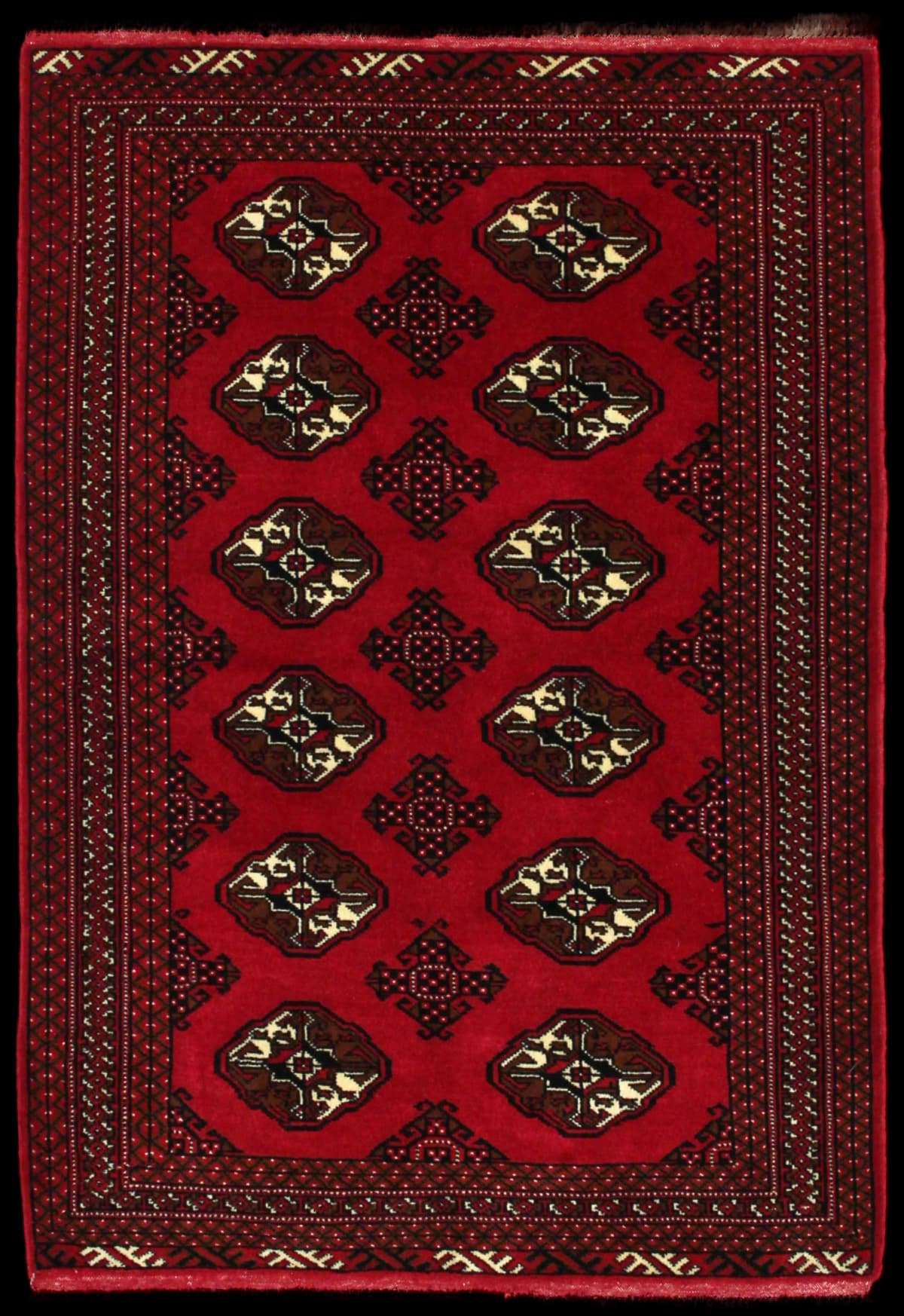
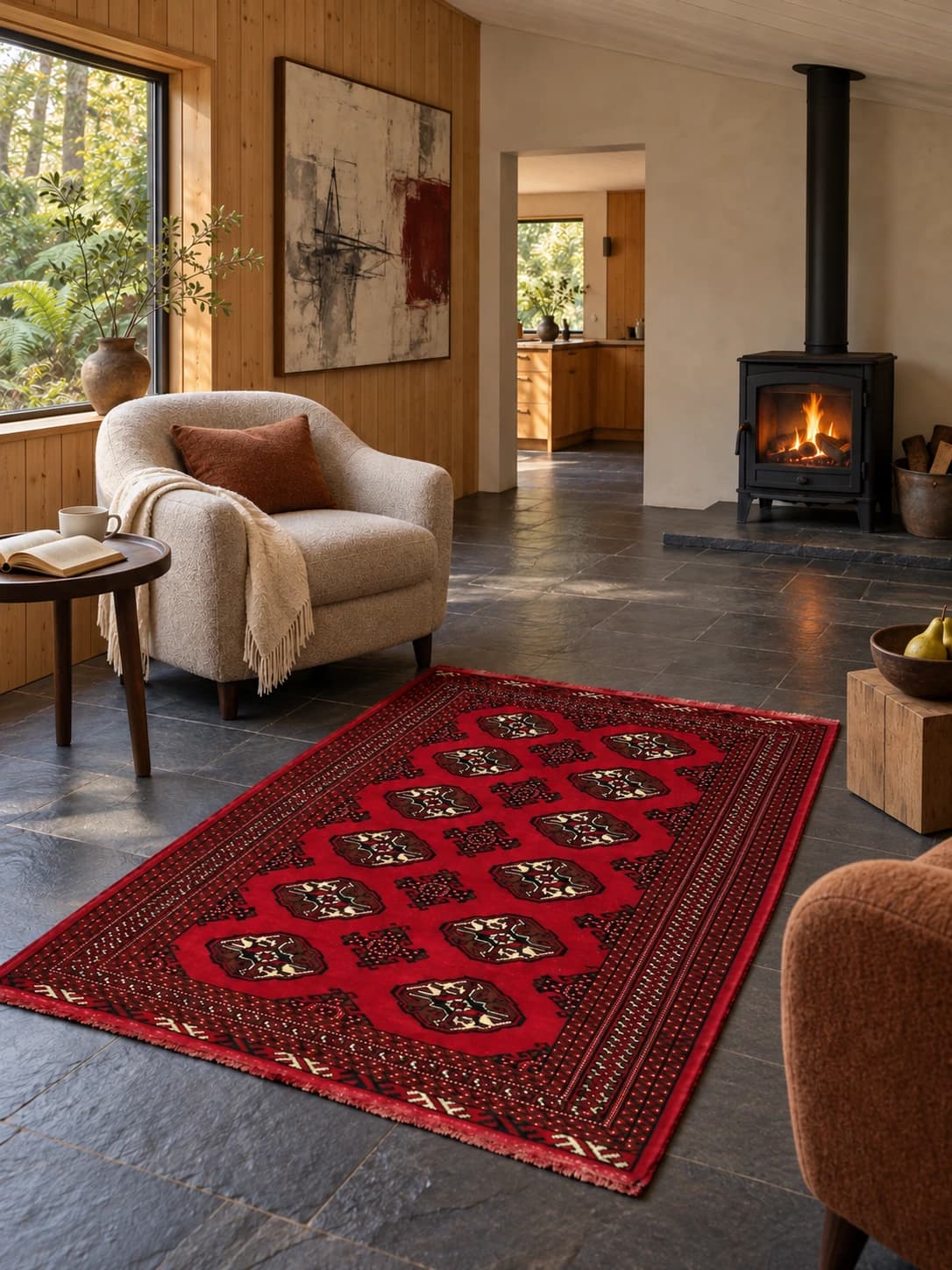
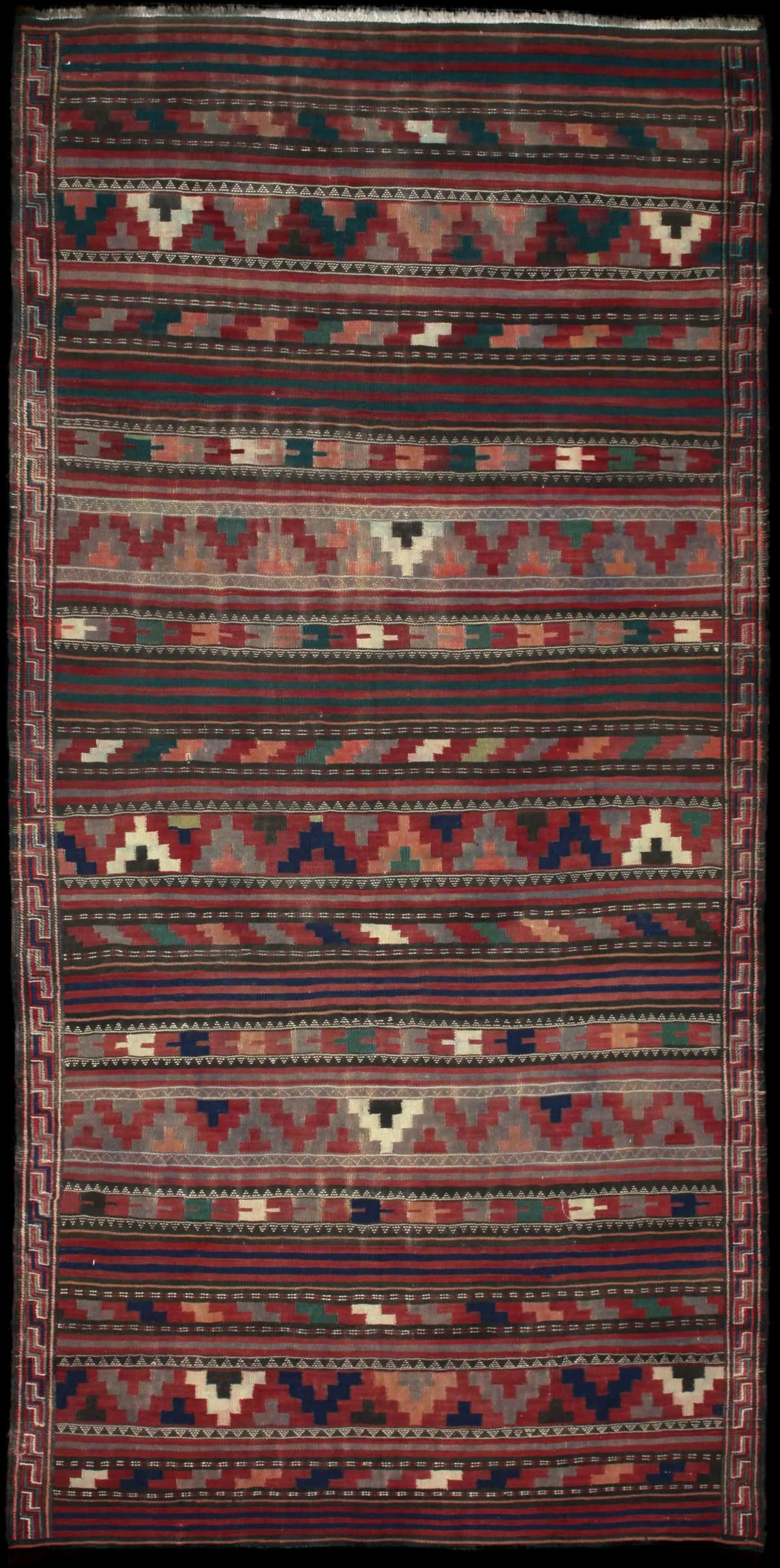
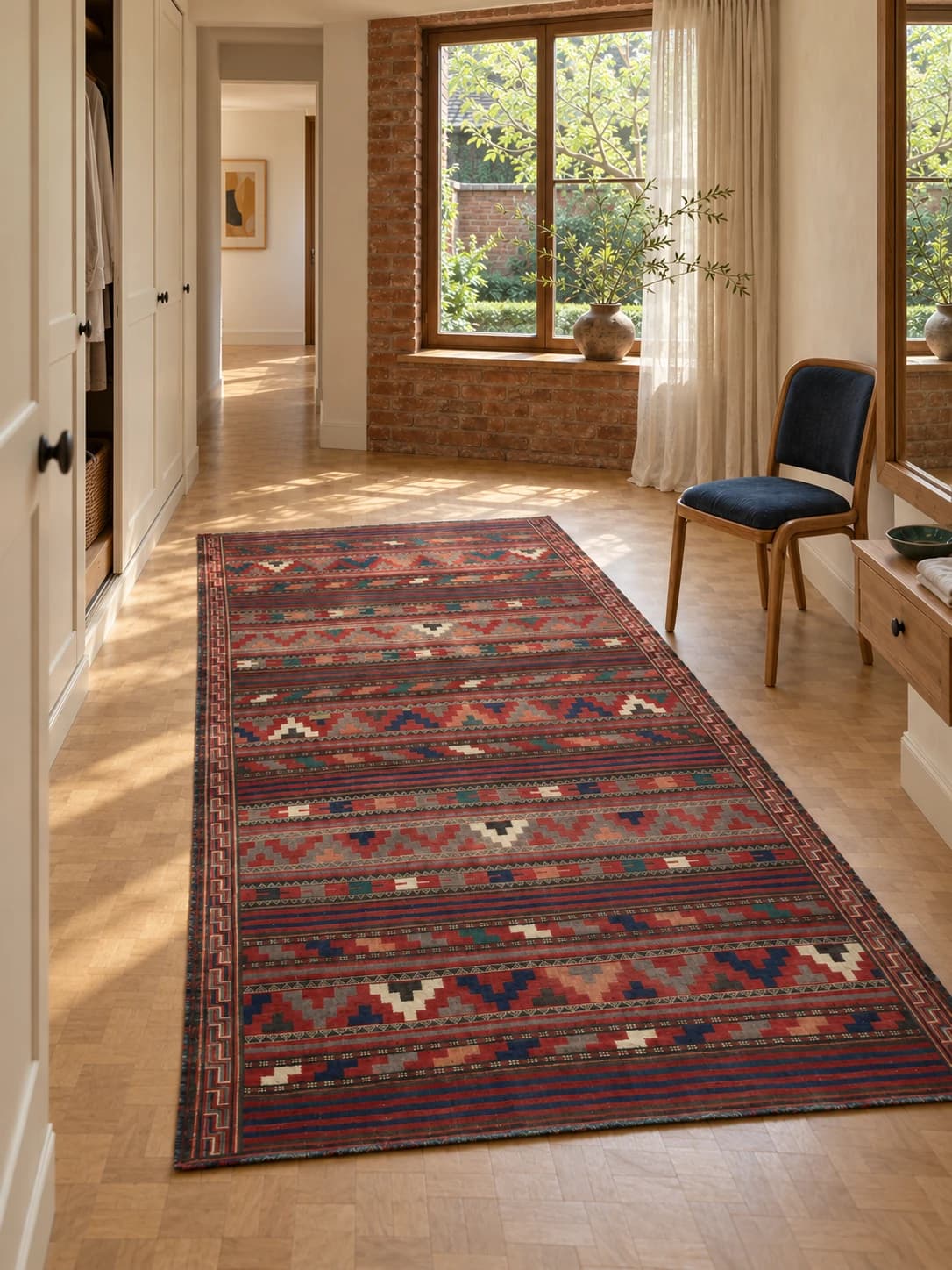
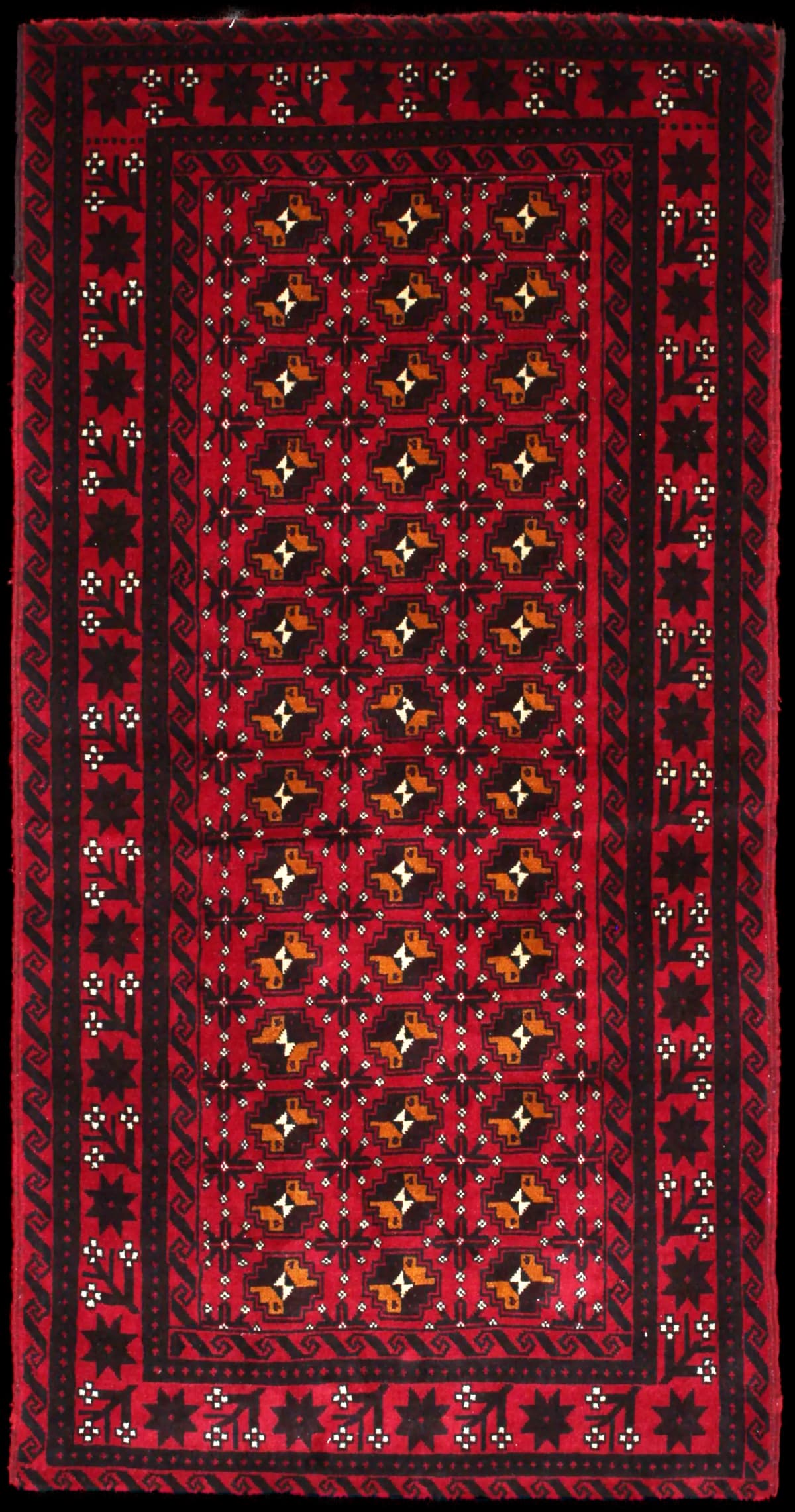
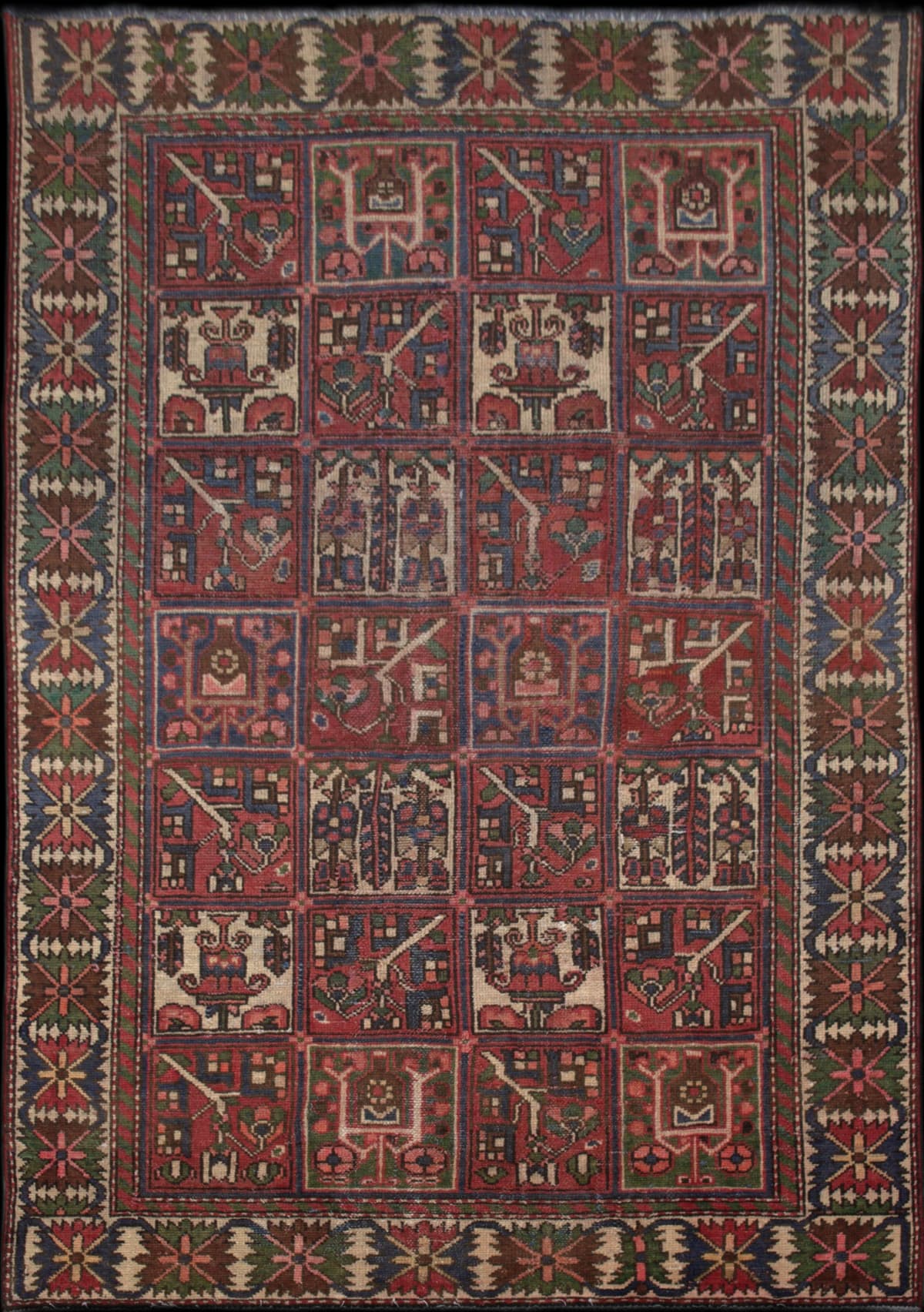
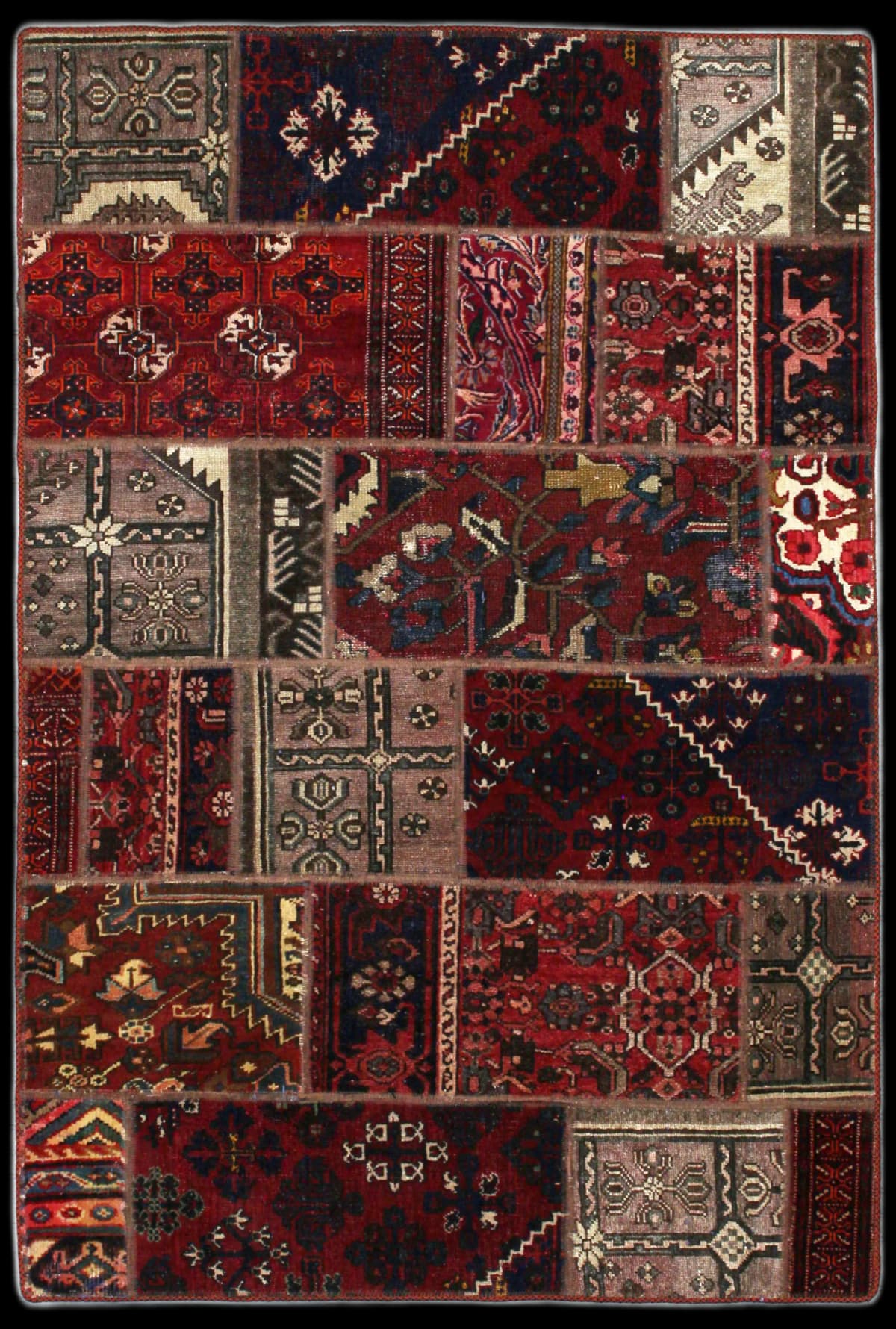
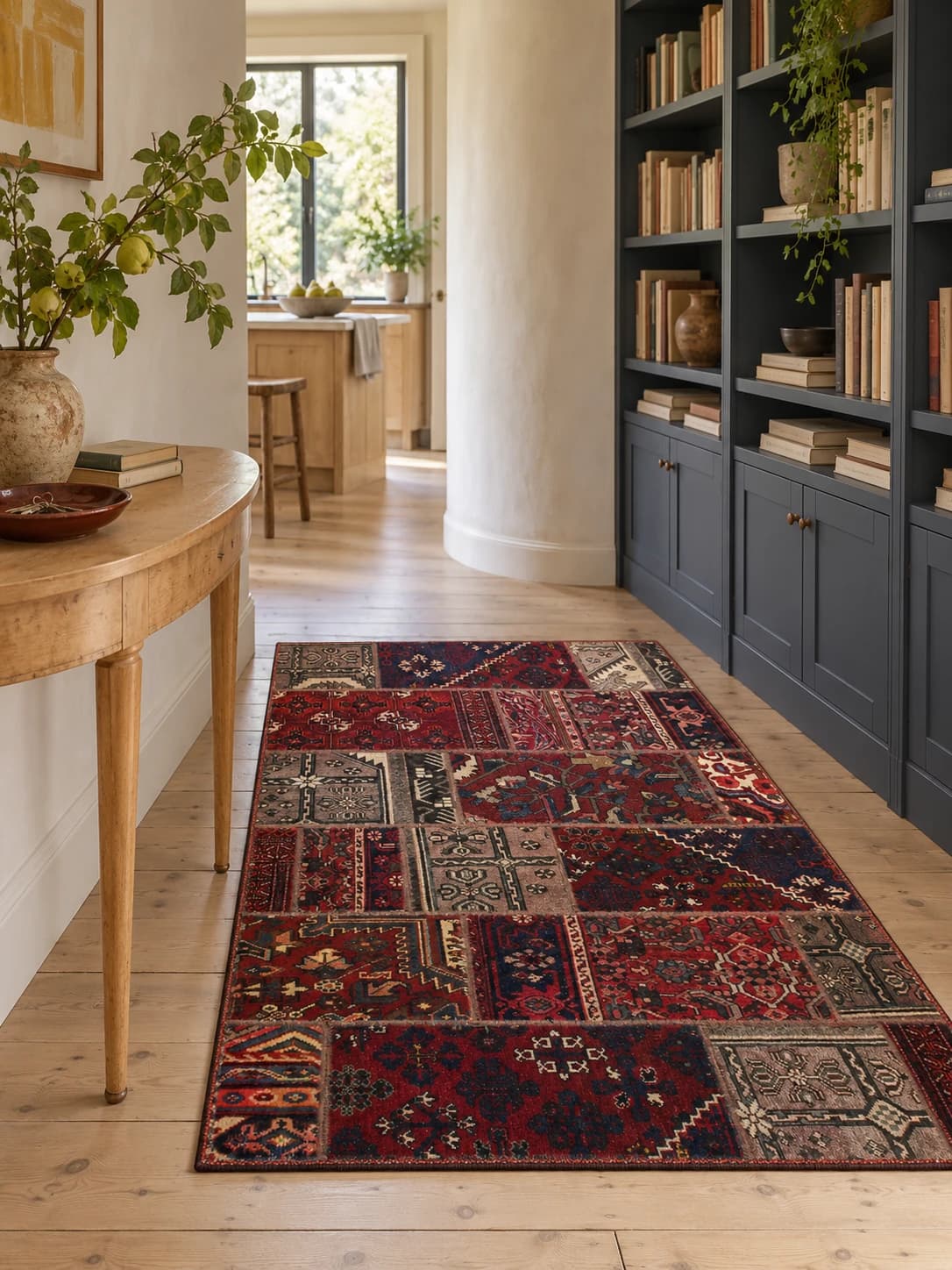
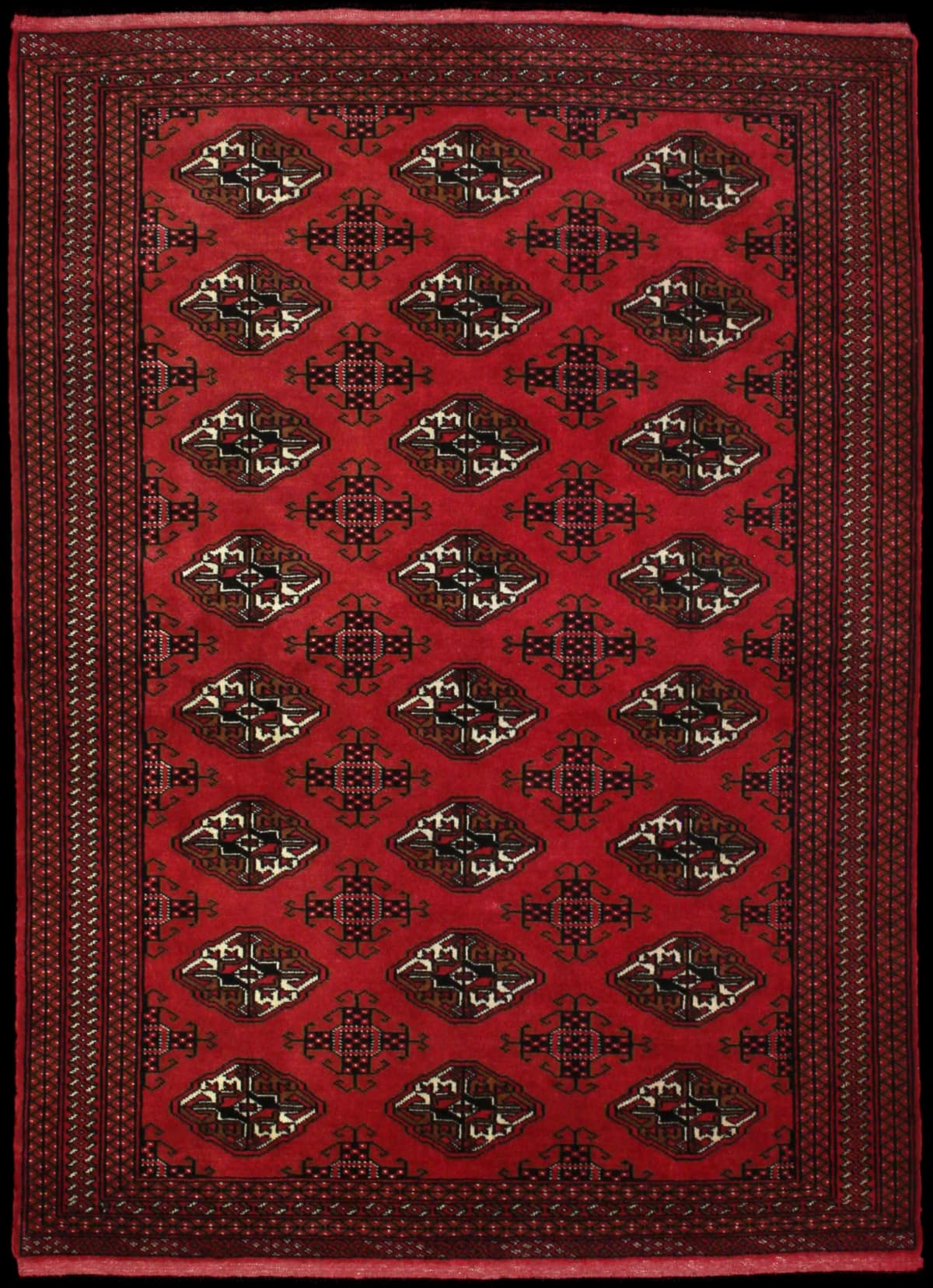
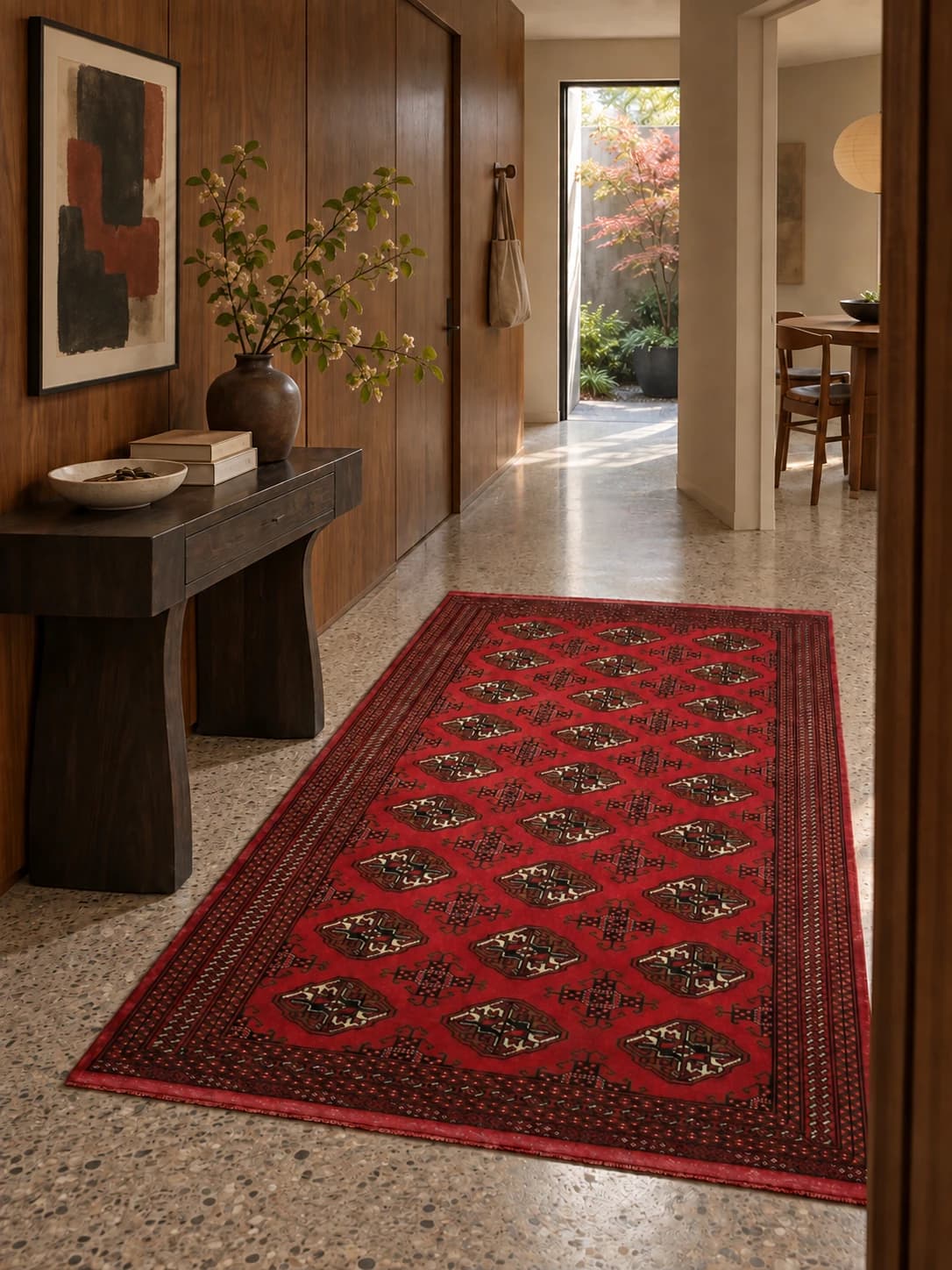
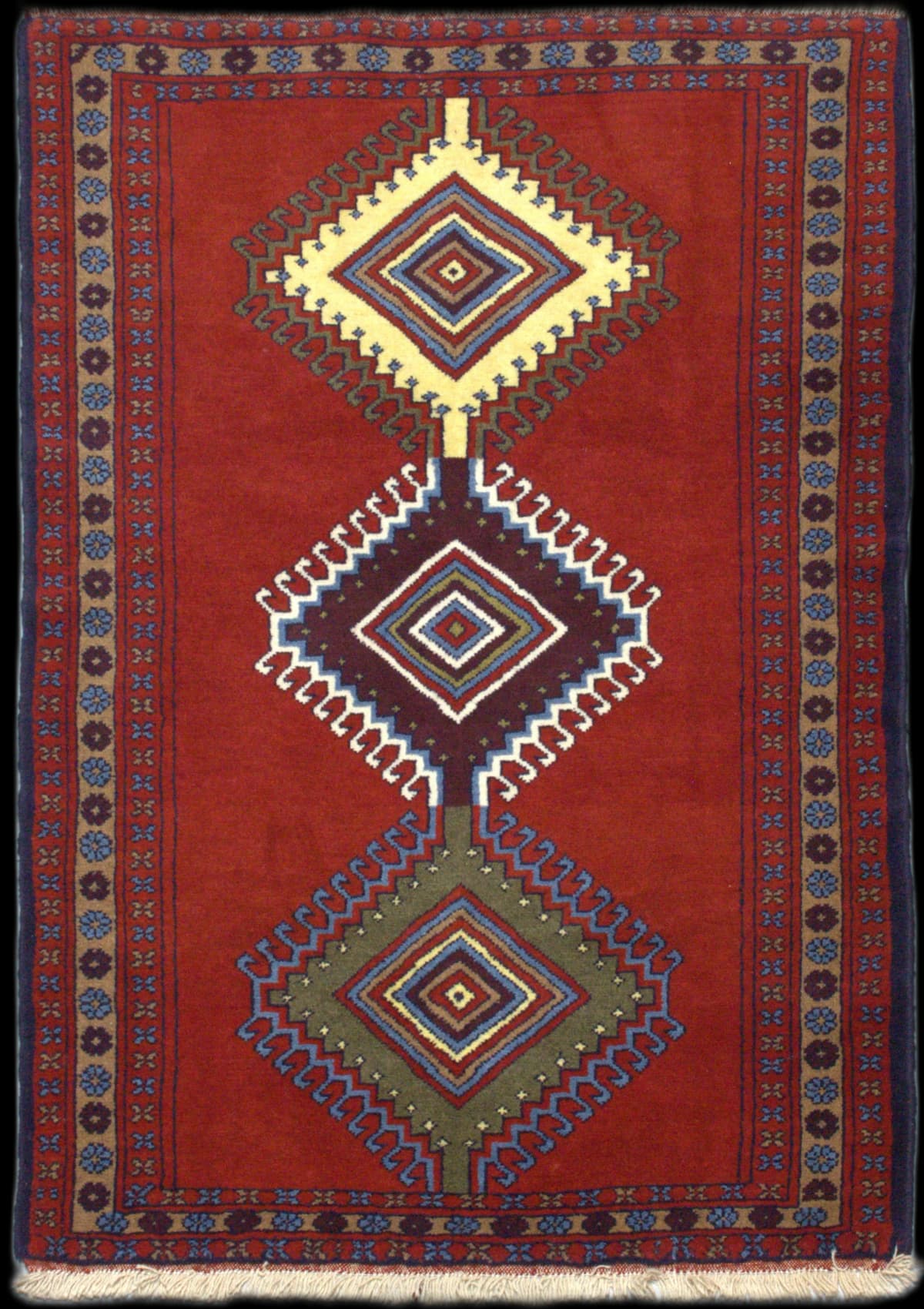
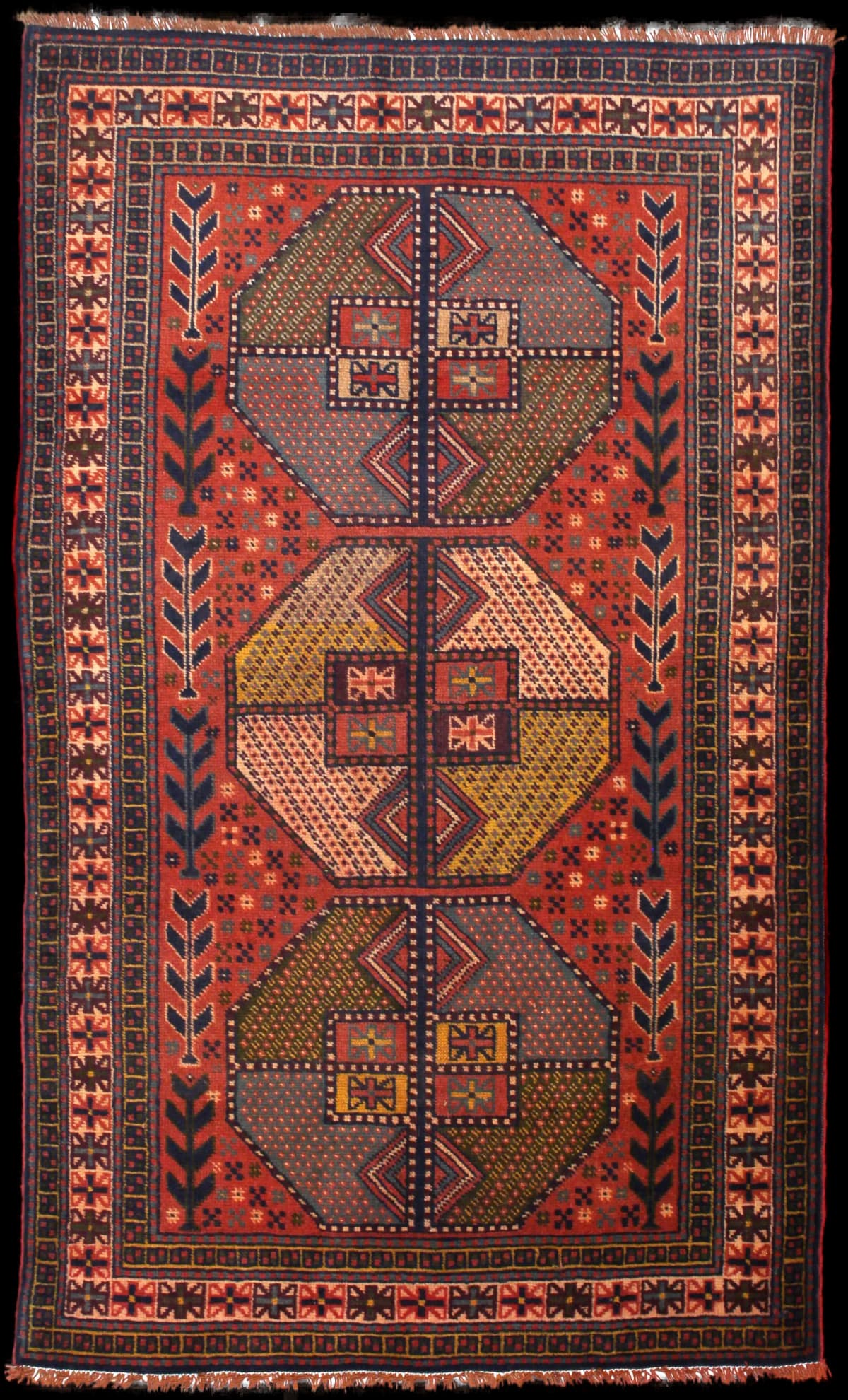
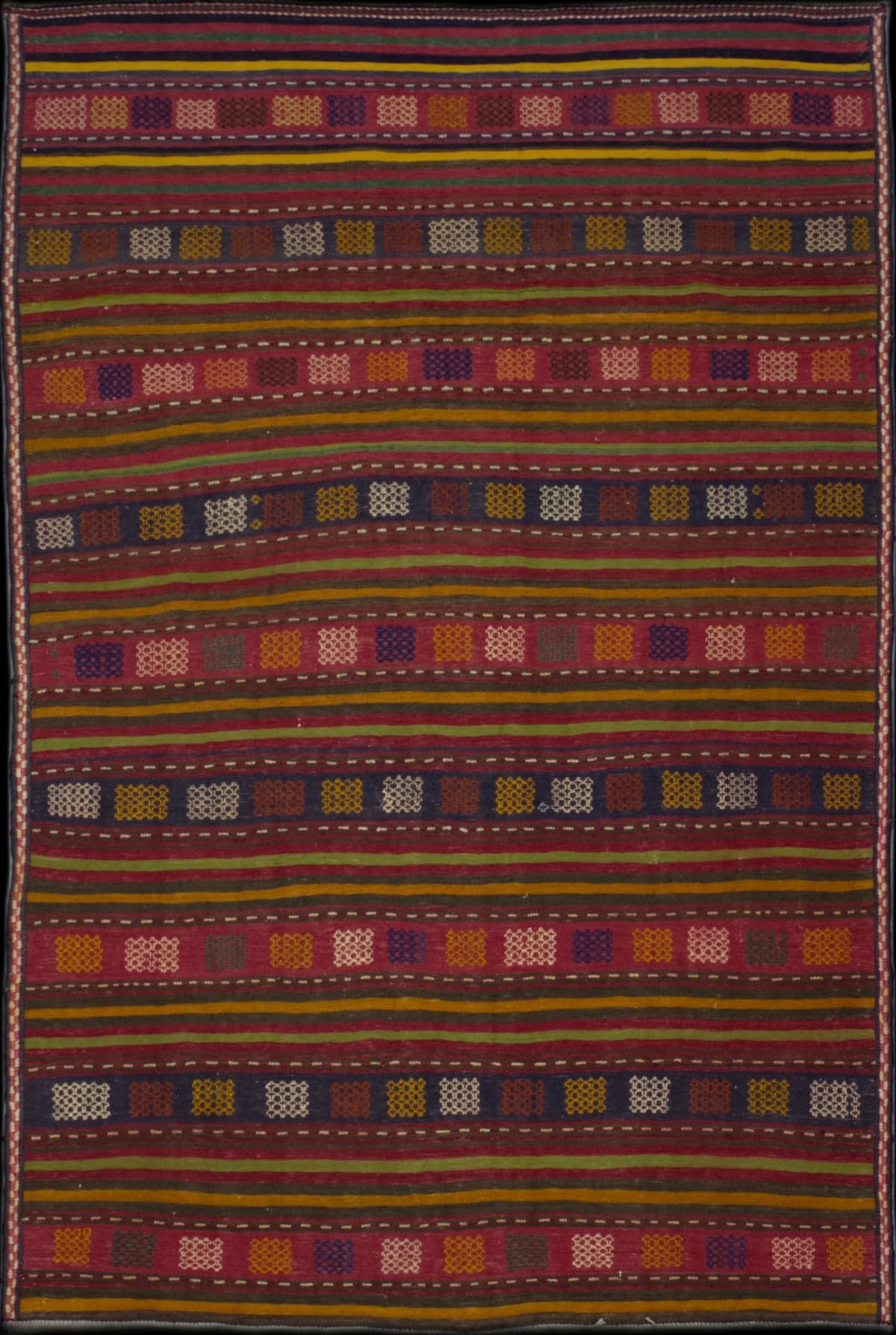
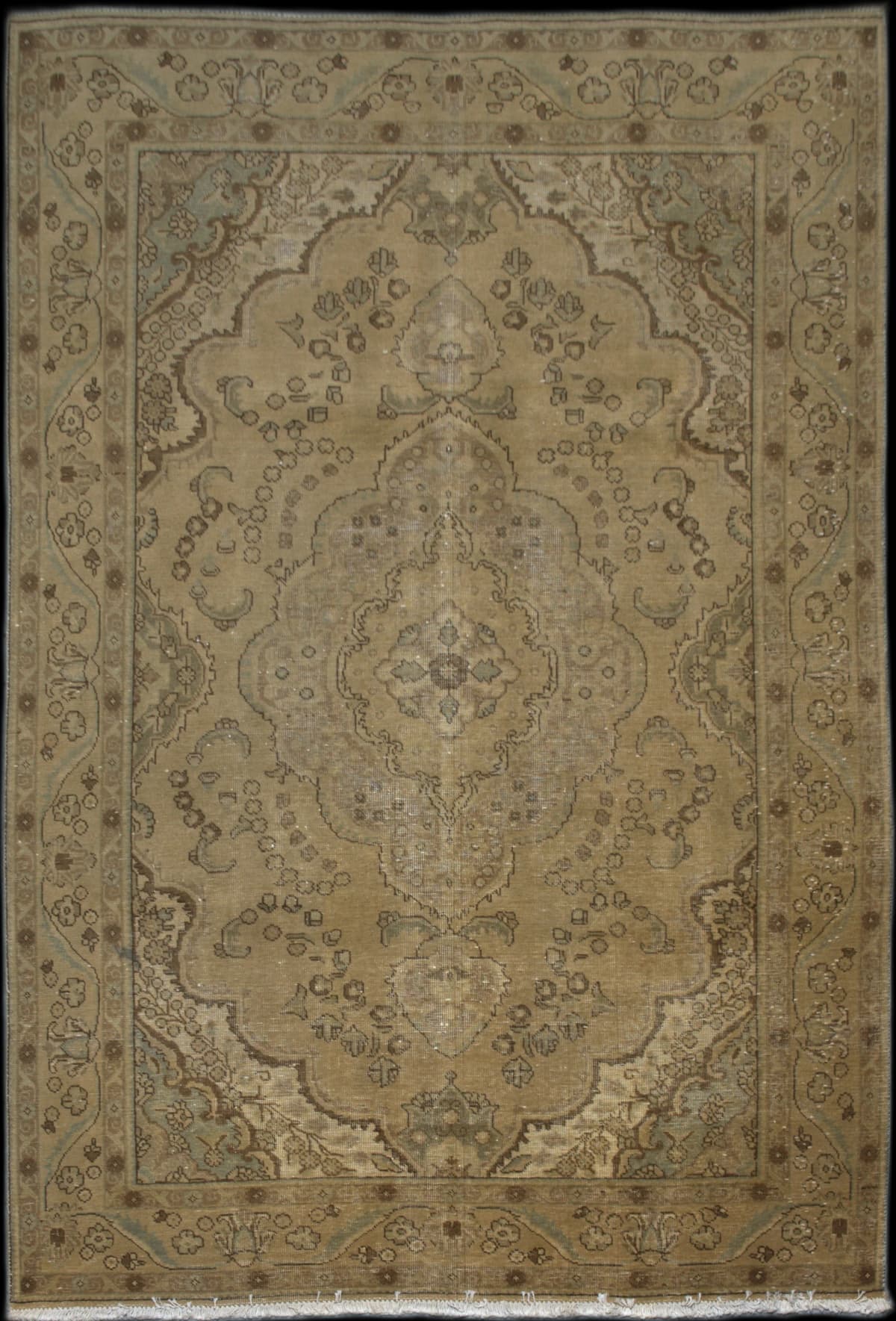
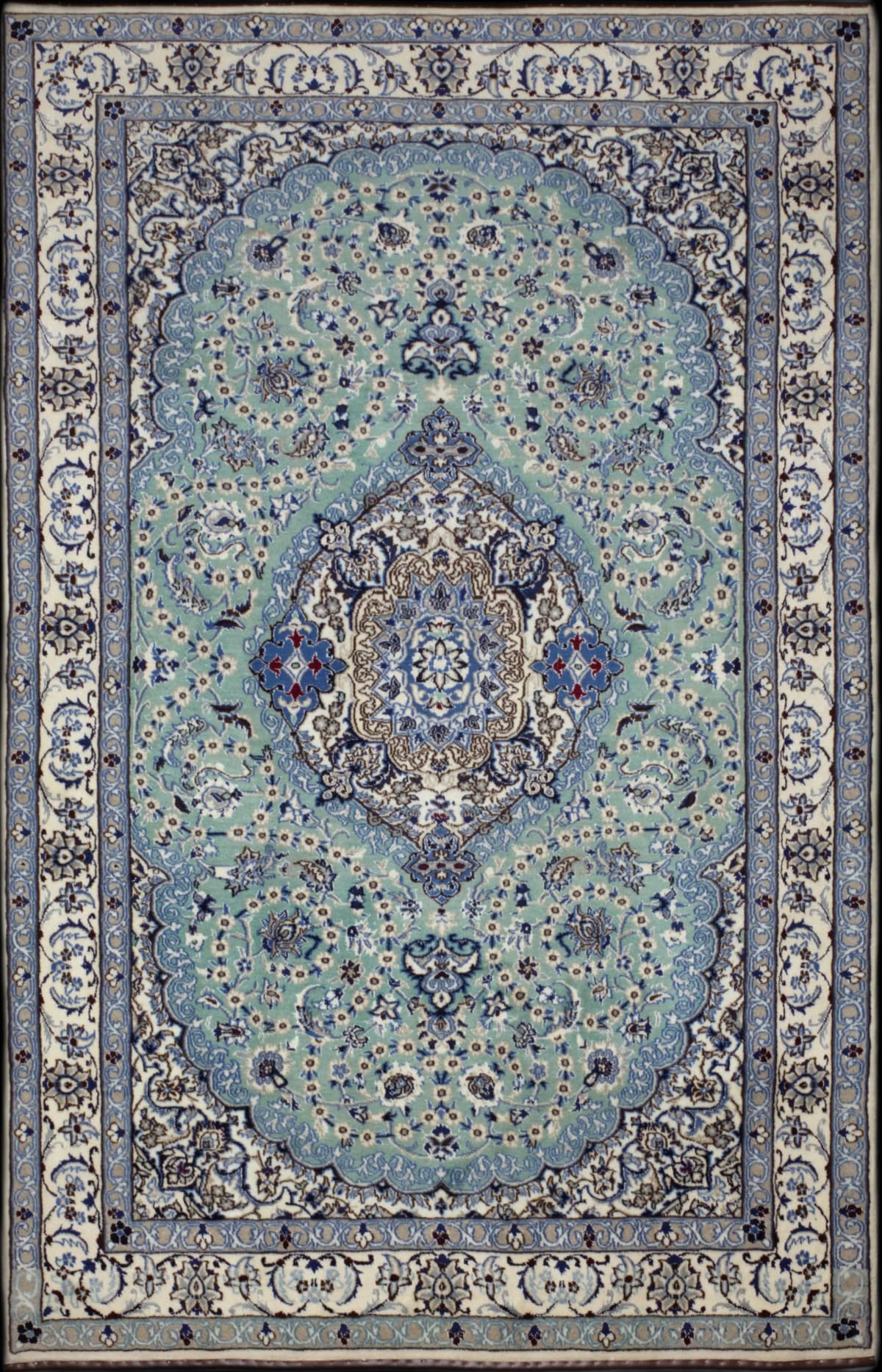
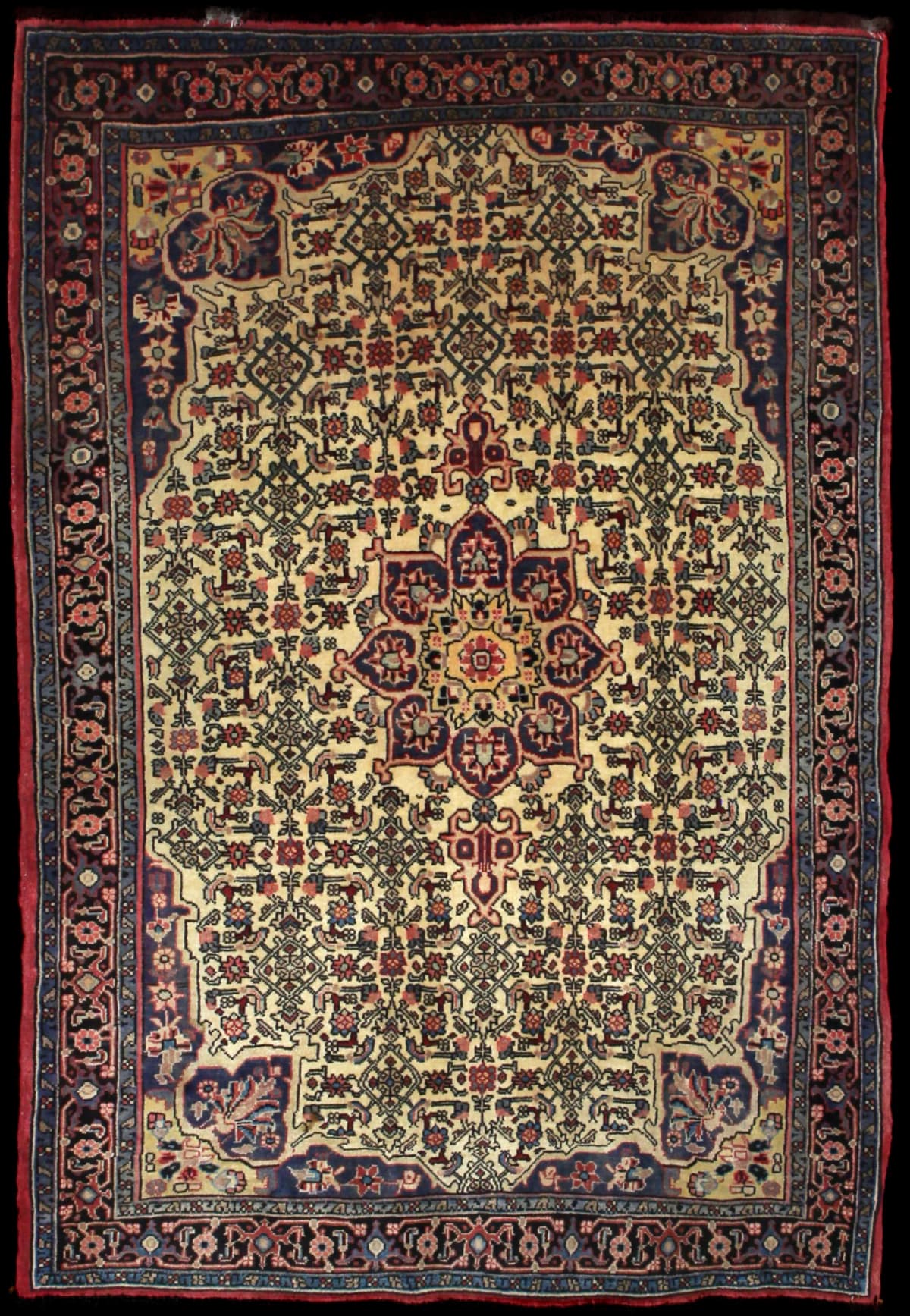
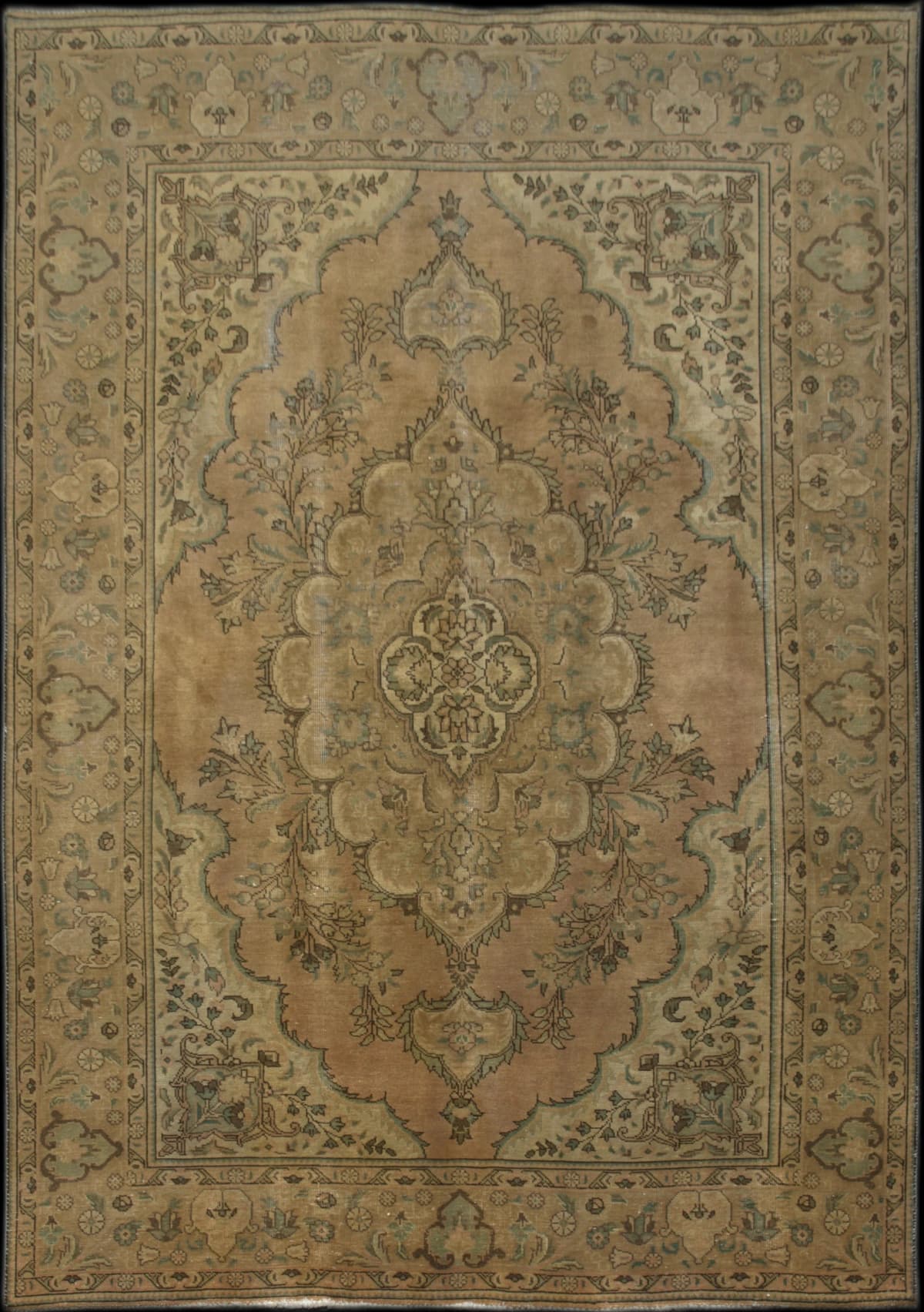
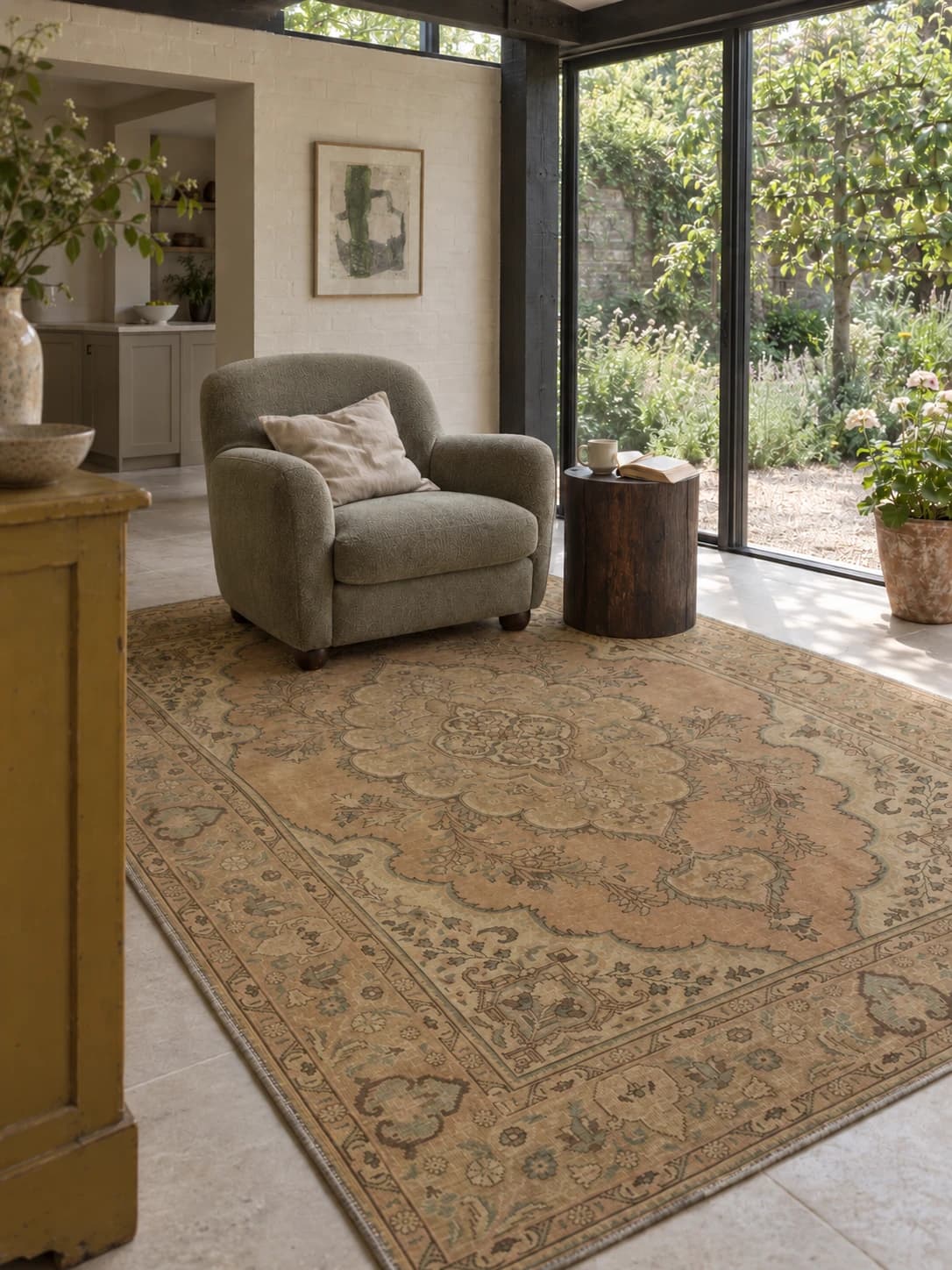
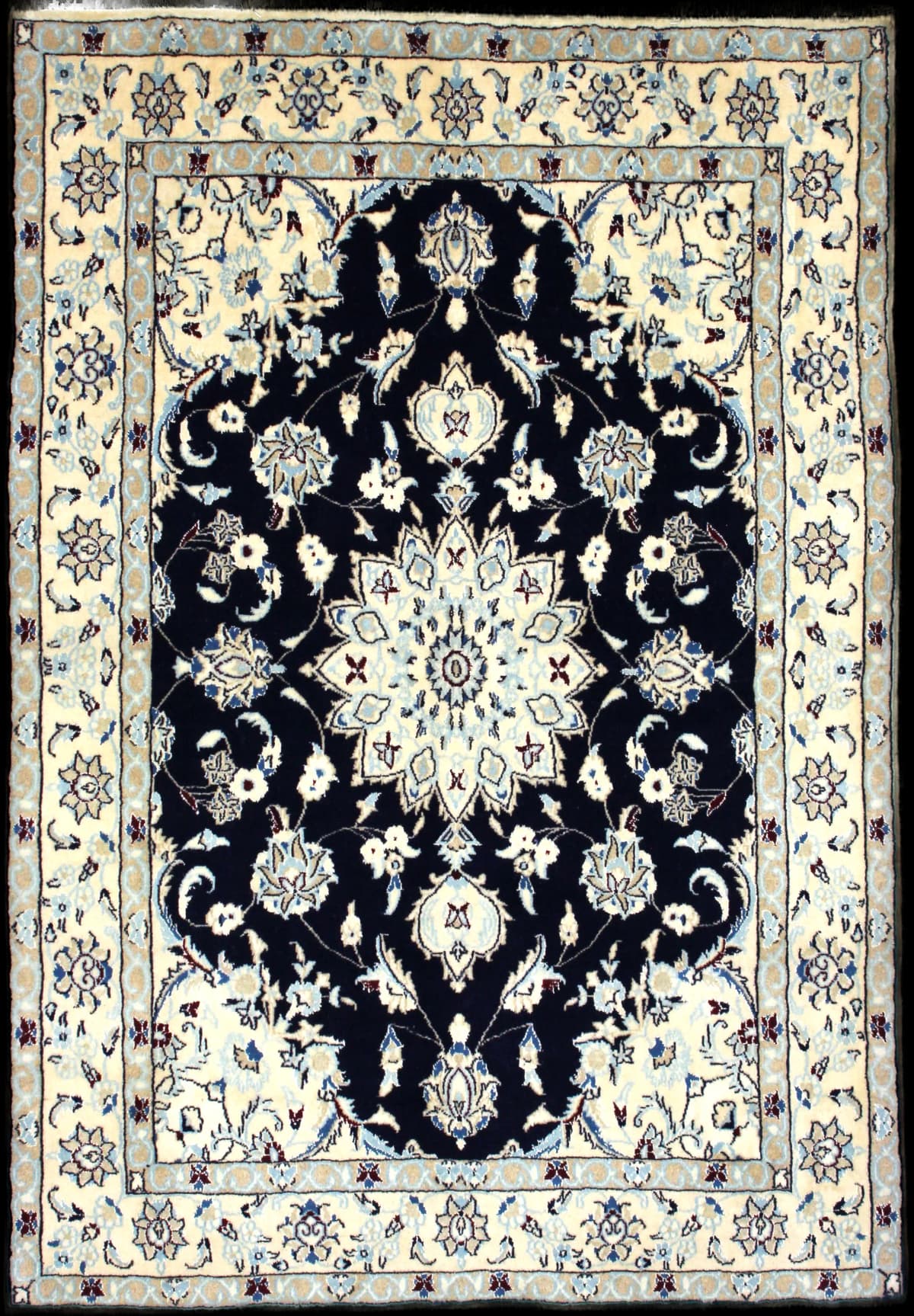
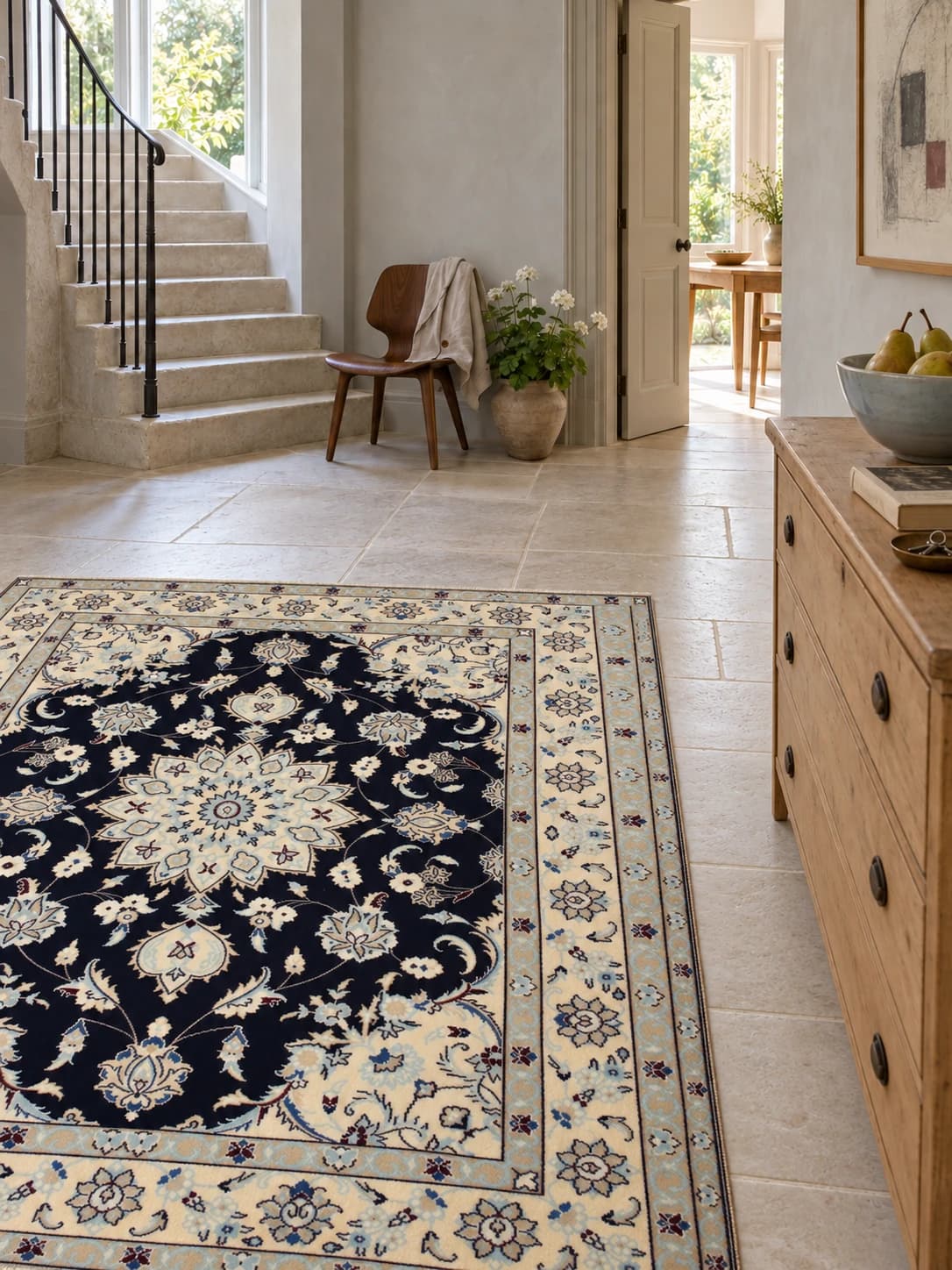
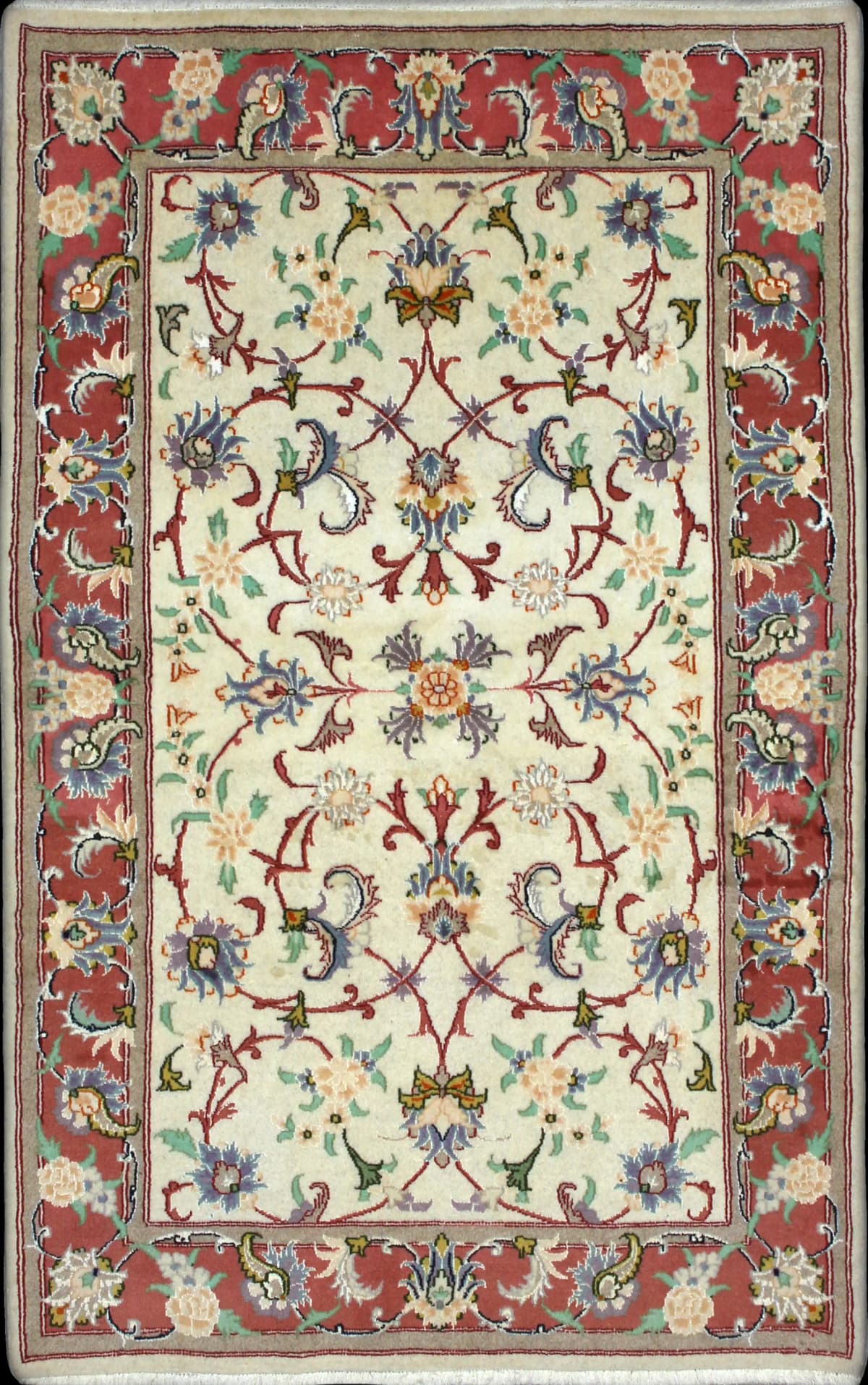
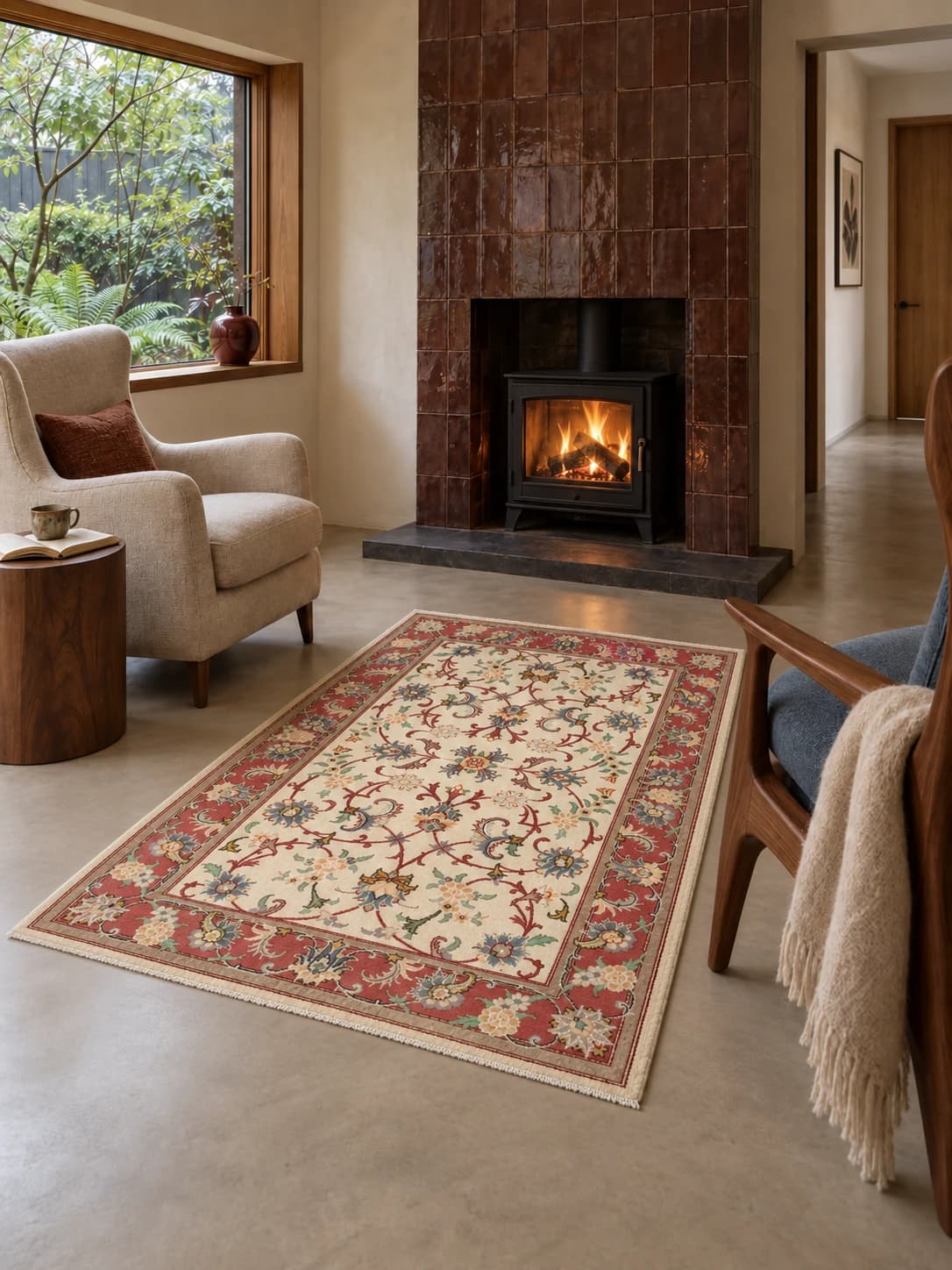
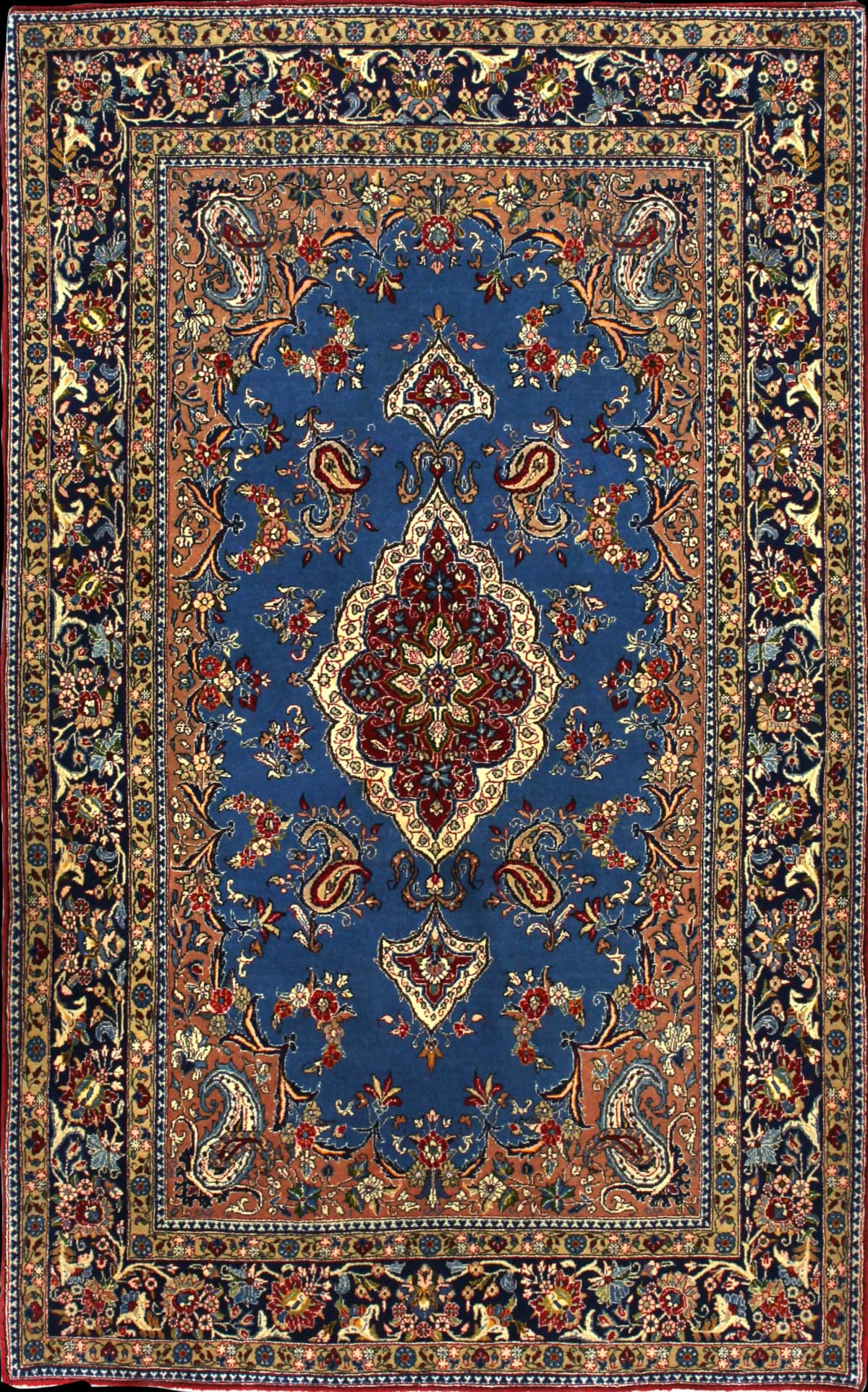
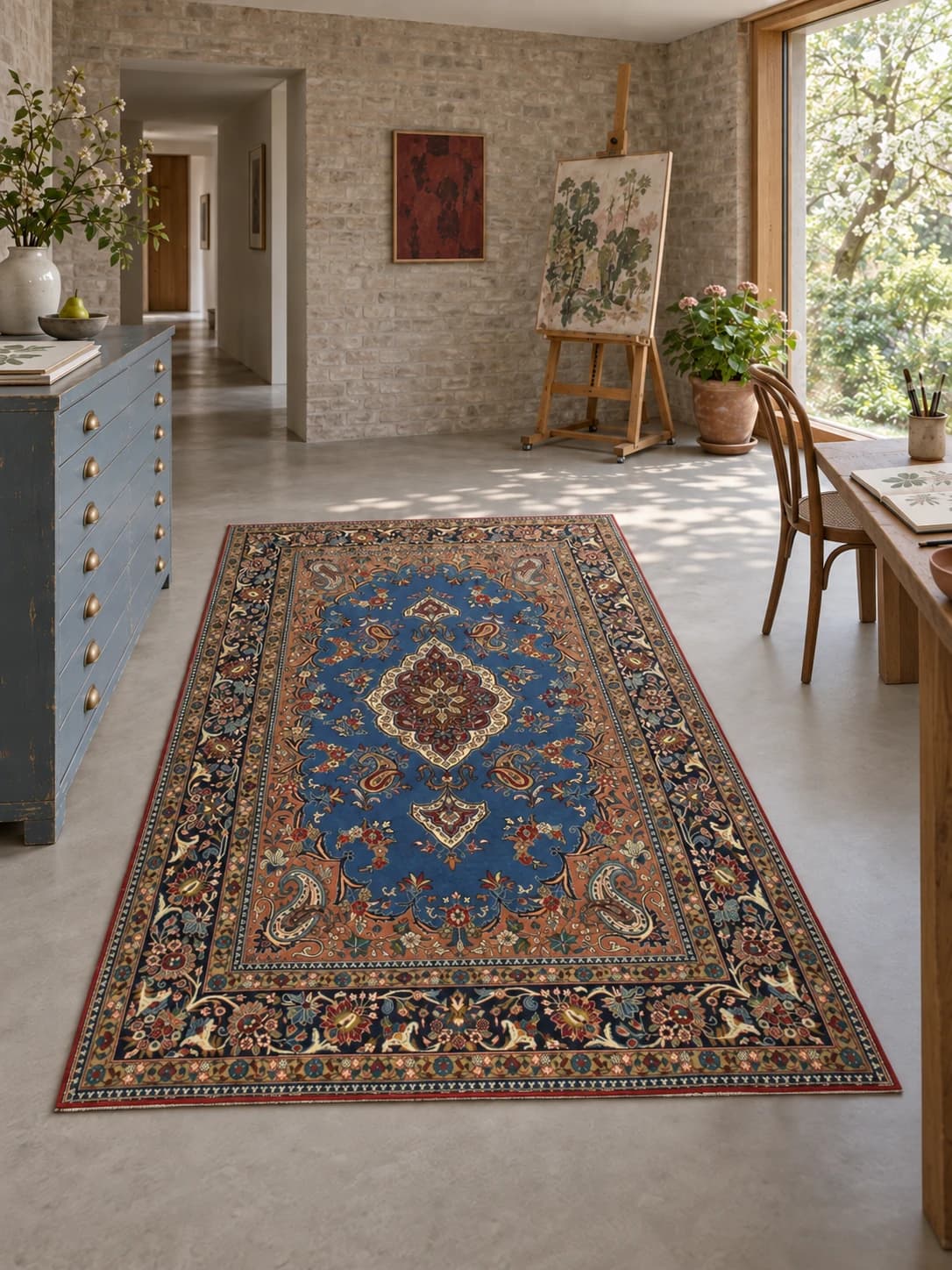
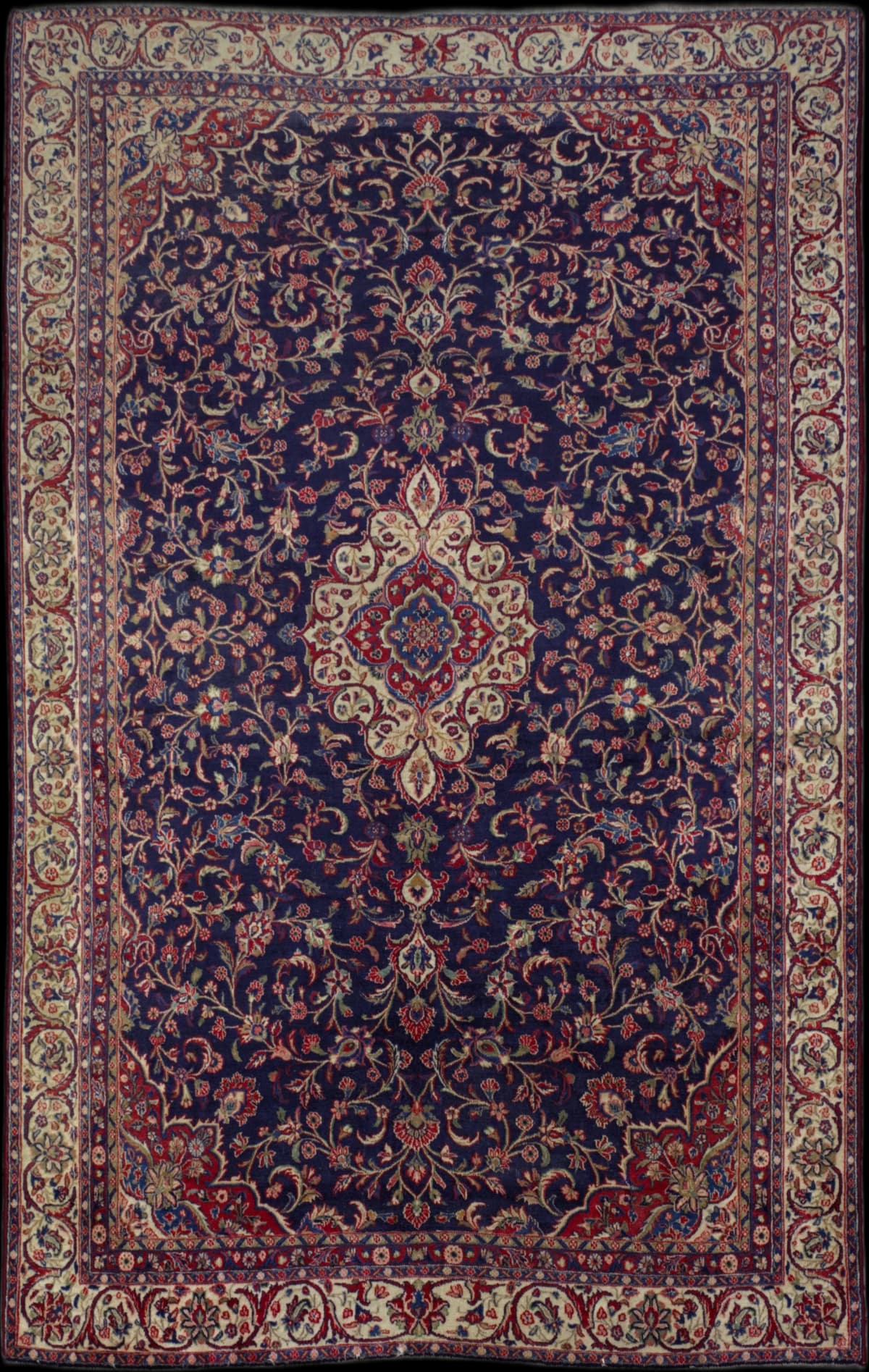
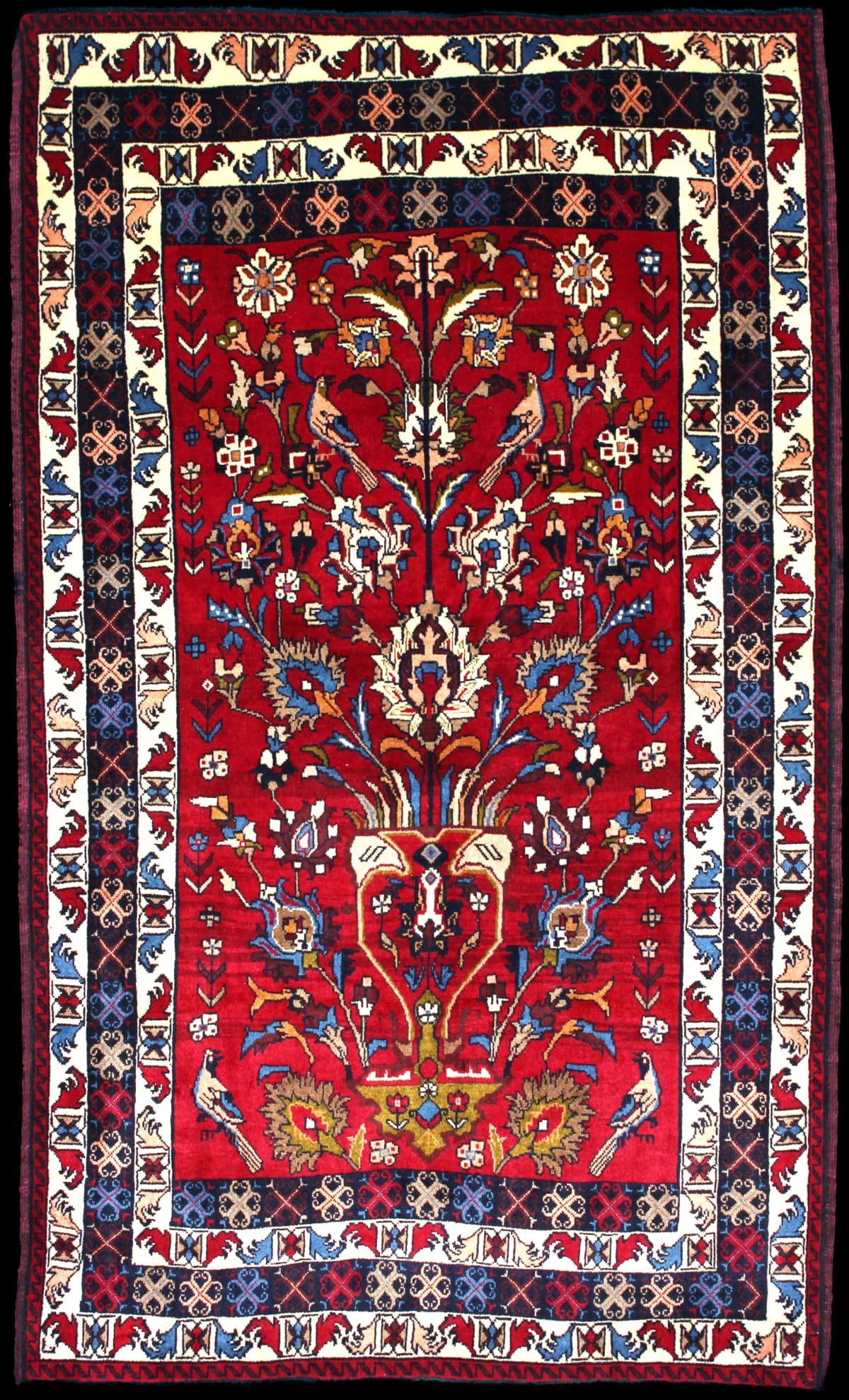
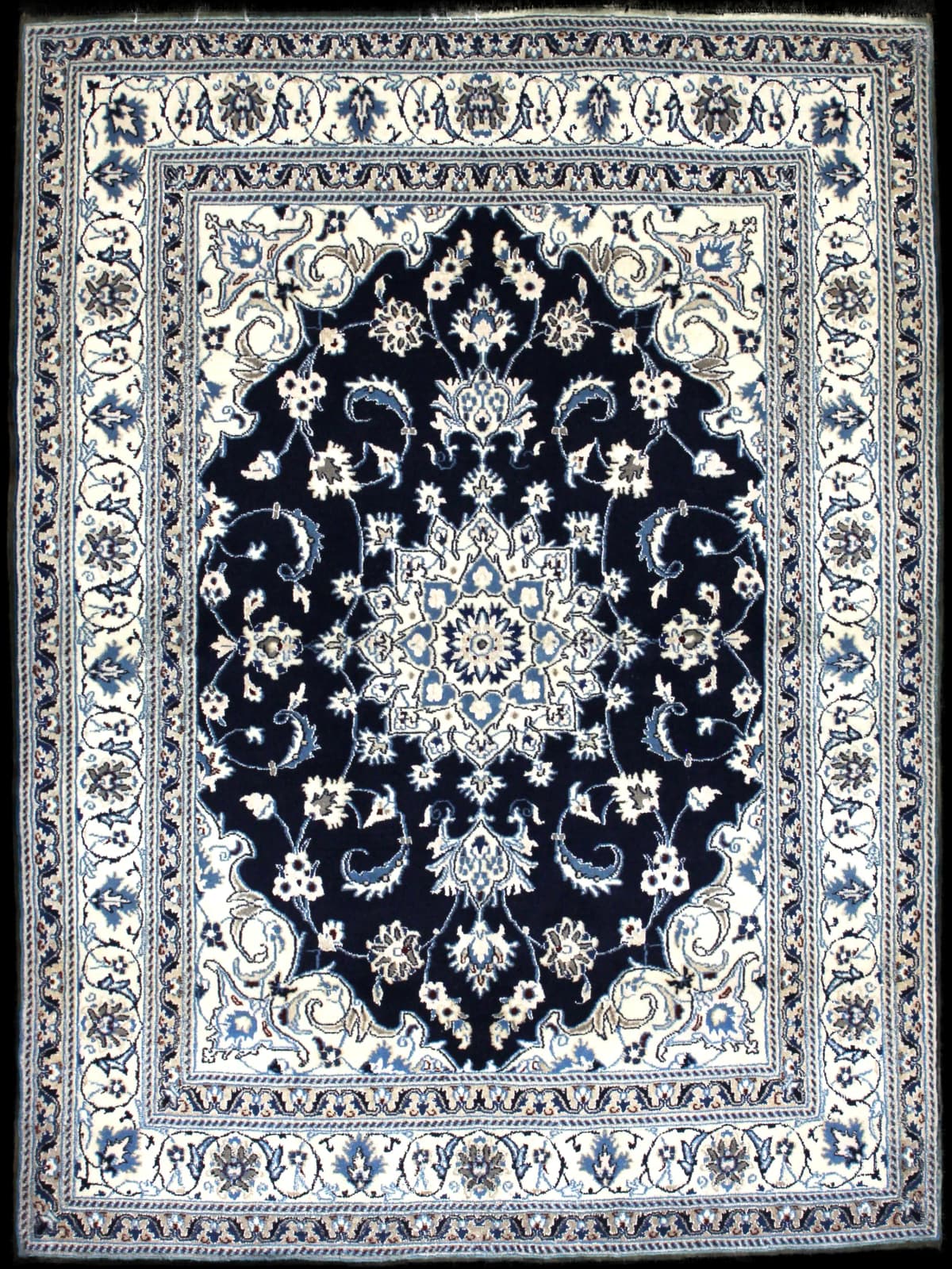
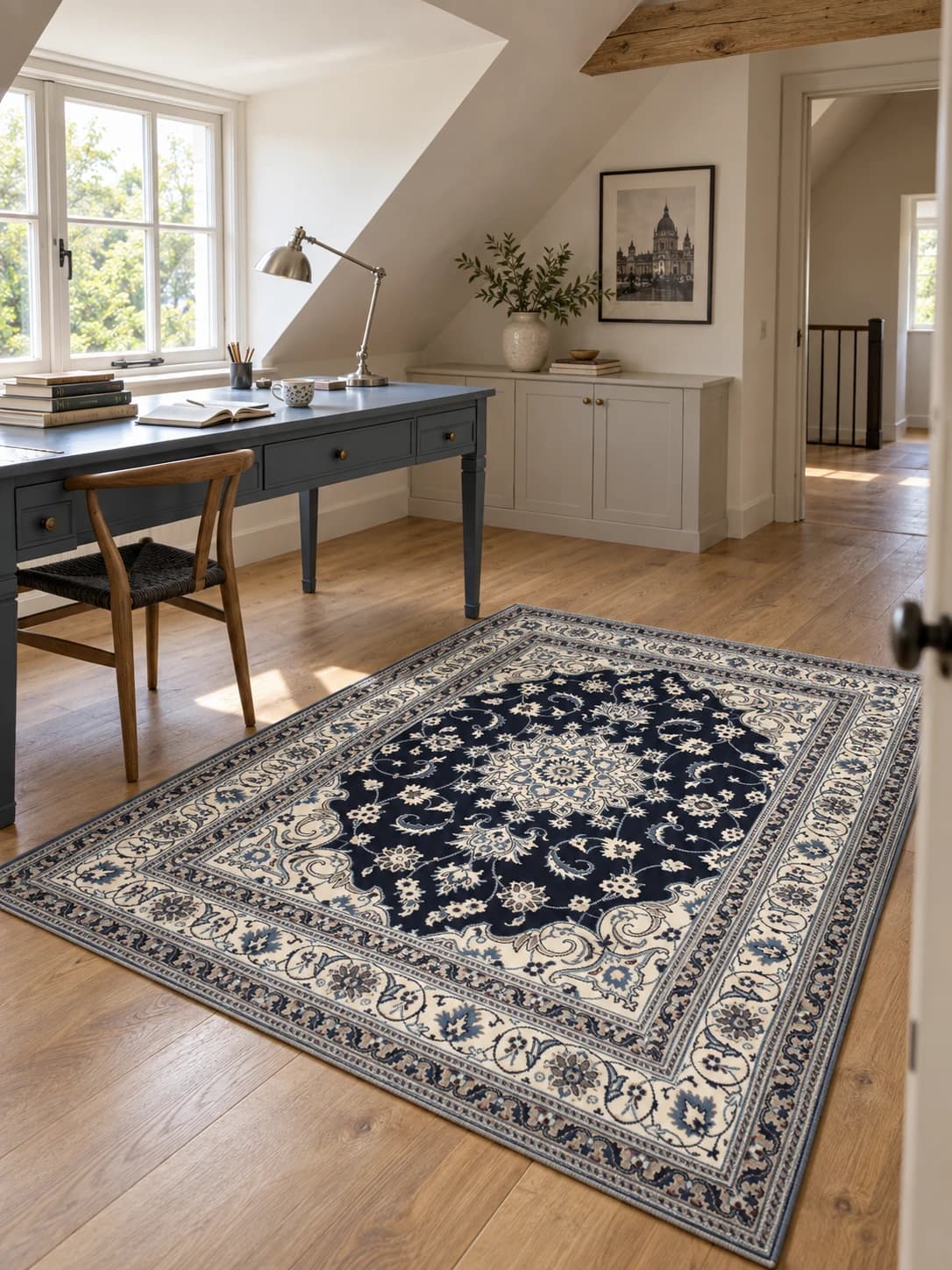
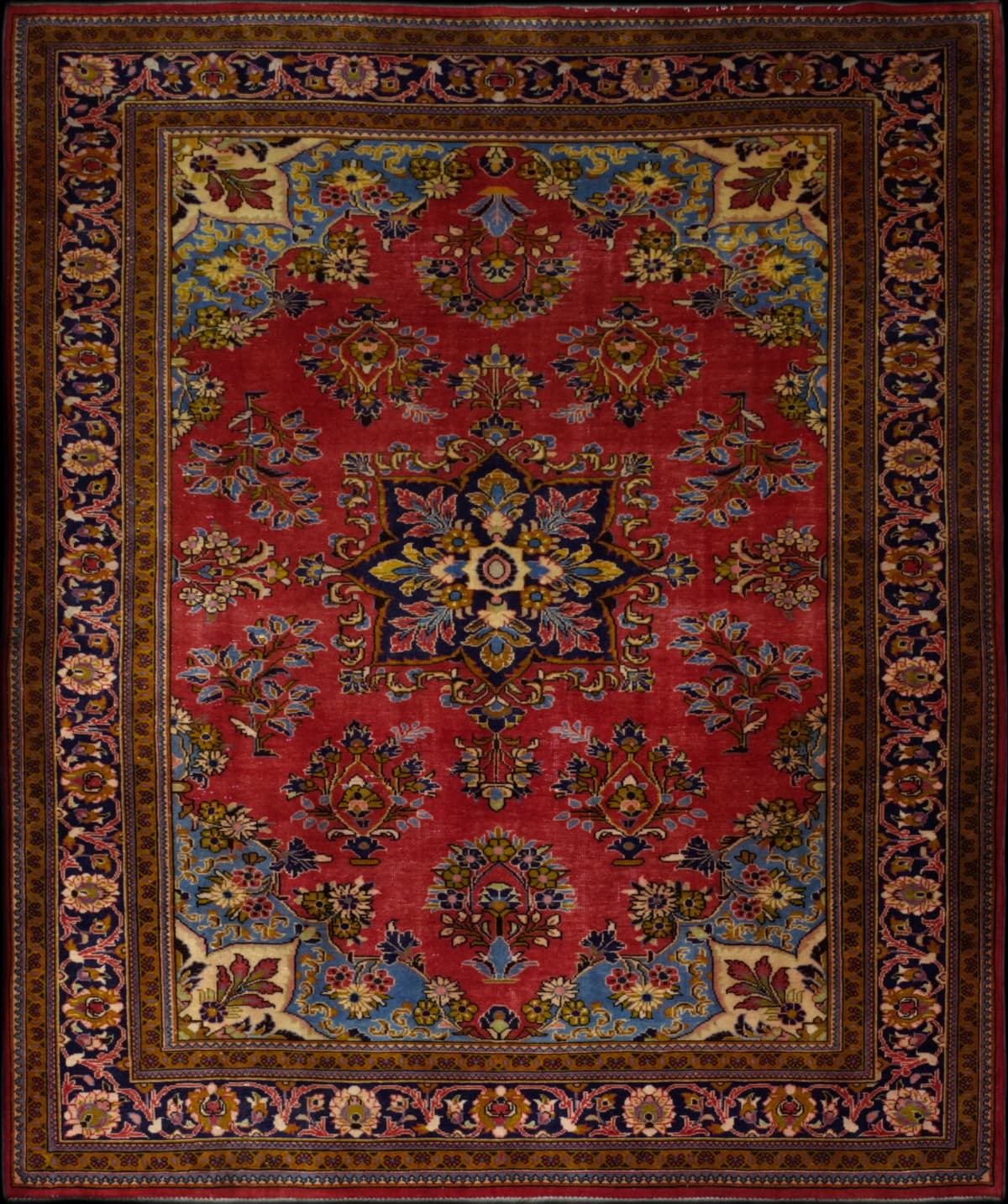
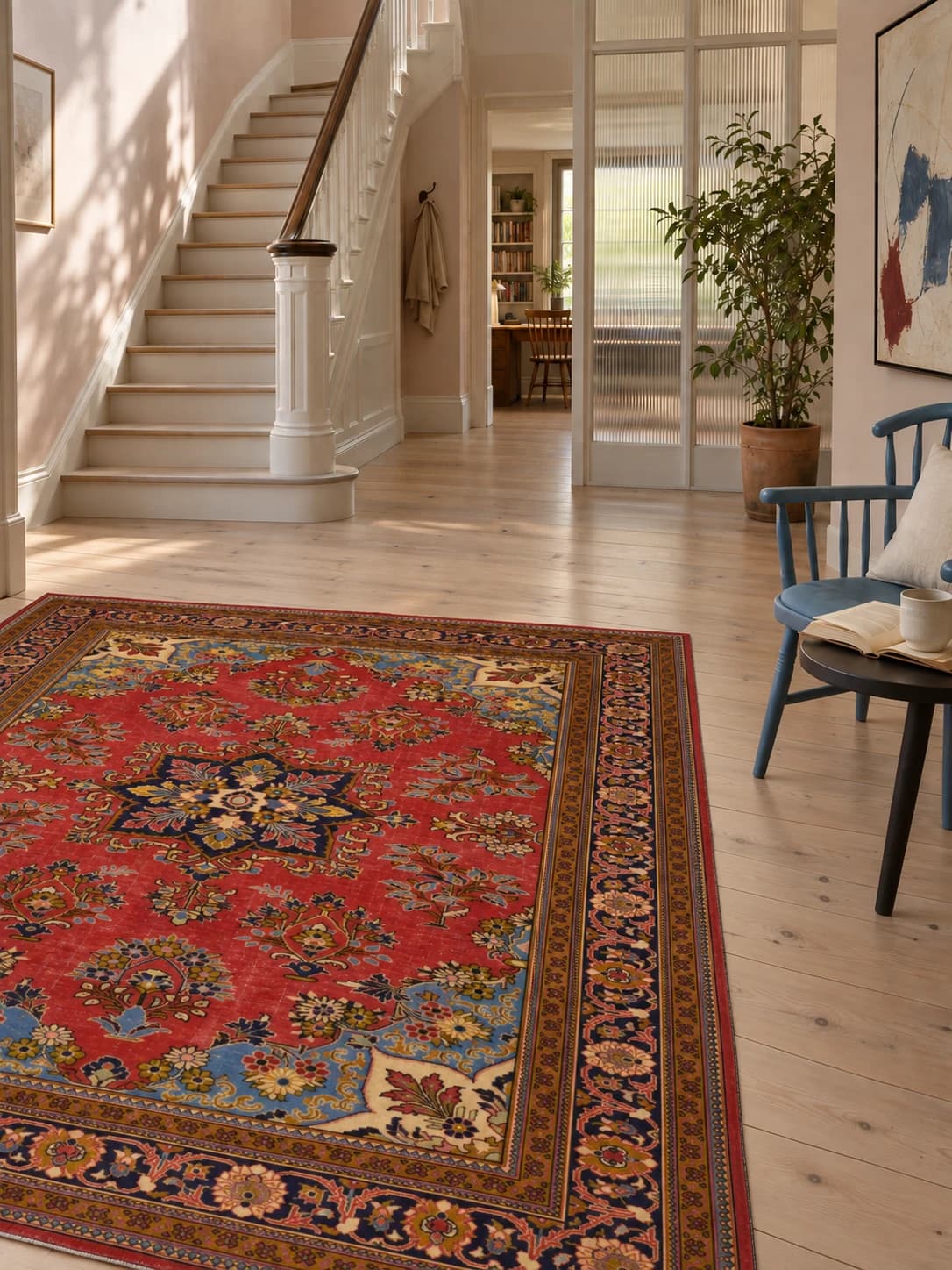
From the region ofنصرآبادNasrabad
Up close
Origin: Nasrabad
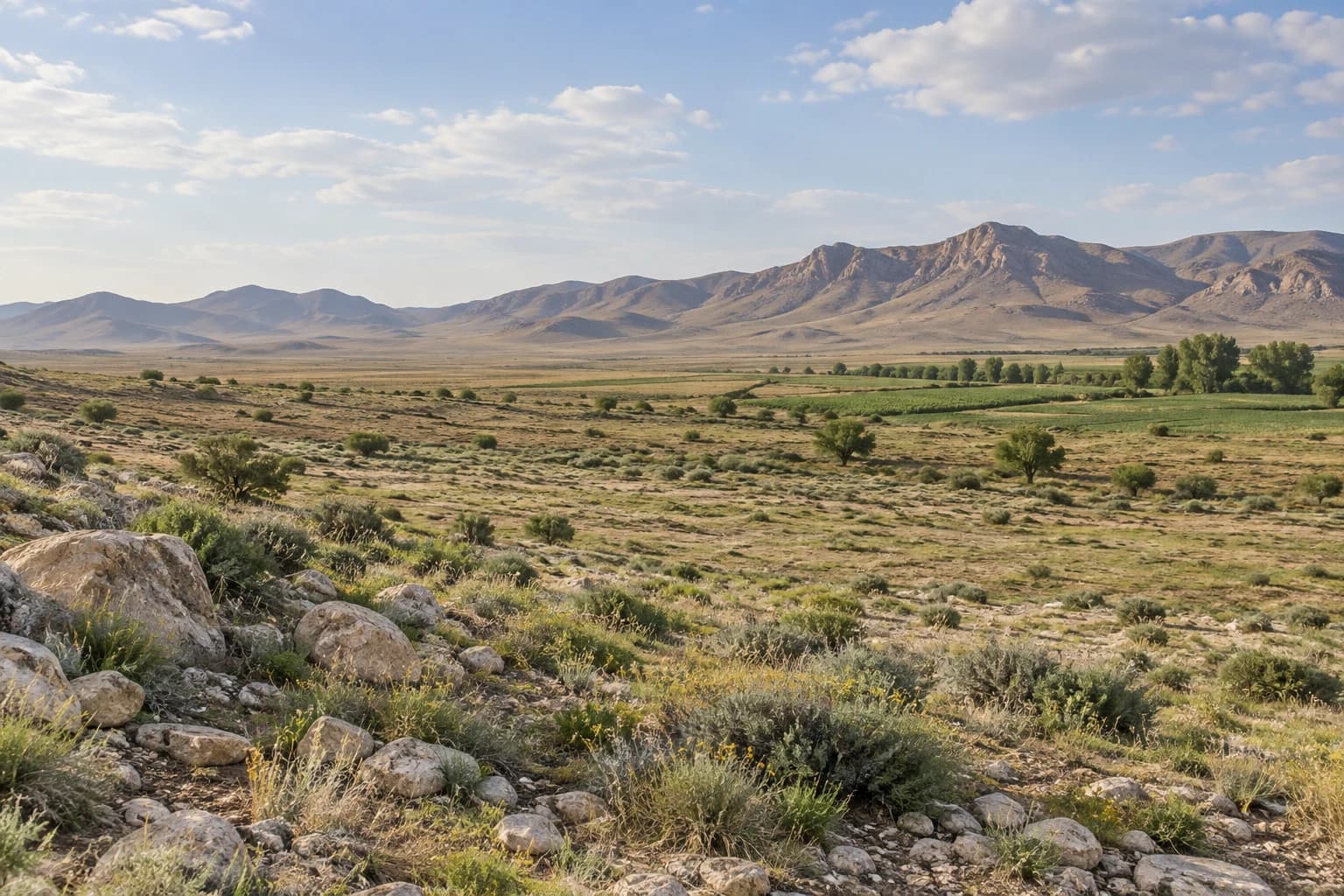
Nasrabad lies on the desert margin south-east of Isfahan, in the Jarqavieh district of Isfahan Province, in central Iran, roughly 60 to 70 kilometers out from the city itself. The name is a compound: the Arabic nasr, meaning victory or help, and the Persian suffix -abad, a place settled and brought into cultivation. Written properly in Persian it is نصرآباد. Whether the Nasr in it was a founder or simply the word for victory is not recorded, and the formation is common enough that both readings occur. Towns of this kind, far enough from a city to work at village pace but close enough to sell into its market, account for a large share of everything woven in Iran.
One caution belongs early. Nasrabad is among the commonest place names in Iran: scores of settlements carry it, in QomSee in the carpet dictionary, Yazd, Kerman, Markazi and Khorasan as well as Isfahan, because the -abad formation was applied wherever land was brought under cultivation. The reading used here is the Isfahan one, but a shared name cannot fix a location by itself, and a Nasrabad in Khorasan would belong to an entirely different weaving world. A rug labeled this way is best judged on what it is, in woolSee in the carpet dictionary, drawing and weave, rather than on the certainty the label seems to promise.
Weaving in a place like this belongs to the village category rather than the tribal or the city one, and the distinction is practical rather than snobbish. Village weavers are settled, so they have fixed looms, better tools, steadier access to dyes and a reliable supply of wool, none of which a migrating household can carry. What they do not have is the apparatus of a city workshop: no drawn cartoon ruling every knot, no supervisor enforcing a house pattern. The result is work that is more regular than nomadic weaving and freer than urban weaving.
That position shows in the rugs themselves. Knot densitySee in the carpet dictionary in village work generally runs above tribal weaving and below city weaving, and the range of sizes is wider than a nomadic camp can manage, since a settled workshop can keep looms of several lengths rather than being confined to small formats and runners. Construction across the village weaves of Iran is remarkably consistent: a wool pileSee in the carpet dictionary knotted on a cotton foundation, the cotton giving the rug a flat, stable body that holds its shape and takes hard use without distorting.
Small weaving towns rarely have a market of their own. Finished rugs travel to the nearest major city and are sold there, which is why so many Persian weaves were made in one town but bought and exported under the name of the city that traded them. For a village in Jarqavieh that city is Isfahan, whose bazaar sets prices, supplies materials and, over time, shapes what a weaver thinks a rug ought to look like.
Isfahan itself should not be read into these rugs. City work from Isfahan is among the finest weaving in Iran, running to something like 500 to 700 knots per square inch, worked in kork woolSee in the carpet dictionary from young sheep or in wool and silk, and drawn from cartoons that let a designer's curves survive into the pile. That is the opposite pole from village weaving, not a description of it. Between a small town in the district and the city there is a relationship of market and habit, not one of shared technique.
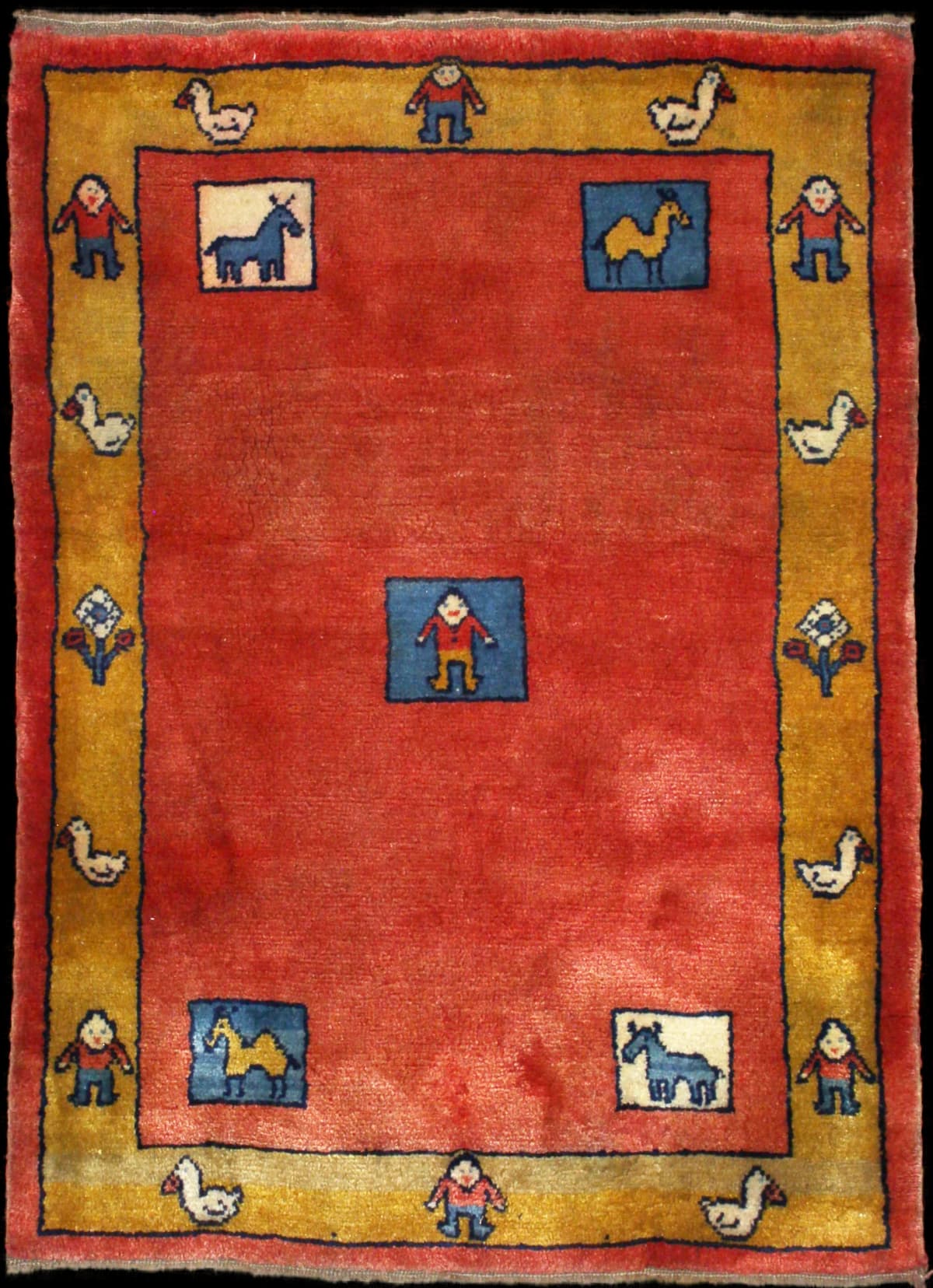
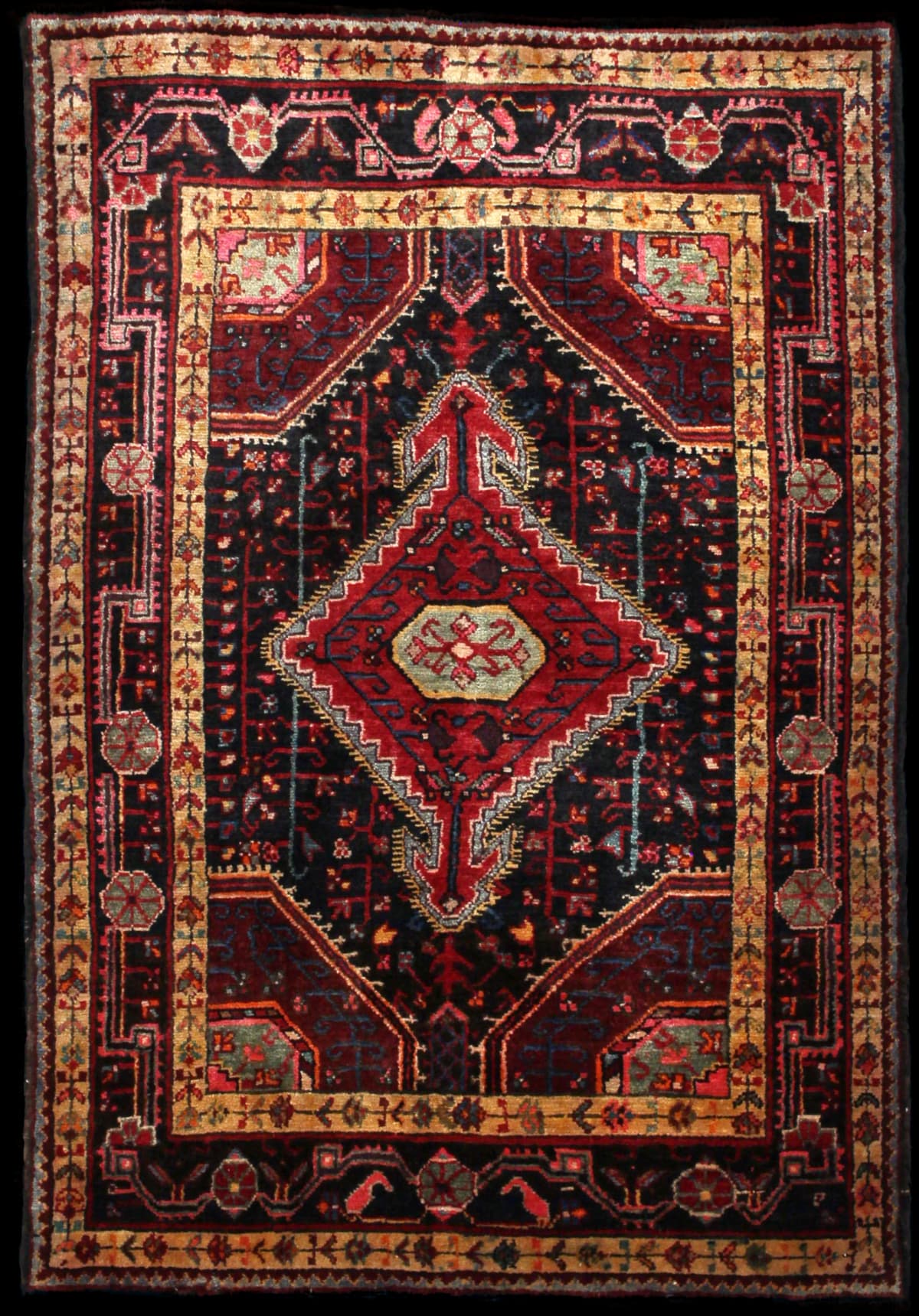
What a village rug from this district is likely to show is geometry: a medallionSee in the carpet dictionary built from straight lines and stepped edges, or an allover field of repeating motifs, botehSee in the carpet dictionary, or the herati patternSee in the carpet dictionary of a rosetteSee in the carpet dictionary framed by four curved leaves. Curvilinear floral drawing of the kind the city is famous for needs a cartoon and very high densitySee in the carpet dictionary to come out crisp, and village looms are not set up for it. Expect drawing that is clear and angular rather than fine and flowing. That expectation comes from the category, not from a documented Nasrabad pattern book, so trust the rug in front of you before the label above it.
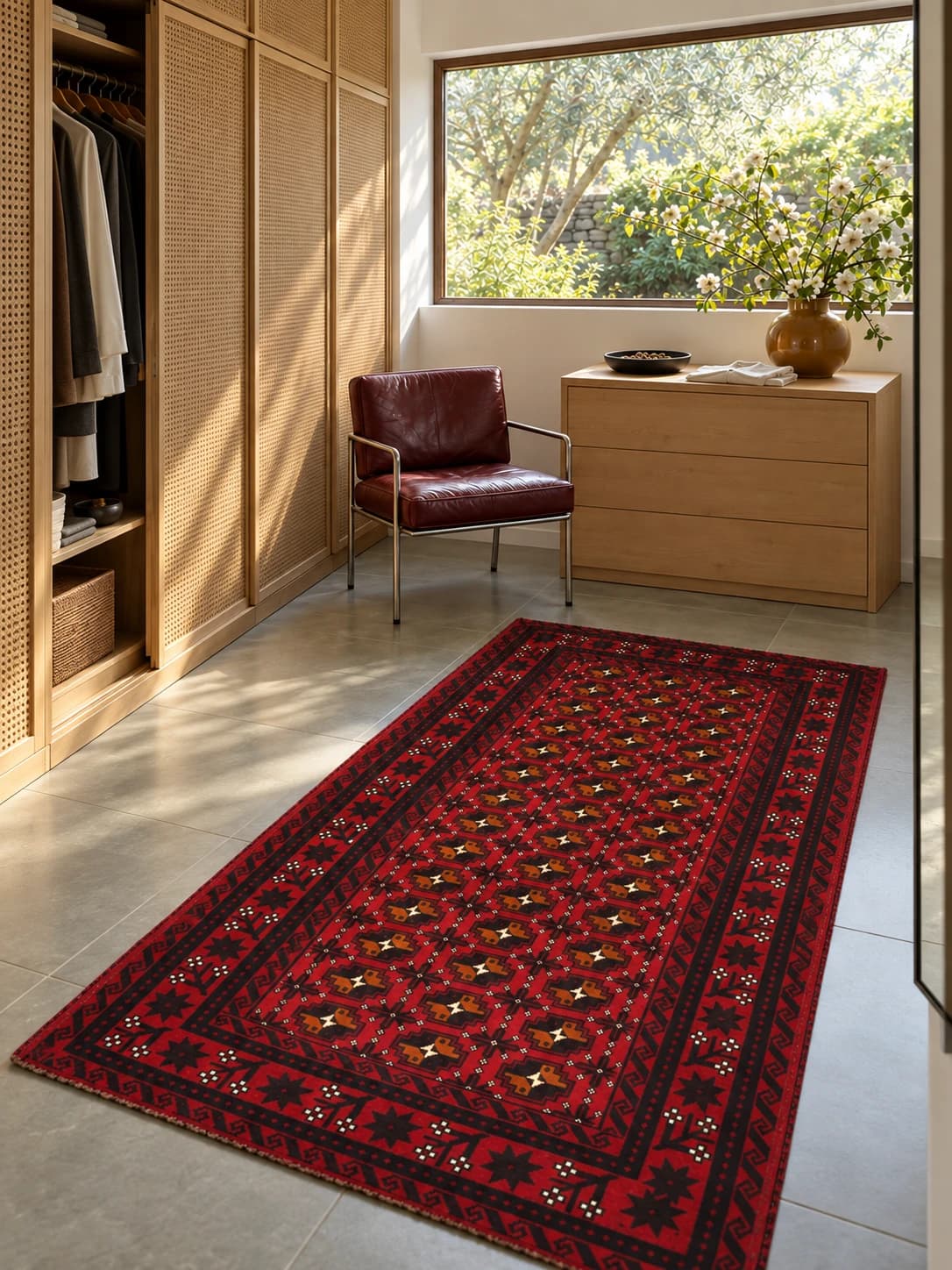
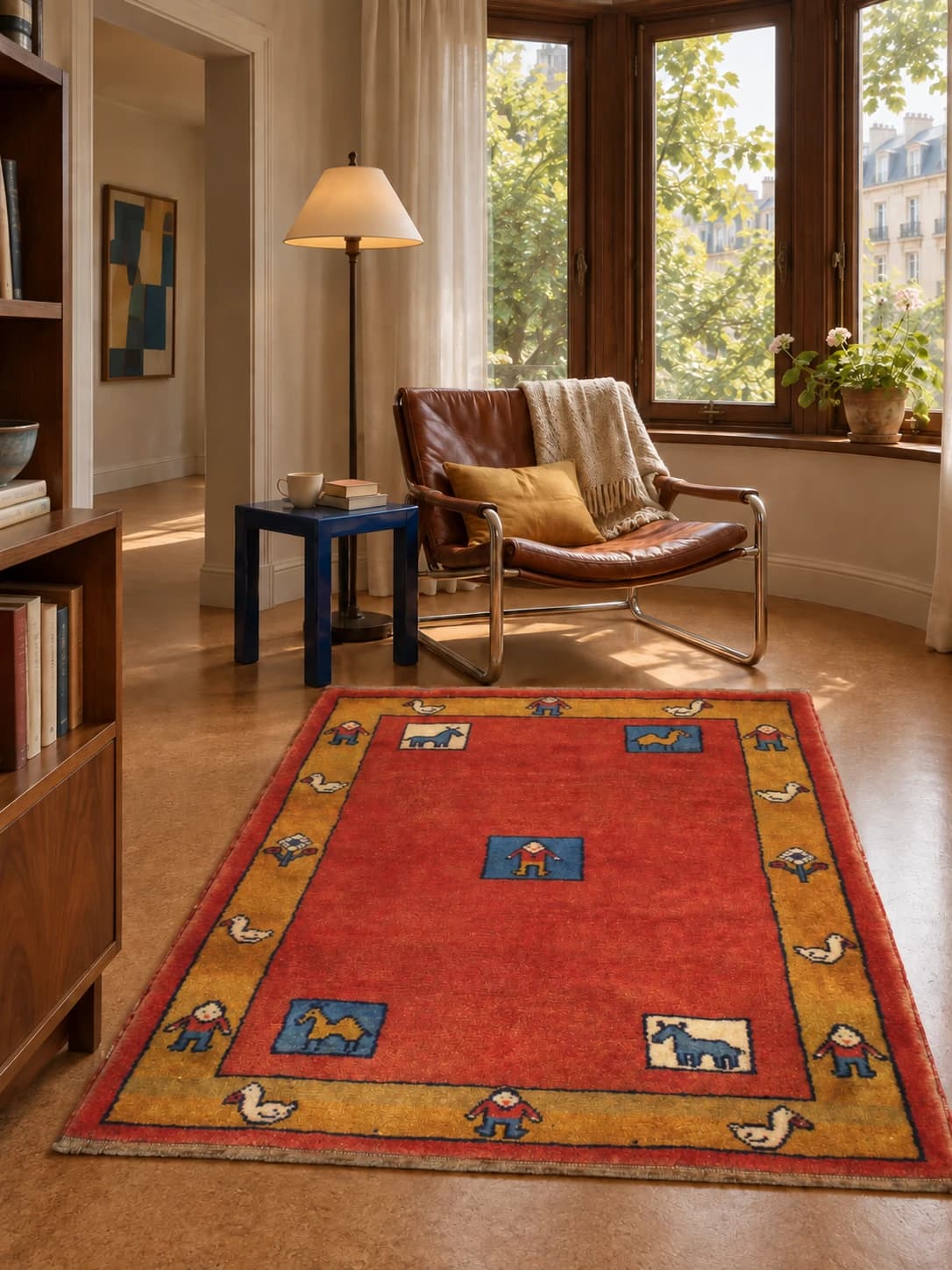
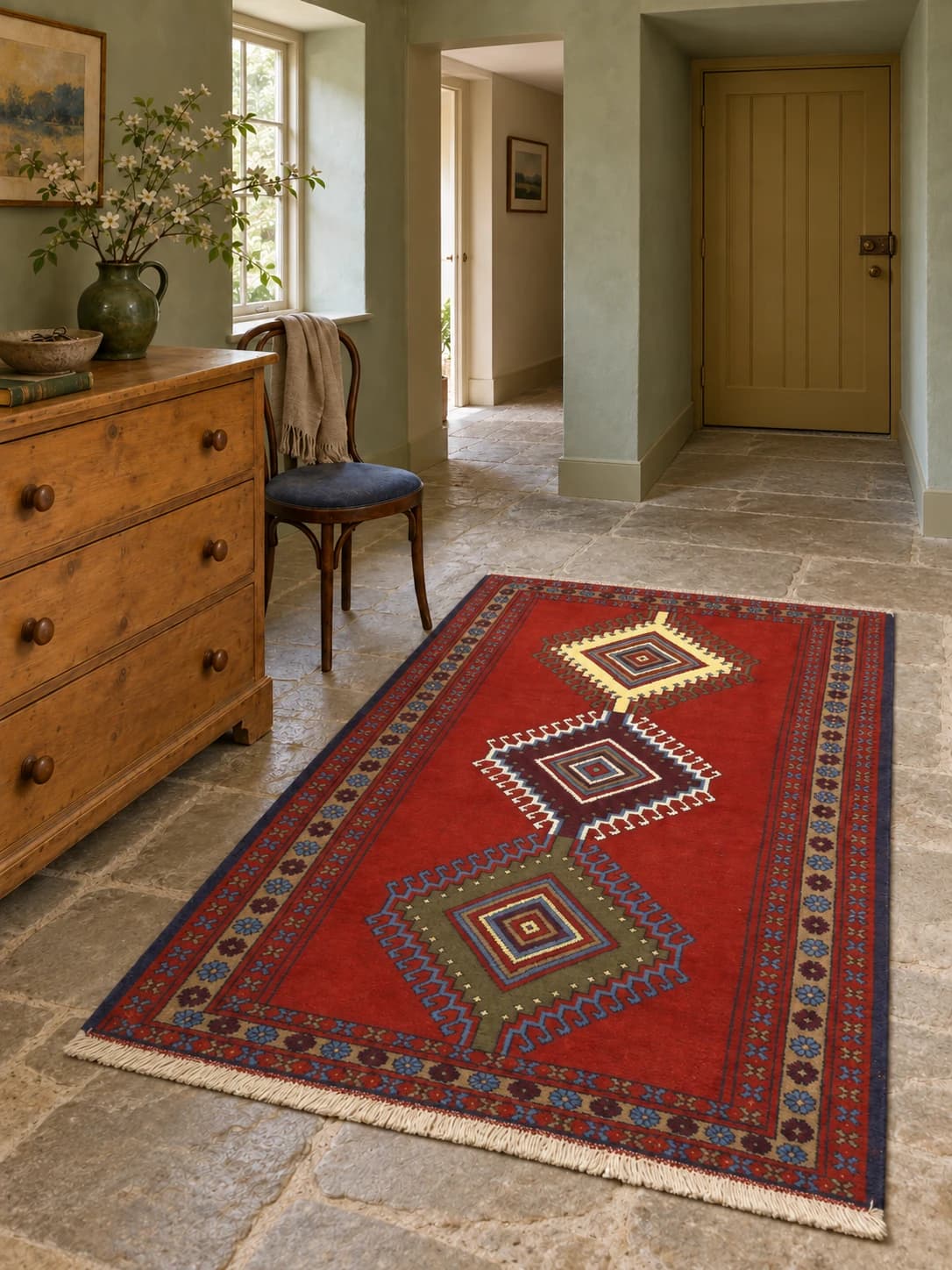
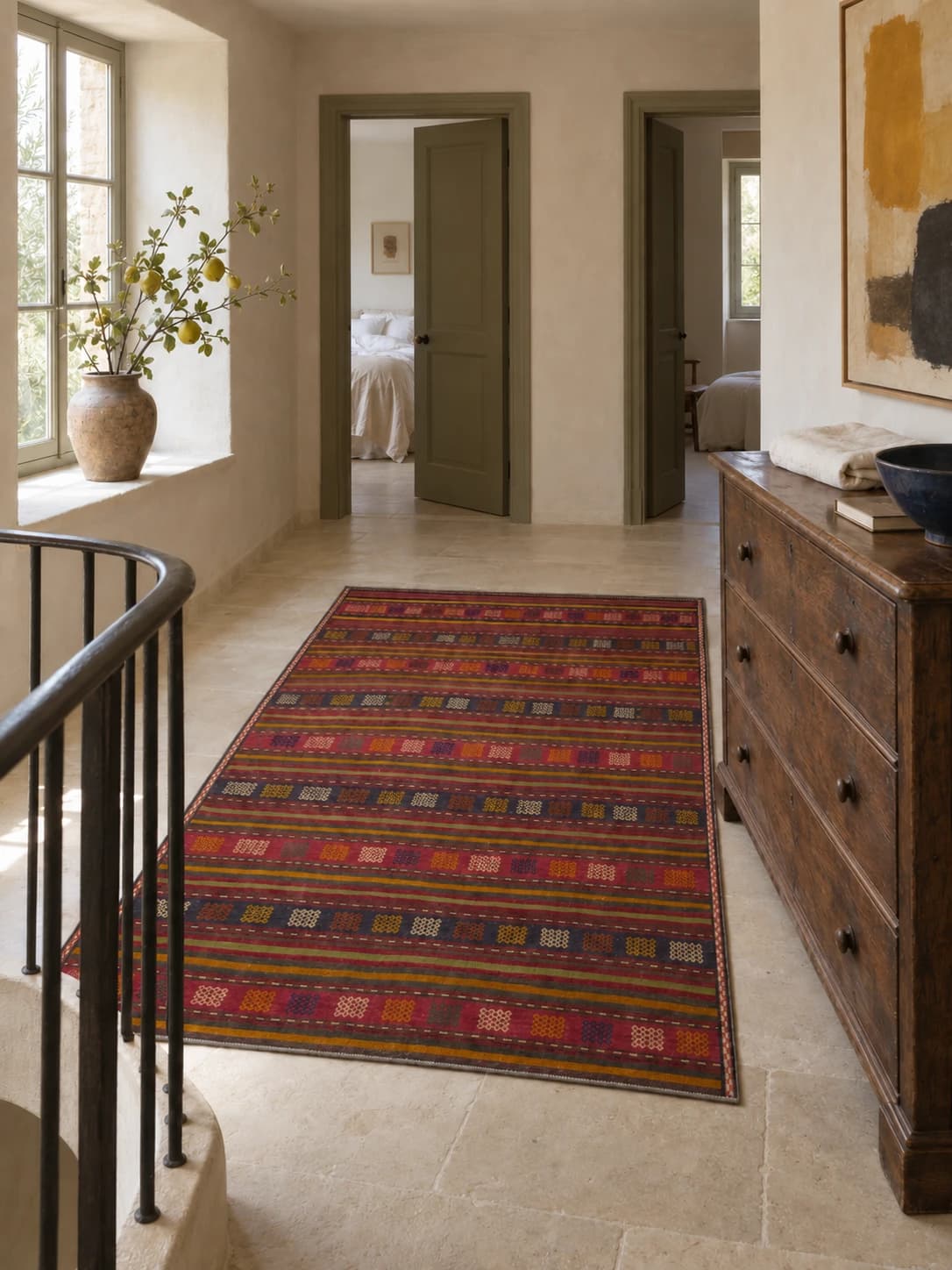
Durability is the practical consequence. A wool pile on cotton at moderate density, carrying a pattern that does not depend on fine detail, is a floor covering rather than a wall piece, and it wears in a way most people come to like: the pile compacts and gains a little sheen, small differences between dye lotsSee in the carpet dictionary surface as abrashSee in the carpet dictionary, and the geometry stays legible after decades of traffic. Knot count counts for less here than it would in a floral city weave, where blurred curves give the weaver away. These are rugs for hallways, kitchens and rooms where the furniture gets moved.
On value, honesty serves better than enthusiasm. Nasrabad is not a name that carries a premium of its own, the way Isfahan, Tabriz or Nain do, and a rug sold under it should be judged on what it is: the quality of the wool, the clarity of the drawing, the evenness of the weave, the colors and the condition. Weighed on those terms, a village rug from the Isfahan hinterland often gives more rug for the money than a comparable piece with a famous name attached, and it asks little of its owner beyond an occasional turn to even out the wear.
The Persian rug
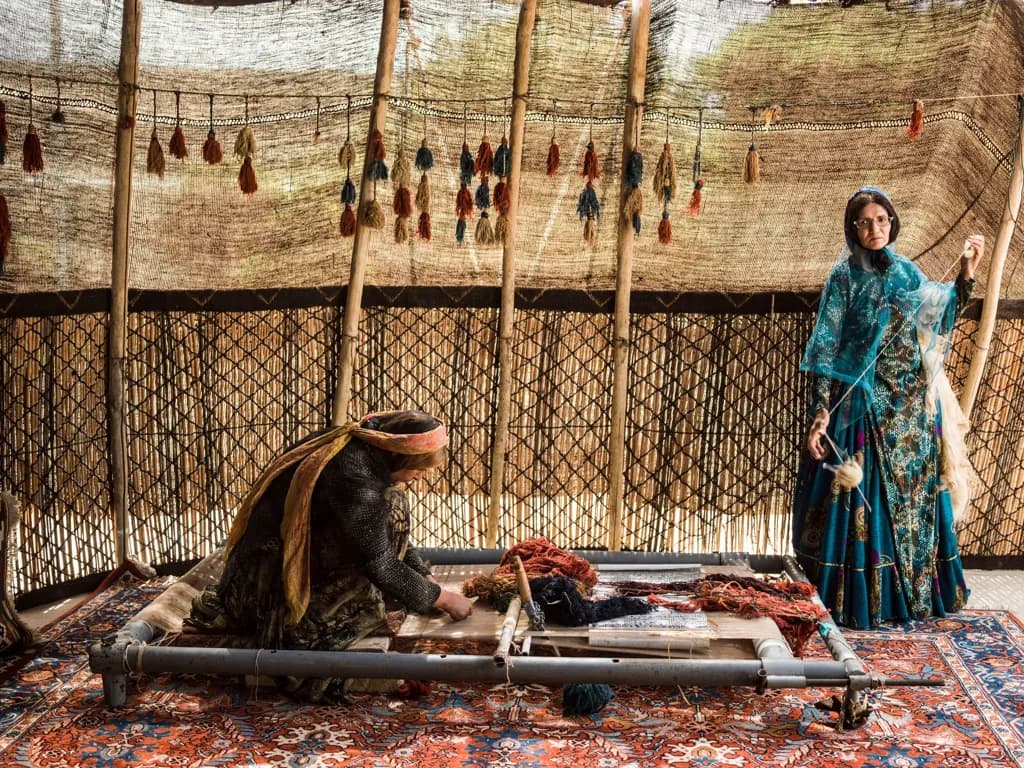
A Persian rug is an Iranian rug — a rug hand-knottedSee in the carpet dictionary in Iran — and the tradition behind it is the oldest documented anywhere. The earliest surviving carpet, the Pazyryk rugSee in the carpet dictionary, was found preserved in a frozen burial mound and dates to the fifth century BC — roughly 2,500 years ago — and it is already accomplished work, not a beginner's craft. What began as warm, hard-wearing floor coverings for tribal households grew, over those centuries, into the art form that every other rug-weaving country has borrowed from.
Two later chapters shaped what a Persian carpet looks like today. Under the Safavid dynastySee in the carpet dictionary, from 1501 to 1732, the court promoted weaving alongside painting and calligraphy, and the workshops of Tabriz, HeratSee in the carpet dictionary, Kashan and Kerman produced the masterpieces that now sit in museums. This is when the great central medallionSee in the carpet dictionary appeared, and when designs grew elaborate enough that a separate designer — often a miniature painter — drew the pattern onto a cartoon for the weaver to follow. The second chapter came in the nineteenth century, under the Qajar dynastySee in the carpet dictionary, when production reached its historical peak, exports to Europe and America boomed, and the workshop industry whose descendants still weave today took its modern shape.
The trade sorts Persian rugs into three families. City rugs — Tabriz, Kashan, Kerman, Nain, Isfahan — are woven in workshops from a drawn design, carry the highest knot densities and come in the widest range of colors, sizes and patterns. Village rugs such as HerizSee in the carpet dictionary, BakhtiariSee in the carpet dictionary and KarajaSee in the carpet dictionary sit in between, mostly geometric and largely woven from memory. Tribal rugs — Baluch, TurkomanSee in the carpet dictionary, QashqaiSee in the carpet dictionary, each named after the people who weave it — are made on small portable looms, so they run smaller, and their bold geometric drawing comes from the weaver's own head rather than from paper.
The design vocabulary draws on a deep stock of motifs: Shah AbbasiSee in the carpet dictionary palmettes, flowing arabesques, the small repeating Herati patternSee in the carpet dictionary, medallions, garden and tree-of-life compositions. These combine with regional habits into styles a practiced eye can place at a glance, from the bold geometric medallions of Heriz to the fine curvilinear florals of Isfahan.
The classic palette is built on natural dyes: madderSee in the carpet dictionary reds, indigo blues, saffron yellows and the soft whites of undyed woolSee in the carpet dictionary, settled into combinations refined over centuries. Natural dyes age gracefully, mellowing into the patina that older rugs are prized for, and slight shifts of tone between dye batchesSee in the carpet dictionary — the effect called abrashSee in the carpet dictionary — are a mark of small-batch natural dyeing, not a flaw.
The pileSee in the carpet dictionary is almost always woolSee in the carpet dictionary, and in a Persian wool rug the wool itself decides much of the quality. The best fleece comes from high-altitude flocks, where it grows thicker and richer in natural oils; spring-sheared wool beats the autumn clip, and hand-spun yarnSee in the carpet dictionary gives a finer, softer thread than machine spinning. Fine pieces add silk highlights to a wool pile, and at the very top sits the Persian silk rug, woven in pure silk. Foundations are usually cotton in city weaving, wool in tribal and older pieces, silk at the very top of the range.
Every knot is tied by hand, one at a time, in one of two forms: the asymmetric Persian knotSee in the carpet dictionary, usual in central and eastern Iran, or the symmetric Turkish knotSee in the carpet dictionary, common in the north-west ever since Seljuk weavers introduced it in the eleventh and twelfth centuries. A large rug holds in the region of two million knots and can occupy a weaver for about a year.
Knot densitySee in the carpet dictionary is the figure newcomers fixate on, and the finest silk-foundation pieces do reach as much as 1,000 knots per square inch. But densitySee in the carpet dictionary only matters as far as the drawing demands it: a curvilinear Isfahan needs a fine weave to stay sharp, while a geometric Heriz is famously durable at a modest count. Material, symmetry, color harmony and condition say more about quality than any single number.
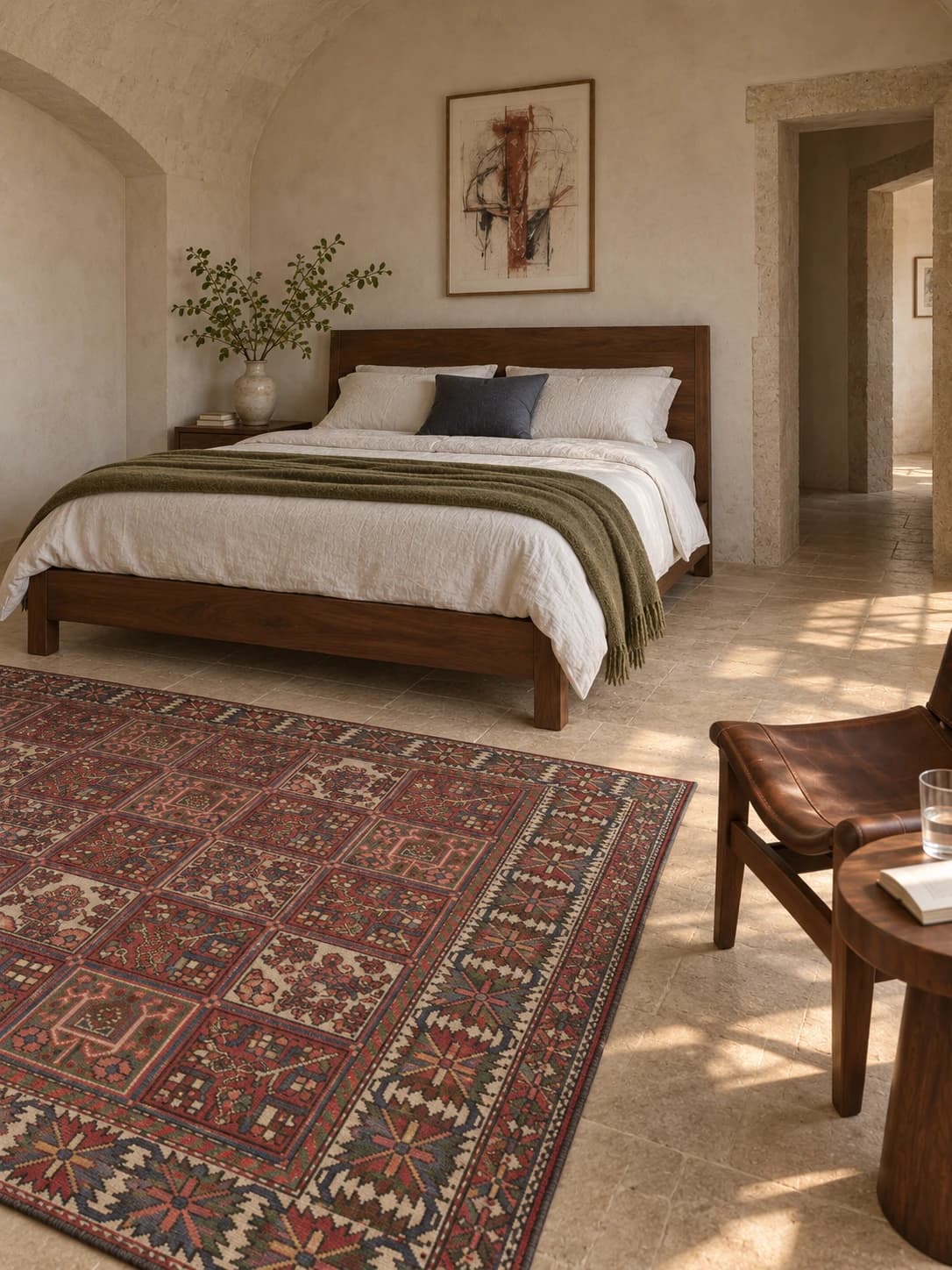
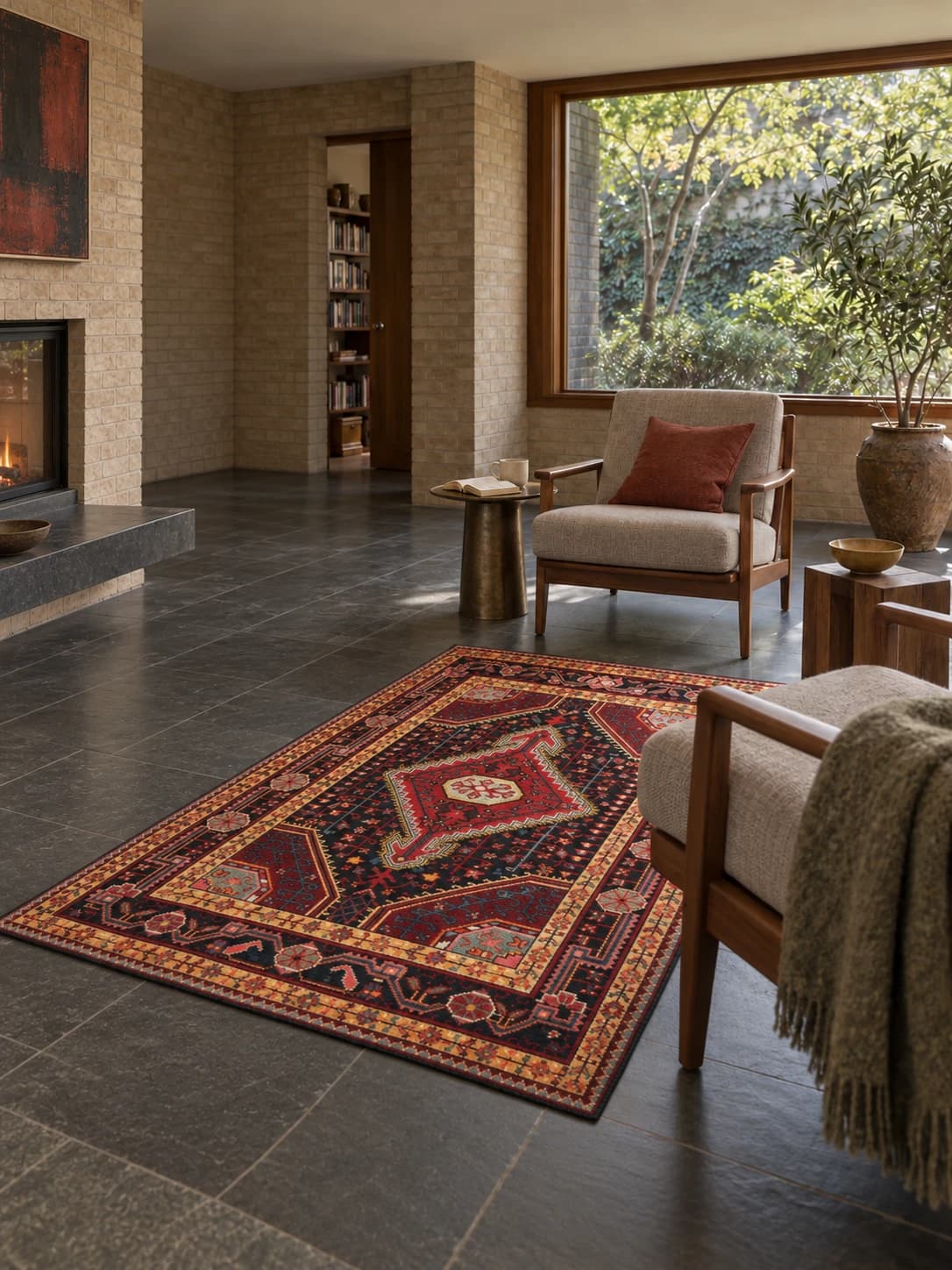
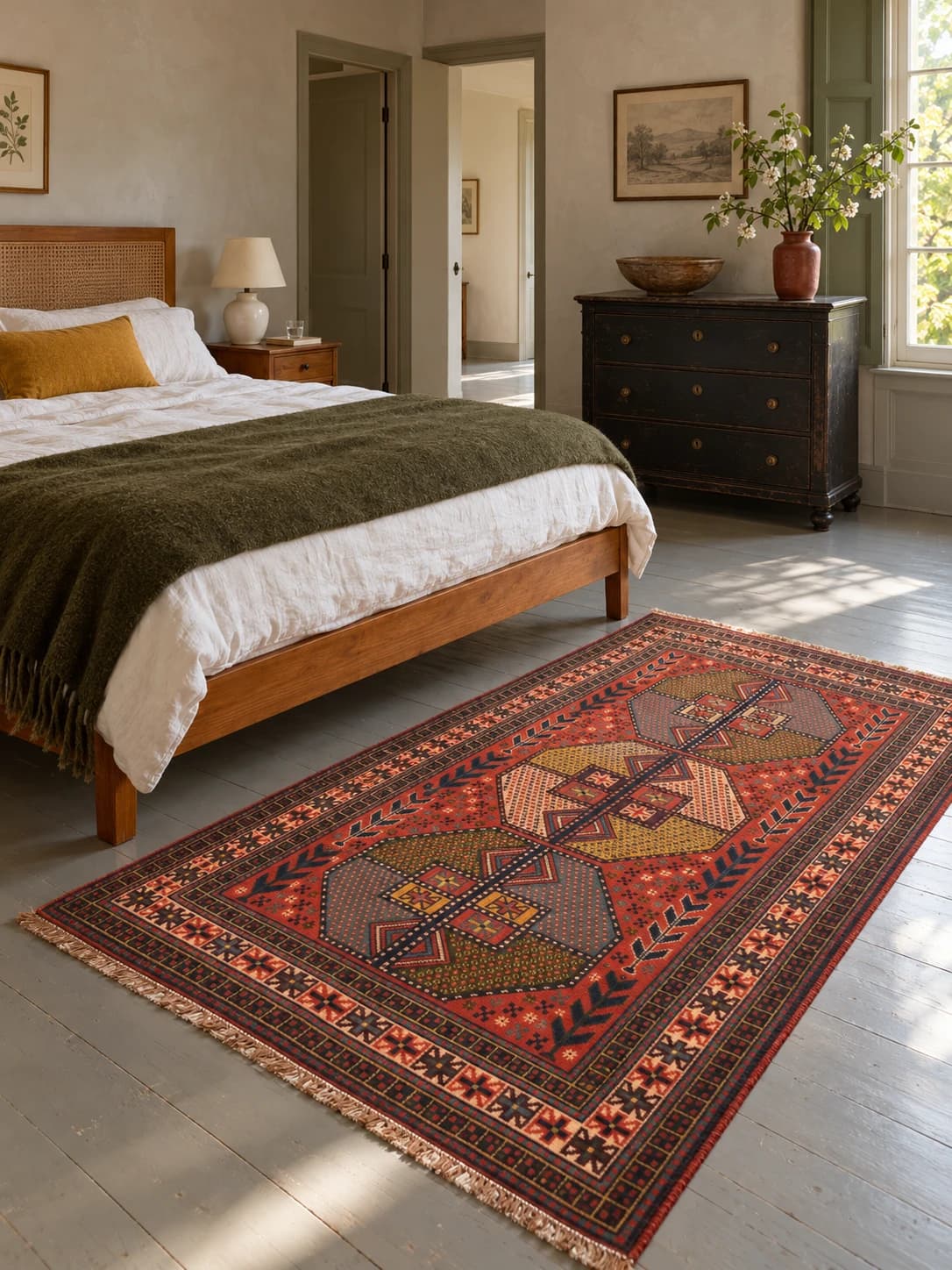
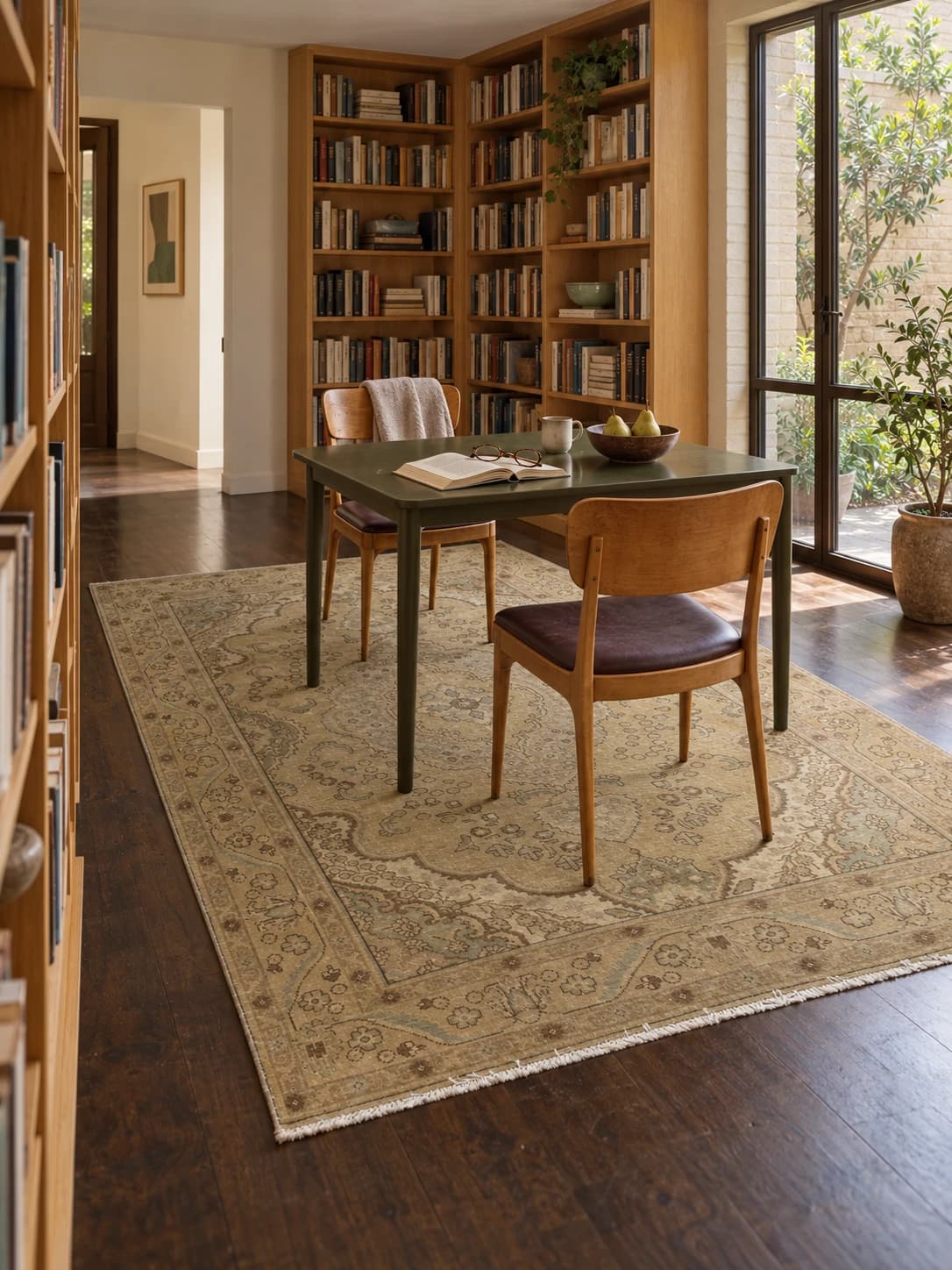
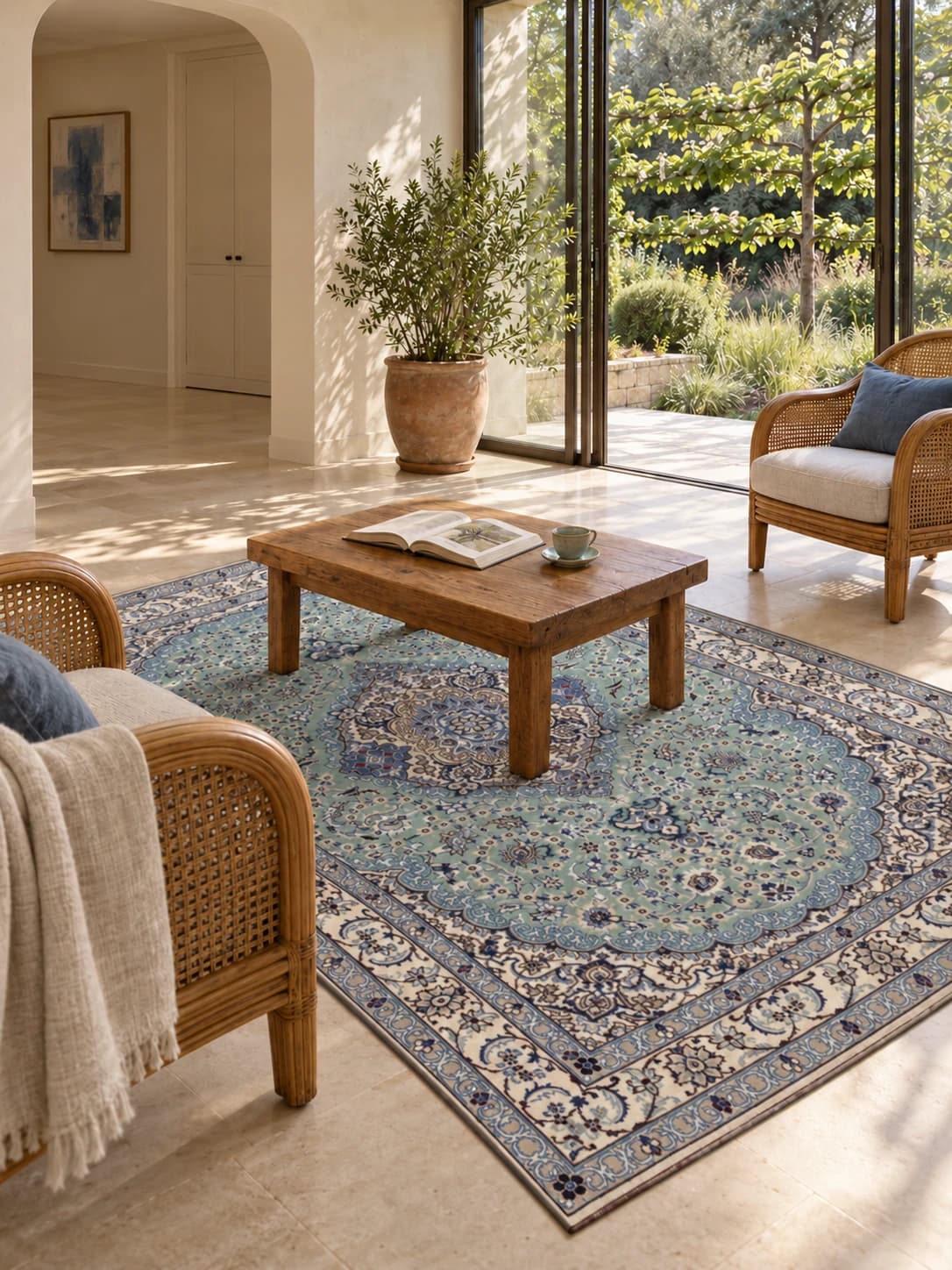
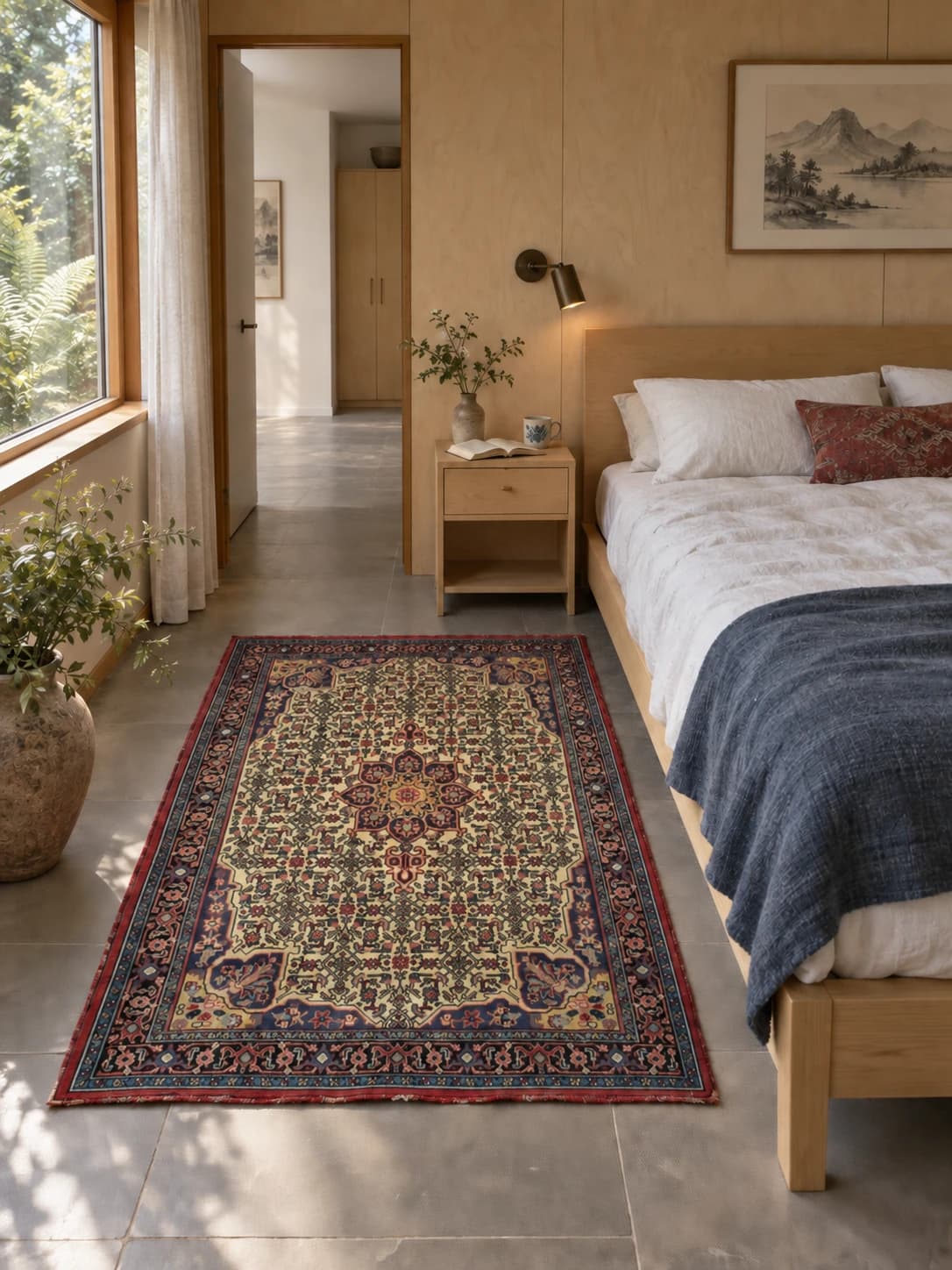
Persian carpets settle into modern rooms as naturally as classical ones, as a focal point in a living room, a foundation under a dining table or a quieter accent in a bedroom. Care is undemanding: gentle vacuuming without a rotating brush, an occasional turn for even wear, and a professional wash about every five years — sooner in a hallway or entrance, less often in a quiet room.
A hand-knotted Persian rug tends to outlast its owners. Pieces a century old regularly survive in fine condition, their colors settled and their pile supple, often looking better than when they left the loomSee in the carpet dictionary. A well-chosen, well-kept rug holds its worth and passes down as a family heirloom rather than being replaced — which is precisely what the knots, the wool and the dyes were always for.
Questions about this carpet?
Our family has traded carpets for two generations. Ask us anything — photos, video calls, advice on sizes.
Message us
Keep exploring
Guides from our family workshop: how to clean, place and care for hand-knotted rugs.