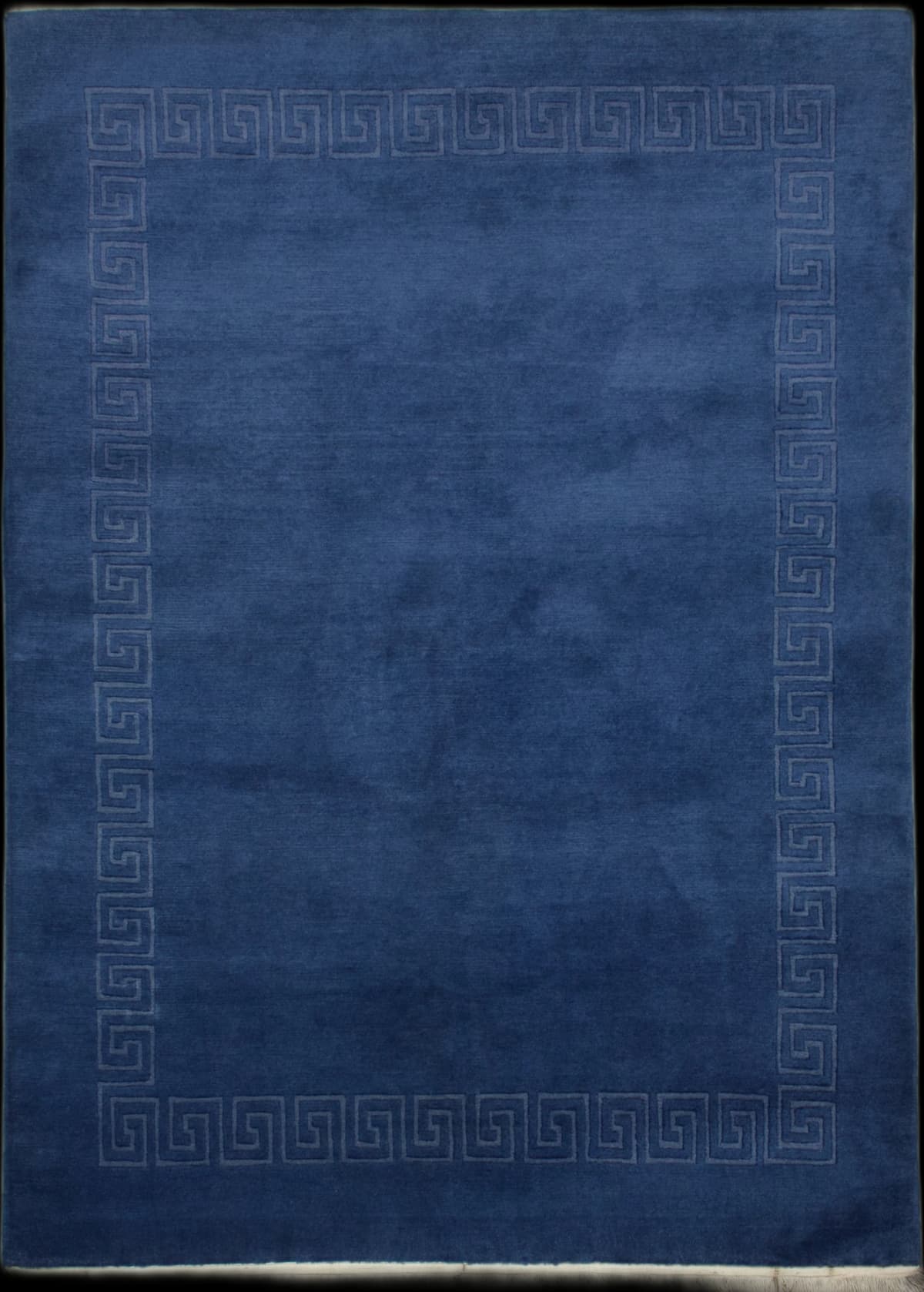
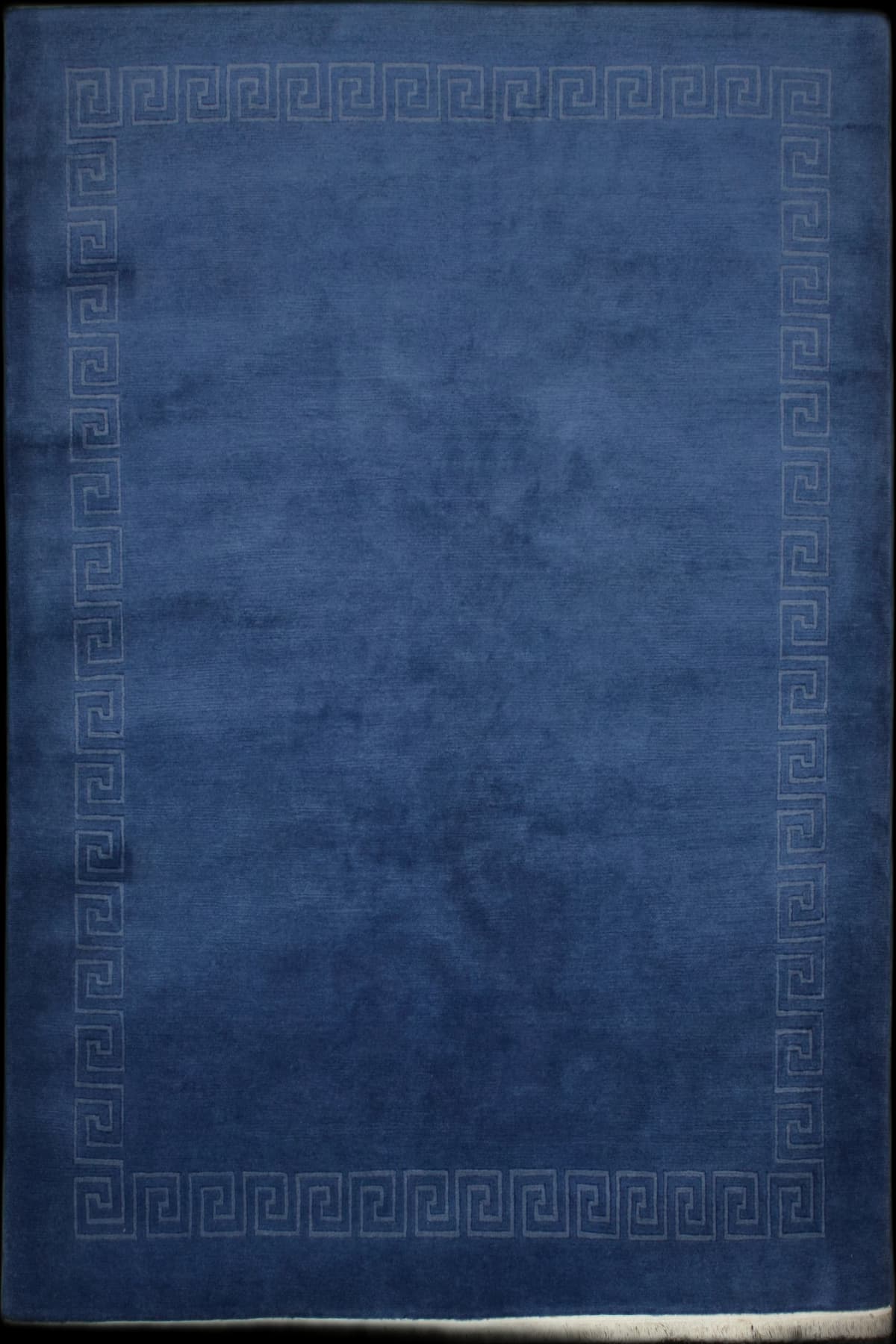
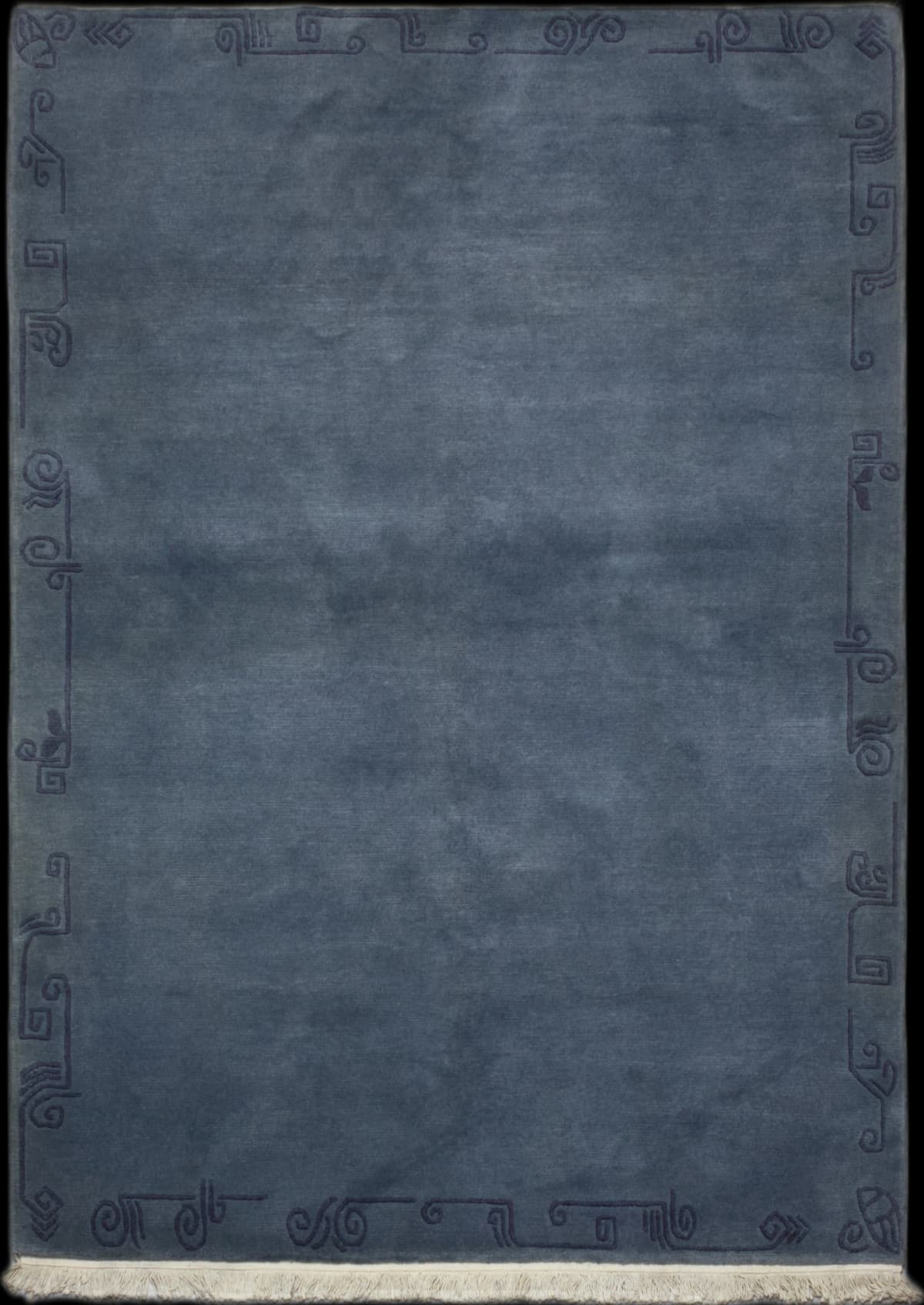
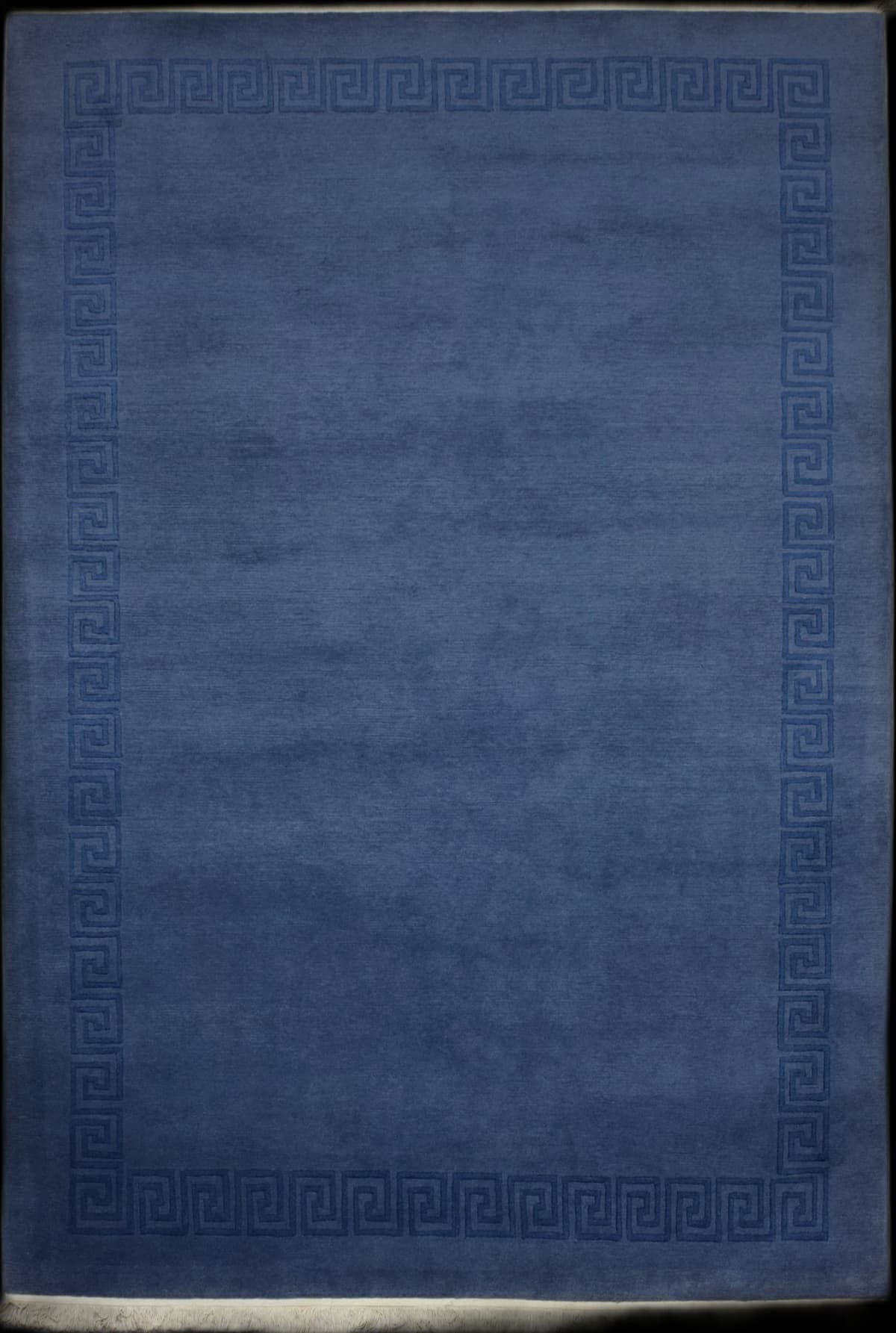
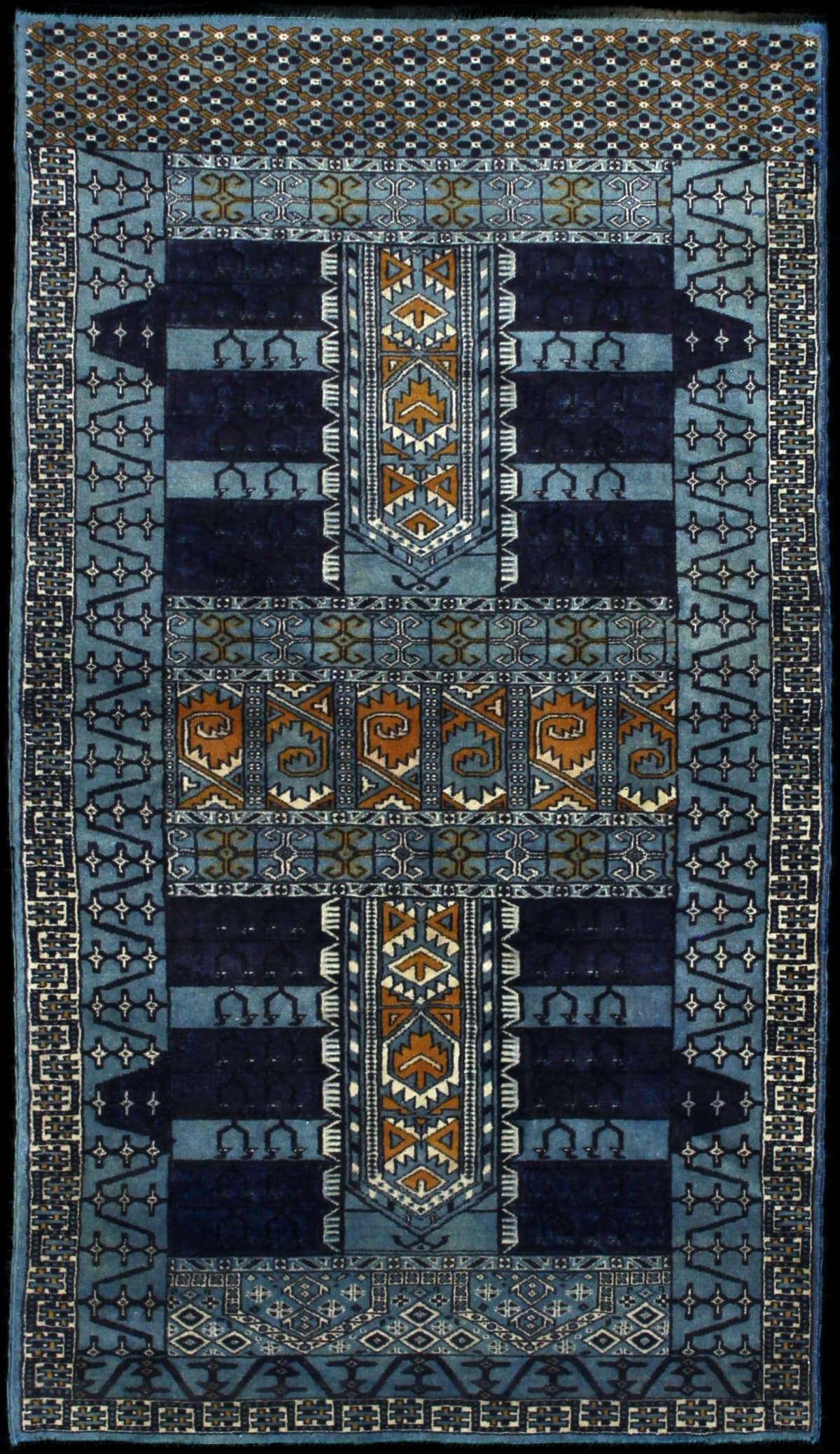
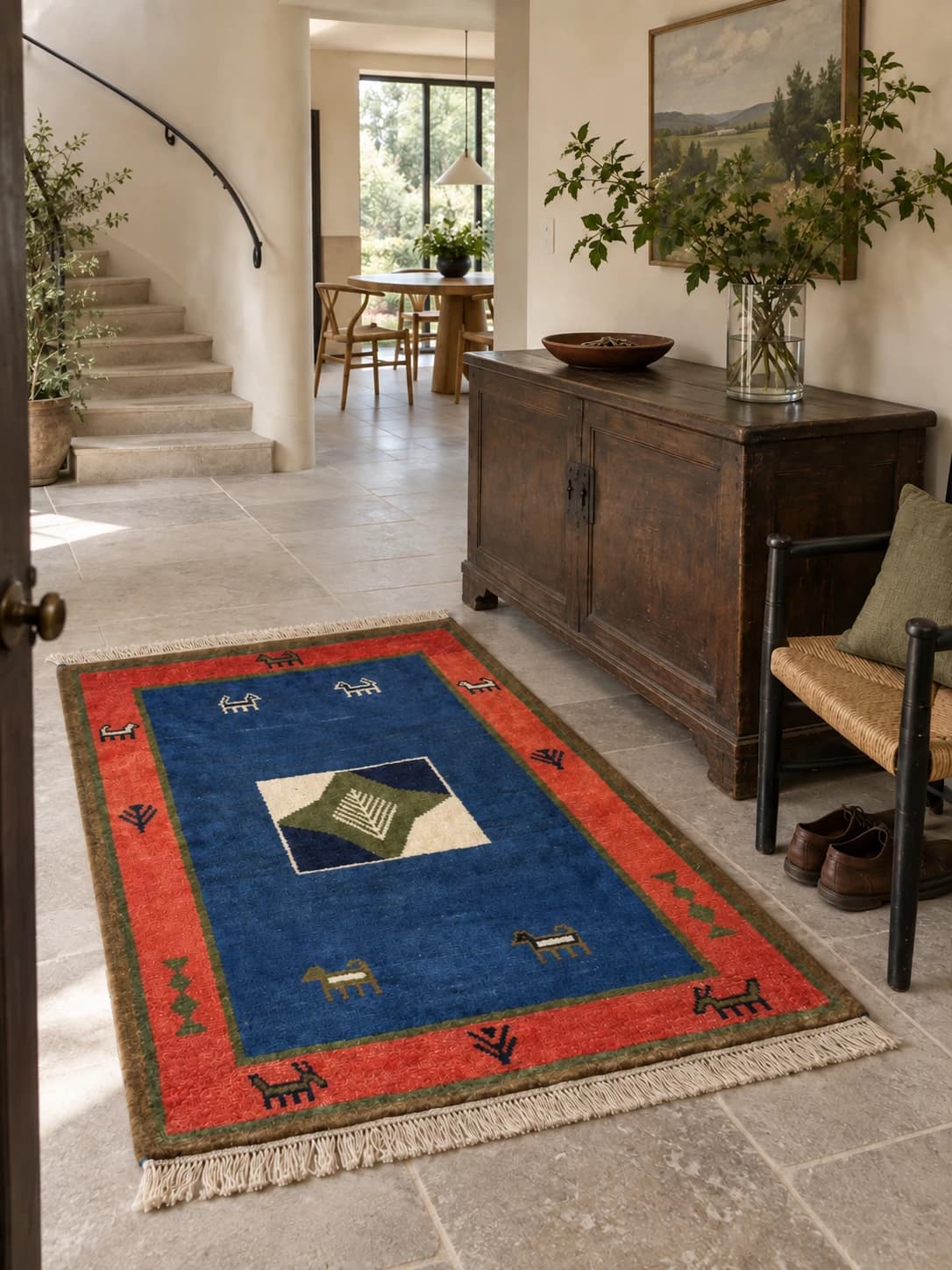
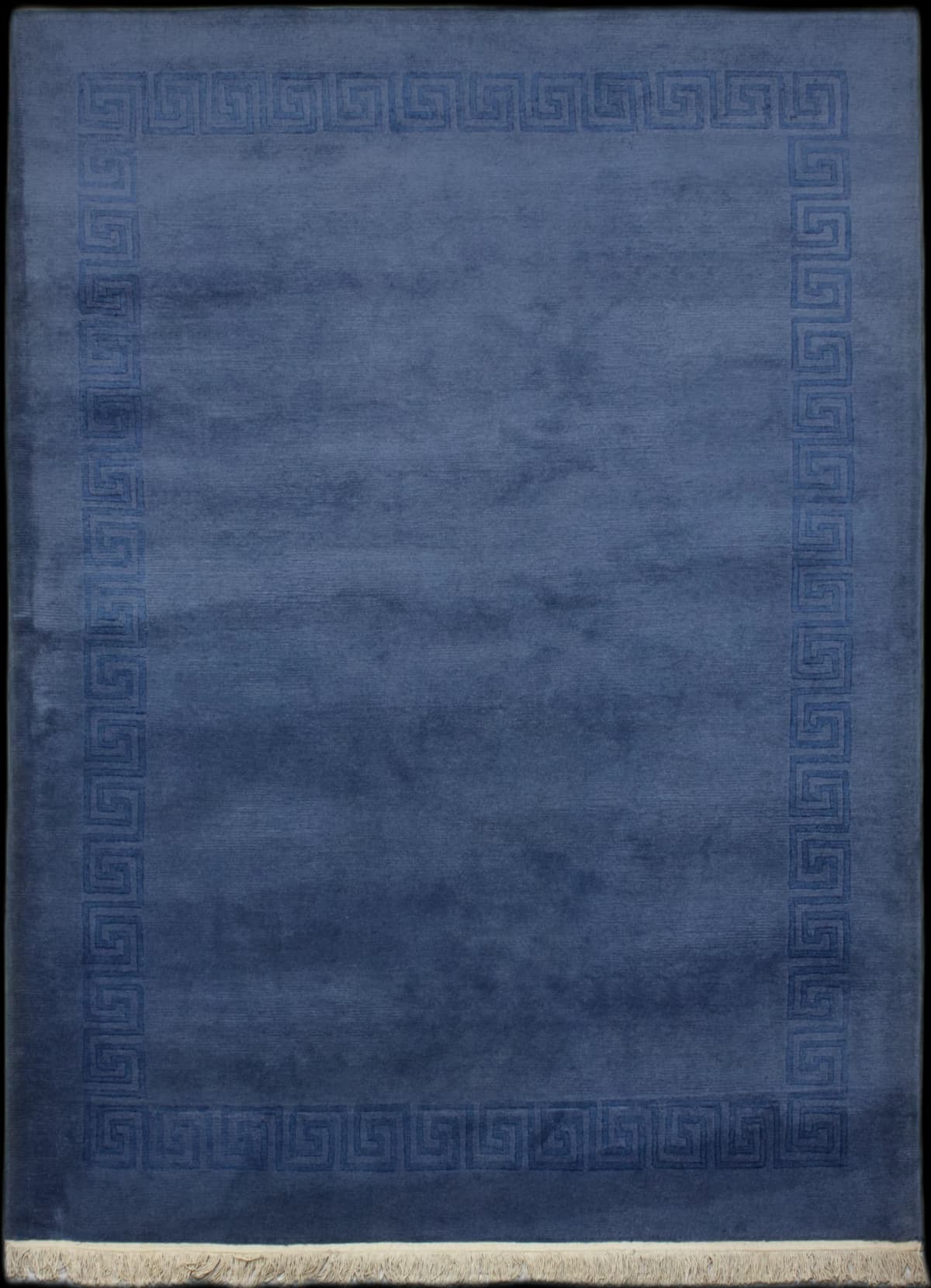
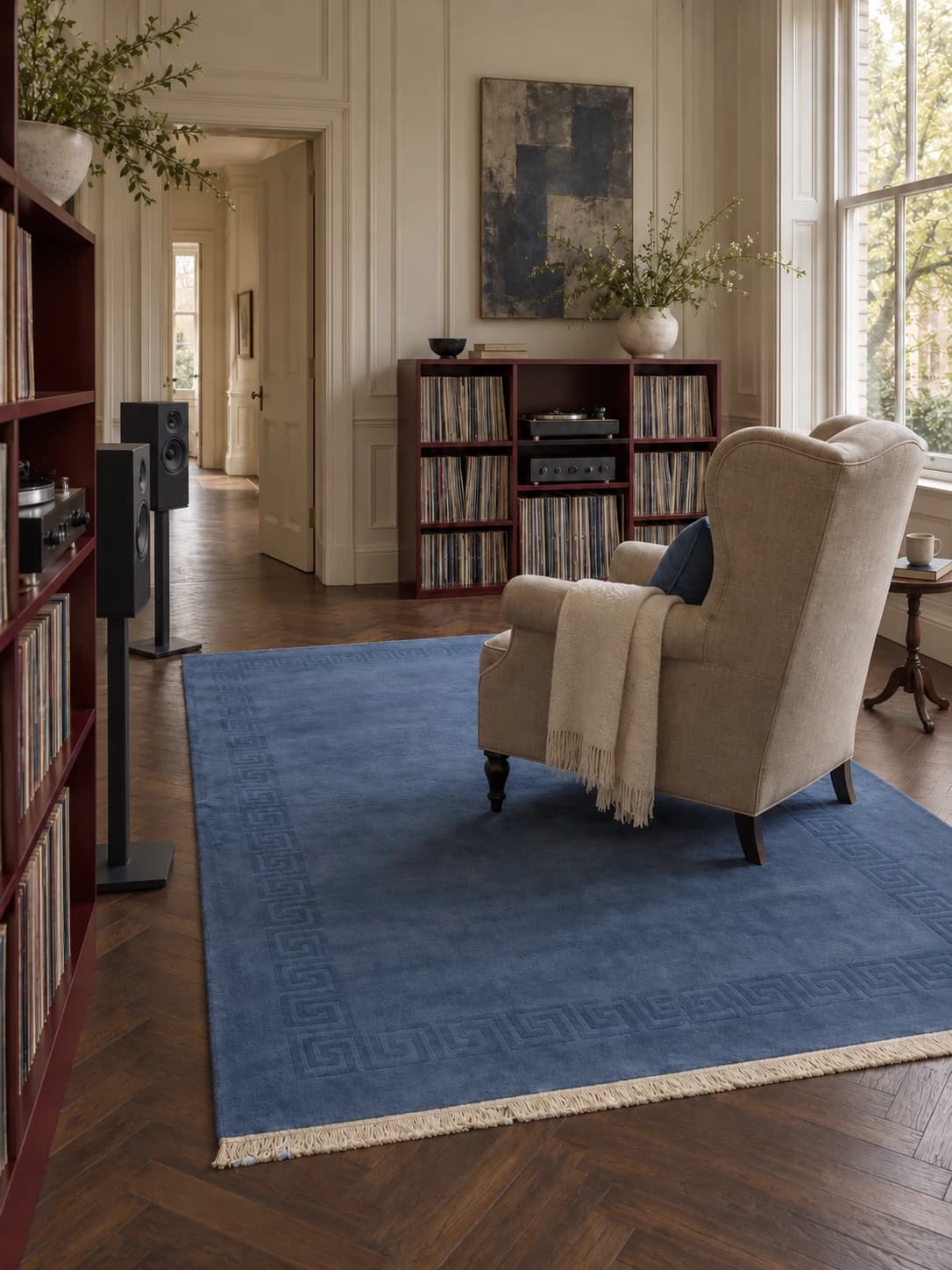
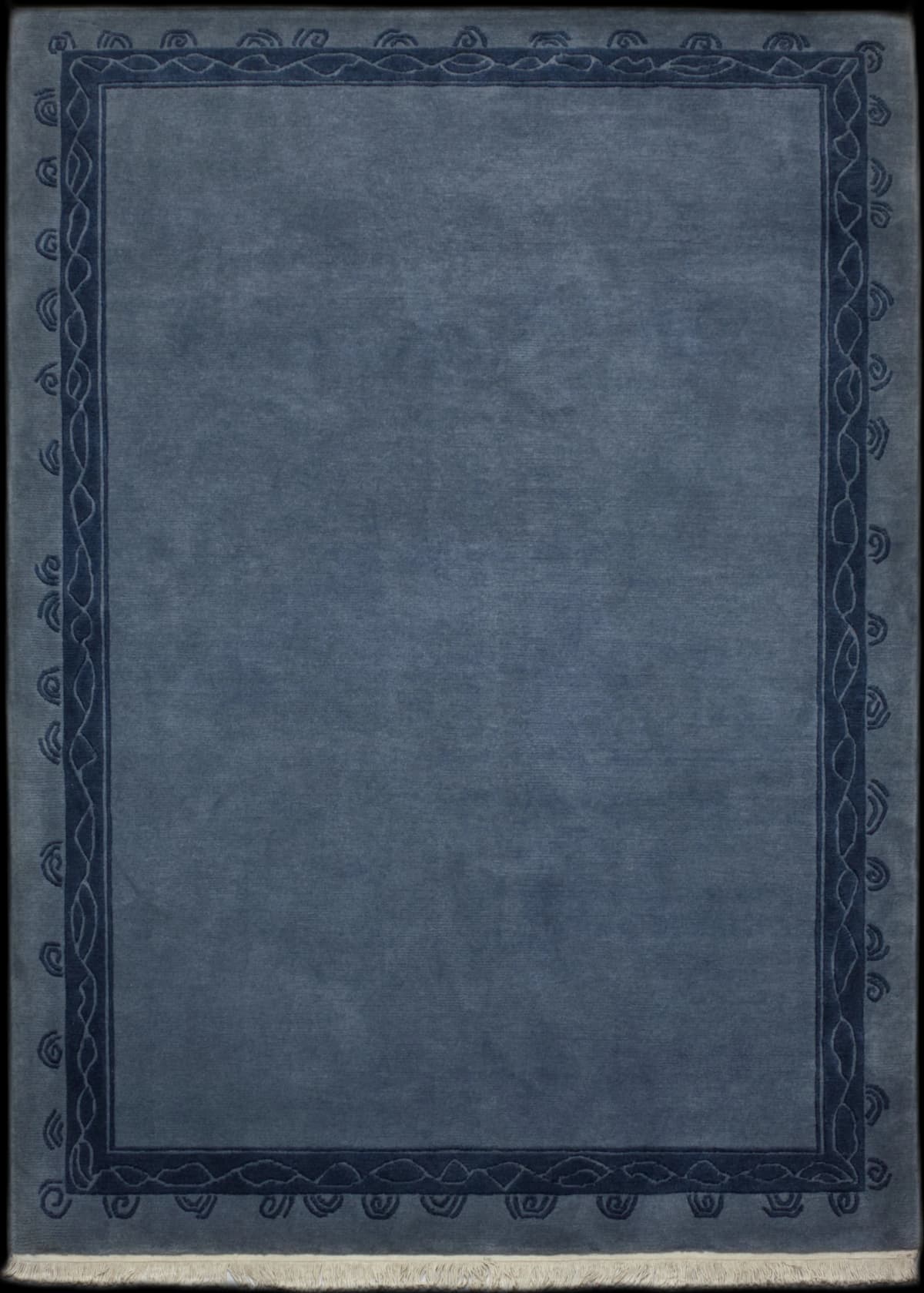
From the region ofنائینNain
What makes this piece special
Hover over or tap a feature to read moreTwo knots per tuft — a denser, more durable pile that holds its pattern for decades.
Up close
Origin: Nain
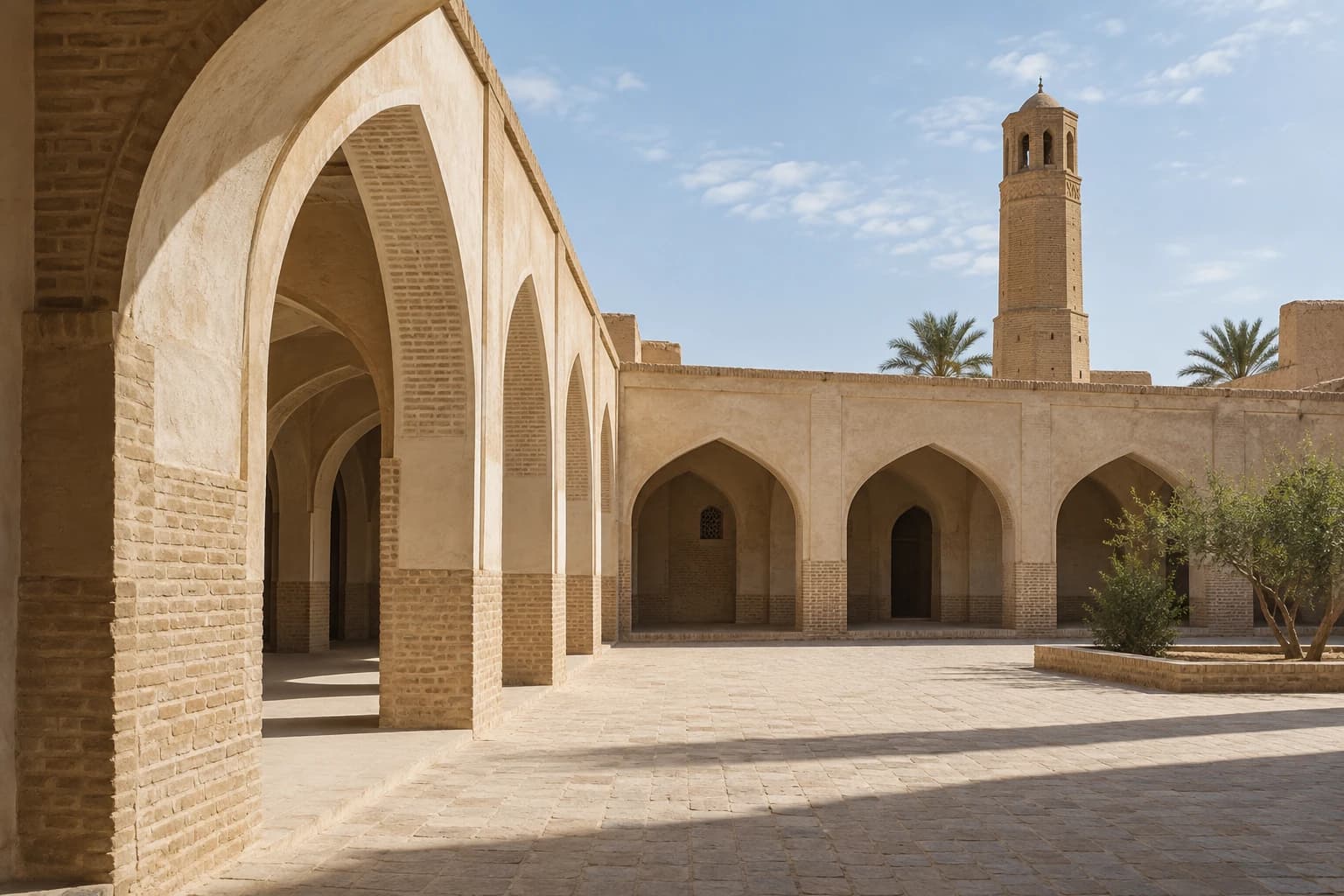
Nain, or Na'in, is an oasis town on the western edge of the Dasht-e Kavir, in the eastern part of Isfahan Province in central Iran. It is the seat of its own county and lies roughly 140 kilometres east of Isfahan city, on the old caravan road that runs from there towards Yazd and on into Khorasan. The settlement itself is very old: the mud-brick citadel of Narin Qaleh still stands above it, and its Friday mosque is counted among the oldest surviving in Iran. As a carpet town, though, Nain is one of the youngest names in the whole Persian repertoire.
Weaving here began with cloth rather than carpets. Until the early twentieth century the town was known for fine woolSee in the carpet dictionary fabric and for the heavy woollen cloaks worn across Iran, and its looms served that trade. When demand for such clothing fell away, the workshops turned to knotted rugs. Much of what they needed came from Isfahan: the designs, the taste for light grounds, the ambition to weave very finely. Within a generation the town had turned those borrowed ideas into something of its own, and the two weaves are told apart readily enough today, by palette and by the cotton foundation Nain keeps where Isfahan often uses silk.
One family did more than any other to bring that about. Fatollah HabibianSee in the carpet dictionary learned the craft in his father's workshop at a time when the styles it made were losing their market; when the family sold off what remained of its stock, he and his brother used the proceeds to set up on their own. The workshop they founded shaped what is now understood as the Nain rugSee in the carpet dictionary and carried the town's name abroad, and it ranks with SeirafianSee in the carpet dictionary of Isfahan and AmoghliSee in the carpet dictionary of Mashhad among the great Persian workshop houses. It has stayed in family hands down to the founder's grandsons. Most Nain rugs carry no signature at all; the Habibian name, woven into a cartoucheSee in the carpet dictionary or a border stripe, is the conspicuous exception.
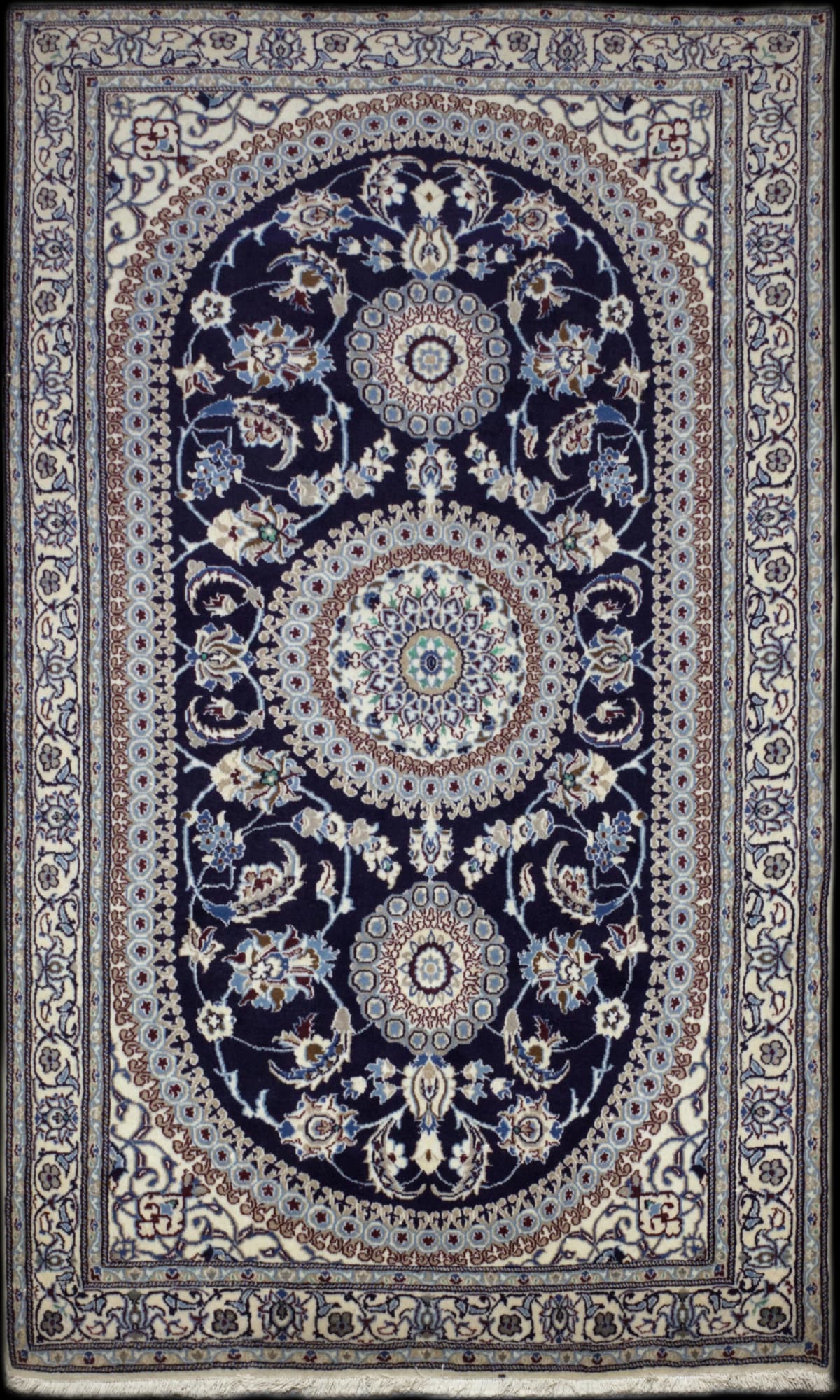
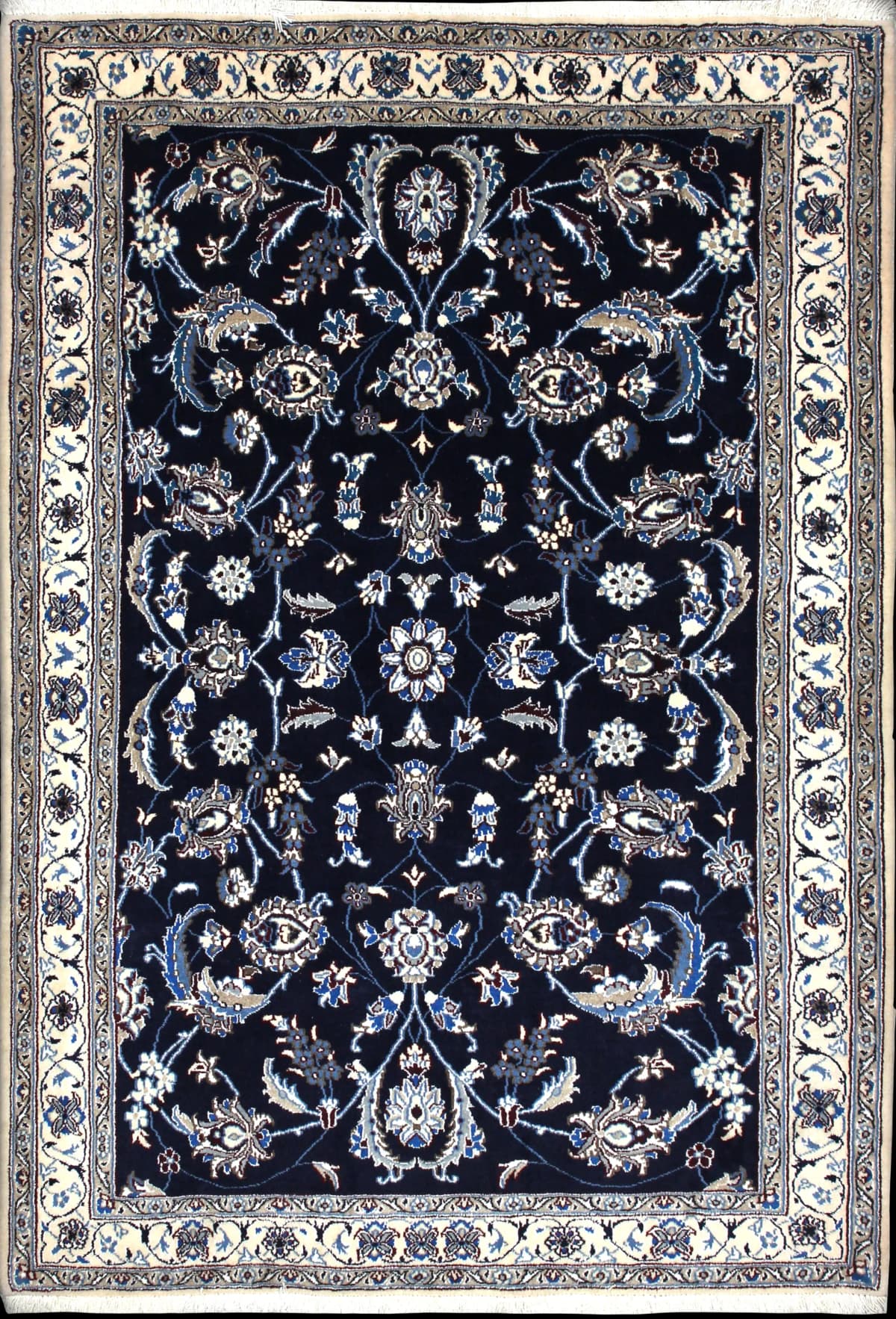
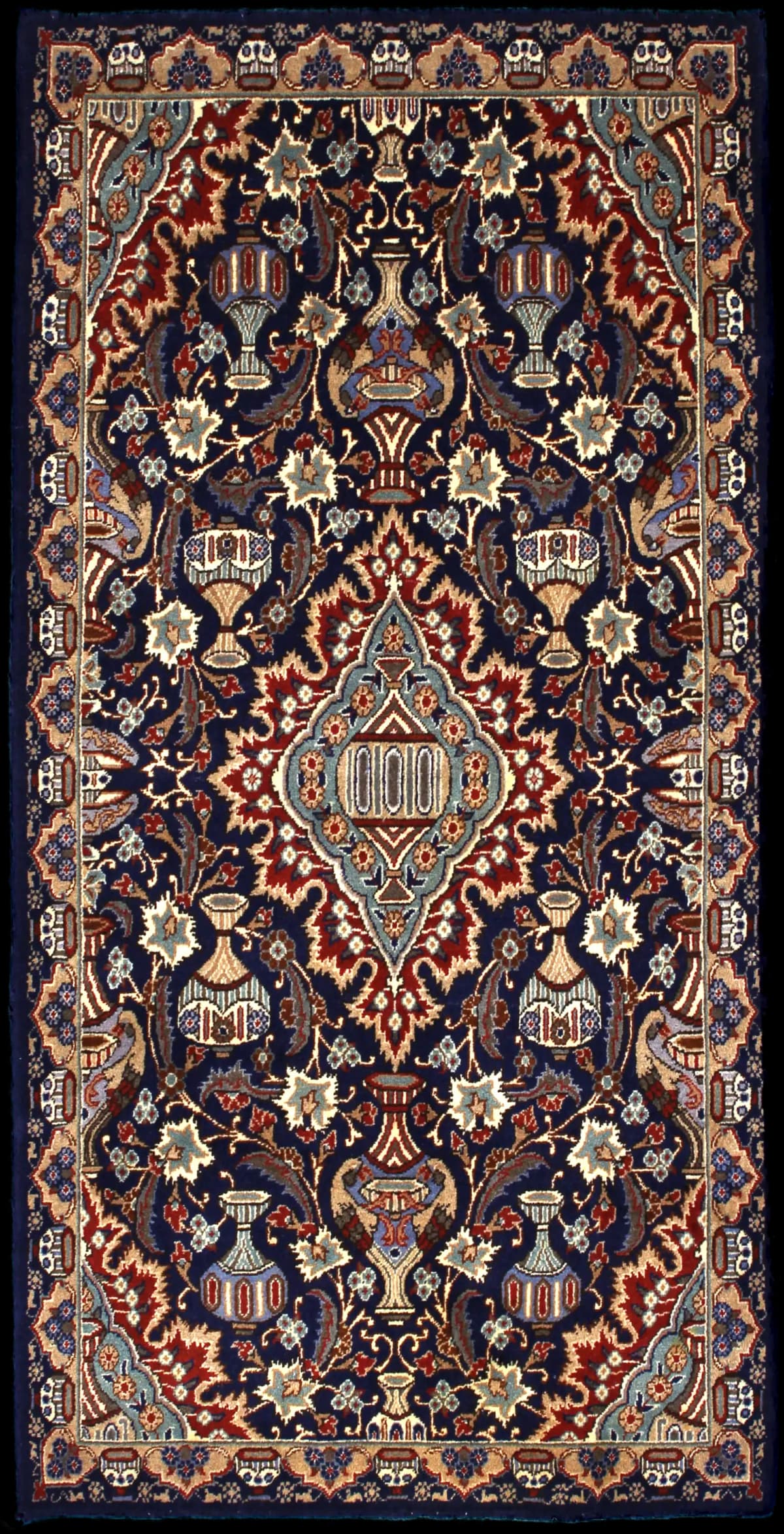
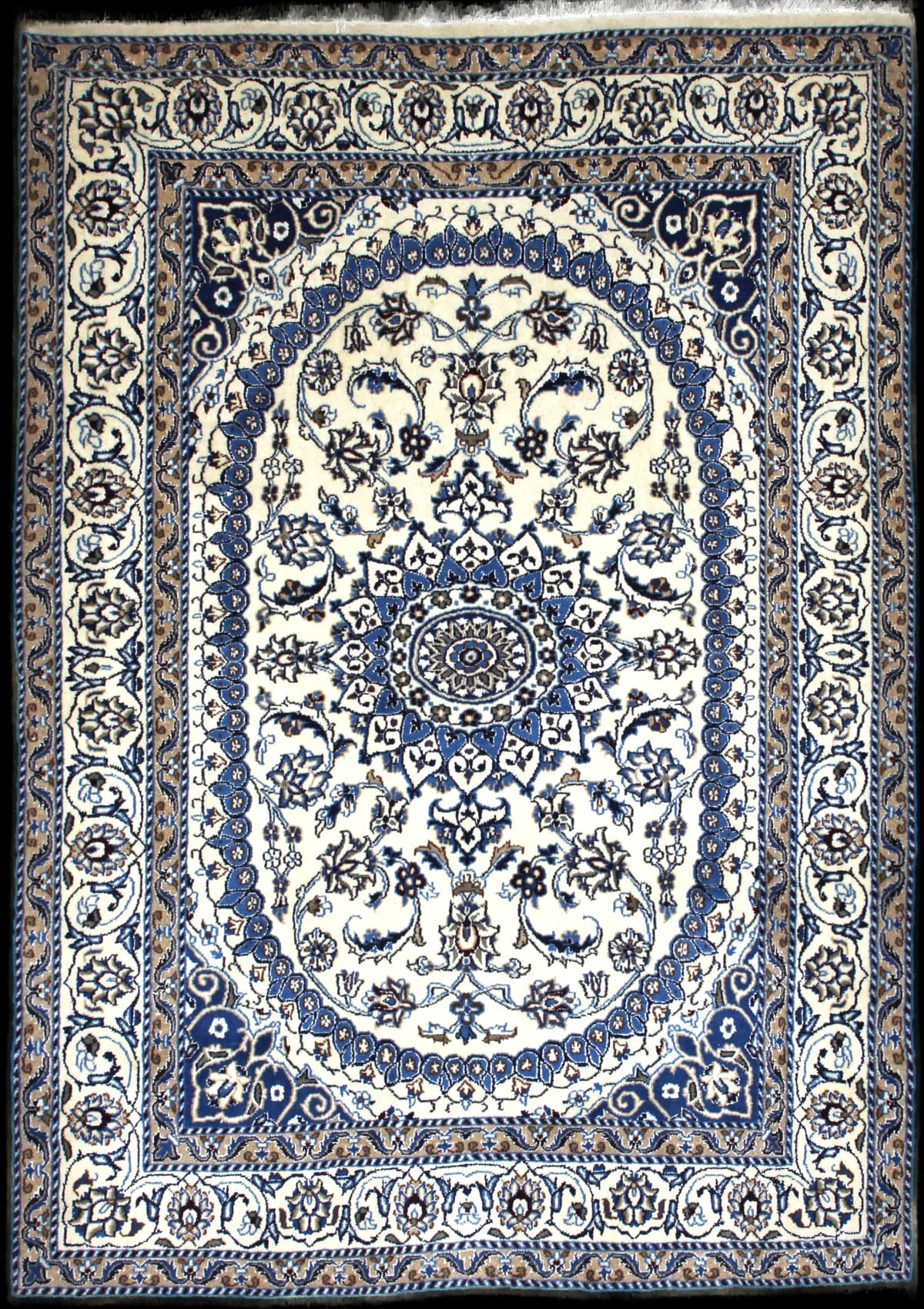
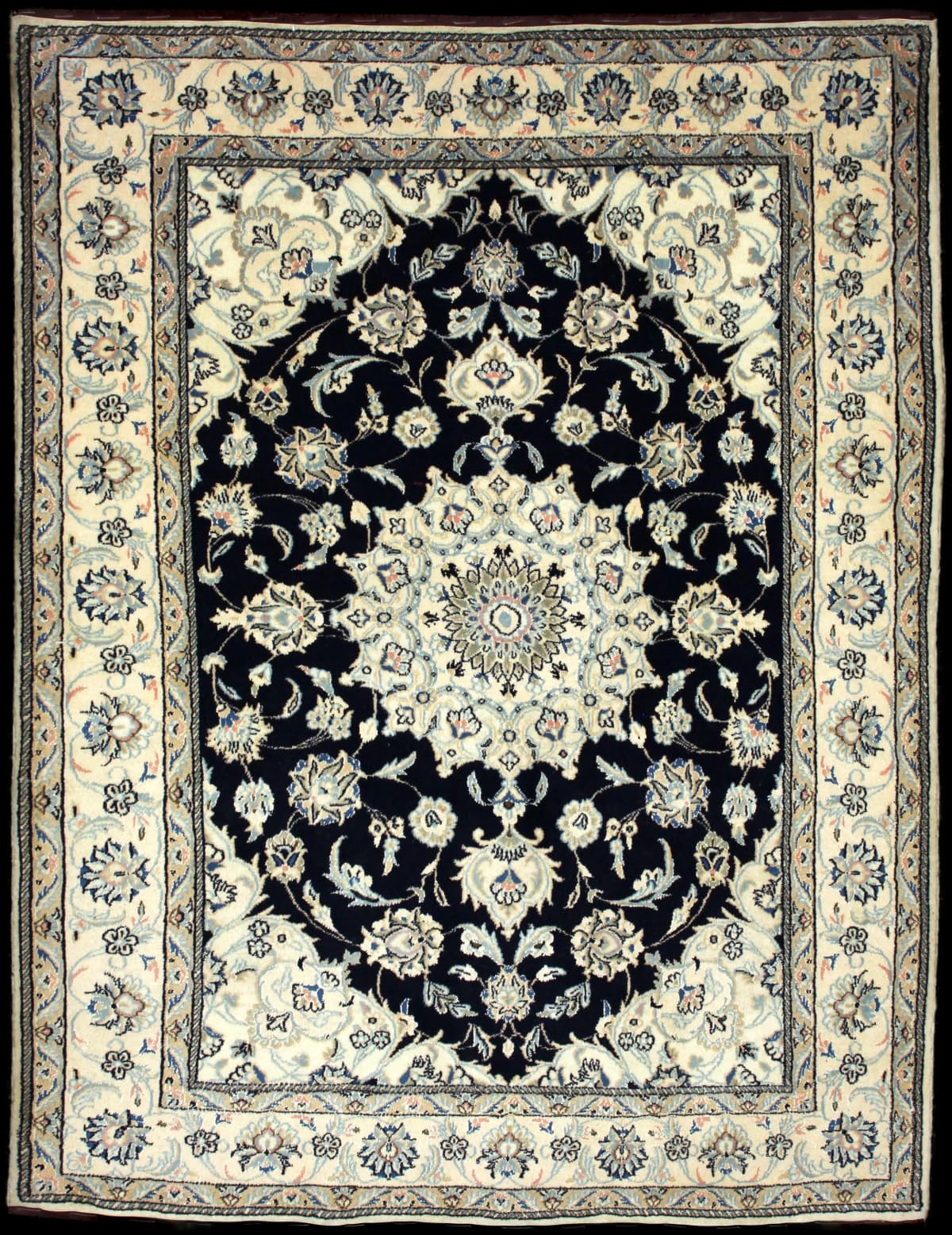
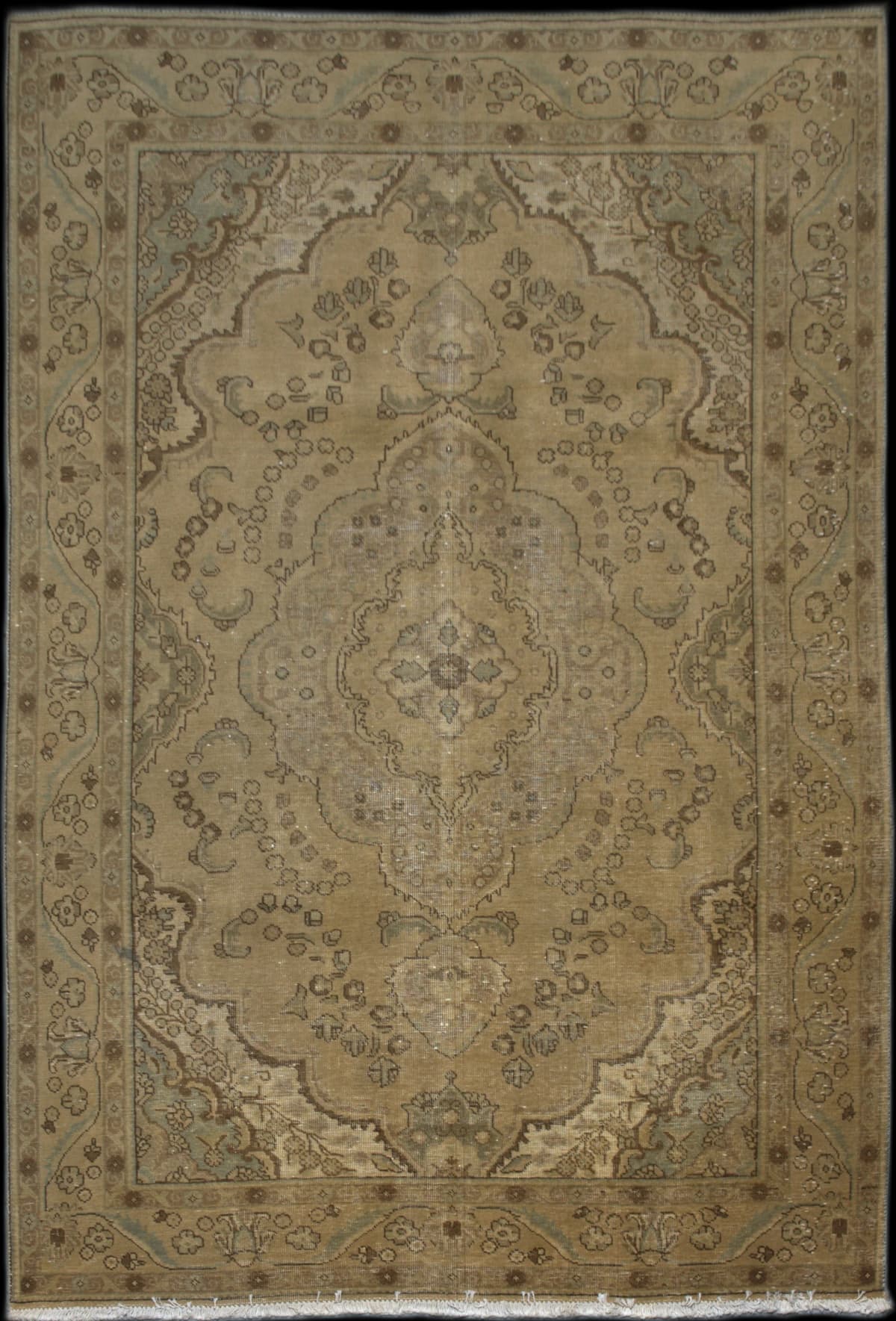
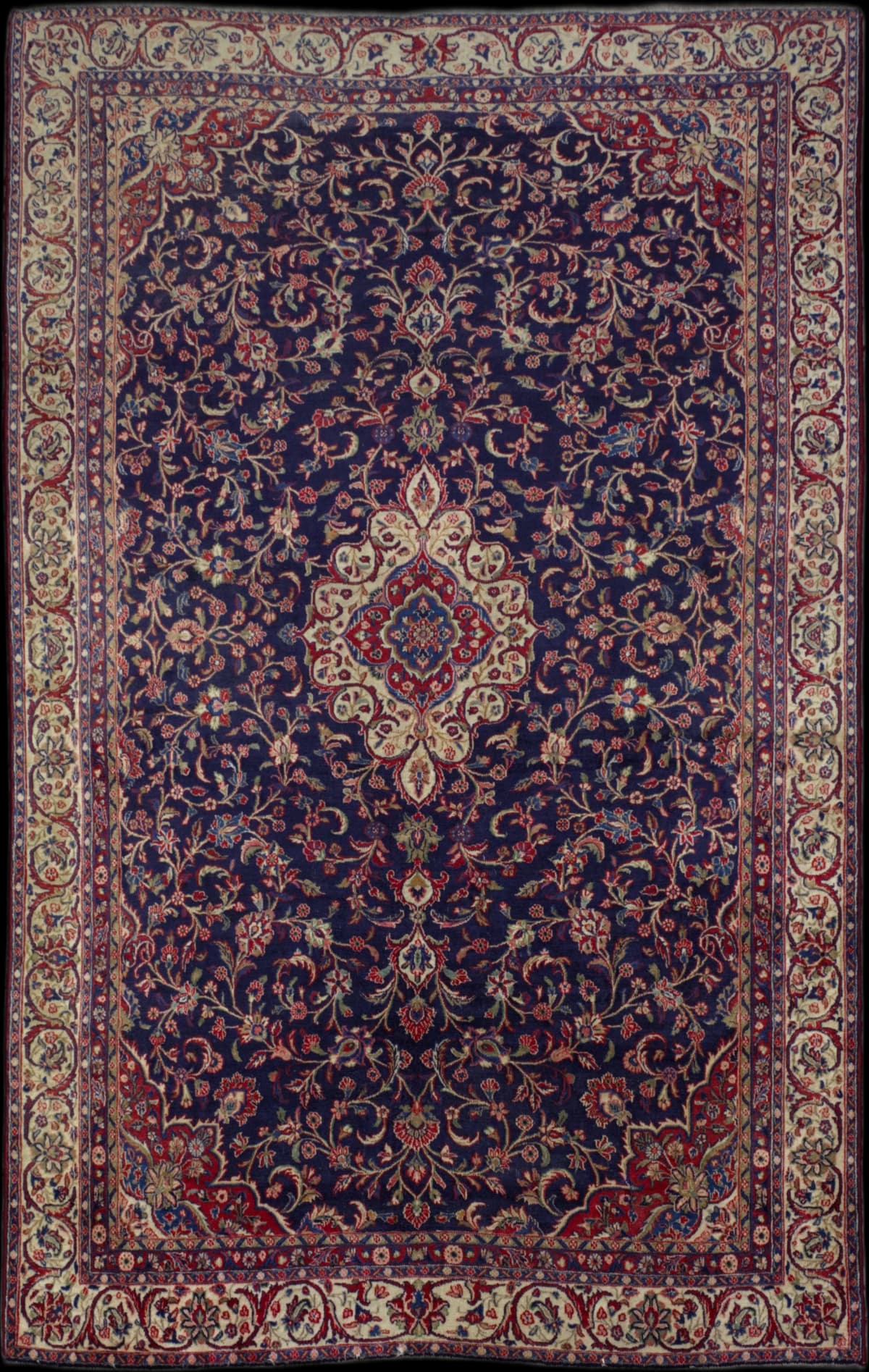
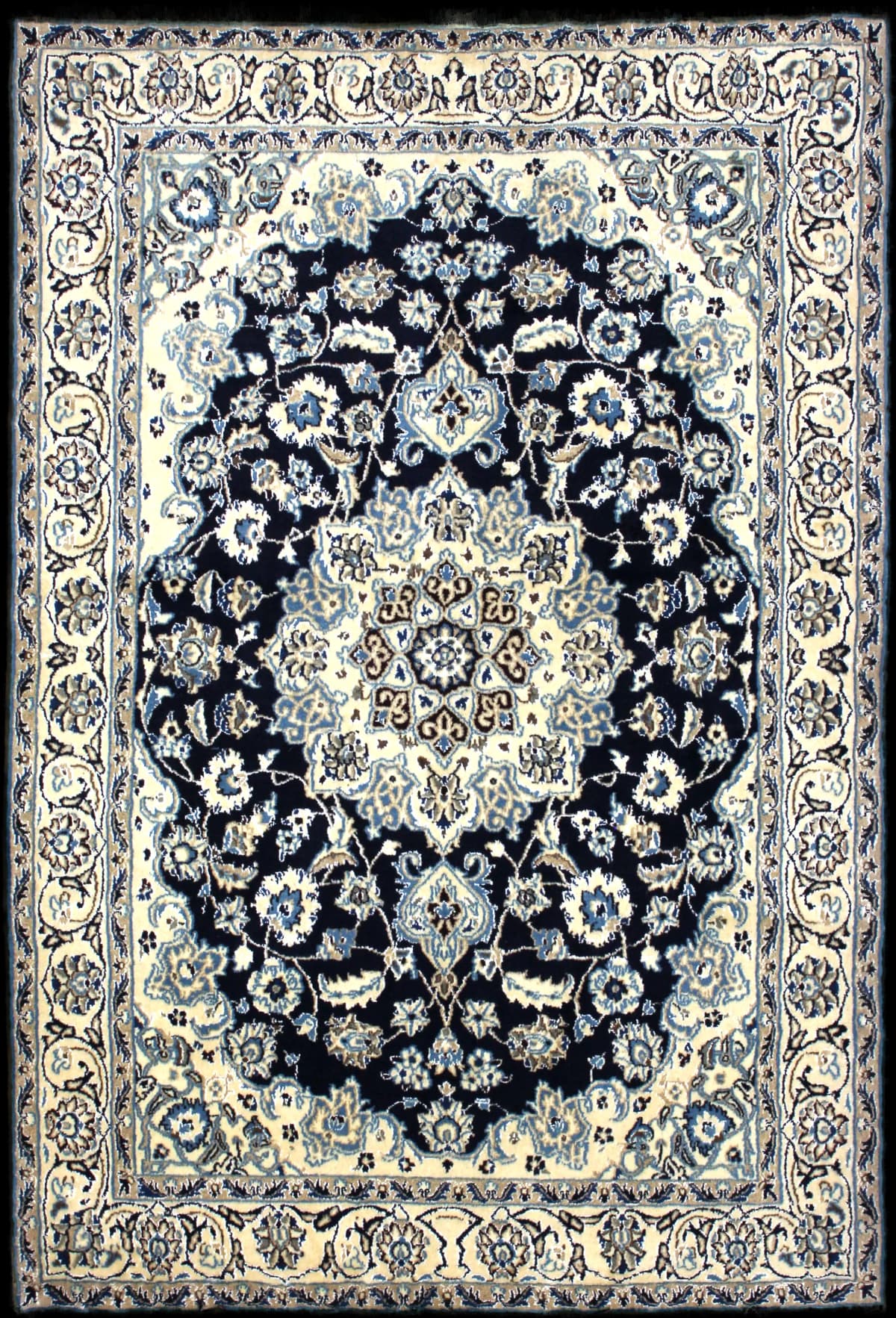
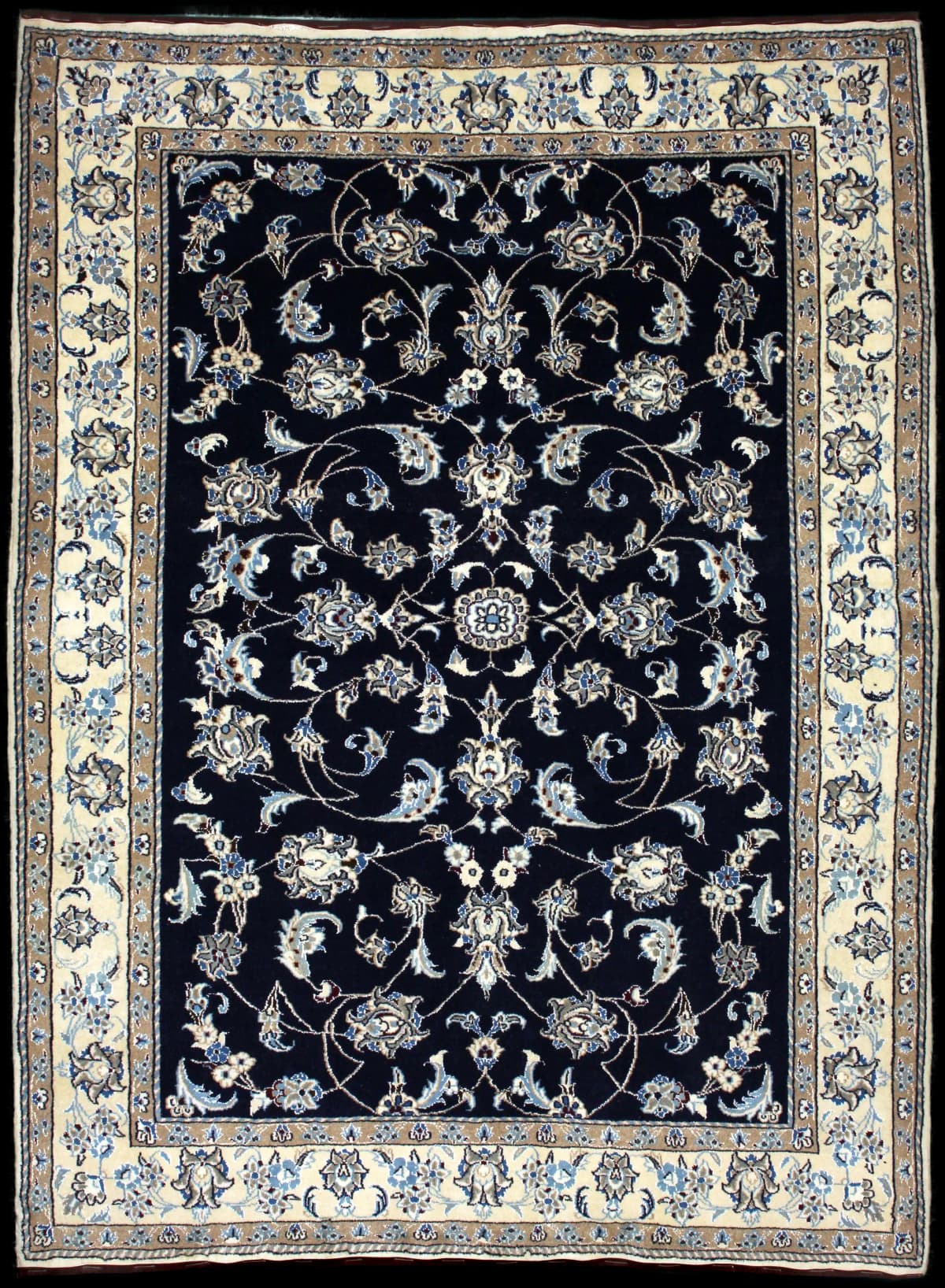
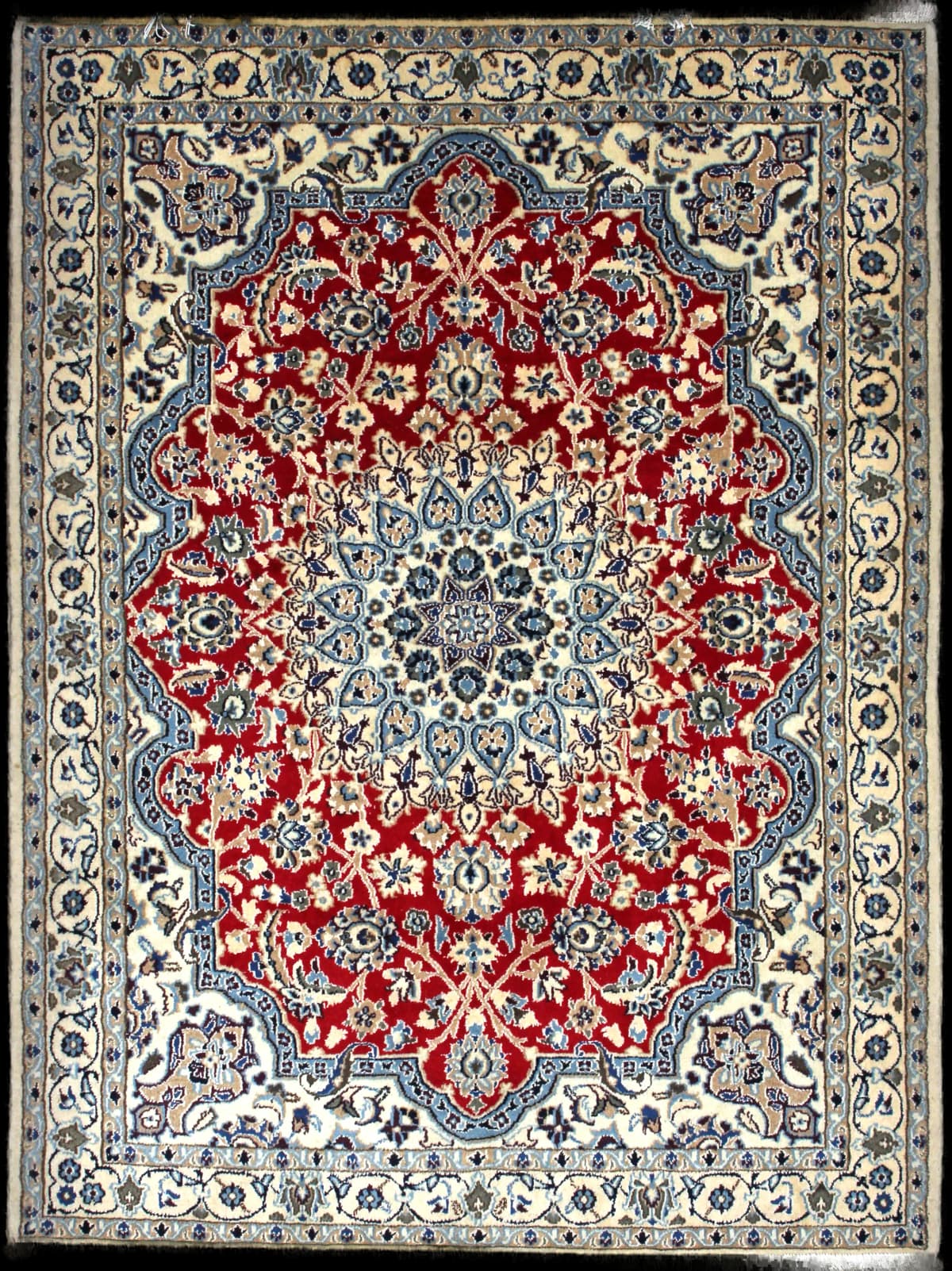
Designs are floral and curvilinear throughout, worked from cartoons drawn by professional designers rather than improvised at the loomSee in the carpet dictionary. Both of the classical workshop layouts appear: a central medallionSee in the carpet dictionary with matching corner piecesSee in the carpet dictionary, and allover patterns repeating evenly across the field. The Shah AbbasiSee in the carpet dictionary palmetteSee in the carpet dictionary, the large stylised lotus of the classical Persian vocabulary, belongs to the standard repertoire, and some pieces carry animals among the scrollwork. A less common variant scatters small star-shaped medallions over the whole ground. The drawing is kept strictly balanced throughout, with long unbroken curves and a great deal of small detail held in order.
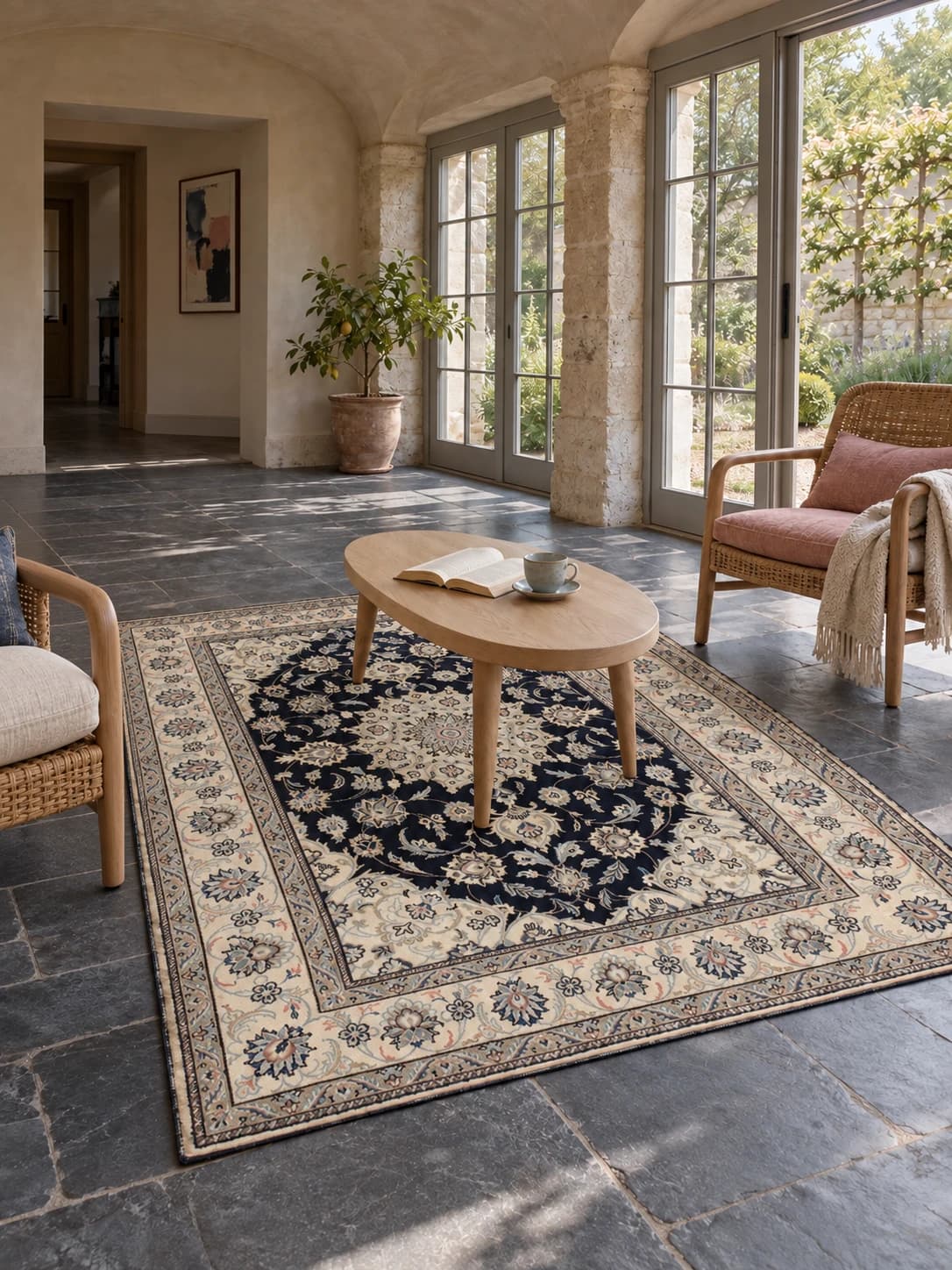
Colour is where the town is most easily recognised. Almost every Nain has a cream or ivory ground worked with many shades of blue and anchored by a deep navy. Beige, light brown and grey carry the middle tones, with small touches of green, yellow and orange lifting the pattern where it needs it. Where silk appears in the pileSee in the carpet dictionary it goes into ivory and blue passages, so that particular vines and leaves catch the light while the wool around them stays matt. The effect is cool and quiet rather than saturated, and it reads as restraint rather than as a lack of colour.
Not every piece is ivory, however. Red grounds turn up often enough to be unremarkable, blue ones less often, and a green ground now and then, so a coloured field is unusual rather than wrong. The cool palette is commonly explained by the climate, on the reasoning that summers on the desert edge are punishing and that pale grounds and blues are the colours that feel cooler to live with. That is folklore rather than documented cause, though the desert setting behind it is real. Anyone who wants a Nain with more weight of colour should go looking for the red-ground pieces specifically, since ivory dominates what gets woven.
Underneath, the construction is consistent enough to be diagnostic. The foundation is cotton, essentially without exception, and silk is never used there, not even in pieces whose pile mixes silk with wool. The warps are depressed, meaning alternate warp threads sit at different depths, and two cotton wefts pass between each row of knots. That combination gives a firm handle, a dense fine-grained back and tightly packed knot rows. The knot is Persian, that is, asymmetric, tied around one warp and passed behind its neighbour, which follows curved drawing more smoothly than the symmetric knot can.
Fineness is graded by a system this town uses and almost nobody else does. The Persian word la means layer or ply, and it counts the threads twisted together in each warp bundle: fewer threads make a thinner warp, and a thinner warp lets more knots stand side by side. The scale therefore runs backwards from what you would expect, so a 4-la rug is finer than a 6-la, and a 6-la finer than a 9-la. Four la is the best grade normally encountered. If a la number is quoted to you, that is what it describes, and it says nothing whatever about silk content.
In knots per square inchSee in the carpet dictionary (KPSI) those grades work out at roughly 200 to 300 for 9-la, 400 to 500 for 6-la, and around 650 for 4-la, with exceptional pieces finer still. Taken as a whole, output runs from about 300 to 700 KPSI, which puts Nain among the finest Persian weaves and its best work in company with silk-foundation Isfahan and the finest QomSee in the carpet dictionary. DensitySee in the carpet dictionary here is not an end in itself: it is what allows a flower the width of a fingernail to be drawn with a legible centre and separate petals.
Pile is wool, or wool with silk. Silk serves as a highlight only, never as the whole field and never in the foundation; it picks out a vine, a palmette centre or a band of the border, and the contrast between matt wool and reflective silk does as much work as colour does. The wool itself is fine and tightly spun, as it has to be to carry detail at this scale. Pile height sits in the medium range, alongside Tabriz, Kashan and Isfahan, so these are neither thin, flat-handling rugs nor deep and shaggy ones.
Sizes cluster below room scale. Small Nain rugs are a real strength rather than an afterthought, and are among the handful of small Persian pieces obtainable both in very high knot counts and in silk and wool. Oversized Nain, by contrast, is genuinely scarce and correspondingly costly: it exists, and it is one of the few oversized weaves available at this fineness, but the choice at any given moment is narrow. Anyone set on a large carpet in this style should expect to wait for the right one rather than pick from several at once.
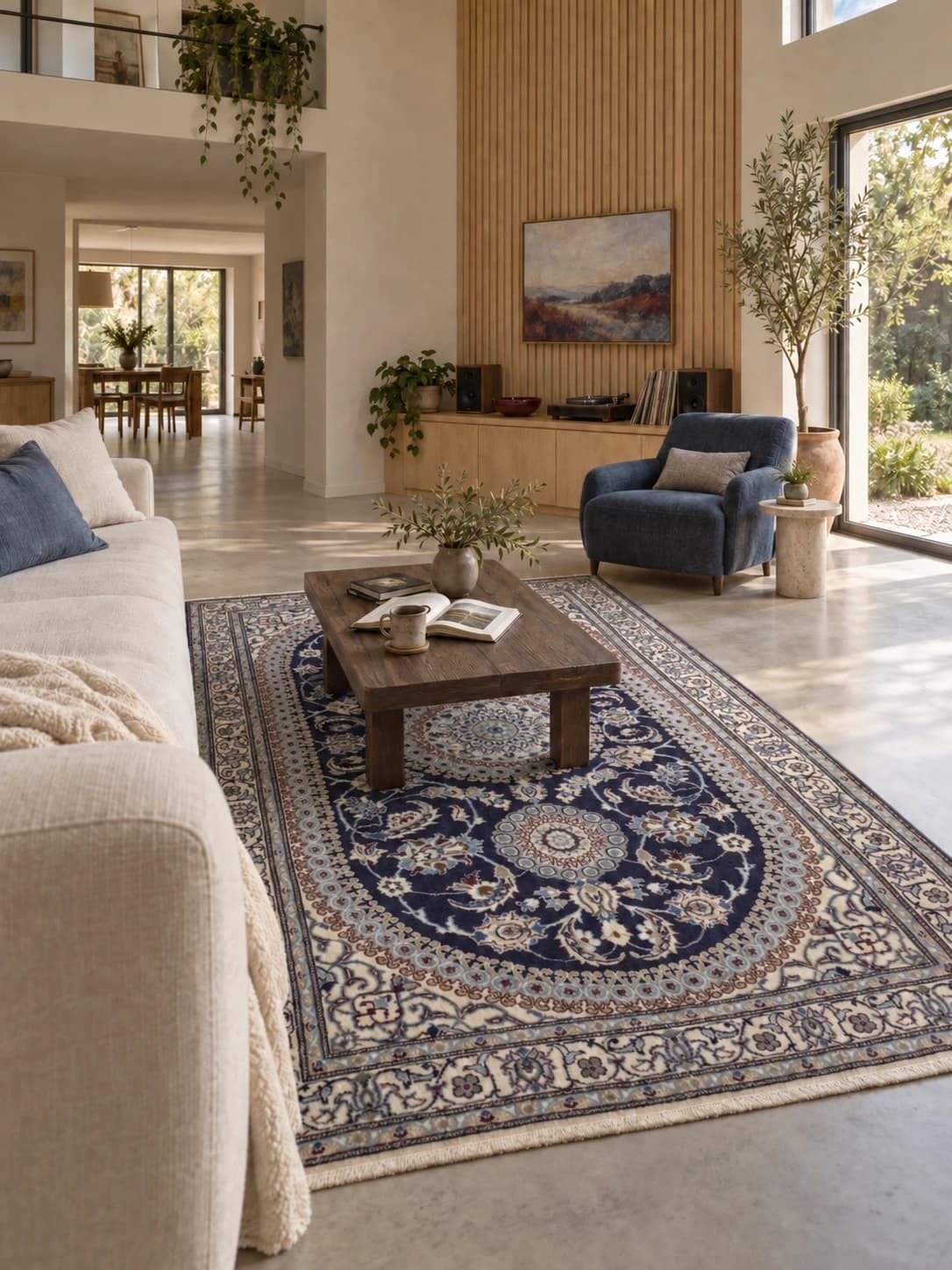
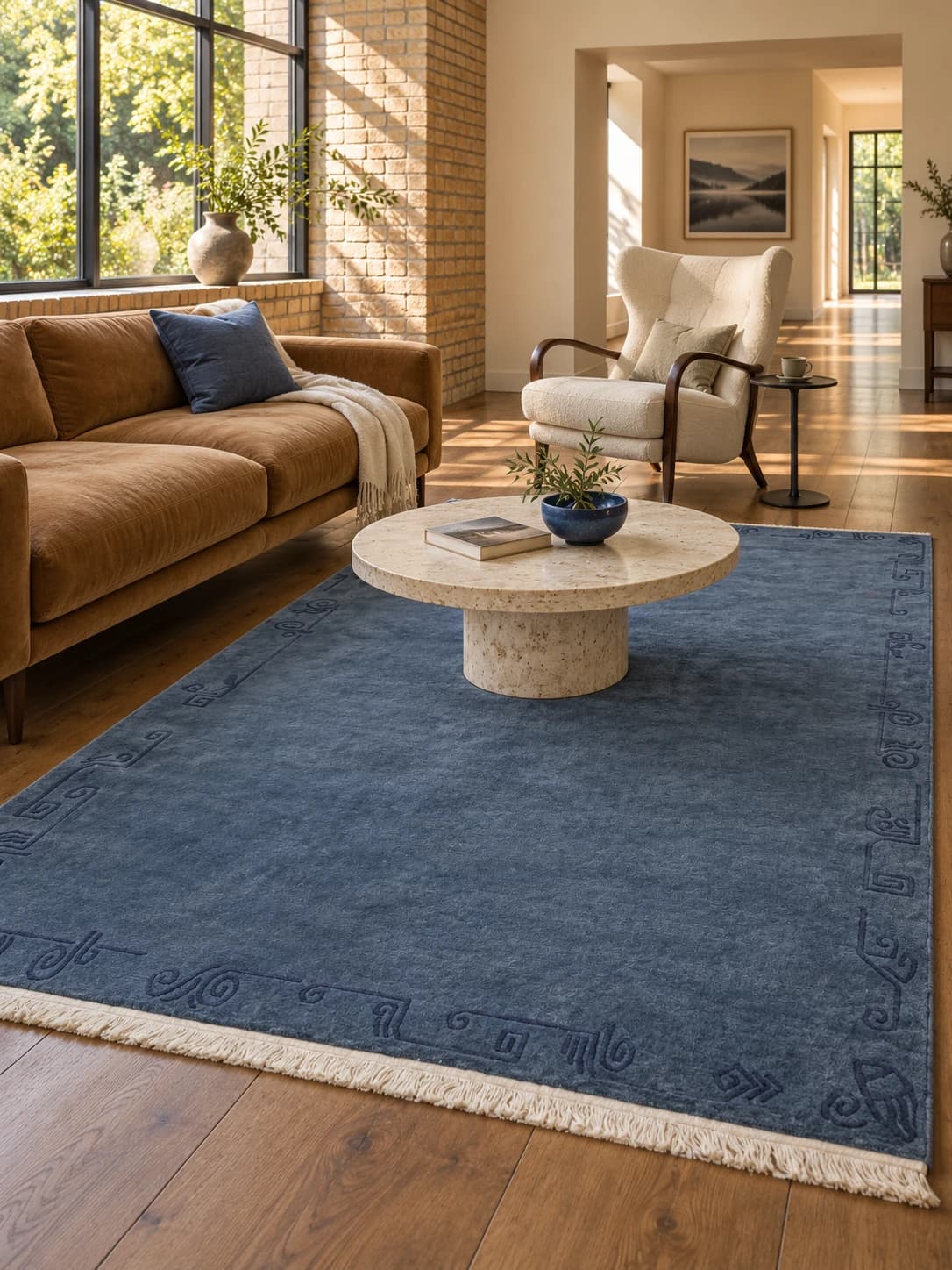
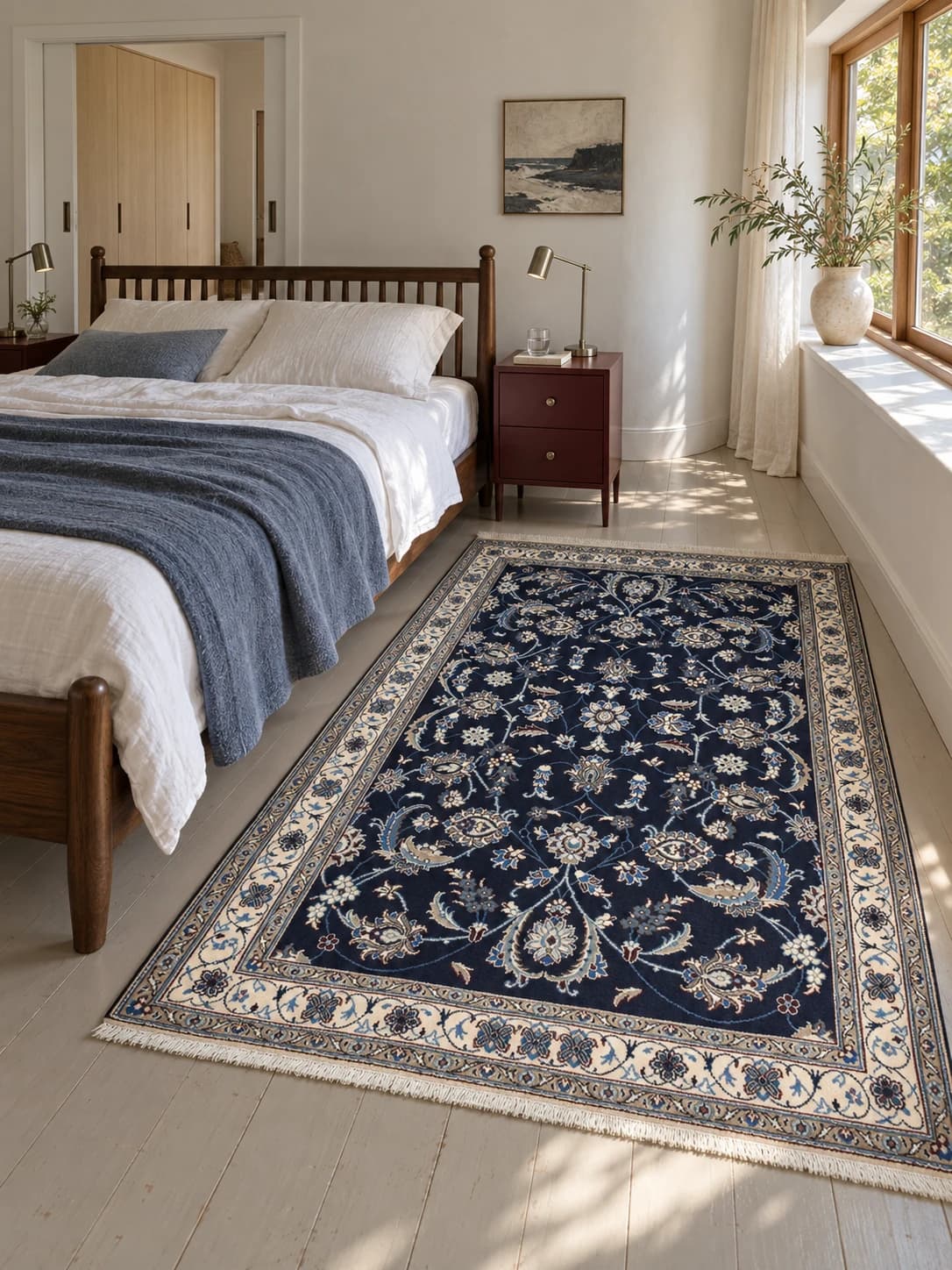
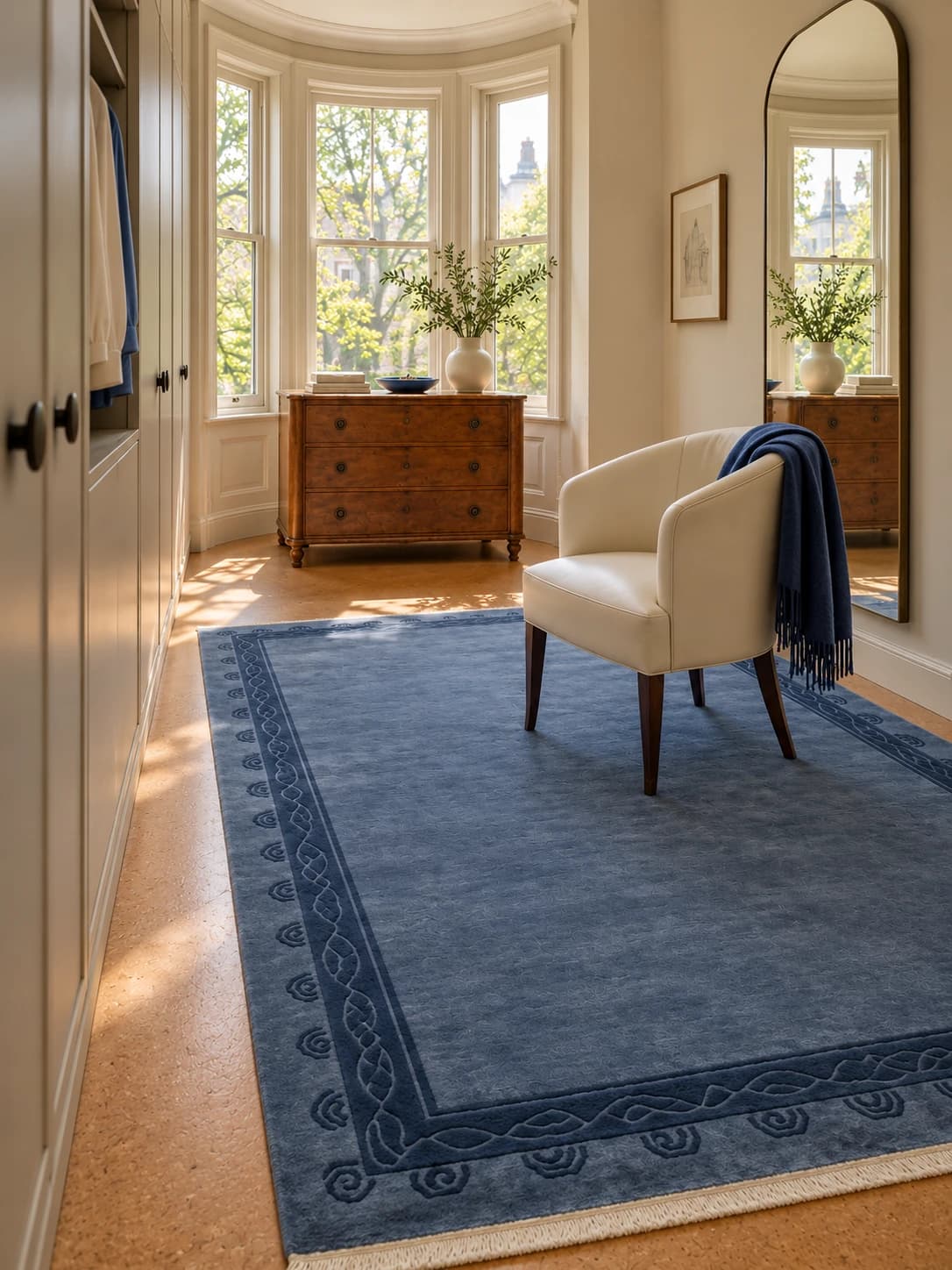
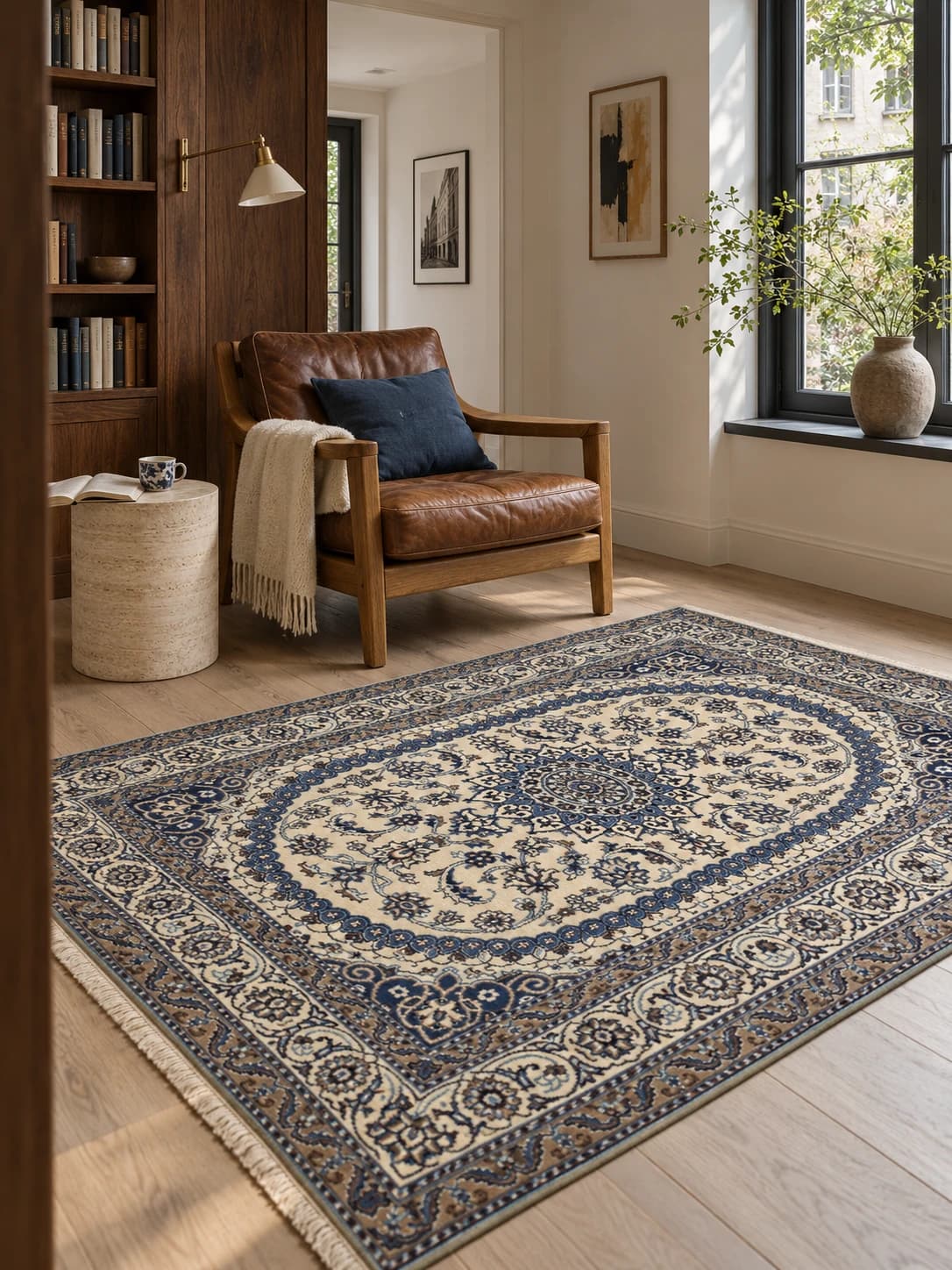
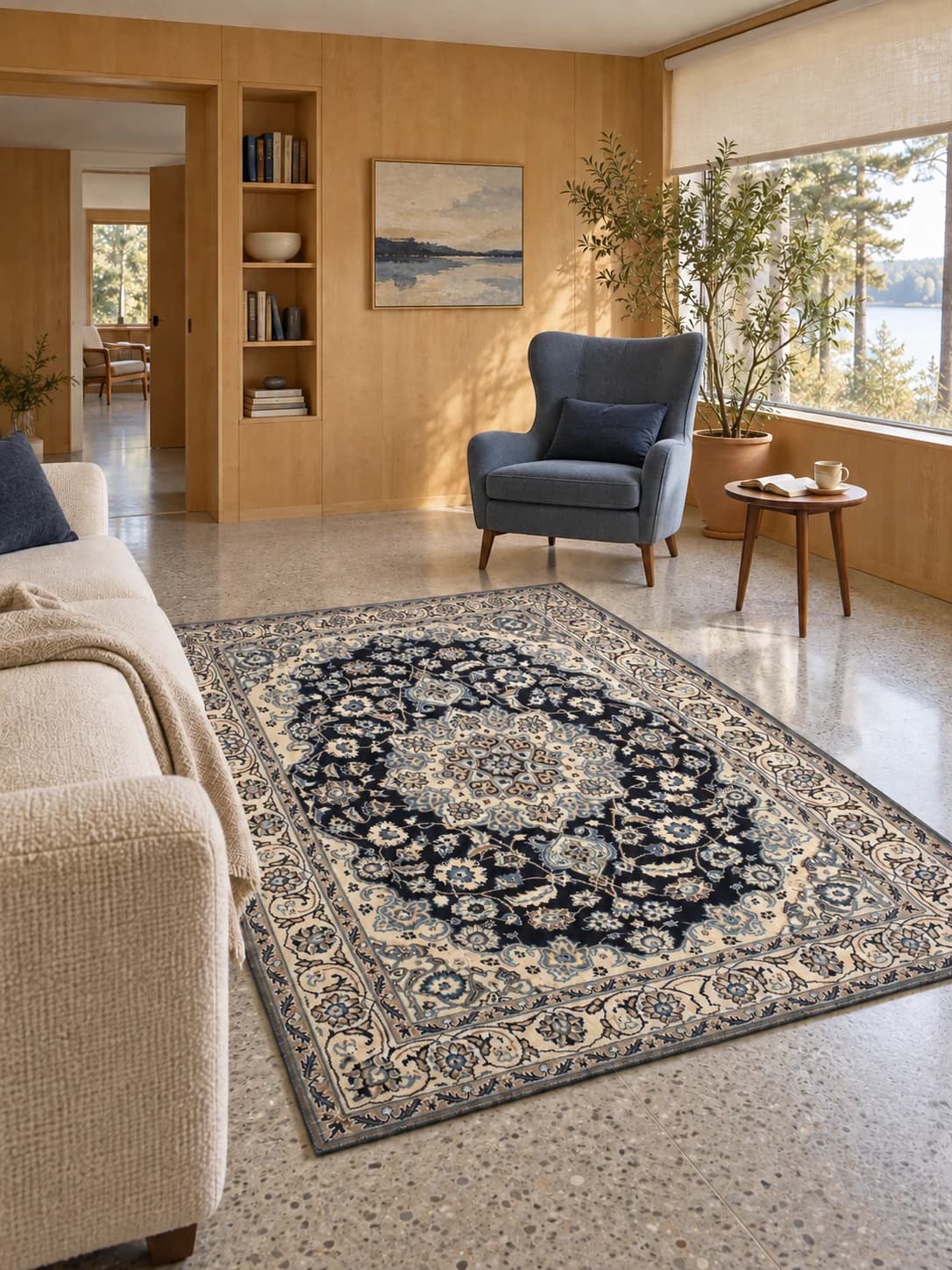
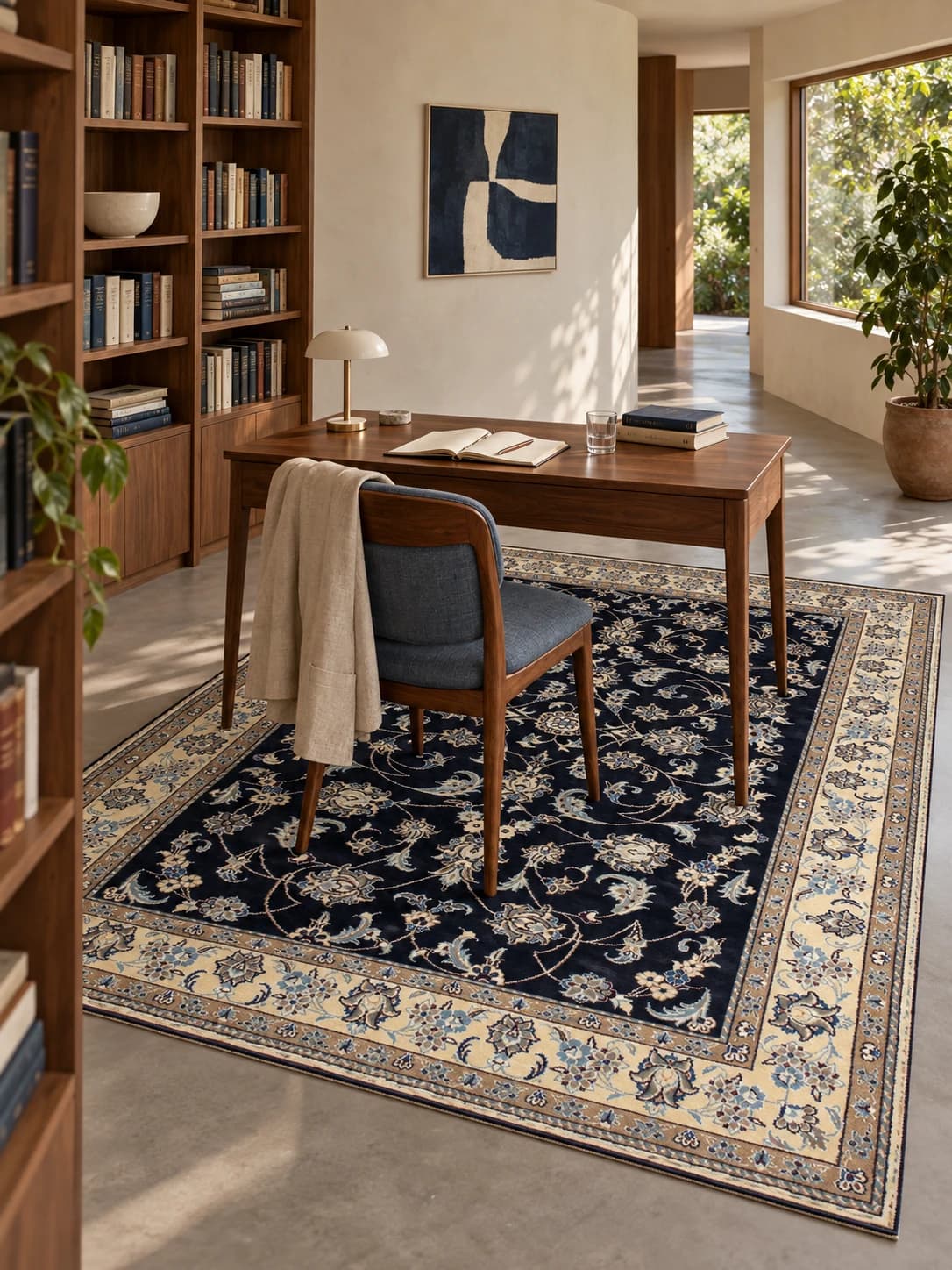
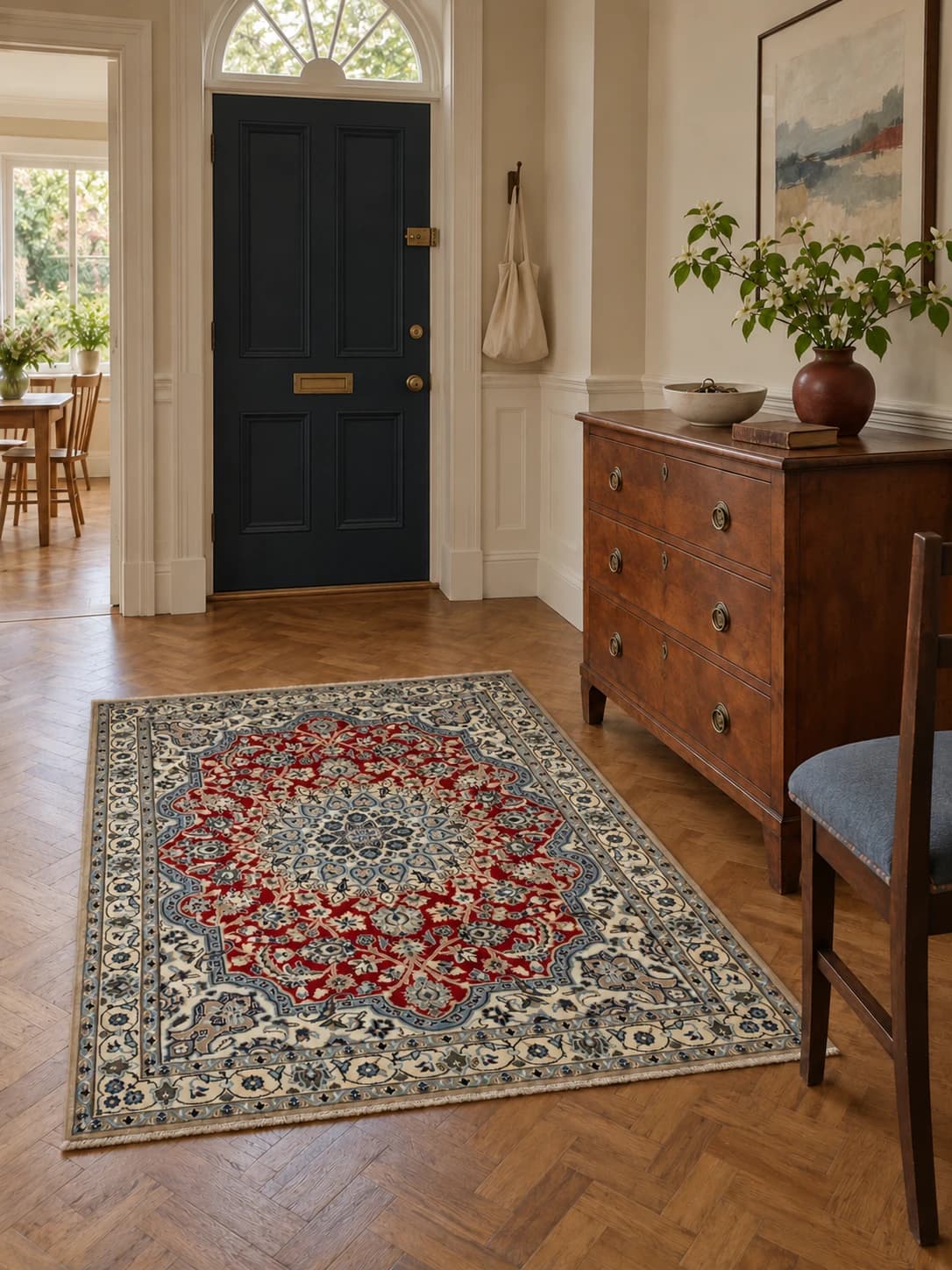
For a room, the thing to weigh is that pale ground. Nain belongs at the bright end of the Persian range, with Tabriz, Kashan and Mashhad, and its ivory and cool blues sit well against plain walls and modern furniture; it is one of the few traditional Persian types that looks at home in a spare, minimal interior. The same pale field is the reason to think twice about a dining room, where spills land and show. Its standing rests on the drawing and the fineness rather than on fashion, which is what has kept it steady among the workshop weaves.
The Persian rug
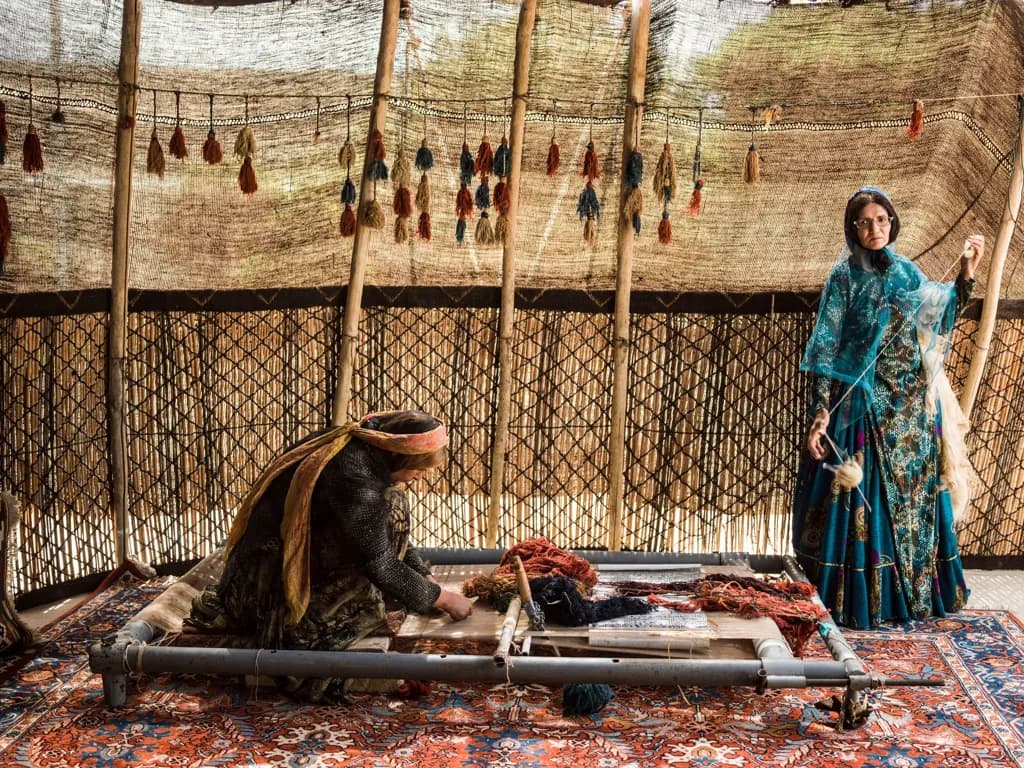
A Persian rug is an Iranian rug — a rug hand-knottedSee in the carpet dictionary in Iran — and the tradition behind it is the oldest documented anywhere. The earliest surviving carpet, the Pazyryk rugSee in the carpet dictionary, was found preserved in a frozen burial mound and dates to the fifth century BC — roughly 2,500 years ago — and it is already accomplished work, not a beginner's craft. What began as warm, hard-wearing floor coverings for tribal households grew, over those centuries, into the art form that every other rug-weaving country has borrowed from.
Two later chapters shaped what a Persian carpet looks like today. Under the Safavid dynastySee in the carpet dictionary, from 1501 to 1732, the court promoted weaving alongside painting and calligraphy, and the workshops of Tabriz, HeratSee in the carpet dictionary, Kashan and Kerman produced the masterpieces that now sit in museums. This is when the great central medallionSee in the carpet dictionary appeared, and when designs grew elaborate enough that a separate designer — often a miniature painter — drew the pattern onto a cartoon for the weaver to follow. The second chapter came in the nineteenth century, under the Qajar dynastySee in the carpet dictionary, when production reached its historical peak, exports to Europe and America boomed, and the workshop industry whose descendants still weave today took its modern shape.
The trade sorts Persian rugs into three families. City rugs — Tabriz, Kashan, Kerman, Nain, Isfahan — are woven in workshops from a drawn design, carry the highest knot densities and come in the widest range of colours, sizes and patterns. Village rugs such as HerizSee in the carpet dictionary, BakhtiariSee in the carpet dictionary and KarajaSee in the carpet dictionary sit in between, mostly geometric and largely woven from memory. Tribal rugs — Baluch, TurkomanSee in the carpet dictionary, QashqaiSee in the carpet dictionary, each named after the people who weave it — are made on small portable looms, so they run smaller, and their bold geometric drawing comes from the weaver's own head rather than from paper.
The design vocabulary draws on a deep stock of motifs: Shah AbbasiSee in the carpet dictionary palmettes, flowing arabesques, the small repeating Herati patternSee in the carpet dictionary, medallions, garden and tree-of-life compositions. These combine with regional habits into styles a practised eye can place at a glance, from the bold geometric medallions of Heriz to the fine curvilinear florals of Isfahan.
The classic palette is built on natural dyes: madderSee in the carpet dictionary reds, indigo blues, saffron yellows and the soft whites of undyed woolSee in the carpet dictionary, settled into combinations refined over centuries. Natural dyes age gracefully, mellowing into the patina that older rugs are prized for, and slight shifts of tone between dye batchesSee in the carpet dictionary — the effect called abrashSee in the carpet dictionary — are a mark of small-batch natural dyeing, not a flaw.
The pileSee in the carpet dictionary is almost always woolSee in the carpet dictionary, and in a Persian wool rug the wool itself decides much of the quality. The best fleece comes from high-altitude flocks, where it grows thicker and richer in natural oils; spring-sheared wool beats the autumn clip, and hand-spun yarnSee in the carpet dictionary gives a finer, softer thread than machine spinning. Fine pieces add silk highlights to a wool pile, and at the very top sits the Persian silk rug, woven in pure silk. Foundations are usually cotton in city weaving, wool in tribal and older pieces, silk at the very top of the range.
Every knot is tied by hand, one at a time, in one of two forms: the asymmetric Persian knotSee in the carpet dictionary, usual in central and eastern Iran, or the symmetric Turkish knotSee in the carpet dictionary, common in the north-west ever since Seljuk weavers introduced it in the eleventh and twelfth centuries. A large rug holds in the region of two million knots and can occupy a weaver for about a year.
Knot densitySee in the carpet dictionary is the figure newcomers fixate on, and the finest silk-foundation pieces do reach as much as 1,000 knots per square inch. But densitySee in the carpet dictionary only matters as far as the drawing demands it: a curvilinear Isfahan needs a fine weave to stay sharp, while a geometric Heriz is famously durable at a modest count. Material, symmetry, colour harmony and condition say more about quality than any single number.
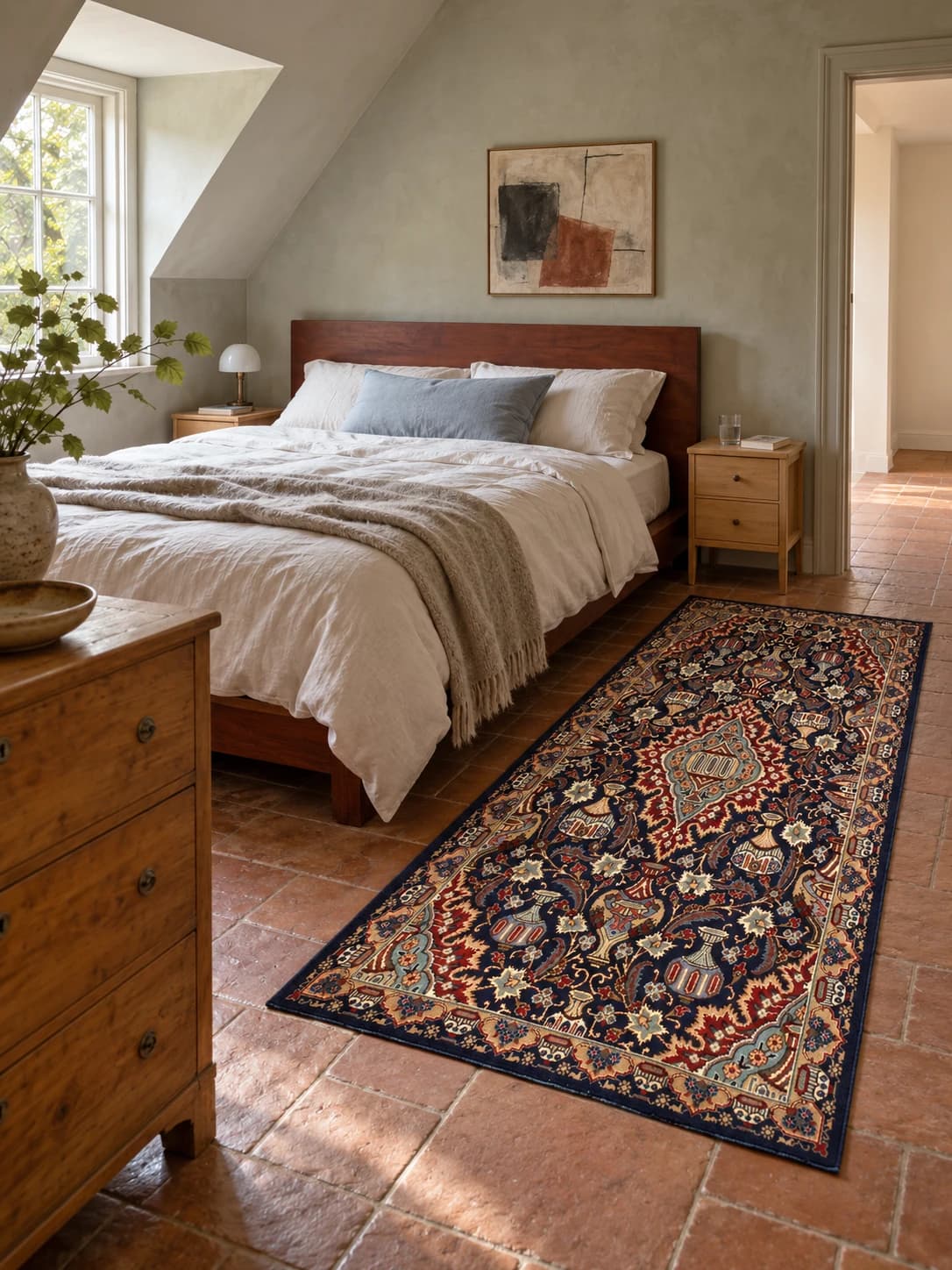
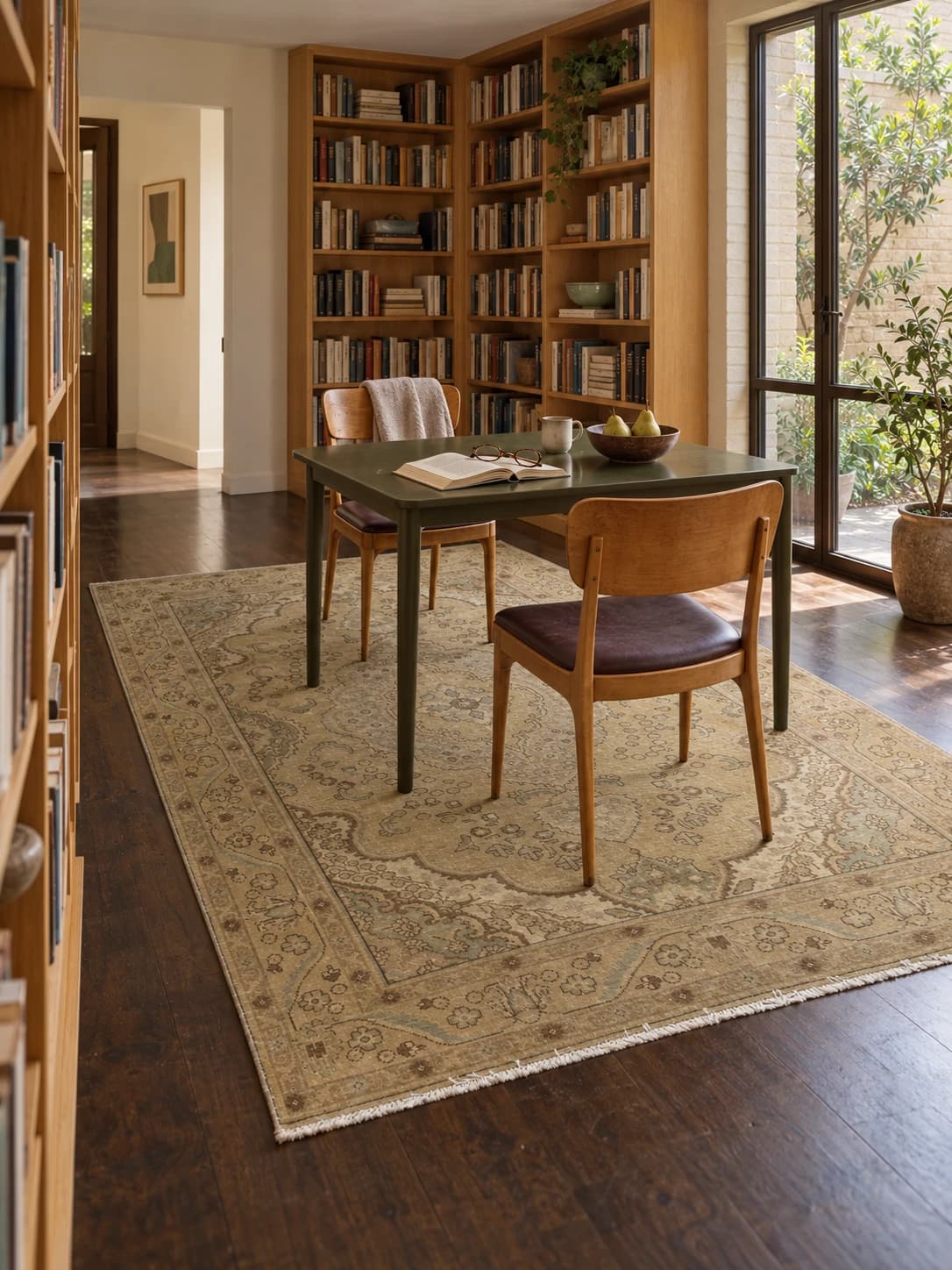
Persian carpets settle into modern rooms as naturally as classical ones, as a focal point in a living room, a foundation under a dining table or a quieter accent in a bedroom. Care is undemanding: gentle vacuuming without a rotating brush, an occasional turn for even wear, and a professional wash about every five years — sooner in a hallway or entrance, less often in a quiet room.
A hand-knotted Persian rug tends to outlast its owners. Pieces a century old regularly survive in fine condition, their colours settled and their pile supple, often looking better than when they left the loomSee in the carpet dictionary. A well-chosen, well-kept rug holds its worth and passes down as a family heirloom rather than being replaced — which is precisely what the knots, the wool and the dyes were always for.
Questions about this carpet?
Our family has traded carpets for two generations. Ask us anything — photos, video calls, advice on sizes.
Message us
Keep exploring
Guides from our family workshop: how to clean, place and care for hand-knotted rugs.