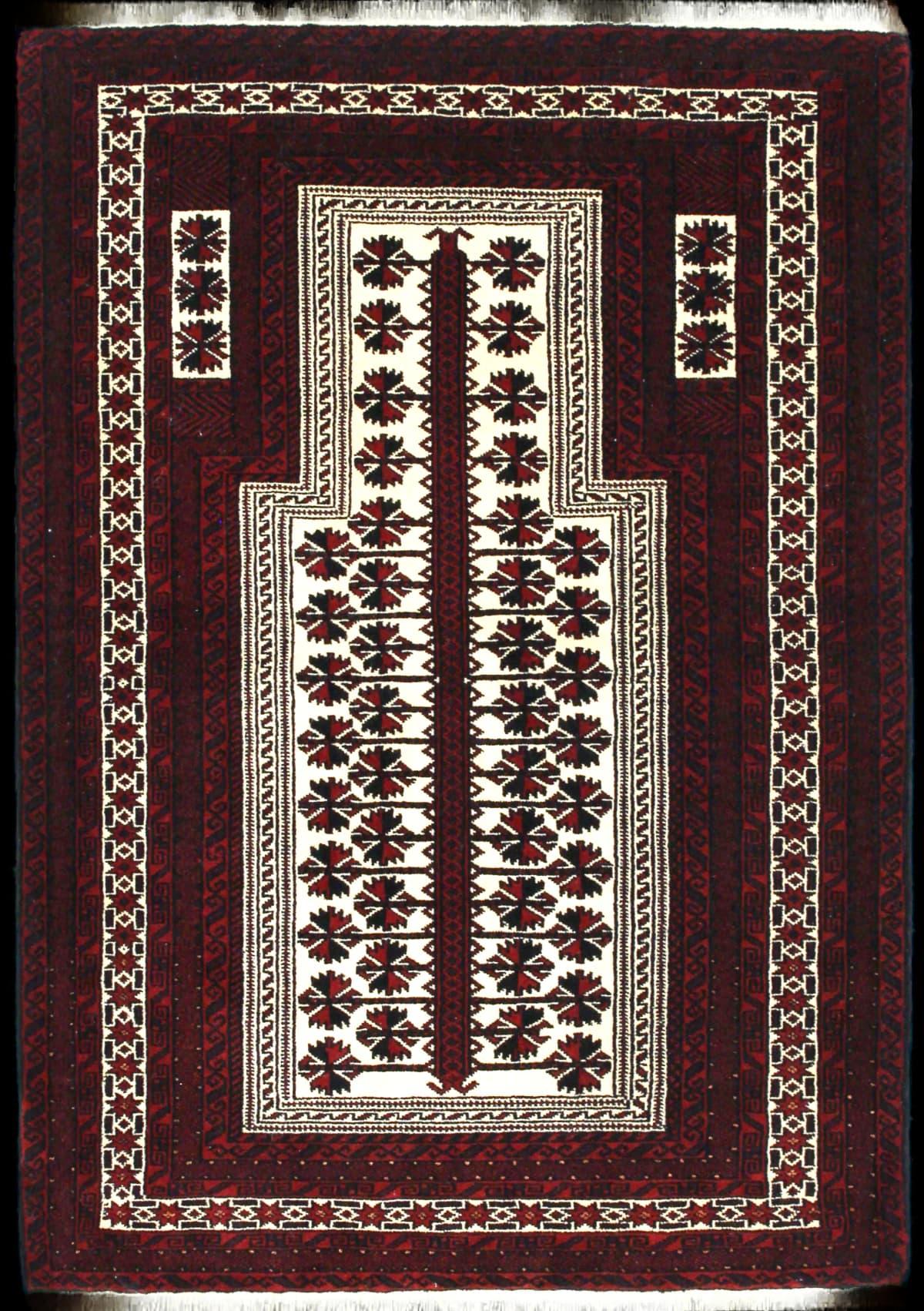
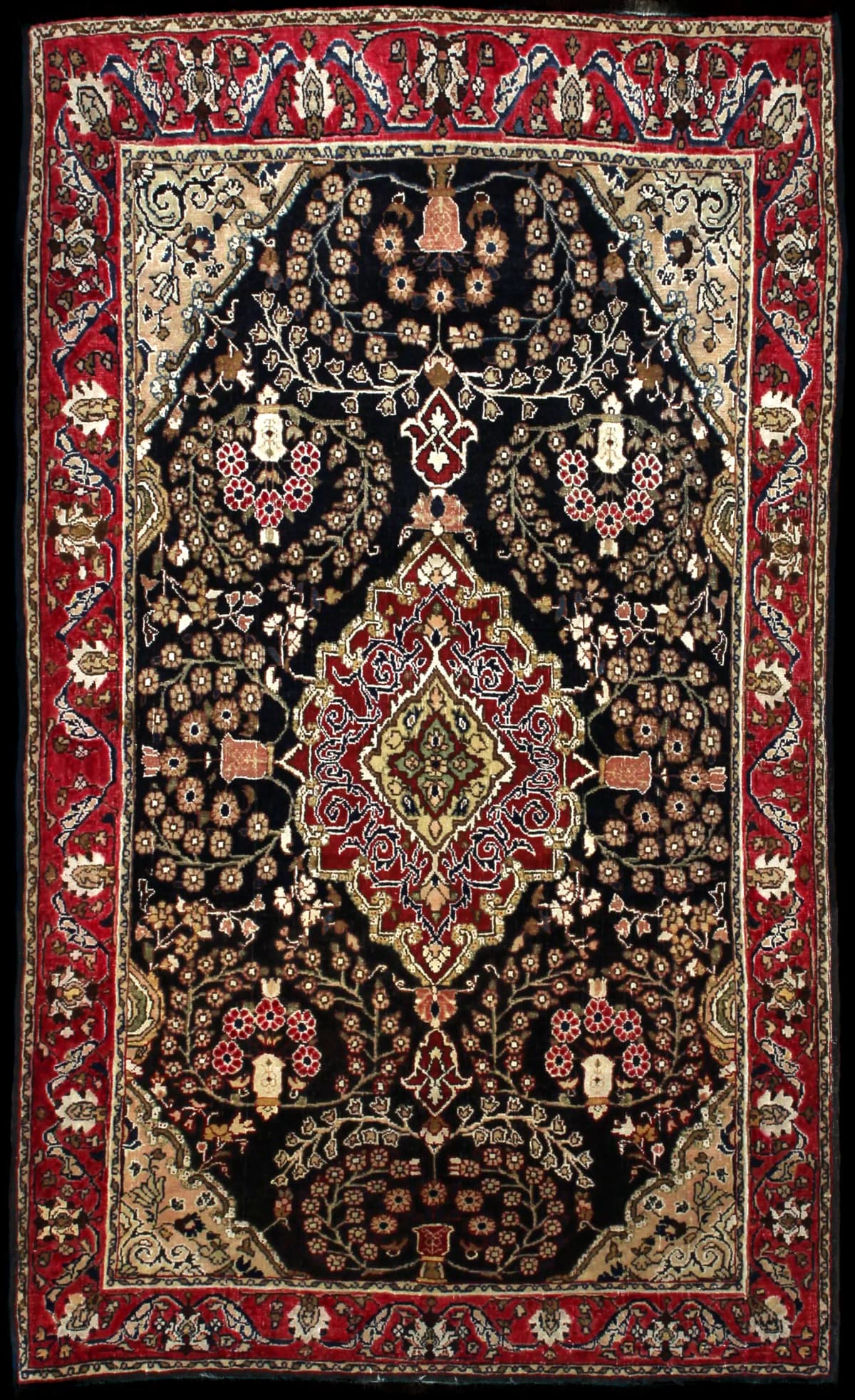
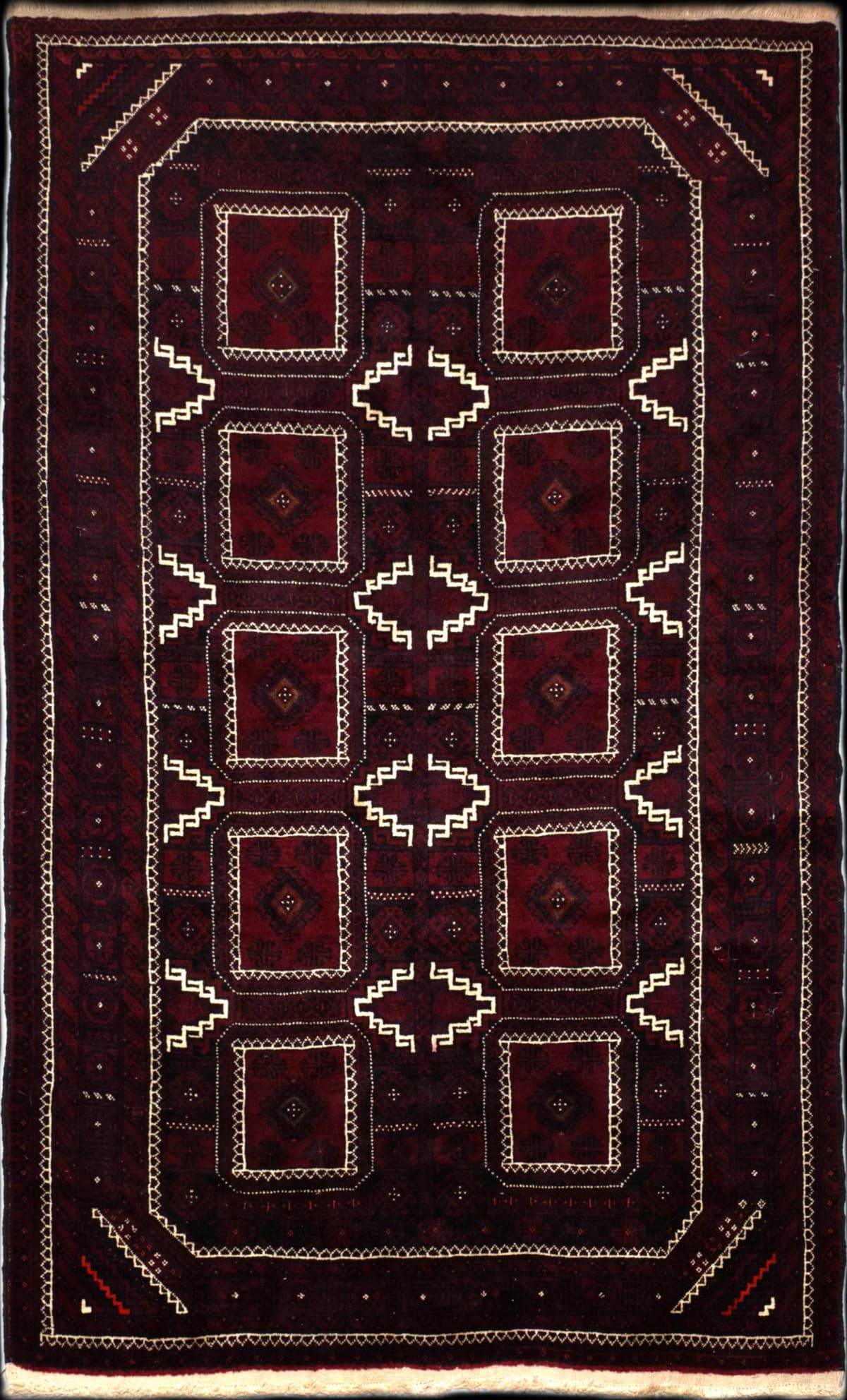
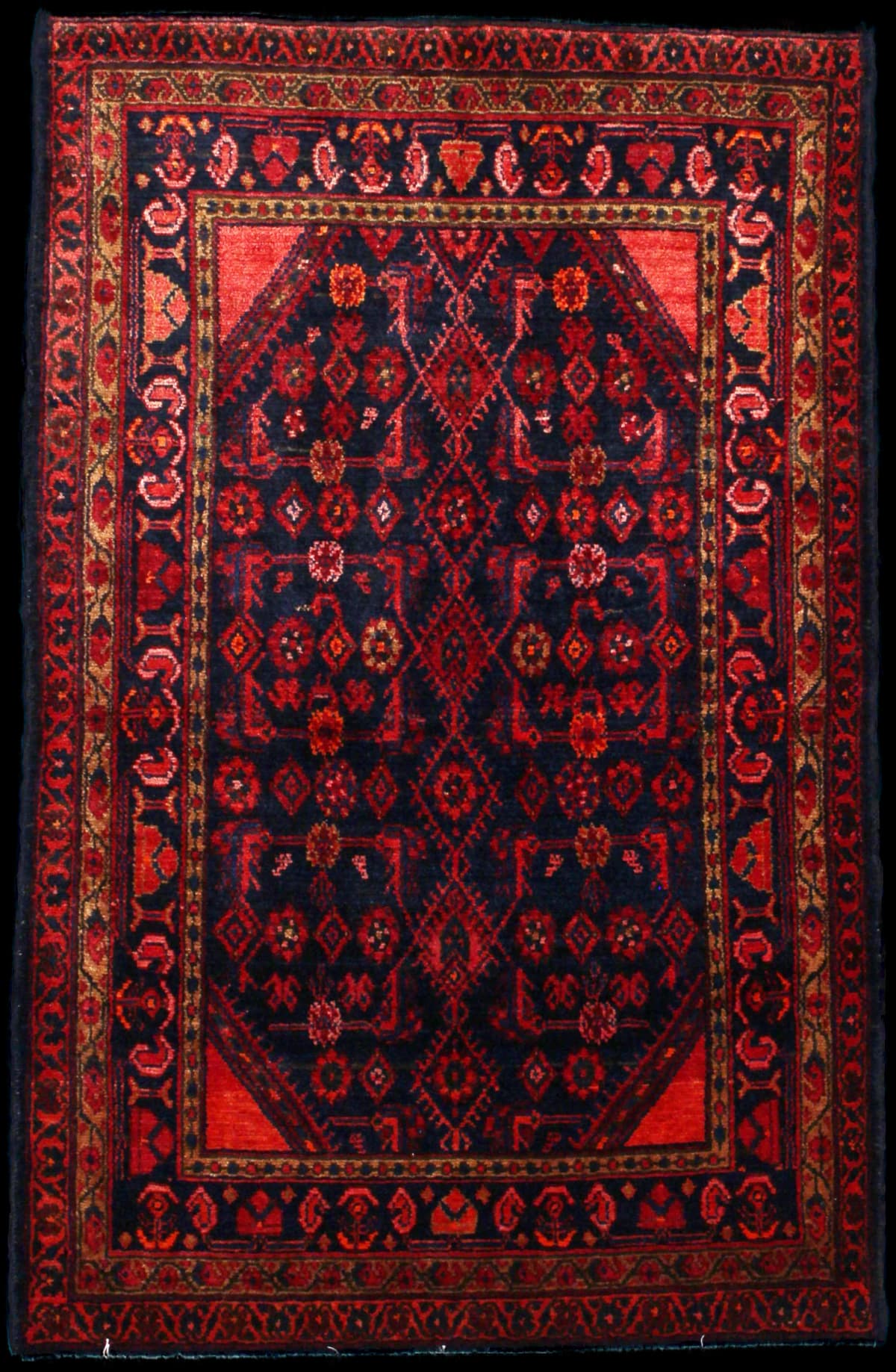
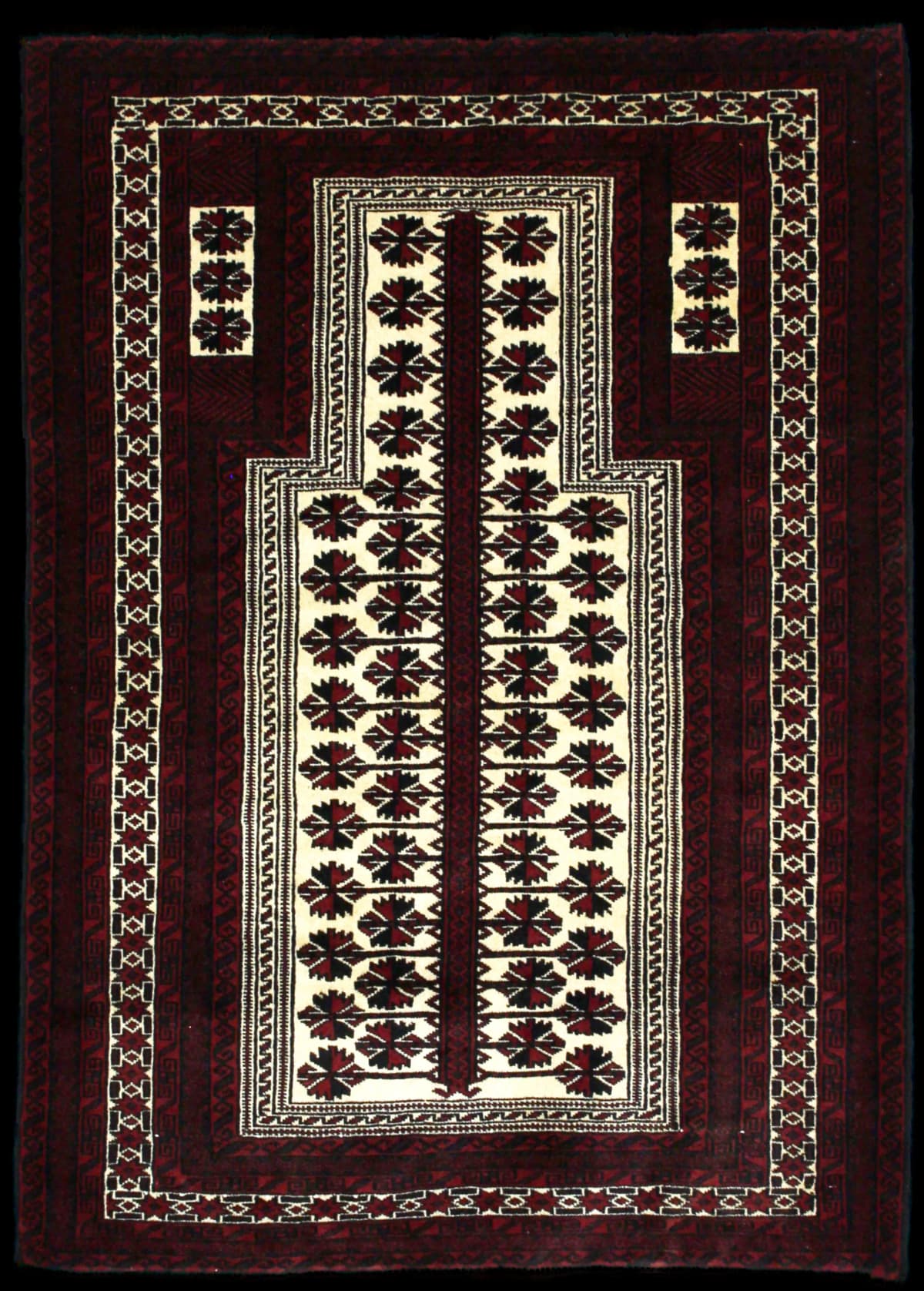
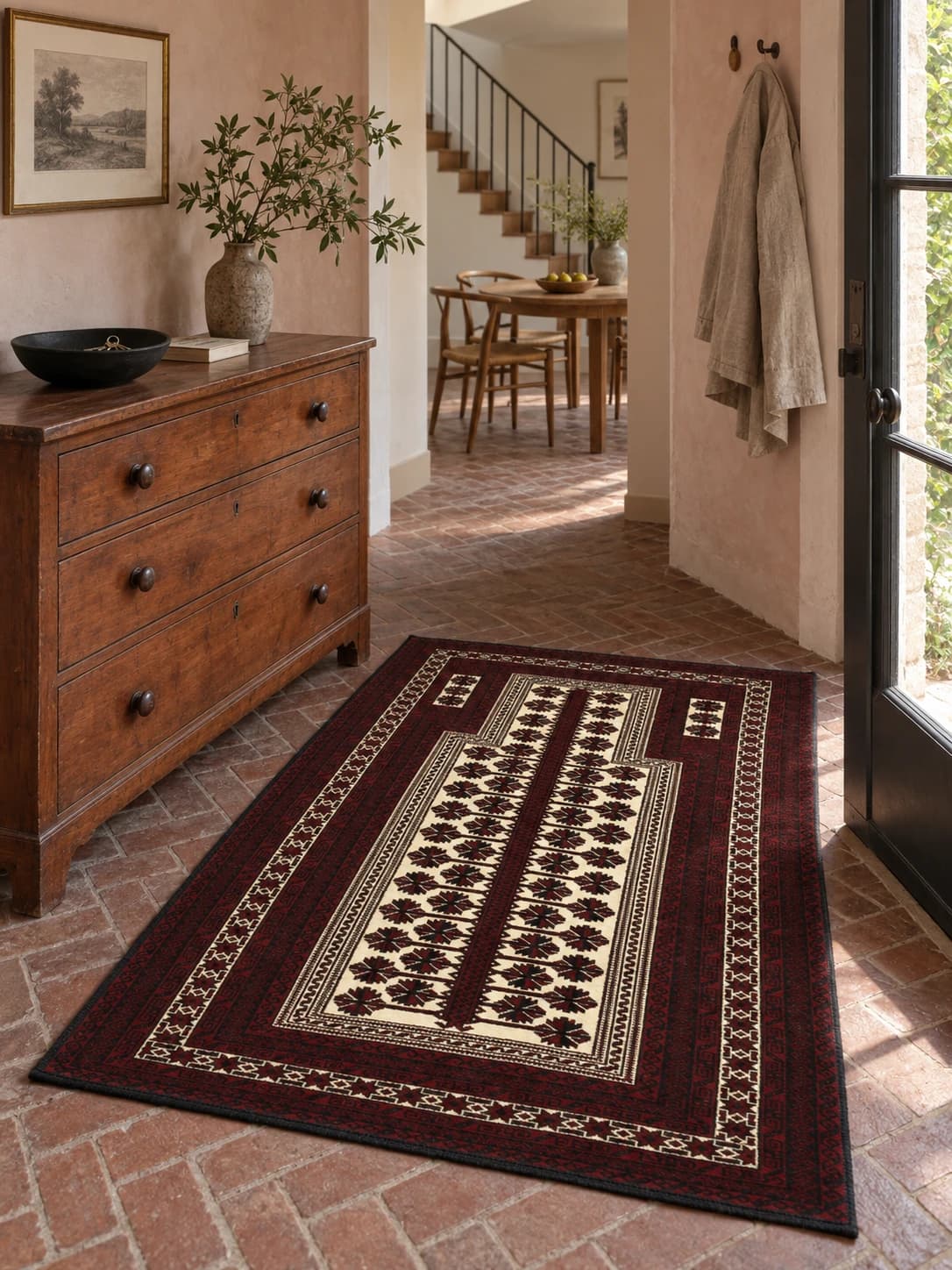
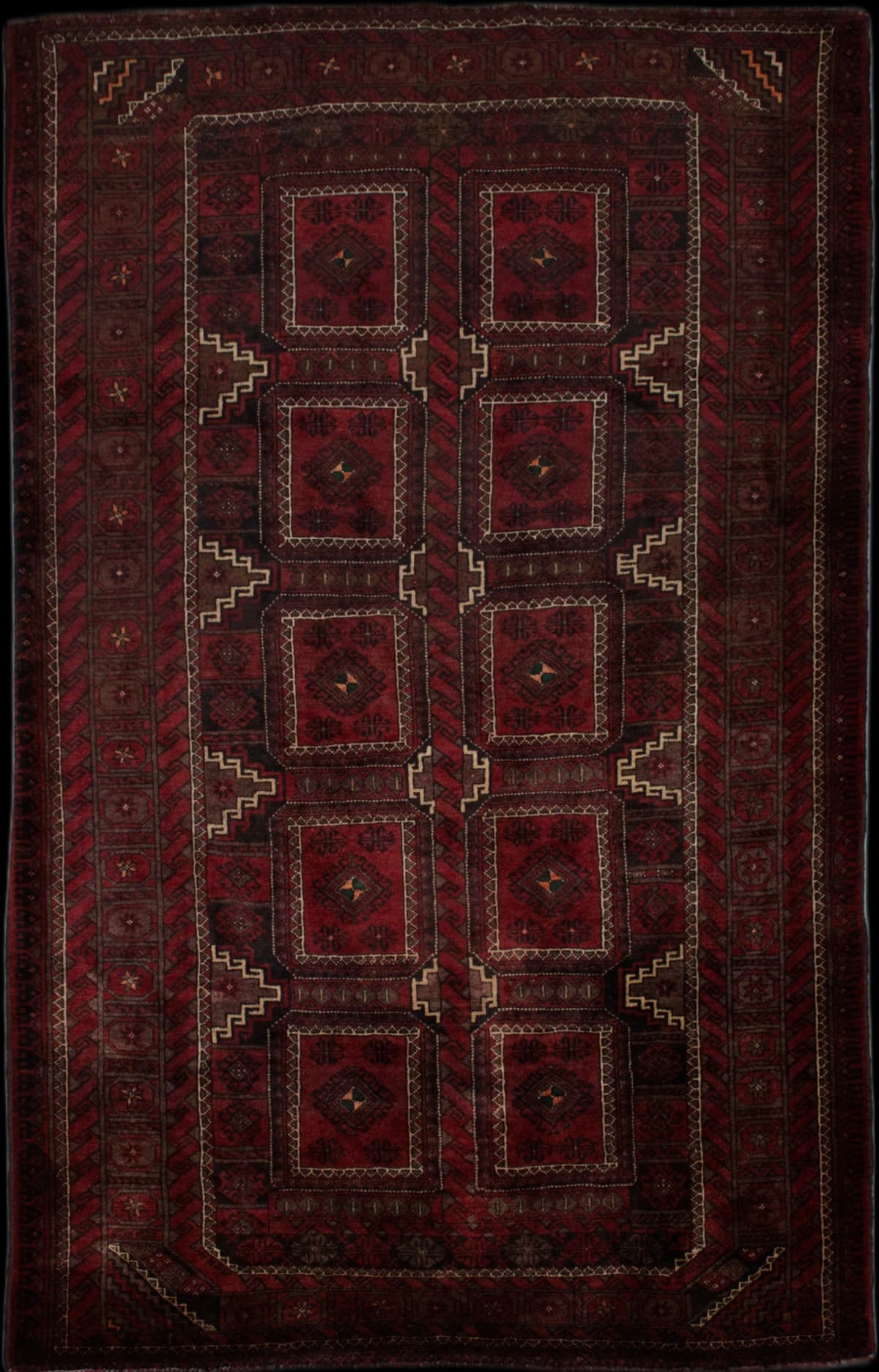
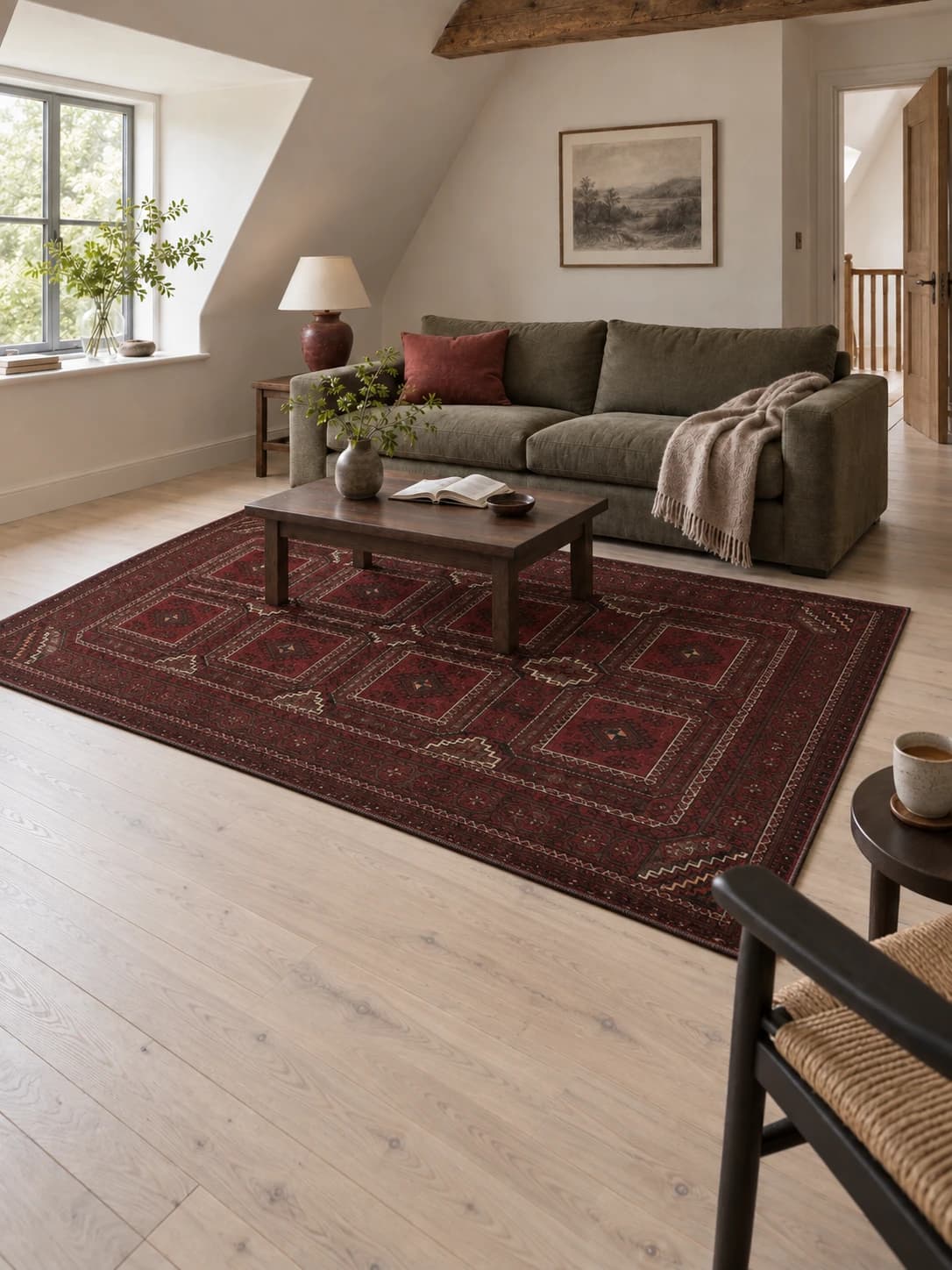
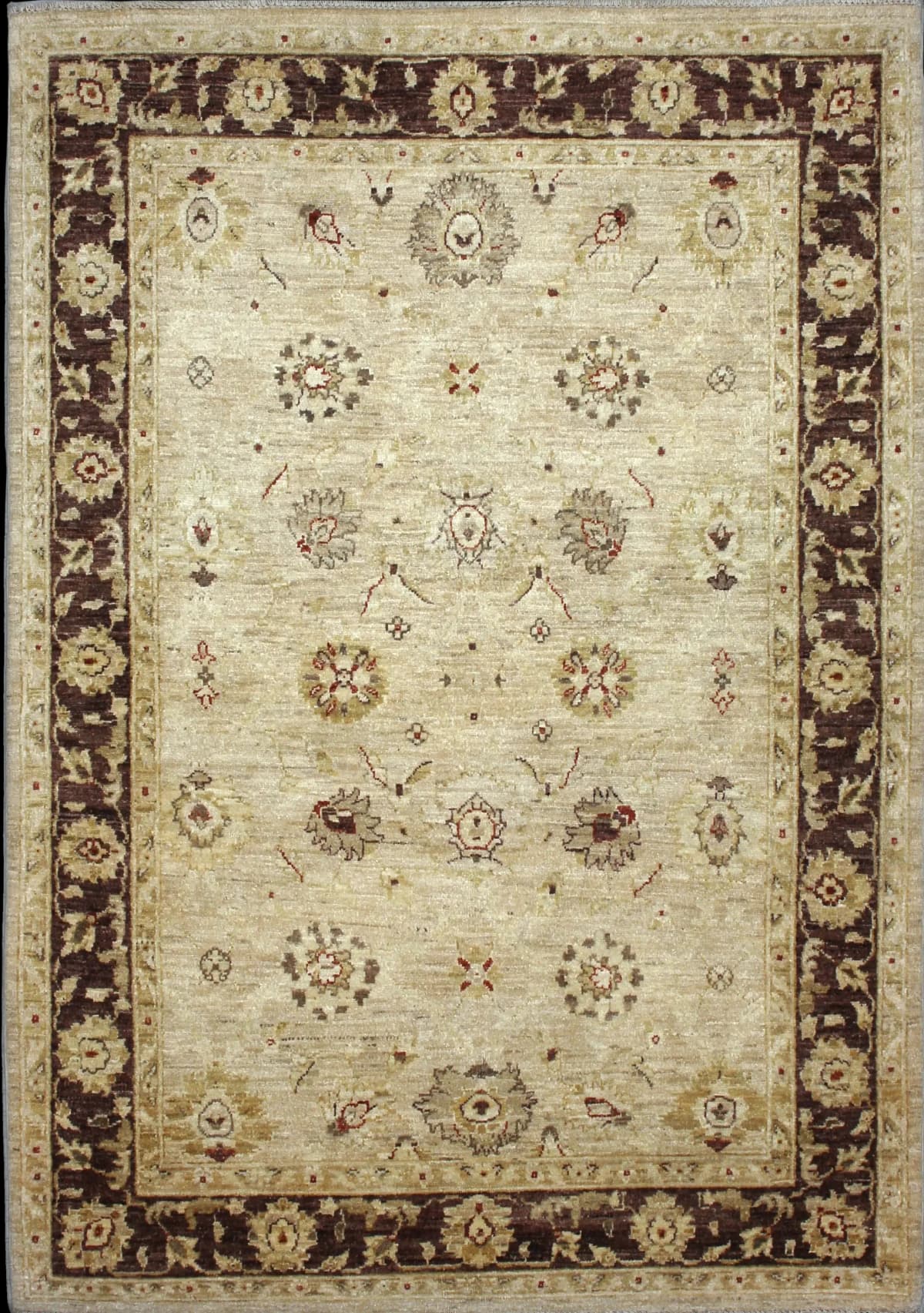
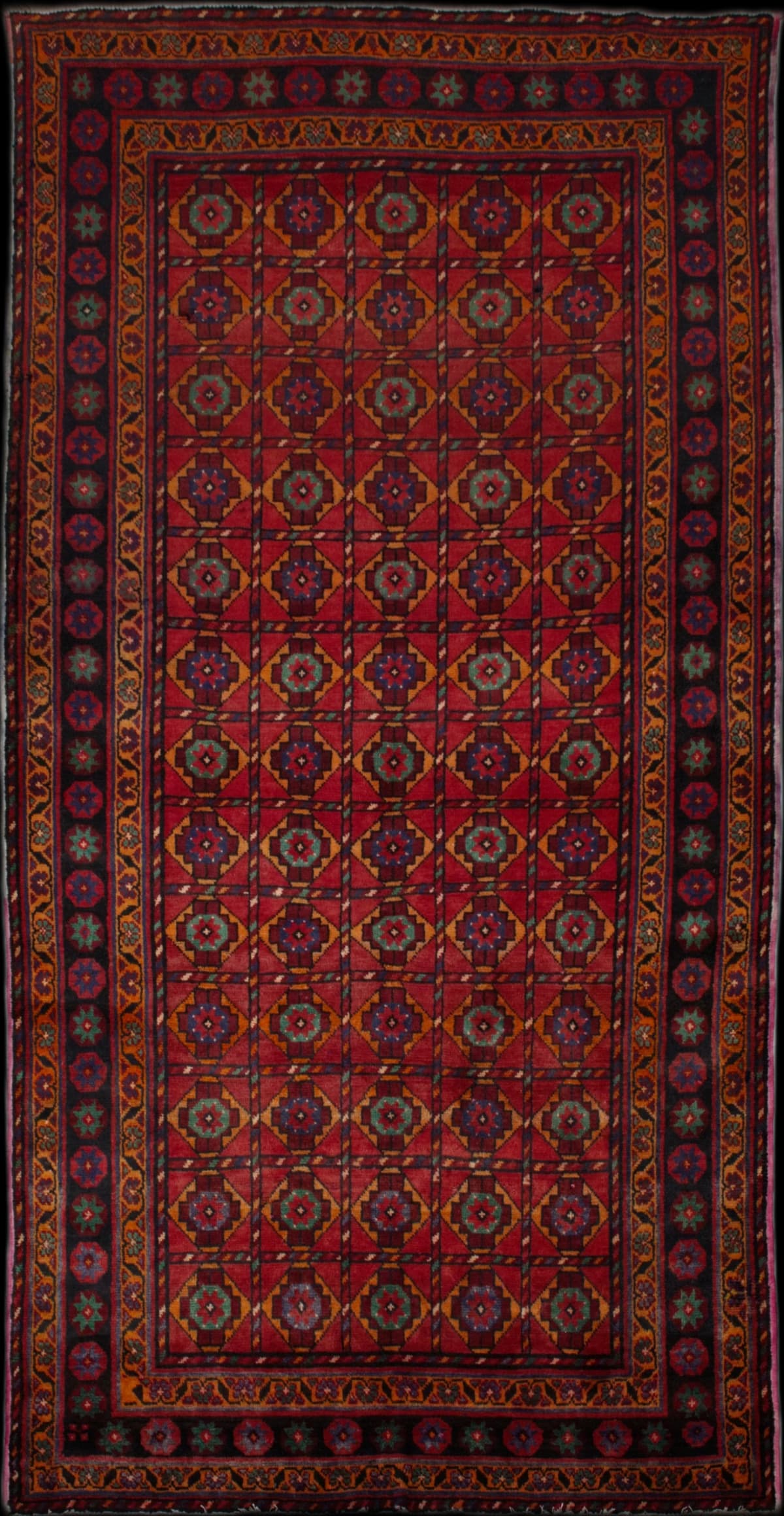
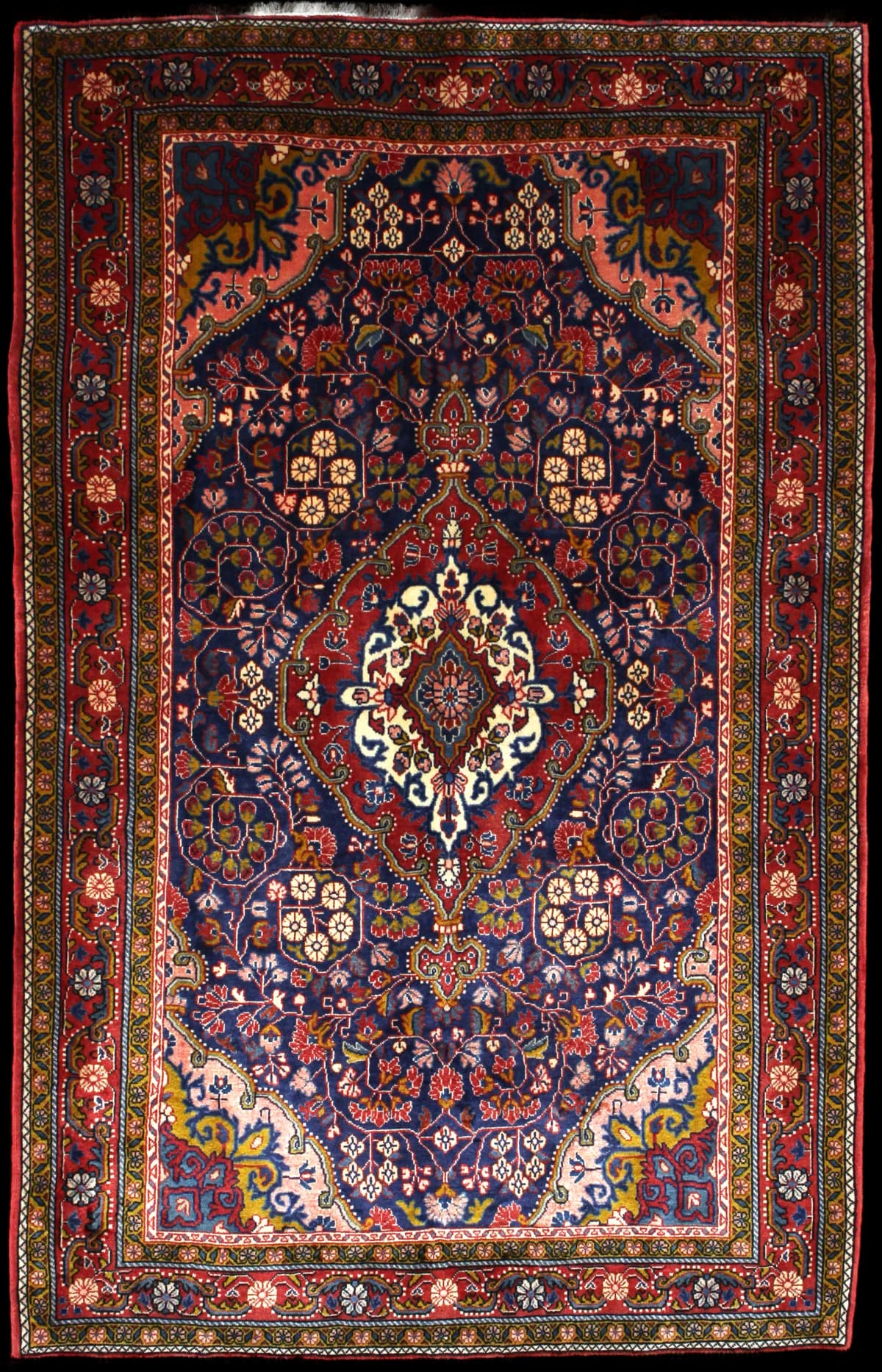
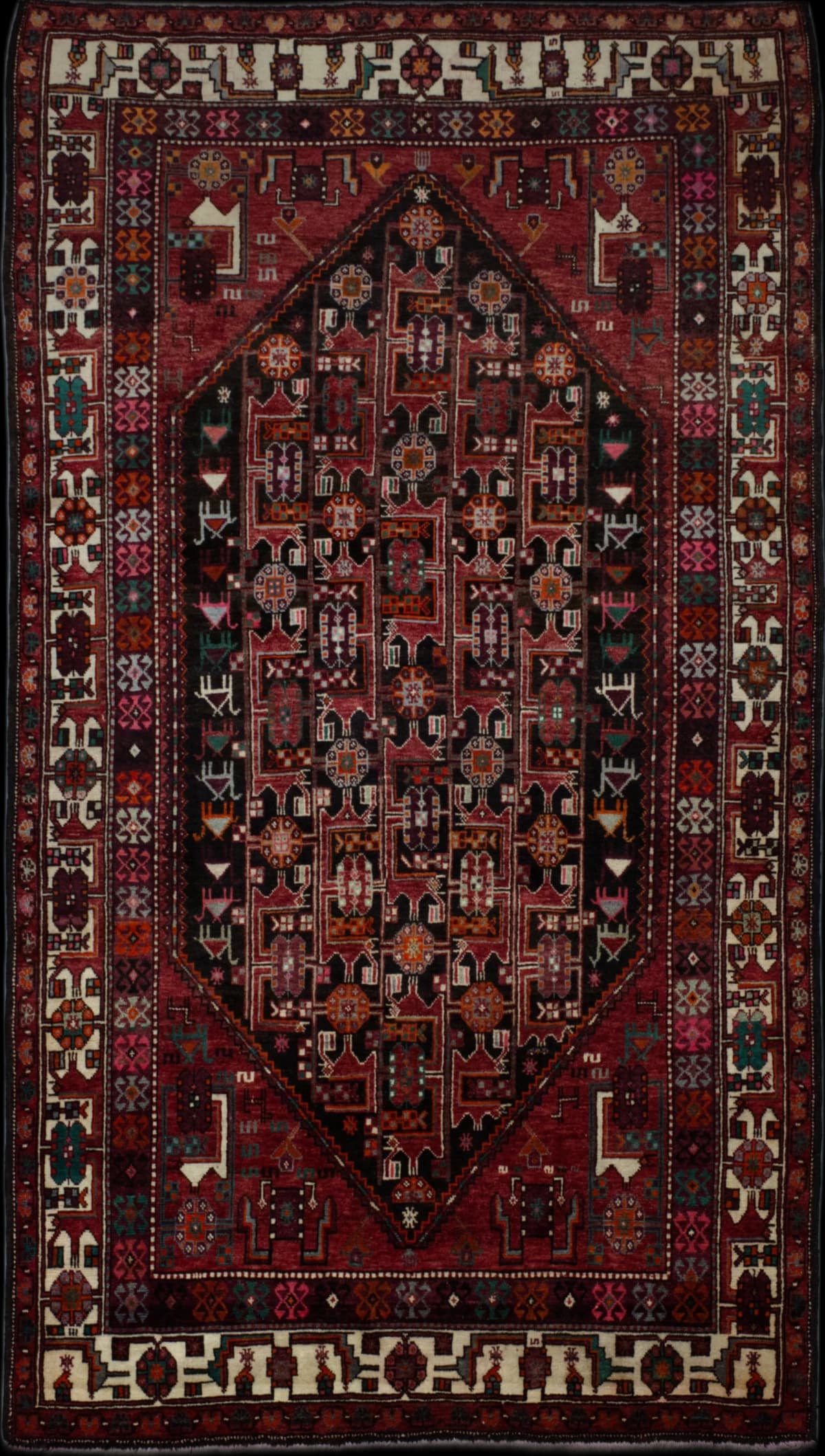
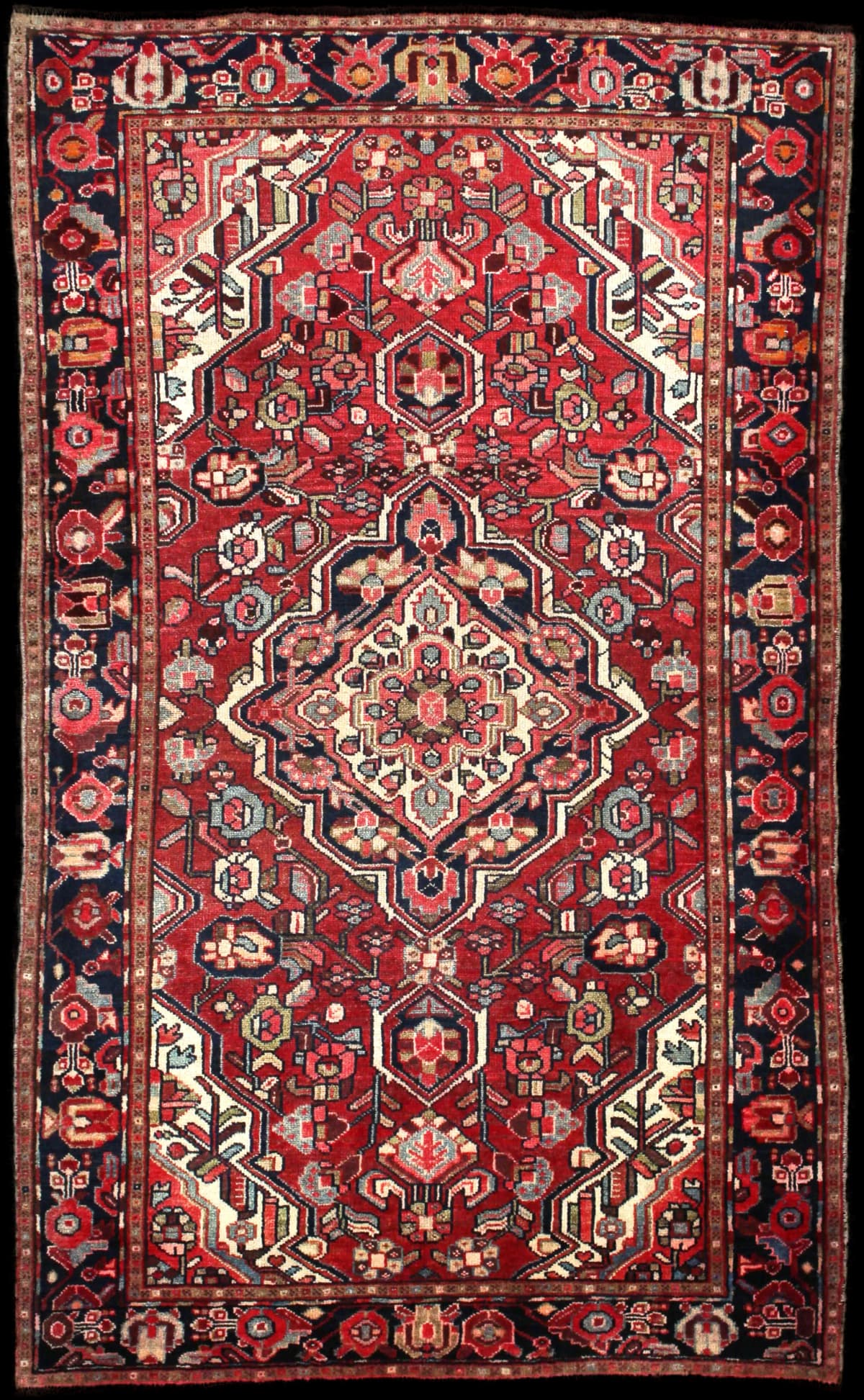
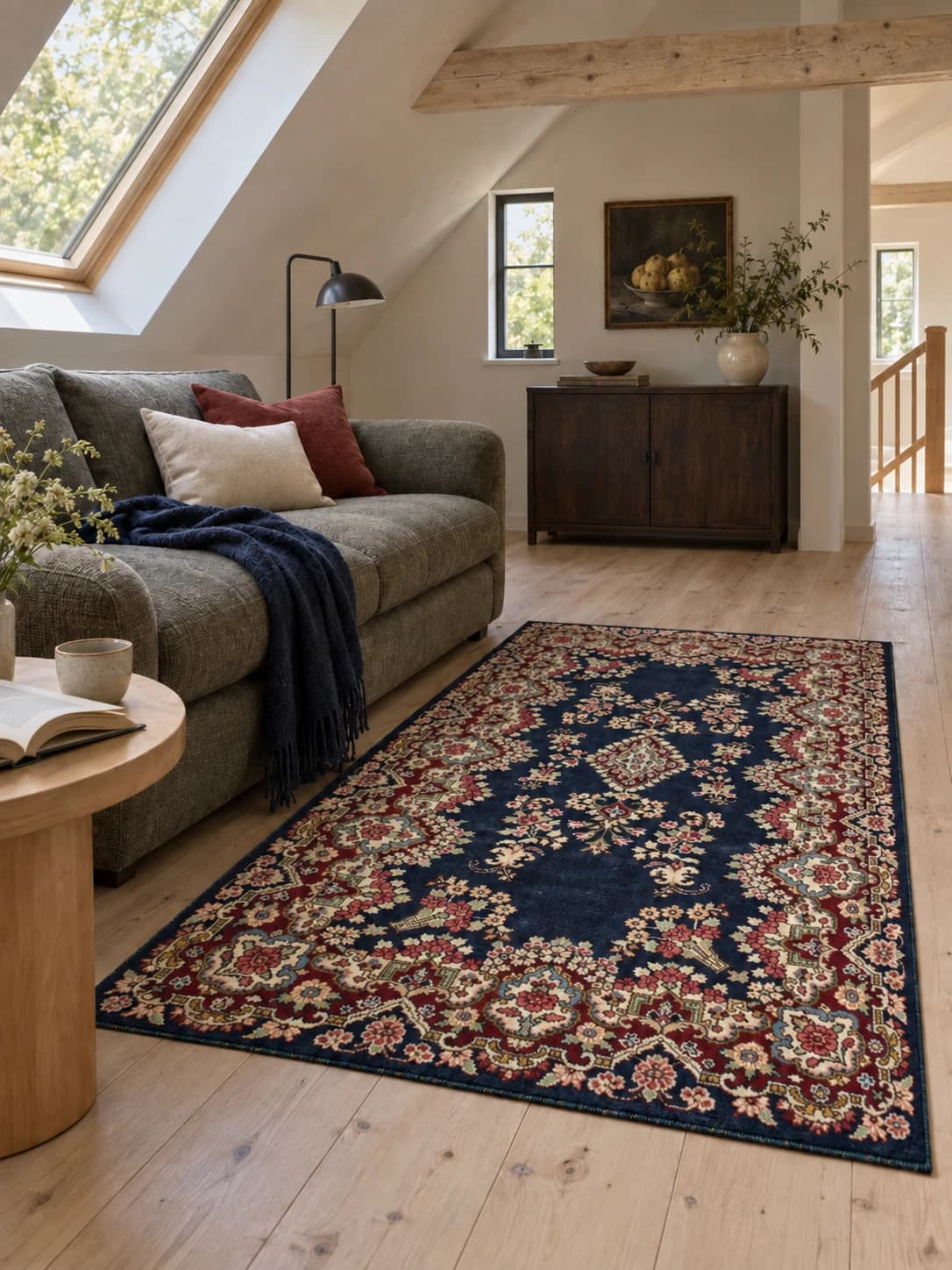
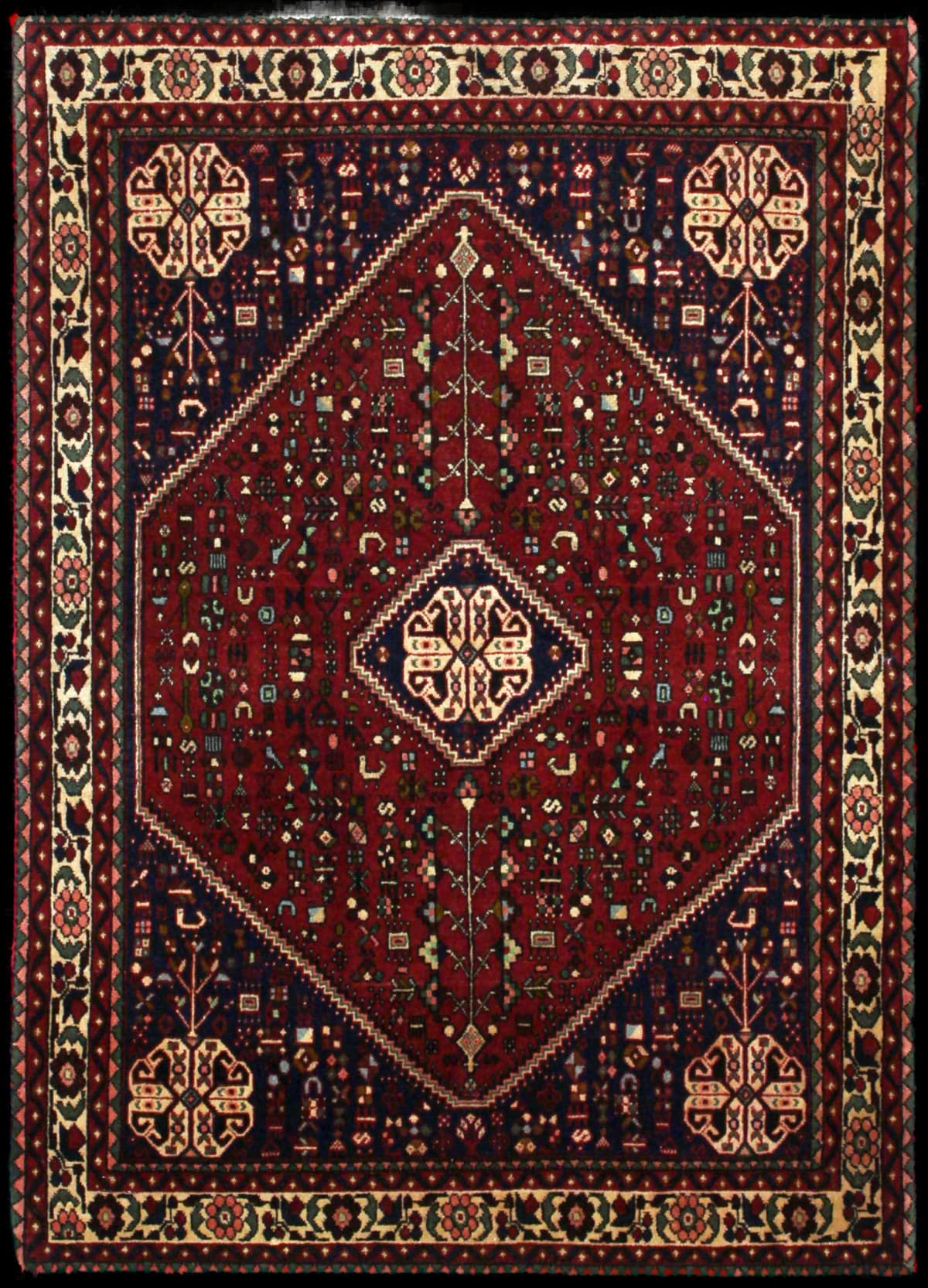
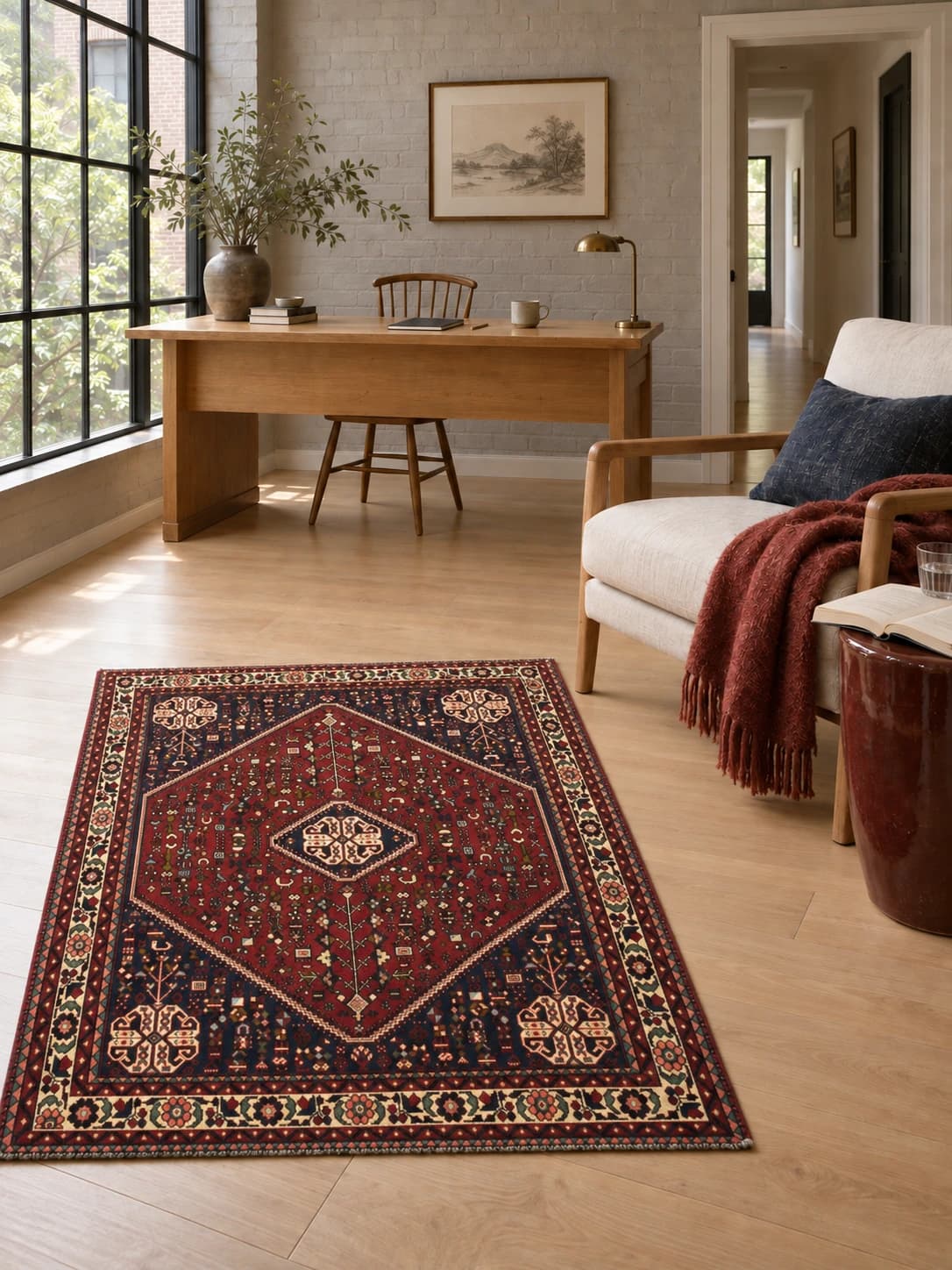
From the region ofکرمانKerman
Up close
Origin: Kerman
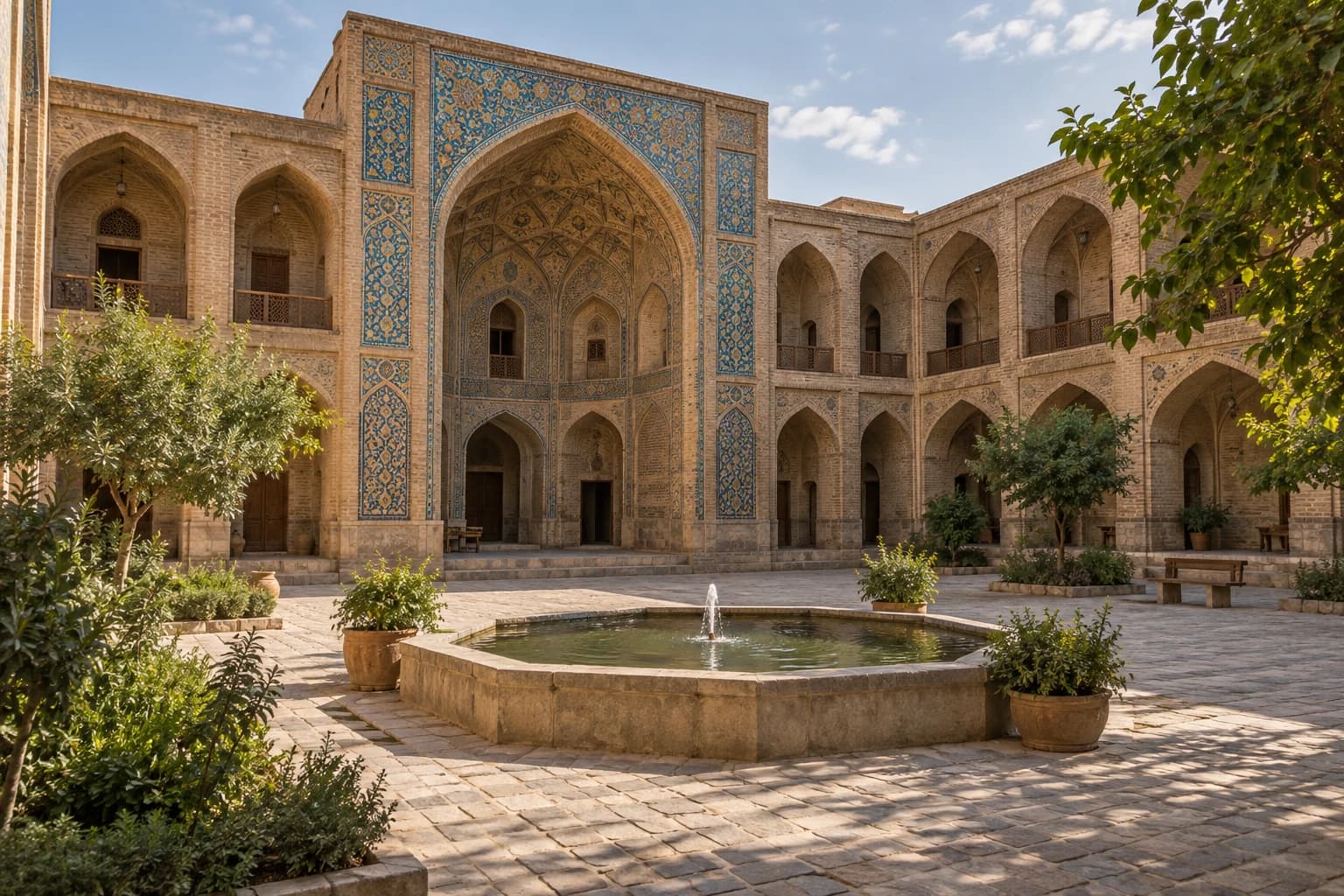
The city of Kerman lies in south-eastern Iran, capital of Kerman province and of the county around it, set on the high desert margin where the Iranian plateau turns toward the old routes to India. Older European writing spells it Kirman, and the classical province around it was Carmania; the site itself has been settled since antiquity. Its position mattered commercially long before carpets did, because merchants moving between Iran and India used Kerman as one of their staging points. The wealth, the woolSee in the carpet dictionary and the steady contact with outside buyers that came with that traffic are the practical reasons a weaving industry took root here rather than elsewhere in the south.
Weaving in the city is far older than its export trade suggests. Under the Safavids, Kerman stood among the largest carpet-producing centers in Persia, named in the same breath as Tabriz, Kashan and HeratSee in the carpet dictionary, and it is from that court era that the modern division of labour dates: patterns grew too complex for a weaver to invent at the loomSee in the carpet dictionary, so a designer drew the cartoon and the weaver executed it. What began in the nineteenth century was the commercial industry rather than the craft. Under the Qajars, exports to Europe and America thrived and foreign firms set up manufacturing operations inside Persia, with Kerman named among the main hubs alongside Tabriz, SultanabadSee in the carpet dictionary and Mashad.
In the usual grouping of Persian weaving, Kerman belongs with Tabriz, Kashan, Nain and Isfahan in the city or workshop class, not with village and tribal work. Those carpets are made indoors on large fixed looms by experienced weavers following a drawn design, which is why their patterns are balanced, repeatable and properly resolved at the corners in a way village weaving rarely is. Curvilinear floral work of the Kerman type depends on exactly those conditions. A single weaver improvising from memory cannot hold a scrolling vine in register across three metres; a cartoon and a workshop can.
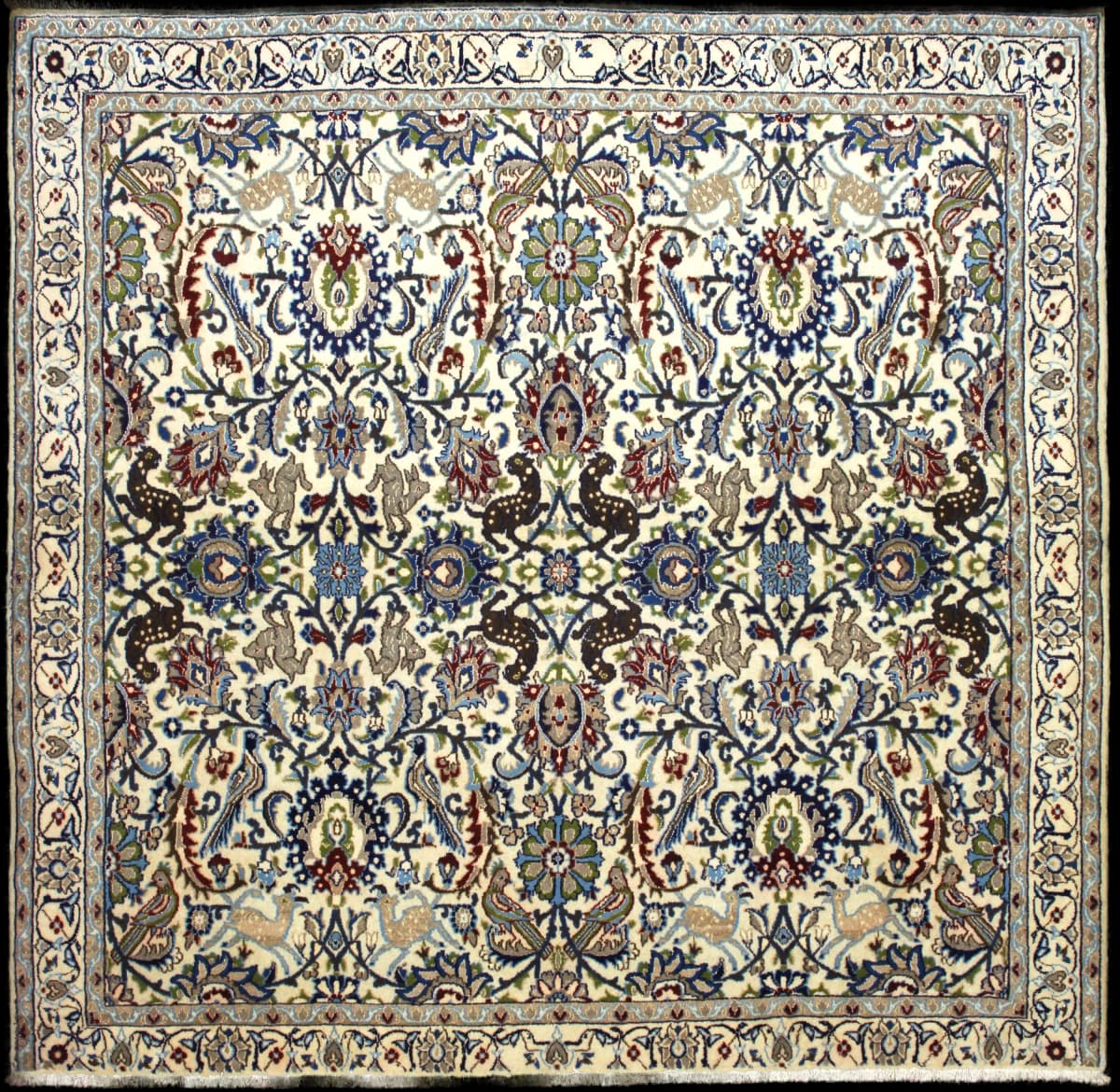
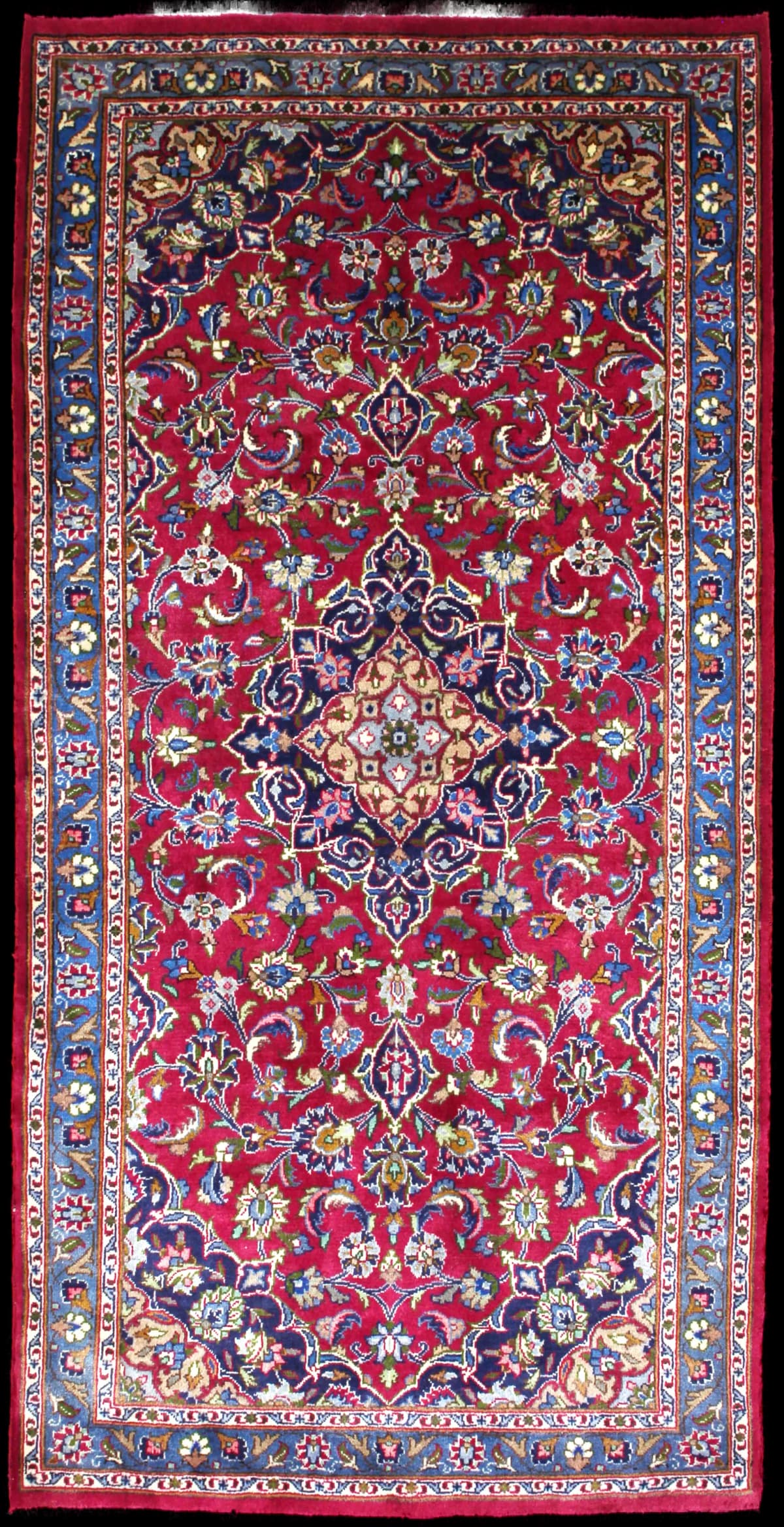
Color is where this region genuinely separates itself from the rest. Kerman kept its own dyeing tradition, and its master dyers were famous specifically for the number of shades they could produce and then combine in one carpet. A typical Kerman carries between fifteen and thirty distinct colors, more variation than you will find in almost any other Persian type, and the effect is not noise but depth: gradations within a single flower, a single leaf, a single stretch of border, so the design reads as modelled rather than flat.
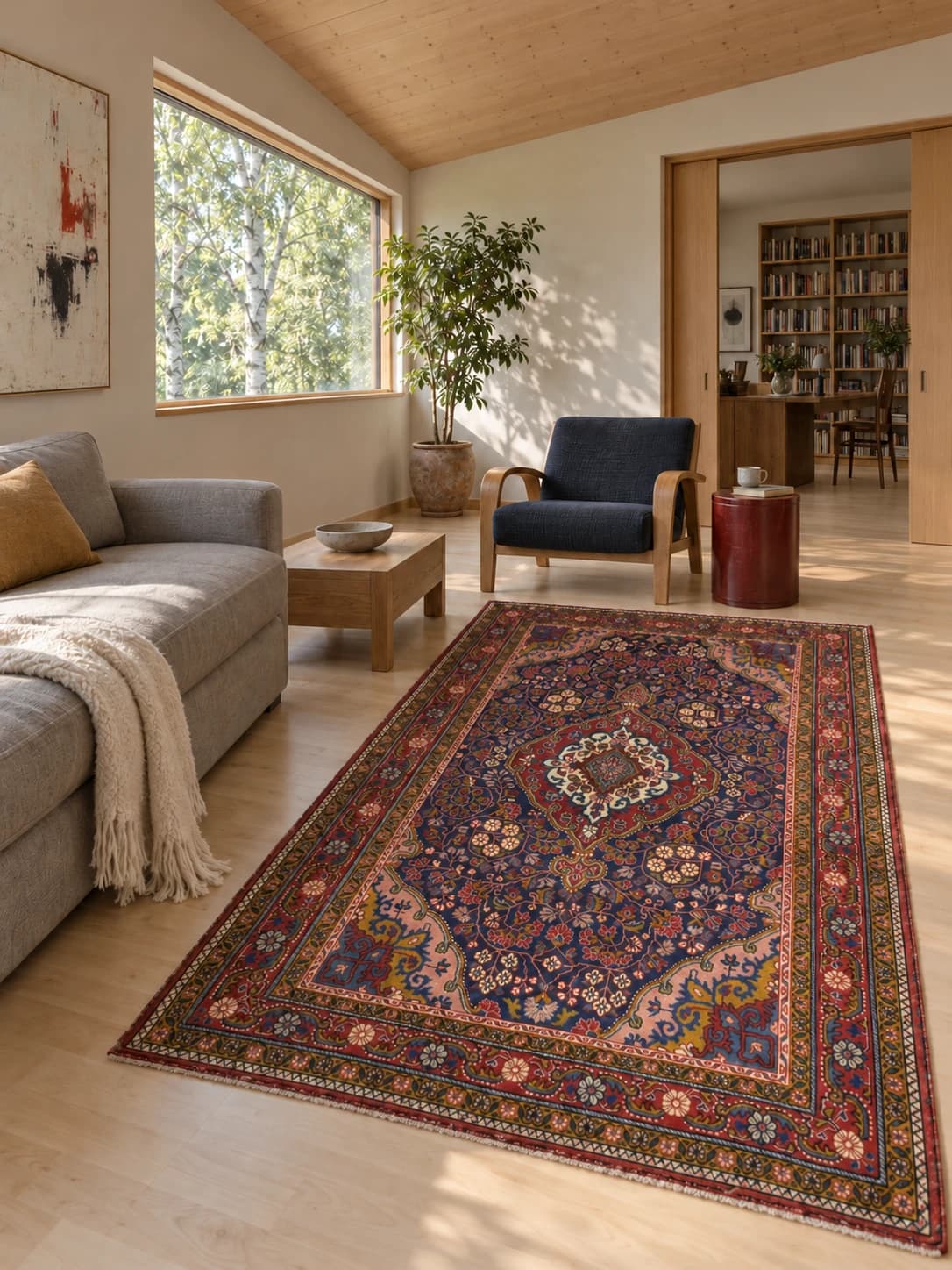
The historic palette leads with deep reds and with blues in several strengths, supported by greens and by cream grounds, with highlights in green, pink and light blue. Within that framework the combinations vary so widely that the region is described by its range rather than by any one signature colorway. That matters when you buy, too. A carpet carrying this many tones picks up and echoes far more of a room than a two-color rug can, and it will often tie together furnishings that otherwise have nothing in common.
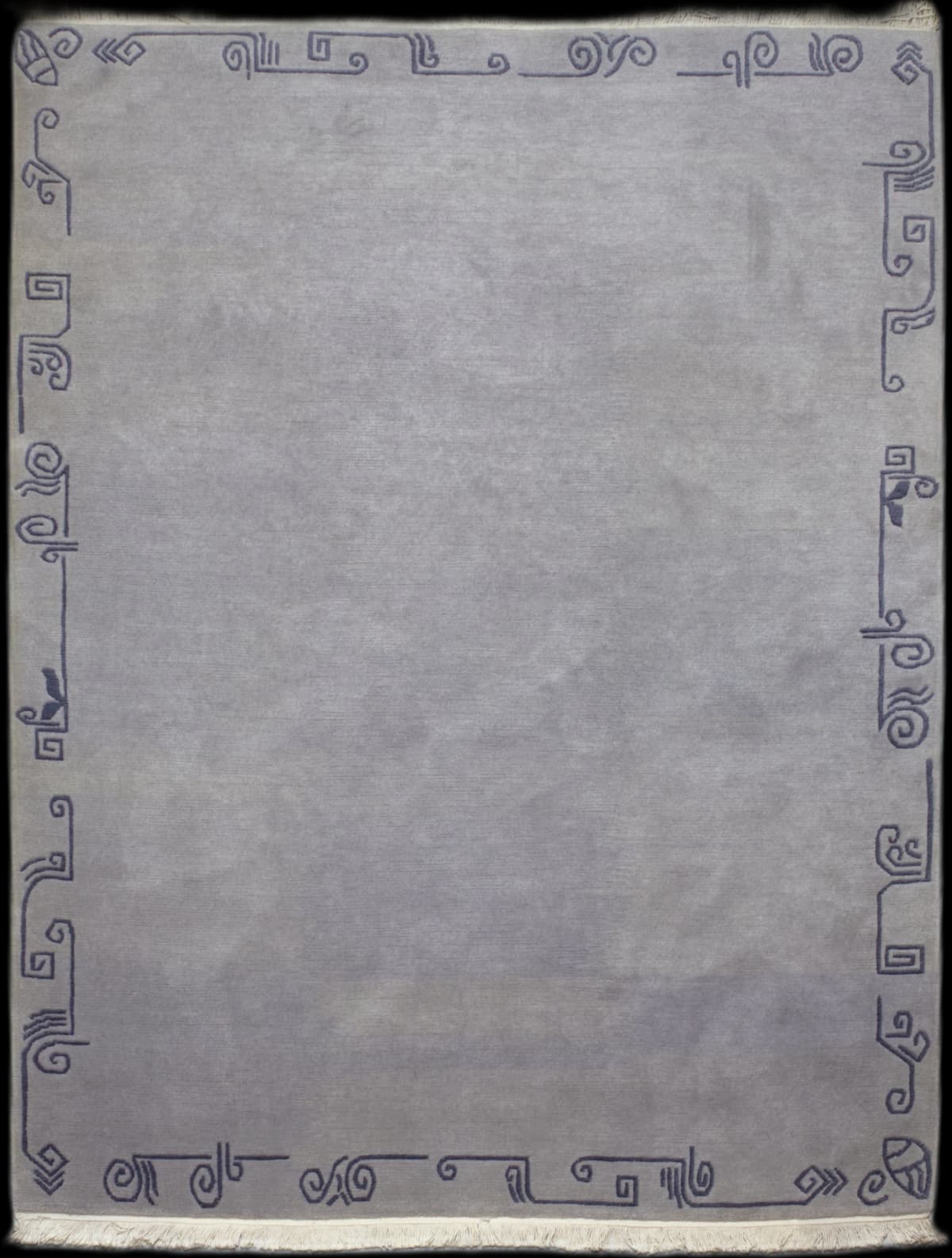
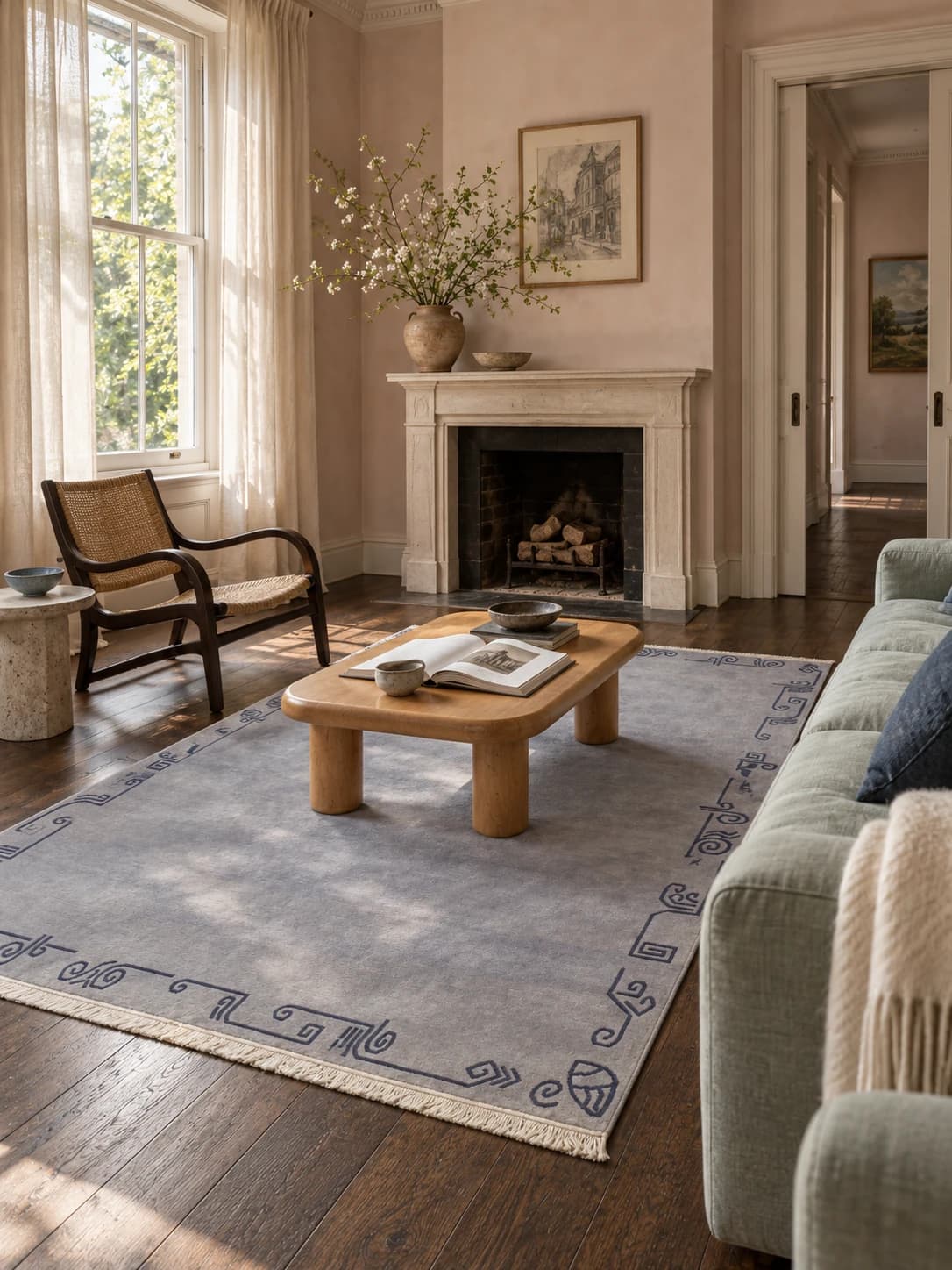
Newer production moves in a different direction. Pastels dominate it: champagne, lime green, soft pink and a greyish blue, with the deep reds and strong blues of the older work largely absent. These are quieter carpets than their nineteenth-century ancestors and they sit well in pale, contemporary rooms, but they are a recent register rather than the regional norm. If what you want is the dense, saturated Kerman of the old descriptions, the pastel pieces are not it, and the difference is obvious across a room.
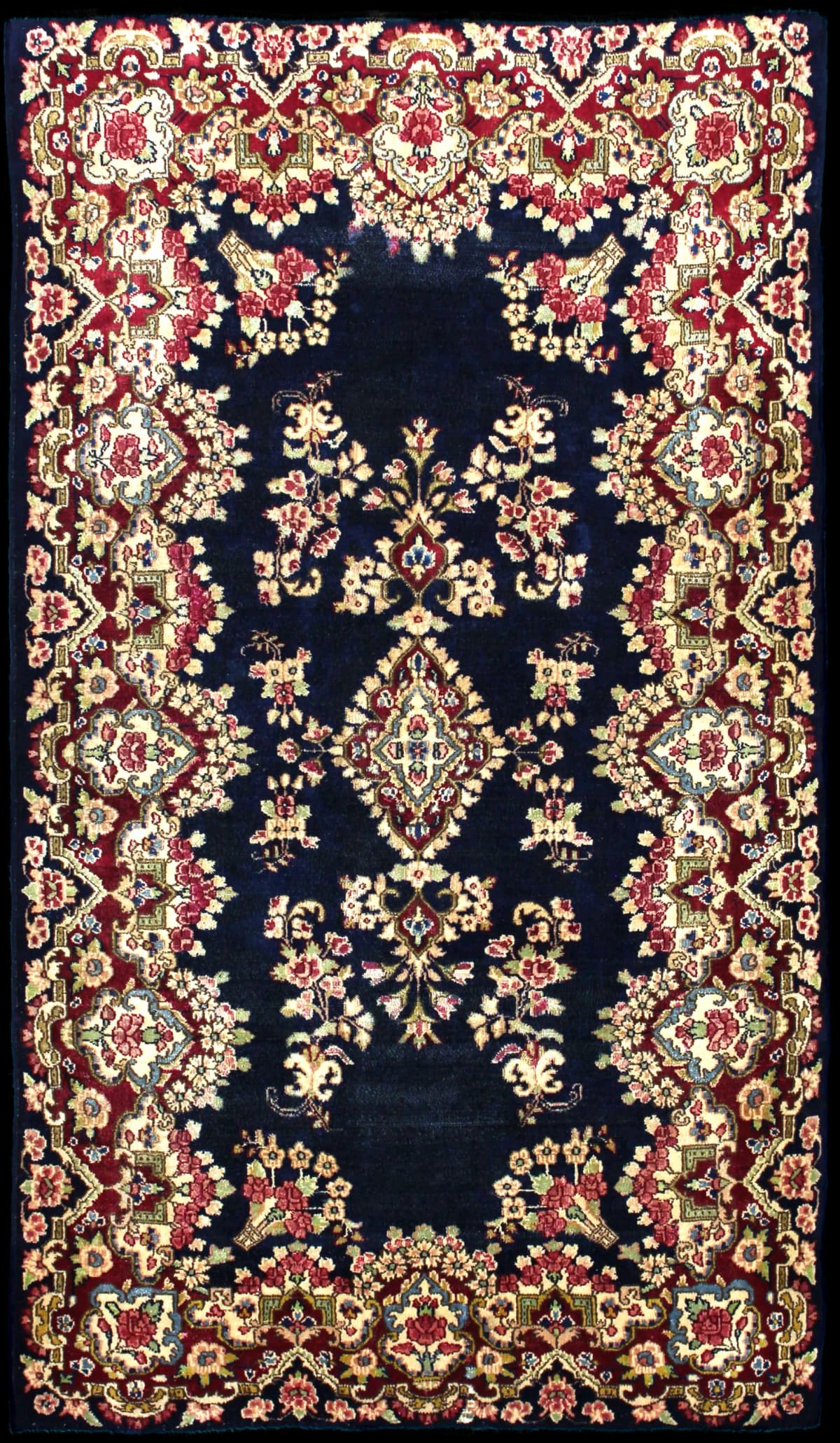
Breadth of design is the other thing the region is known for. Floral work dominates, as it does in all the city weaves, most often as a central medallionSee in the carpet dictionary on a decorated field, with the medallion understood as a lotus, a flower with long-standing sacred associations in Persian carpet symbolism. Allover patterns are equally common, and the two are sometimes combined. Among the designs the region is singled out for is one called spring: very small, very intricate flowers scattered in profusion across the whole field, which asks for the weaver's fineness and the dyer's range at once.
Two older motifs appear here regularly. The tree of lifeSee in the carpet dictionary fills most of the field with a single large tree surrounded by birds, animals and flowering branches, read as the link between the earth and what grows from it, and elsewhere as strength, wisdom and long life; Kerman's handling of it is singled out as unlike anyone else's. The botehSee in the carpet dictionary, the teardrop or pine-cone shape that European buyers know through paisley, repeats in rows across the ground; the word means a budding plant in Persian and stands for growth and renewal. Tabriz and Malayer weave both, and the tree of life is at home in Kashan and Isfahan too.
Open-field layouts, common in newer Kermans, leave most of the ground a single color with generous space between the motifs. Their origin is the decoration of Qur'an covers, where a central medallion sits in a wide plain field, and they appear in three forms: one central medallion, repeating medallions, or an allover scatter. At the opposite extreme sit the garden carpets, whose field is cut into a grid of panels, each a framed window onto flowers, cypresses and birds, and the hunting carpets, with riders and game moving through flowering ground.
Construction is consistent: a cotton foundation carrying a wool pileSee in the carpet dictionary. The wool is kork, the fine soft undercoat fleece of the region's sheep, and it is what gives a good Kerman its particular softness and its slight sheen under changing light. Kork is not exclusive to this region, since Isfahan, Tabriz and Mashad all draw on it, but Kerman is one of its strongholds. Some pieces mix silk into the wool pile for highlights, and a smaller number are woven with a pile of pure silk, which sharpens the drawing and raises the cost accordingly.
Kerman weaves with the asymmetrical knotSee in the carpet dictionary, usually called the Persian knot, as do Kashan, Isfahan, Nain and Mashad; the symmetrical or Turkish knotSee in the carpet dictionary belongs to Turkey, the Caucasus and north-western Iran, and reaches central Iran only through particular village and tribal weaves. No single figure in knots per square inchSee in the carpet dictionary (KPSI) describes this region. Workshop pieces are finely knotted and hold crisp detail, but a substantial share of production, from the lesser workshops, uses the jufti knotSee in the carpet dictionary, which loops the yarn around four warp threads instead of two. That weaves much faster and produces a looser, lighter carpet.
For a buyer the tells are weight and drawing rather than the back, which rarely gives the jufti knot away at a glance. A carpet woven that way feels surprisingly light for its size, close to half what a comparable rug weighs, and its pattern goes soft: flowers and vines that should be crisp look fuzzy and pixelated, and the layouts tend to be plainer, with more empty ground. A workshop Kerman does the opposite, holding fine detail and putting its long color range to work in the shadingSee in the carpet dictionary. On a cotton foundation, such a carpet is built for long domestic use.
The Persian rug
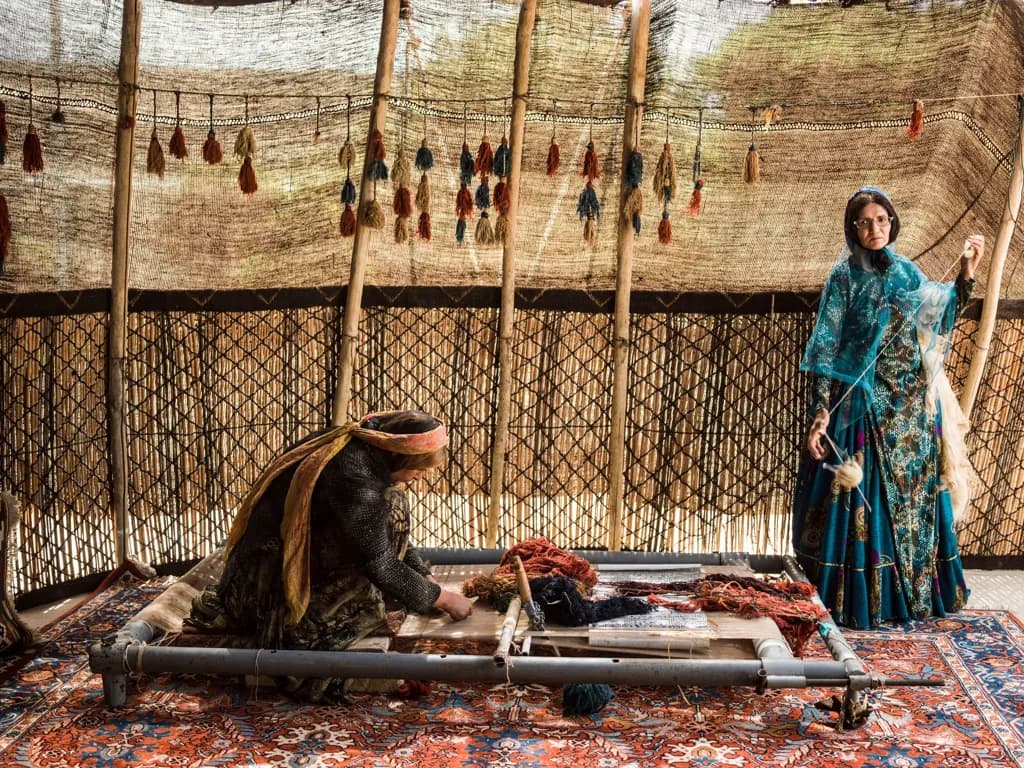
A Persian rug is an Iranian rug — a rug hand-knottedSee in the carpet dictionary in Iran — and the tradition behind it is the oldest documented anywhere. The earliest surviving carpet, the Pazyryk rugSee in the carpet dictionary, was found preserved in a frozen burial mound and dates to the fifth century BC — roughly 2,500 years ago — and it is already accomplished work, not a beginner's craft. What began as warm, hard-wearing floor coverings for tribal households grew, over those centuries, into the art form that every other rug-weaving country has borrowed from.
Two later chapters shaped what a Persian carpet looks like today. Under the Safavid dynastySee in the carpet dictionary, from 1501 to 1732, the court promoted weaving alongside painting and calligraphy, and the workshops of Tabriz, HeratSee in the carpet dictionary, Kashan and Kerman produced the masterpieces that now sit in museums. This is when the great central medallionSee in the carpet dictionary appeared, and when designs grew elaborate enough that a separate designer — often a miniature painter — drew the pattern onto a cartoon for the weaver to follow. The second chapter came in the nineteenth century, under the Qajar dynastySee in the carpet dictionary, when production reached its historical peak, exports to Europe and America boomed, and the workshop industry whose descendants still weave today took its modern shape.
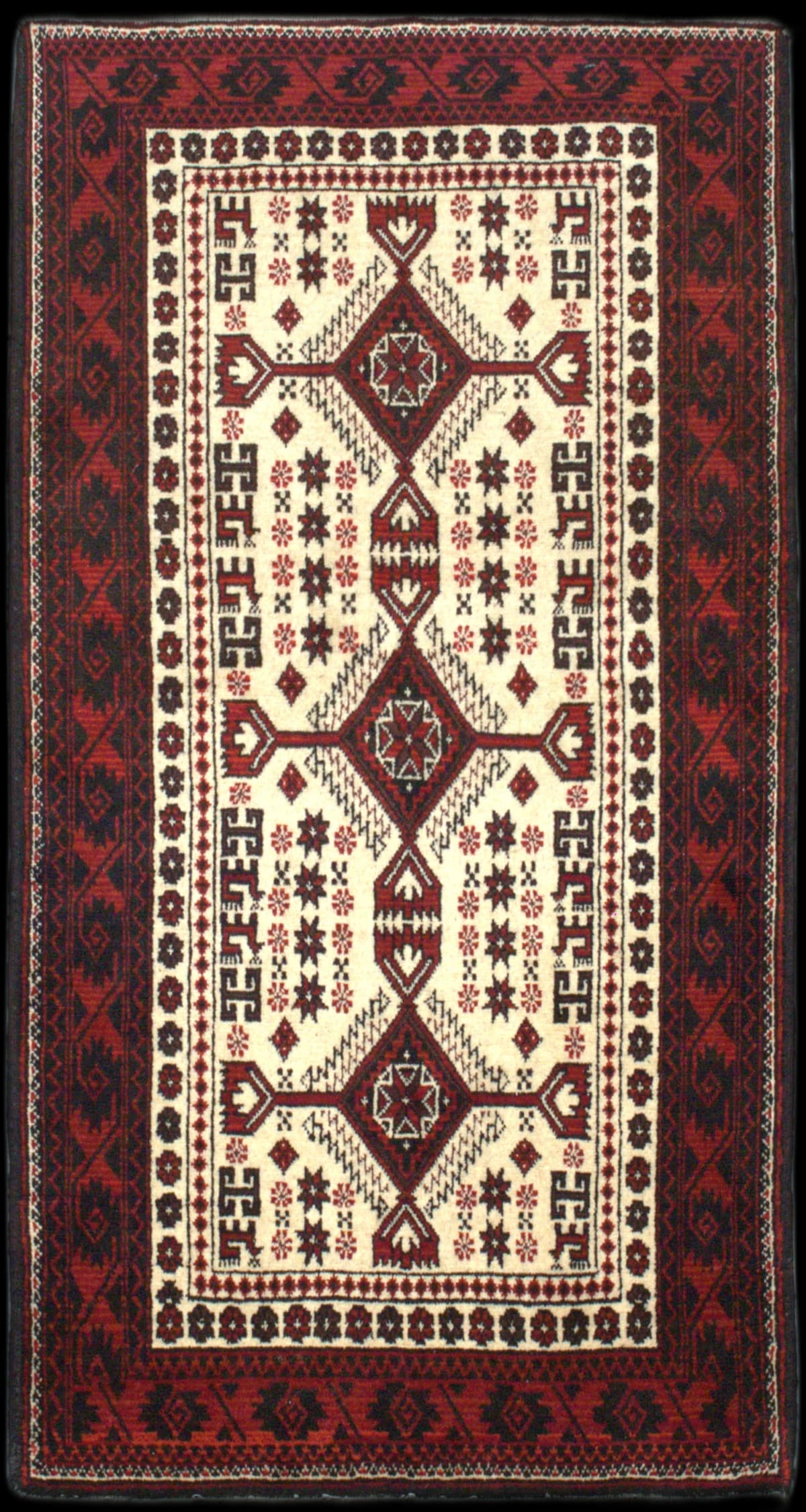
The trade sorts Persian rugs into three families. City rugs — Tabriz, Kashan, Kerman, Nain, Isfahan — are woven in workshops from a drawn design, carry the highest knot densities and come in the widest range of colors, sizes and patterns. Village rugs such as HerizSee in the carpet dictionary, BakhtiariSee in the carpet dictionary and KarajaSee in the carpet dictionary sit in between, mostly geometric and largely woven from memory. Tribal rugs — Baluch, TurkomanSee in the carpet dictionary, QashqaiSee in the carpet dictionary, each named after the people who weave it — are made on small portable looms, so they run smaller, and their bold geometric drawing comes from the weaver's own head rather than from paper.
The design vocabulary draws on a deep stock of motifs: Shah AbbasiSee in the carpet dictionary palmettes, flowing arabesques, the small repeating Herati patternSee in the carpet dictionary, medallions, garden and tree-of-life compositions. These combine with regional habits into styles a practised eye can place at a glance, from the bold geometric medallions of Heriz to the fine curvilinear florals of Isfahan.
The classic palette is built on natural dyes: madderSee in the carpet dictionary reds, indigo blues, saffron yellows and the soft whites of undyed woolSee in the carpet dictionary, settled into combinations refined over centuries. Natural dyes age gracefully, mellowing into the patina that older rugs are prized for, and slight shifts of tone between dye batchesSee in the carpet dictionary — the effect called abrashSee in the carpet dictionary — are a mark of small-batch natural dyeing, not a flaw.
The pileSee in the carpet dictionary is almost always woolSee in the carpet dictionary, and in a Persian wool rug the wool itself decides much of the quality. The best fleece comes from high-altitude flocks, where it grows thicker and richer in natural oils; spring-sheared wool beats the autumn clip, and hand-spun yarnSee in the carpet dictionary gives a finer, softer thread than machine spinning. Fine pieces add silk highlights to a wool pile, and at the very top sits the Persian silk rug, woven in pure silk. Foundations are usually cotton in city weaving, wool in tribal and older pieces, silk at the very top of the range.
Every knot is tied by hand, one at a time, in one of two forms: the asymmetric Persian knotSee in the carpet dictionary, usual in central and eastern Iran, or the symmetric Turkish knotSee in the carpet dictionary, common in the north-west ever since Seljuk weavers introduced it in the eleventh and twelfth centuries. A large rug holds in the region of two million knots and can occupy a weaver for about a year.
Knot densitySee in the carpet dictionary is the figure newcomers fixate on, and the finest silk-foundation pieces do reach as much as 1,000 knots per square inch. But densitySee in the carpet dictionary only matters as far as the drawing demands it: a curvilinear Isfahan needs a fine weave to stay sharp, while a geometric Heriz is famously durable at a modest count. Material, symmetry, color harmony and condition say more about quality than any single number.
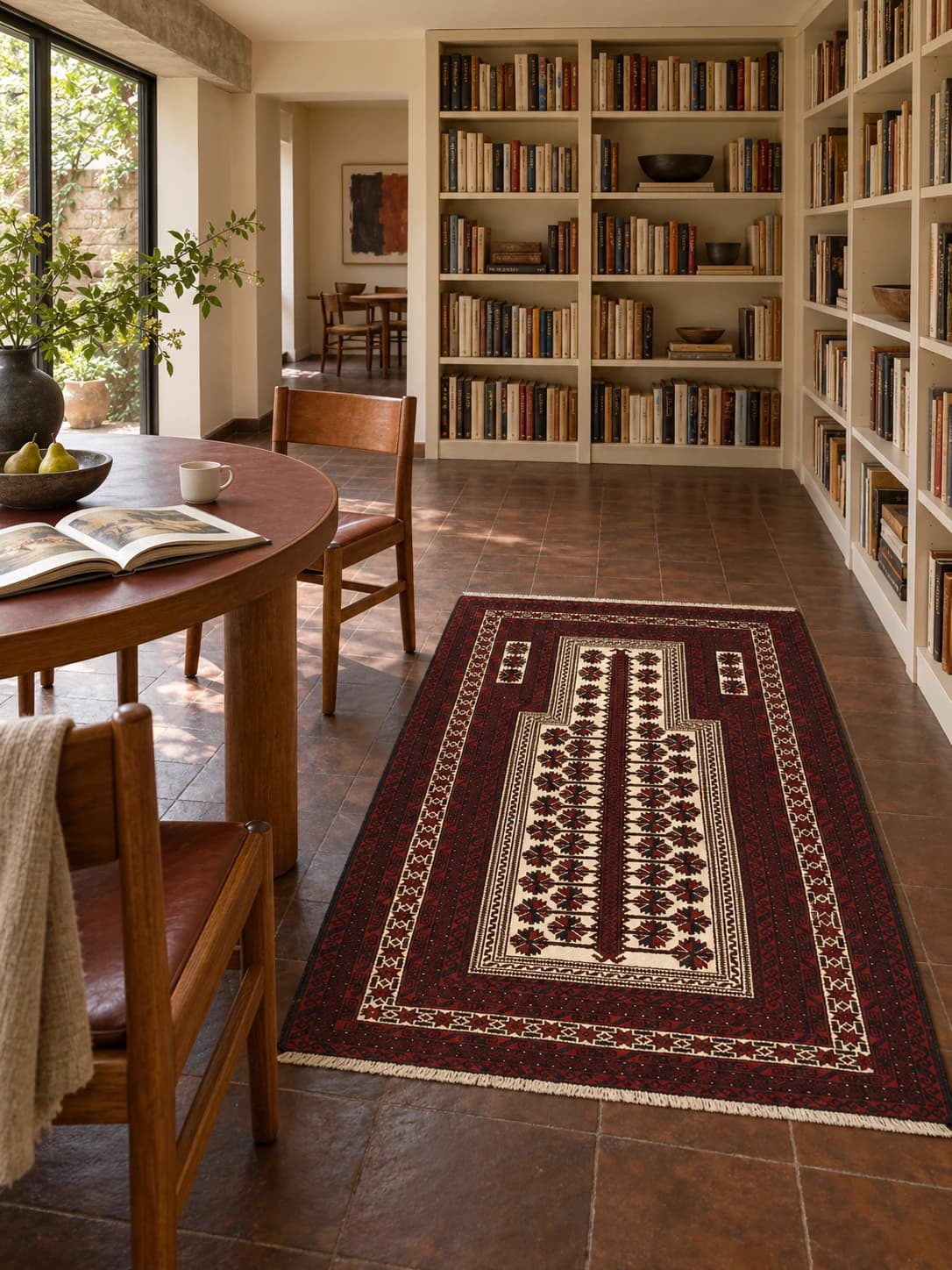
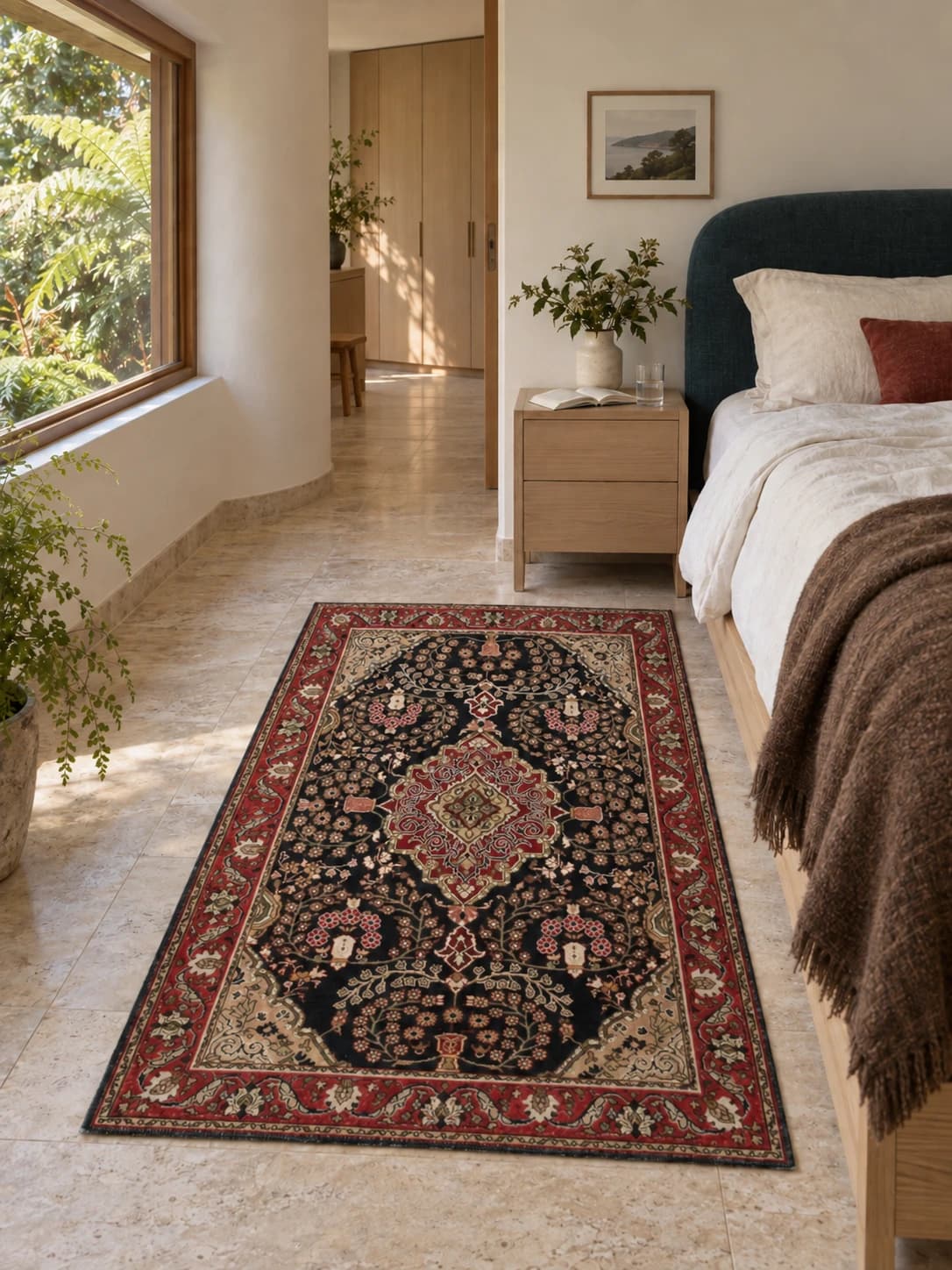
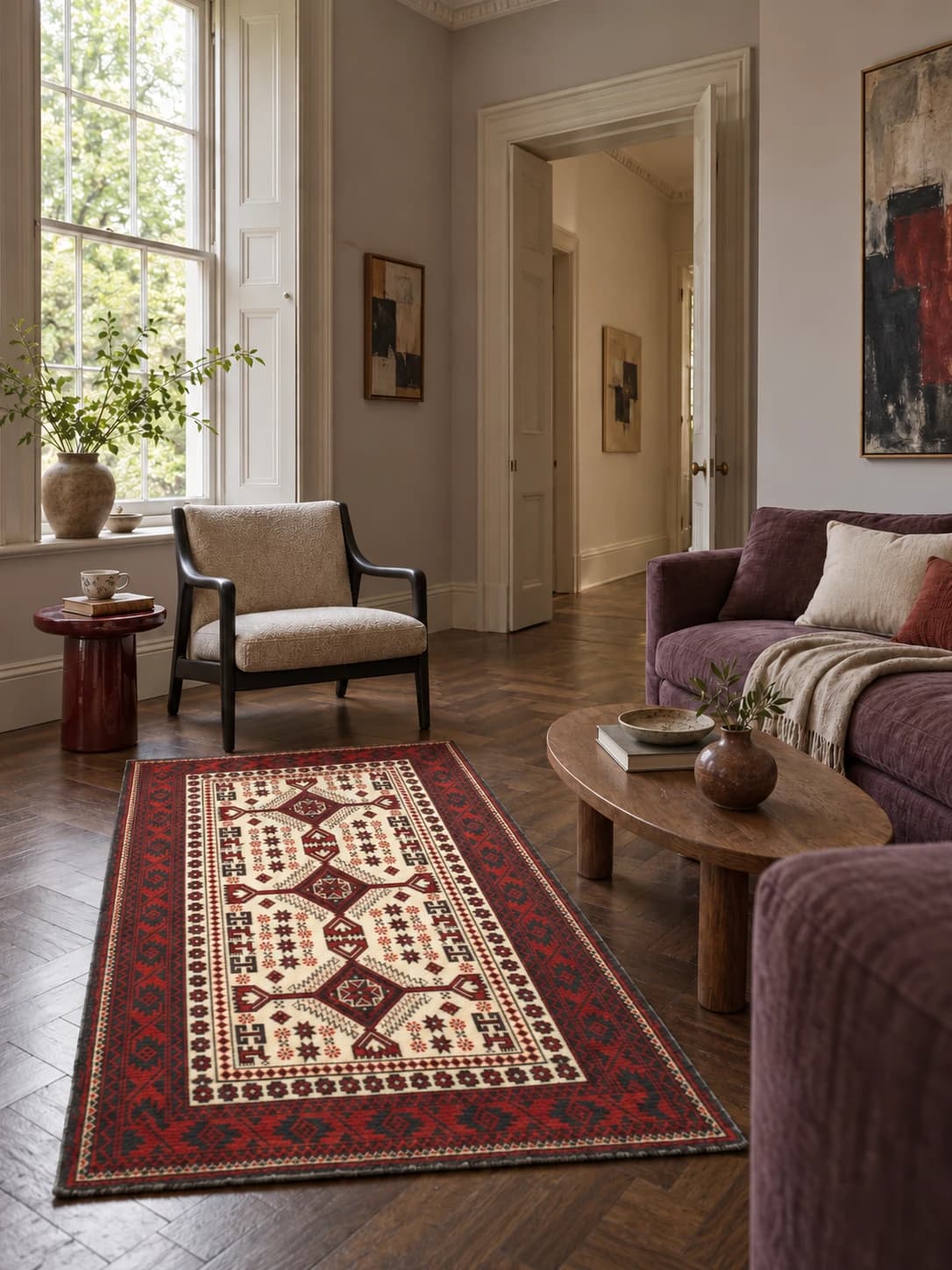
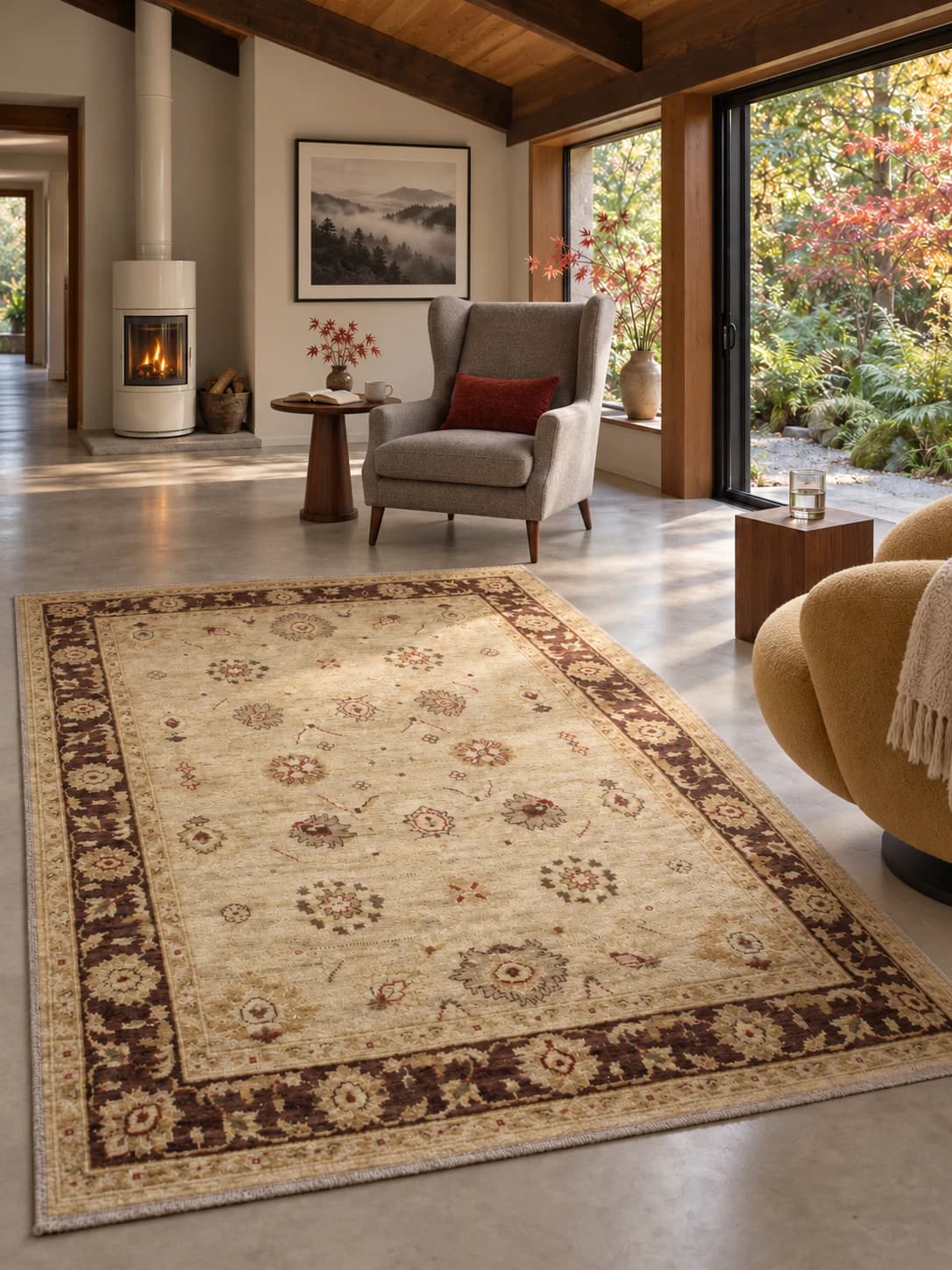
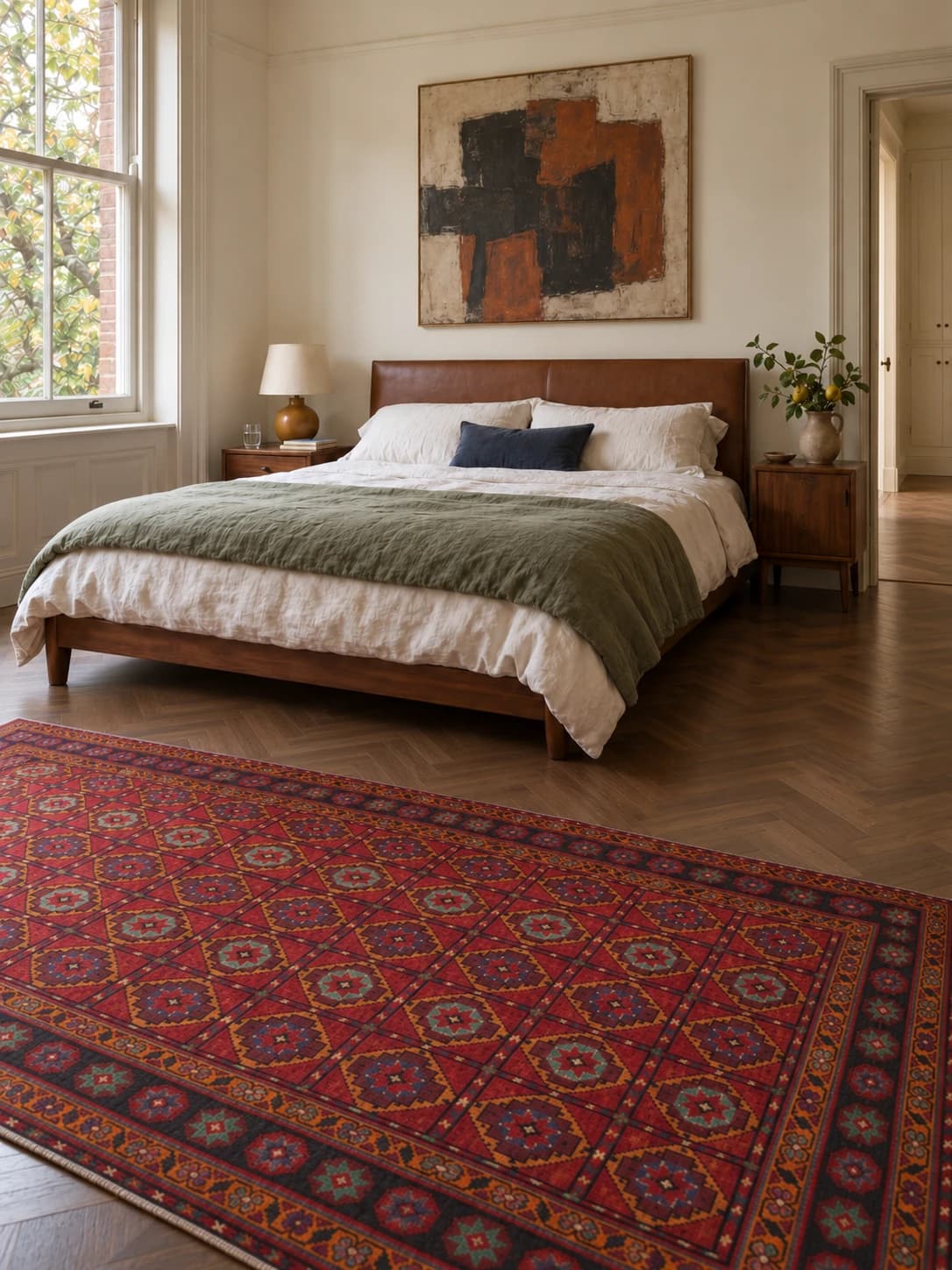
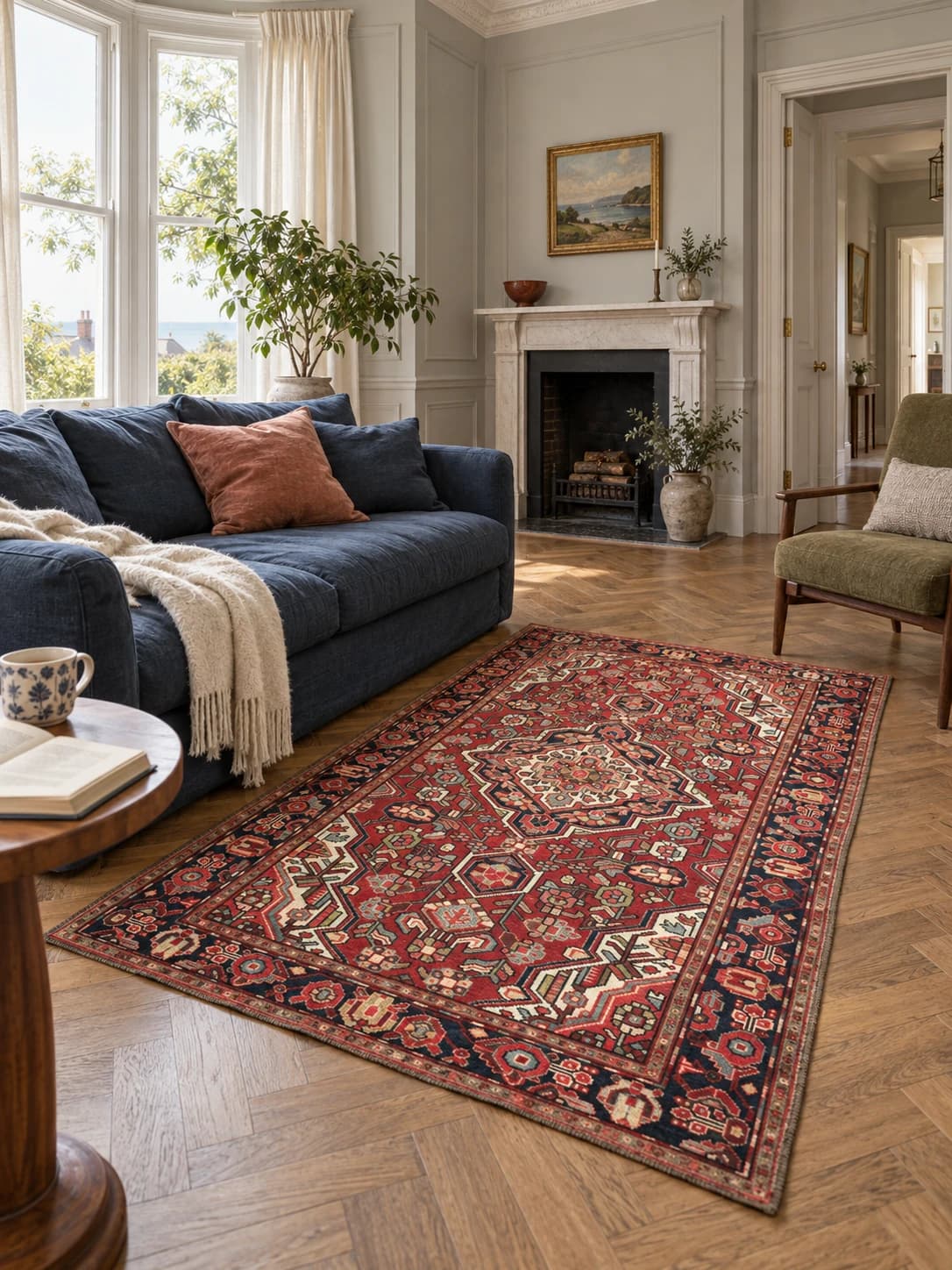
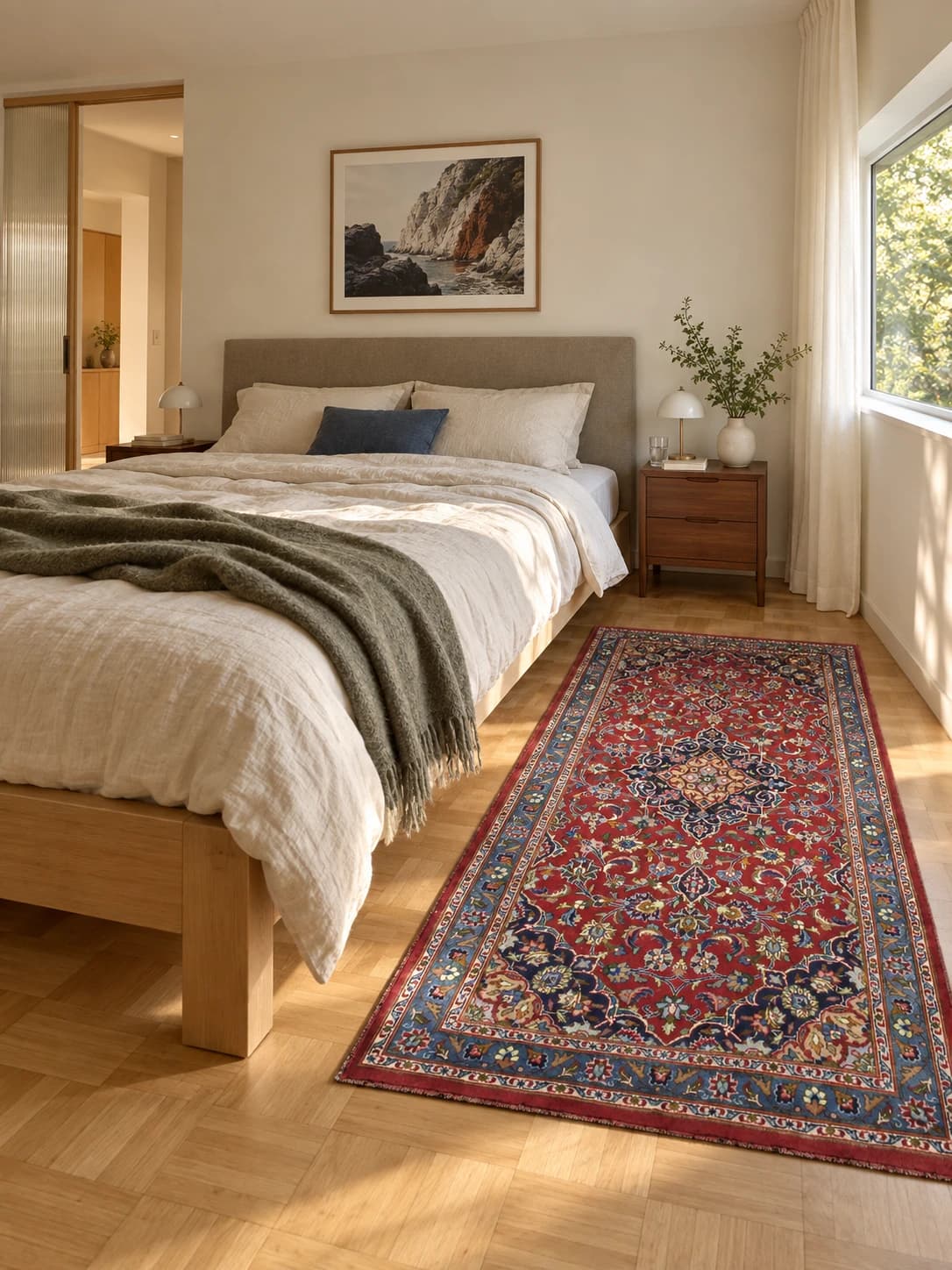
Persian carpets settle into modern rooms as naturally as classical ones, as a focal point in a living room, a foundation under a dining table or a quieter accent in a bedroom. Care is undemanding: gentle vacuuming without a rotating brush, an occasional turn for even wear, and a professional wash about every five years — sooner in a hallway or entrance, less often in a quiet room.
A hand-knotted Persian rug tends to outlast its owners. Pieces a century old regularly survive in fine condition, their colors settled and their pile supple, often looking better than when they left the loomSee in the carpet dictionary. A well-chosen, well-kept rug holds its worth and passes down as a family heirloom rather than being replaced — which is precisely what the knots, the wool and the dyes were always for.
Questions about this carpet?
Our family has traded carpets for two generations. Ask us anything — photos, video calls, advice on sizes.
Message us
Keep exploring
Guides from our family workshop: how to clean, place and care for hand-knotted rugs.