Pakistan
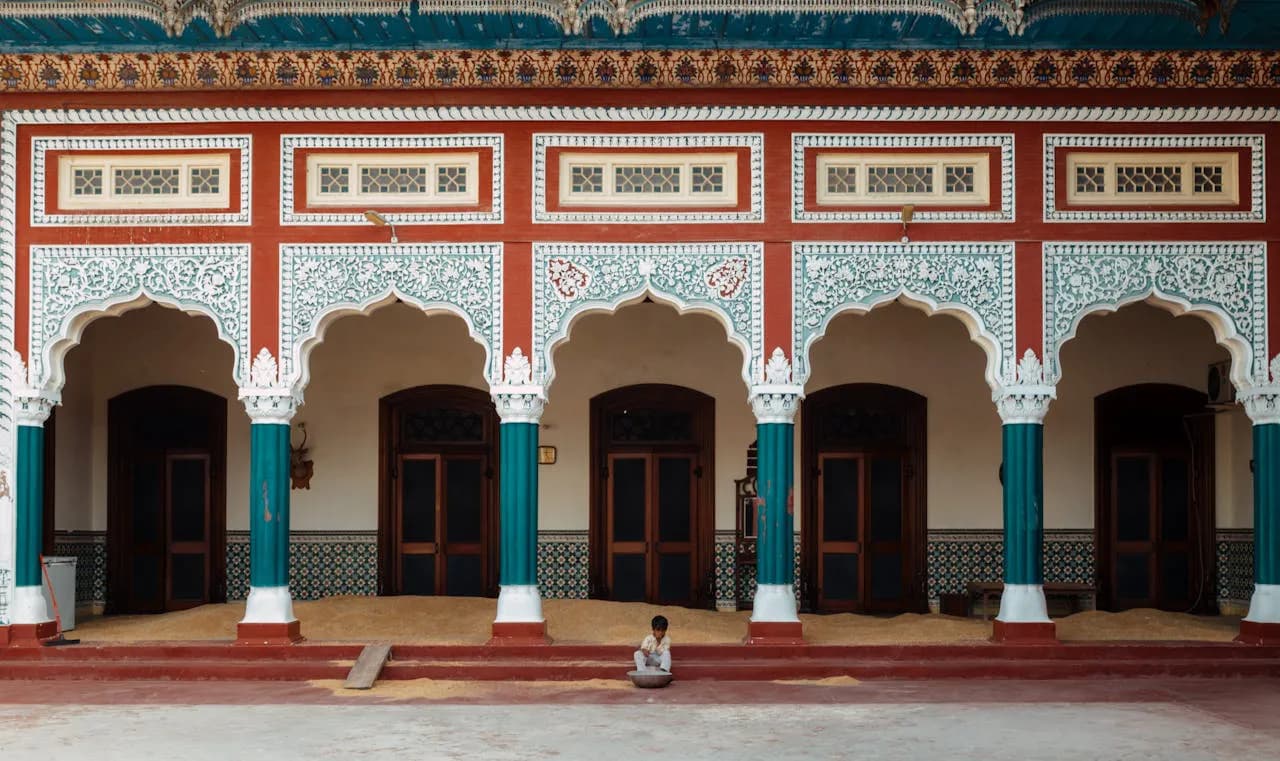
Pakistani rugs are a young industry with old roots. Serious workshop weaving took hold in the country in the second half of the twentieth century, and its defining wave came in the 1970s, when embargoes cut Iranian weaving off from Western buyers. Experienced workshop owners moved to Pakistan, bringing their design archives and production skill with them, trained local weavers, and set the industry's course: classical Turkish and Persian patterns, woven to disciplined workshop standards.
The defining material is woolA natural animal fiber used for the pile, and in some rugs also the foundation, of high-quality rugs. It is durable, resilient, stain resistant and flame resistant, feels soft and cushioned underfoot, insulates against cold, and takes up dye readily and holds it for many years. It also traps dust particles, which helps reduce allergic reactions. Quality depends above all on where the sheep graze: high-elevation pastures and good feed give thicker, oilier wool, with Manchester, New Zealand and Ghazni wools the best-known prized examples. Early-spring shearing and hand spinning (finer, softer thread than machine spinning) improve it further, while thin, dry wool from dead sheep goes into cheaper rugs.See in the carpet dictionary from the highlands of Ghazni in neighboring Afghanistan — thick, high-altitude fleece rich in lanolinThe natural wax that coats wool fibers and serves as the fleece’s own protection, waterproofing it. Wool from sheep raised at higher elevations is thicker and oilier ("fatty"), and a warm, slightly oily hand is a quick sign of real wool. In a carpet, the lanolin that remains repels liquids, so spills bead on the surface for a few moments instead of soaking in, one reason wool resists spills and soil. Hand spinning preserves it, while repeated harsh chemical cleaning strips it away, so gentle washing is recommended.See in the carpet dictionary, usually spun by hand. It takes dye deeply, carries a natural luster, and wears into the soft, almost silky surface these rugs are known for, with New Zealand woolWool sourced from New Zealand, ranked with Manchester and Ghazni wool among the three best-known high-quality wools for Persian and Oriental rugs; good rug wool of this kind feels thick and oily. Because it is imported rather than taken from local flocks, its use affects a rug's price. It is cited for the pile of Pakistan-woven Oushak, Ziegler and Peshawar rugs, sometimes paired with Ghazni wool, and for the thick pile of Kazak Azari rugs.See in the carpet dictionary appearing alongside it in the better grades. The pileThe surface of a rug or carpet, made of upright fibers in cut tufts or loops. In a hand-knotted rug it is formed by the cut ends of thousands of wool or silk knots tied onto the warp row by row, trimmed lightly during weaving and given its final height by shearing at finishing. Pile thickness, measured from the back of the rug to the top of the pile, typically runs from low, about 1/8 to 1/4 inch (3 to 6 mm), to high, about 1/2 to 5/8 inch (13 to 16 mm). Fine, dense designs are cut short to keep the pattern sharp; higher pile suits traffic and heavy furniture, lower pile suits door clearance and humid rooms.See in the carpet dictionary sits on a cotton foundation, tied predominantly in the asymmetric Persian knotThe asymmetrical knot of hand-knotted rugs, the counterpart of the symmetrical Turkish (Ghiordes) knot. The weaver wraps the yarn around one warp thread and passes it under the neighboring one, usually working by hand without a hook. On the back of the rug the knots look staggered or diagonal rather than like tidy squares, and the pile feels softer; the knot permits finer detail and higher knot density. In Iran, a rule of thumb ties it to the central, eastern, and southern rugs (Kashan, Isfahan, Nain, Kerman), while the northwest and west favor the Turkish knot, though exceptions exist. Fine curvilinear florals are often credited to it, but Turkish-knot rugs can be just as intricate.See in the carpet dictionary, at densities typically between 100 and 300 knots per square inchThe number of knots in one square inch of a hand-knotted rug (KPSI; 1 KPSI is about 15.5 knots per 10 x 10 cm), counted on the back with a ruler by multiplying the knots along one inch of height by those along one inch of width, averaged over two or three areas. More knots give sharper detail, like a higher-resolution screen, and, all else equal, somewhat more durability and a higher price, but density alone does not grade quality: Heriz and Bijar are durable at low to medium counts, while floral curvilinear designs blur without enough knots. Figures run from under about 80 for coarse tribal weaves such as Gabbeh and Qashqai, through roughly 120 to 225 for many village rugs and 300 to 700 for fine city rugs such as Nain and Isfahan, to 600 to 1,000 or more for pure silk Qum.See in the carpet dictionary.
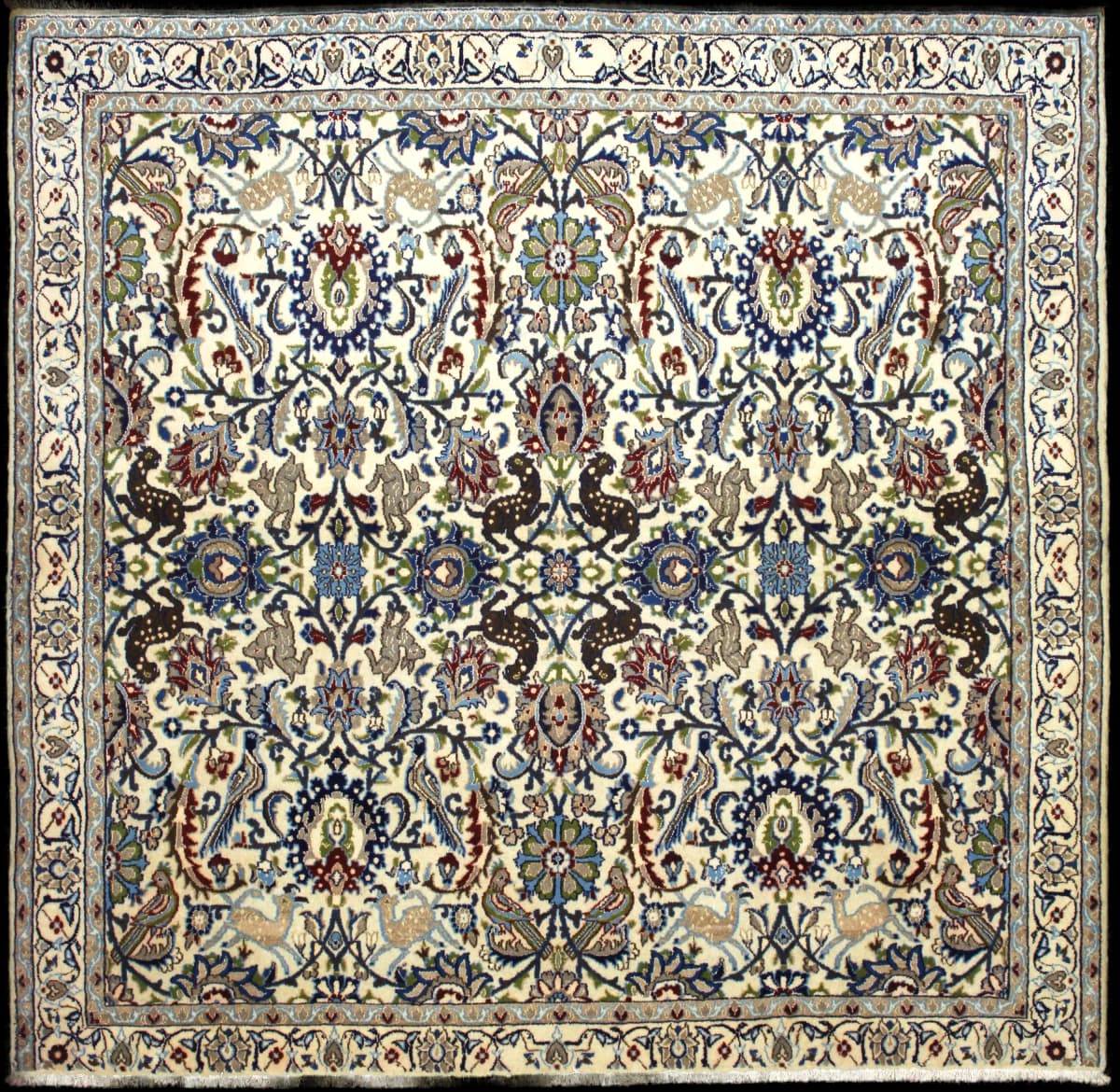
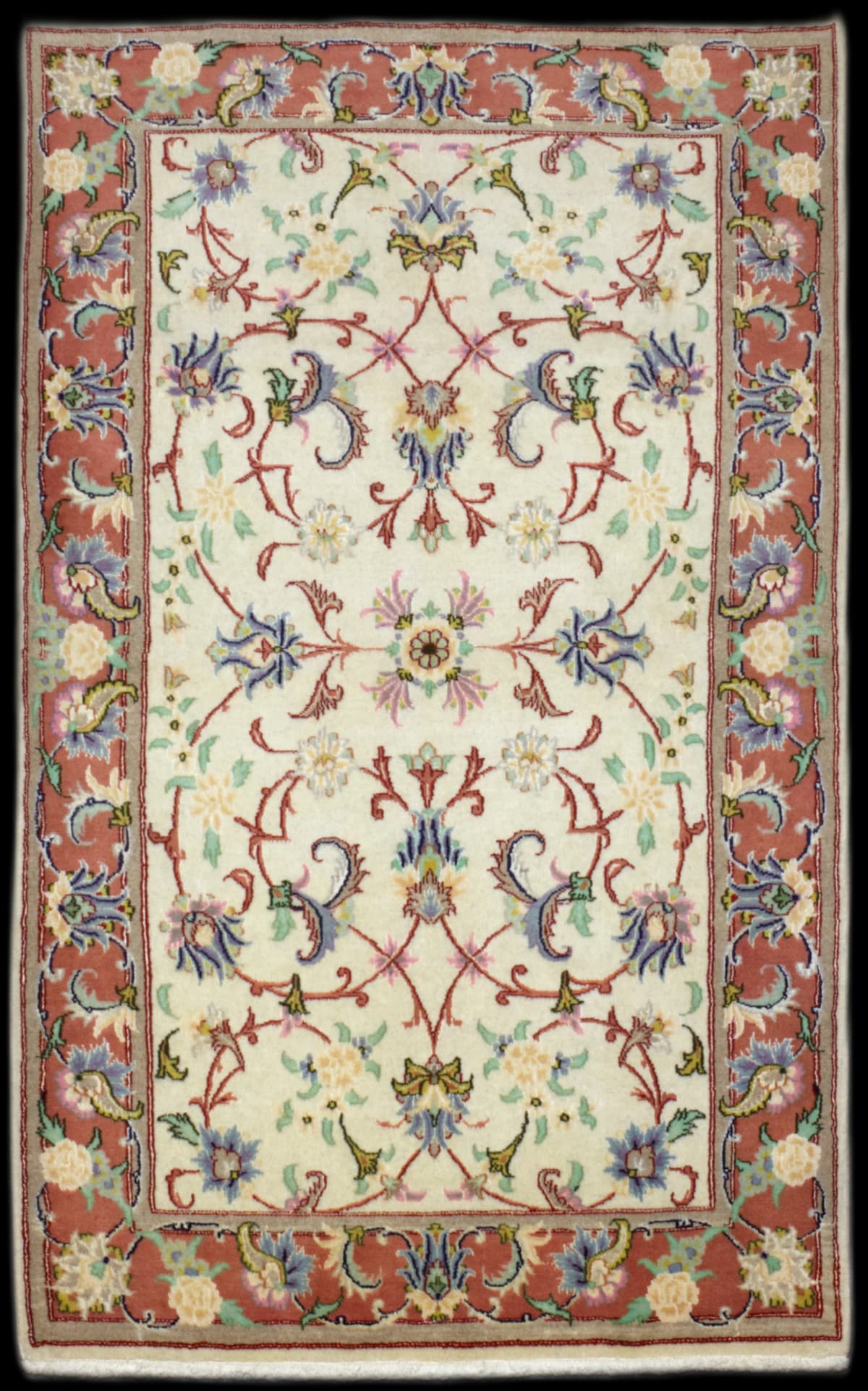
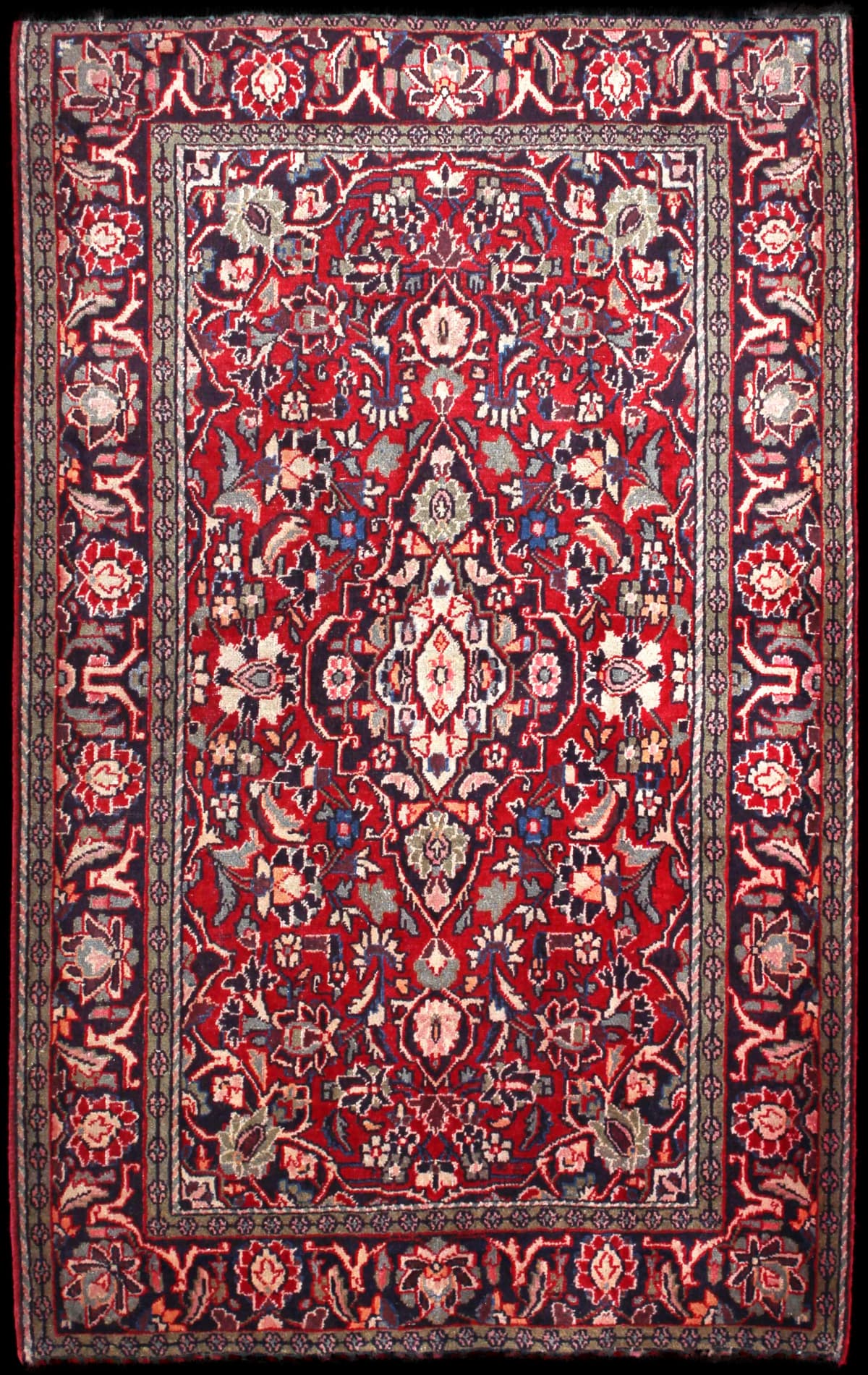
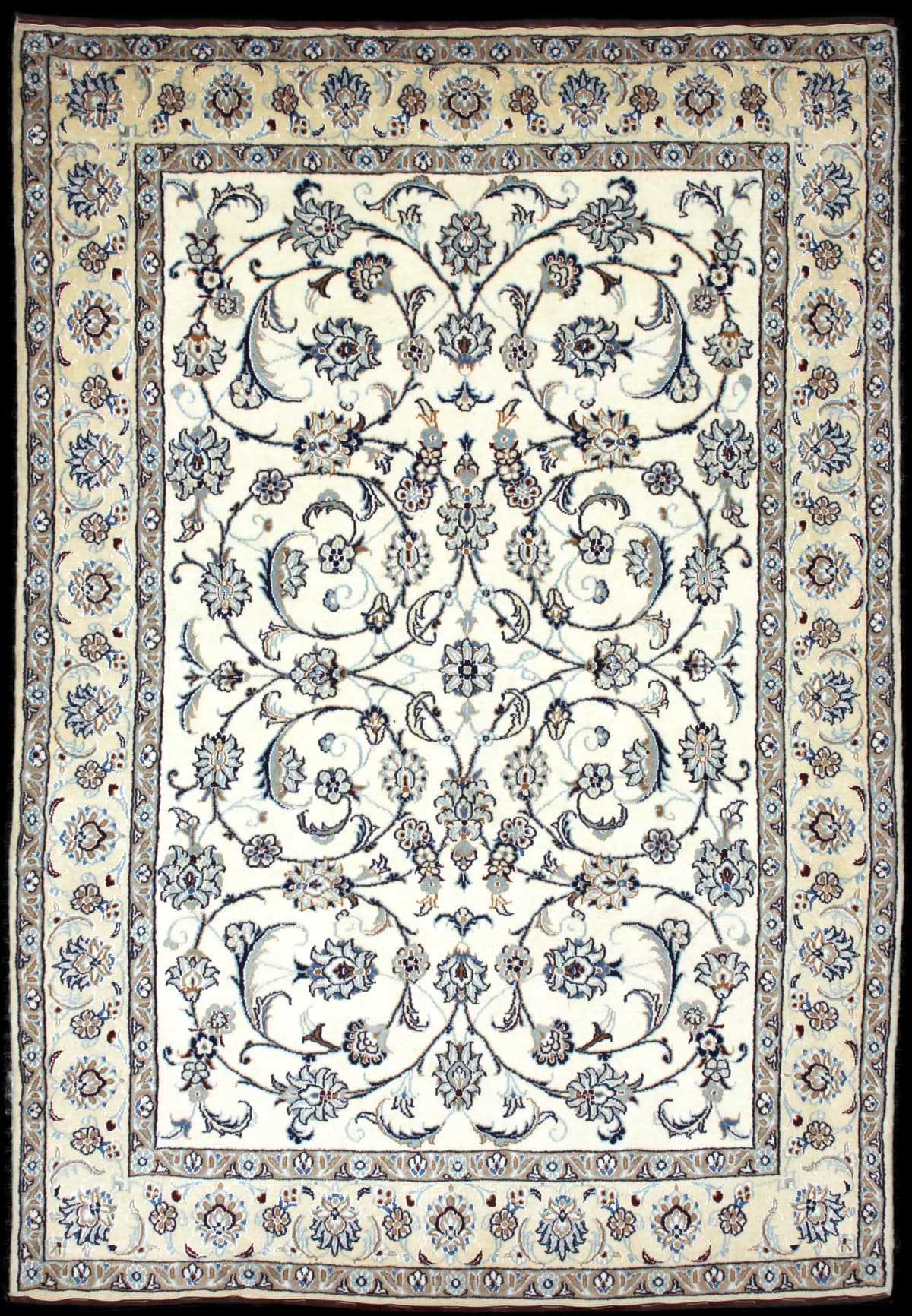
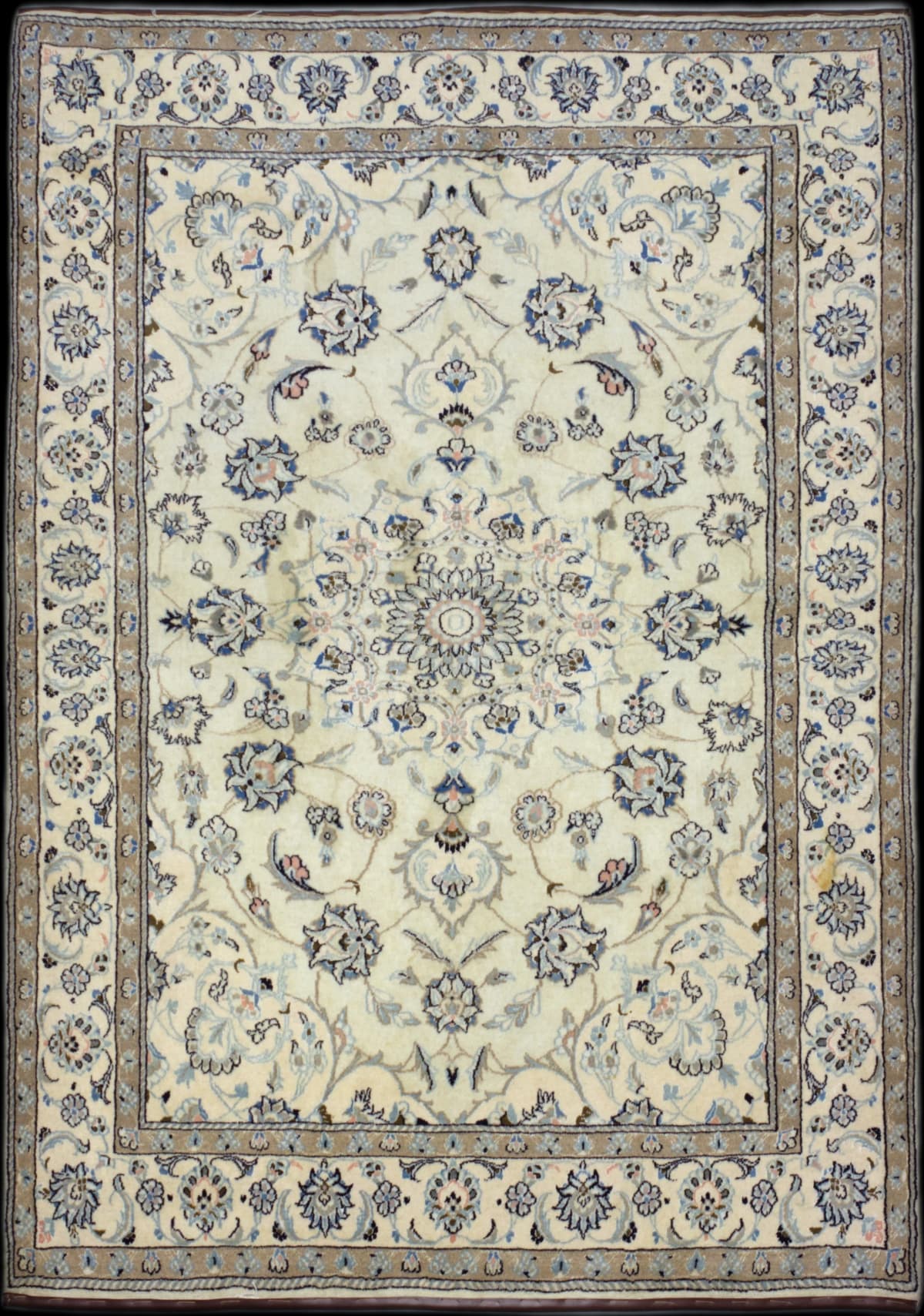
The best-known face of this weaving is the Peshawar style, which also trades as ChobiHand-knotted rugs from Pakistan, made in the city of Peshawar in the north of the country and also called Chobi. They copy old Persian and Turkish designs, mostly floral all-over or repeating patterns (medallions are rare, because all-over layouts suit more rooms), using hand-spun wool and vegetable dyes. The rugs are woven in darker tones, then stone-washed and left in strong sunlight, and the pile is cut short so the pattern shows, which gives a new rug an antique finish. Colors are soft and subdued, often beige-based, with deliberate light-and-dark variation that imitates aged rugs; the rugs feel thin yet wear well. The same look is also sold as Oushak, Ziegler or Ferahan.See in the carpet dictionary, ZieglerA type of Persian carpet first made in the late 19th century for the European market by the firm Ziegler & Co., with enlarged, modified traditional Persian designs in softer, muted colors suited to Western tastes. A Ziegler Mahal design marks a particular period of production, yet old Ziegler patterns are still reproduced today, so design alone cannot date a rug. The name is also one of several trade names, alongside Oushak, Peshawar, Chobi and Farahan, used for workshop rugs made in Pakistan since roughly the 1970s in traditional Persian and Turkish designs, with a wool pile on a cotton foundation; which name applies varies with design and knot density.See in the carpet dictionary or Farahan depending on design and knot count. These rugs look antique but are newly made, and the antique finish is deliberate: the wool is colored with natural dyes, so the palette starts darker, and the finished rug is then stone-washed and set out in strong sunlight until the colors soften. The pile is clipped short in the same spirit. Underneath the treatment they remain thoroughly durable rugs.
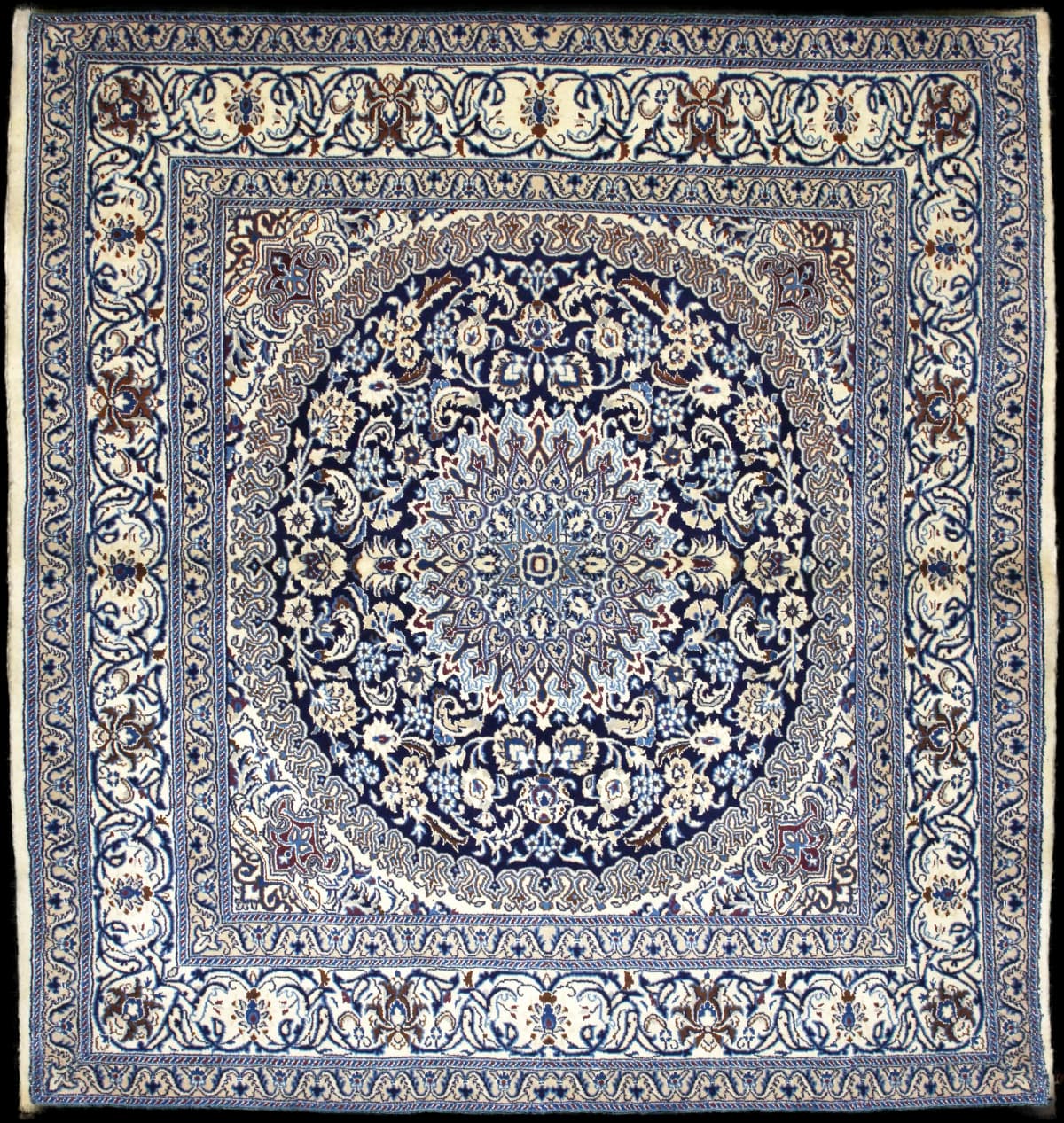
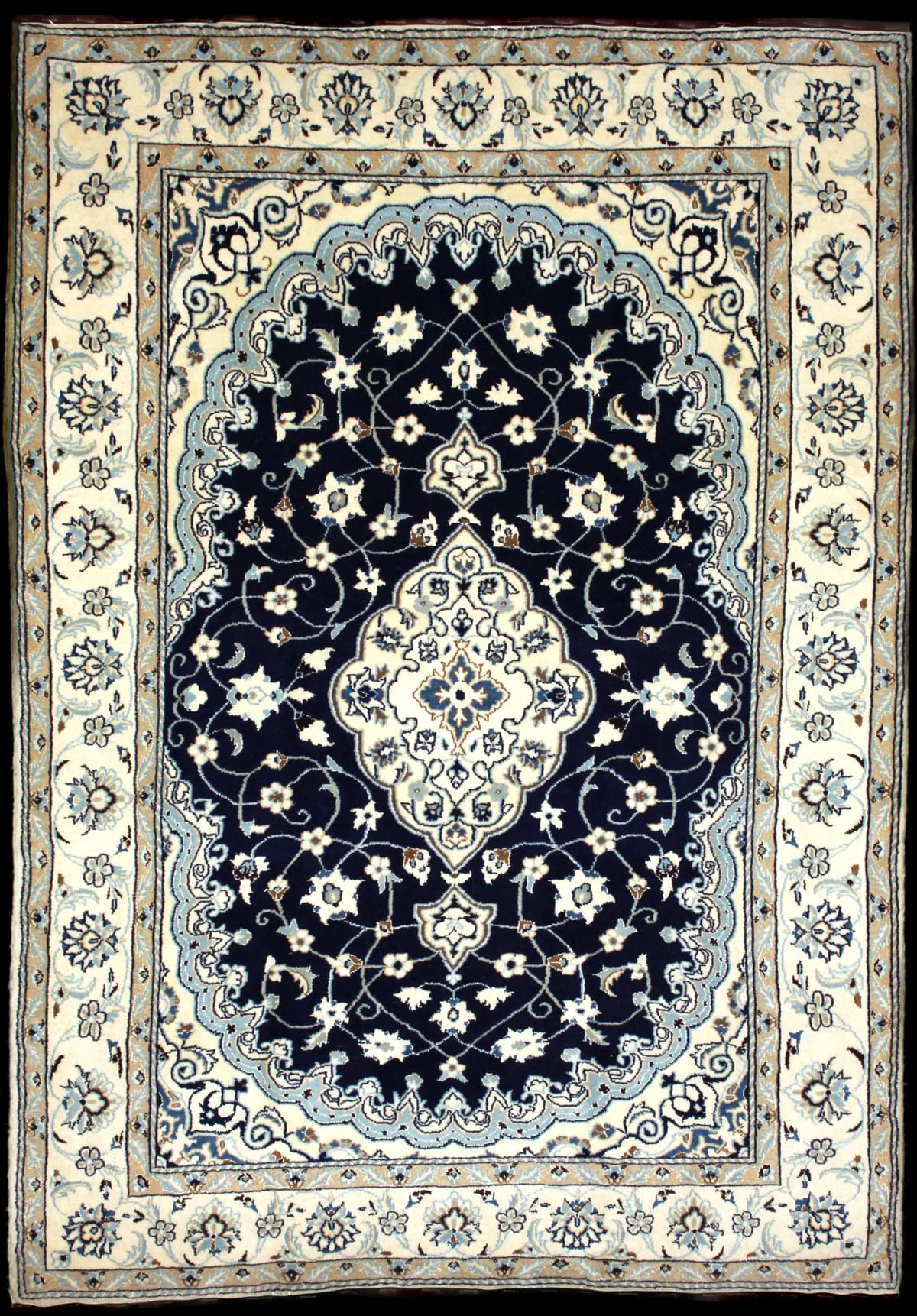
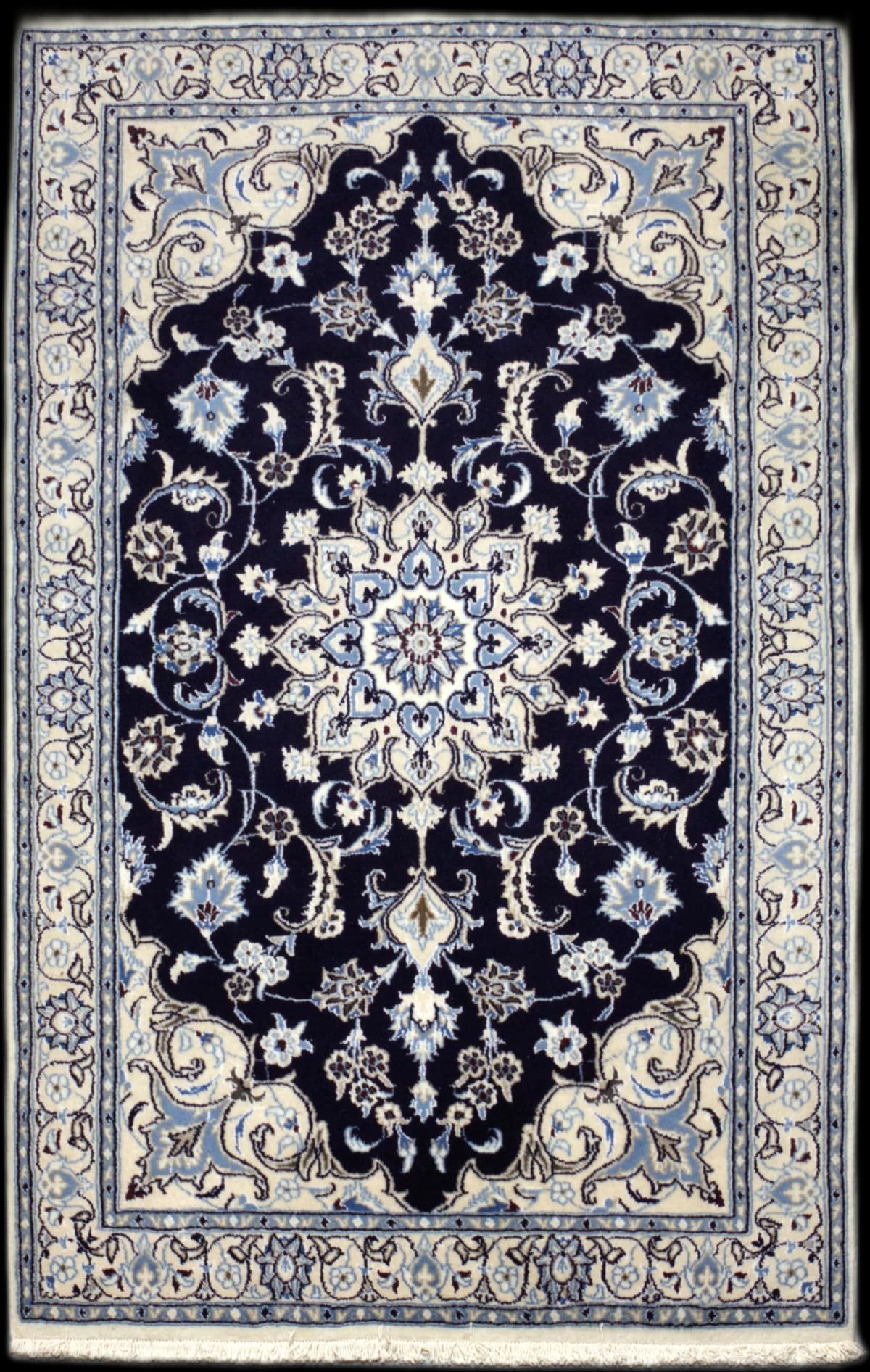
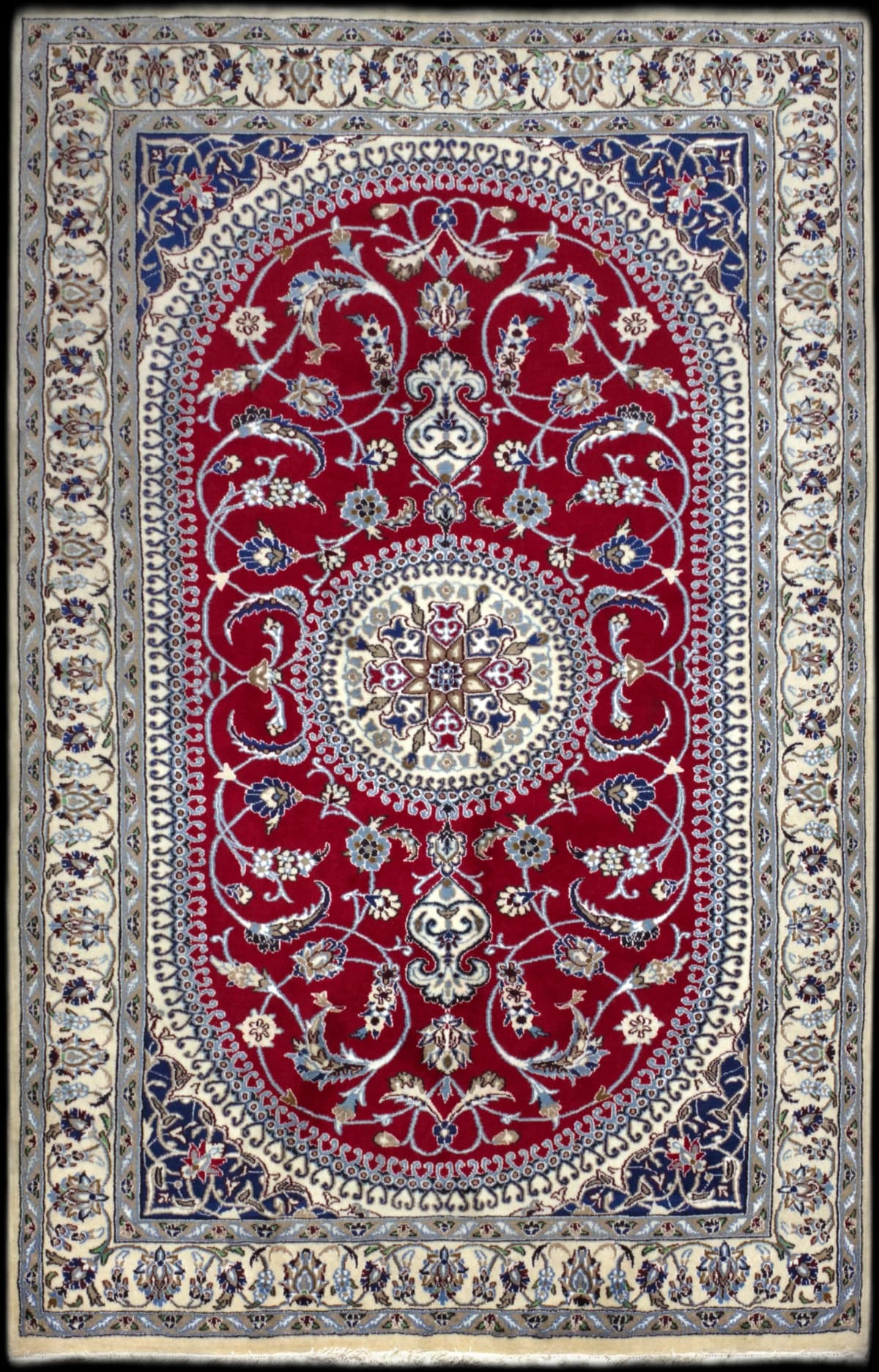
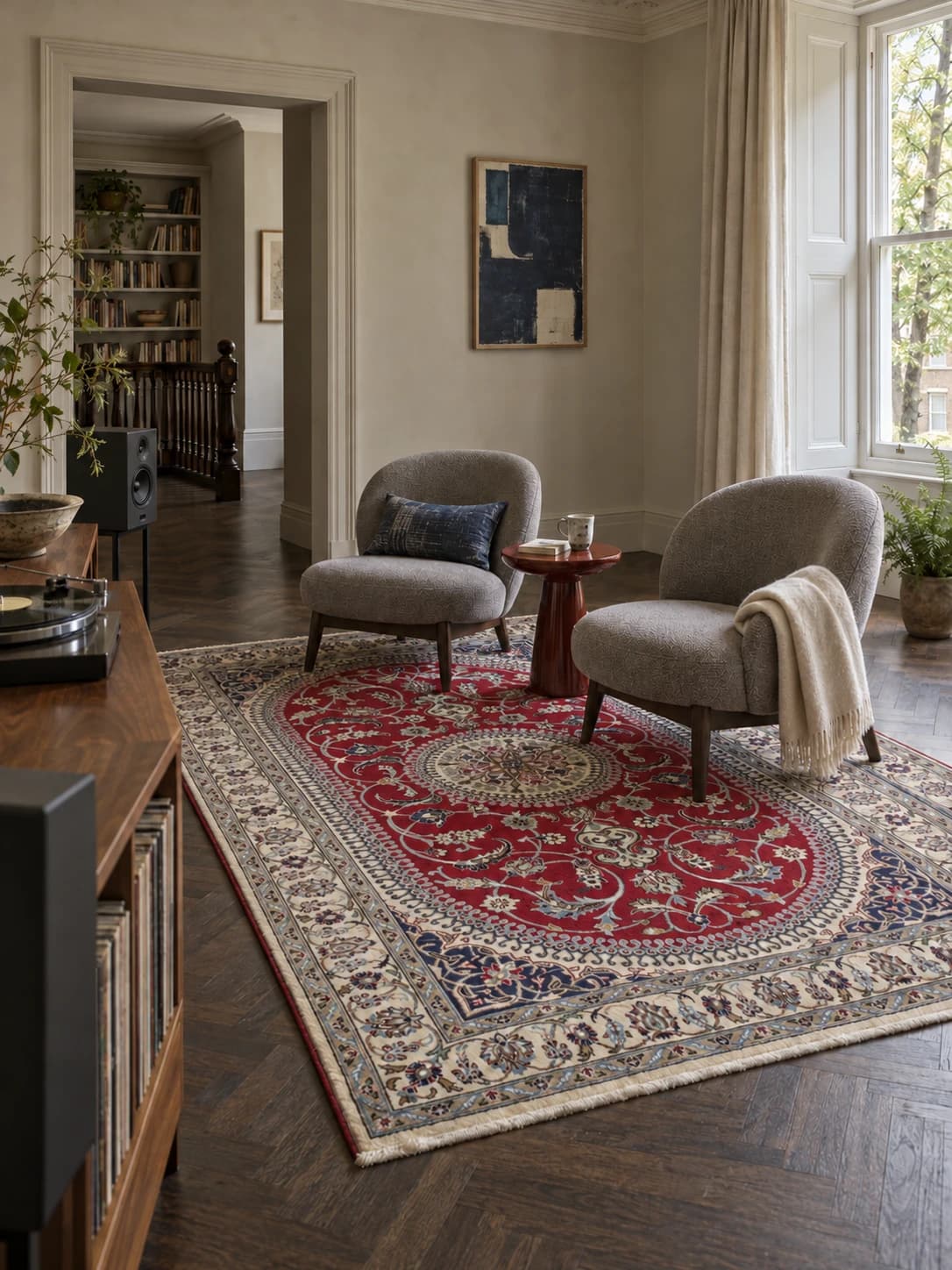
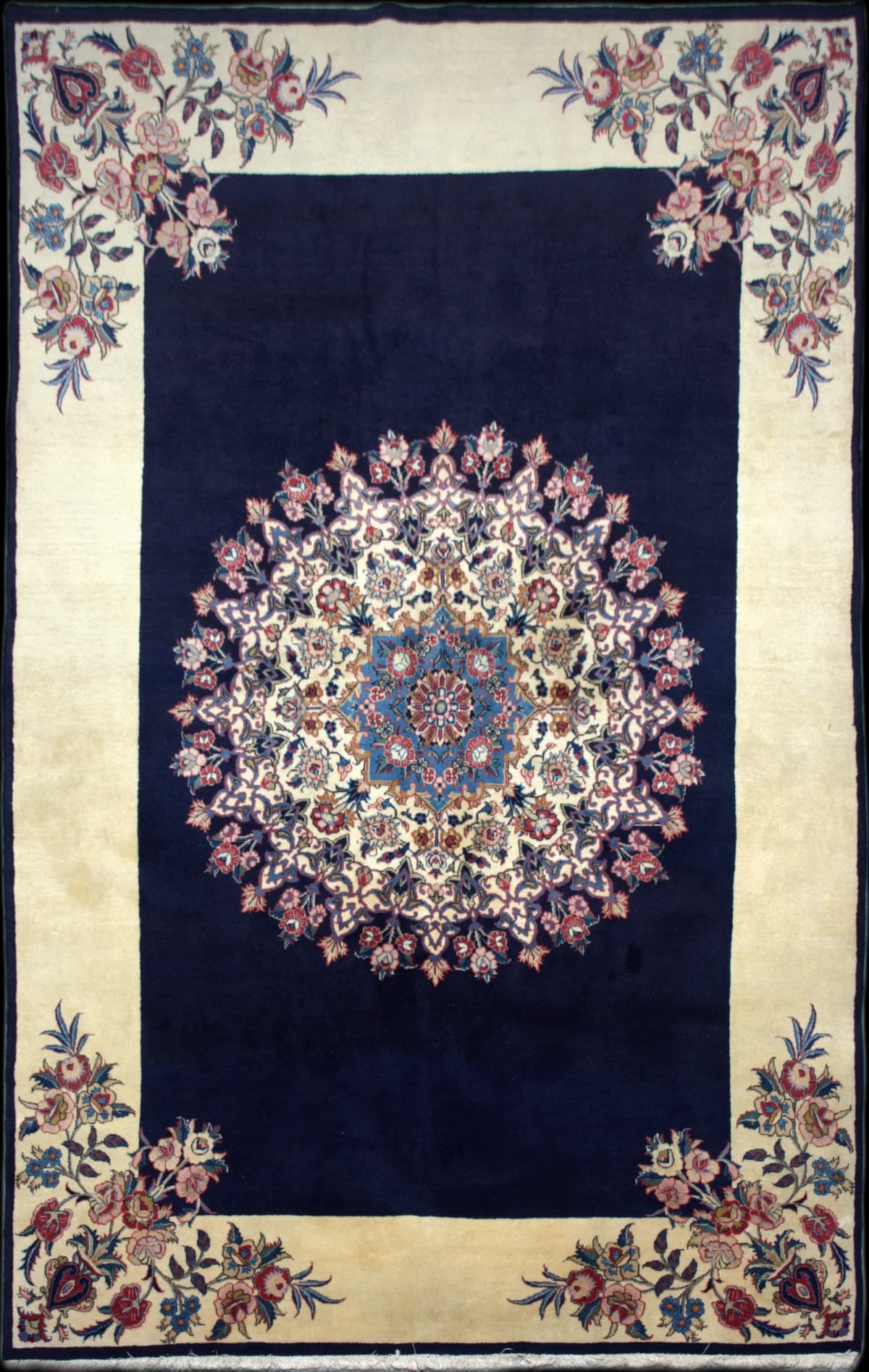
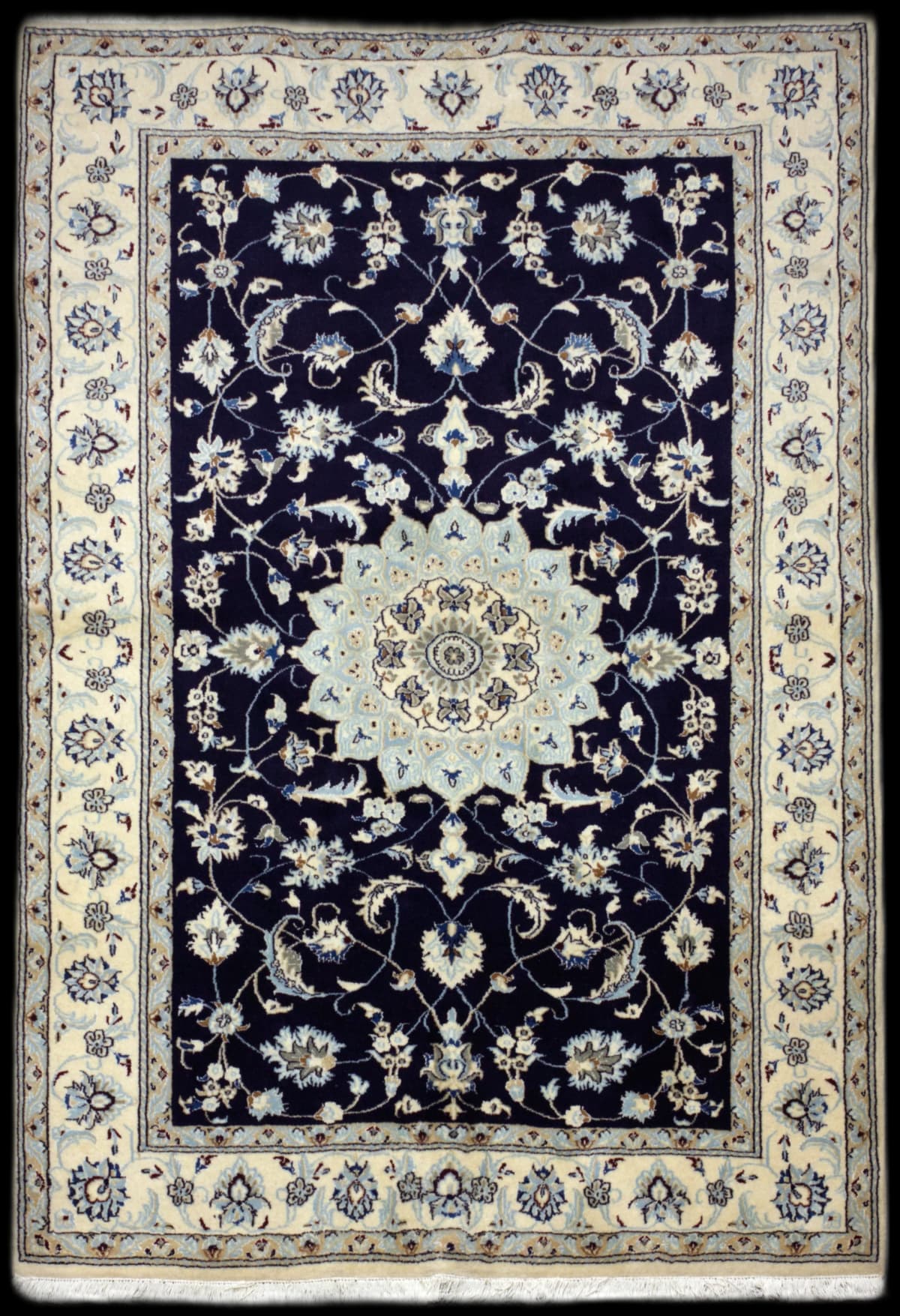
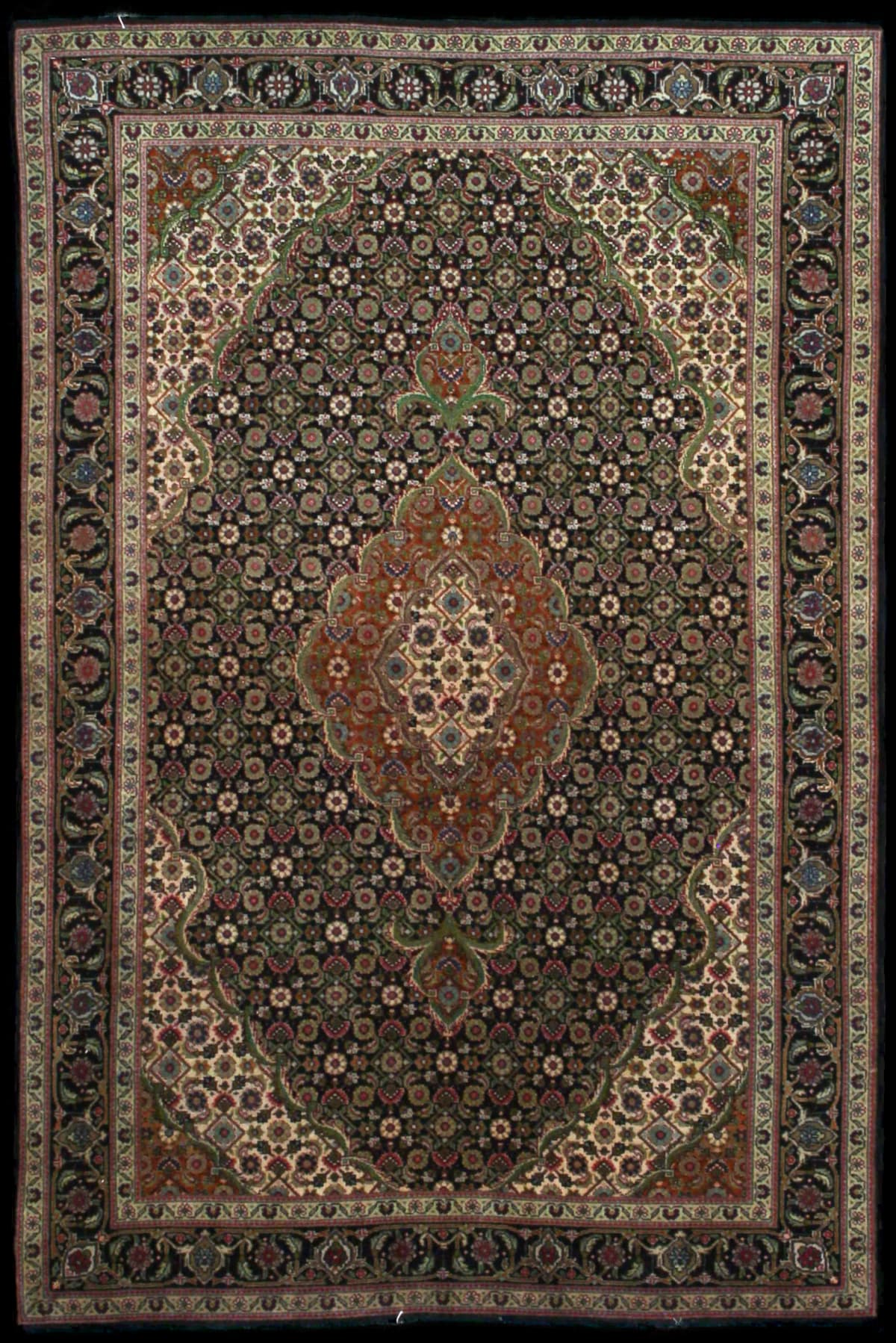
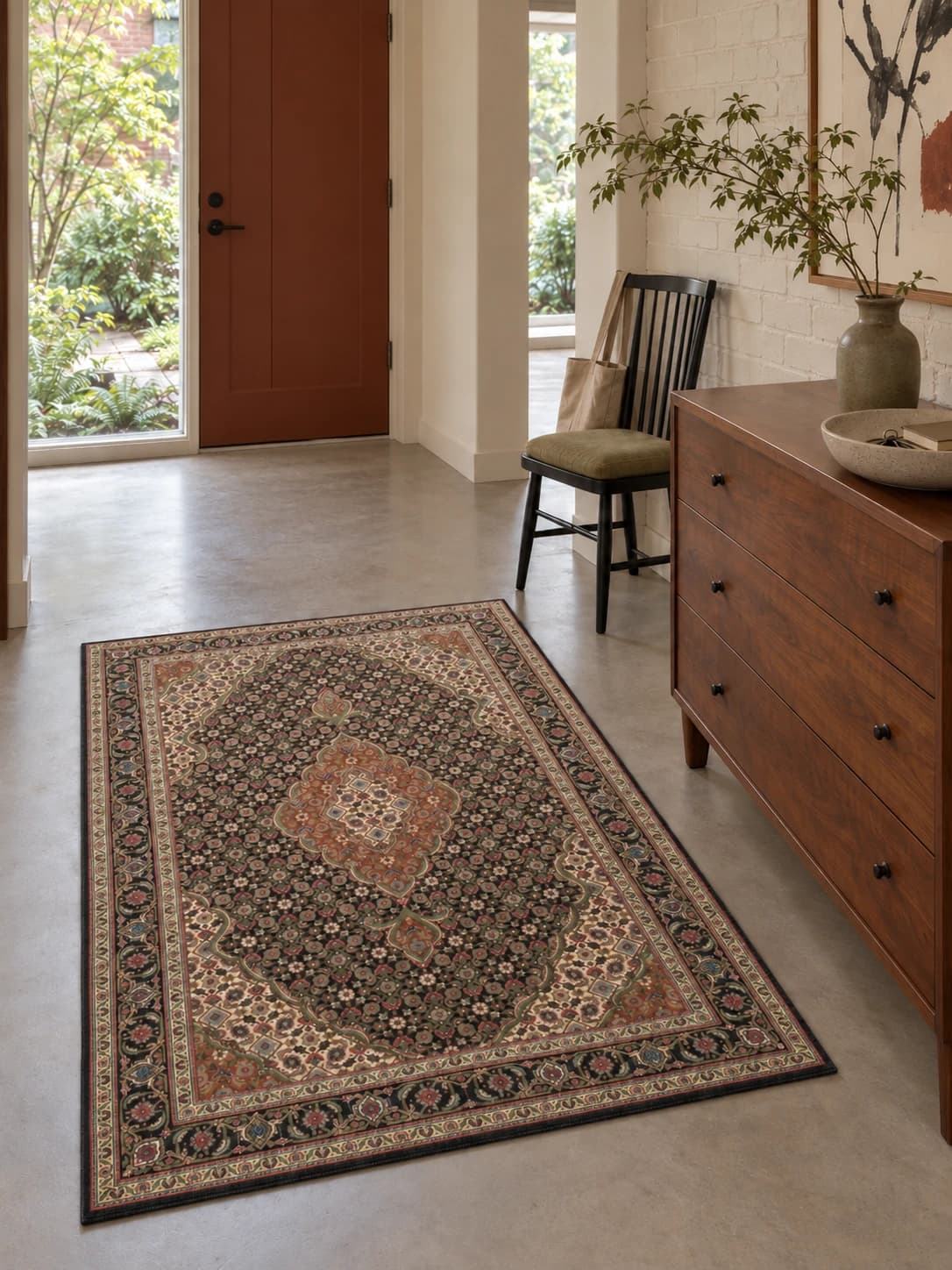
Designs keep to the classical repertoire: elegant, often slightly simplified renderings of Persian patterns such as Mahal, SultanabadAntique Persian carpets from Sultanabad, the former name of the Arak region of Iran, a newer weaving center that flourished under the Qajars in the late 19th and early 20th centuries and supplied European and American buyers. Their typical layout is an allover field of oversized palmettes, lotus blossoms, floral sprays and angular vines, recalling the Shah Abbasi pattern in a rustic village manner rather than the precise curvilinear drawing of city rugs. Indigo or midnight blue with rust or brick red, gold and olive is a classic palette. Because Sultanabad no longer exists under that name, antique examples are scarce and command higher prices.See in the carpet dictionary and Ziegler, laid out in spacious, refined compositions. Floral and traditional drawing dominates, and tribal or village designs are rare here. The other Pakistani staple is the BokharaRugs woven today chiefly in Pakistani workshops by Pakistani and Afghan weavers who rework older Persian-Turkmen designs rooted in Central Asia; in the trade they count as Oriental rather than Persian rugs. The hallmark is an allover repeat of guls, stylized octagonal (sometimes diamond-shaped) flower motifs, on a field most often red, then cream, sometimes blue or green, and more recently black, with black, peach, blue, and green accents, all in plant-based dyes. The pile is soft, silky-looking 100 percent wool on a cotton foundation, medium in height, and some pieces come oversized; a finer grade has higher knot density, more detailed drawing, and premium Ghazni wool.See in the carpet dictionary pattern — rows of octagonal gulAn octagonal or polygonal, stylized flower motif repeated in rows across the field of Turkmen rugs. The same repeat is typical of Baluchi rugs, where a flower sits inside each octagon, and of Bokhara rugs, woven chiefly in Pakistan after Turkmen models. In older Turkmen rugs each tribe (Tekke, Salor, Ersari and others) typically kept its own gul, so an expert can often tell the tribe from the motif, whereas modern pieces mix guls freely. The word means “flower” or “rose” in Persian, though the shapes are highly geometric rather than naturalistic.See in the carpet dictionary medallions, usually on a deep red ground — woven with the same precision.
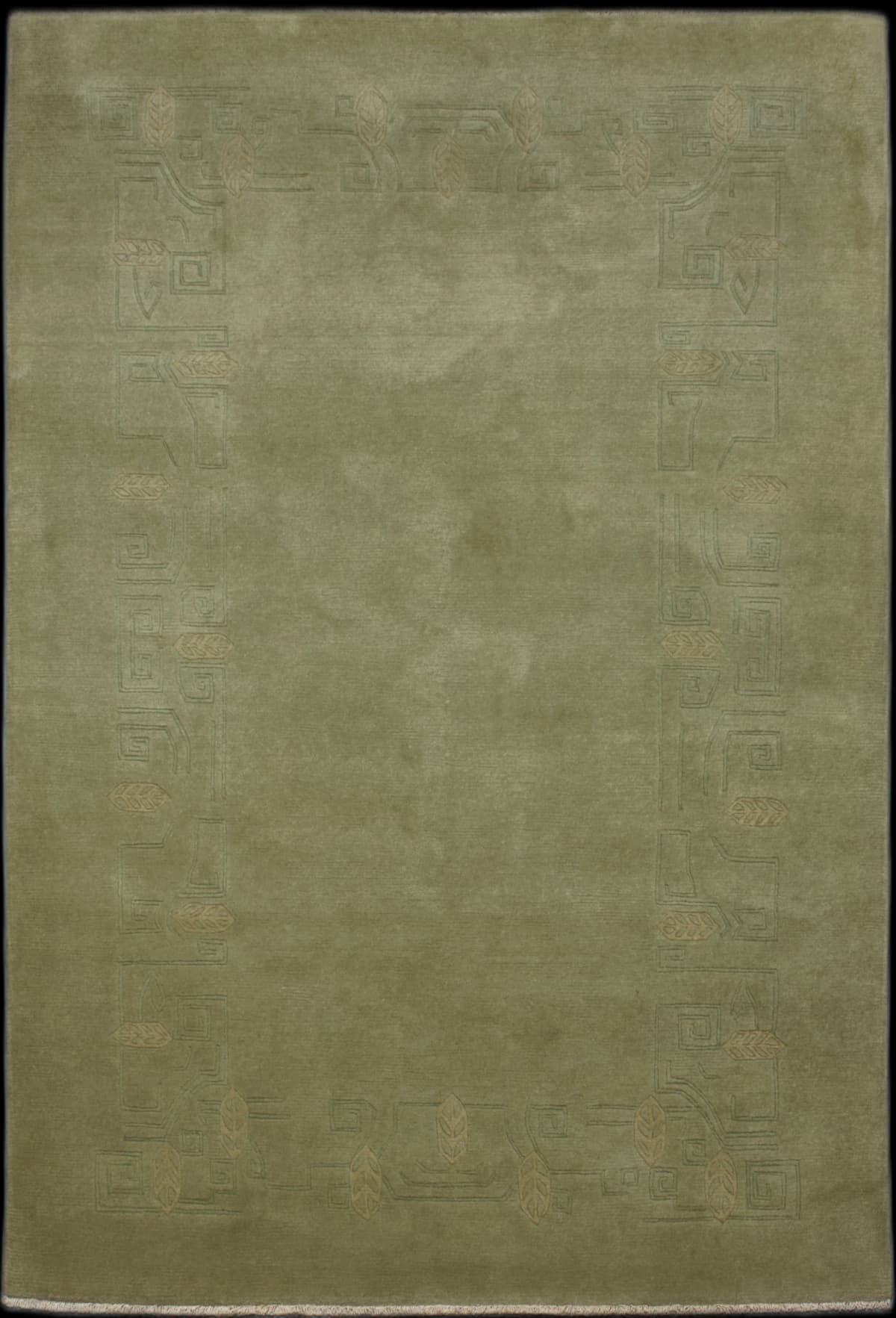
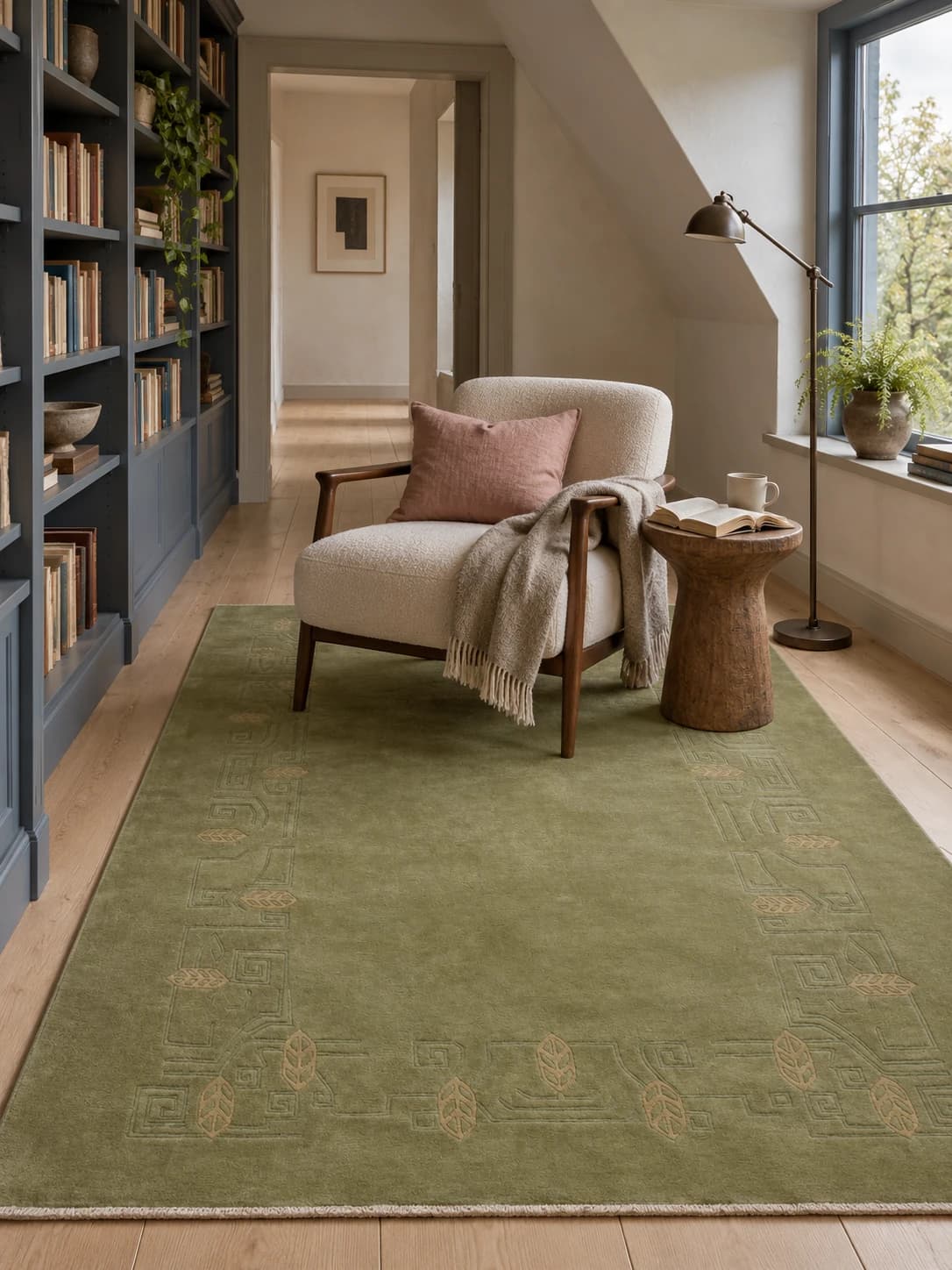
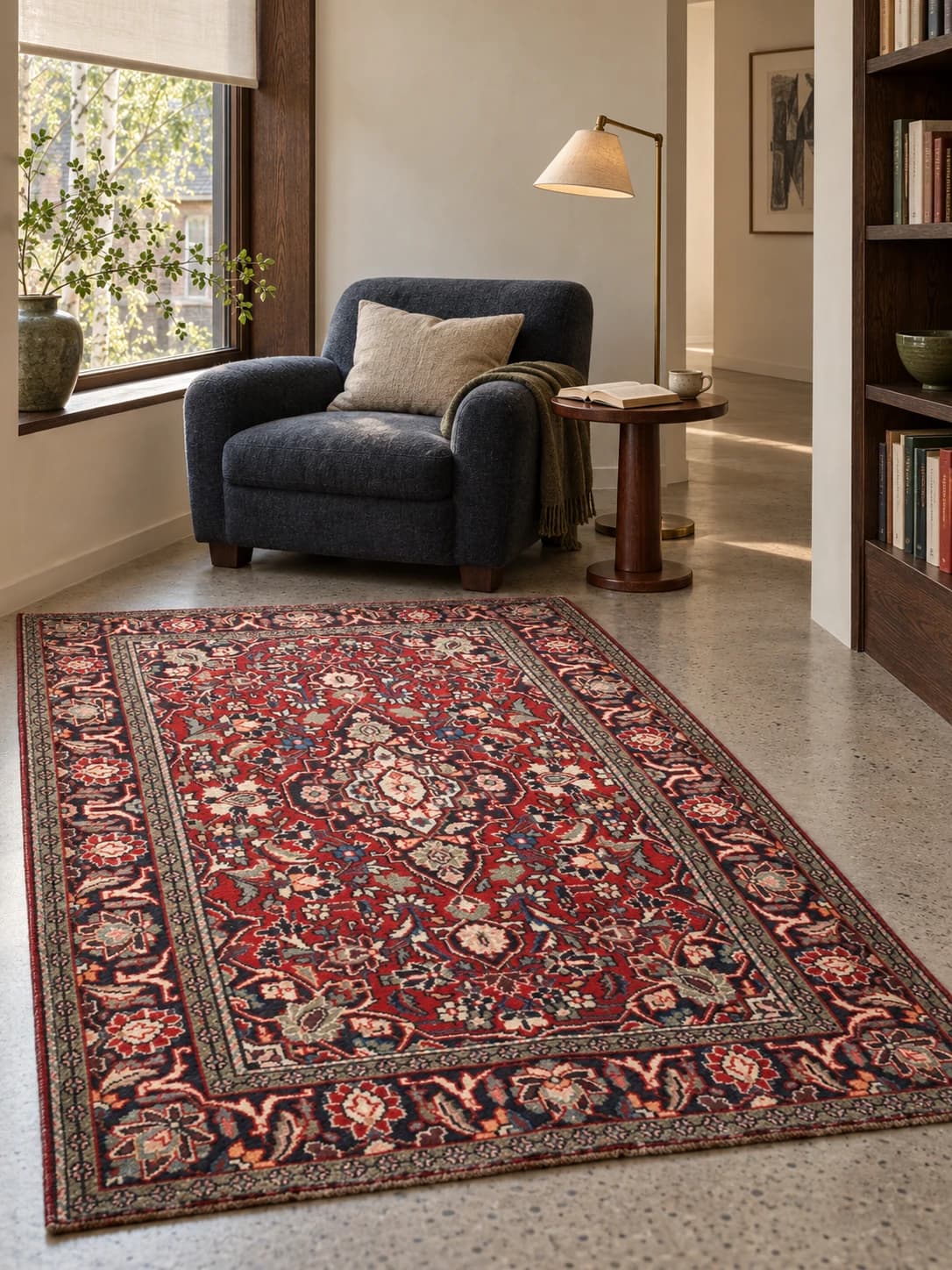
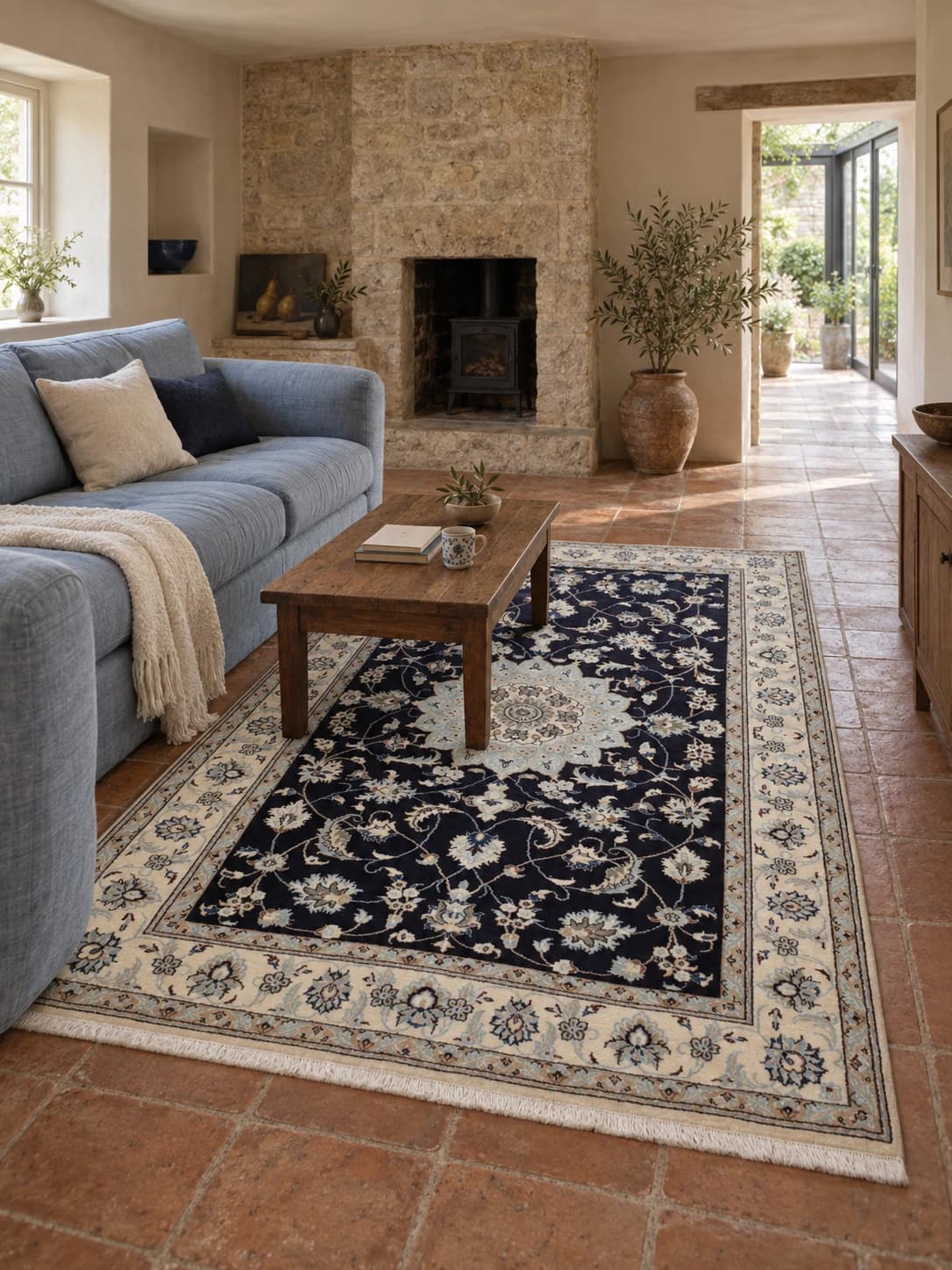
Color is chosen deliberately. The workshops employ designers who set palettes to the taste of the moment and of the destination market, so classic pieces carry rich reds, deep blues and warm burgundies, while newer weavings favor subtle earth tones and neutral schemes. Several shades of one color often run through a single rug to deepen the aged effect, and the natural dyes produce gentle abrashSubtle shifts in color within a handmade rug, often visible as horizontal bands across the field. They arise because successive dye batches never match exactly, because differences in the wool's fat and oil content make colors change unevenly with age, and, in cream areas woven from undyed wool, because the fiber changes tone as it ages. Abrash often grows more distinct with age, so in an older rug it counts as a sign of natural dyes and hand production rather than a fault, while a newer rug is still checked for even color. Machine-made and some new hand-knotted rugs imitate it on purpose.See in the carpet dictionary — subtle variations in color that add depth and character.
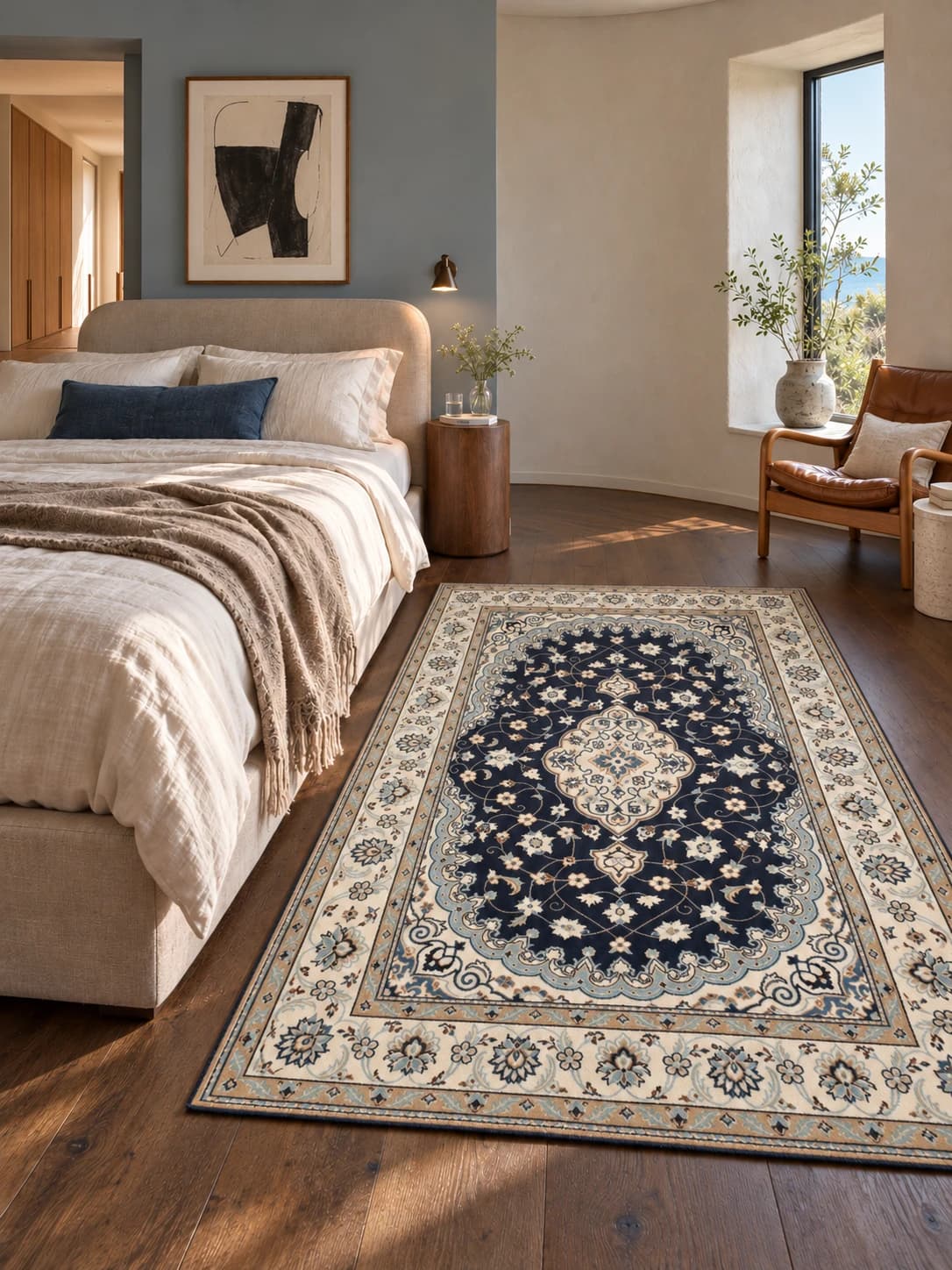
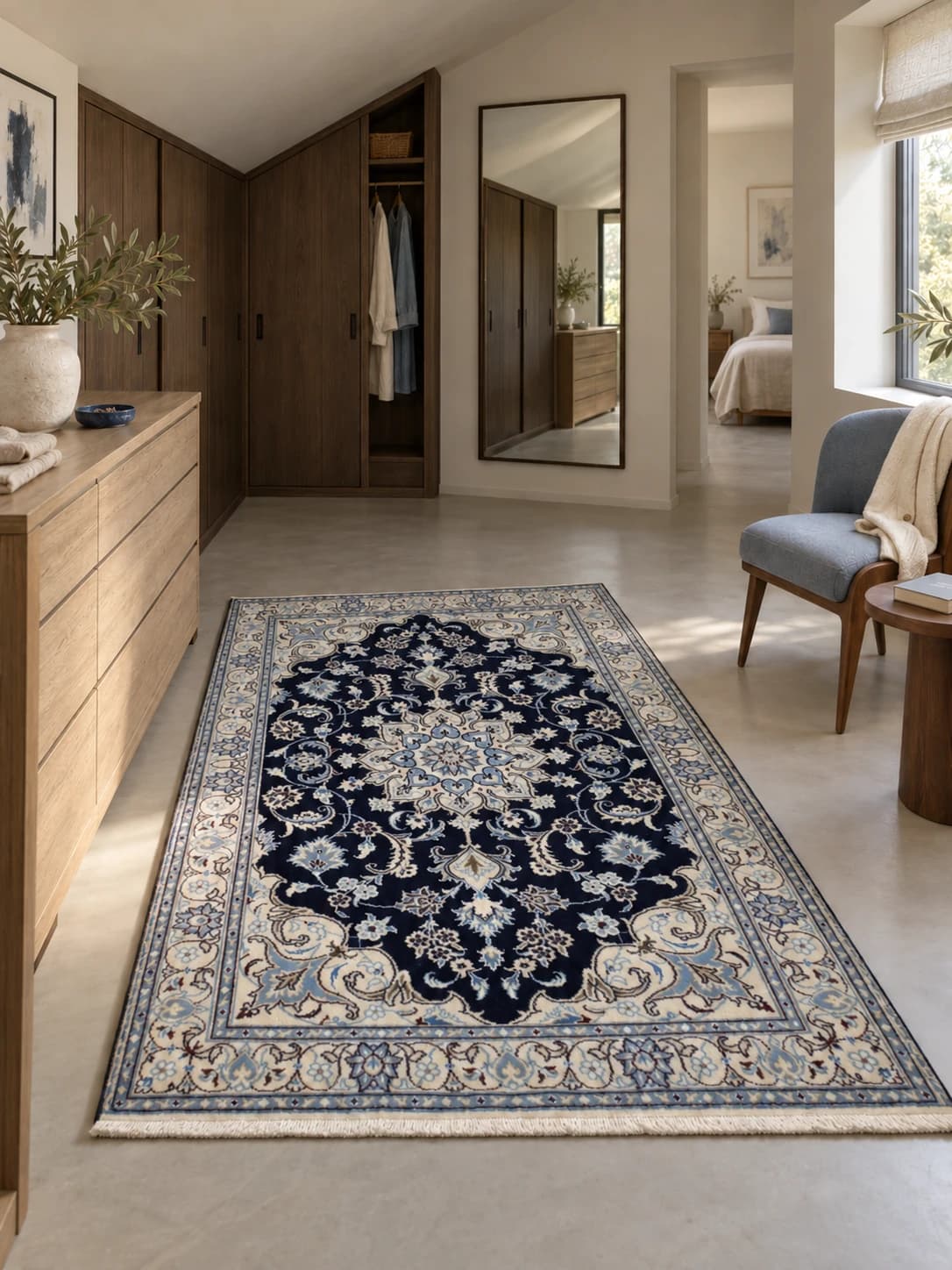
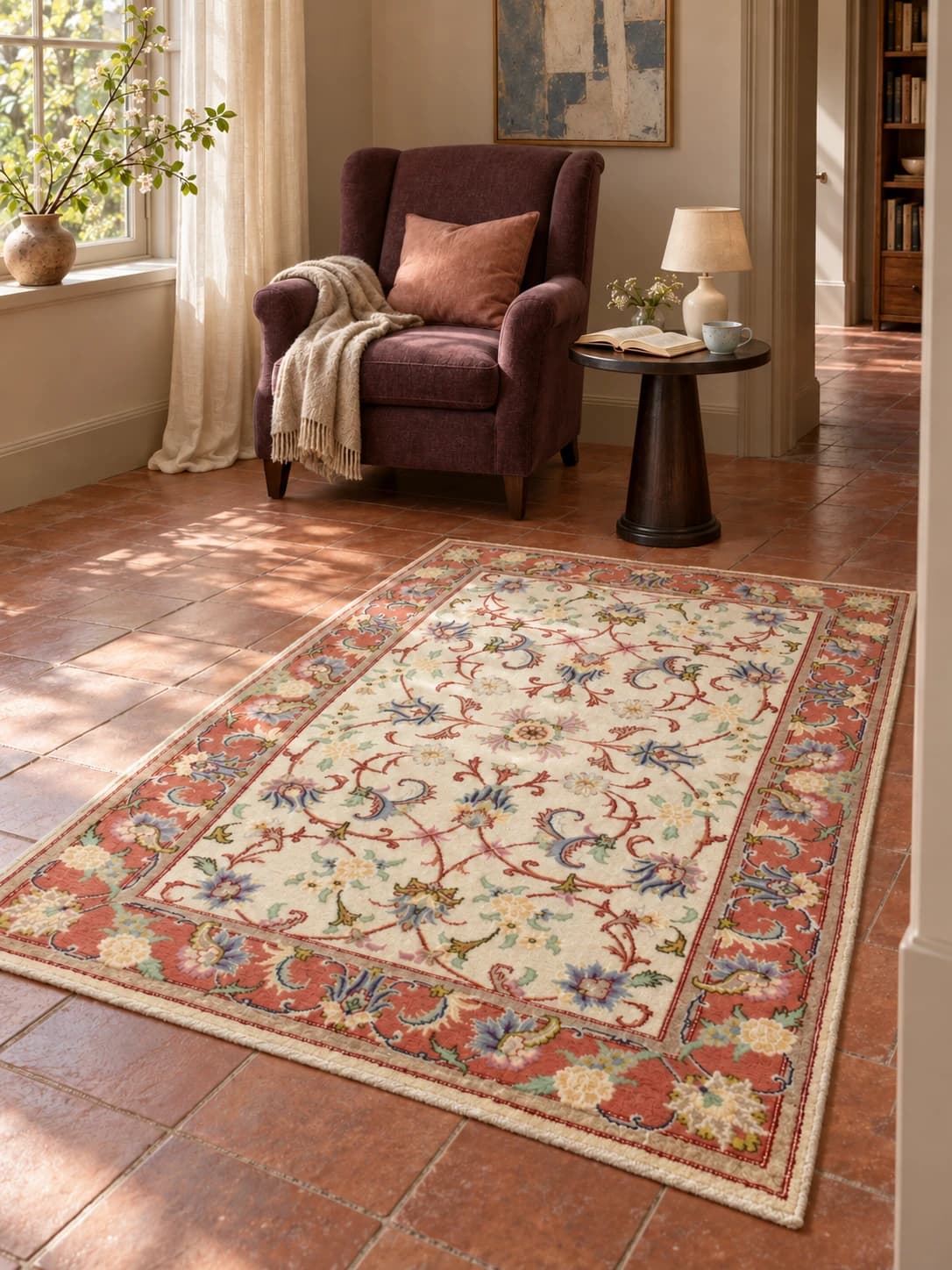
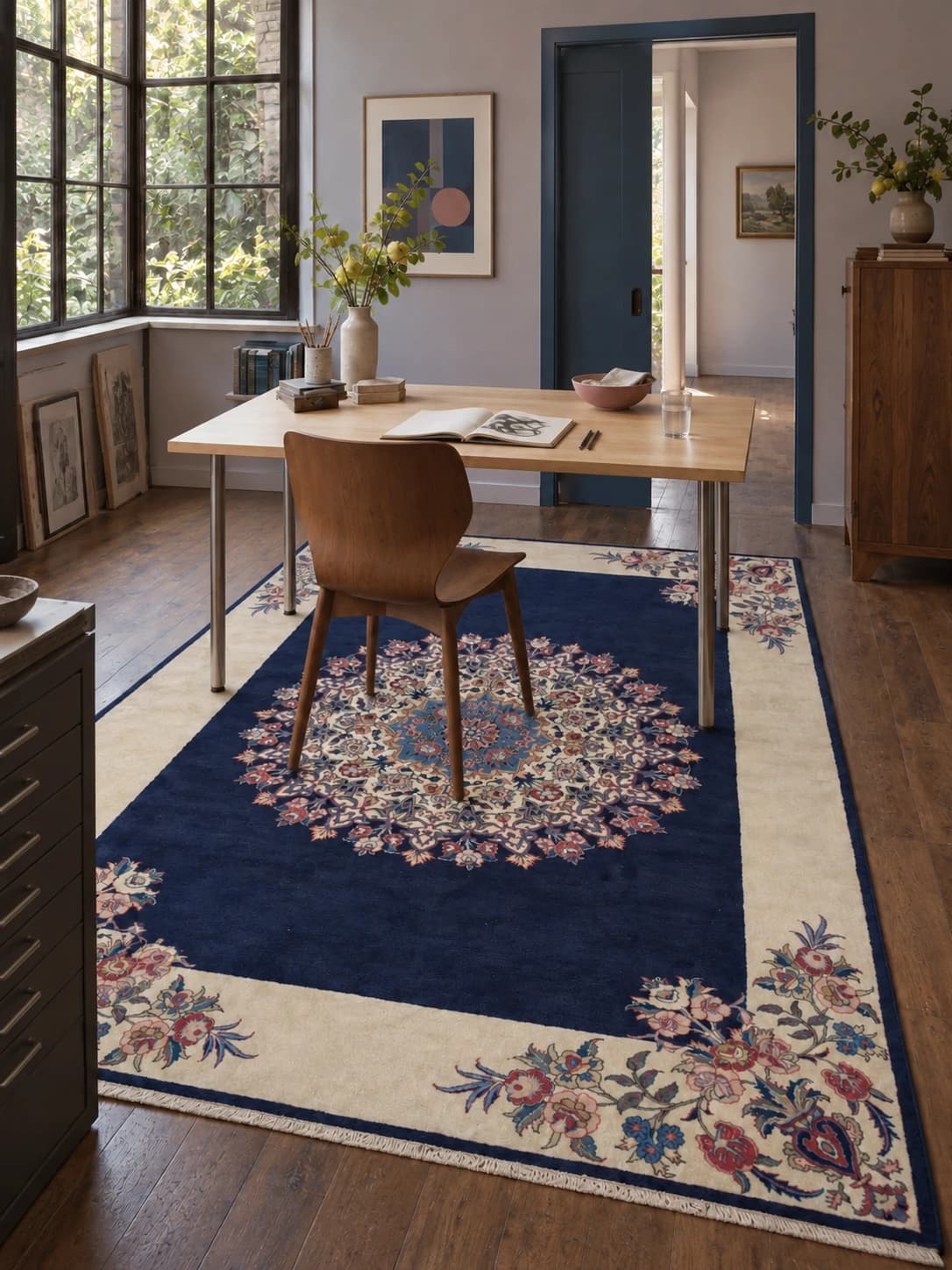
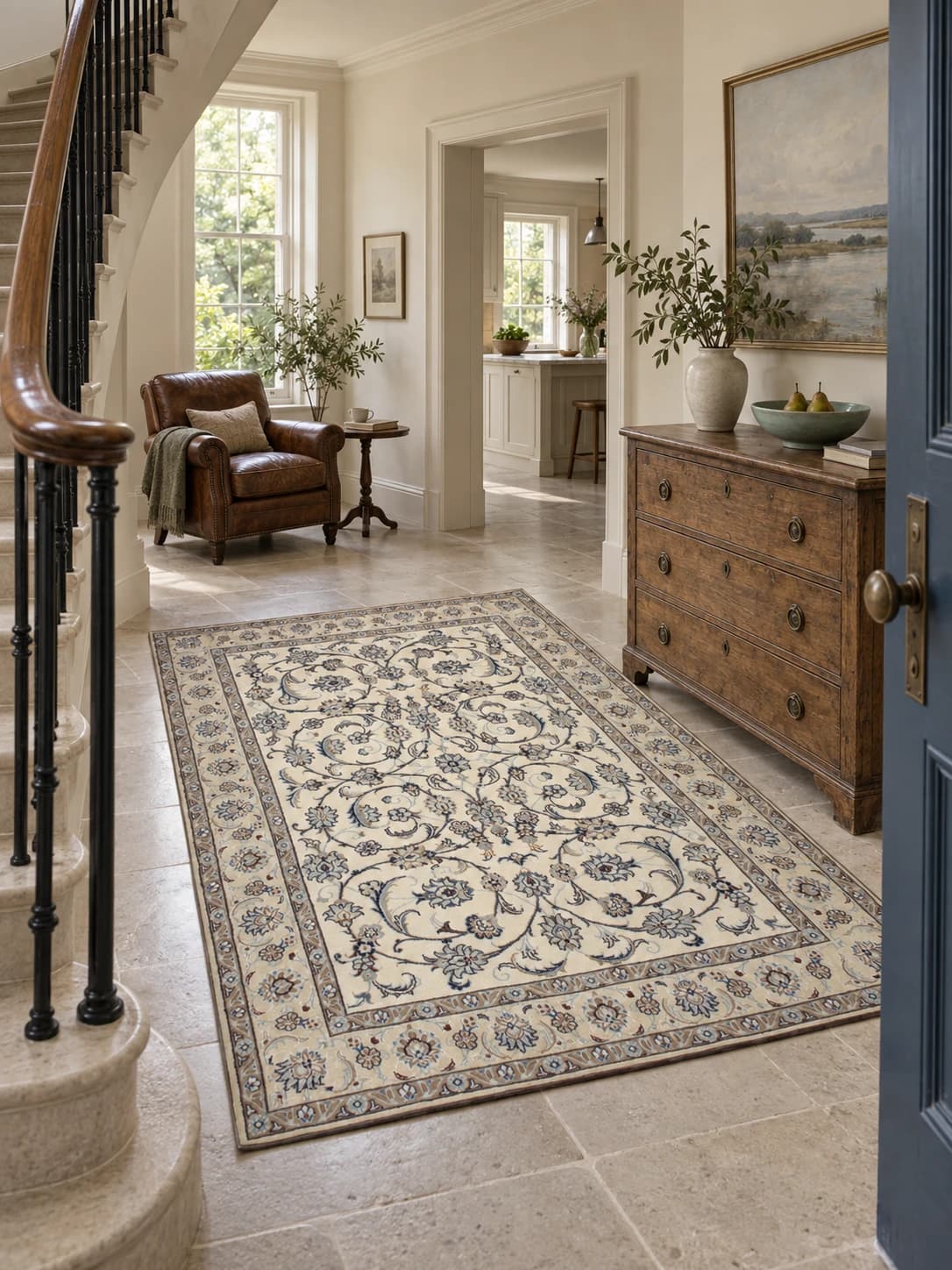
Sizes span the full workshop range, from compact pieces around 90x150 cm to carpets of more than 350x550 cm, so the style exists for most rooms and formats.
Modern Pakistani production moves easily between faithful renderings of antique designs and contemporary reinterpretations. That ability to balance tradition with adaptation is what established Pakistan as a leading force in current hand-knottedA rug construction in which the weaver ties each knot of wool or silk pile yarn by hand around adjacent warp threads on a loom, then runs a weft through the row and beats it down. The cut knot ends form the pile, the warps and wefts form the foundation, and the warp ends become the fringe. A rug can take months or even years, and the work leaves subtle irregularities: patterns not perfectly symmetrical, opposite edges a few inches different in length, an uneven fringe. Authentic Persian, Oriental and Turkish rugs are hand-knotted, unlike hand-tufted rugs (sometimes sold as “handmade”) and machine-made ones, whose backs feel stiff and evenly aligned.See in the carpet dictionary rug production.
These rugs offer honest value: the look and the hand-knotted construction of high-end Persian carpets at more accessible price points. The combination of durable Ghazni woolA prized rug wool from the Ghazni region of Afghanistan. Like other top-grade fleece it is thick and oily, and it is ranked with Manchester wool and New Zealand wool among the three best-known high-quality wools for Persian and Oriental rugs. Kazak rugs woven by Afghan weavers in Pakistan use it hand-spun.See in the carpet dictionary, careful drawing and reasonable cost appeals to first-time buyers and collectors alike.
Each Pakistani carpet is a piece of cultural synthesis, a centuries-old design tradition carried on by newer workshops. Whether chosen for its traditional elegance or its designer-friendly palette, it is a practical rug built to be walked on for decades.
Questions about this carpet?
Our family has traded carpets for two generations. Ask us anything — photos, video calls, advice on sizes.
Message us
Keep exploring
Guides from our family workshop: how to clean, place and care for hand-knotted rugs.