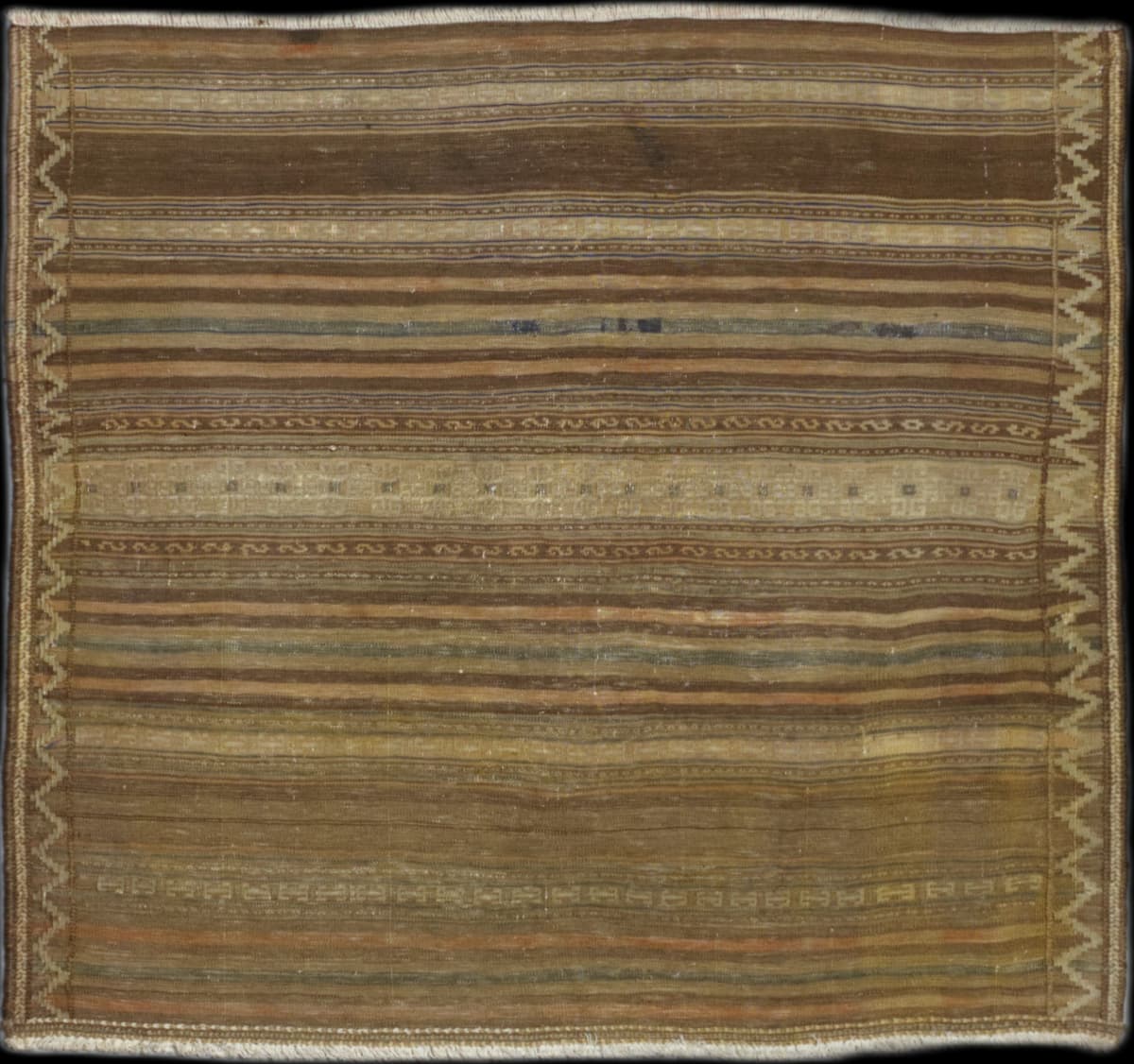
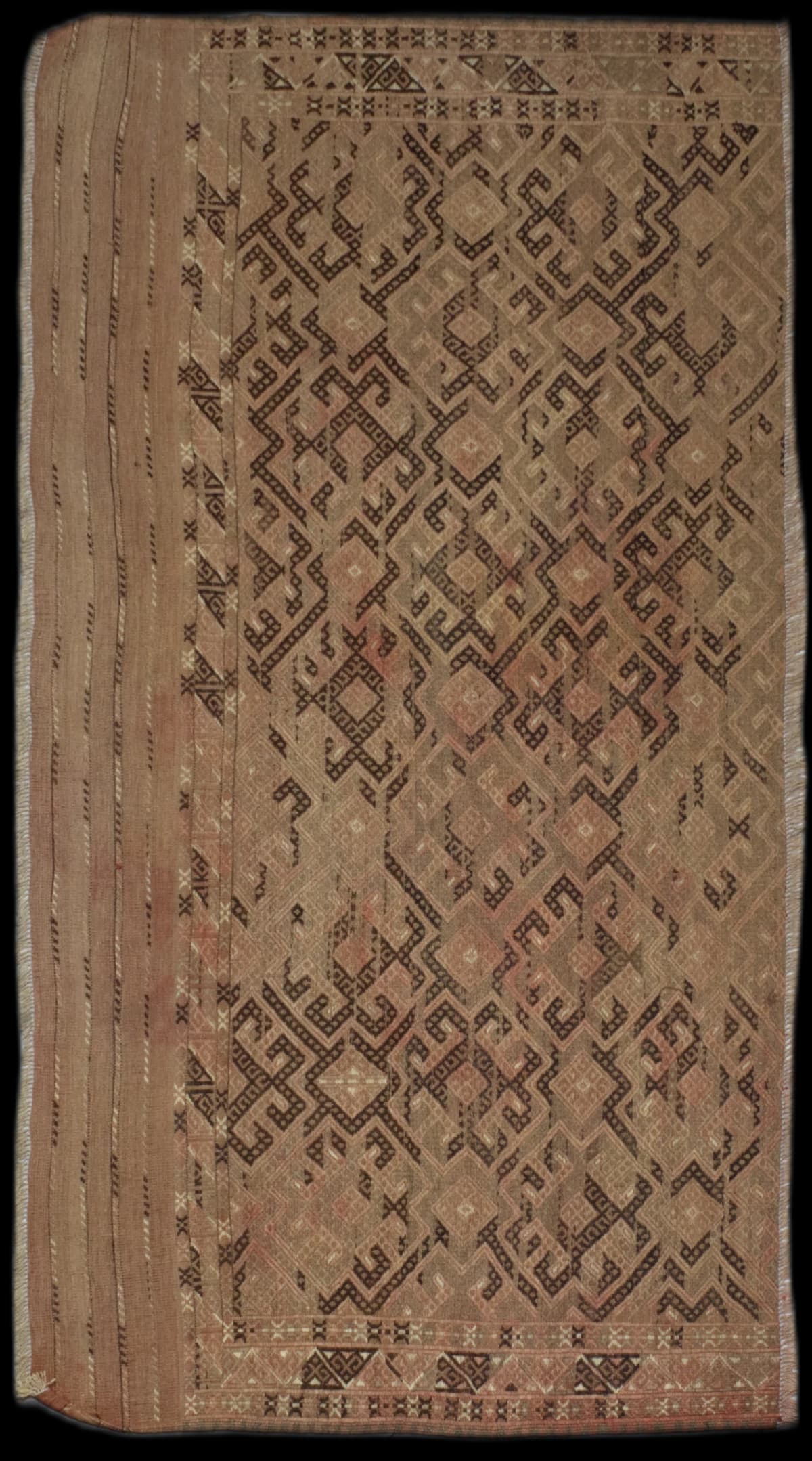
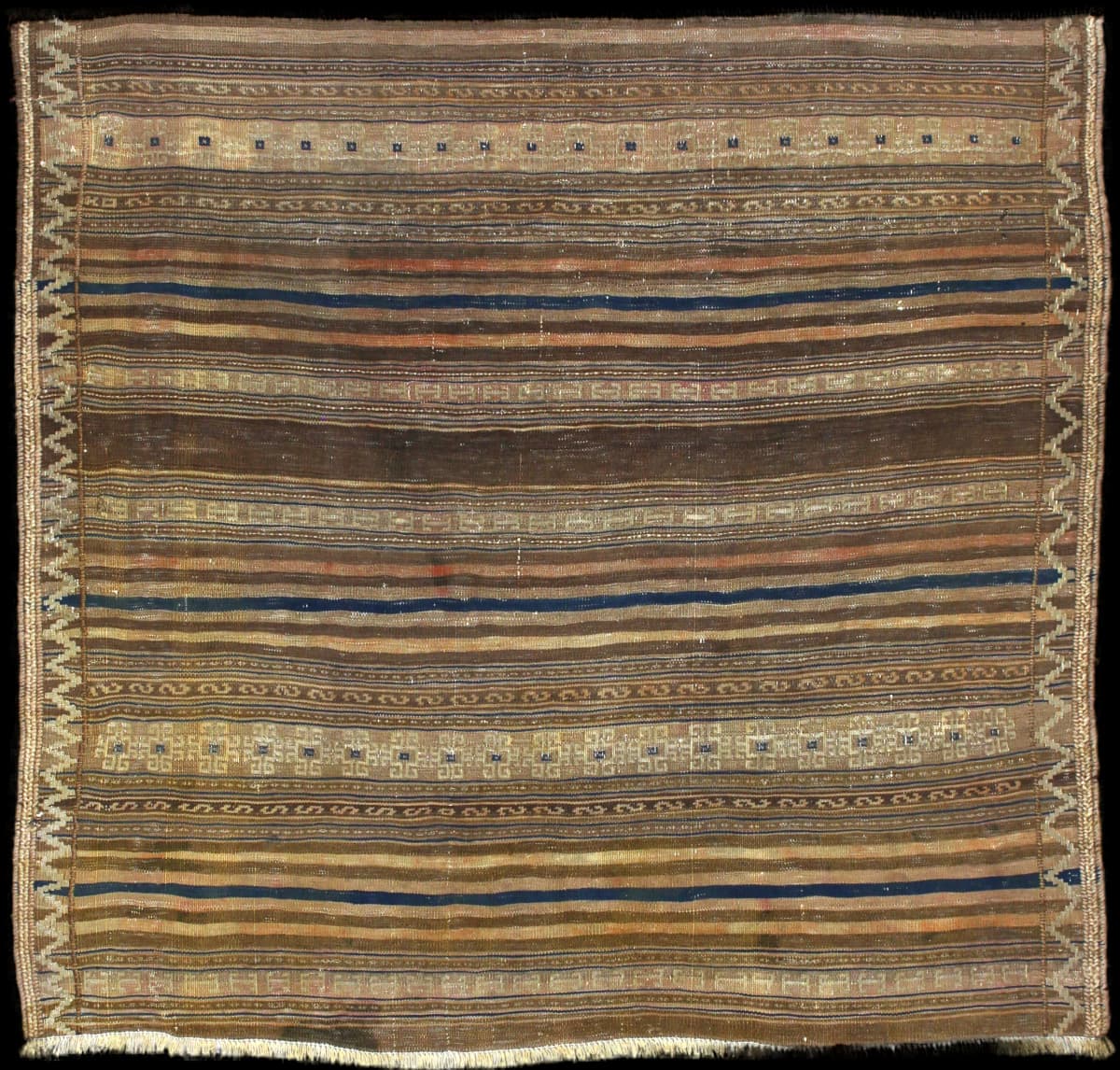
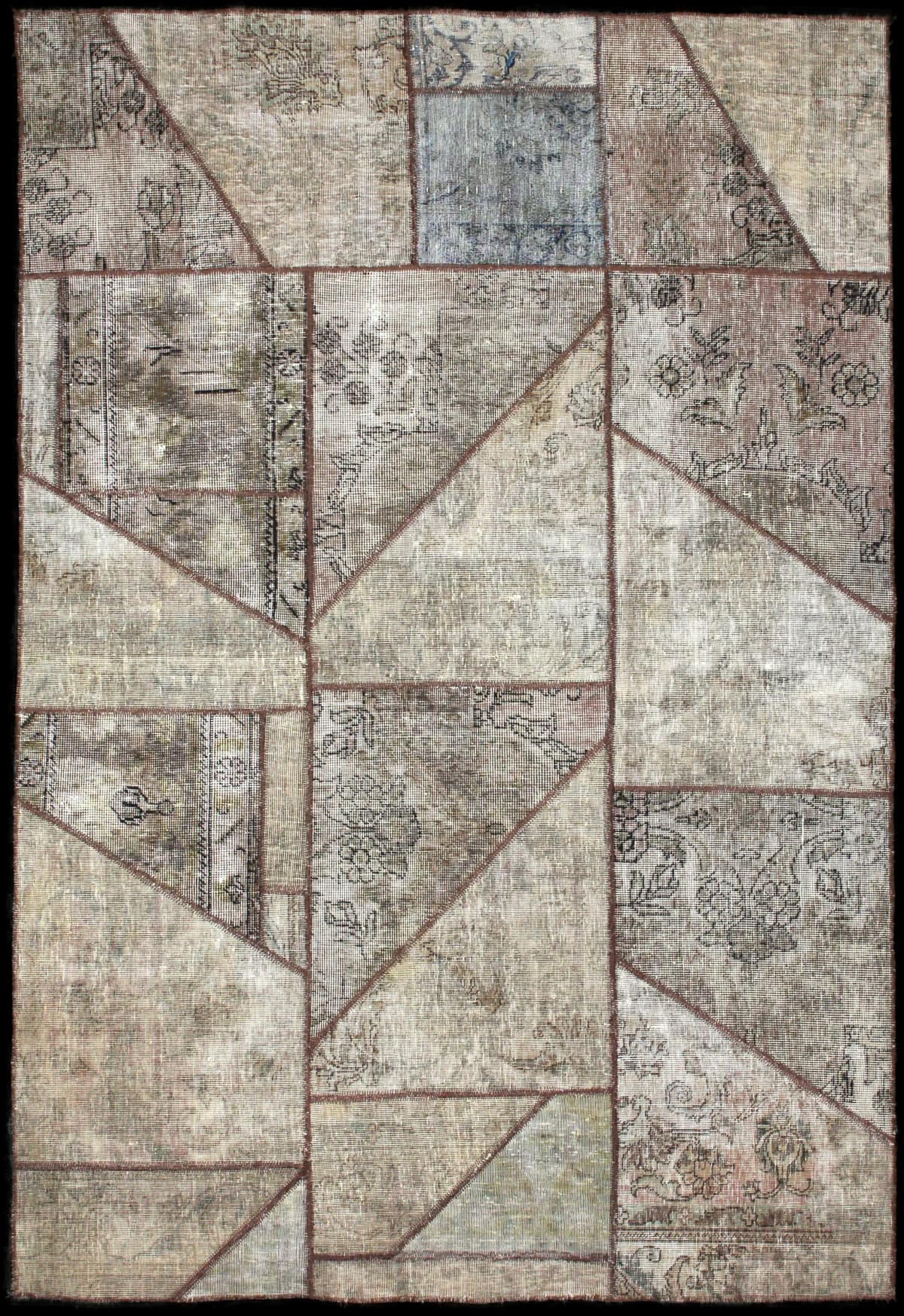
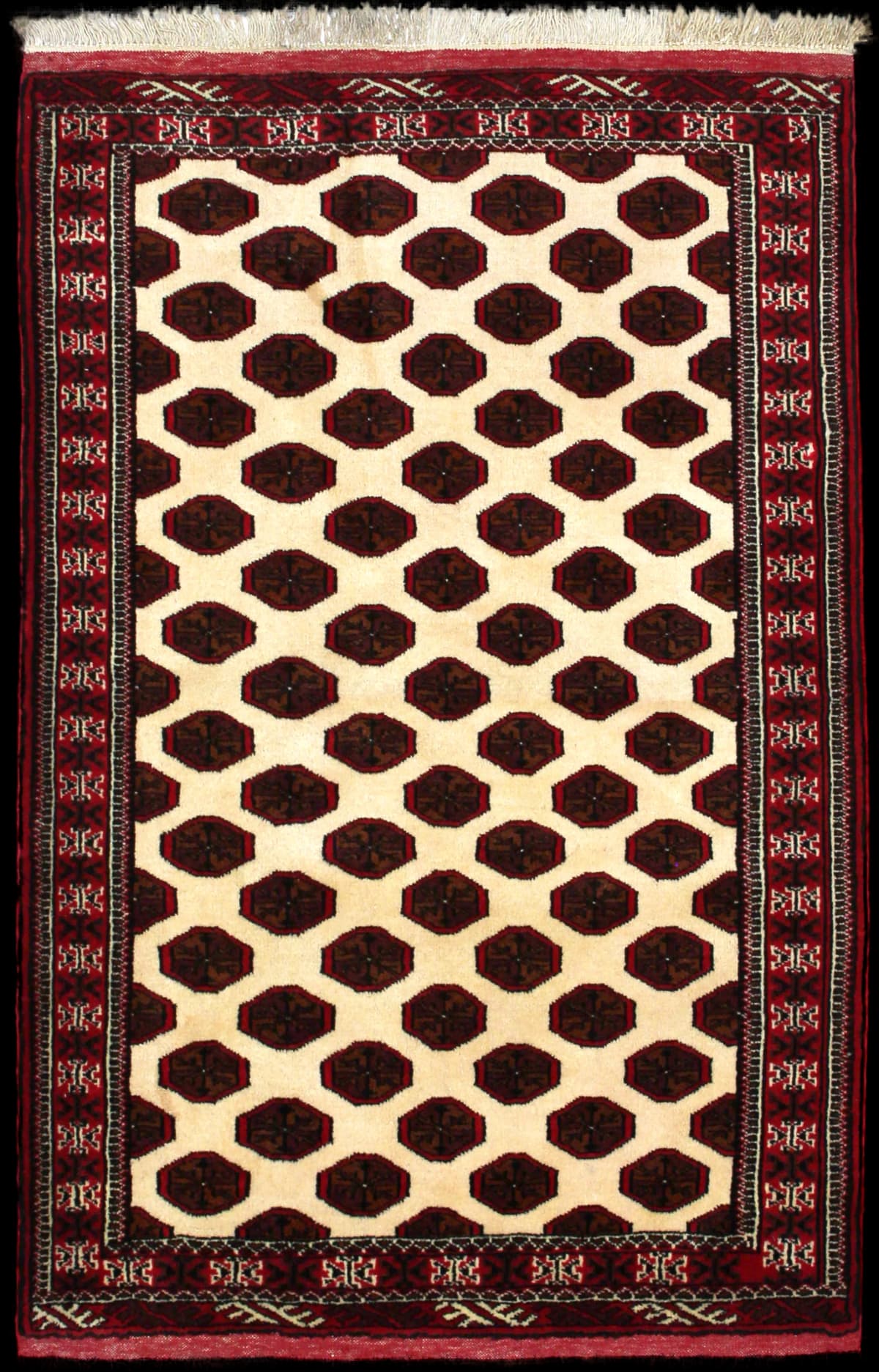
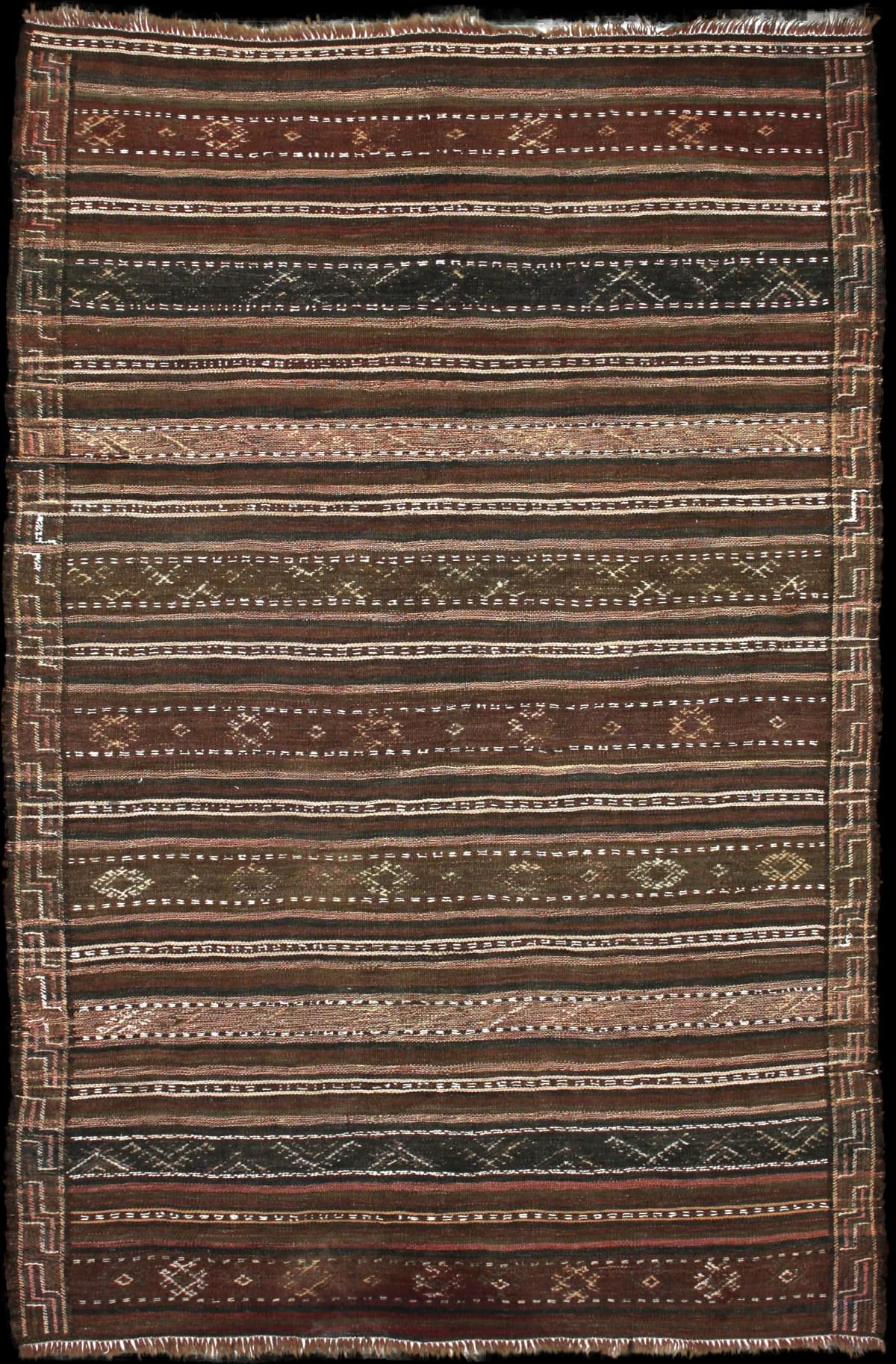
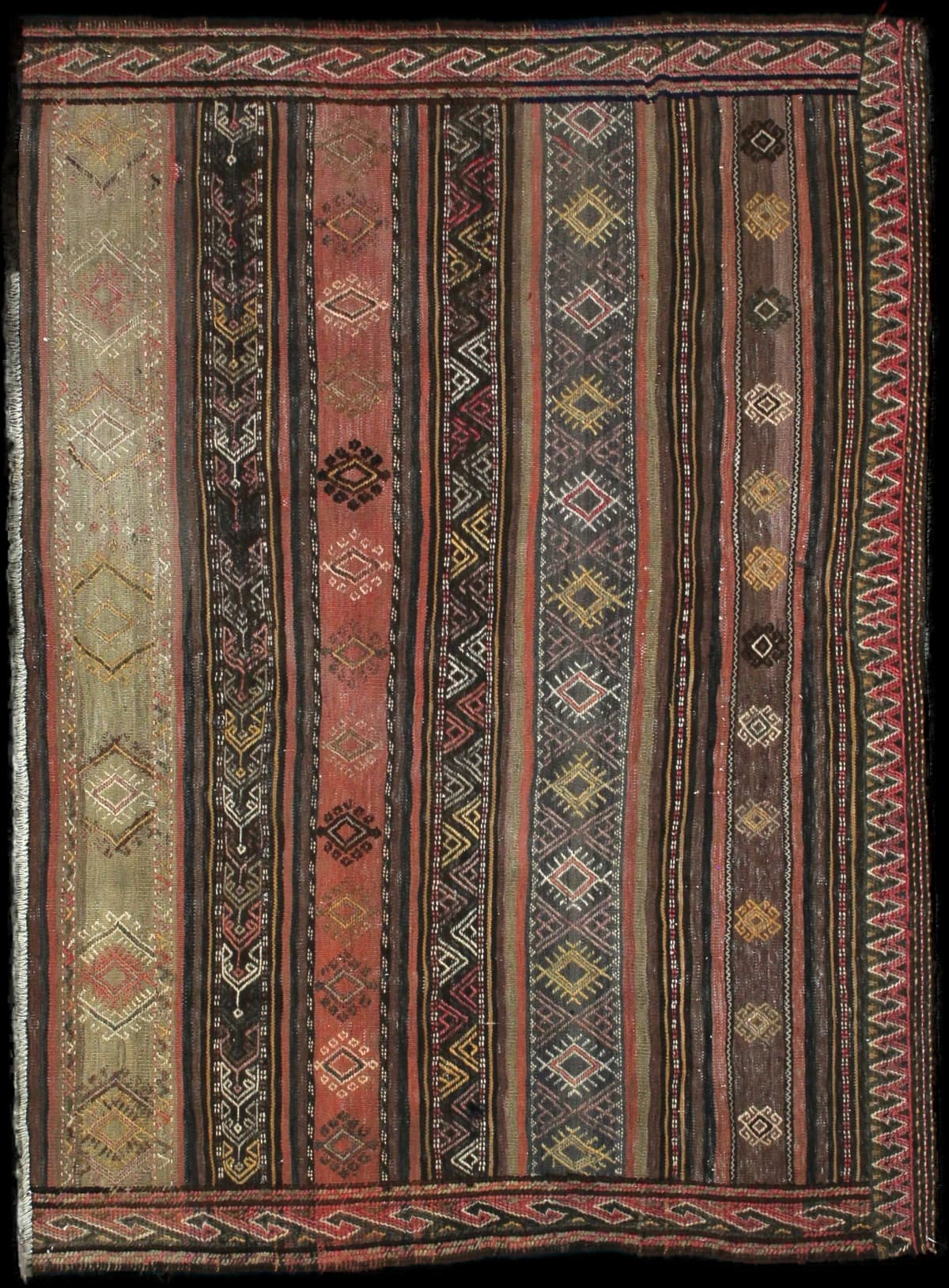
From the region ofکلات نادریKalat-e Naderi
Origin: Kalat-e Naderi
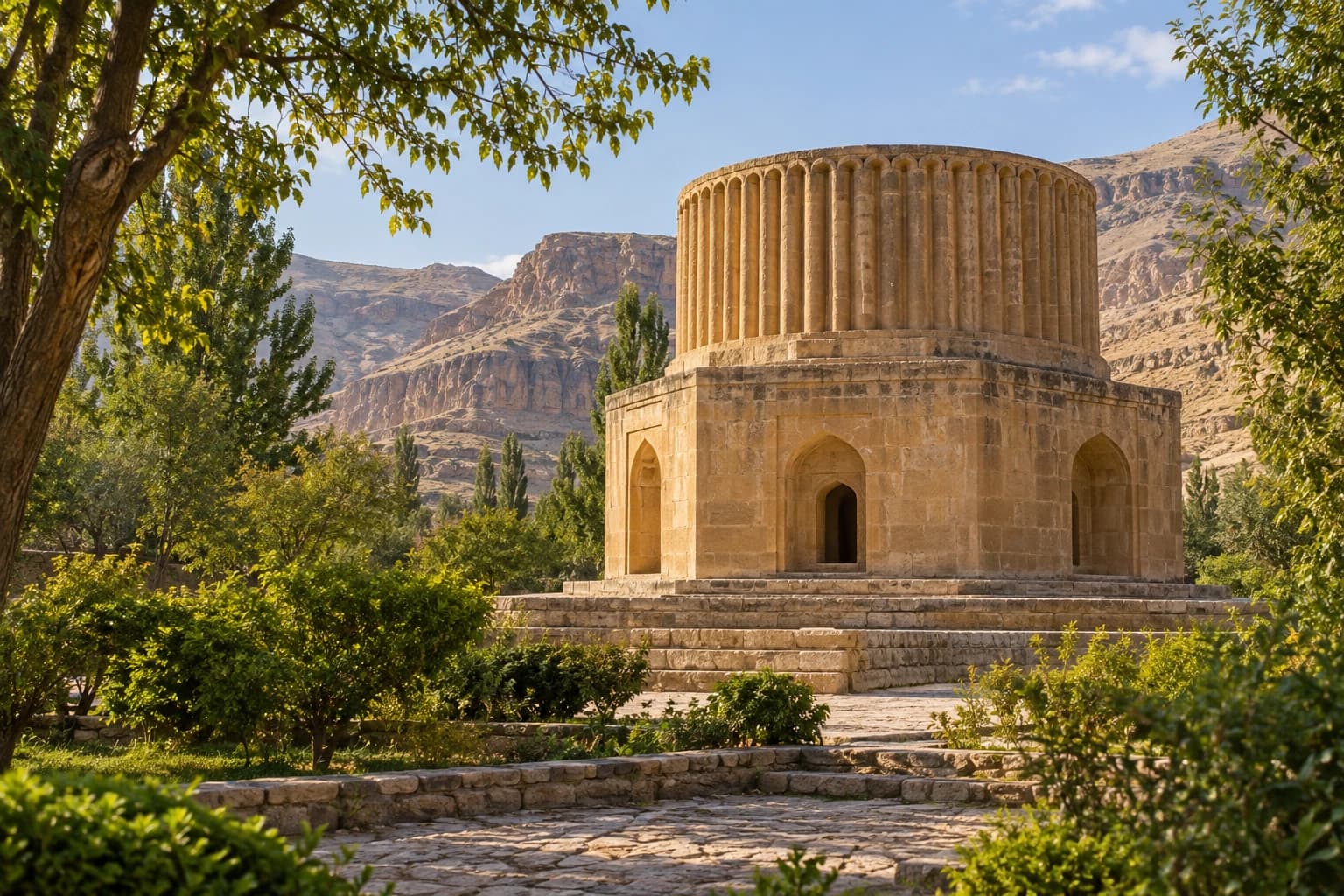
Kalat-e Naderi lies in Razavi Khorasan, the north-eastern corner of Iran, some eighty kilometres due north of Mashhad and pressed hard against the border with Turkmenistan. The name means the Kalat of Nader: kalat is an old word in Persian for a fortified mountain stronghold, and the place is exactly that, a bowl of farmland and villages ringed by the rock walls of the Hezar Masjed range and entered through a handful of narrow gorges. Nader Shah Afshar, who ruled Persia from 1736 to 1747, kept his treasury inside that natural fortress and built the Kakh-e Khorshid, the Sun Palace, within it. The town still carries his name, though the county around it is now usually written simply as Kalat.
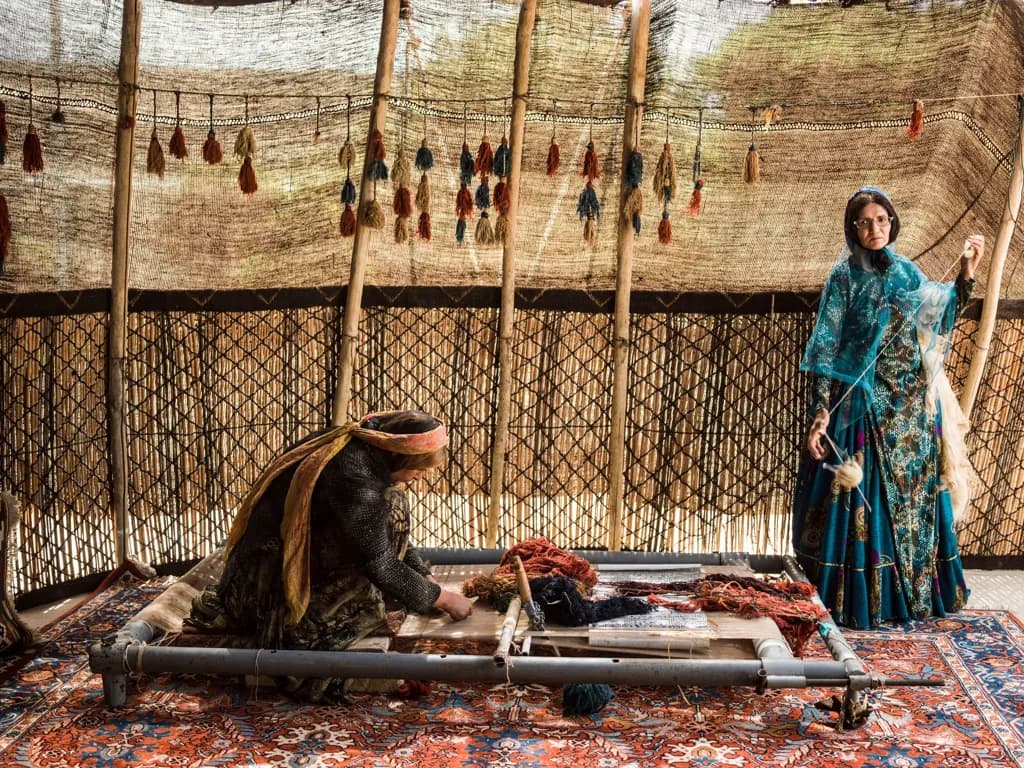
Weaving here belongs to the frontier rather than to the city. Around the turn of the seventeenth century the Safavid shahs could not hold this stretch of border against Uzbek and TurkmenSee in the carpet dictionary raiding, so they moved Kurdish tribes east and settled them along it, trusting to a reputation as formidable fighters. Their descendants, Kurmanji-speaking Khorasani Kurds, still make up much of the population of this corner of Khorasan alongside Turkmen communities, which is how a Kurdish weaving tradition ended up more than a thousand kilometres from Kurdistan. On this frontier the work is village work, done in settled houses in the valleys rather than in migrating camps.
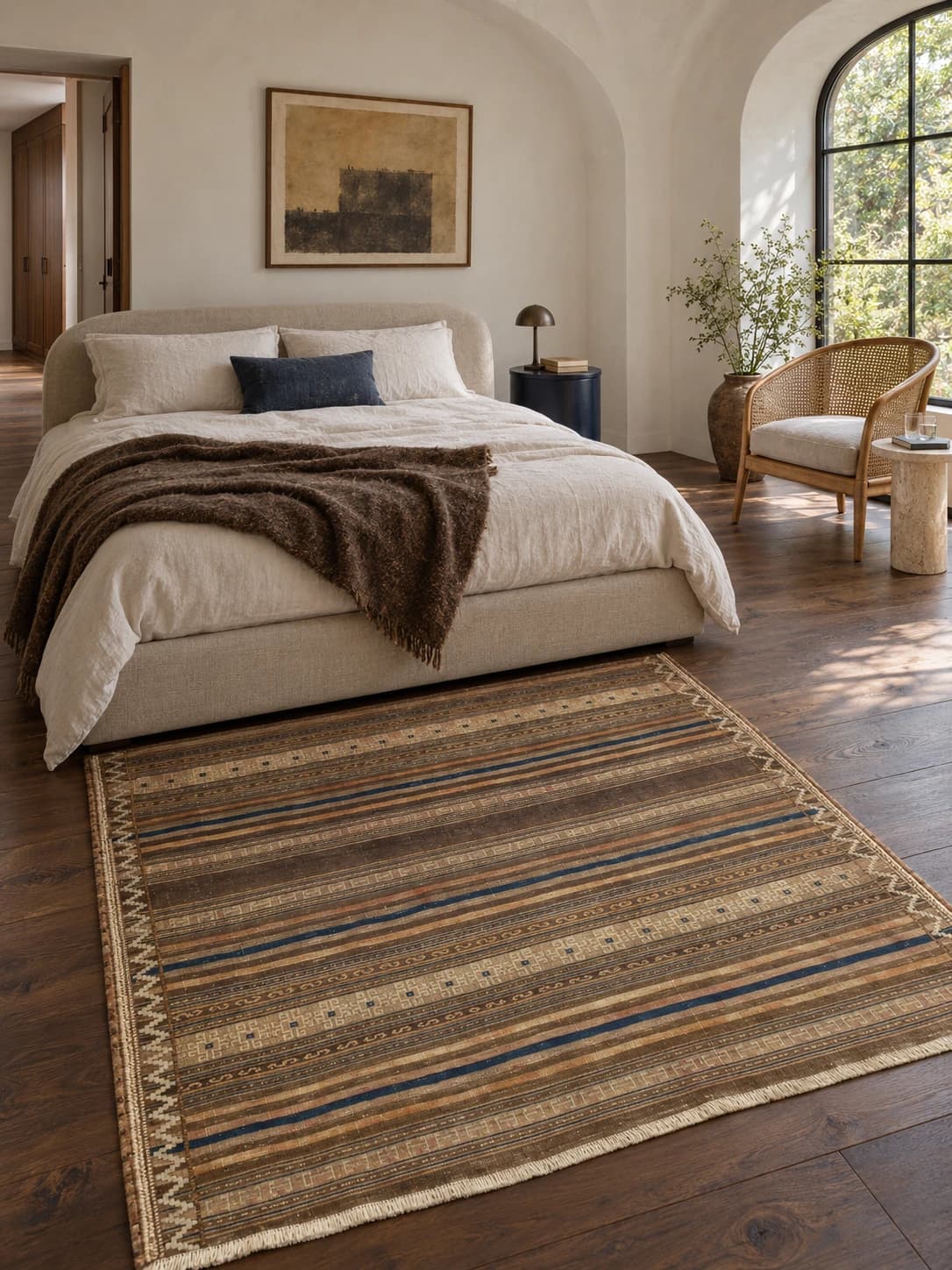
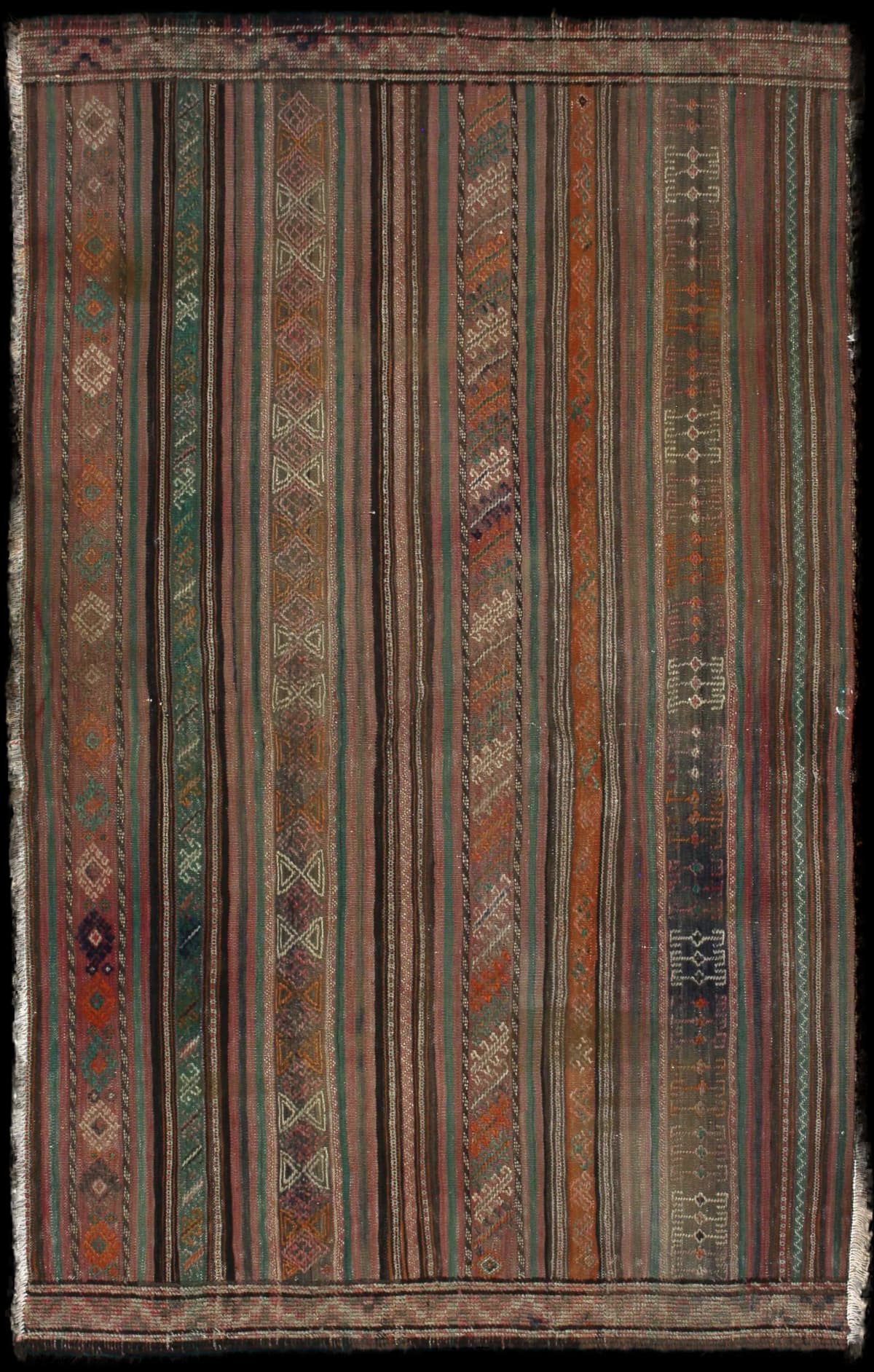
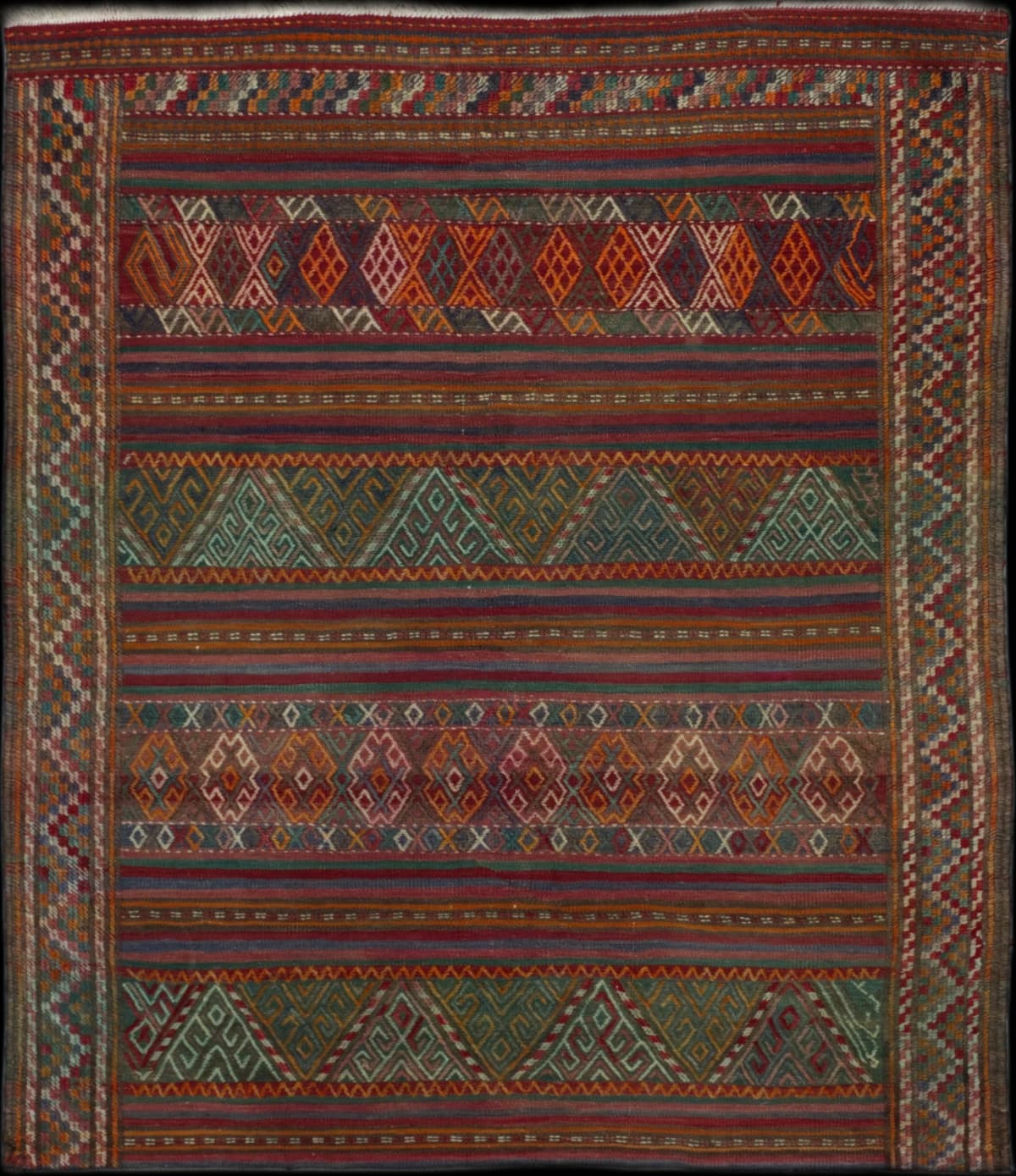
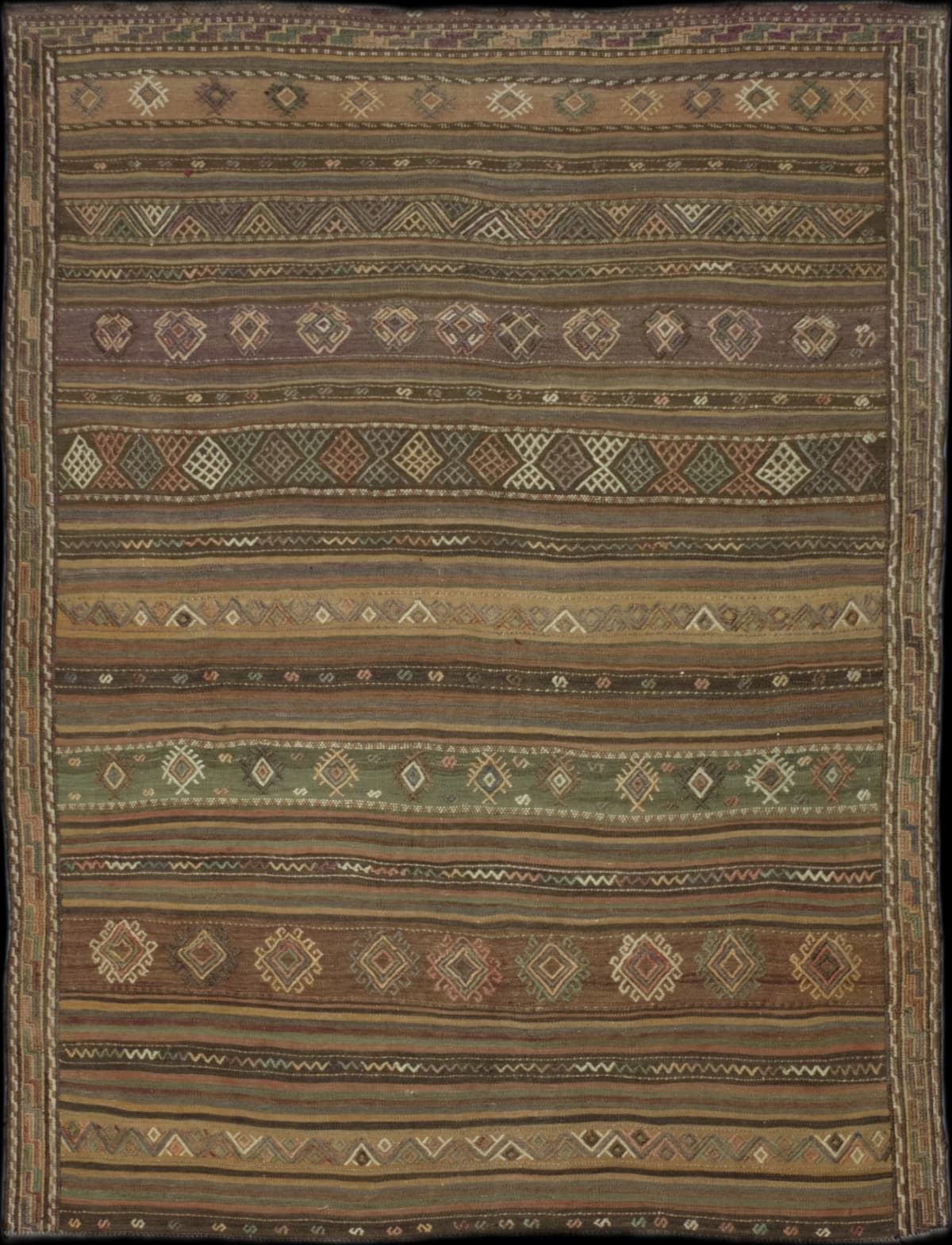
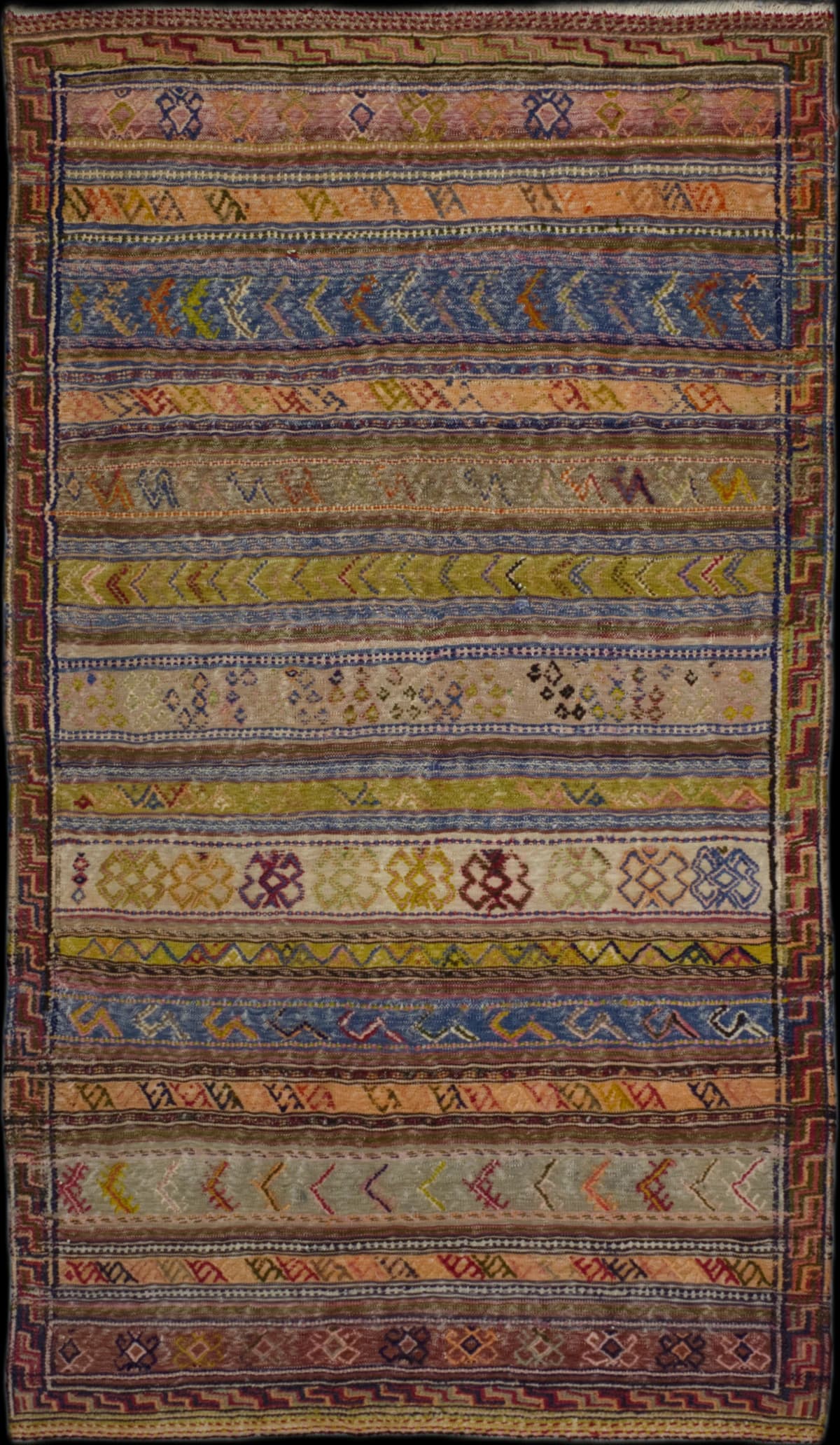
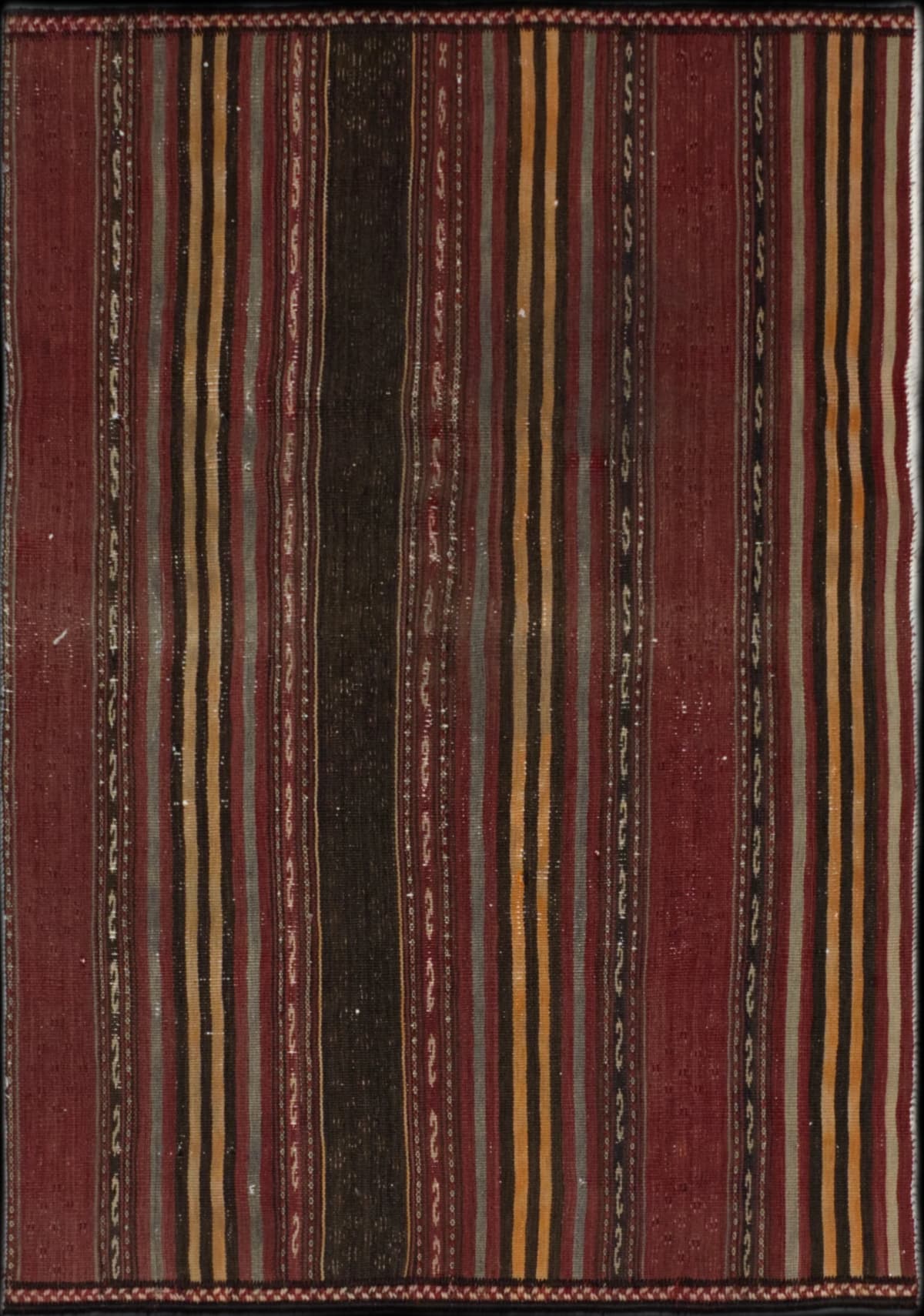
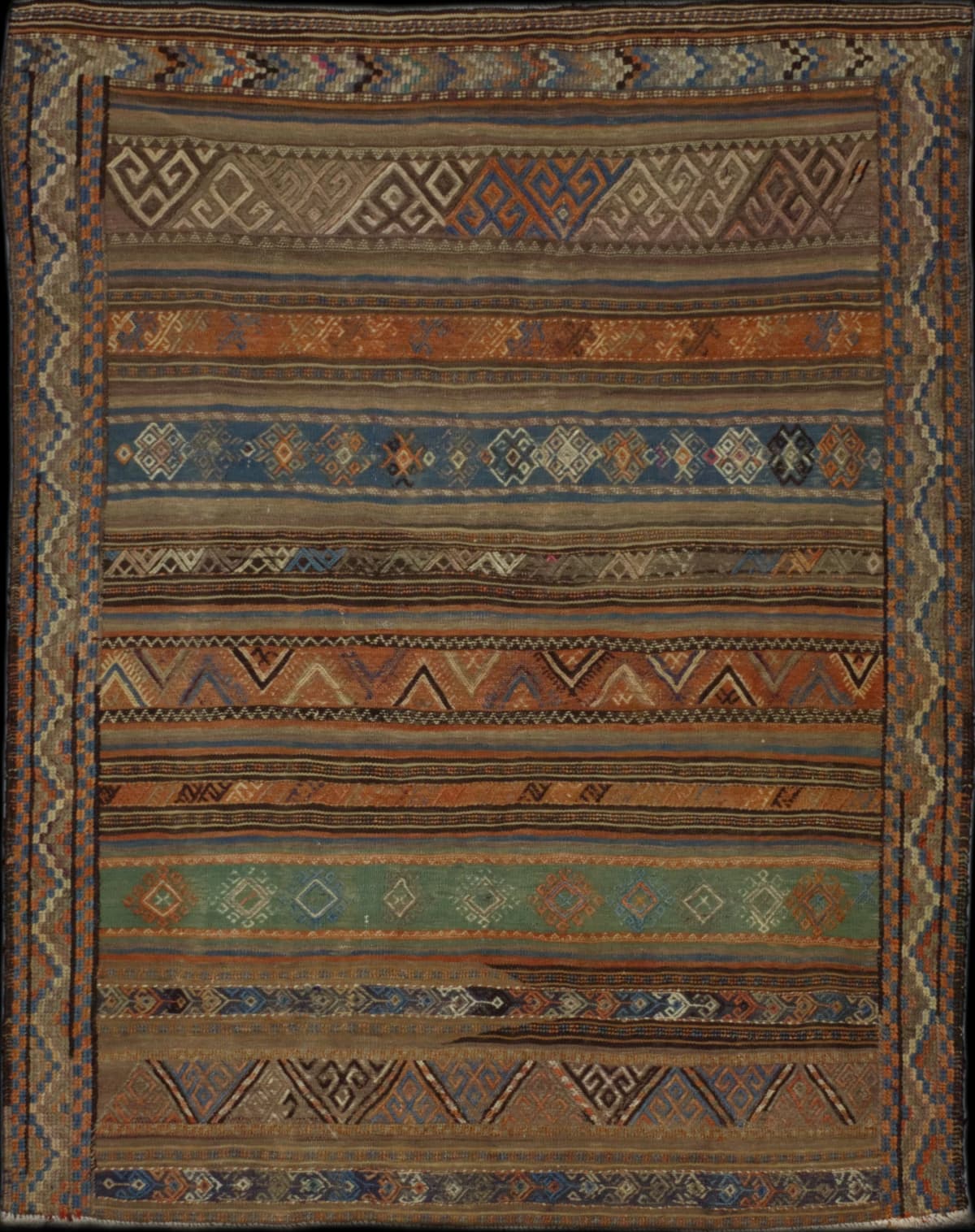
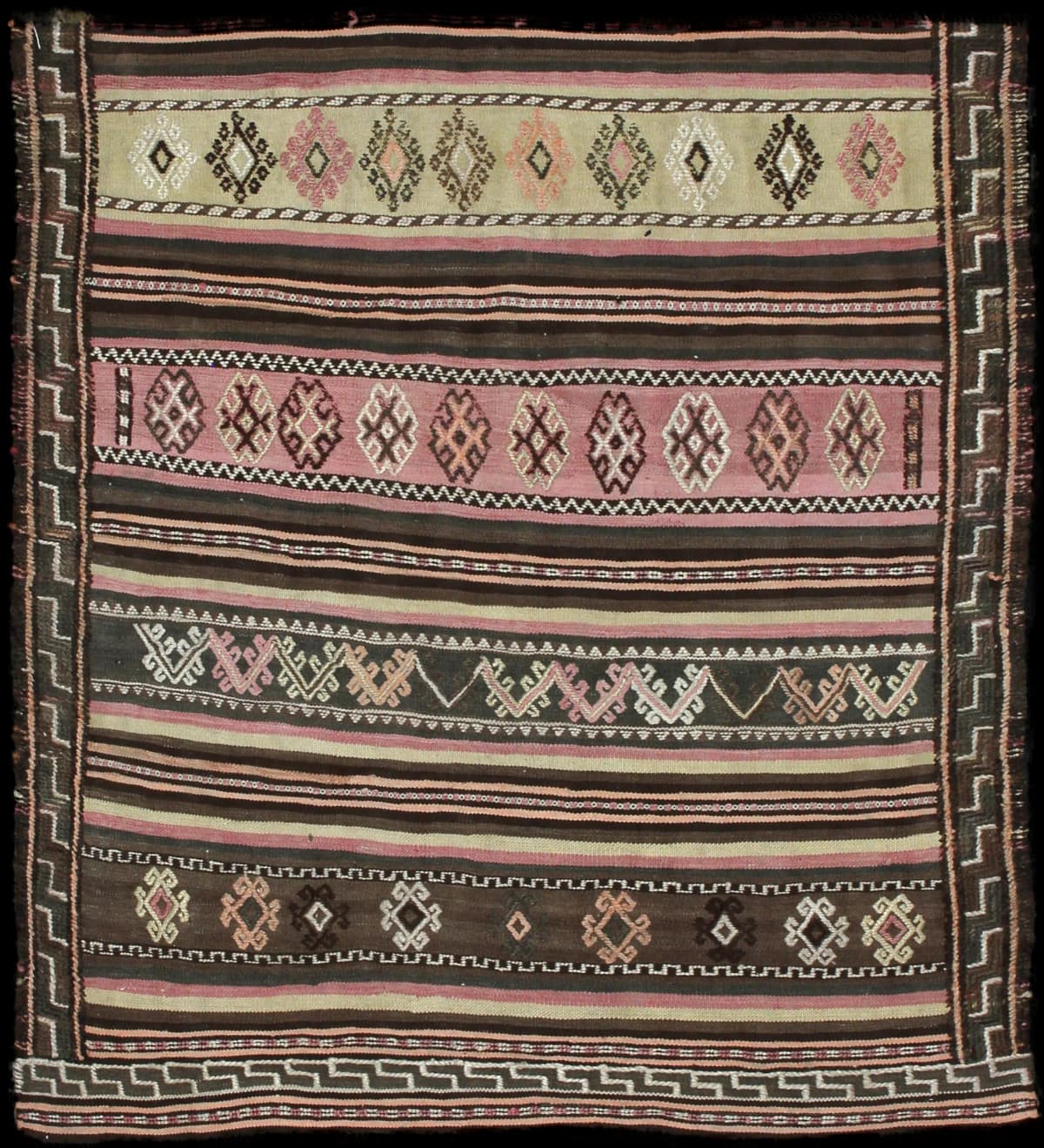
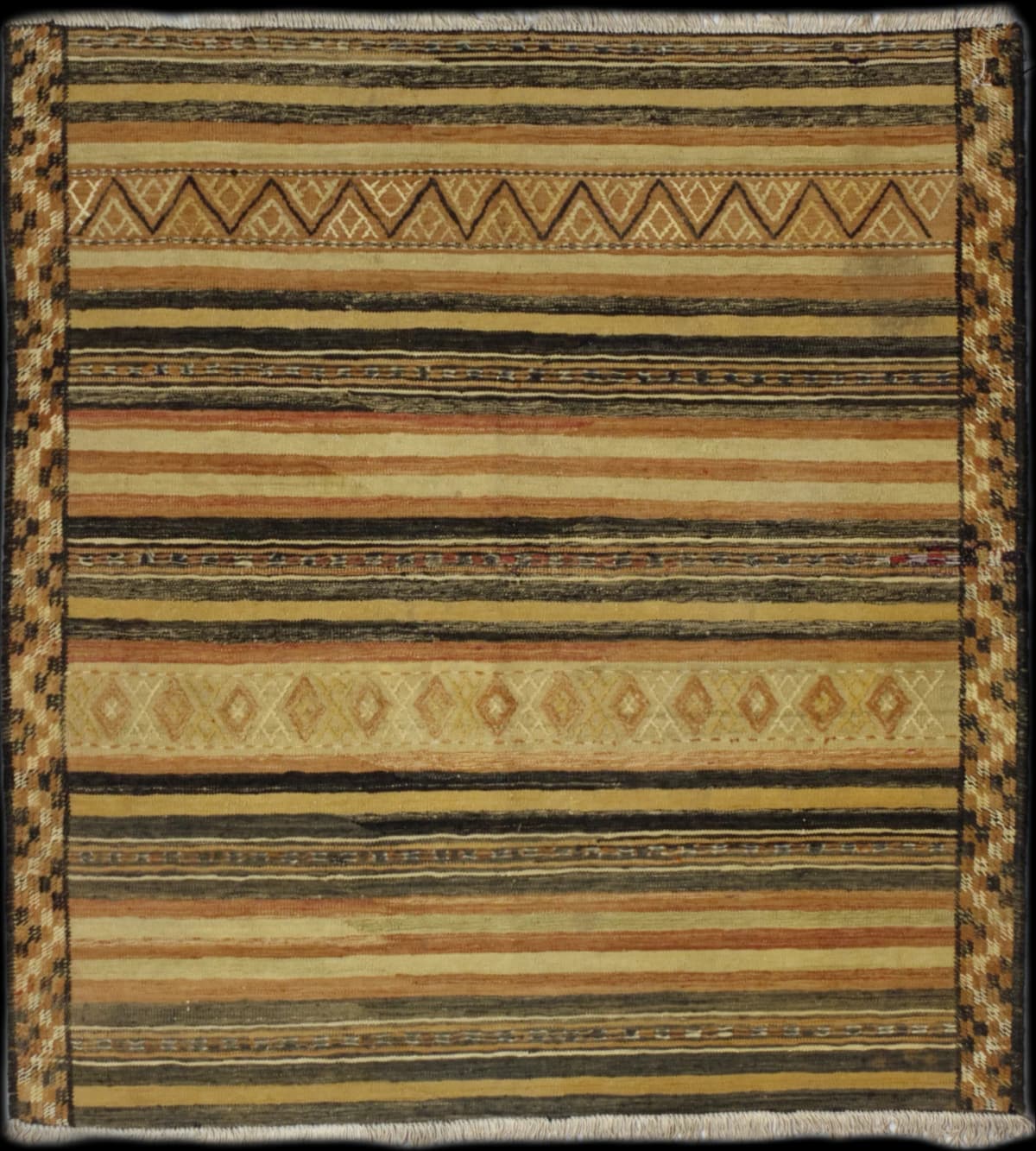
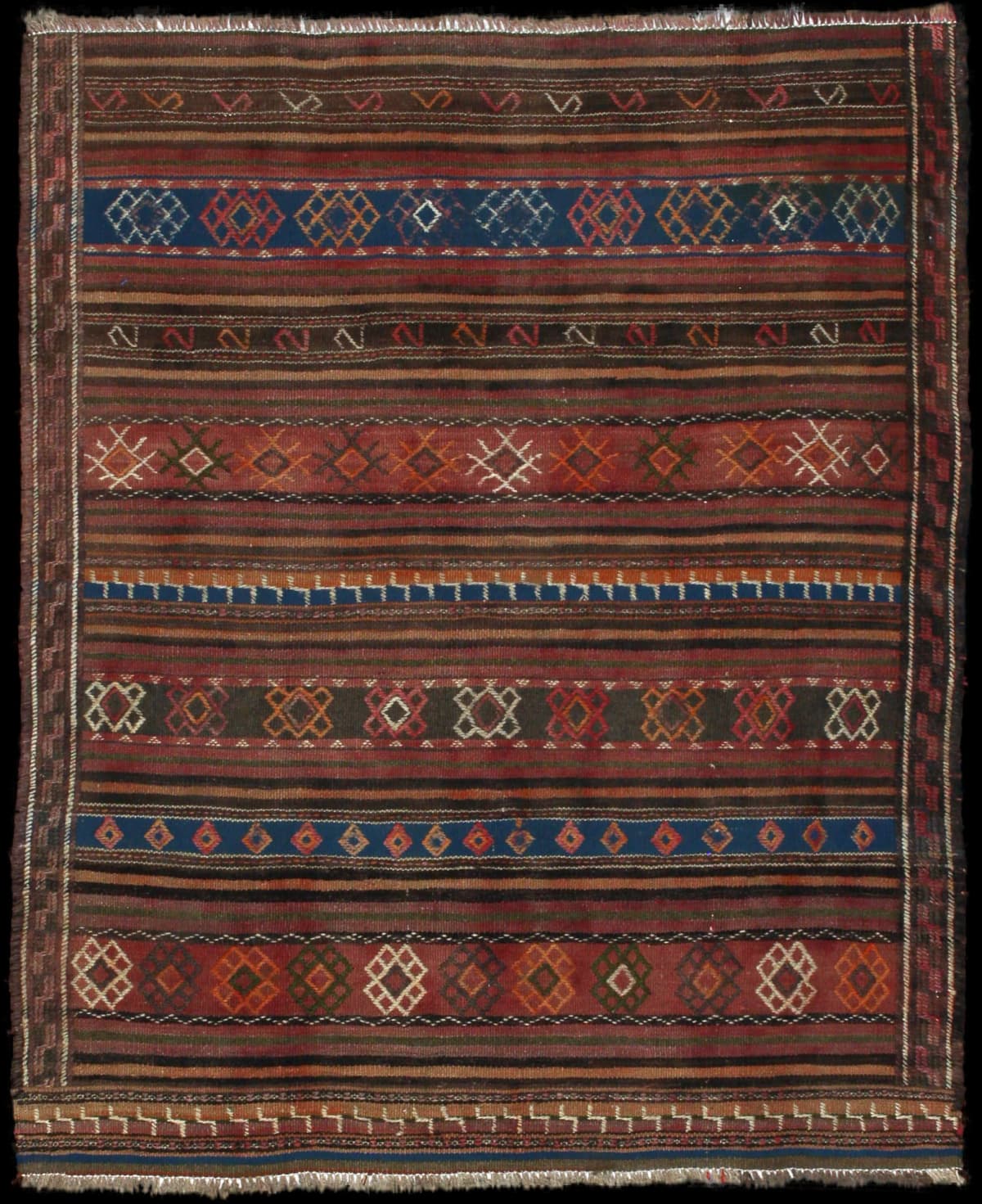
Rugs carrying the Kalat-e Naderi name are flatweaves of the soumakSee in the carpet dictionary type, and that is the first thing to understand about them. A soumak has no pileSee in the carpet dictionary and no knots: colored wefts are wrapped around the warp threads in a continuous motion, building the pattern directly into the surface and giving it a fine, slightly raised grain that looks embroidered rather than woven. Because nothing is knotted, a knots per square inchSee in the carpet dictionary (KPSI) figure does not apply and should never be quoted for one. What matters instead is the quality of the woolSee in the carpet dictionary and the fineness of the wrapping.
Two practical differences separate a soumak from a plain kilimSee in the carpet dictionary. The wrapping yarns leave their tails on the reverse, so the rug has one finished face, where a slit-woven kilim can be turned over and used on either side. The wrapping also adds a little body, so a soumak is slightly thicker than a kilim while remaining a low, thin textile far below the height of any pile carpet; the listed thickness of each piece gives the exact figure. In practice that means doors clear it, chairs slide over it, and it settles flat without a struggle.
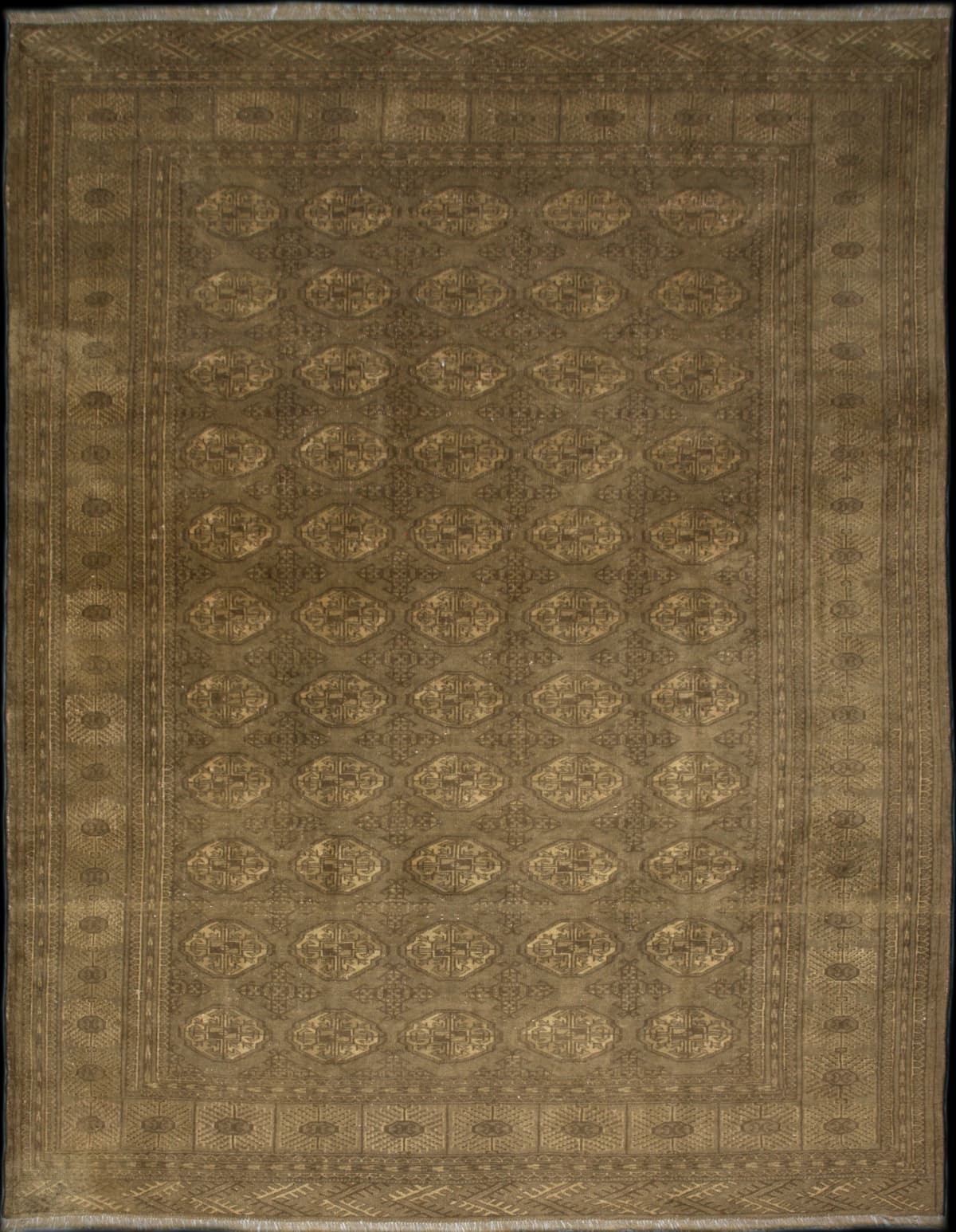
Pattern runs to two families. One is the repeating medallionSee in the carpet dictionary, a column or grid of angular medallions marching up the field. The other is the allover, the same vocabulary of hooked diamonds, stars, polygons and barbed outlines spread across the ground with no central medallion to anchor it. Curved drawing and floral scrollwork, the stock in trade of the urban workshops in Mashhad down the road, are essentially absent. Everything is built on the diagonal of the weave, which is what gives these rugs their stepped, crystalline look and makes them read clearly from a distance.
That geometry is inherited rather than invented. The Kurdish tribes of north-eastern Khorasan came from the Anatolian frontier lands in the west and brought their pattern language east with them; generations later it still reads as Anatolian and Caucasian rather than Persian. Weavers work without a cartoon, the squared paper blueprint a city workshop in Tabriz or Kashan would follow, learning designs from older women at the same loomSee in the carpet dictionary and reworking what they see around them. The outcome is a recognizable family style carried by strong individual personality, which is also why no two pieces repeat each other exactly.
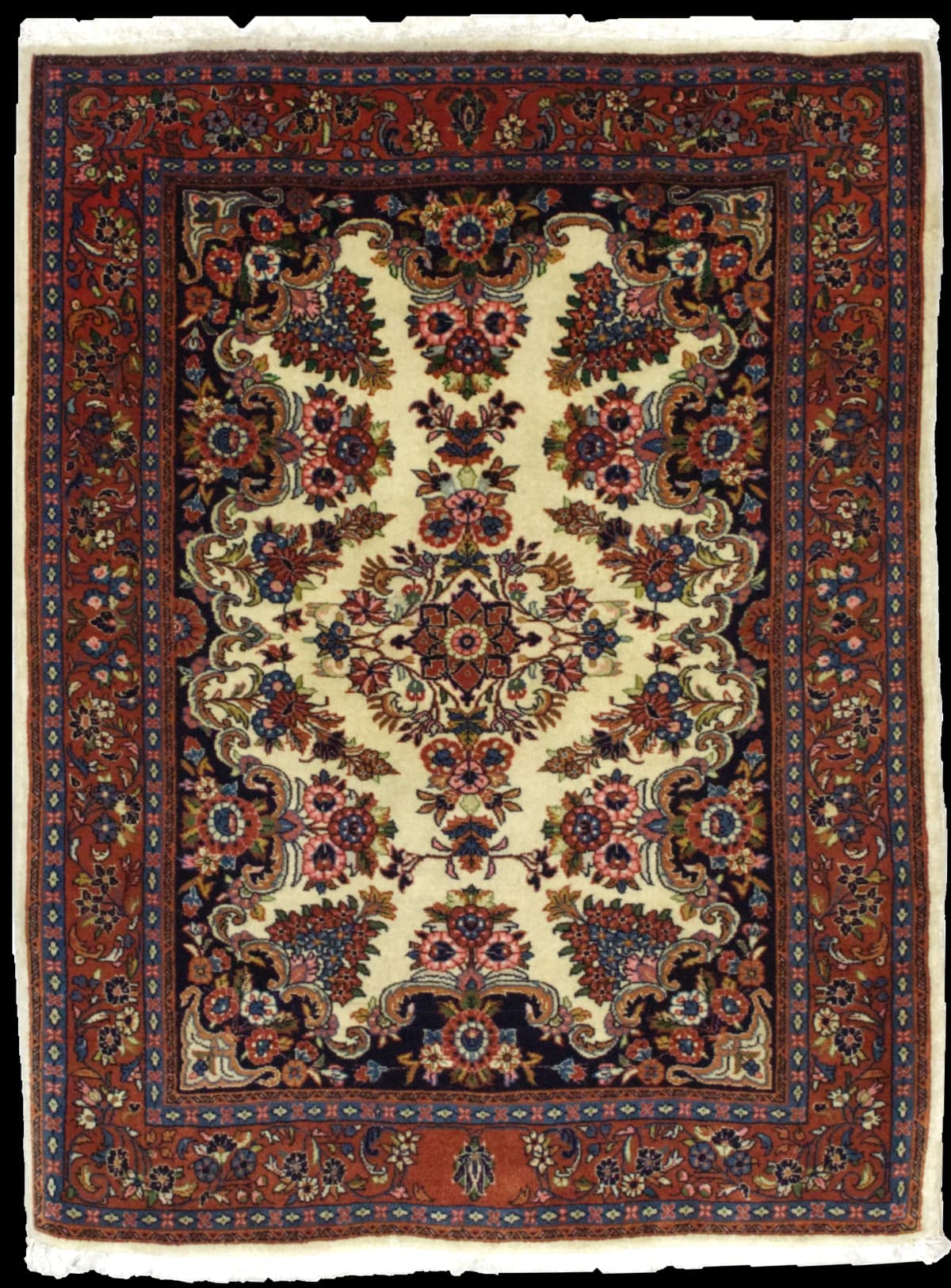
Color is strong and unhesitating. Fields are usually deep red or blue, with ivory used as a full ground in its own right rather than only as an accent, and the borders draw on the same three. Highlights come in browns of several shades, along with gold, grey and black. There is no pastel register here and no shadingSee in the carpet dictionary or tonal gradation; a color is either present or it is not. That flat, declarative palette is a large part of why these rugs hold their own in a plain modern room.
Dyestuffs have traditionally been gathered locally rather than bought in, from whatever plants and minerals the district yields. Madder rootSee in the carpet dictionary for reds, indigo for blues and walnut husks for browns, boiled in copper cauldrons, are the classic materials across Persian tribal weaving and stand behind the colors of older pieces. Naturally dyed wool softens with age rather than fading flat, and bands of slightly different tone across a field, where one dye lotSee in the carpet dictionary ran out and the next began, are called abrashSee in the carpet dictionary. They are a mark of hand work, not a fault.
Foundation and surface are both animal fibre. Warp and weftSee in the carpet dictionary are wool or goat hairSee in the carpet dictionary, goat hair being an ordinary structural choice on this frontier rather than an exotic reinforcement, and the wrapping yarn is wool from the weavers' own flocks. Hand-spinning leaves the lanolinSee in the carpet dictionary in the fibre, the sheep's own protection, which is part of why a well-kept tribal wool surface stays springy and hard-wearing. An all-wool structure also gives a supple, light rug that can be rolled tightly, moved without ceremony and hung on a wall without distorting.
Size follows the loom. Households here weave on compact, narrow looms set up inside the house, with no arrangement for the very large formats a commercial workshop handles, so output runs small to medium. Bags, cushion faces and small squares sit at one end of the range, runners and modest room sizes at the other. Wide room-size pieces are uncommon, and a very large flatweaveSee in the carpet dictionary attributed to this district is an unusual thing that deserves a careful look at its structure.
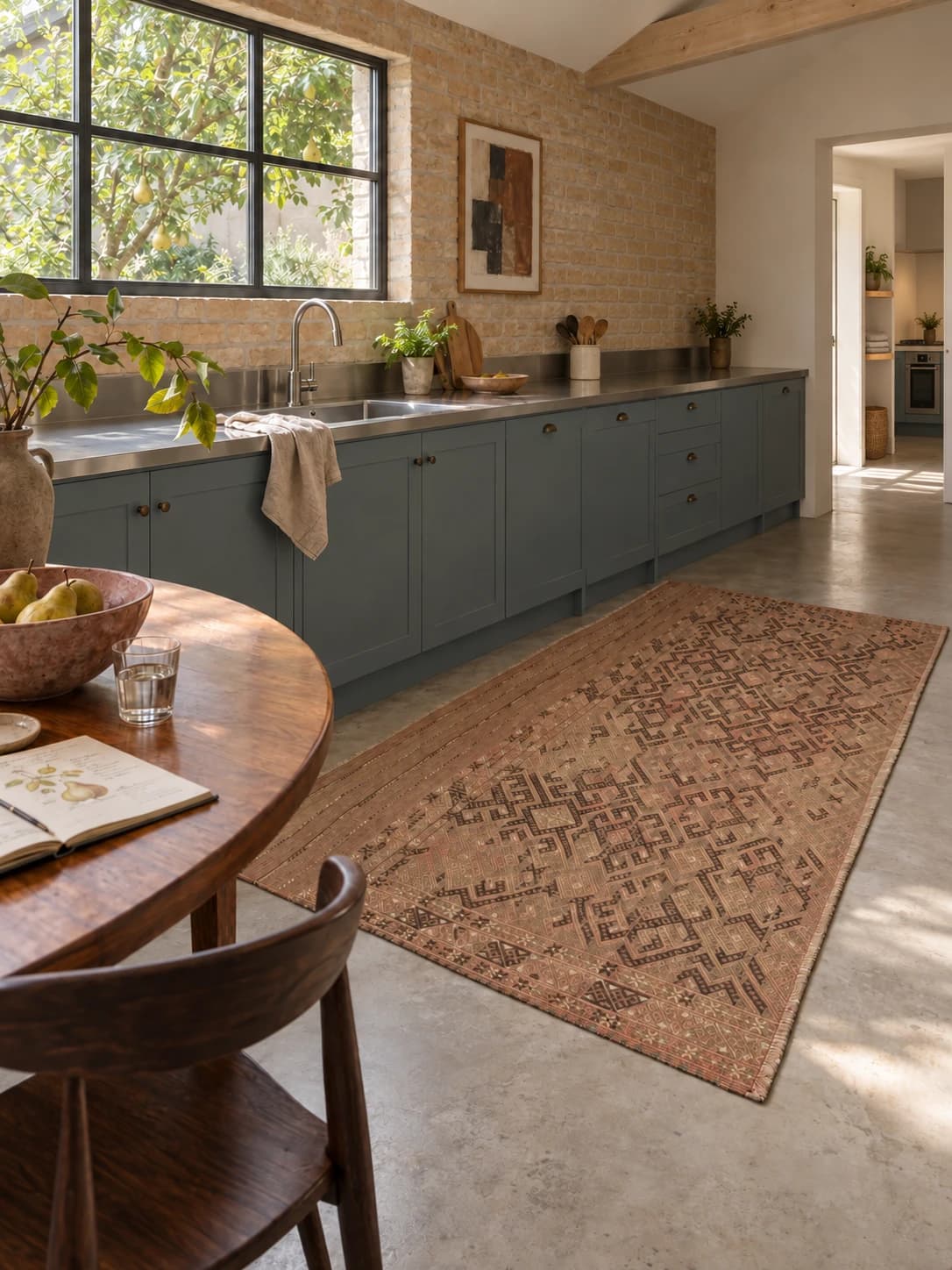
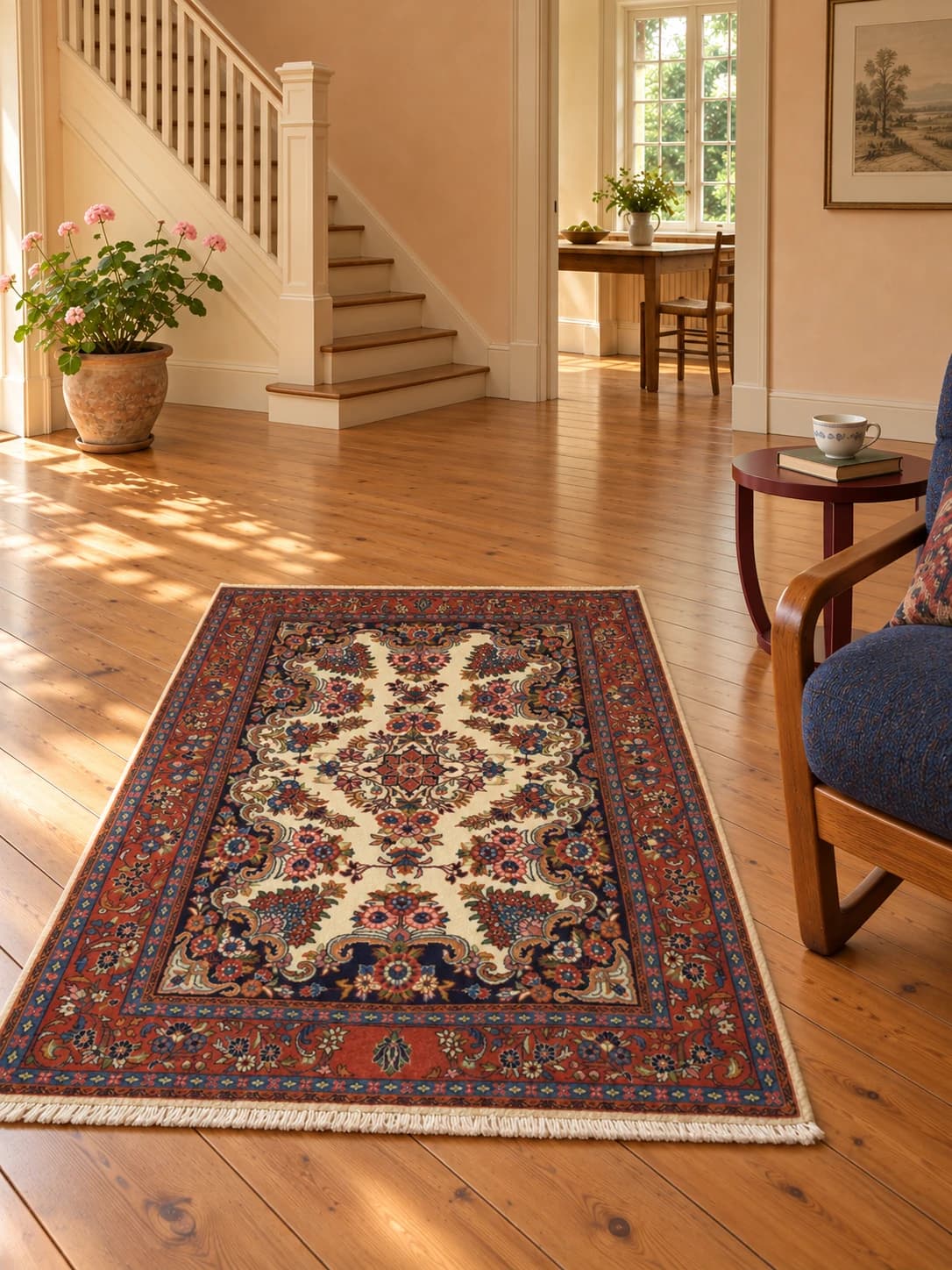
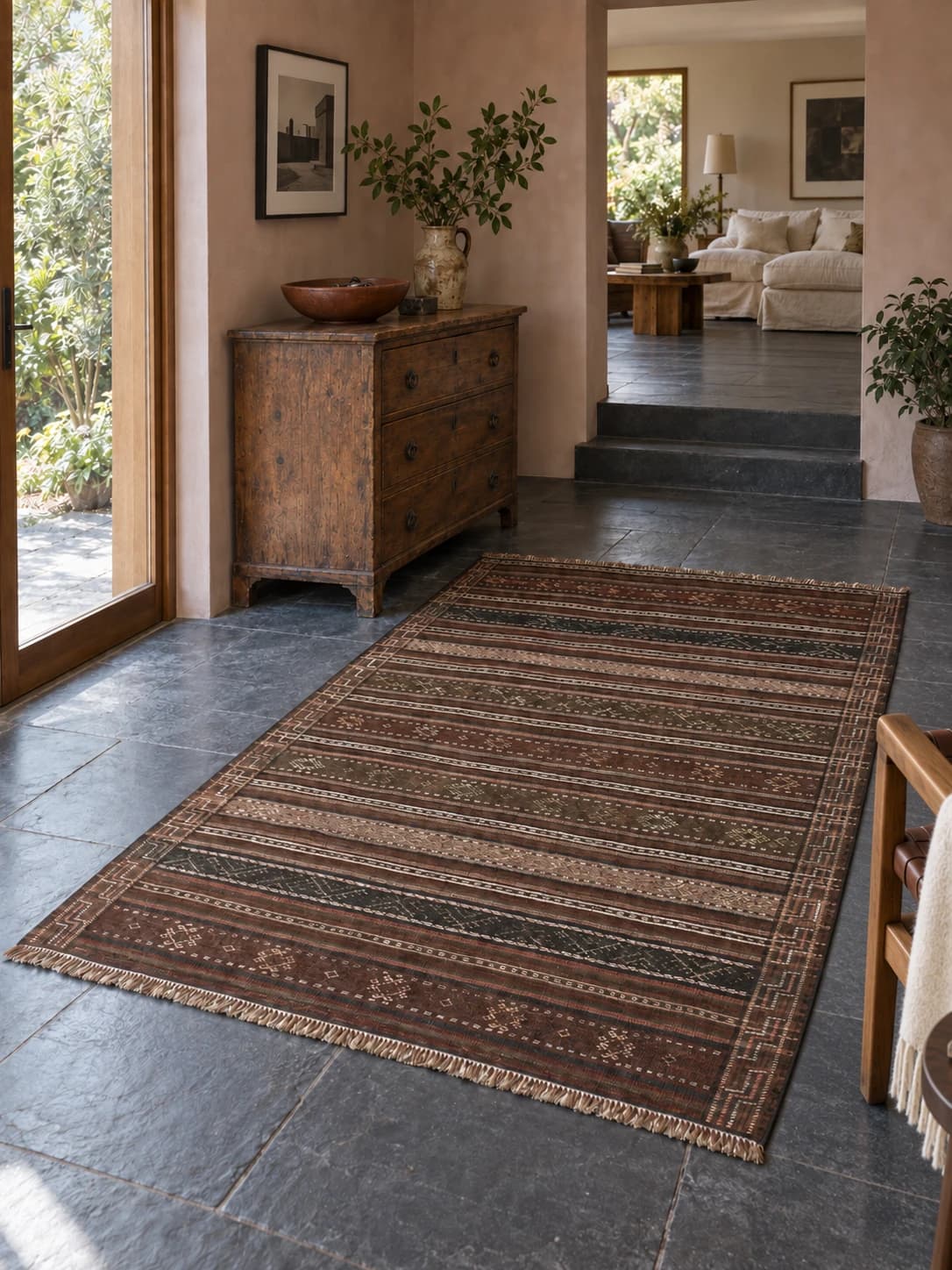
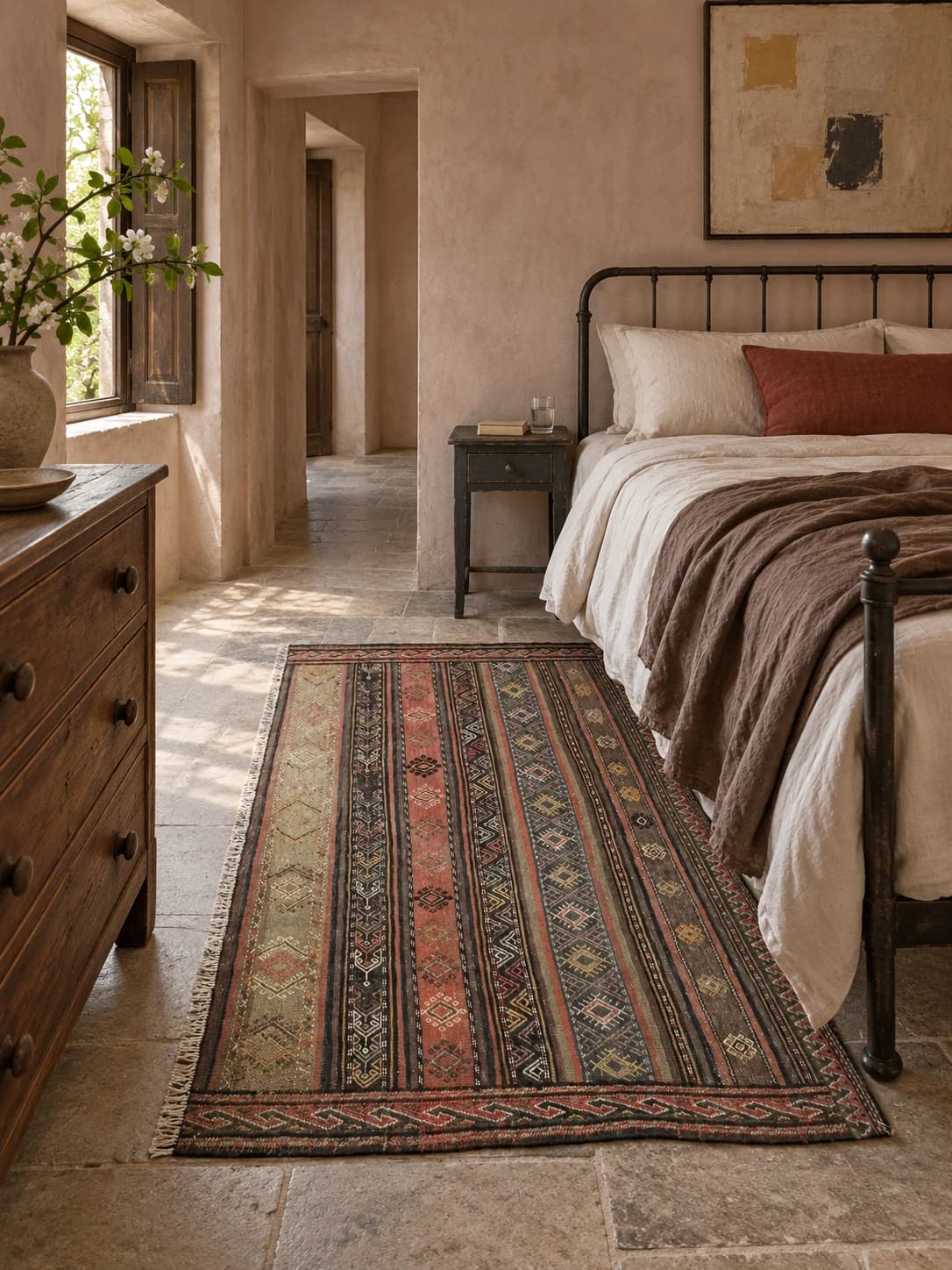
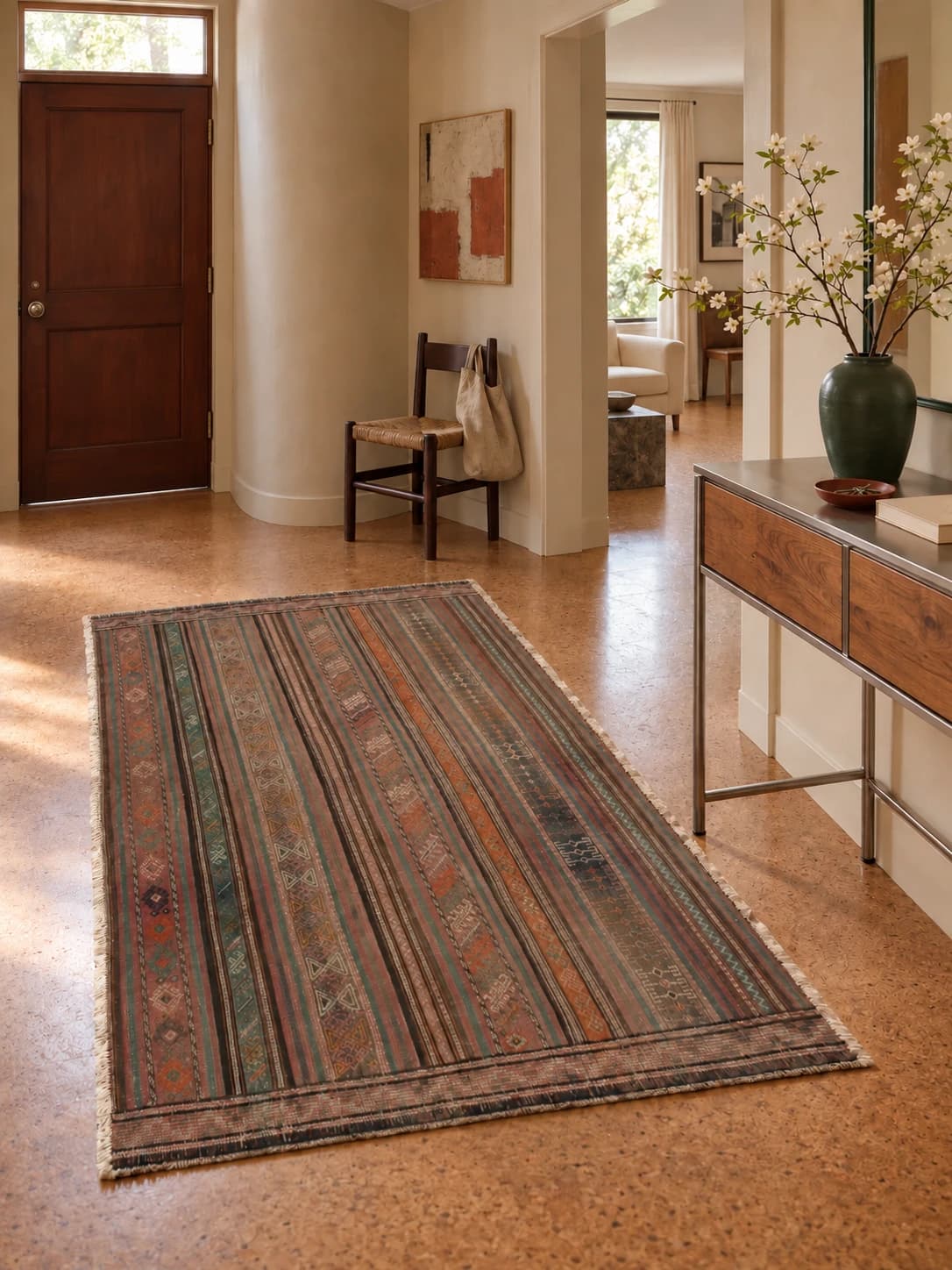
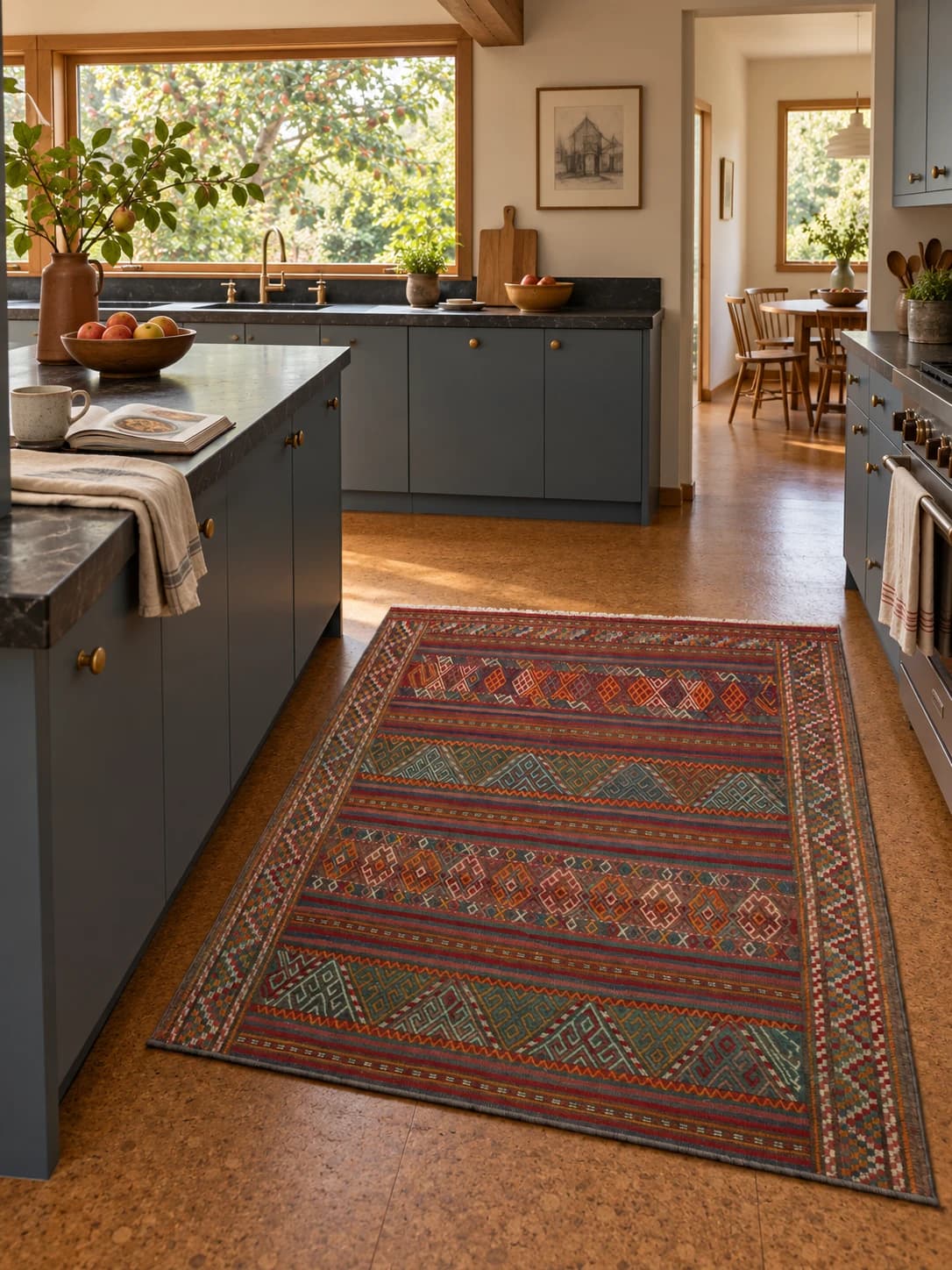
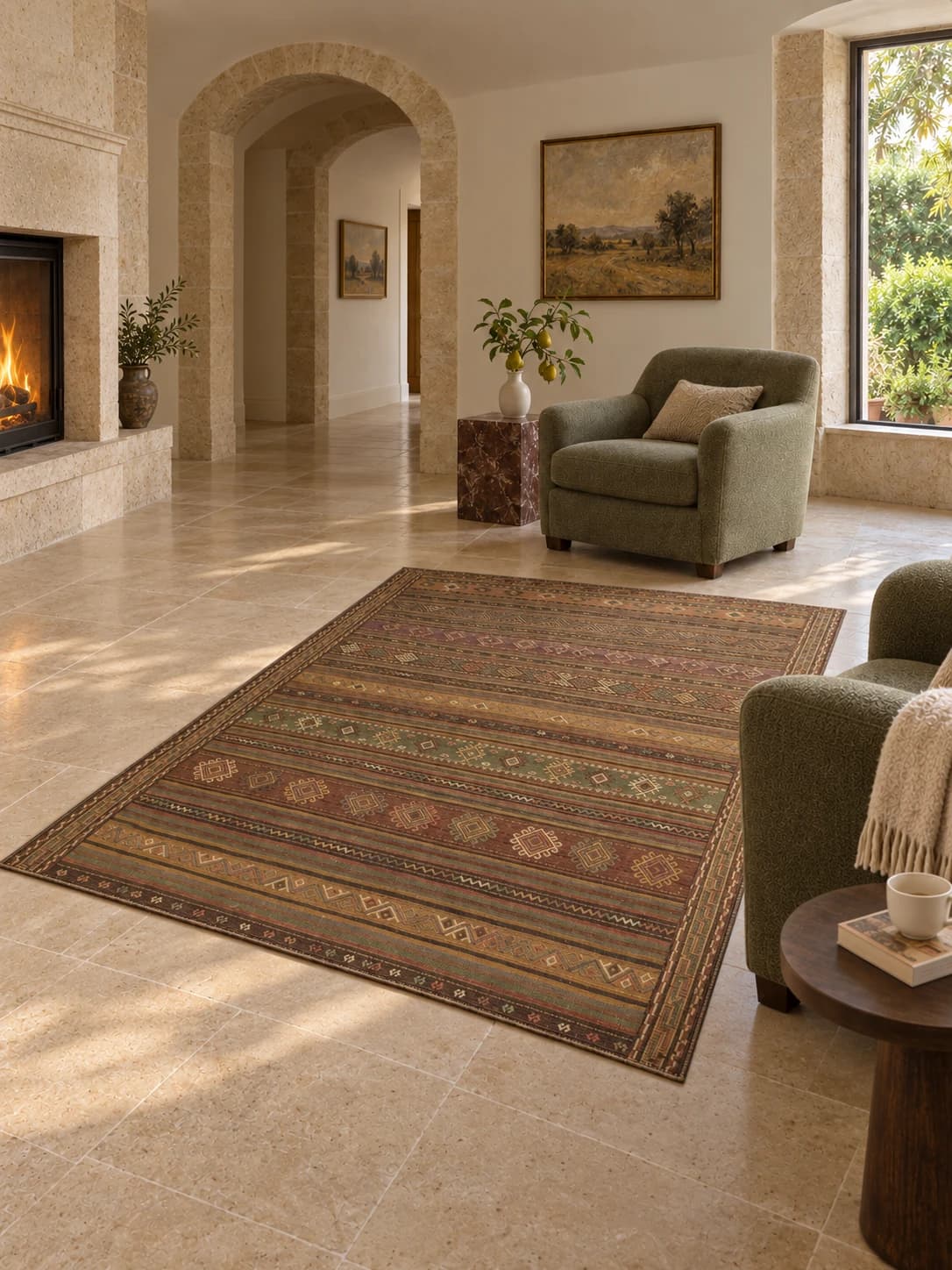
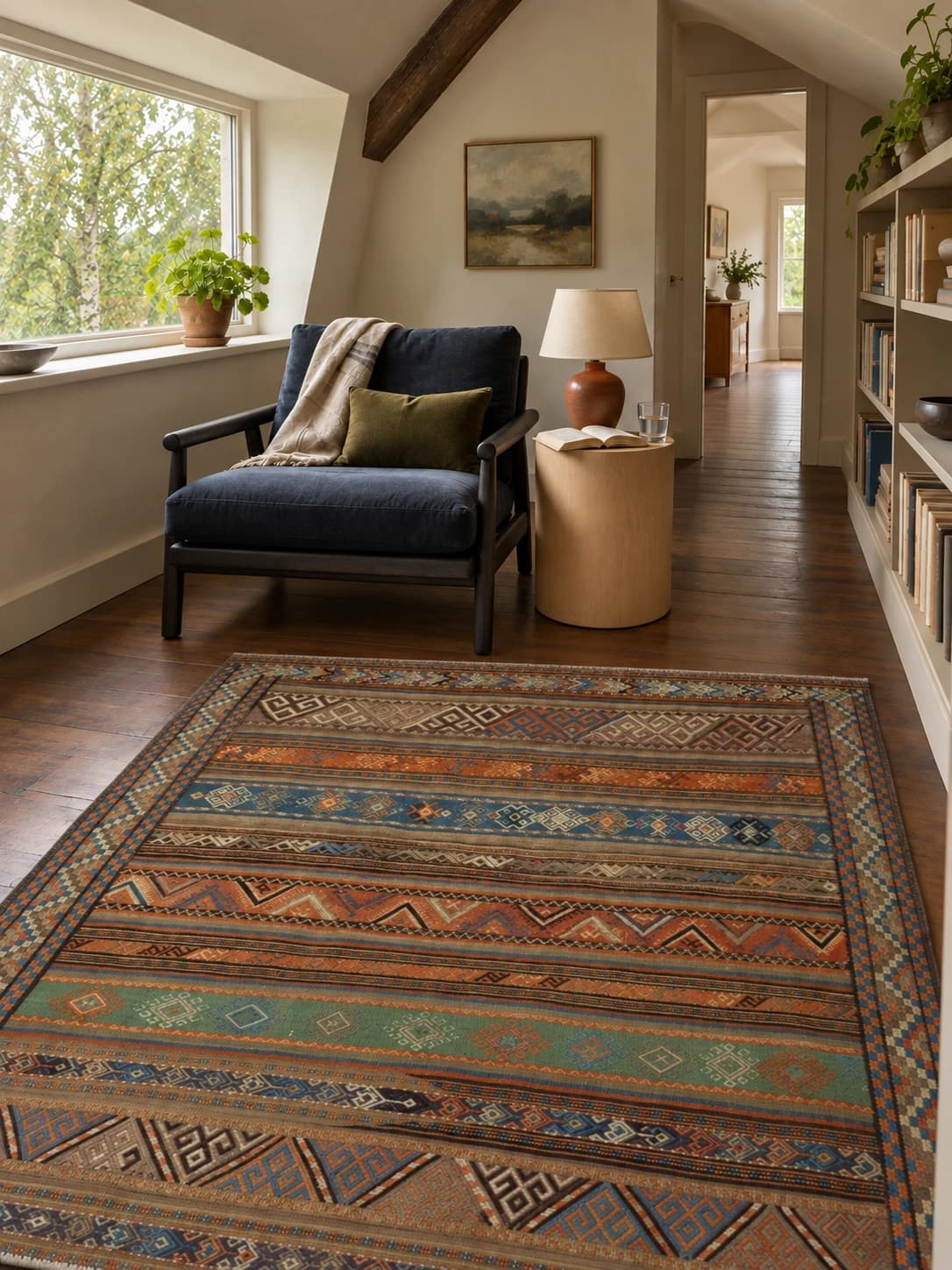
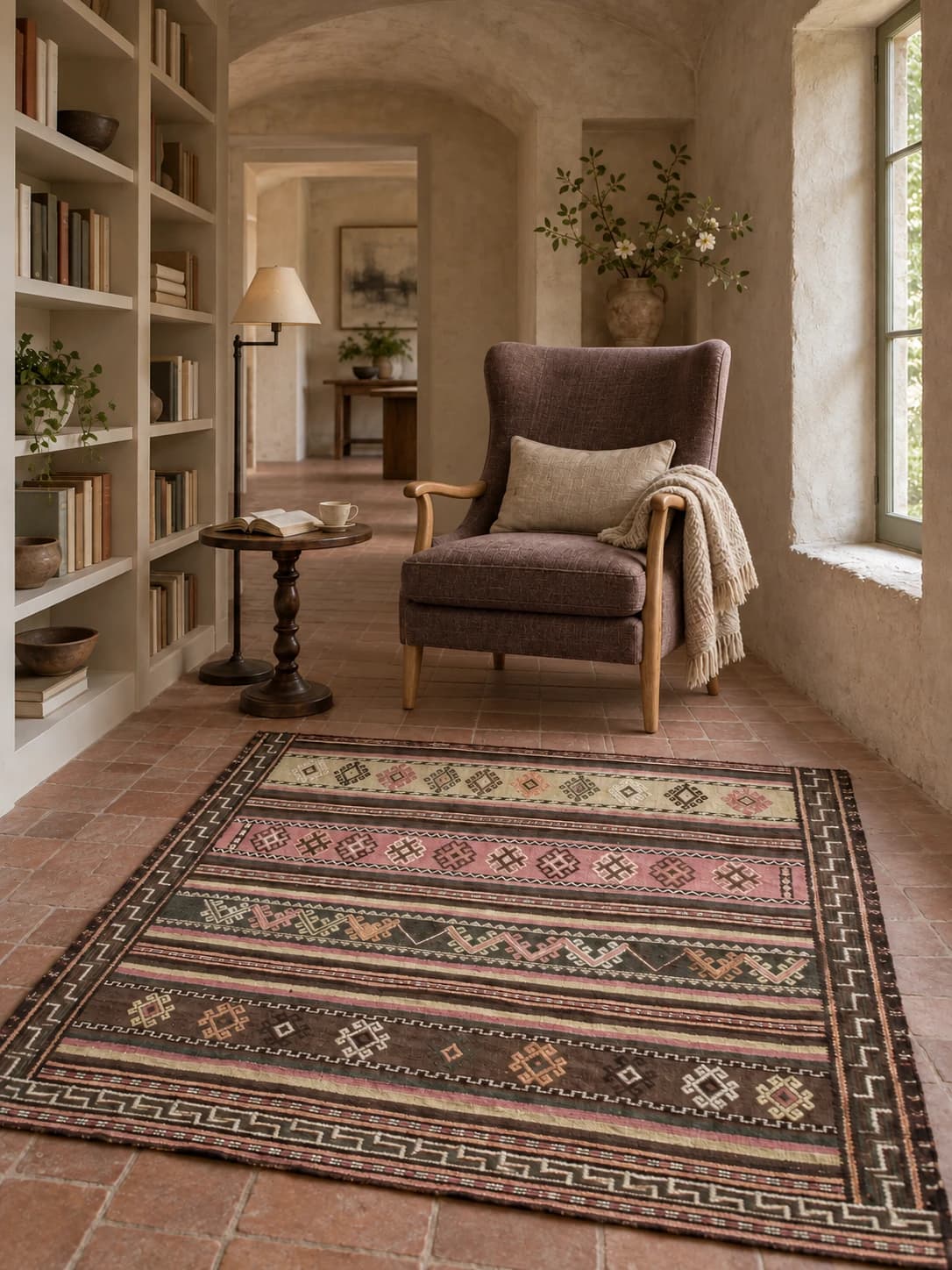
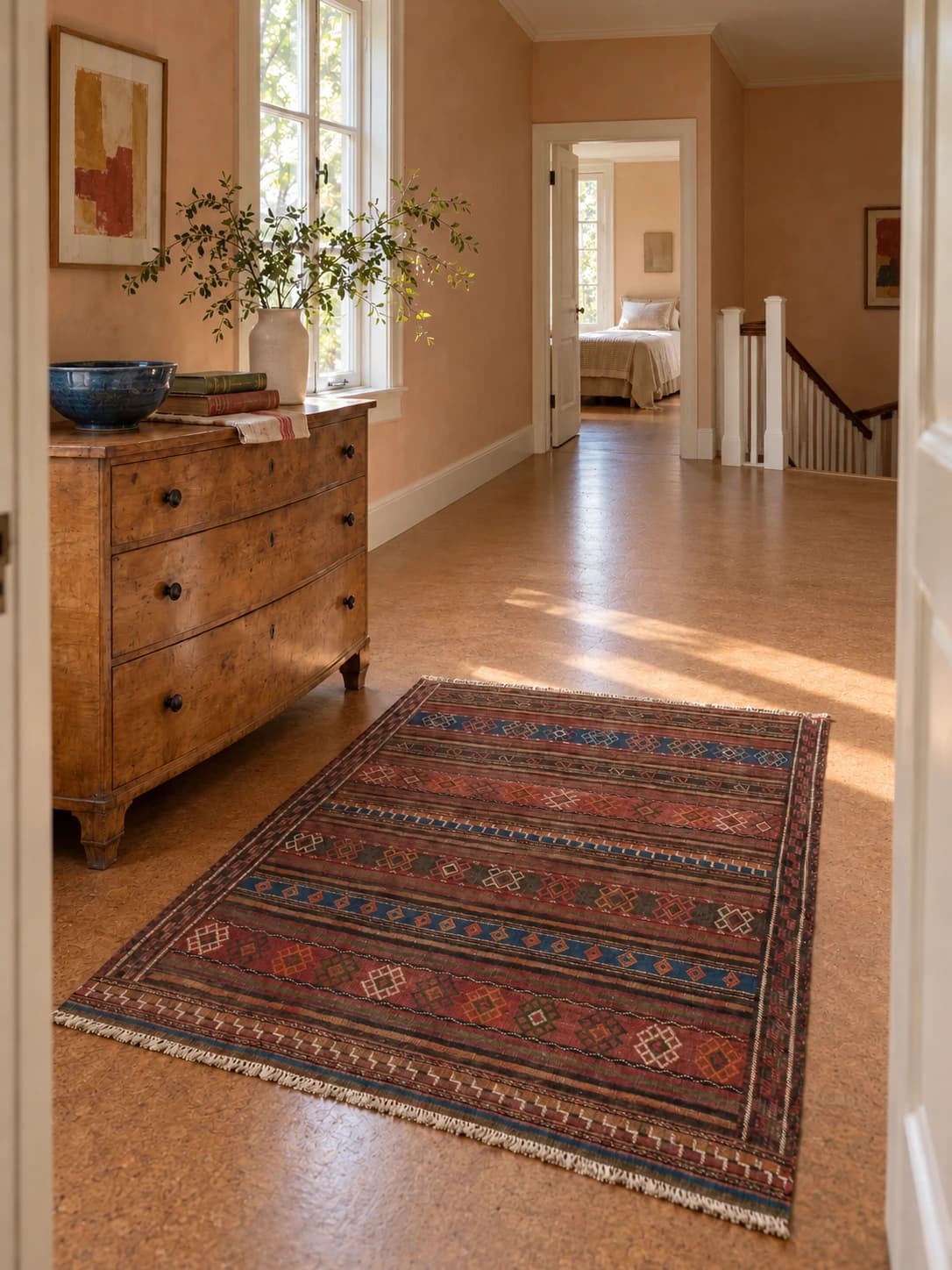
In a home these behave differently from a pile carpet. A flatweave is thin, so it will not crush or shade the way a pile does, but neither does it cushion underfoot, and a punishing traffic lane is better served by a deep-pile weave such as HerizSee in the carpet dictionary or BijarSee in the carpet dictionary. A soumak earns its place under a dining table, in a hallway where a door has to clear the floor, layered over a larger plain covering, or on a wall, where the pattern can be read whole. Vacuum without a beater barSee in the carpet dictionary and turn it end to end once a year.
The Persian rug
A Persian rug is an Iranian rug — a rug hand-knottedSee in the carpet dictionary in Iran — and the tradition behind it is the oldest documented anywhere. The earliest surviving carpet, the Pazyryk rugSee in the carpet dictionary, was found preserved in a frozen burial mound and dates to the fifth century BC — roughly 2,500 years ago — and it is already accomplished work, not a beginner's craft. What began as warm, hard-wearing floor coverings for tribal households grew, over those centuries, into the art form that every other rug-weaving country has borrowed from.
Two later chapters shaped what a Persian carpet looks like today. Under the Safavid dynastySee in the carpet dictionary, from 1501 to 1732, the court promoted weaving alongside painting and calligraphy, and the workshops of Tabriz, HeratSee in the carpet dictionary, Kashan and Kerman produced the masterpieces that now sit in museums. This is when the great central medallionSee in the carpet dictionary appeared, and when designs grew elaborate enough that a separate designer — often a miniature painter — drew the pattern onto a cartoon for the weaver to follow. The second chapter came in the nineteenth century, under the Qajar dynastySee in the carpet dictionary, when production reached its historical peak, exports to Europe and America boomed, and the workshop industry whose descendants still weave today took its modern shape.
The trade sorts Persian rugs into three families. City rugs — Tabriz, Kashan, Kerman, Nain, Isfahan — are woven in workshops from a drawn design, carry the highest knot densities and come in the widest range of colors, sizes and patterns. Village rugs such as HerizSee in the carpet dictionary, BakhtiariSee in the carpet dictionary and KarajaSee in the carpet dictionary sit in between, mostly geometric and largely woven from memory. Tribal rugs — Baluch, TurkomanSee in the carpet dictionary, QashqaiSee in the carpet dictionary, each named after the people who weave it — are made on small portable looms, so they run smaller, and their bold geometric drawing comes from the weaver's own head rather than from paper.
The design vocabulary draws on a deep stock of motifs: Shah AbbasiSee in the carpet dictionary palmettes, flowing arabesques, the small repeating Herati patternSee in the carpet dictionary, medallions, garden and tree-of-life compositions. These combine with regional habits into styles a practised eye can place at a glance, from the bold geometric medallions of Heriz to the fine curvilinear florals of Isfahan.
The classic palette is built on natural dyes: madderSee in the carpet dictionary reds, indigo blues, saffron yellows and the soft whites of undyed woolSee in the carpet dictionary, settled into combinations refined over centuries. Natural dyes age gracefully, mellowing into the patina that older rugs are prized for, and slight shifts of tone between dye batchesSee in the carpet dictionary — the effect called abrashSee in the carpet dictionary — are a mark of small-batch natural dyeing, not a flaw.
The pileSee in the carpet dictionary is almost always woolSee in the carpet dictionary, and in a Persian wool rug the wool itself decides much of the quality. The best fleece comes from high-altitude flocks, where it grows thicker and richer in natural oils; spring-sheared wool beats the autumn clip, and hand-spun yarnSee in the carpet dictionary gives a finer, softer thread than machine spinning. Fine pieces add silk highlights to a wool pile, and at the very top sits the Persian silk rug, woven in pure silk. Foundations are usually cotton in city weaving, wool in tribal and older pieces, silk at the very top of the range.
Every knot is tied by hand, one at a time, in one of two forms: the asymmetric Persian knotSee in the carpet dictionary, usual in central and eastern Iran, or the symmetric Turkish knotSee in the carpet dictionary, common in the north-west ever since Seljuk weavers introduced it in the eleventh and twelfth centuries. A large rug holds in the region of two million knots and can occupy a weaver for about a year.
Knot densitySee in the carpet dictionary is the figure newcomers fixate on, and the finest silk-foundation pieces do reach as much as 1,000 knots per square inch. But densitySee in the carpet dictionary only matters as far as the drawing demands it: a curvilinear Isfahan needs a fine weave to stay sharp, while a geometric Heriz is famously durable at a modest count. Material, symmetry, color harmony and condition say more about quality than any single number.
Persian carpets settle into modern rooms as naturally as classical ones, as a focal point in a living room, a foundation under a dining table or a quieter accent in a bedroom. Care is undemanding: gentle vacuuming without a rotating brush, an occasional turn for even wear, and a professional wash about every five years — sooner in a hallway or entrance, less often in a quiet room.
A hand-knotted Persian rug tends to outlast its owners. Pieces a century old regularly survive in fine condition, their colors settled and their pile supple, often looking better than when they left the loomSee in the carpet dictionary. A well-chosen, well-kept rug holds its worth and passes down as a family heirloom rather than being replaced — which is precisely what the knots, the wool and the dyes were always for.
Questions about this carpet?
Our family has traded carpets for two generations. Ask us anything — photos, video calls, advice on sizes.
Message us
Keep exploring
Guides from our family workshop: how to clean, place and care for handmade rugs.