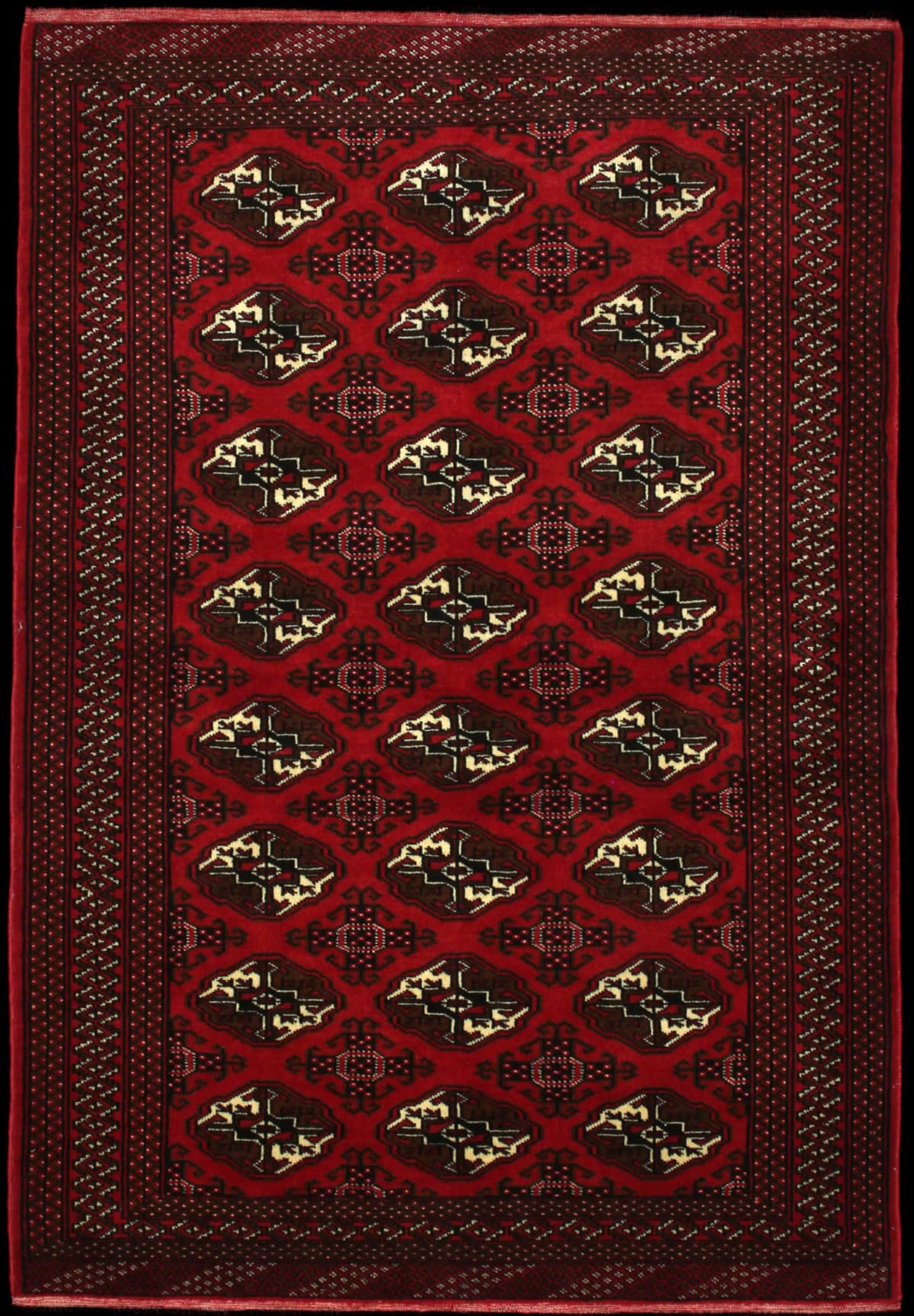
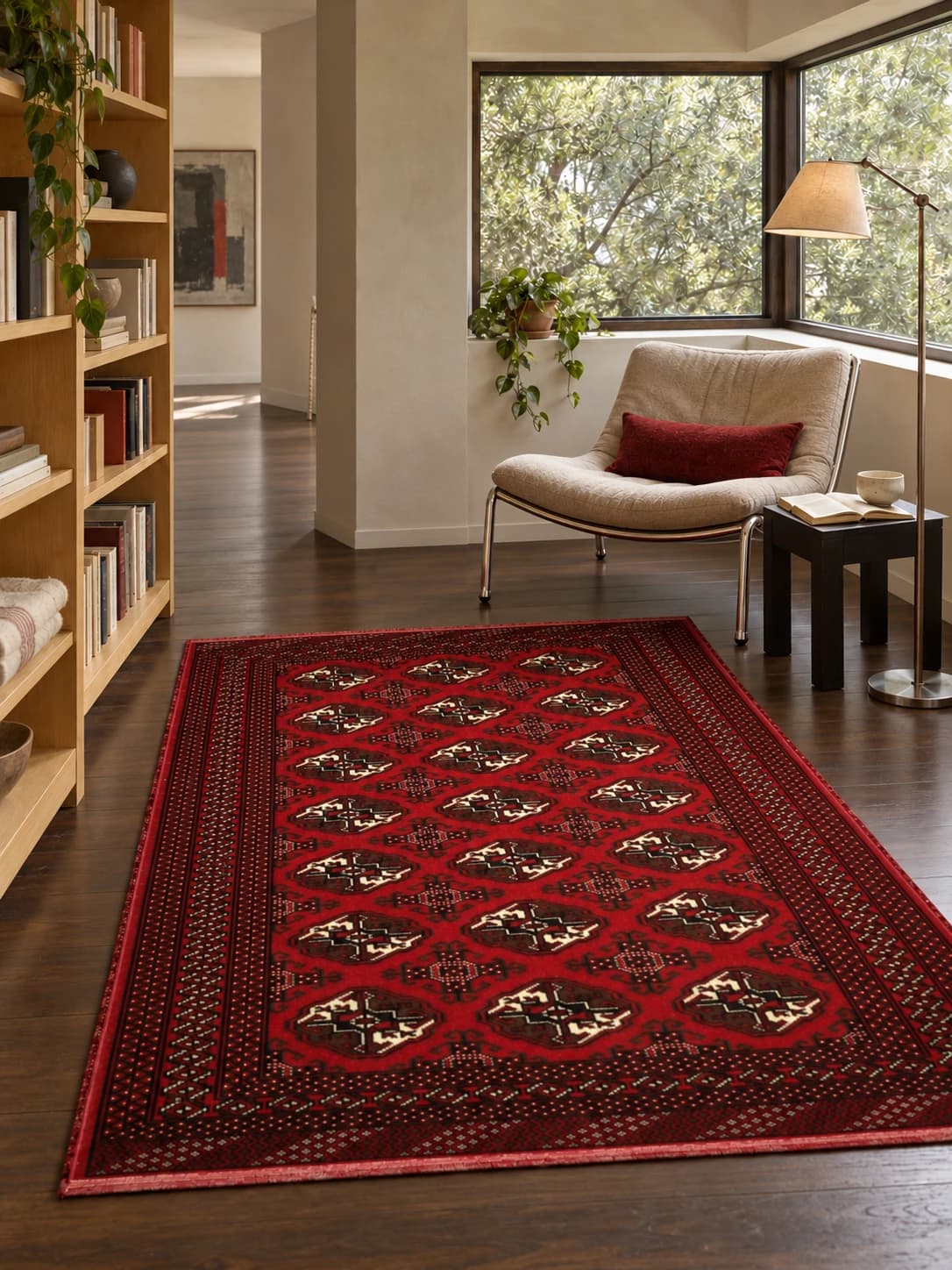
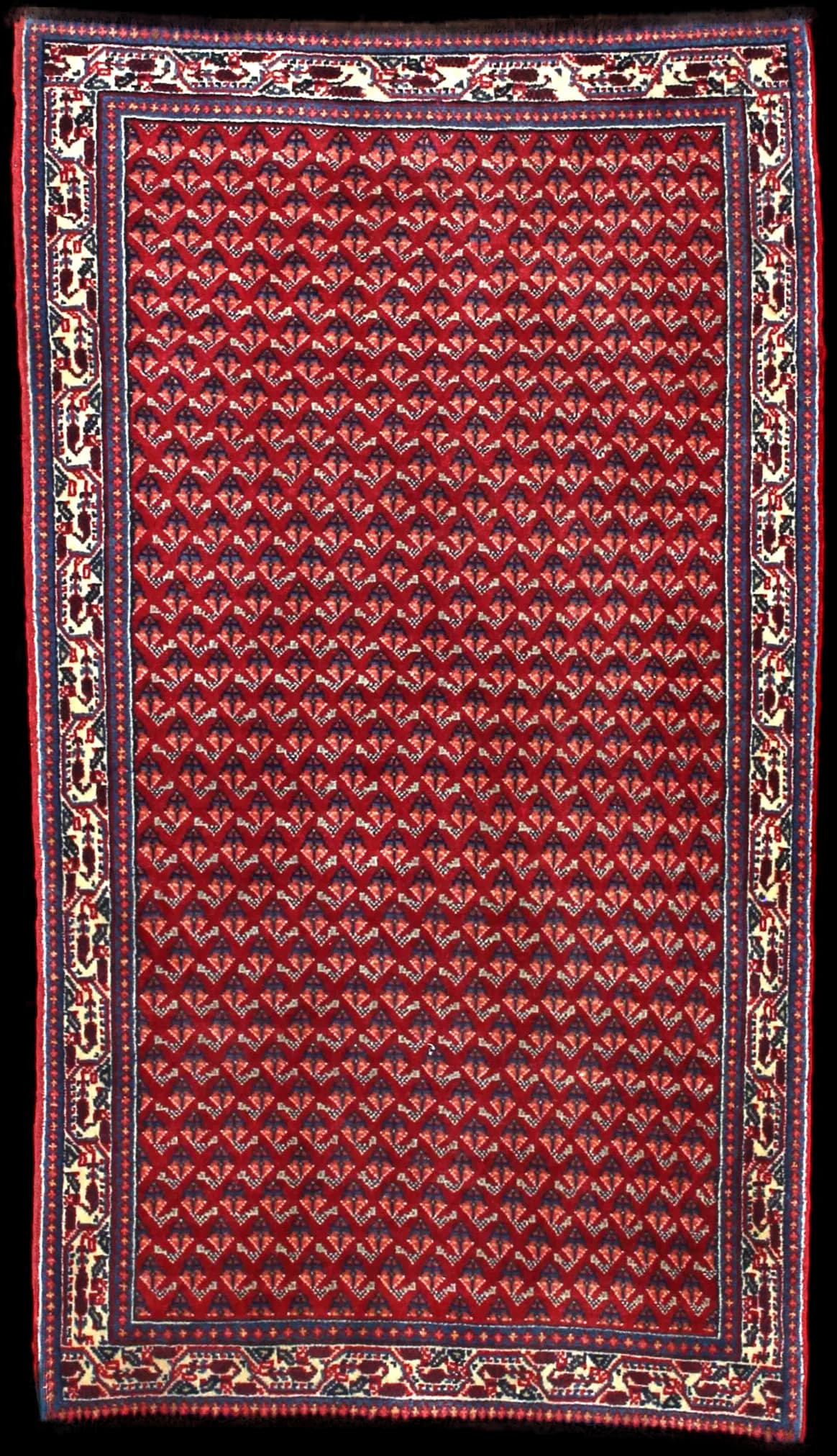
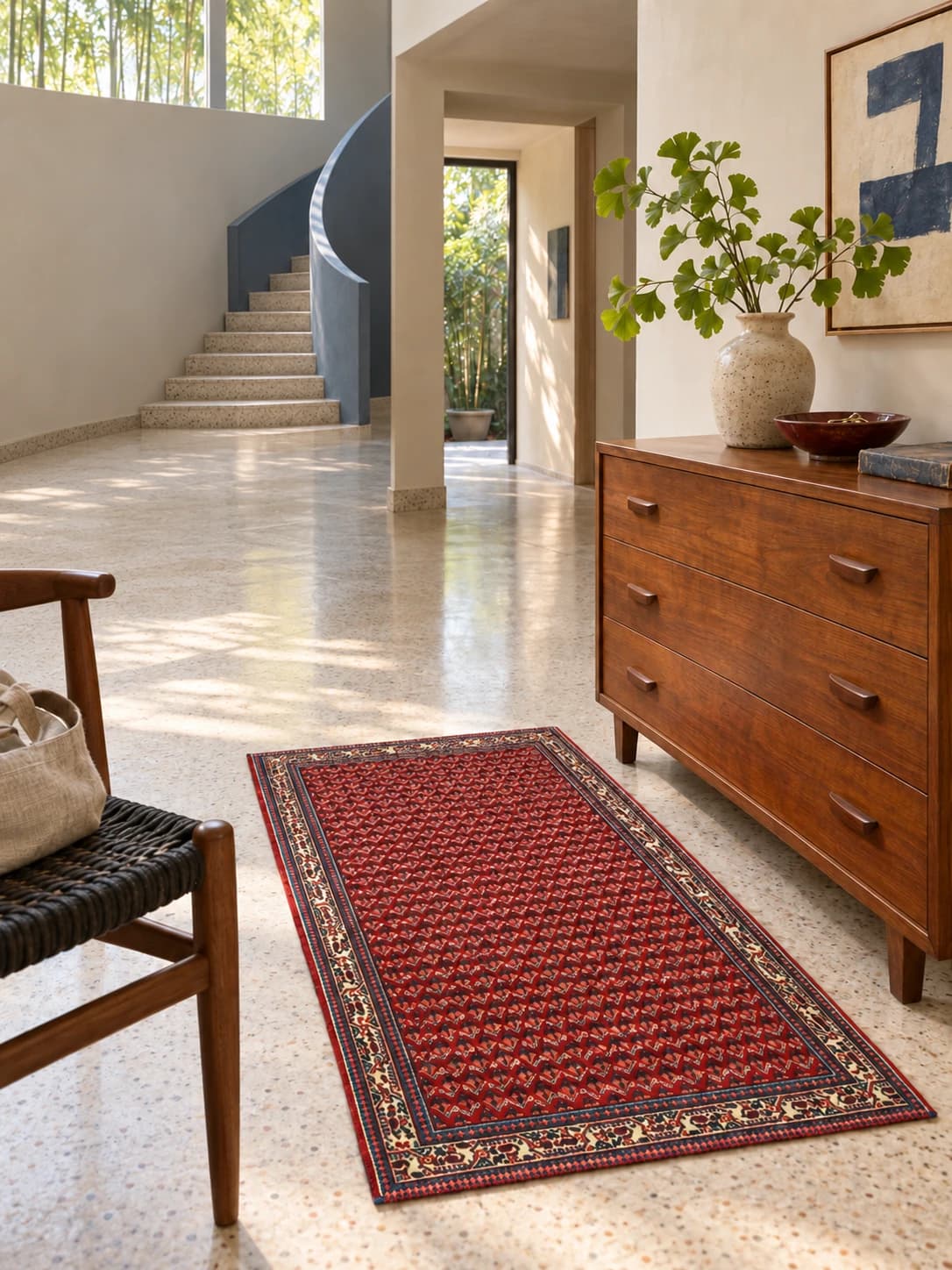
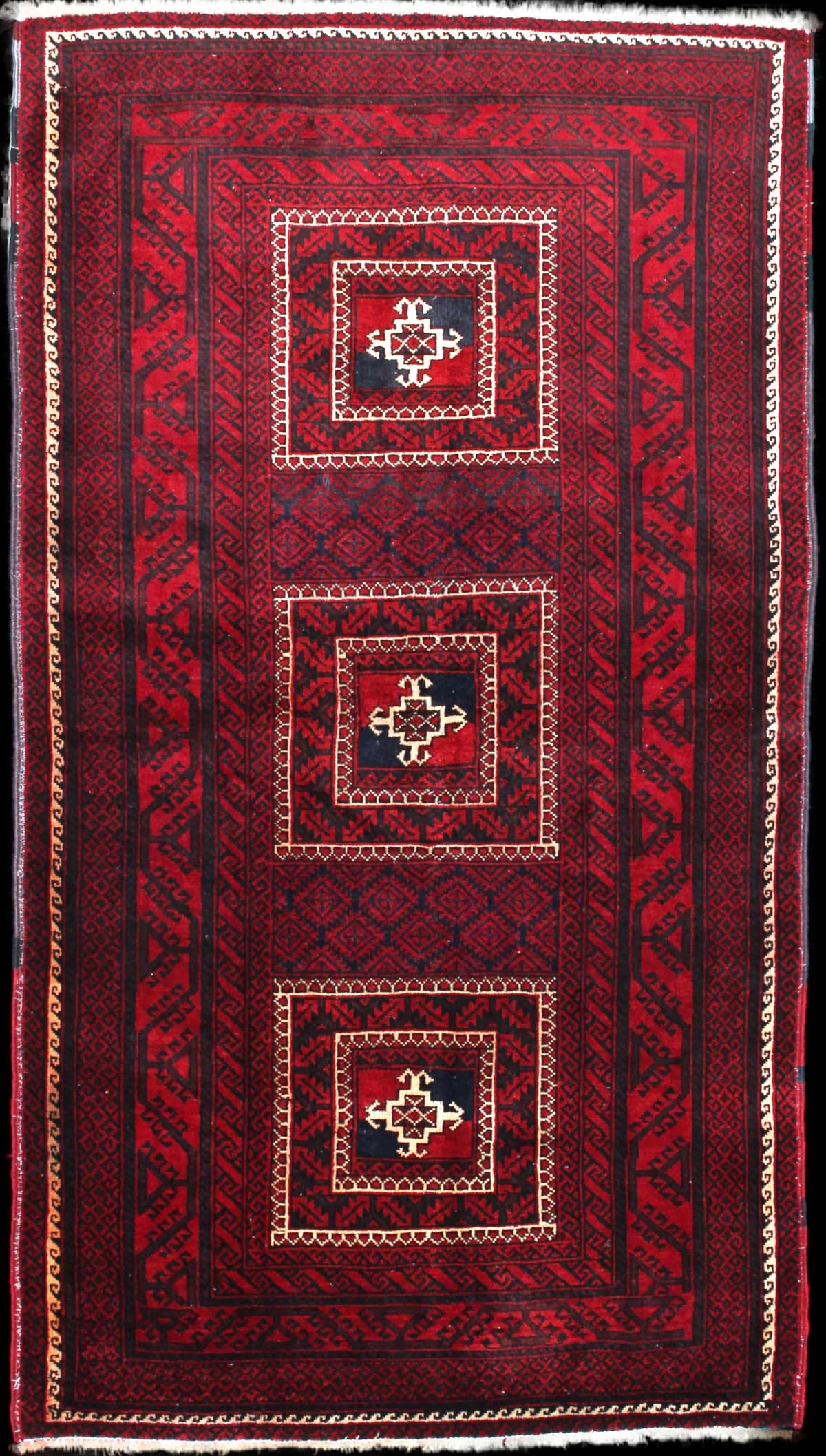
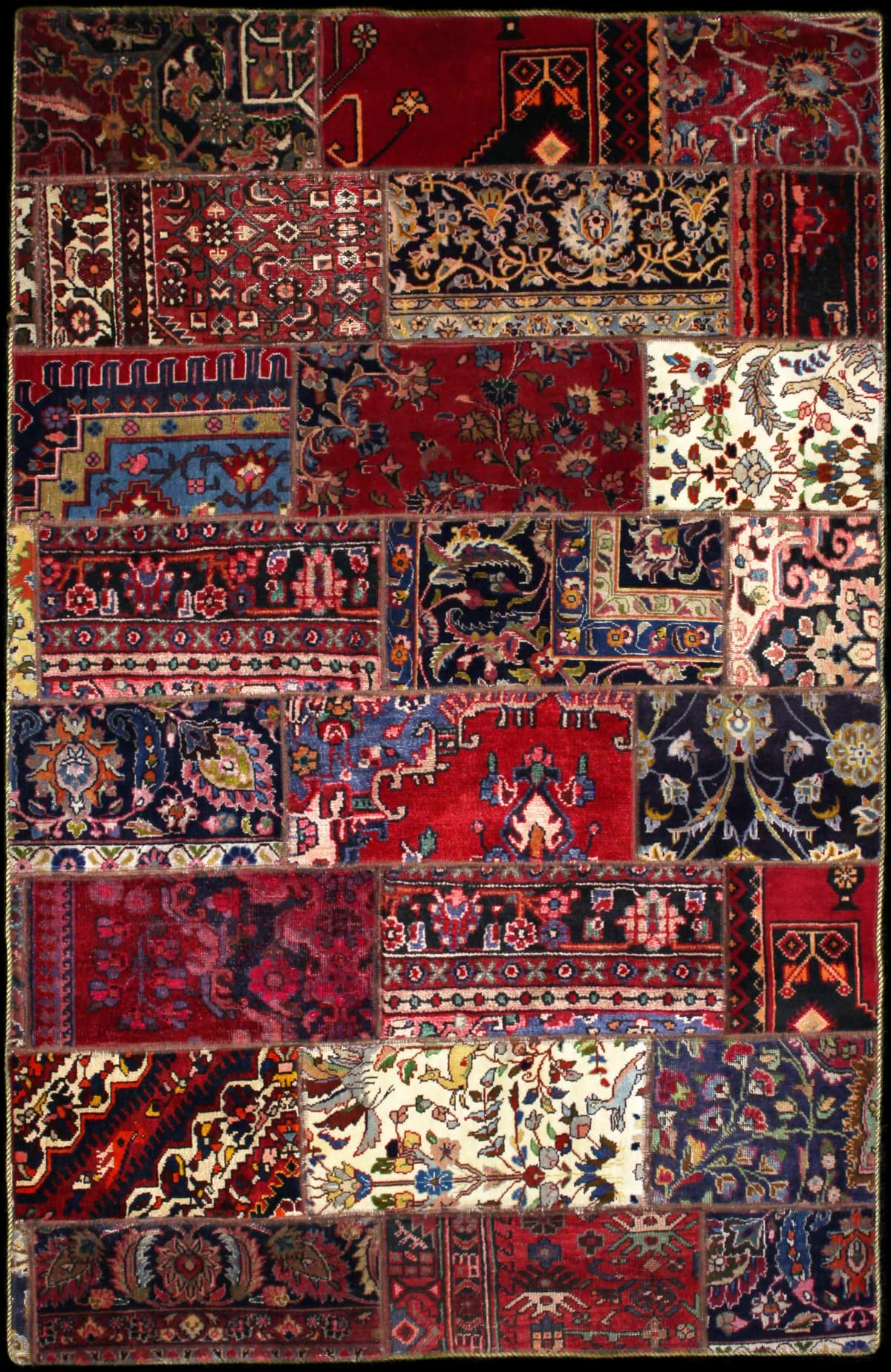
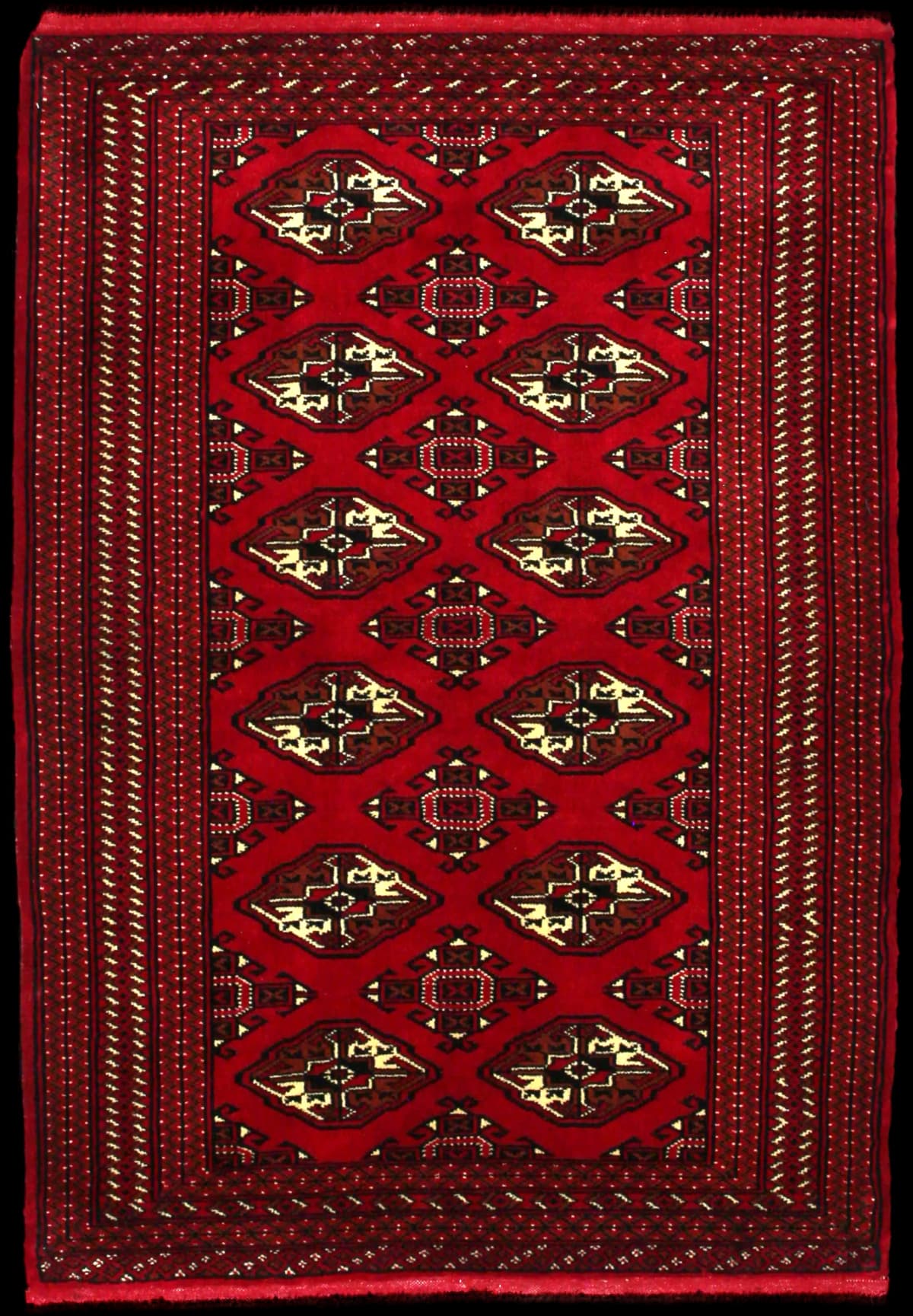
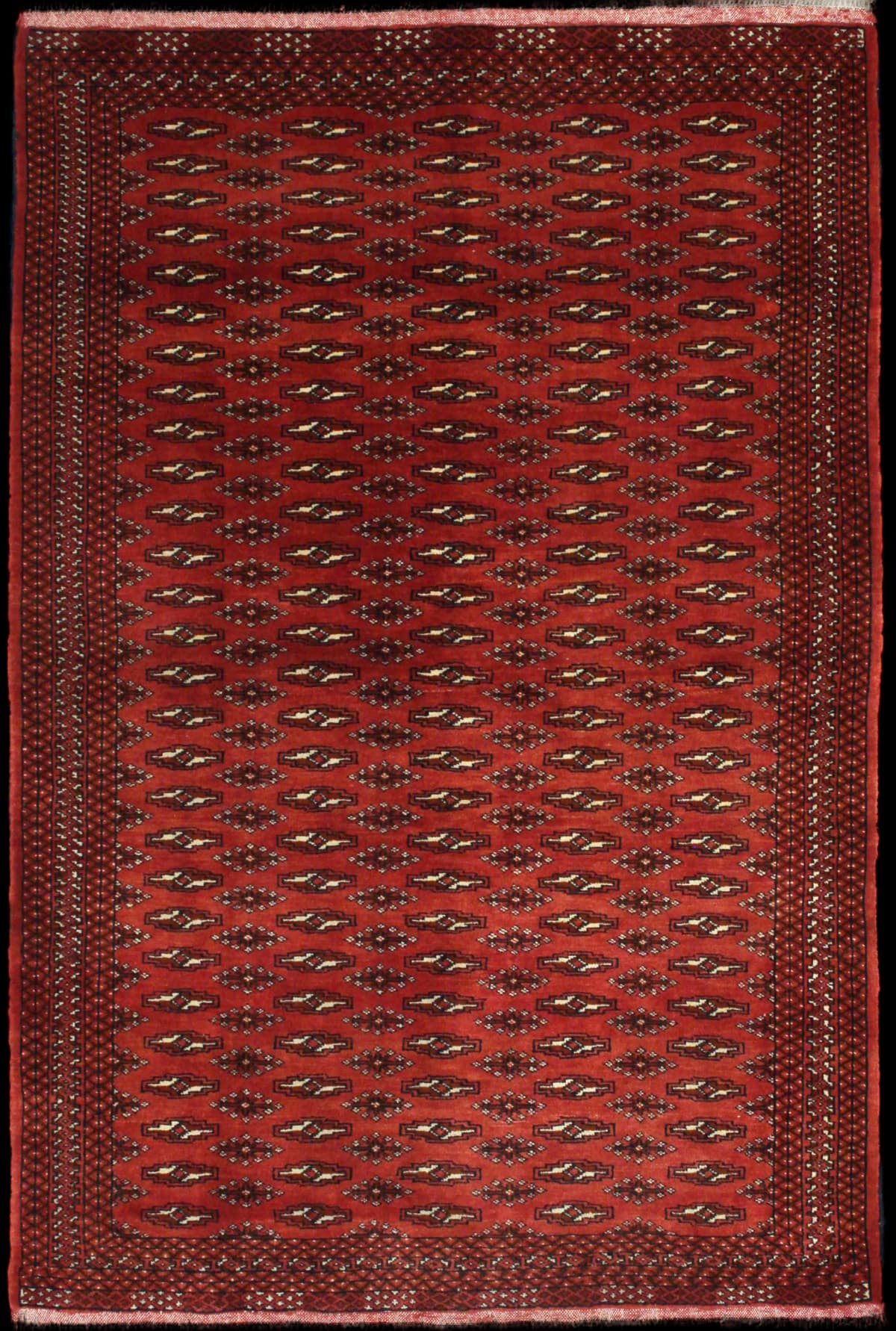
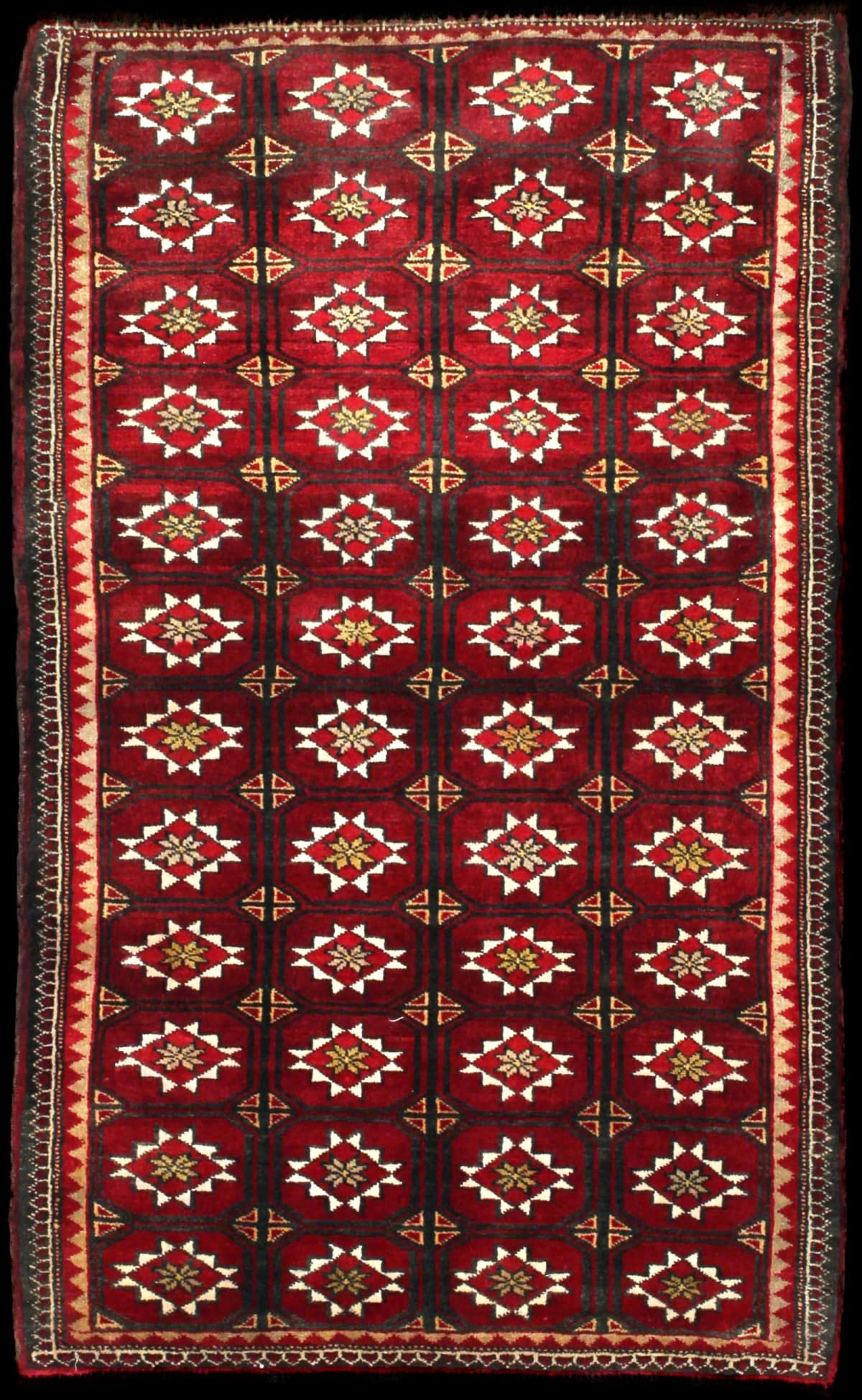
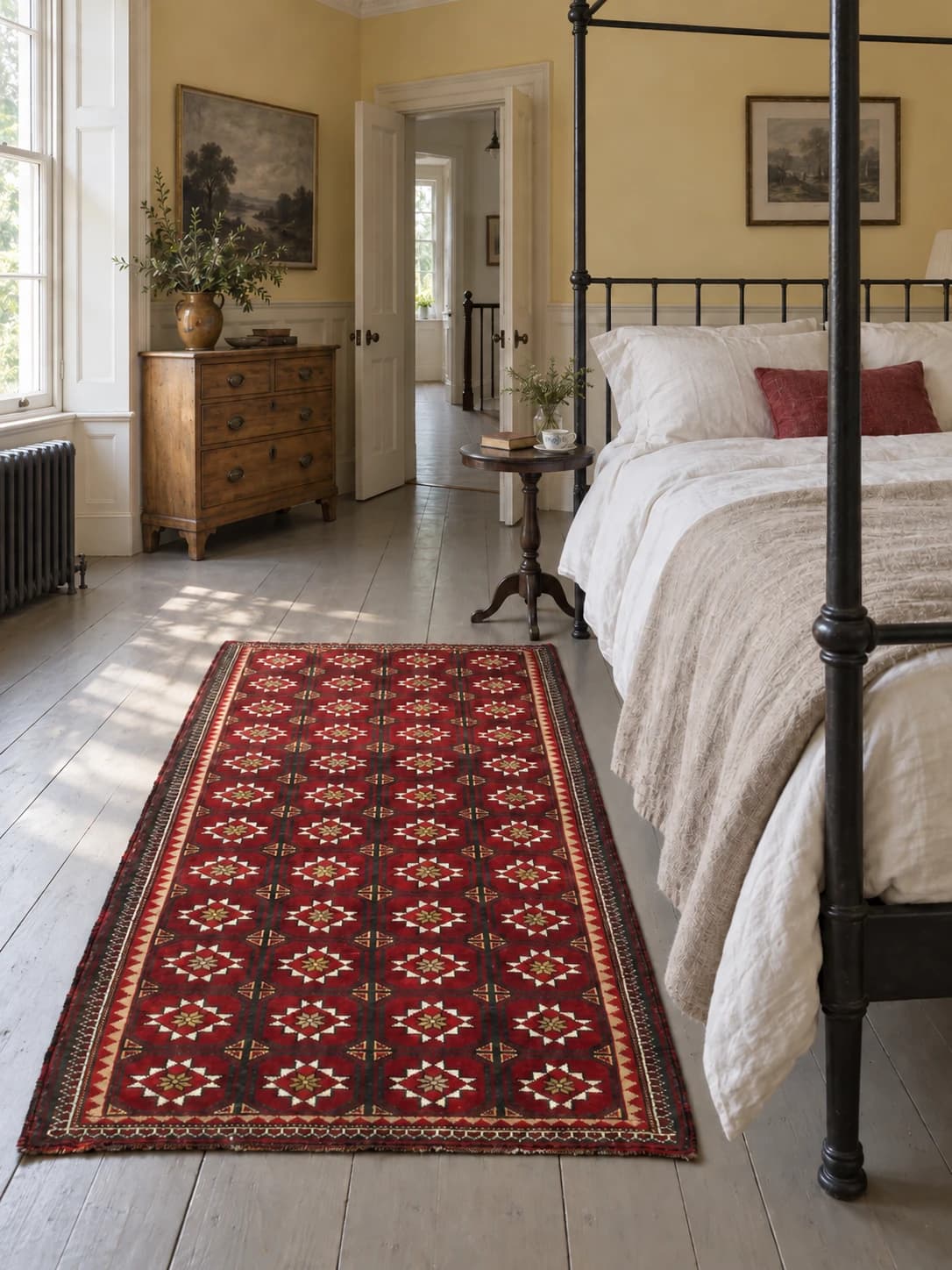
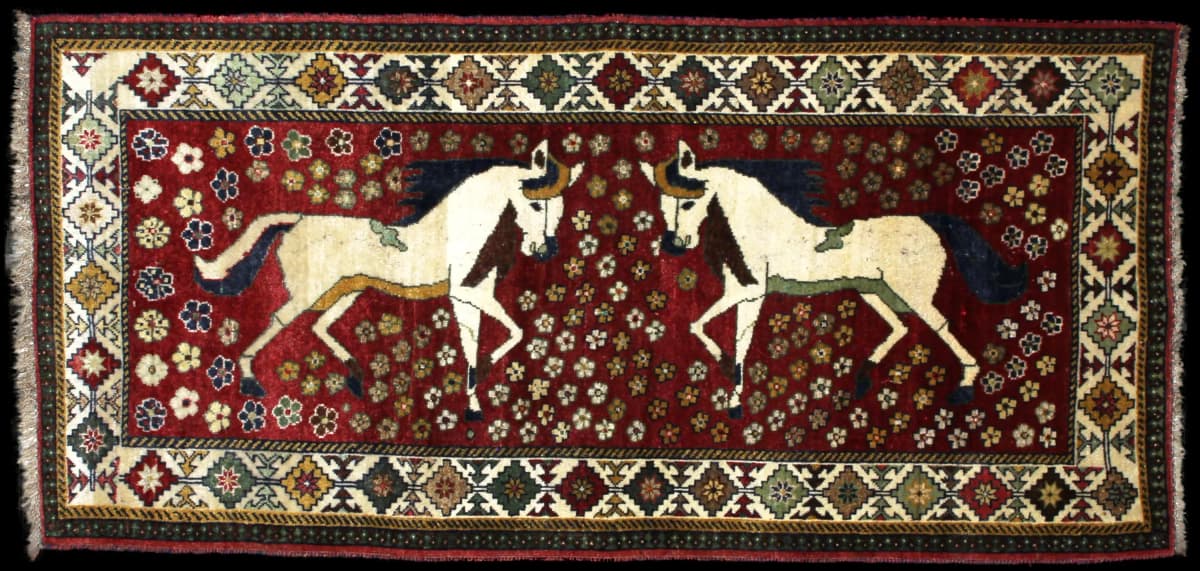
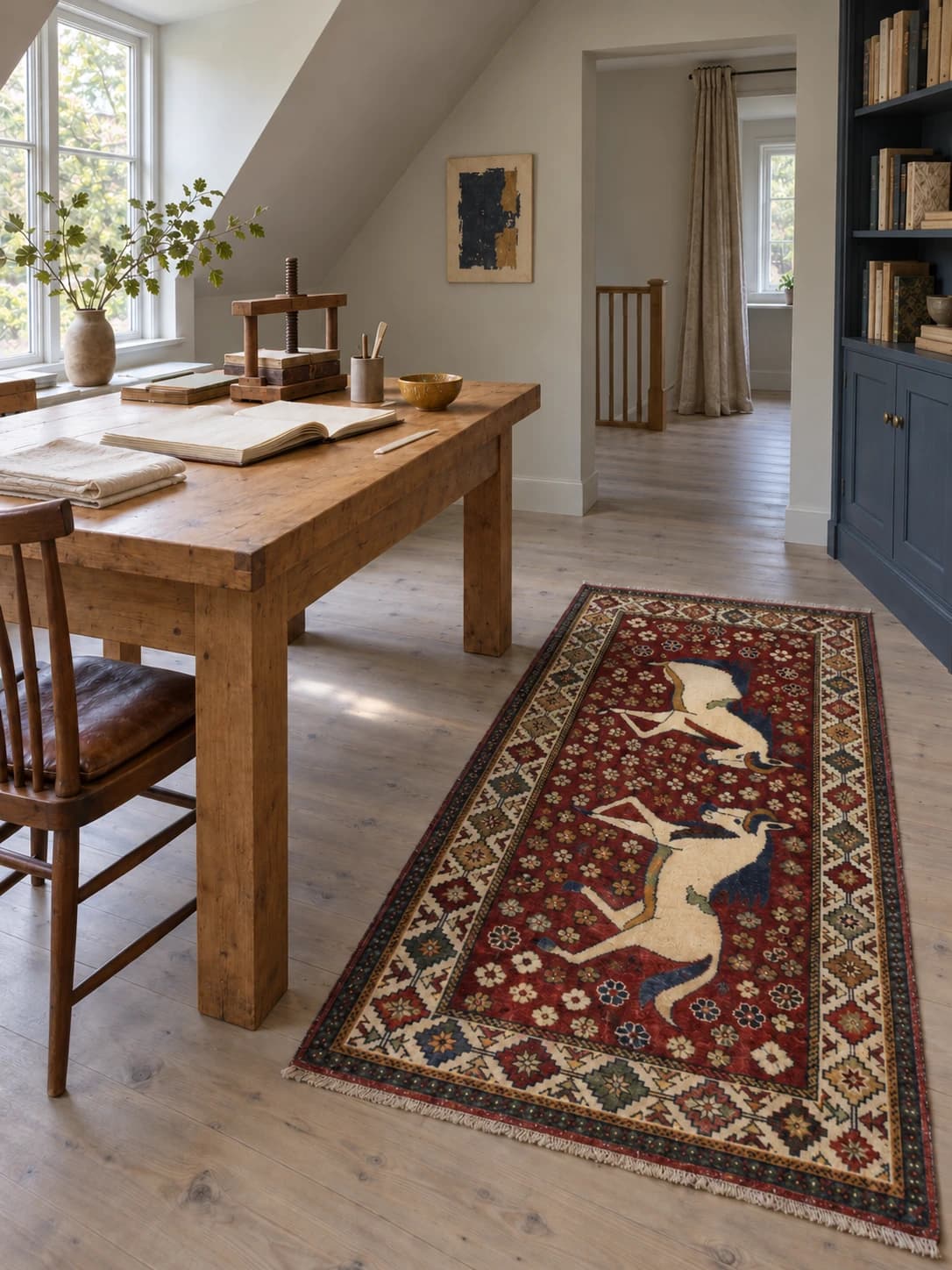
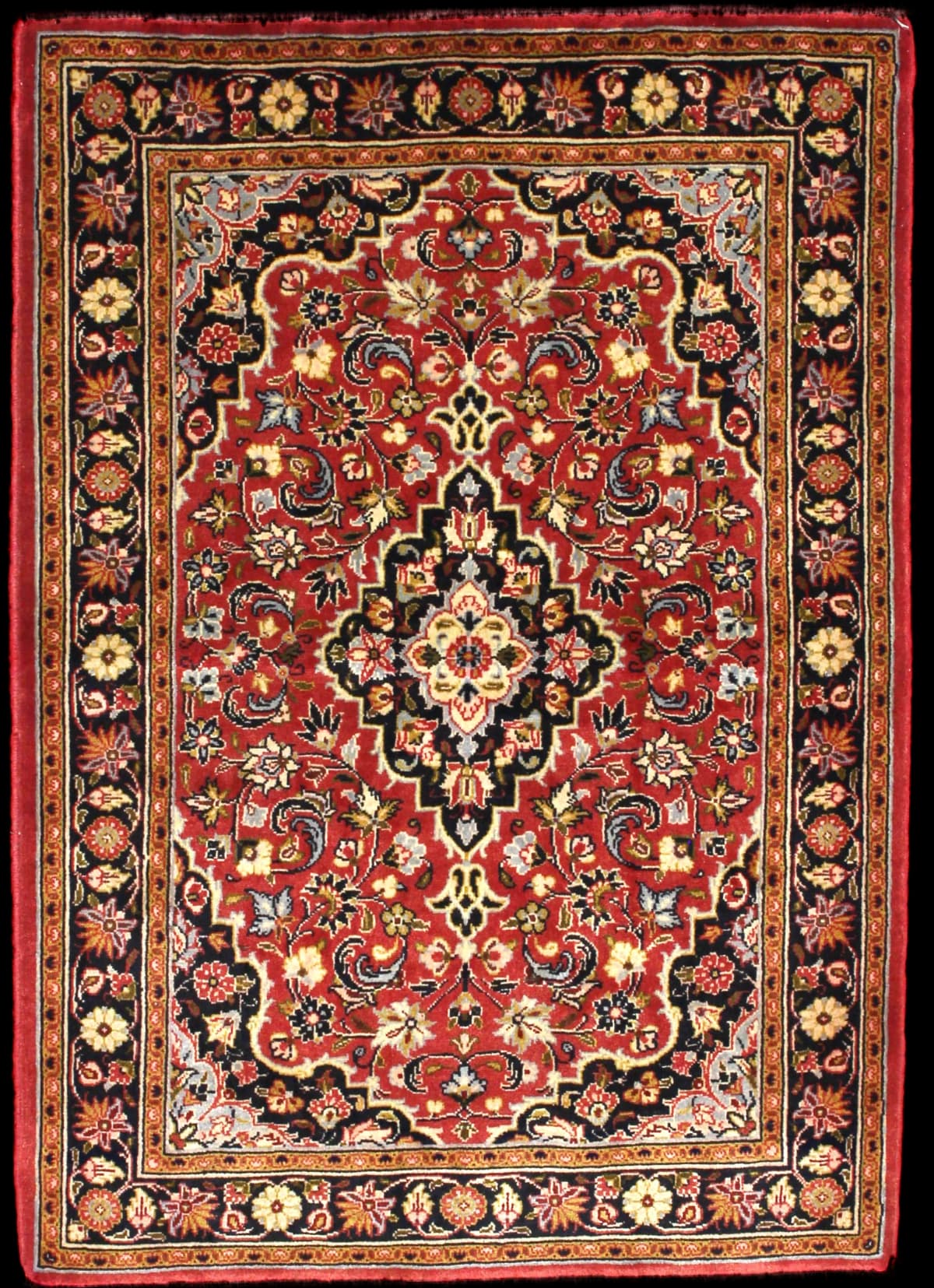
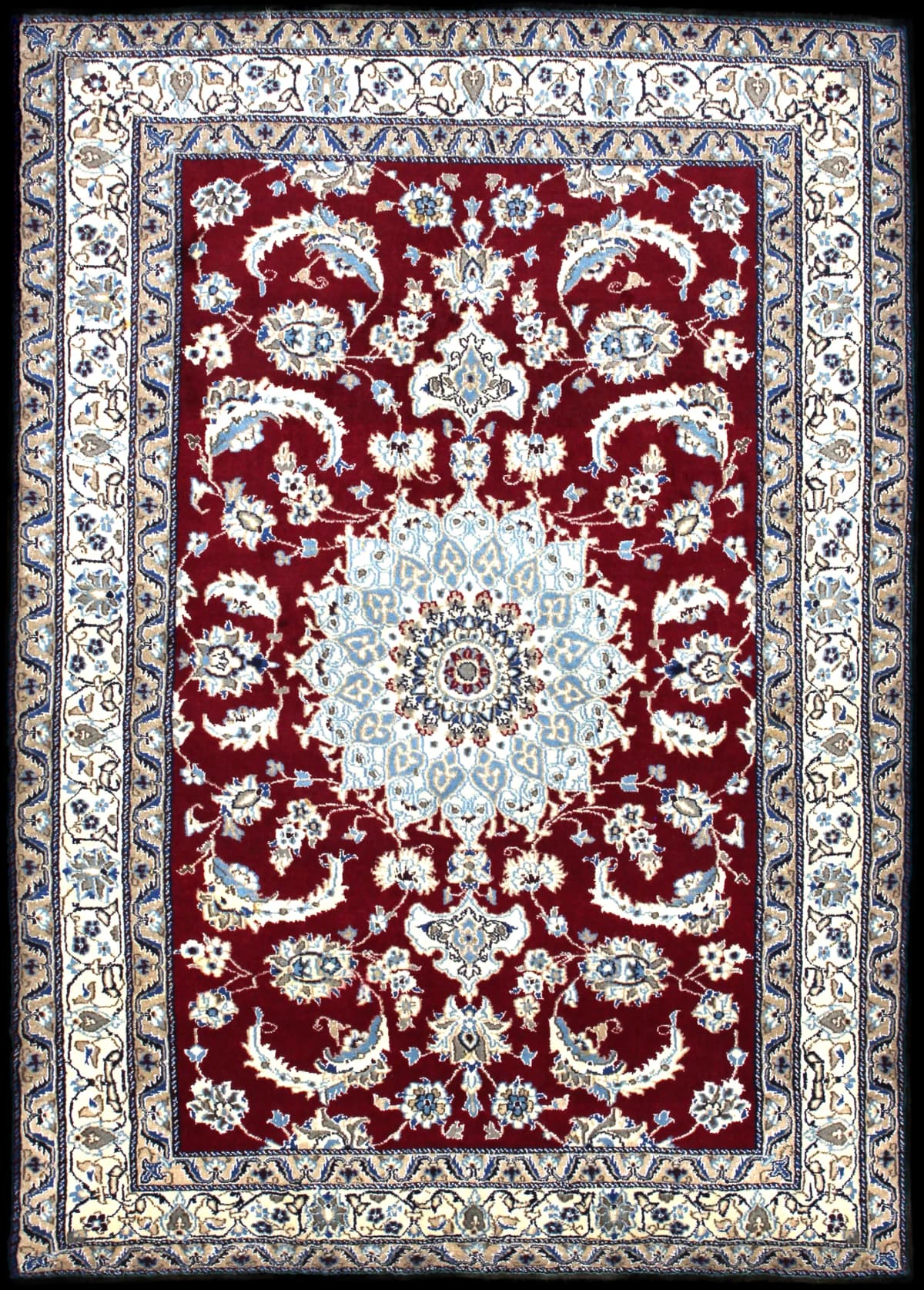
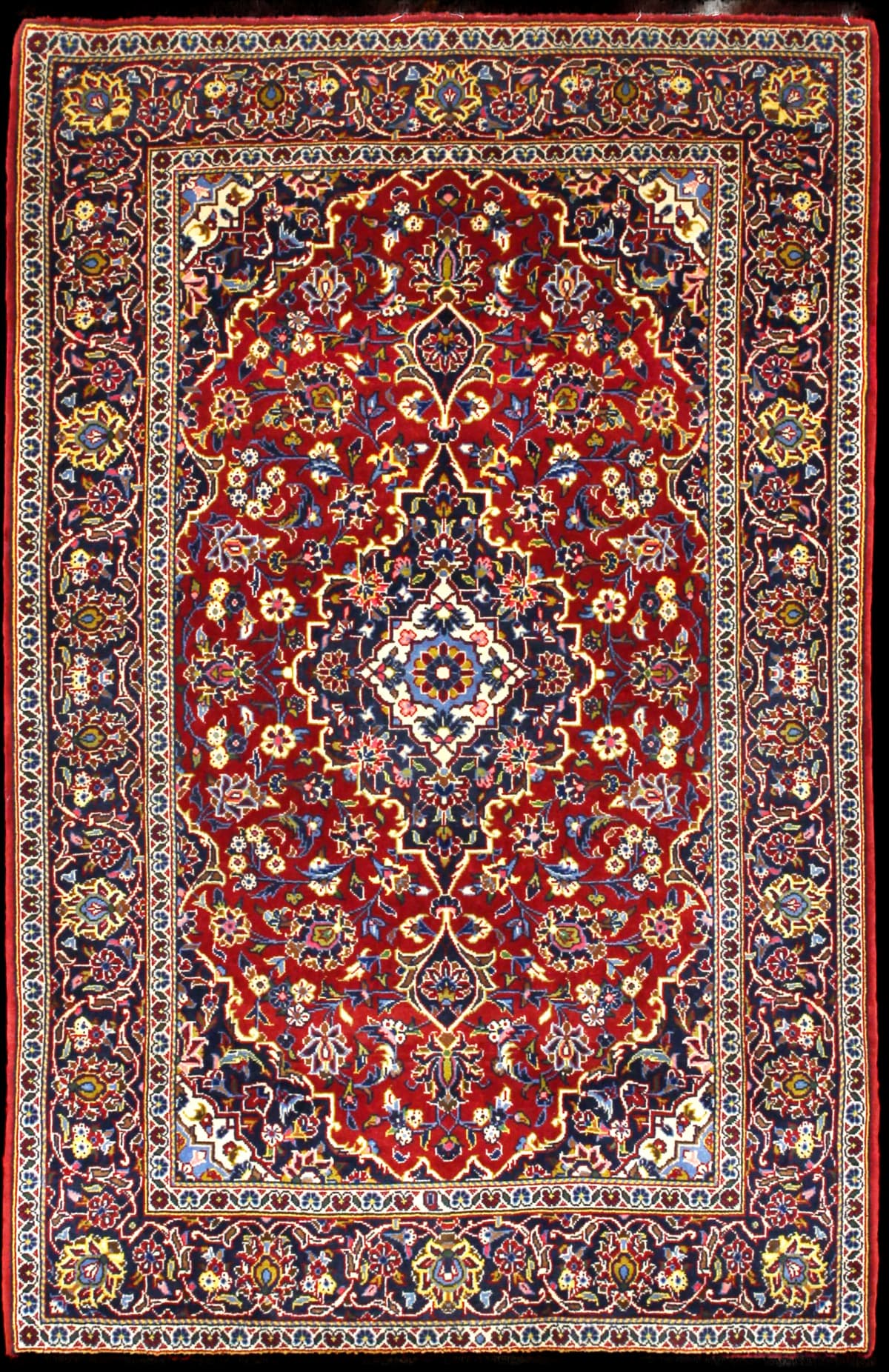
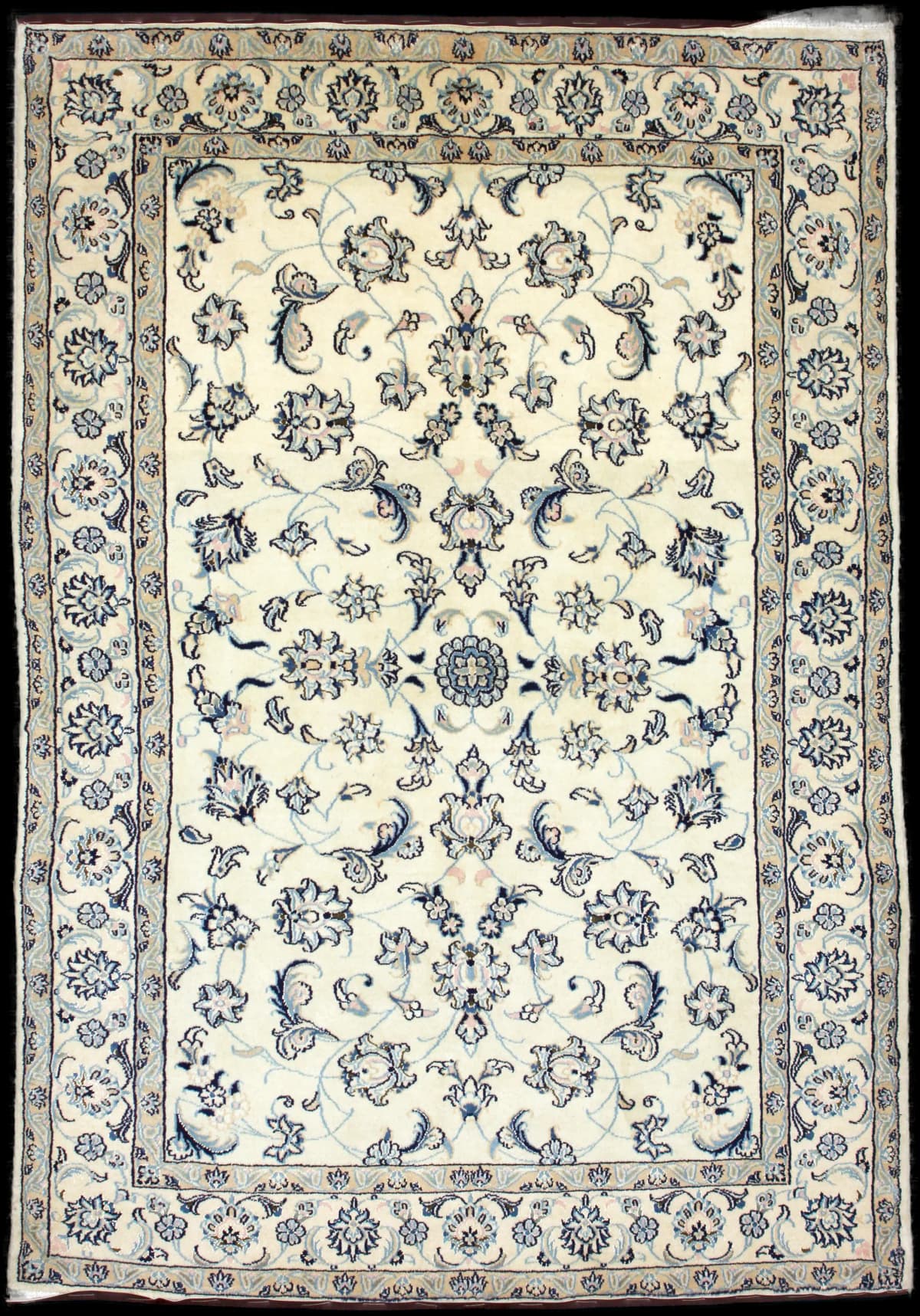
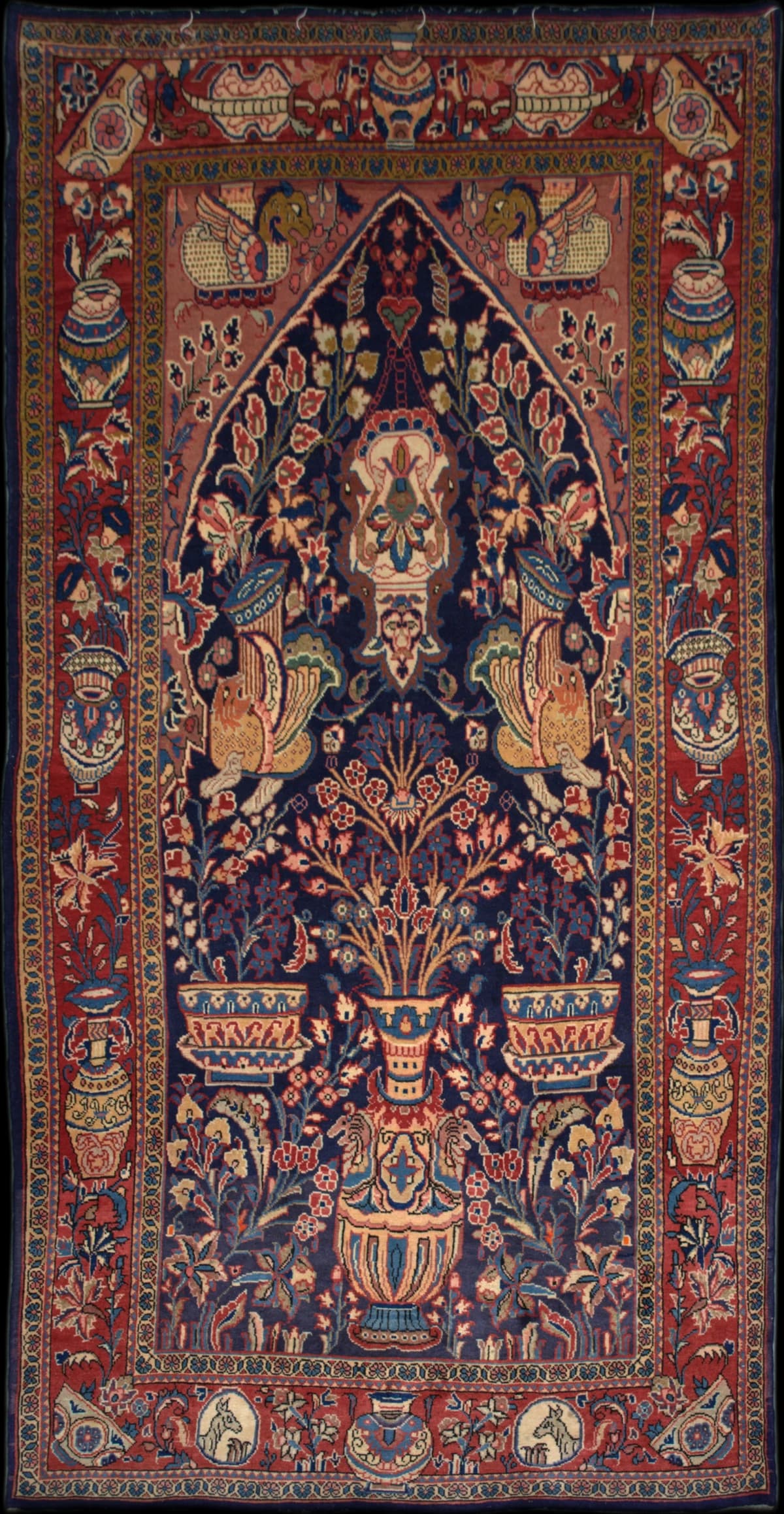
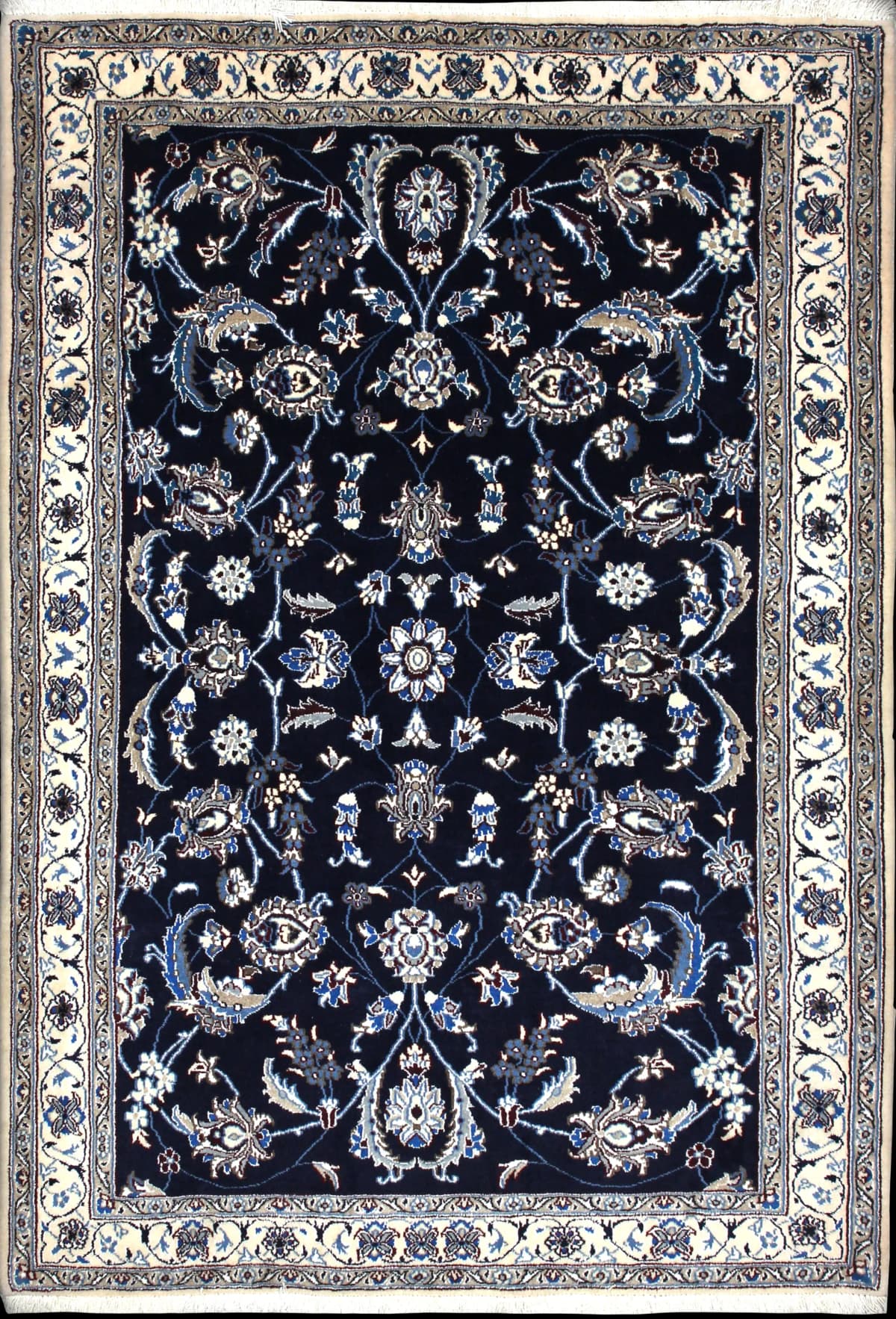
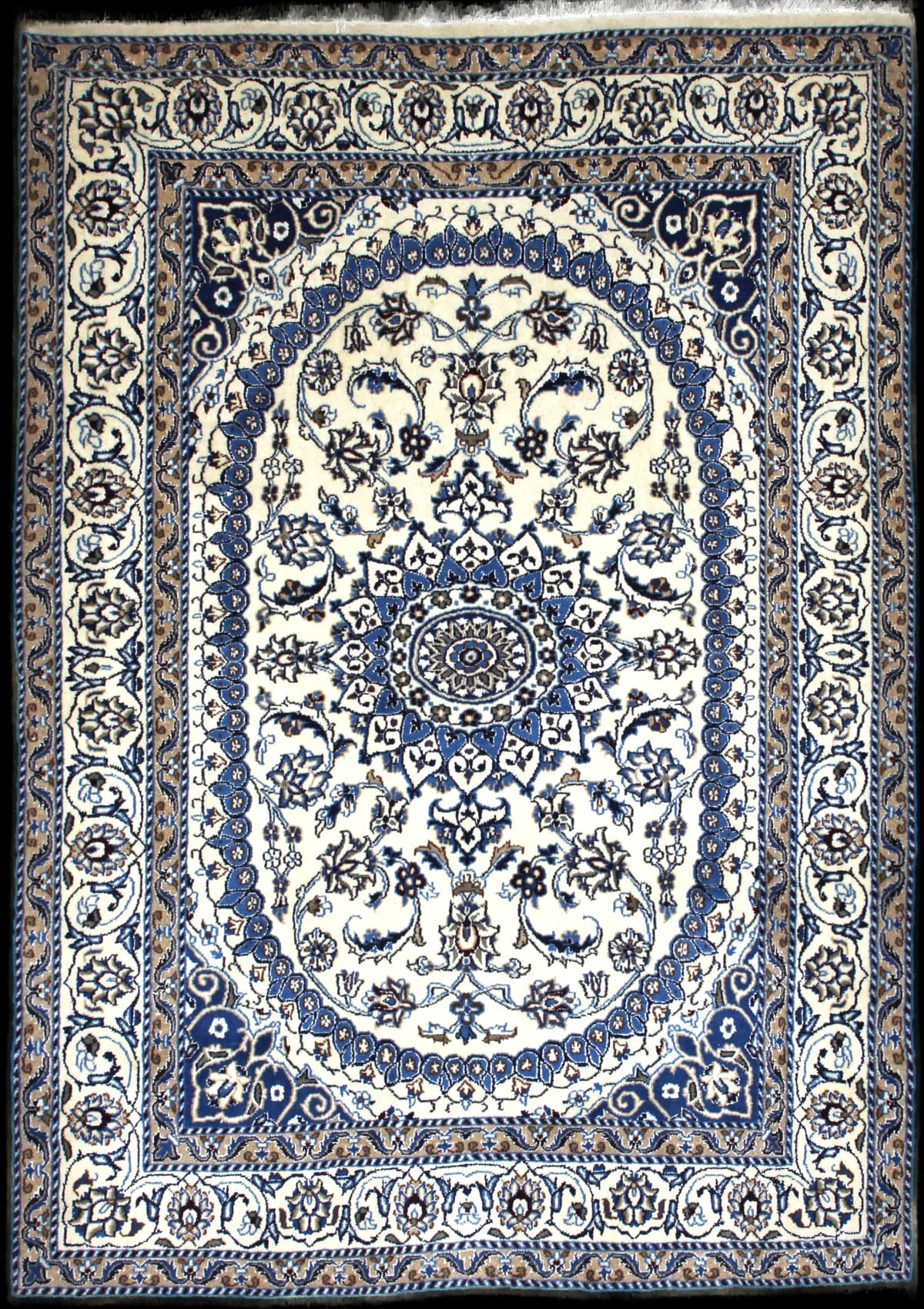
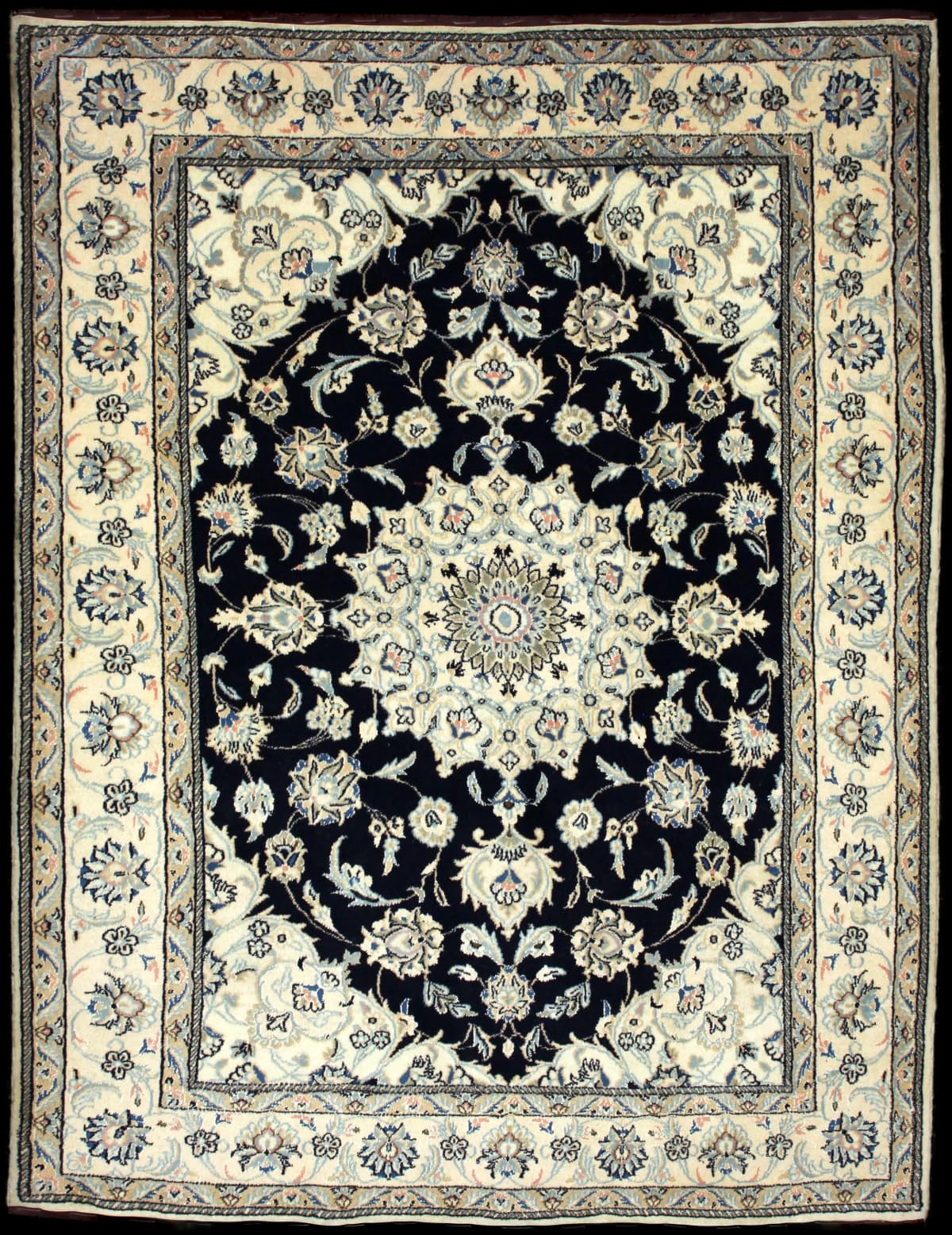
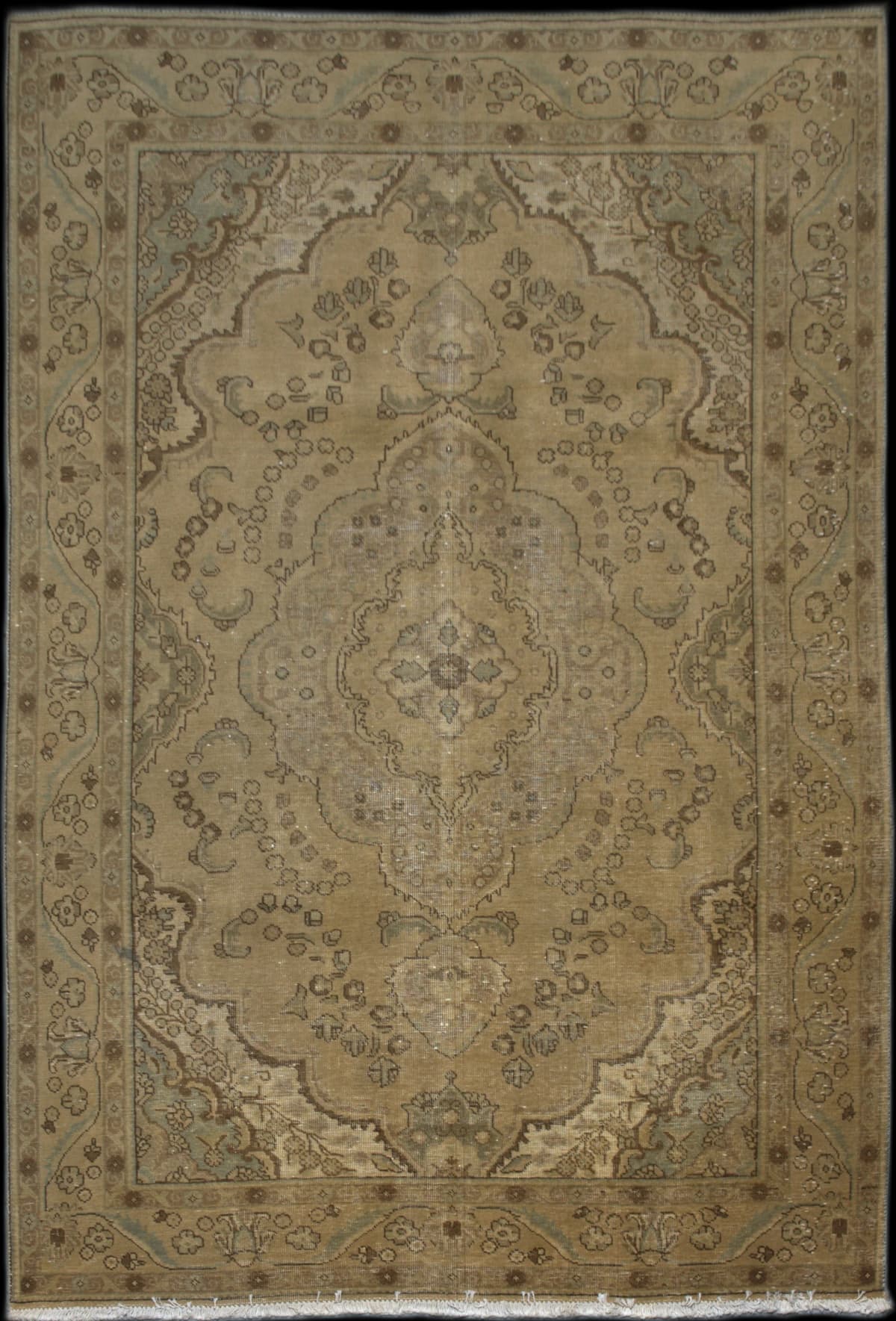
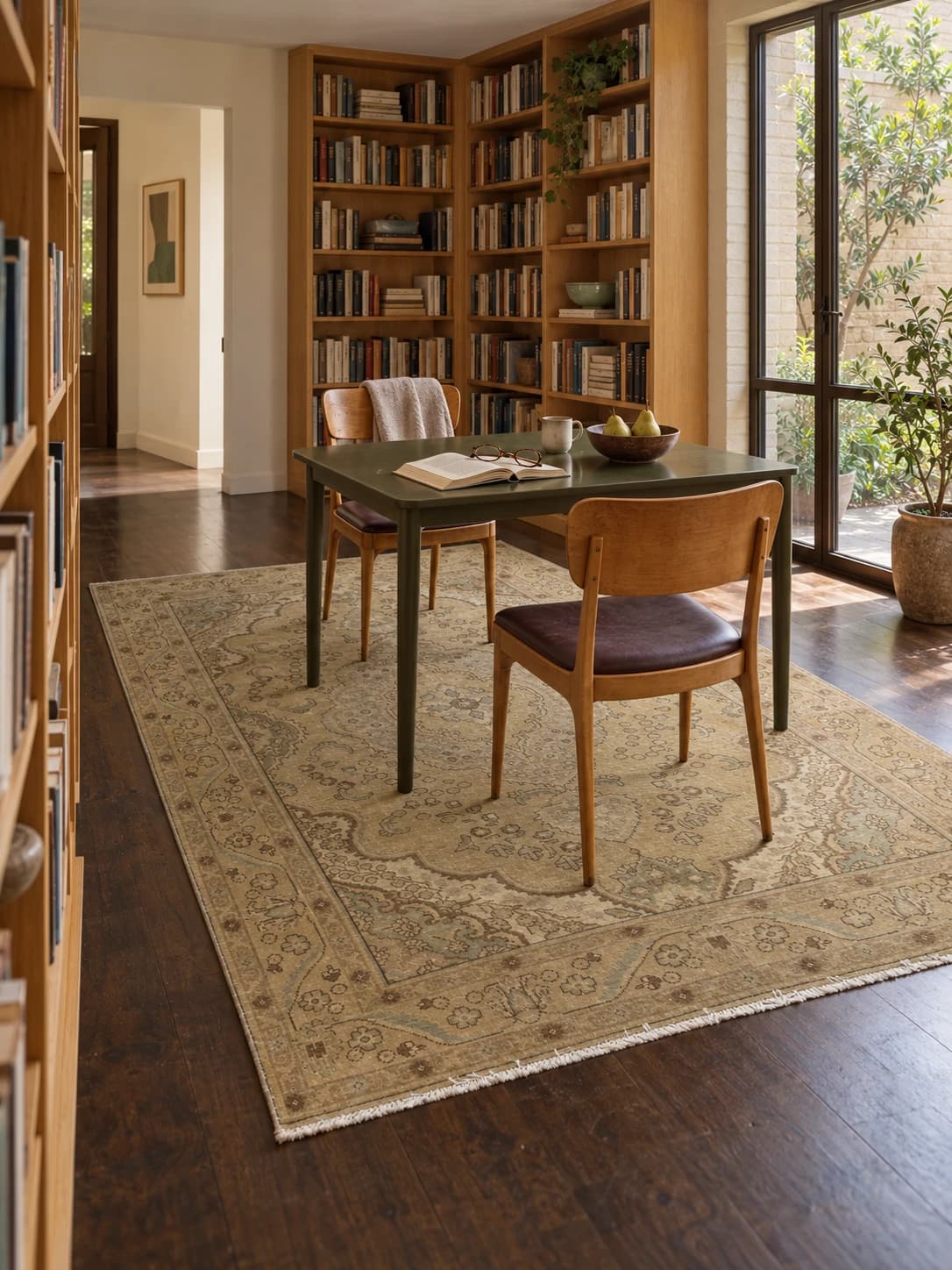
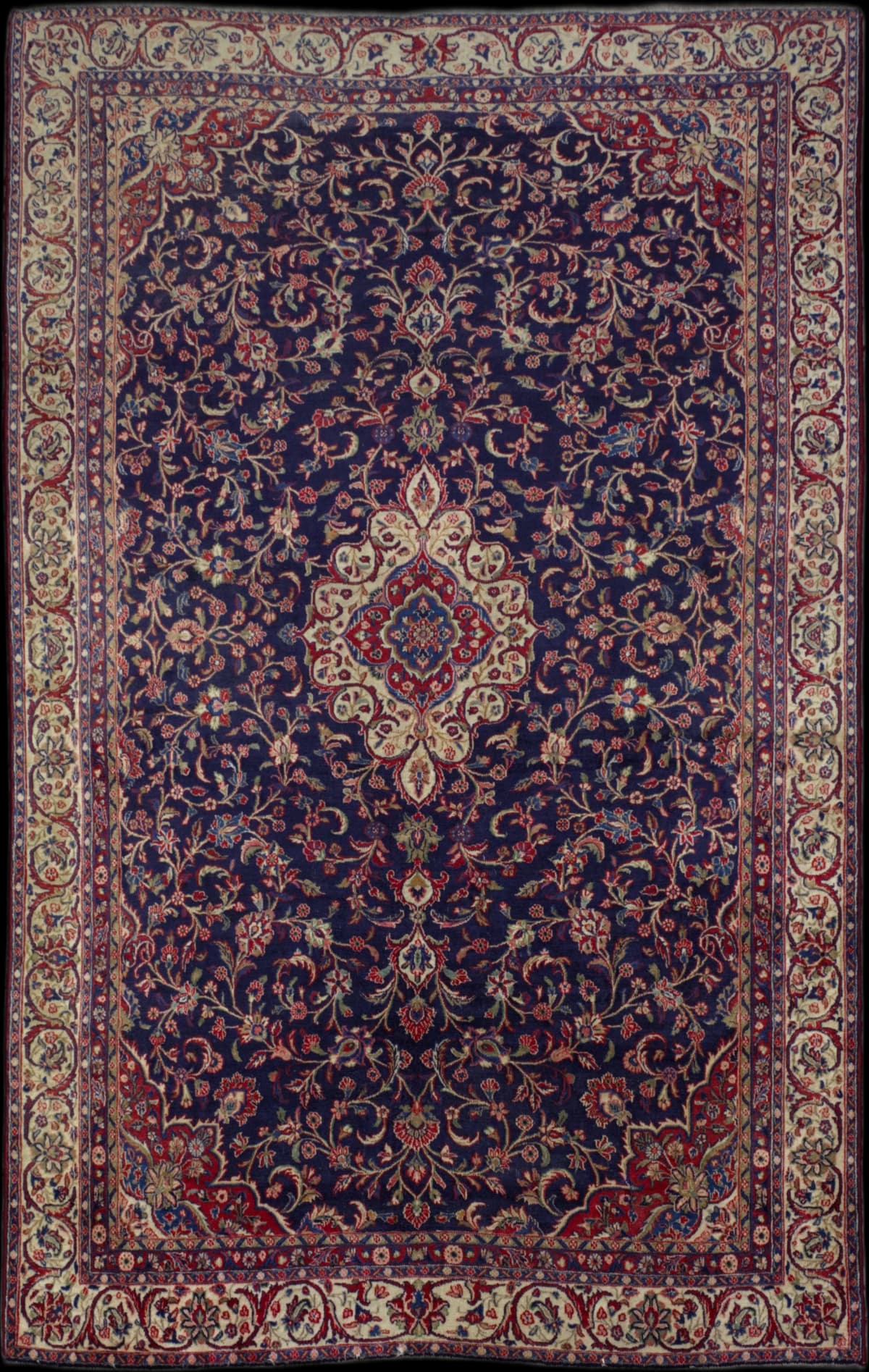
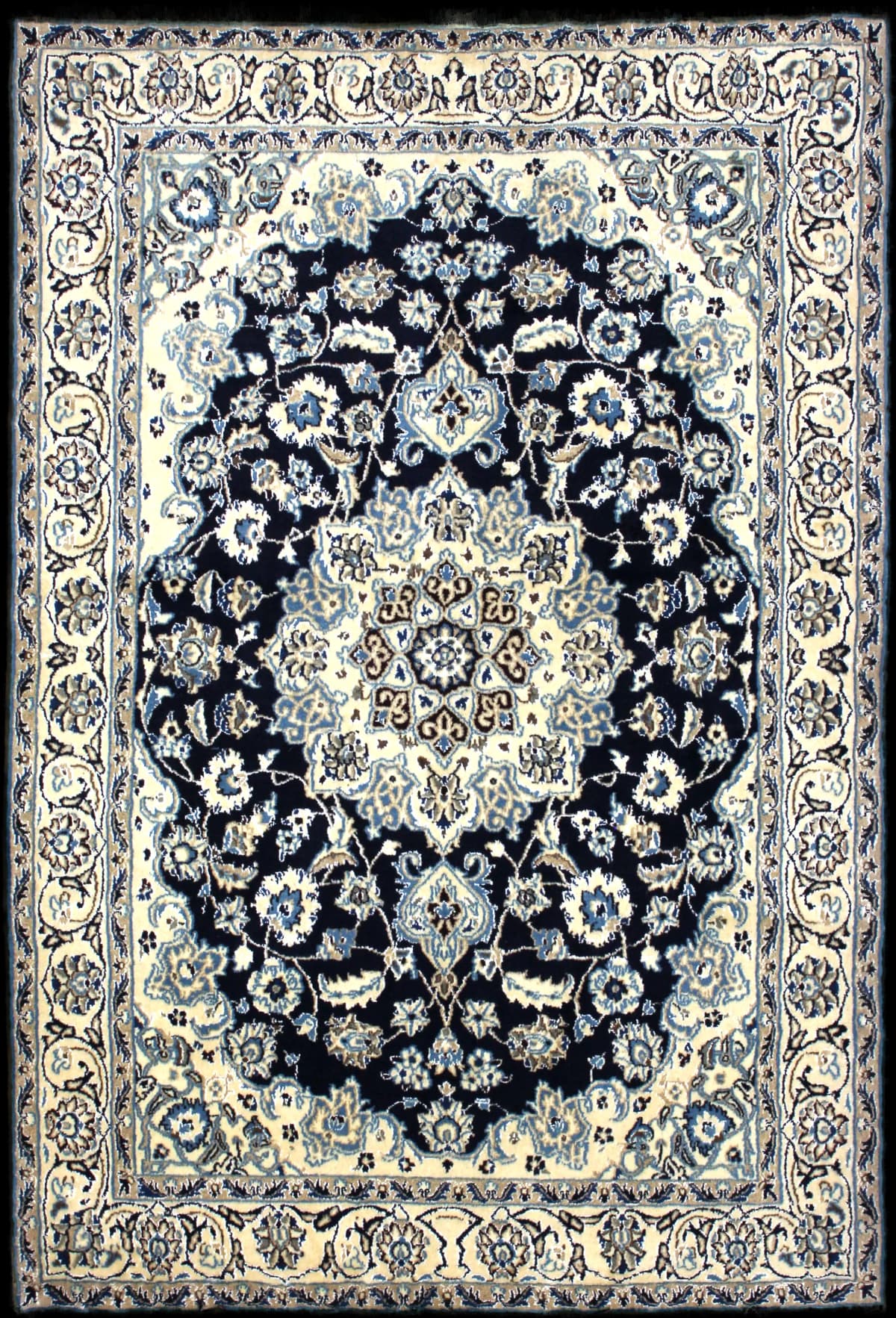
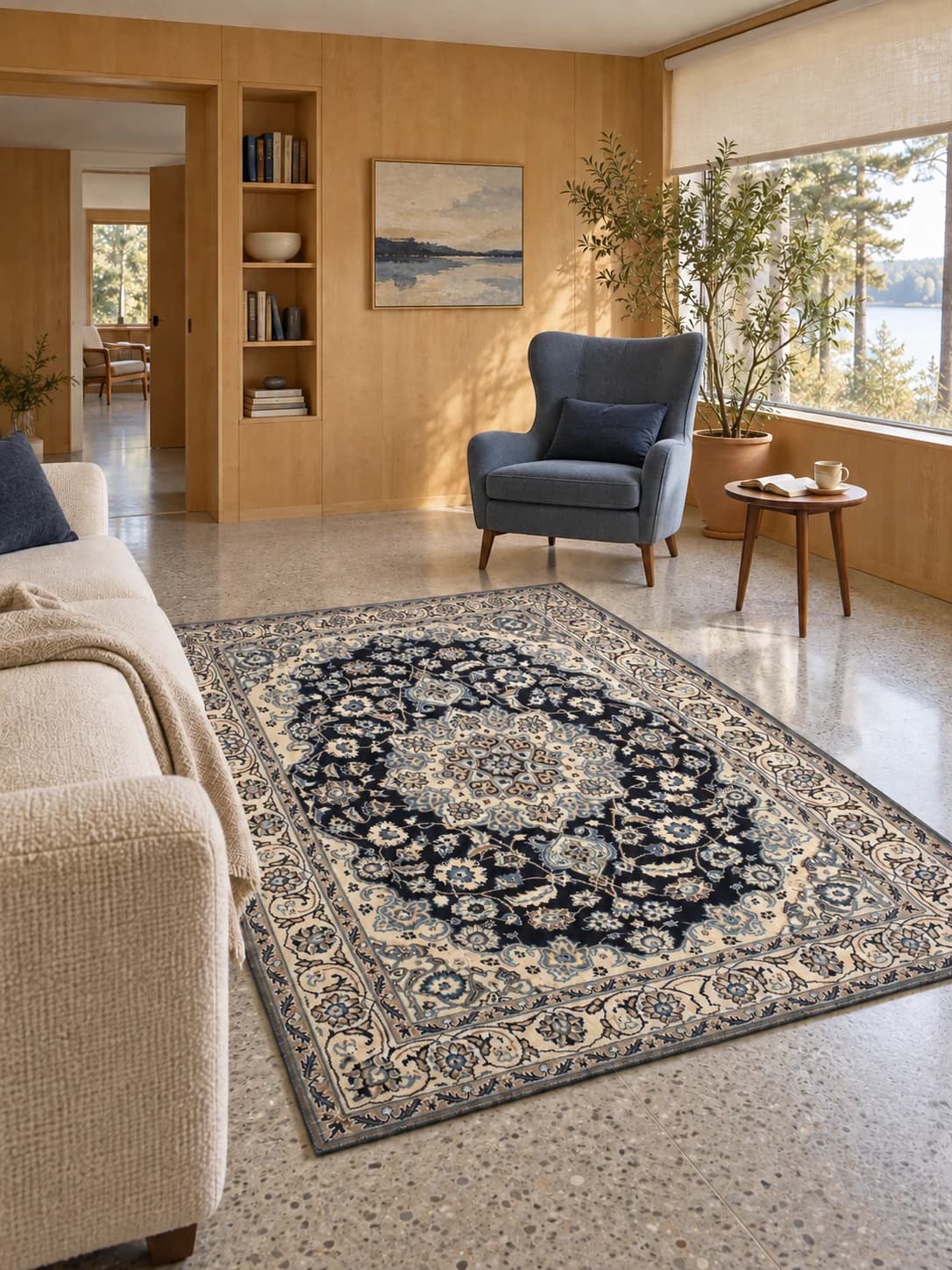
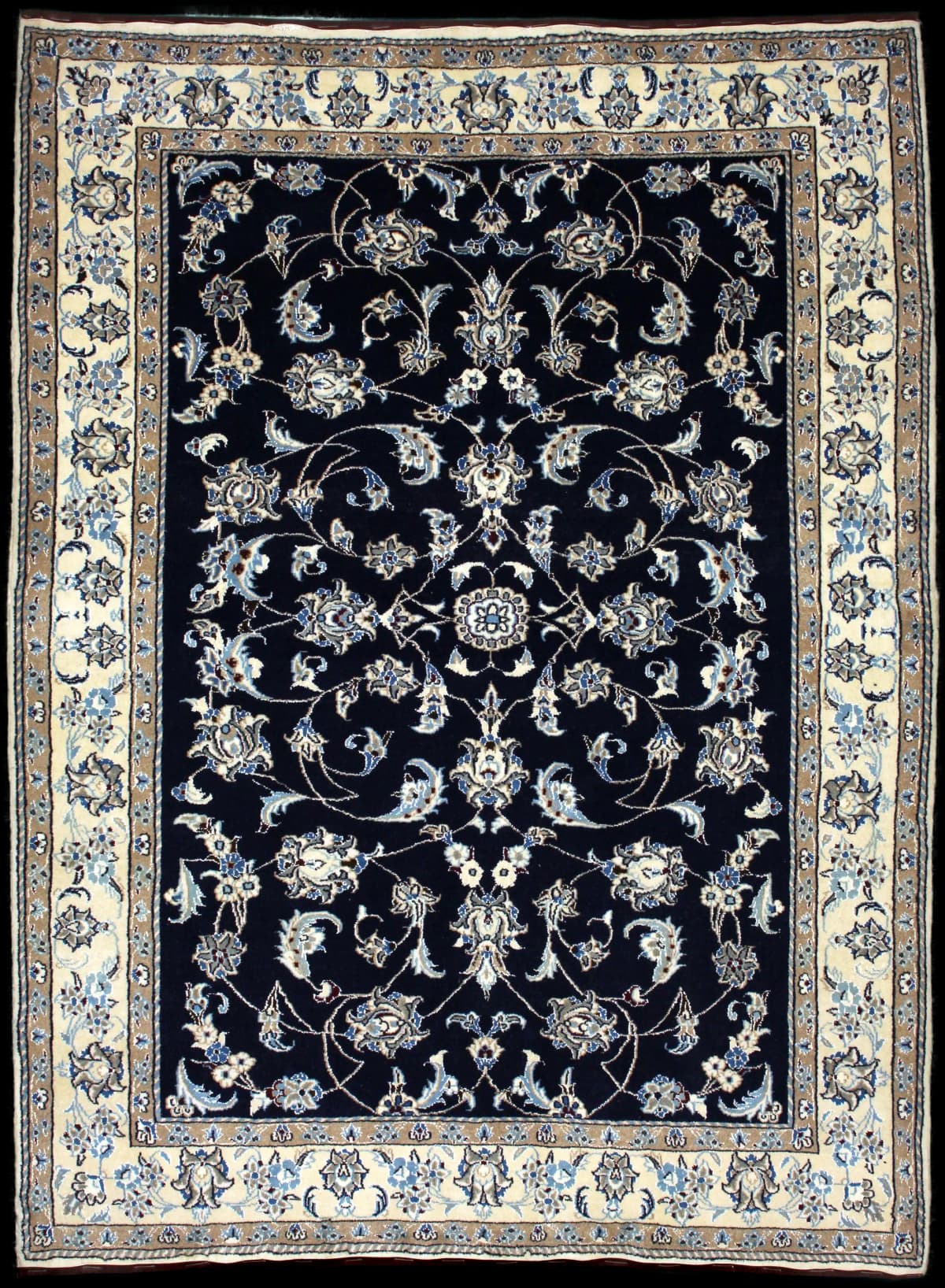
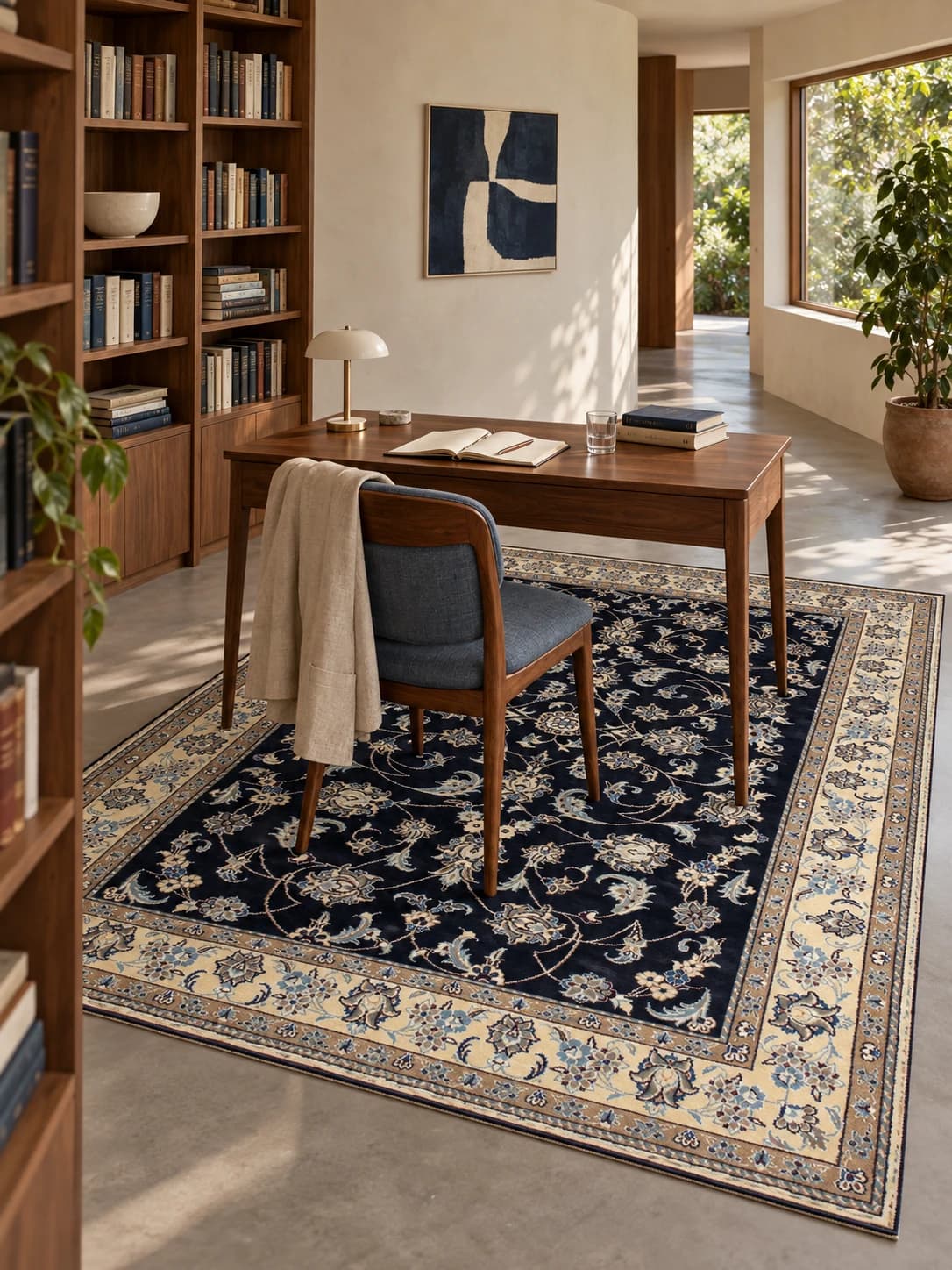
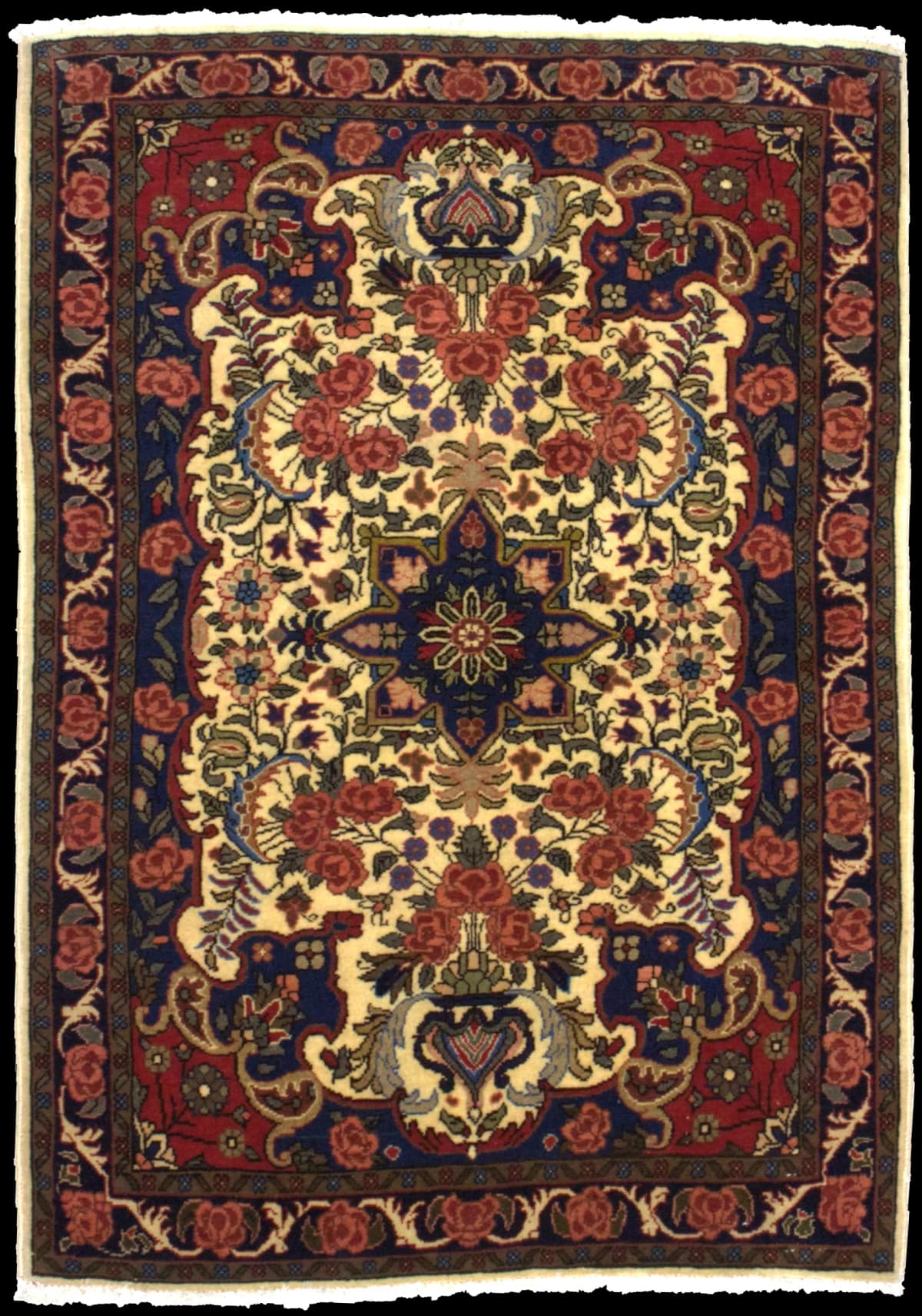
From the region ofاراکArak
What makes this piece special
Hover over or tap a feature to read moreTwo knots per tuft — a denser, more durable pile that holds its pattern for decades.
Up close
Origin: Arak
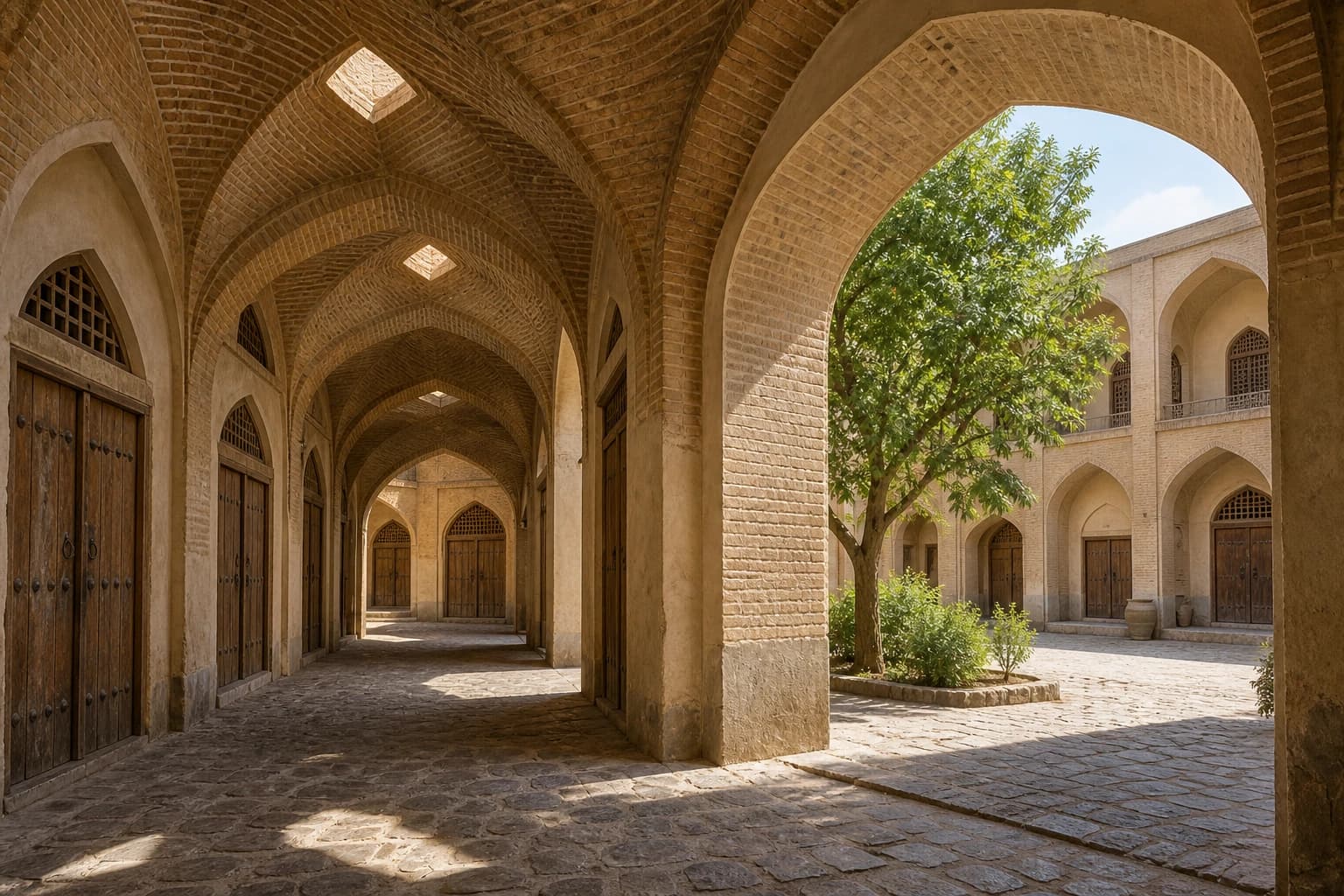
ArakSee in the carpet dictionary sits in central Iran, roughly 250 kilometres south-west of Tehran, on the eastern flank of the Zagros. It is the capital of Markazi province, whose name simply means central. The town was founded at the start of the 19th century as a Qajar garrison called Soltanabad, and kept that name until the 1930s, when it was renamed Arak. Around it lies a ring of weaving settlements: the Farahan district and the village of SaroukSee in the carpet dictionary to the north, Mohajeran a short way out of the city, Lilihan to the south. West of all of them the district shades into the Malayer and Hamadan looms, and that is where the confusion over names begins.
Buyers rarely meet the word Arak on a label, and that is the first thing to understand about the region. Its output reaches the market under village and trade names instead: Sarouk above all, then SultanabadSee in the carpet dictionary, Mahal and Ziegler MahalSee in the carpet dictionary, Farahan, Lilihan, and the Mohajeran or American SaroukSee in the carpet dictionary. Sarouk itself is a small place about 50 kilometres north of the city, yet the trade stretched the name across the whole district so thoroughly that it is often said in Iran there is no Sarouk town at all, only Arak. Both accounts are true in their own way, and both are worth knowing.
Weaving here was old, but what made the district famous was money from outside. Soltanabad emerged under the Qajars as one of the newer weaving centres, and through the 19th century British and German buying pushed the growth of factories there, alongside Tabriz, Kerman and Mashhad. European and American firms came into Persia in the same period and set up production of their own, weaving for export rather than for local use. That arrangement, with looms organised on a commercial scale around an agent's drawings and dye recipes, is the reason so many large, evenly drawn antique carpets of the period come from this one district.
Sarouk earned its reputation in the same century for careful drawing, rich colour and consistent quality, and as exports grew the designs and palettes were adjusted to foreign taste. The clearest case is the Mohajeran or American Sarouk of the 1920s and 1930s, which became very popular in the United States; a deep burgundy Sarouk from that period has usually been re-dyed after weaving to suit Western rooms. Quality dipped briefly in the middle of the 20th century, something the district's master weavers noticed and pulled back up quickly.
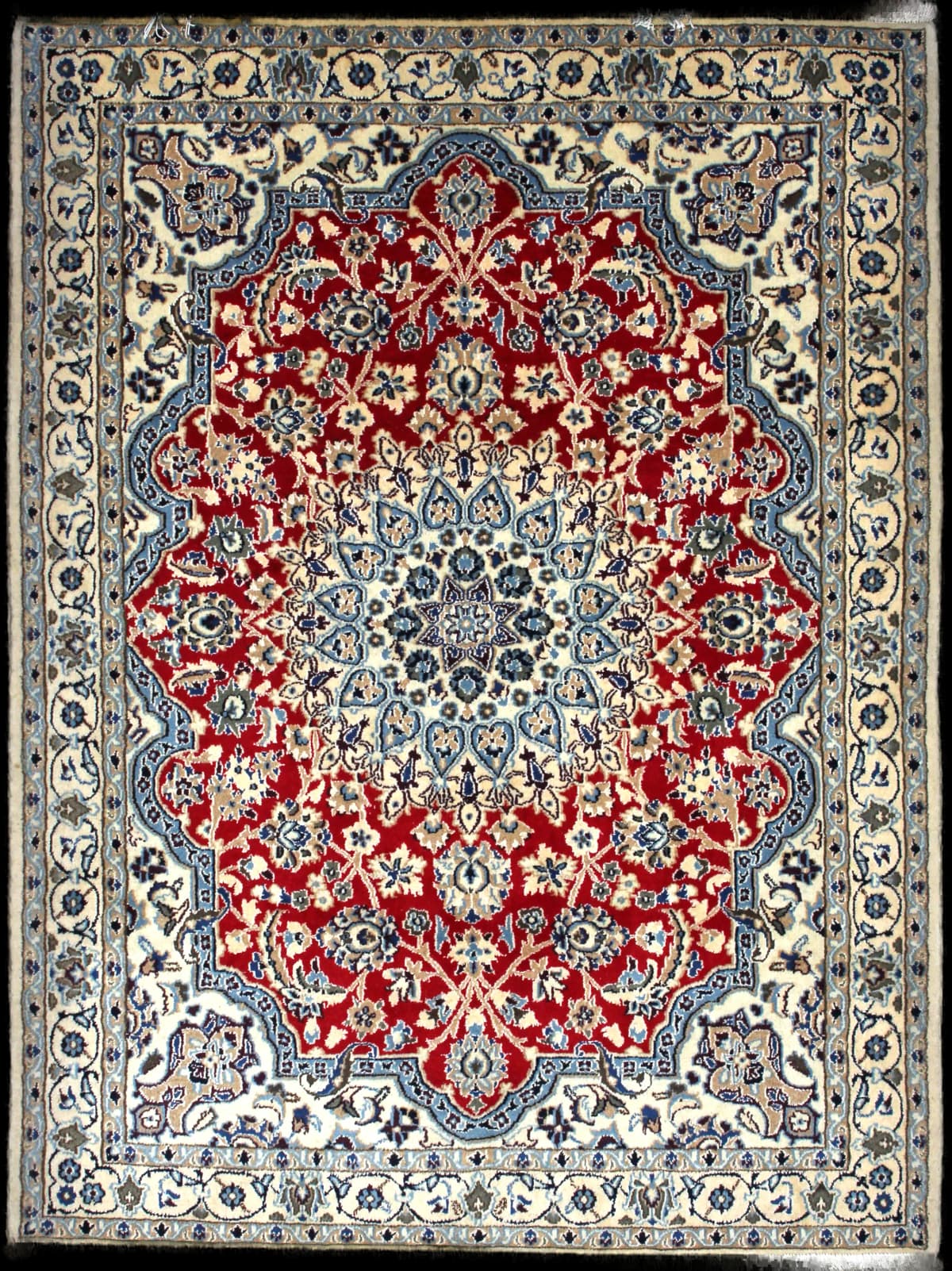
Design at the Sarouk end of the district is floral rather than geometric, and semi-formal rather than strictly courtly. MedallionSee in the carpet dictionary and allover layouts both occur, with floral allover and floral medallionSee in the carpet dictionary the most common; herati and botehSee in the carpet dictionary appear regularly, and pictorial pieces exist, though far fewer than at Tabriz. One habit is worth memorising: the main border is usually accompanied by a much thinner secondary borderSee in the carpet dictionary running alongside it. A vintage example might carry an ivory field of afshan, meaning scattered flowers, with leafy branches, rosettes and paired sprays and no central medallion at all.
At the older Sultanabad and Mahal end the drawing changes character. Allover is the hallmark there as well, but the field fills with oversized palmettes, stylised lotus blossoms, angular vine scrolls and rosettes, each motif slightly varied because it was drawn by hand rather than copied exactly. The effect is a rhythmic, herati-inspired lattice that borrows the Shah AbbasiSee in the carpet dictionary vocabulary of Safavid court carpets and rebuilds it with village directness. Where a city rug is precise and curvilinear, an antique Sultanabad reads as bold and architectural, its symmetry strong rather than delicate.
Colour is where the region is easiest to recognise. Sarouk fields run to beige, ivory and cream, to dark navy and blue, and to red, with highlights in yellow, several blues and green, drawn from natural dyes that settle into a harmonious whole and improve with age. The most useful test is the red itself: a characteristic Sarouk red leans orange or rust rather than burgundy or scarlet, and the border is usually a different colour from the field. Antique Sultanabads go deeper, with indigo grounds, brick red, gold and olive inside a terracotta border.
Construction follows city practice. The foundation is cotton, rigid and stable, which is what keeps large pieces flat and square, and the pileSee in the carpet dictionary is woolSee in the carpet dictionary, occasionally with silk used for highlights. The knot is normally the asymmetrical Persian knotSee in the carpet dictionary, but older Sarouks are regularly found with the symmetrical Turkish knotSee in the carpet dictionary, which is a useful hint at age on a piece with nothing else to date it. Wool quality is the district's other signature: soft, dense and plush underfoot, with the better antiques using fine cork woolSee in the carpet dictionary.
Knot densitySee in the carpet dictionary runs from medium to high, reaching roughly 320 knots per square inch (KPSI) at the upper end of Sarouk weaving. Two measured pieces show the spread honestly: a vintage ivory afshan Sarouk of about 3 by 4 metres counted 225 KPSI, fine enough to carry curved floral drawing without stiffness, while an antique Sultanabad of about 3.2 by 4.9 metres counted 116, which gives a sturdy, substantial handle instead. Pile is mostly medium to thick, though some older Sarouks were clipped short over that fine cork wool.
Formats cover the whole ladder. Small mats from about 0.6 by 0.9 metres up to 1.2 by 1.8, medium pieces around 1.5 by 2.1 and 1.8 by 2.7, large carpets from 2.4 by 3 up to 3 by 4.3 metres, and oversize beyond that; the workshops here have long looms and the resources for commissioned palace sizes larger than 3.7 by 5.5 metres. Runners are woven from roughly 1.8 to 6 metres in both narrow and wide widths, and a wide Sarouk runner is usually semi-antique or antique. Small Sarouks also tend to be finely knotted.
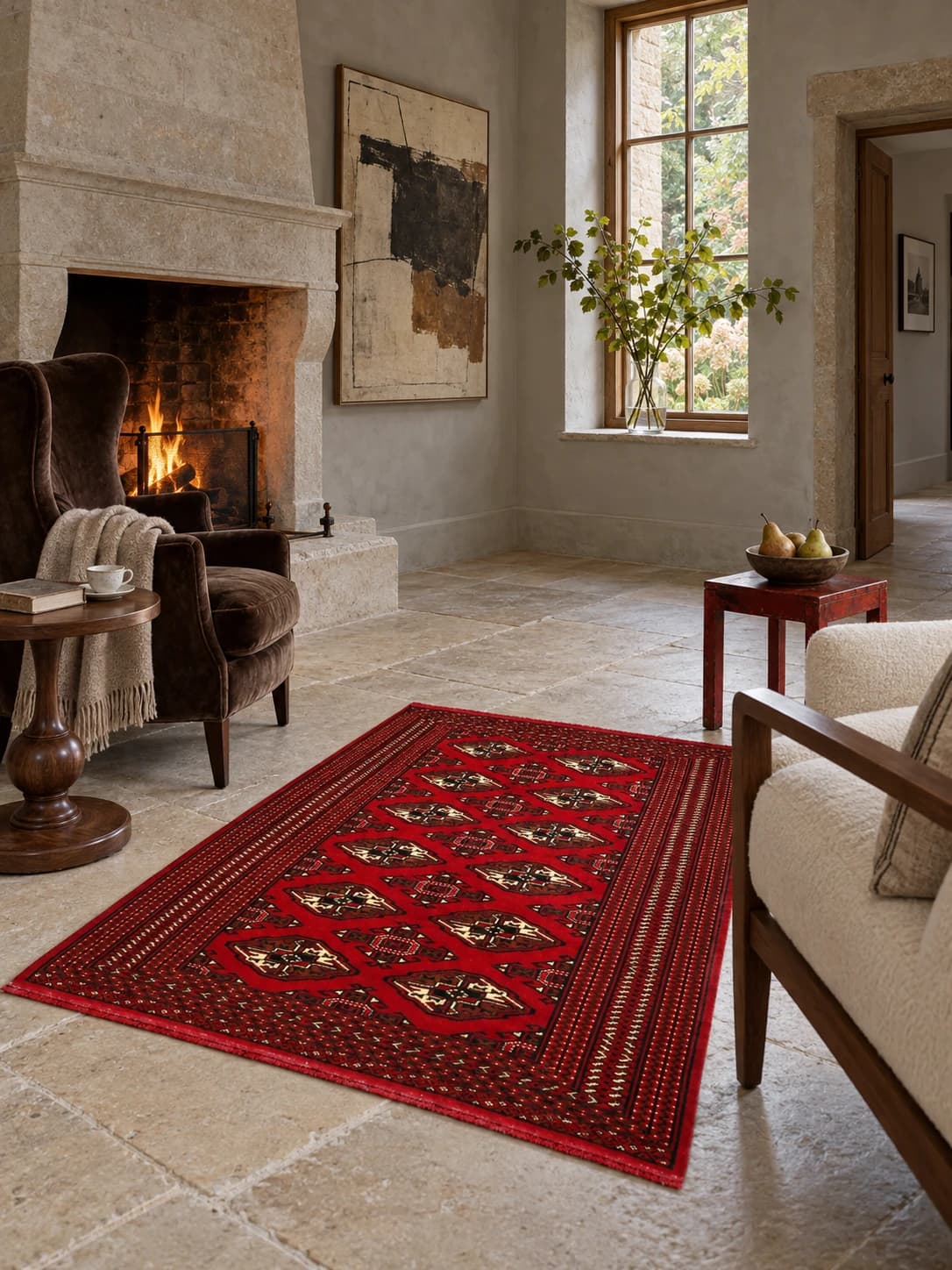
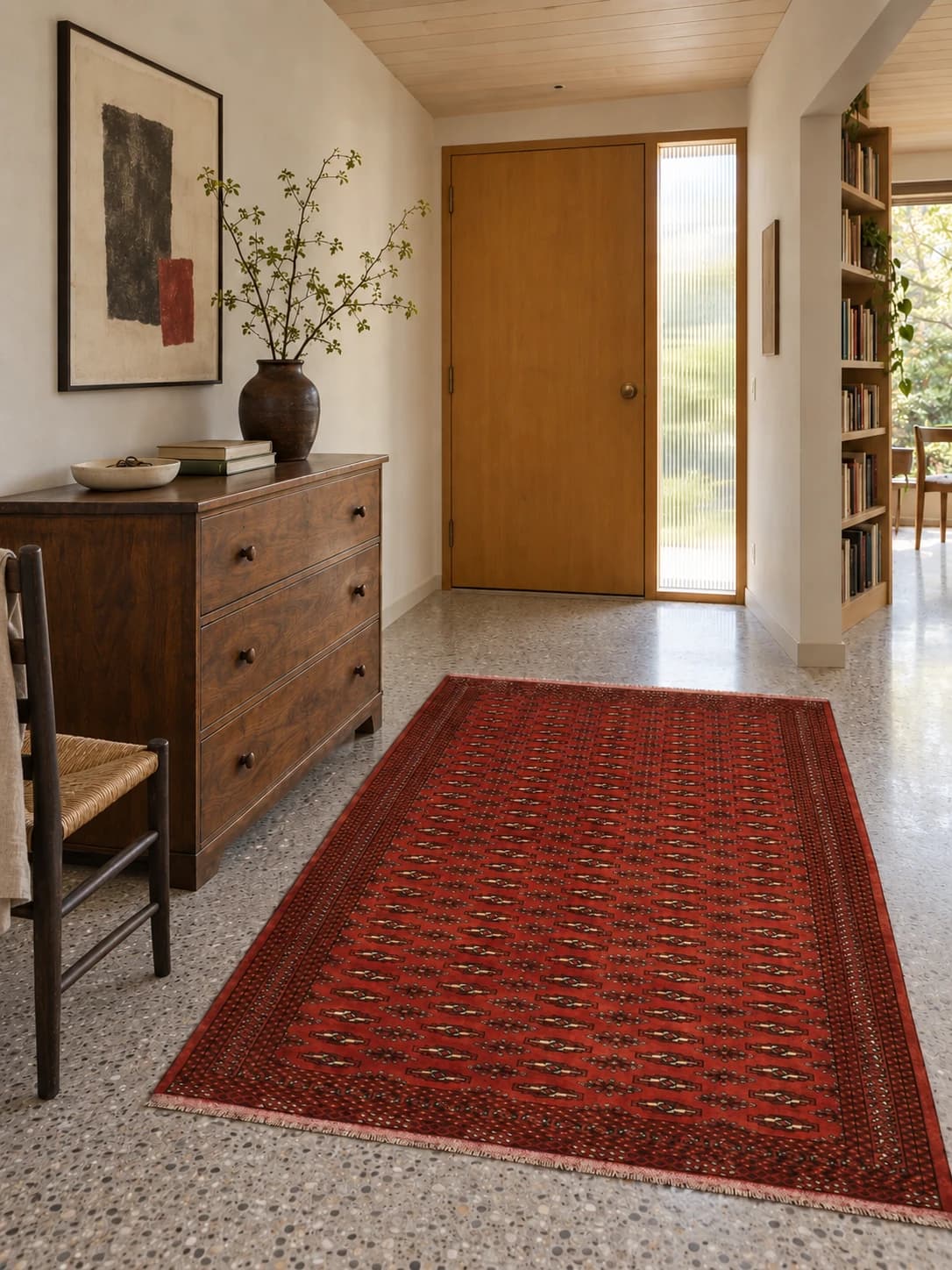
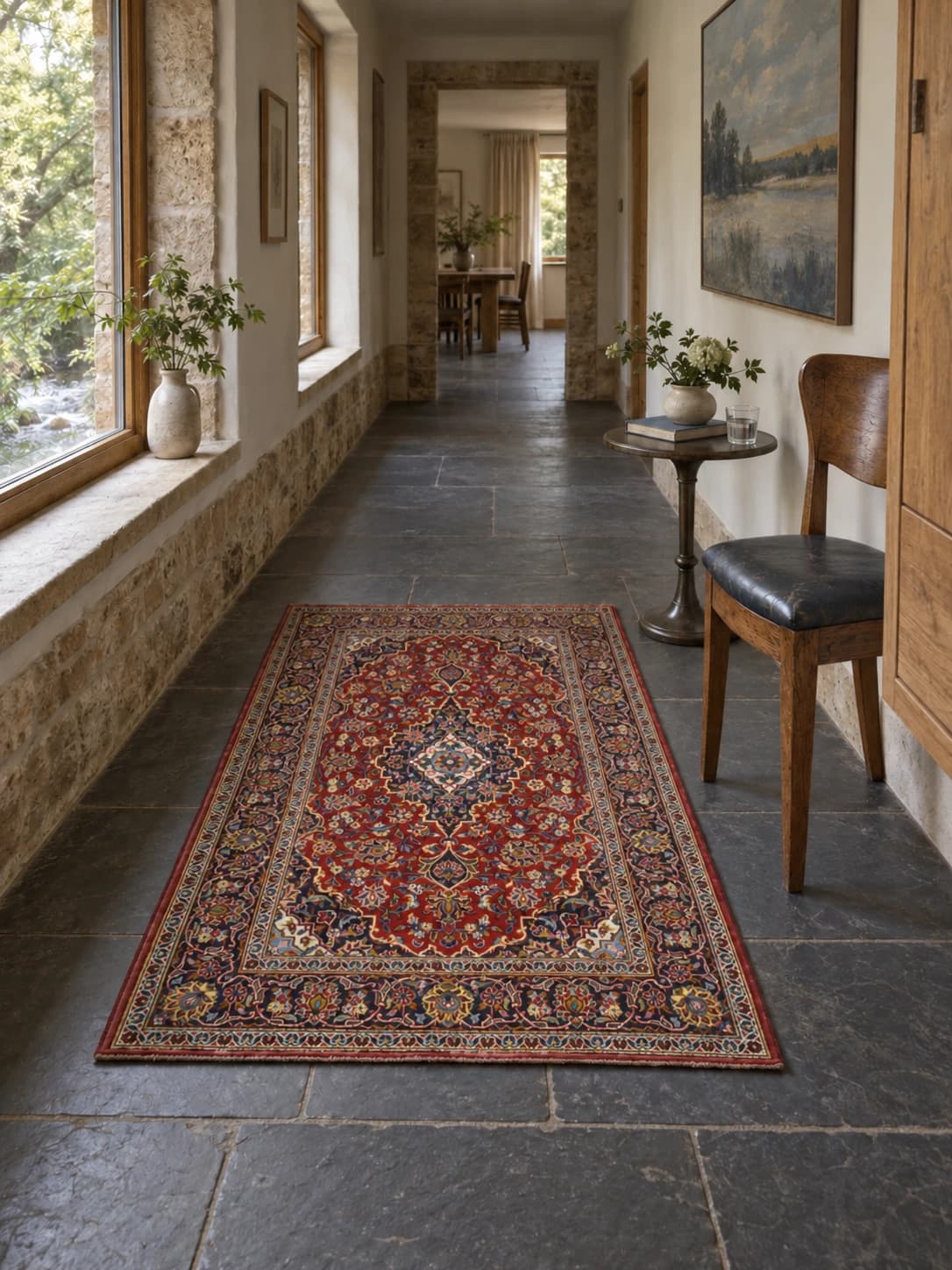
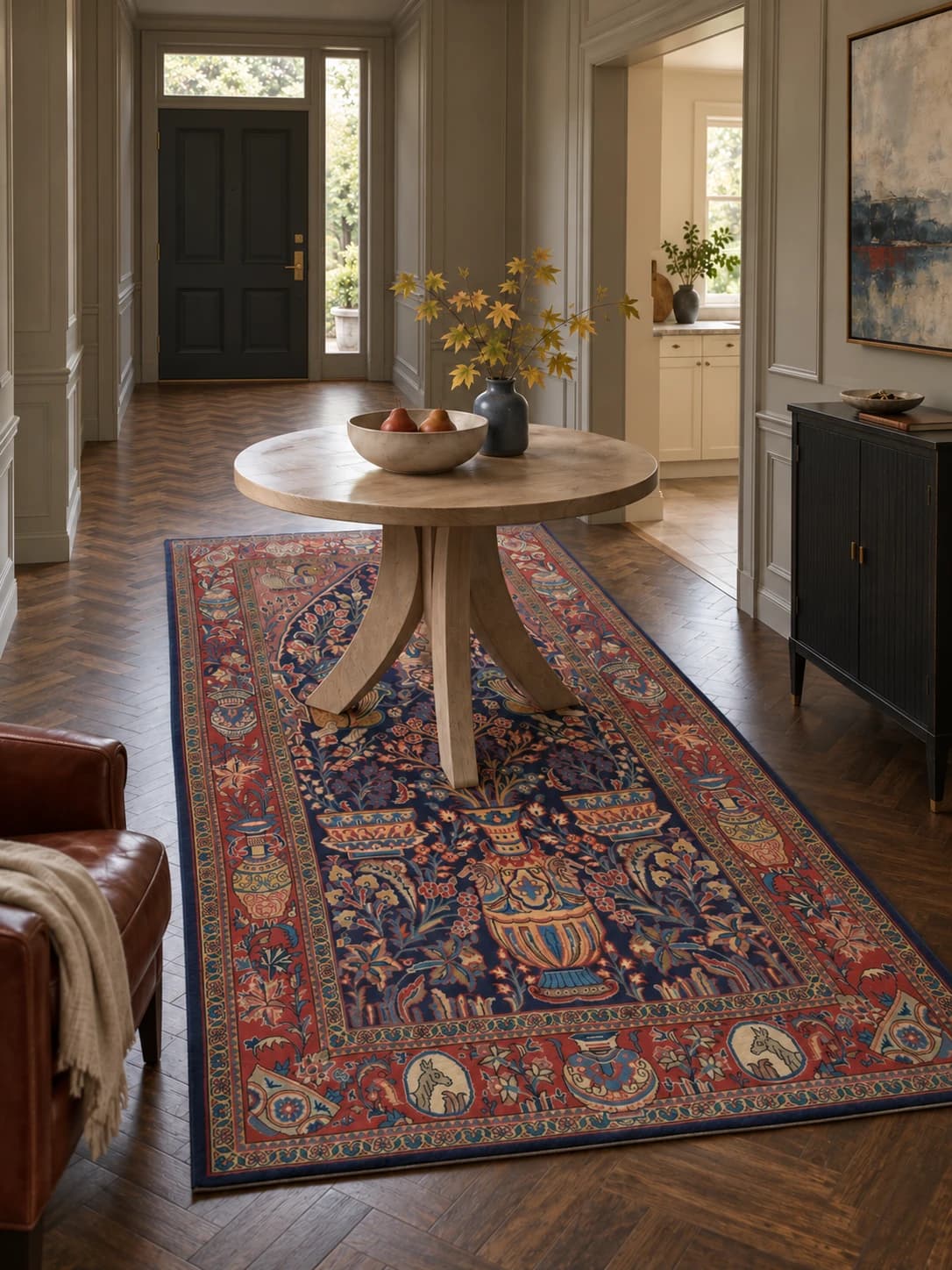
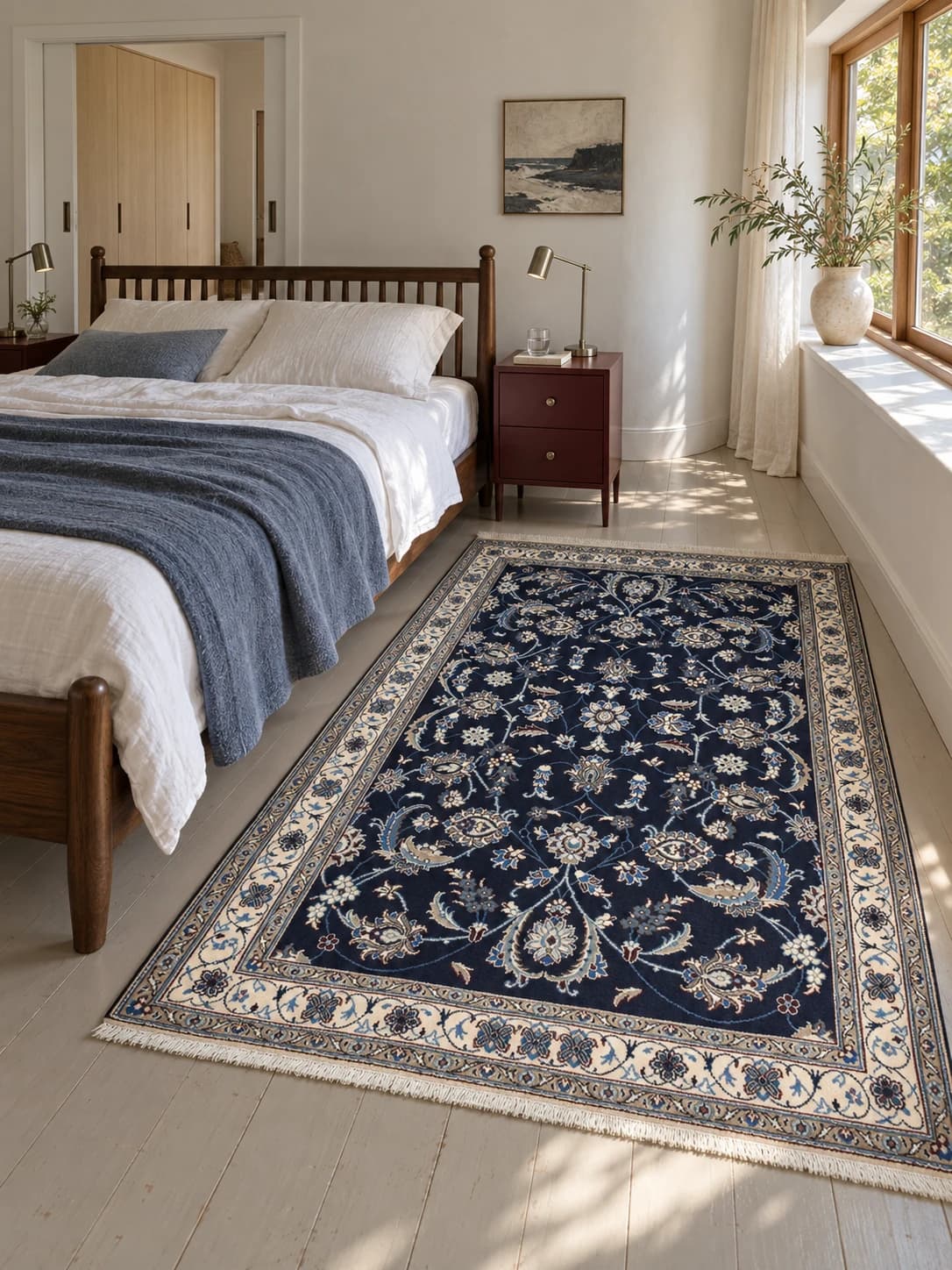
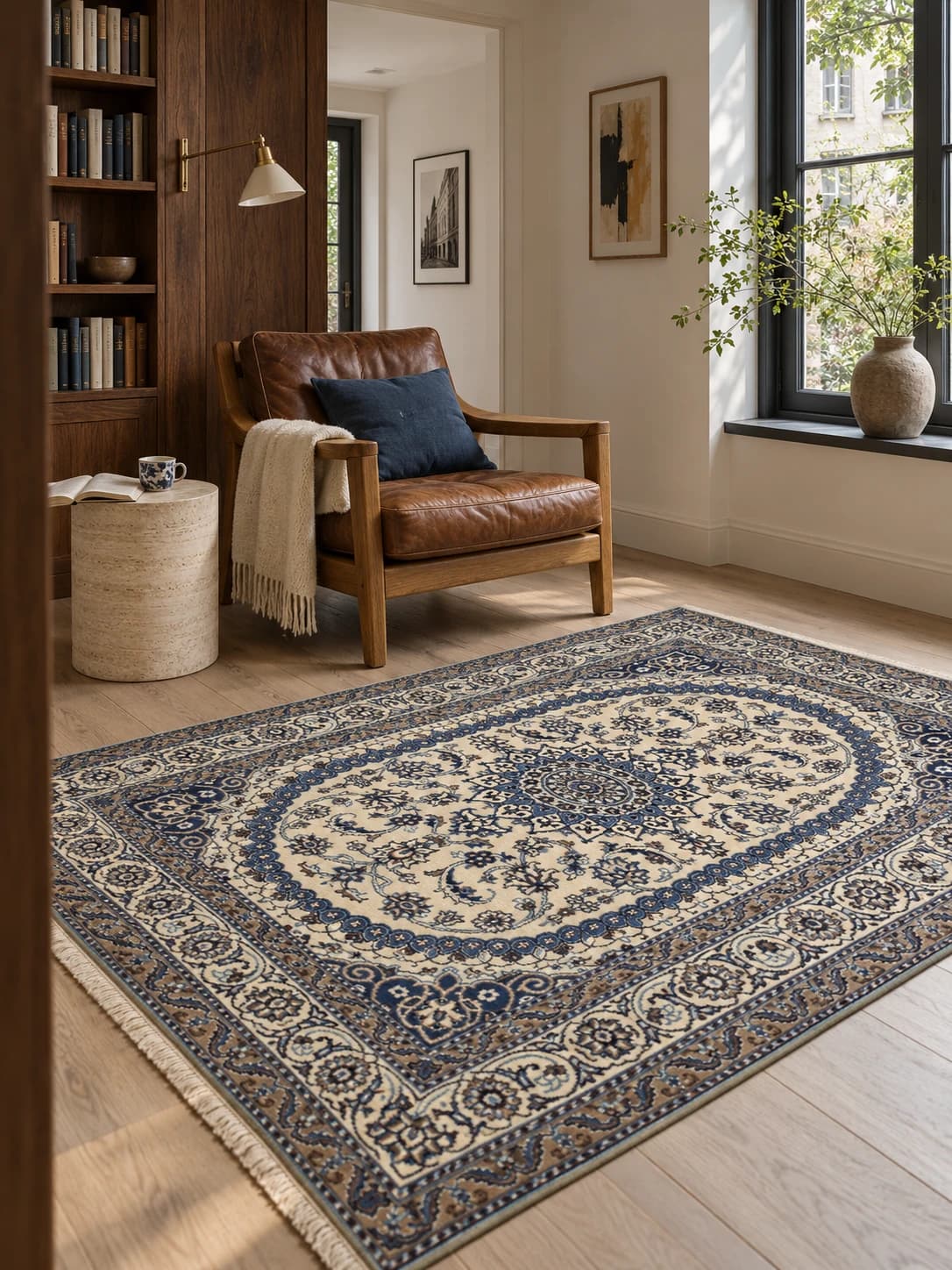
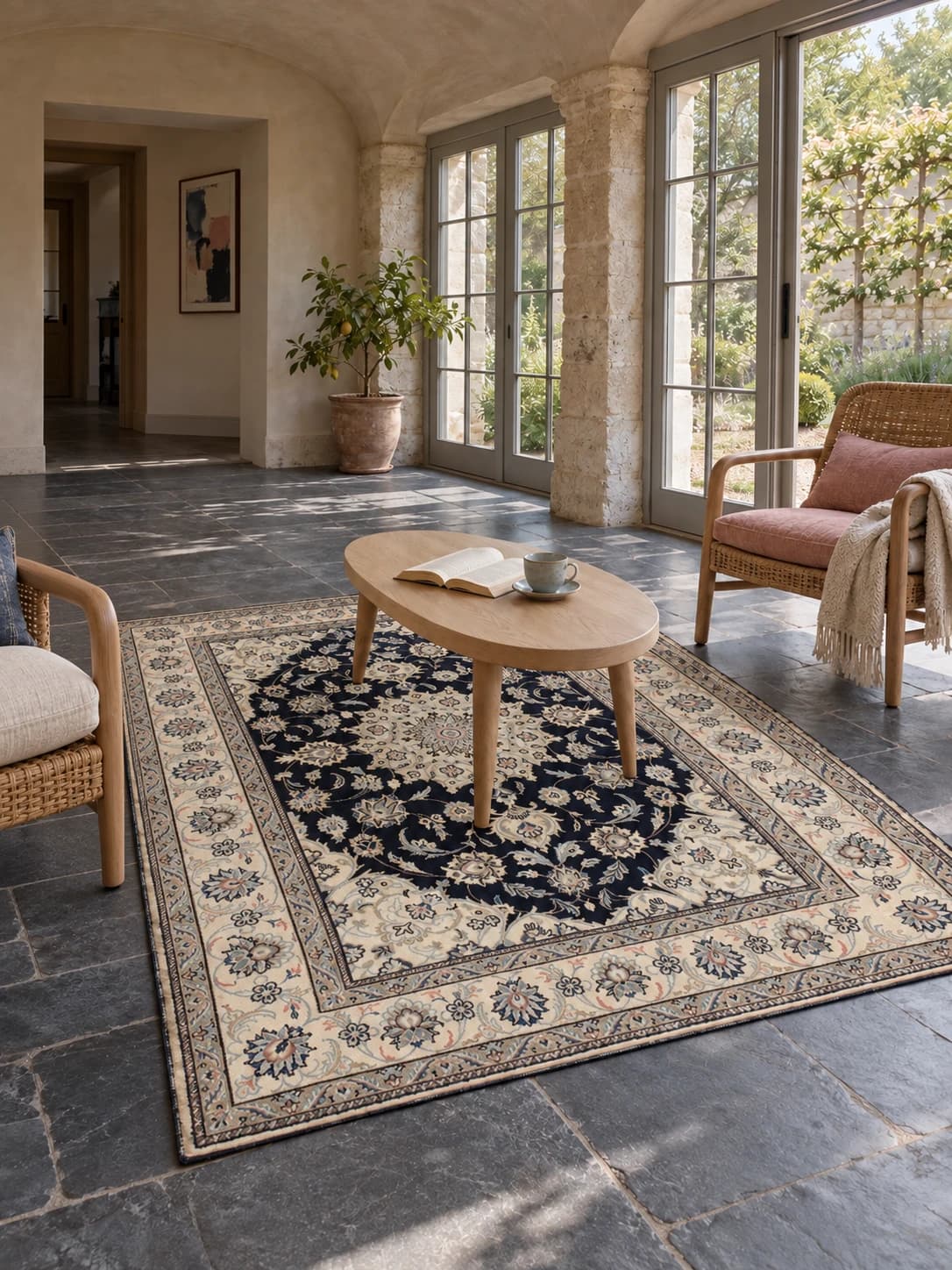
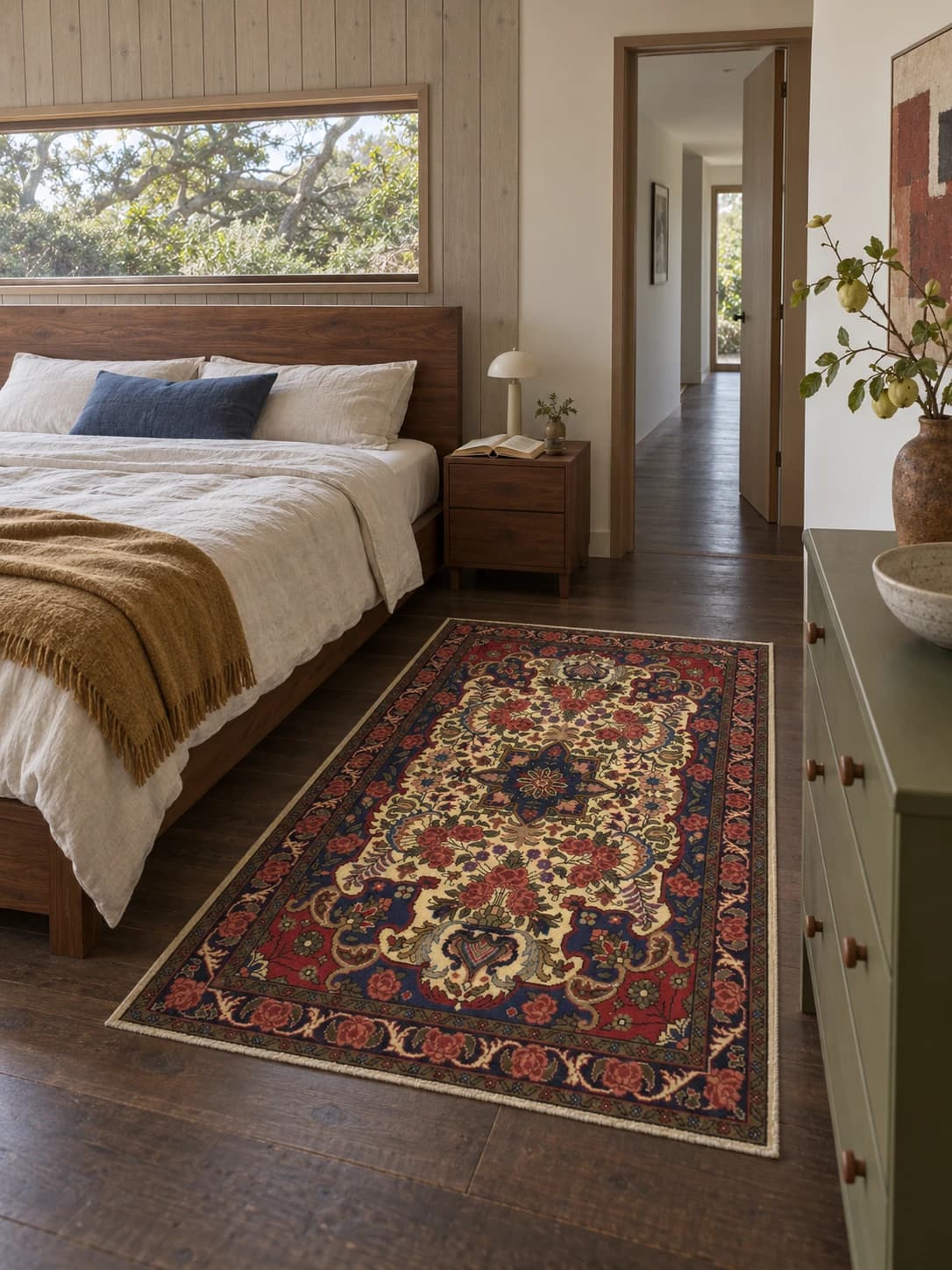
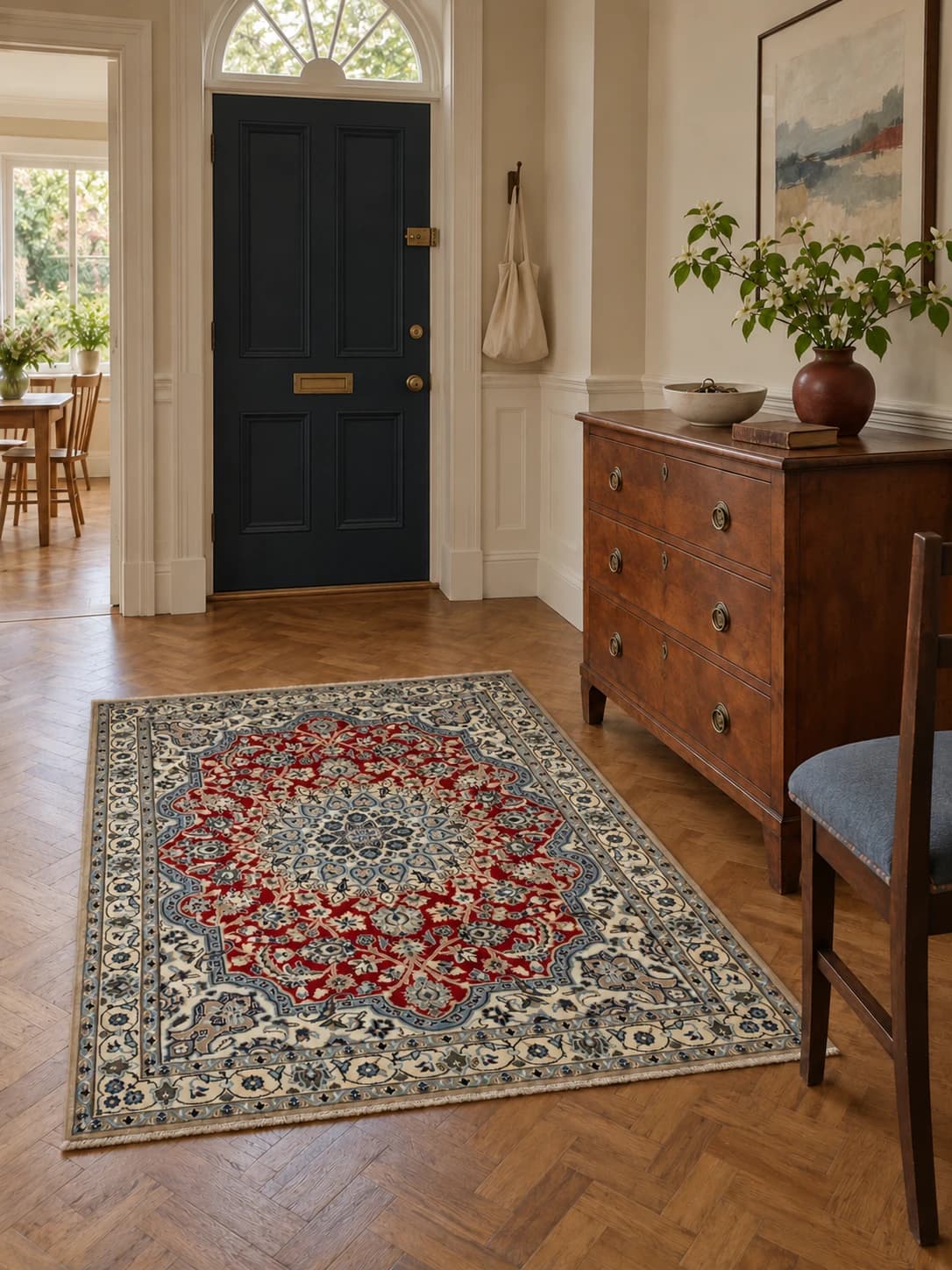
In use, these are practical carpets rather than fragile ones. The darker grounds common in the district hide the marks that dining rooms, kitchens and entrance halls inflict, and the soft, deep wool makes them pleasant on stairs, in hallways and in bedrooms where a rug is walked on barefoot. Larger Sultanabad and Mahal pieces, built coarser and heavier, take traffic particularly well. Handle is worth checking alongside pattern, since a short-clipped antique Sarouk in cork wool feels quite different underfoot from a thick modern one.
Three details help place a piece. The state-owned Iran Carpet CompanySee in the carpet dictionary ran quality-control workshops in the weaving cities, Sarouk especially, checking materials, colour and weaving, and obliging a weaver to cut out and repeat even a small mistake; those rugs took longer to make and stand apart from ordinary district work. The drawing here also travelled: the finest Malayer rugs, woven between Arak and Hamadan, follow Sarouk and Farahan patterns so closely they can be hard to separate, while newer Mehraban work leans on American Sarouk. And Ziegler Mahal patterns are still in production, so design alone never dates a carpet.
The Persian rug
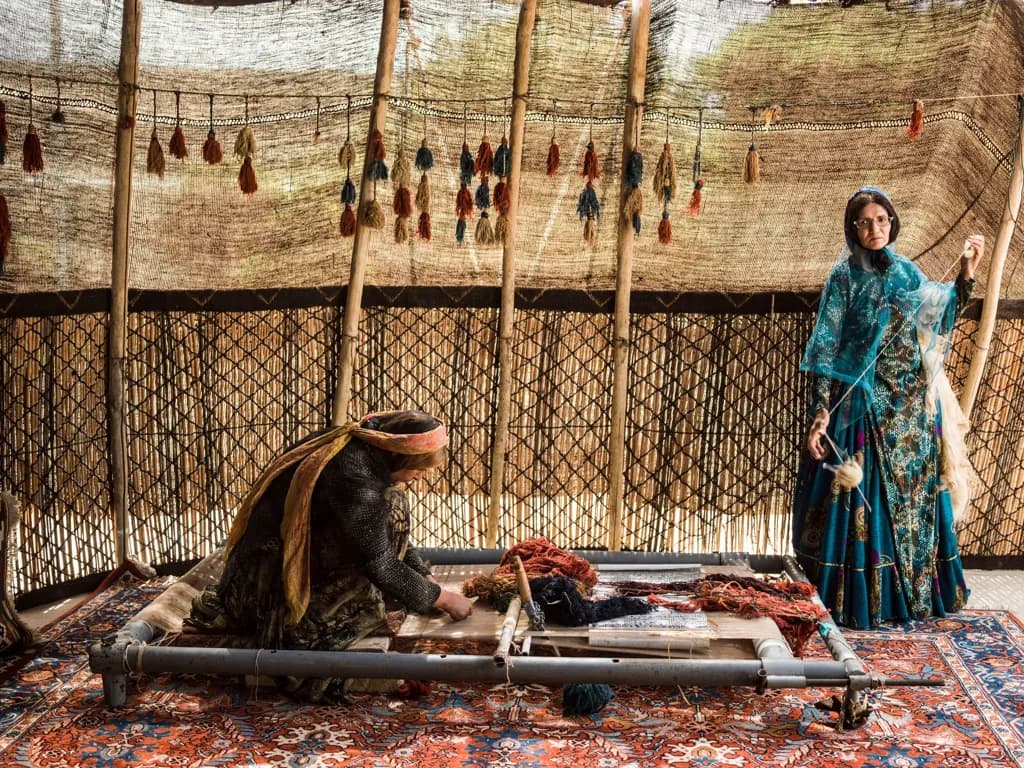
A Persian rug is an Iranian rug — a rug hand-knottedSee in the carpet dictionary in Iran — and the tradition behind it is the oldest documented anywhere. The earliest surviving carpet, the Pazyryk rugSee in the carpet dictionary, was found preserved in a frozen burial mound and dates to the fifth century BC — roughly 2,500 years ago — and it is already accomplished work, not a beginner's craft. What began as warm, hard-wearing floor coverings for tribal households grew, over those centuries, into the art form that every other rug-weaving country has borrowed from.
Two later chapters shaped what a Persian carpet looks like today. Under the Safavid dynastySee in the carpet dictionary, from 1501 to 1732, the court promoted weaving alongside painting and calligraphy, and the workshops of Tabriz, HeratSee in the carpet dictionary, Kashan and Kerman produced the masterpieces that now sit in museums. This is when the great central medallionSee in the carpet dictionary appeared, and when designs grew elaborate enough that a separate designer — often a miniature painter — drew the pattern onto a cartoon for the weaver to follow. The second chapter came in the nineteenth century, under the Qajar dynastySee in the carpet dictionary, when production reached its historical peak, exports to Europe and America boomed, and the workshop industry whose descendants still weave today took its modern shape.
The trade sorts Persian rugs into three families. City rugs — Tabriz, Kashan, Kerman, Nain, Isfahan — are woven in workshops from a drawn design, carry the highest knot densities and come in the widest range of colours, sizes and patterns. Village rugs such as HerizSee in the carpet dictionary, BakhtiariSee in the carpet dictionary and KarajaSee in the carpet dictionary sit in between, mostly geometric and largely woven from memory. Tribal rugs — Baluch, TurkomanSee in the carpet dictionary, QashqaiSee in the carpet dictionary, each named after the people who weave it — are made on small portable looms, so they run smaller, and their bold geometric drawing comes from the weaver's own head rather than from paper.
The design vocabulary draws on a deep stock of motifs: Shah AbbasiSee in the carpet dictionary palmettes, flowing arabesques, the small repeating Herati patternSee in the carpet dictionary, medallions, garden and tree-of-life compositions. These combine with regional habits into styles a practised eye can place at a glance, from the bold geometric medallions of Heriz to the fine curvilinear florals of Isfahan.
The classic palette is built on natural dyes: madderSee in the carpet dictionary reds, indigo blues, saffron yellows and the soft whites of undyed woolSee in the carpet dictionary, settled into combinations refined over centuries. Natural dyes age gracefully, mellowing into the patina that older rugs are prized for, and slight shifts of tone between dye batchesSee in the carpet dictionary — the effect called abrashSee in the carpet dictionary — are a mark of small-batch natural dyeing, not a flaw.
The pileSee in the carpet dictionary is almost always woolSee in the carpet dictionary, and in a Persian wool rug the wool itself decides much of the quality. The best fleece comes from high-altitude flocks, where it grows thicker and richer in natural oils; spring-sheared wool beats the autumn clip, and hand-spun yarnSee in the carpet dictionary gives a finer, softer thread than machine spinning. Fine pieces add silk highlights to a wool pile, and at the very top sits the Persian silk rug, woven in pure silk. Foundations are usually cotton in city weaving, wool in tribal and older pieces, silk at the very top of the range.
Every knot is tied by hand, one at a time, in one of two forms: the asymmetric Persian knotSee in the carpet dictionary, usual in central and eastern Iran, or the symmetric Turkish knotSee in the carpet dictionary, common in the north-west ever since Seljuk weavers introduced it in the eleventh and twelfth centuries. A large rug holds in the region of two million knots and can occupy a weaver for about a year.
Knot densitySee in the carpet dictionary is the figure newcomers fixate on, and the finest silk-foundation pieces do reach as much as 1,000 knots per square inch. But densitySee in the carpet dictionary only matters as far as the drawing demands it: a curvilinear Isfahan needs a fine weave to stay sharp, while a geometric Heriz is famously durable at a modest count. Material, symmetry, colour harmony and condition say more about quality than any single number.
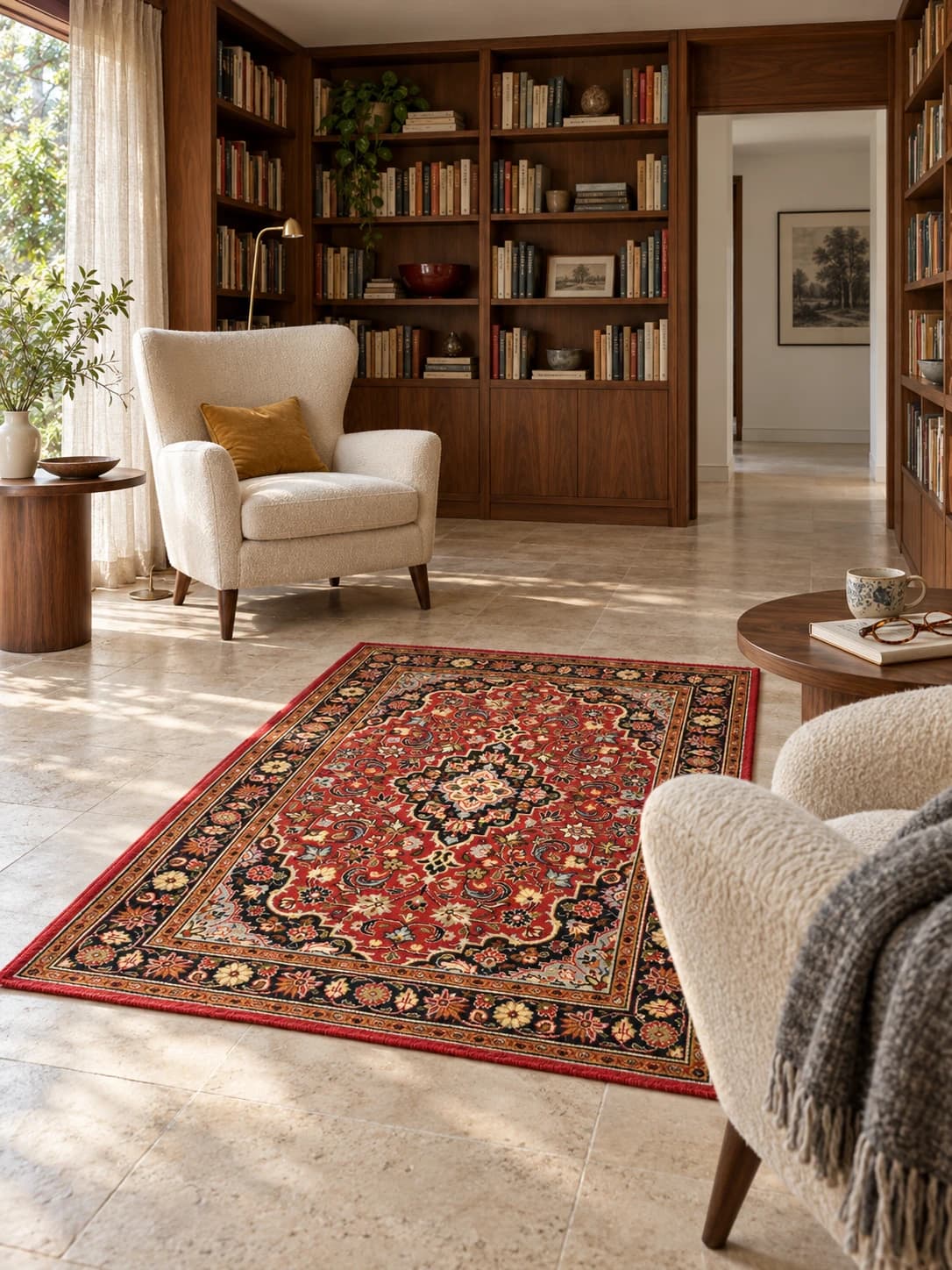
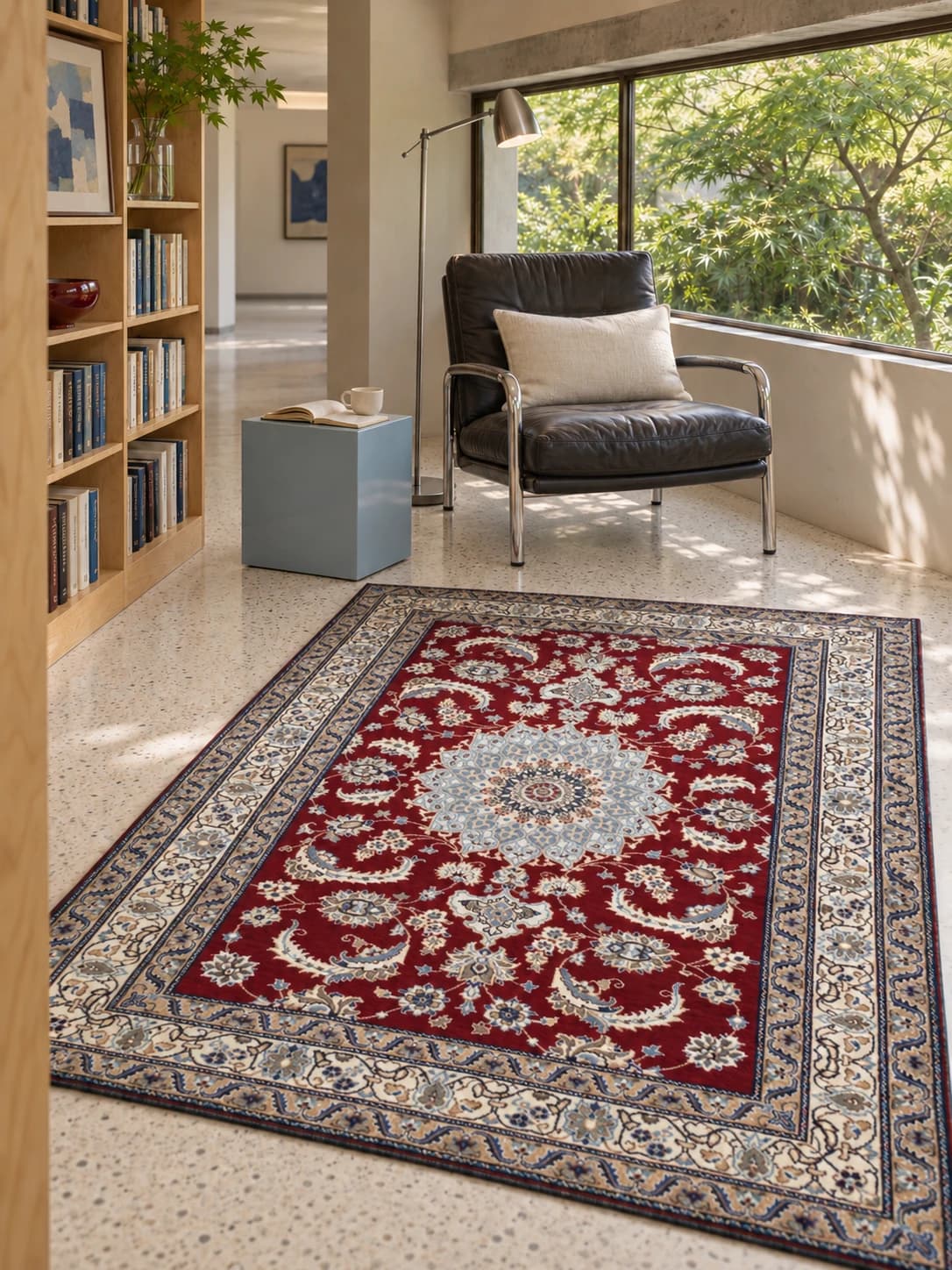
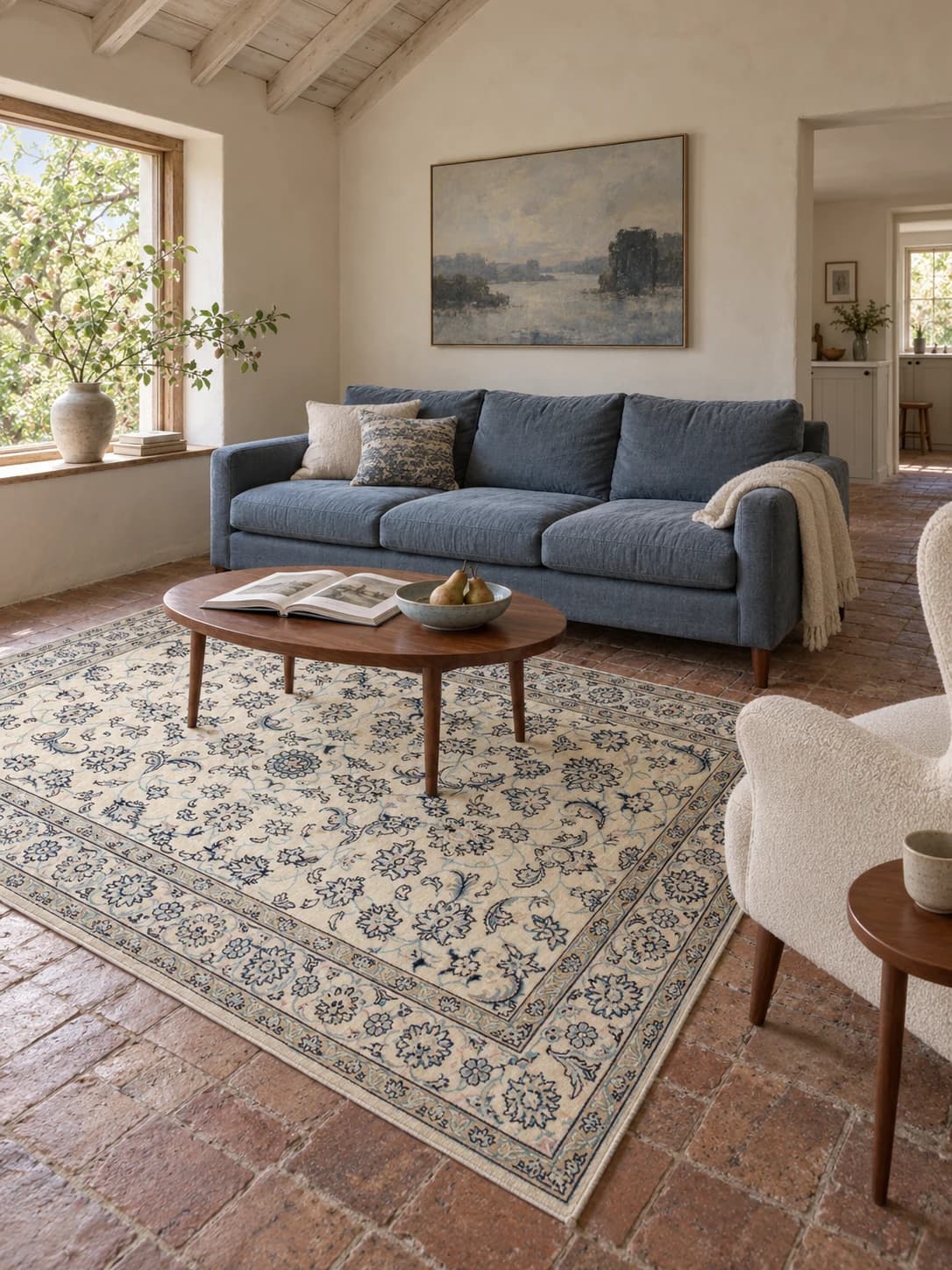
Persian carpets settle into modern rooms as naturally as classical ones, as a focal point in a living room, a foundation under a dining table or a quieter accent in a bedroom. Care is undemanding: gentle vacuuming without a rotating brush, an occasional turn for even wear, and a professional wash about every five years — sooner in a hallway or entrance, less often in a quiet room.
A hand-knotted Persian rug tends to outlast its owners. Pieces a century old regularly survive in fine condition, their colours settled and their pile supple, often looking better than when they left the loomSee in the carpet dictionary. A well-chosen, well-kept rug holds its worth and passes down as a family heirloom rather than being replaced — which is precisely what the knots, the wool and the dyes were always for.
Questions about this carpet?
Our family has traded carpets for two generations. Ask us anything — photos, video calls, advice on sizes.
Message us
Keep exploring
Guides from our family workshop: how to clean, place and care for hand-knotted rugs.