From the region ofنیشابورNeyshabur
What makes this piece special
Hover over or tap a feature to read moreTwo knots per tuft — a denser, more durable pile that holds its pattern for decades.
Up close
Origin: Neyshabur
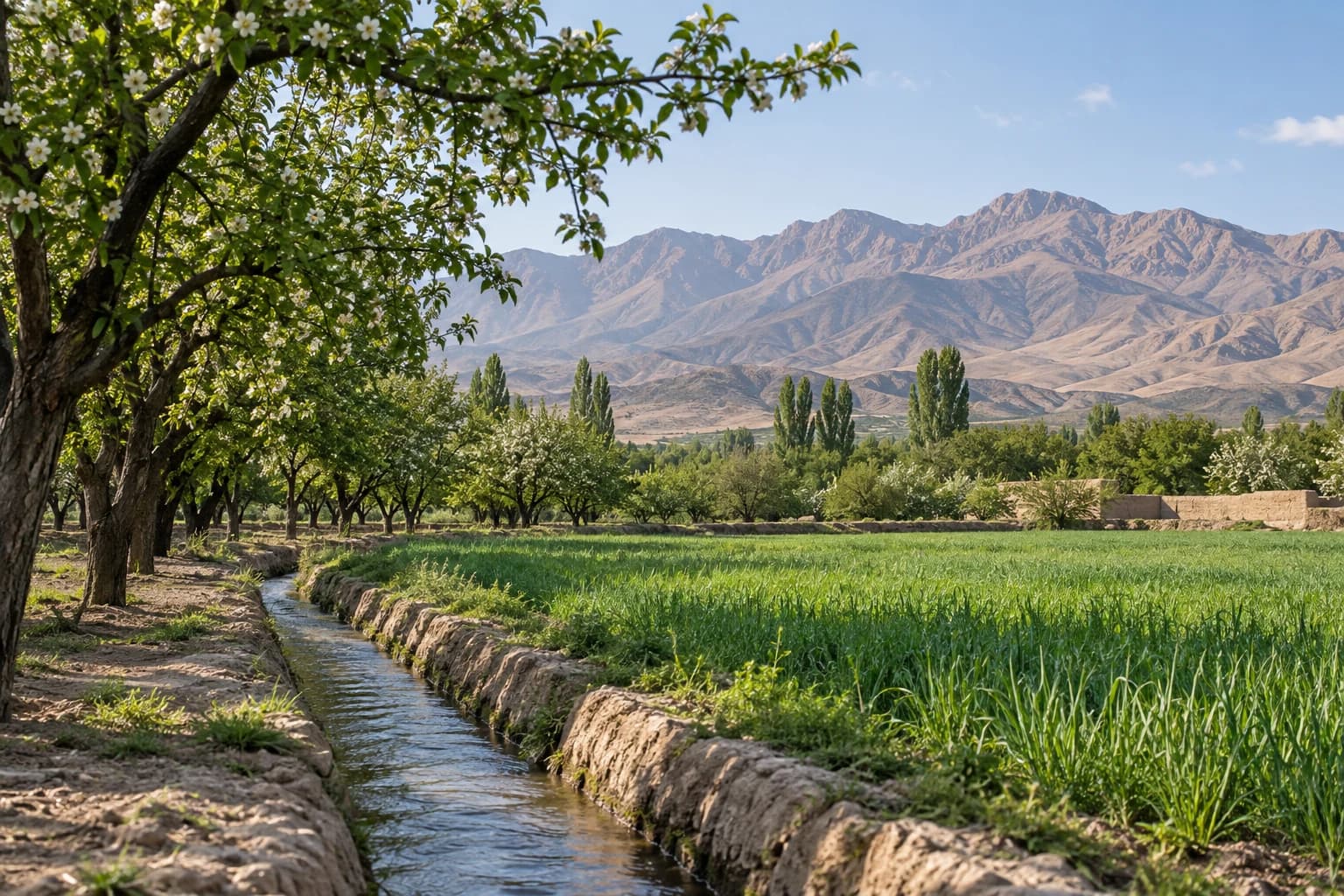
Neyshabur lies in Razavi Khorasan, in the north-east of Iran, roughly 120 km west of Mashhad by road, on the plain at the southern foot of the Binalud range. It is an old city, a Sasanian foundation credited to Shapur I and known then as Nev-Shapur, the fair city of Shapur. For rug purposes it belongs to the Khorasan weaving country: Mashhad, the great workshop city of the province, is its neighbour to the east; Quchan and its Kurdish tribal looms lie to the north; KashmarSee in the carpet dictionary is roughly due south, and Moud, down towards Birjand in South Khorasan, further south again. A rug sold as Neyshabur belongs to that Khorasan family.
Its reputation in the Middle Ages rested on scholarship, pottery and trade rather than on carpets. The city was a Tahirid capital of Khorasan and later a Seljuk one, and it holds the graves of Omar Khayyam and Attar. It was sacked by the Mongols in 1221 and wrecked by earthquake later that century, after which the settlement itself shifted ground. No unbroken line of carpet weaving runs from that era to the present. Rug weaving in Mashhad, the provincial centre, is dated to the late Middle Ages, and the commercial workshop production behind the Khorasan rugs on the market today is a good deal more recent still.
Turquoise is the one material for which this town is famous worldwide. The Ma'dan mines north-west of the city are the classic source of Persian turquoise and have been worked for centuries. It is worth saying plainly that the stone has nothing demonstrable to do with the rugs: the Khorasan weaving palette is not a turquoise palette, and nothing links the mines to the dye pots. The turquoise explains why the name of the town travelled far beyond the province. The carpets are a separate and much quieter story, and anyone selling the two as one thing is selling a connection that has not been shown.
Persian rugs take their names from the towns that wove them, and in Khorasan that naming runs through Mashhad. Carpets from the smaller towns of the province are finished on local looms and then carried to Mashhad, where they enter the market. A piece woven a morning's drive away can therefore reach a buyer under the bigger city's name, and a good deal of Khorasan weaving is sold exactly that way. The consequence is practical: because the smaller towns are not famous brand names, their work tends to cost noticeably less than comparable quality from Tabriz, Mashhad or Kashan.
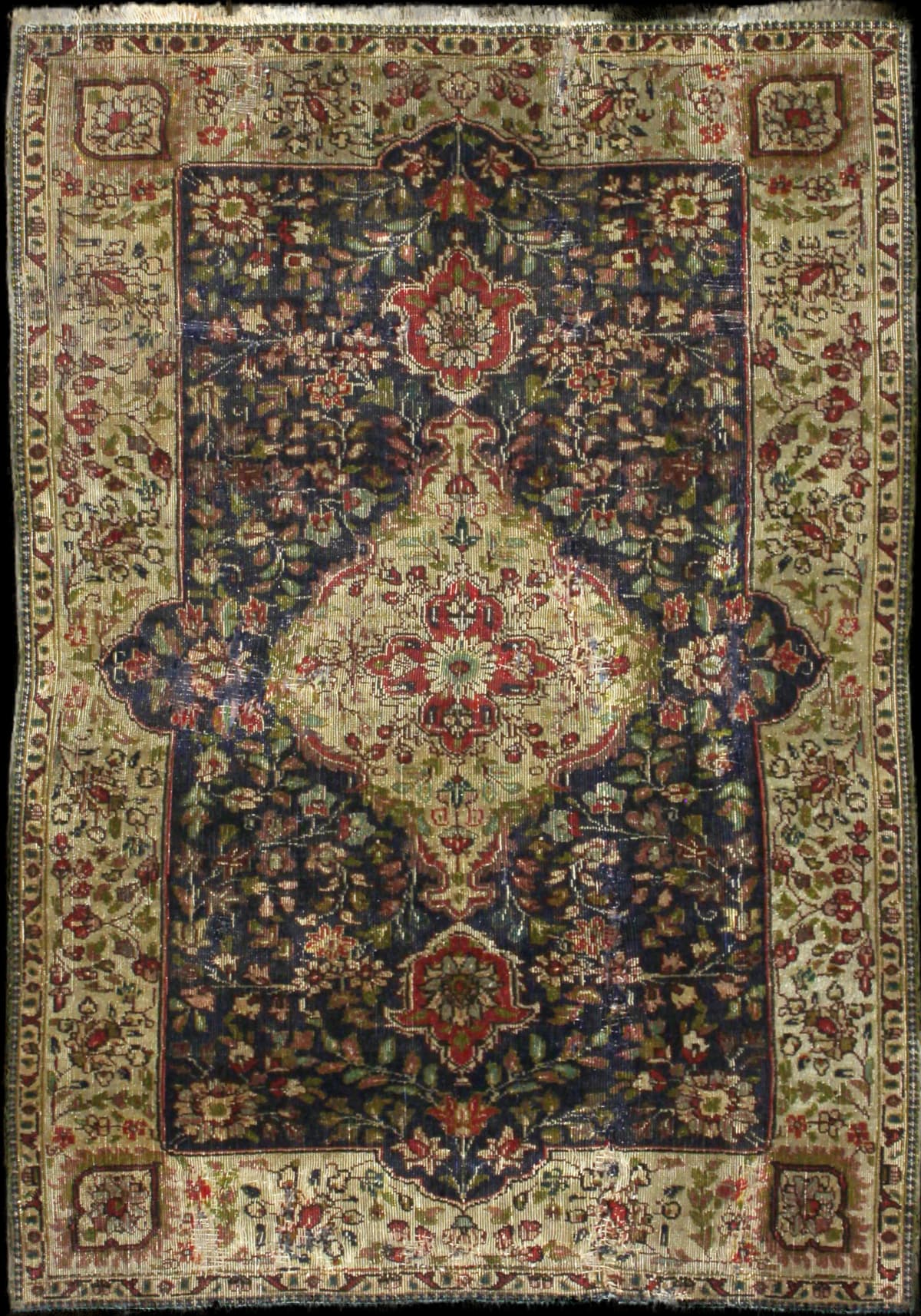
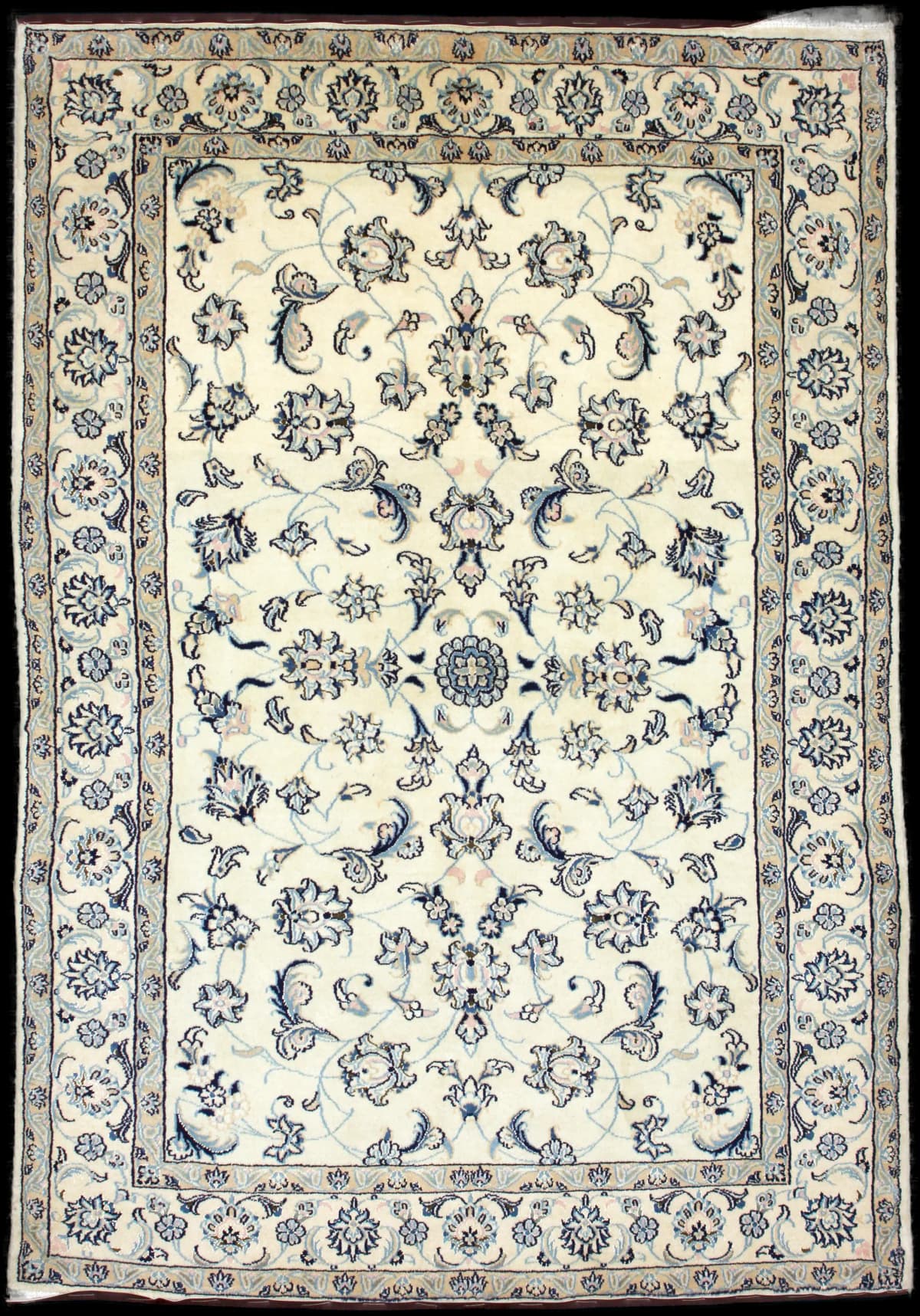
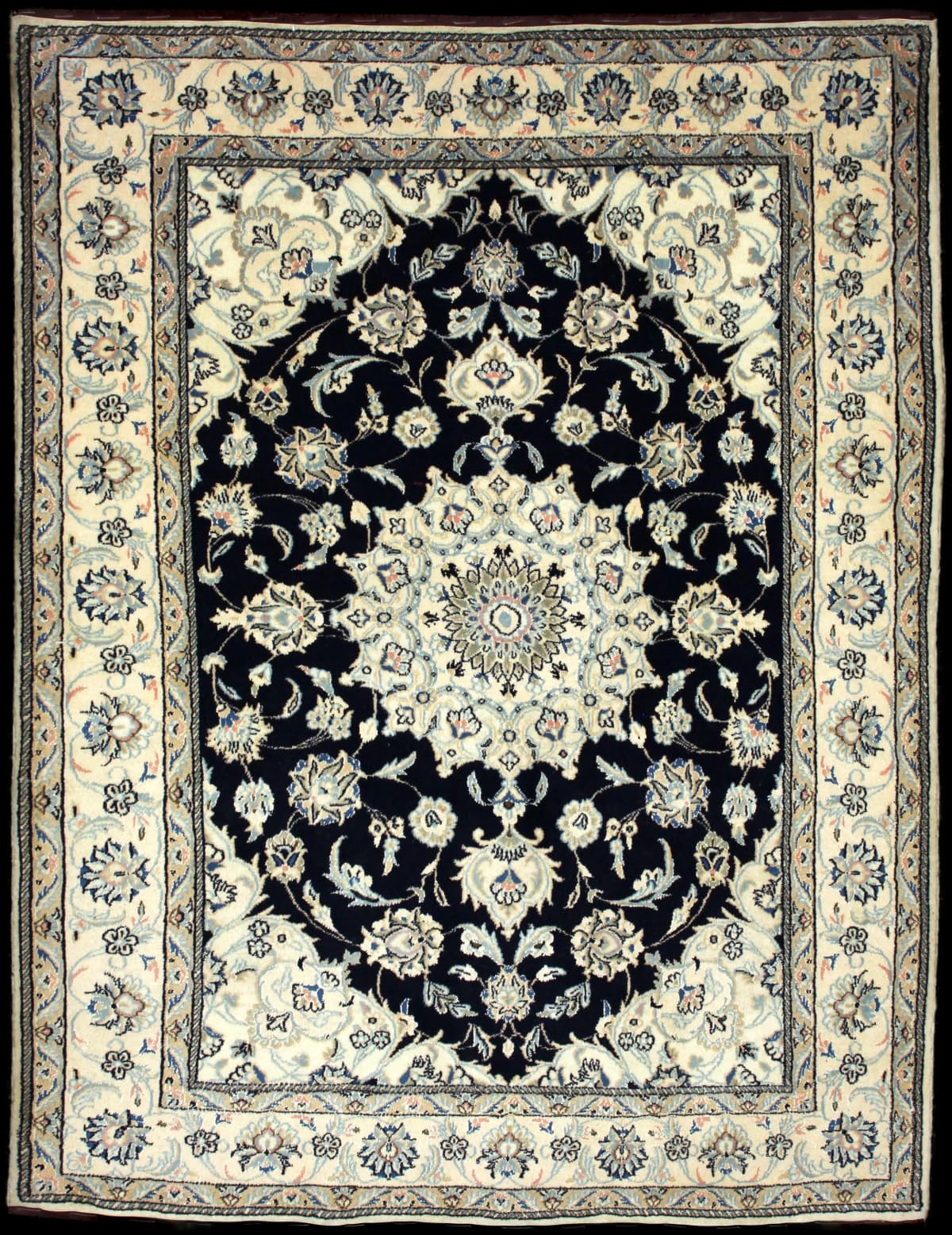
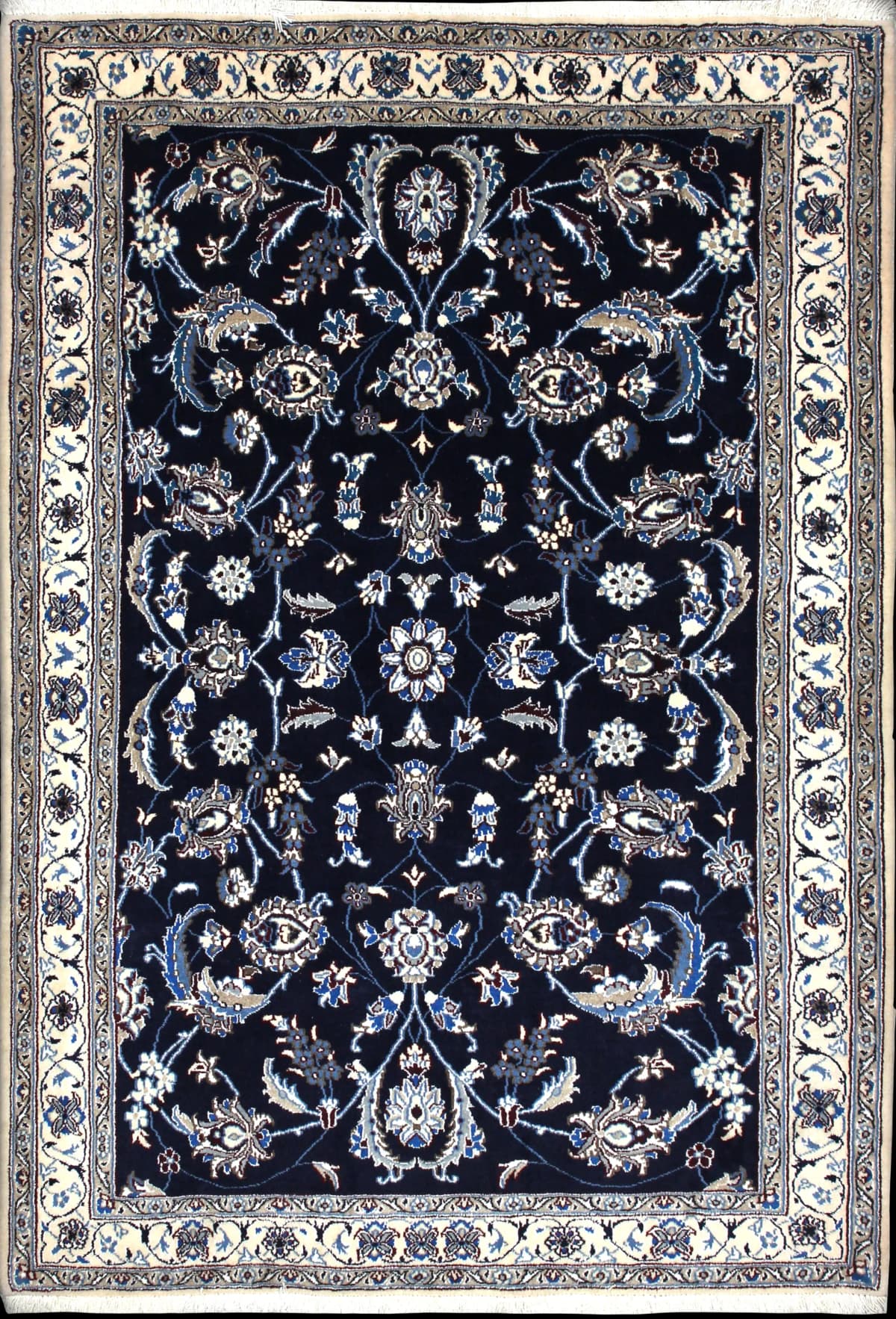
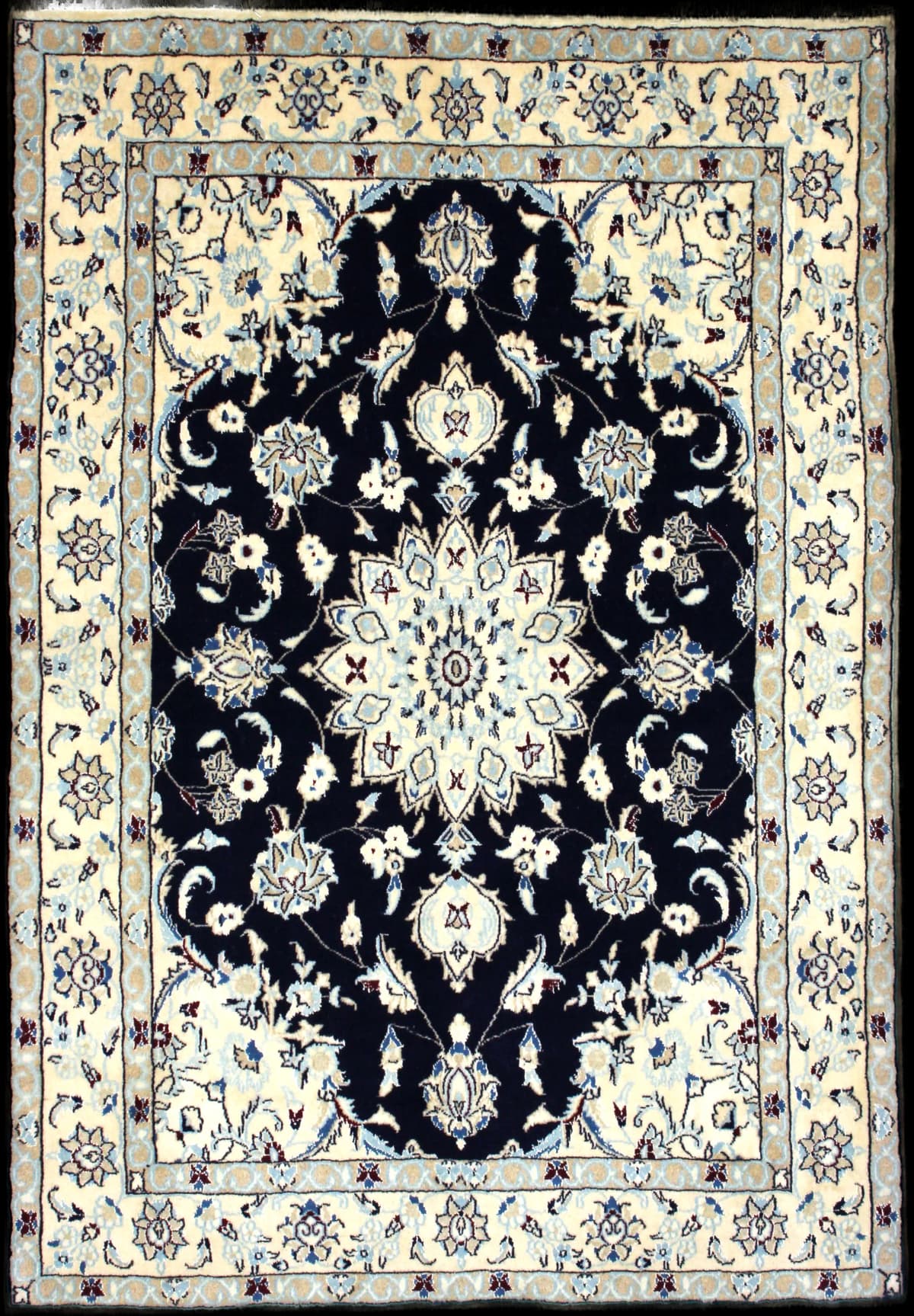
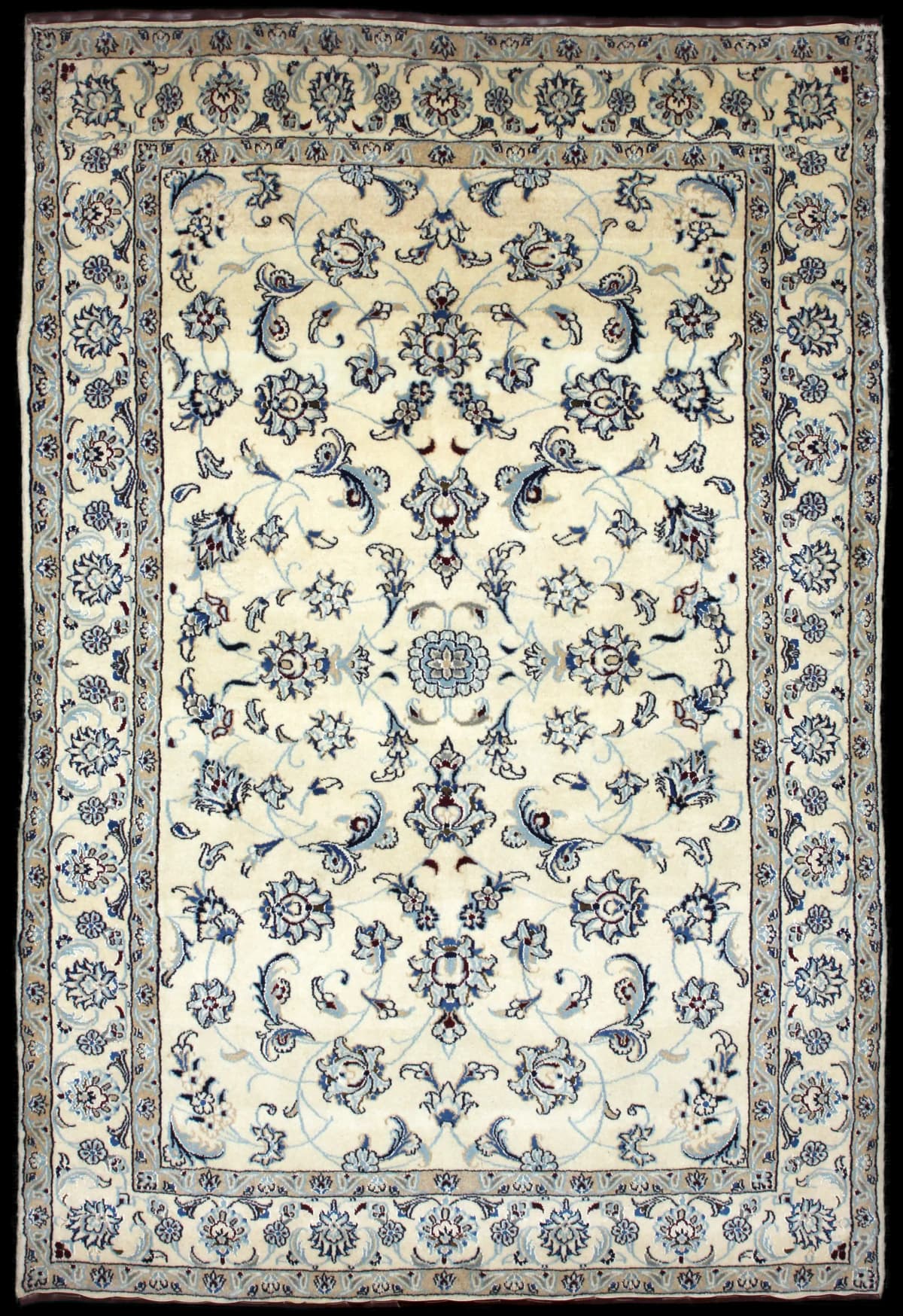
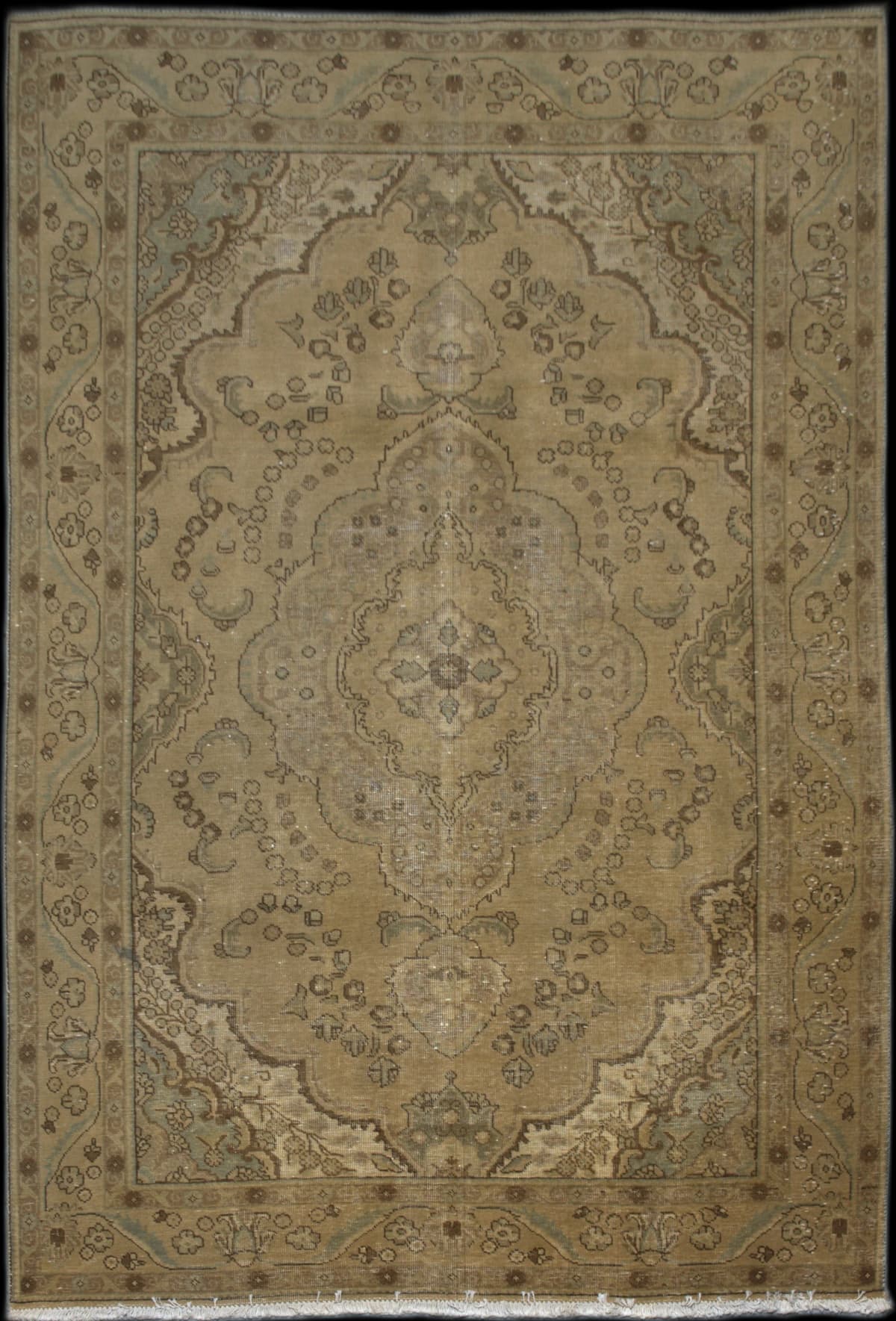
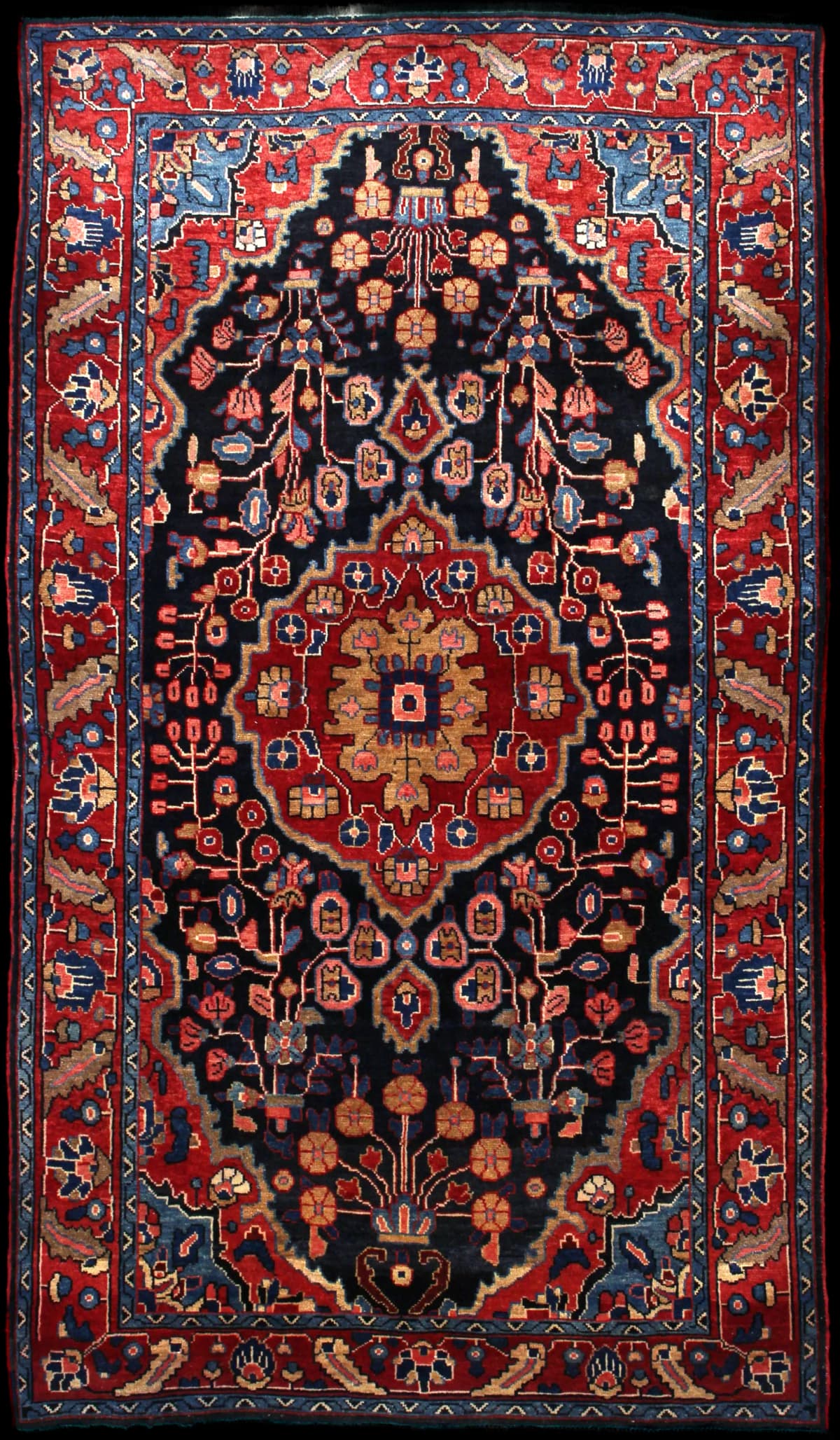
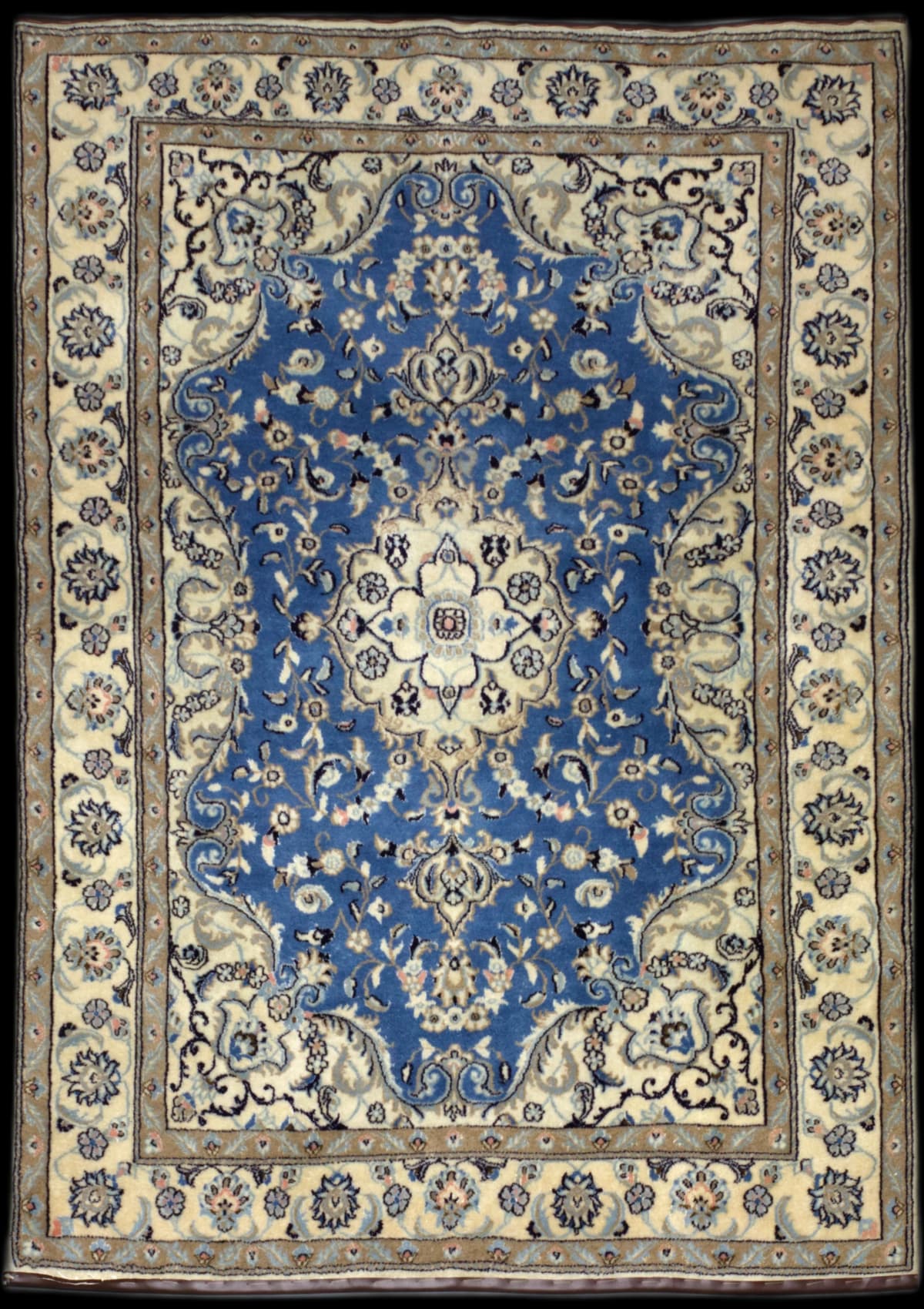
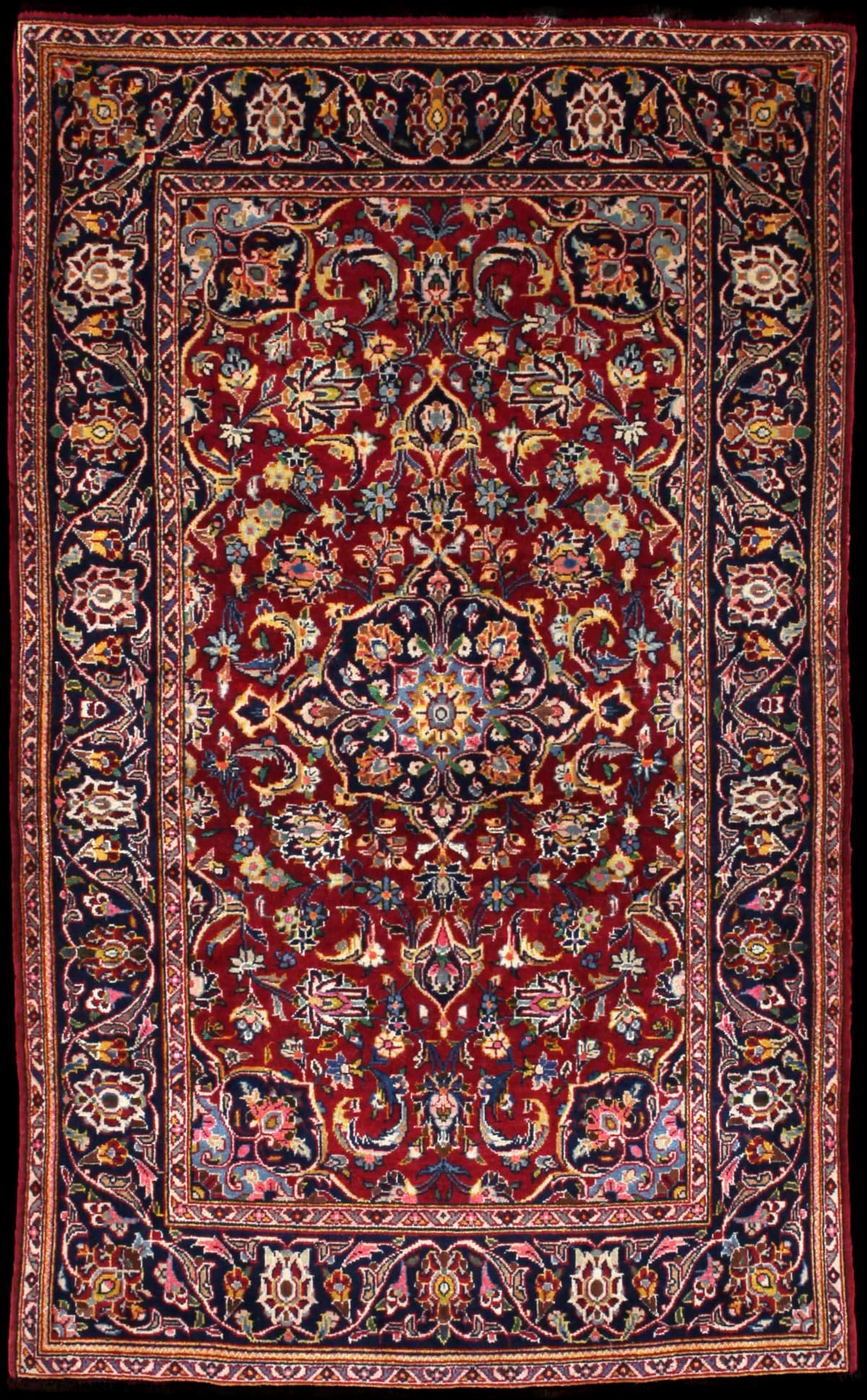
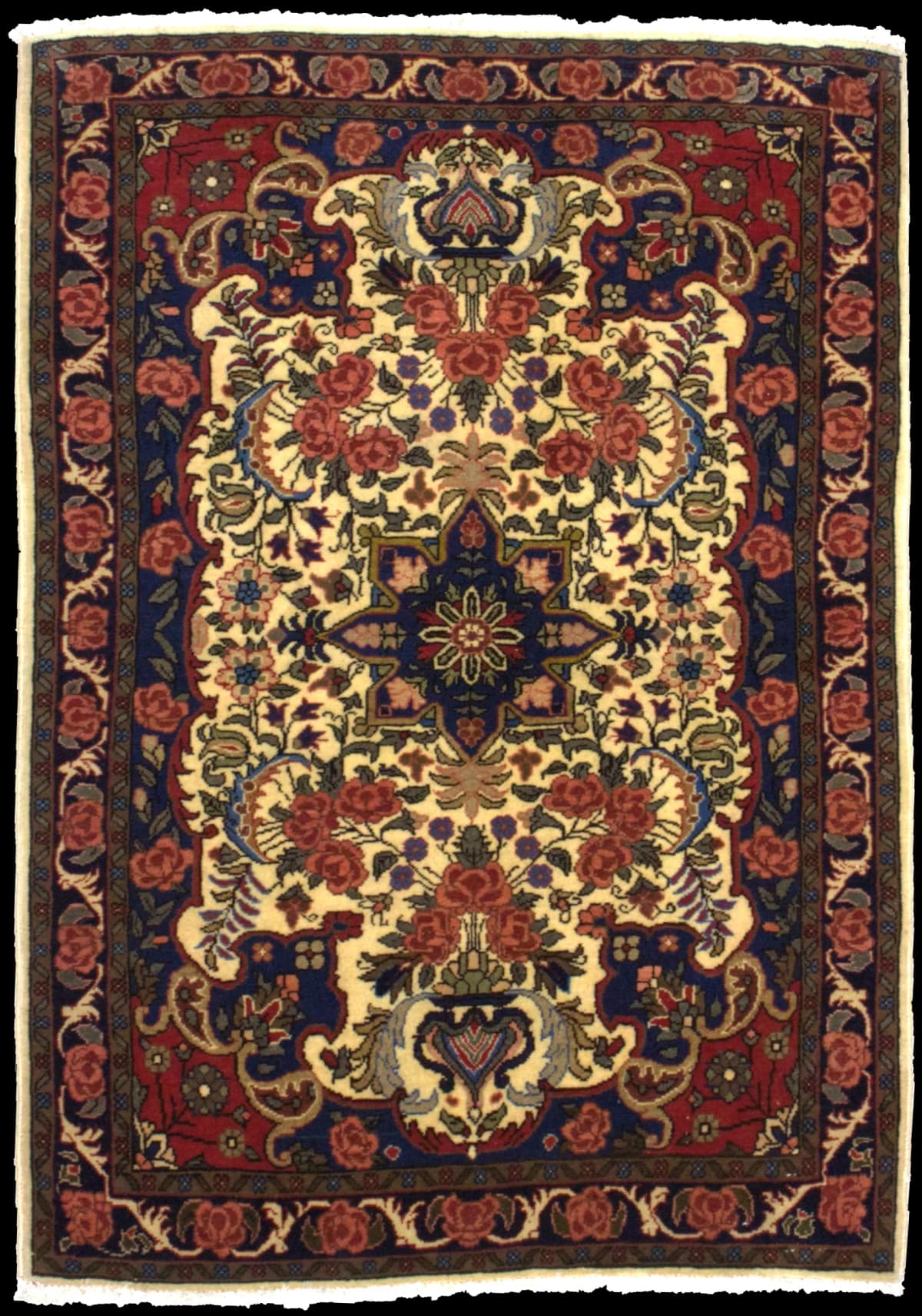
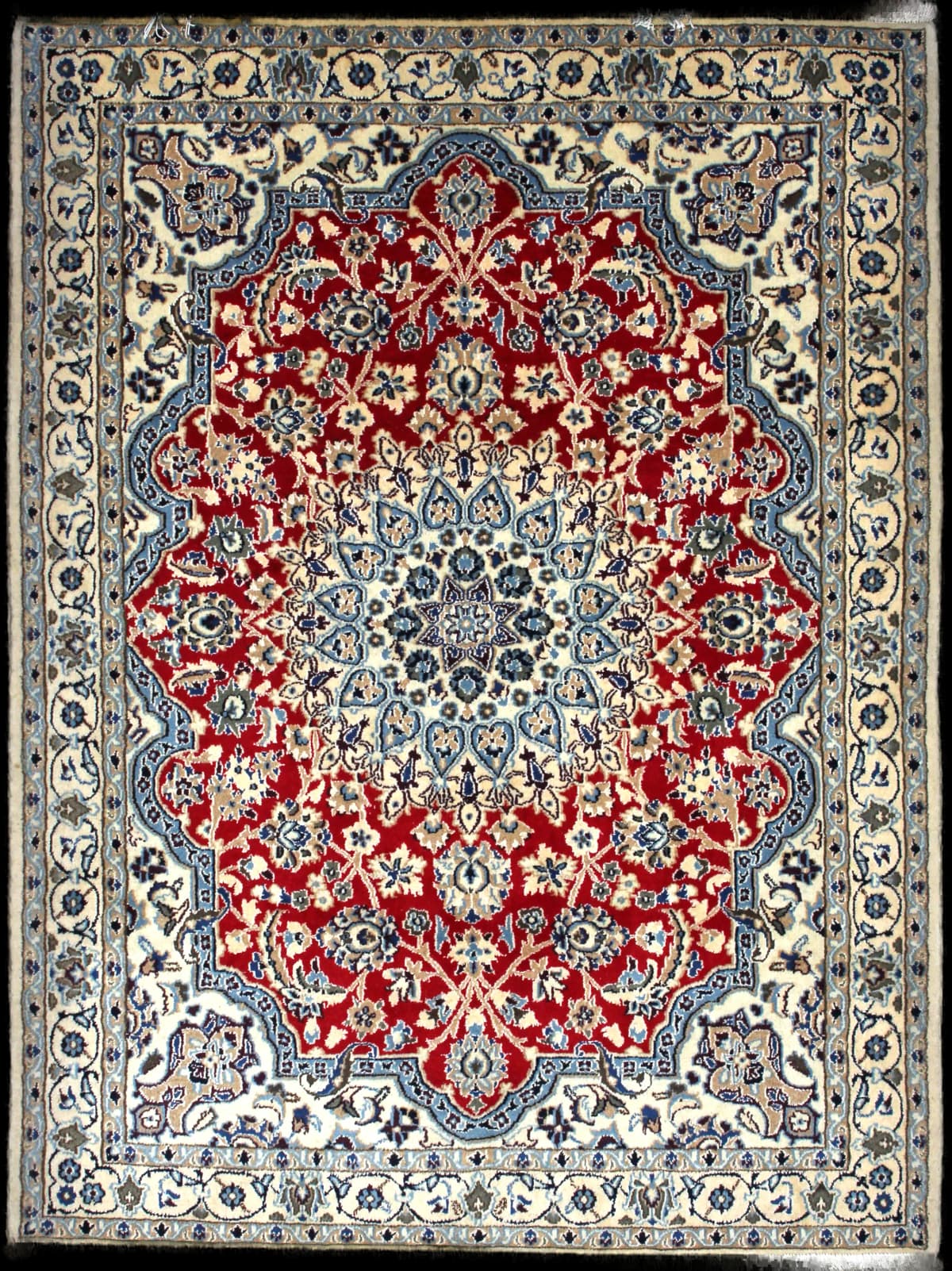
Design in the Khorasan city workshops is mostly curvilinear. The typical carpet carries one large Shah AbbasiSee in the carpet dictionary medallionSee in the carpet dictionary over a field densely filled with curvilinear flowers, with floral corner piecesSee in the carpet dictionary; in Mashhad those corners are drawn unusually long, and that elongation is the city's own clearest tell rather than a provincial one. Within the frame the layout varies: an allover field with no medallion at all, a medallion without corners, or the full medallion-and-corner arrangement. The branchwork connecting the flowers varies just as much, drawn thick in some pieces, spun very thin in others, and in some left out altogether so the blossoms sit free on the ground.
Beside the Shah Abbasi palmetteSee in the carpet dictionary, the botehSee in the carpet dictionary appears often. The word names a budding flower or plant, the motif stands for growth and regeneration, and it is drawn as a teardrop, flame or pine-cone shape repeated across the field. The Herati or Mahi pattern also turns up in the province: a rhombus holding a rosetteSee in the carpet dictionary, framed by curved leaves that read as fish, mahi being Persian for fish. It is the signature of Moud, in the south of historic Khorasan, and a secondary motif in Mashhad; nothing attaches it particularly to Neyshabur. The storytelling panel or garden layout, likewise, is Kashmar's speciality rather than this town's.
Colour is where the province is most recognisable. The Khorasan red is a wine red or burgundy drawn from a dye plant that grows in the area, and it is the single most identifying colour of the district; anyone shopping specifically for burgundy is looking in the right place. Around it sit dark and light blue, cream and ivory, and green, and a fine piece may run an ivory ground with a red and navy medallion picked out in blue, green, gold and rose. Kashmar, to the south, works a deliberately quieter register of brownish cream, soft blues and a particular pink, an earth range genuinely hard to find elsewhere in Persian weaving.
WoolSee in the carpet dictionary pileSee in the carpet dictionary on a cotton foundation is the norm across the Khorasan towns. Those towns keep large flocks and work from their own wool and their own locally gathered plant dyes rather than bought-in materials, which is part of why the regional colours stay so consistent from piece to piece. The finer pieces use kork woolSee in the carpet dictionary, the first clip from young sheep: fattier, softer under the hand, and brighter once dyed. A silk foundationSee in the carpet dictionary turns up only in exceptional workshop carpets and is rare; in older silk-and-wool pieces from the province the silk is in the foundation alone, with the pile still pure wool.
No reliable knot figure exists for Neyshabur specifically, and any description quoting a precise range for it should be read with suspicion. What can be said is relative. Mashhad's fine curvilinear floral drawing needs a high count to hold its curves, above 250 knots per square inchSee in the carpet dictionary (KPSI), and the exceptional workshop carpets of that city have run far higher on silk foundations, which is what makes such counts physically possible at all. Larger-scale drawing carries perfectly well at much less, and the tribal weaving of the province sits nearer 120 KPSI. Judge the piece in front of you rather than the label on it.
Sizes in Khorasan divide along that same line. The city workshops are known for large room-sized carpets meant to cover a whole floor, while the tribal looms to the north stay small to medium, rarely wider than about 1.8 metres or longer than about 4 metres, simply because those looms are compact. The cotton foundation is part of why the town weaves can go large and stay square: a cotton warp holds its tension where the wool and goat-hair warps of the tribal looms pull, which is why a tribal Khorasan piece more often finishes slightly off true than a workshop one does.
For a buyer, the honest summary is that a Neyshabur is a Khorasan rug from a town outside the famous names, and that is mostly good news. The materials, the palette and the design vocabulary are those of the province, and the workmanship in a good example stands comparison with better-known towns. Since the name itself carries no guarantee either way, let the rug argue its own case: the handle of the wool, the clarity of the drawing where curves meet, and the evenness of the knotting on the back are what separate a good Khorasan piece from an ordinary one.
The Persian rug
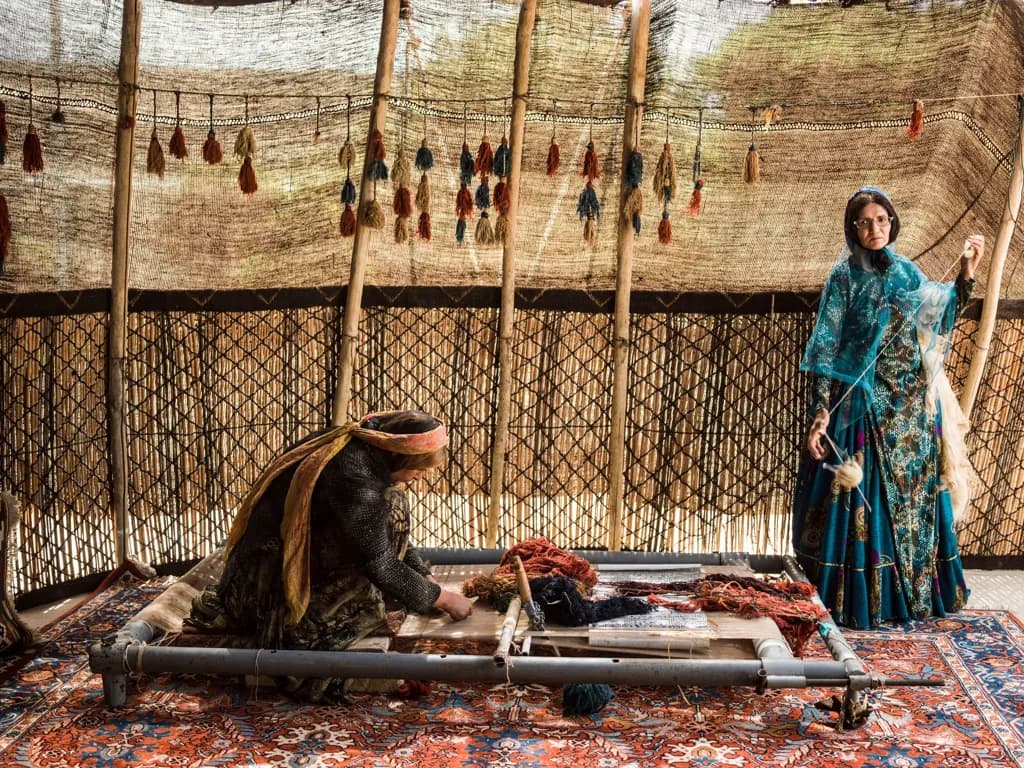
A Persian rug is an Iranian rug — a rug hand-knottedSee in the carpet dictionary in Iran — and the tradition behind it is the oldest documented anywhere. The earliest surviving carpet, the Pazyryk rugSee in the carpet dictionary, was found preserved in a frozen burial mound and dates to the fifth century BC — roughly 2,500 years ago — and it is already accomplished work, not a beginner's craft. What began as warm, hard-wearing floor coverings for tribal households grew, over those centuries, into the art form that every other rug-weaving country has borrowed from.
Two later chapters shaped what a Persian carpet looks like today. Under the Safavid dynastySee in the carpet dictionary, from 1501 to 1732, the court promoted weaving alongside painting and calligraphy, and the workshops of Tabriz, HeratSee in the carpet dictionary, Kashan and Kerman produced the masterpieces that now sit in museums. This is when the great central medallionSee in the carpet dictionary appeared, and when designs grew elaborate enough that a separate designer — often a miniature painter — drew the pattern onto a cartoon for the weaver to follow. The second chapter came in the nineteenth century, under the Qajar dynastySee in the carpet dictionary, when production reached its historical peak, exports to Europe and America boomed, and the workshop industry whose descendants still weave today took its modern shape.
The trade sorts Persian rugs into three families. City rugs — Tabriz, Kashan, Kerman, Nain, Isfahan — are woven in workshops from a drawn design, carry the highest knot densities and come in the widest range of colours, sizes and patterns. Village rugs such as HerizSee in the carpet dictionary, BakhtiariSee in the carpet dictionary and KarajaSee in the carpet dictionary sit in between, mostly geometric and largely woven from memory. Tribal rugs — Baluch, TurkomanSee in the carpet dictionary, QashqaiSee in the carpet dictionary, each named after the people who weave it — are made on small portable looms, so they run smaller, and their bold geometric drawing comes from the weaver's own head rather than from paper.
The design vocabulary draws on a deep stock of motifs: Shah AbbasiSee in the carpet dictionary palmettes, flowing arabesques, the small repeating Herati patternSee in the carpet dictionary, medallions, garden and tree-of-life compositions. These combine with regional habits into styles a practised eye can place at a glance, from the bold geometric medallions of Heriz to the fine curvilinear florals of Isfahan.
The classic palette is built on natural dyes: madderSee in the carpet dictionary reds, indigo blues, saffron yellows and the soft whites of undyed woolSee in the carpet dictionary, settled into combinations refined over centuries. Natural dyes age gracefully, mellowing into the patina that older rugs are prized for, and slight shifts of tone between dye batchesSee in the carpet dictionary — the effect called abrashSee in the carpet dictionary — are a mark of small-batch natural dyeing, not a flaw.
The pileSee in the carpet dictionary is almost always woolSee in the carpet dictionary, and in a Persian wool rug the wool itself decides much of the quality. The best fleece comes from high-altitude flocks, where it grows thicker and richer in natural oils; spring-sheared wool beats the autumn clip, and hand-spun yarnSee in the carpet dictionary gives a finer, softer thread than machine spinning. Fine pieces add silk highlights to a wool pile, and at the very top sits the Persian silk rug, woven in pure silk. Foundations are usually cotton in city weaving, wool in tribal and older pieces, silk at the very top of the range.
Every knot is tied by hand, one at a time, in one of two forms: the asymmetric Persian knotSee in the carpet dictionary, usual in central and eastern Iran, or the symmetric Turkish knotSee in the carpet dictionary, common in the north-west ever since Seljuk weavers introduced it in the eleventh and twelfth centuries. A large rug holds in the region of two million knots and can occupy a weaver for about a year.
Knot densitySee in the carpet dictionary is the figure newcomers fixate on, and the finest silk-foundation pieces do reach as much as 1,000 knots per square inch. But densitySee in the carpet dictionary only matters as far as the drawing demands it: a curvilinear Isfahan needs a fine weave to stay sharp, while a geometric Heriz is famously durable at a modest count. Material, symmetry, colour harmony and condition say more about quality than any single number.
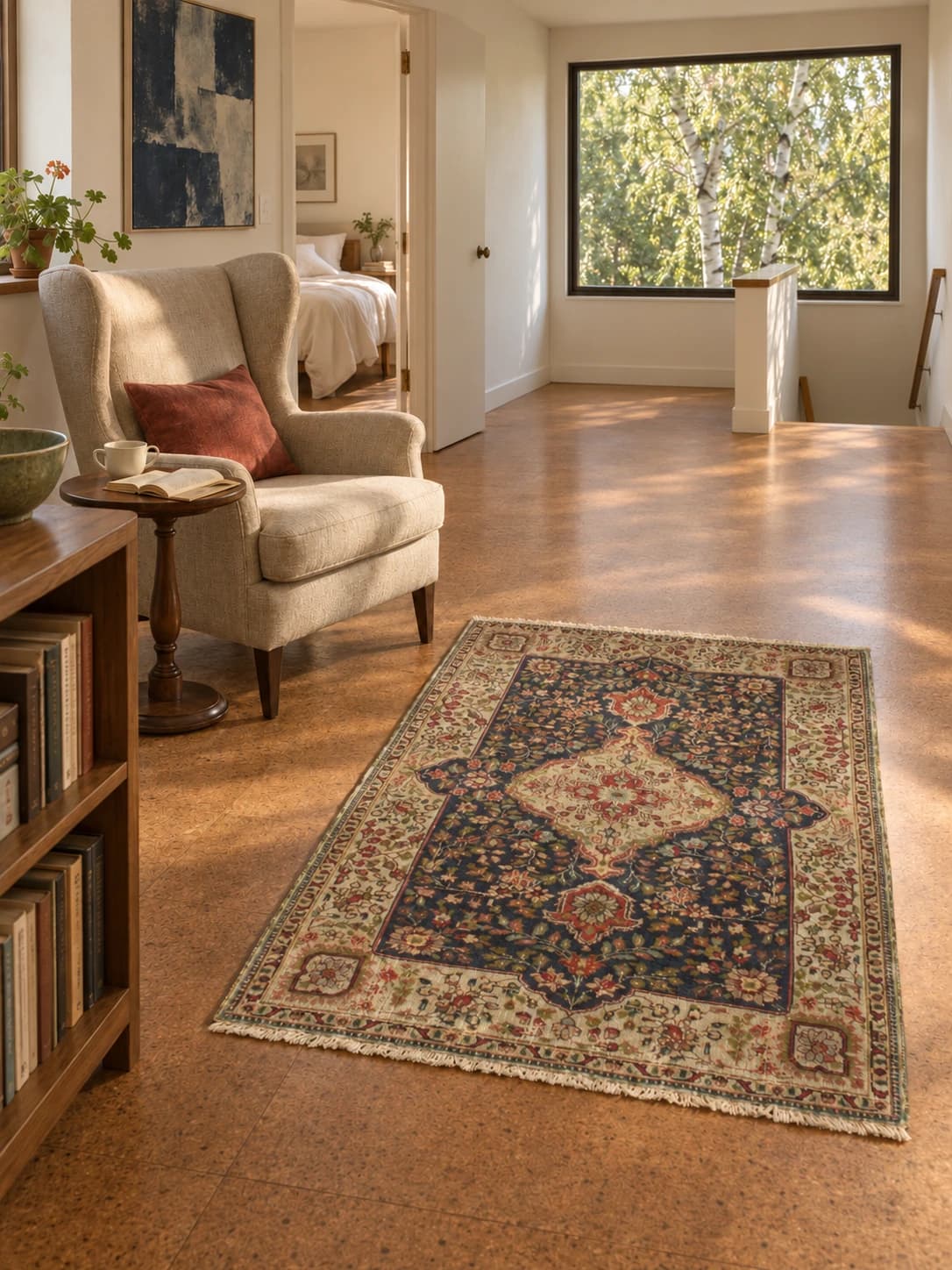
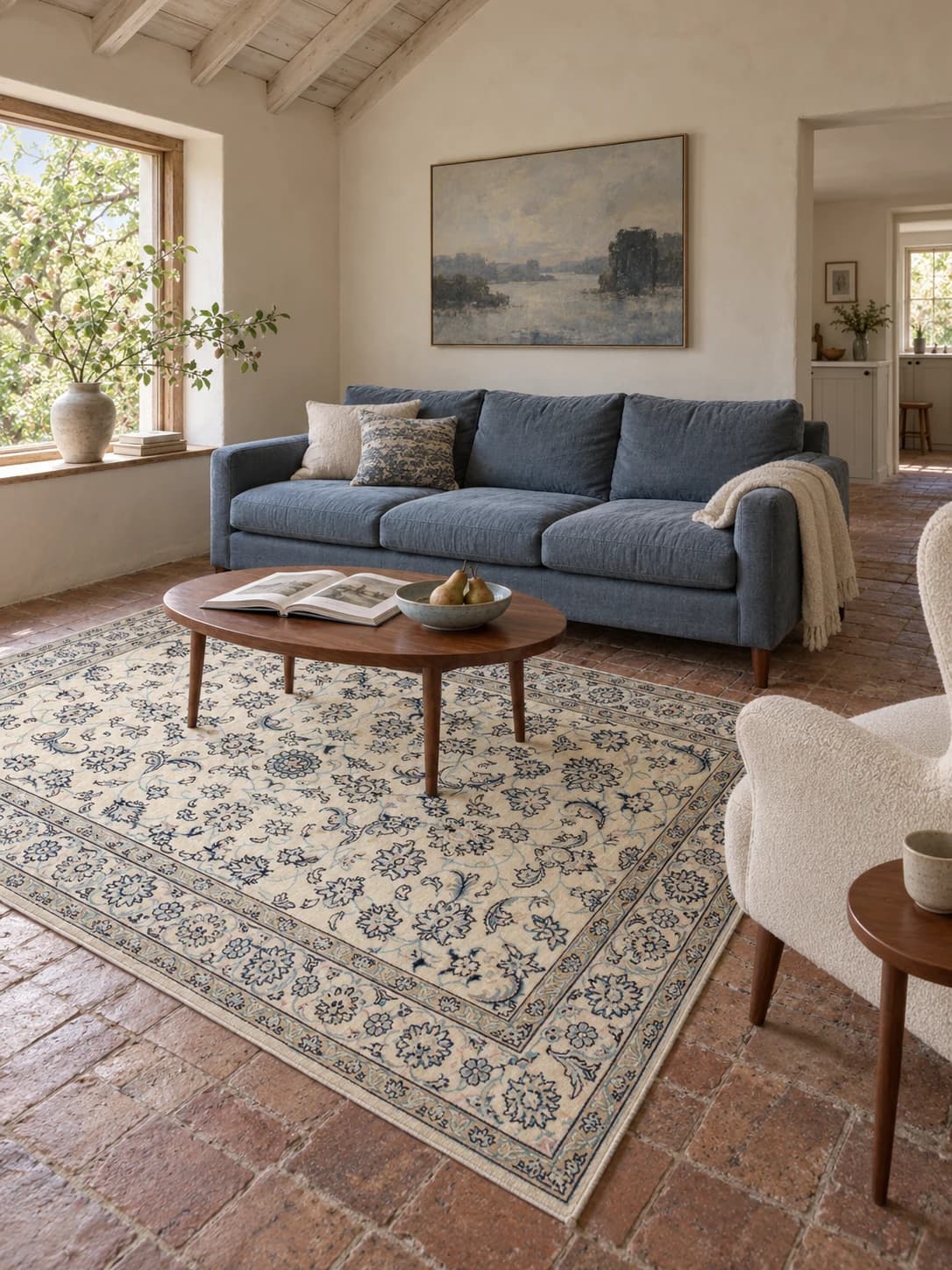
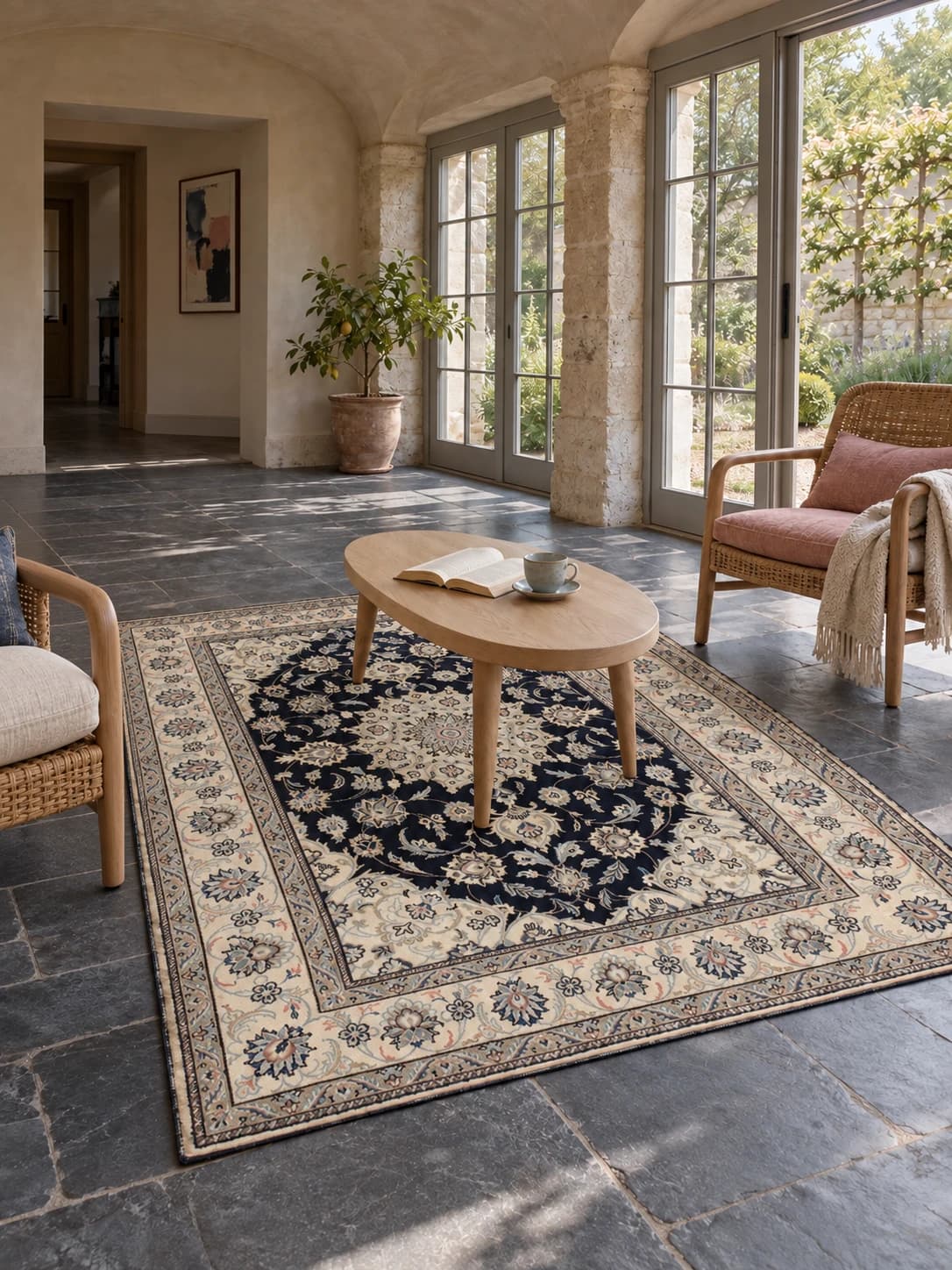
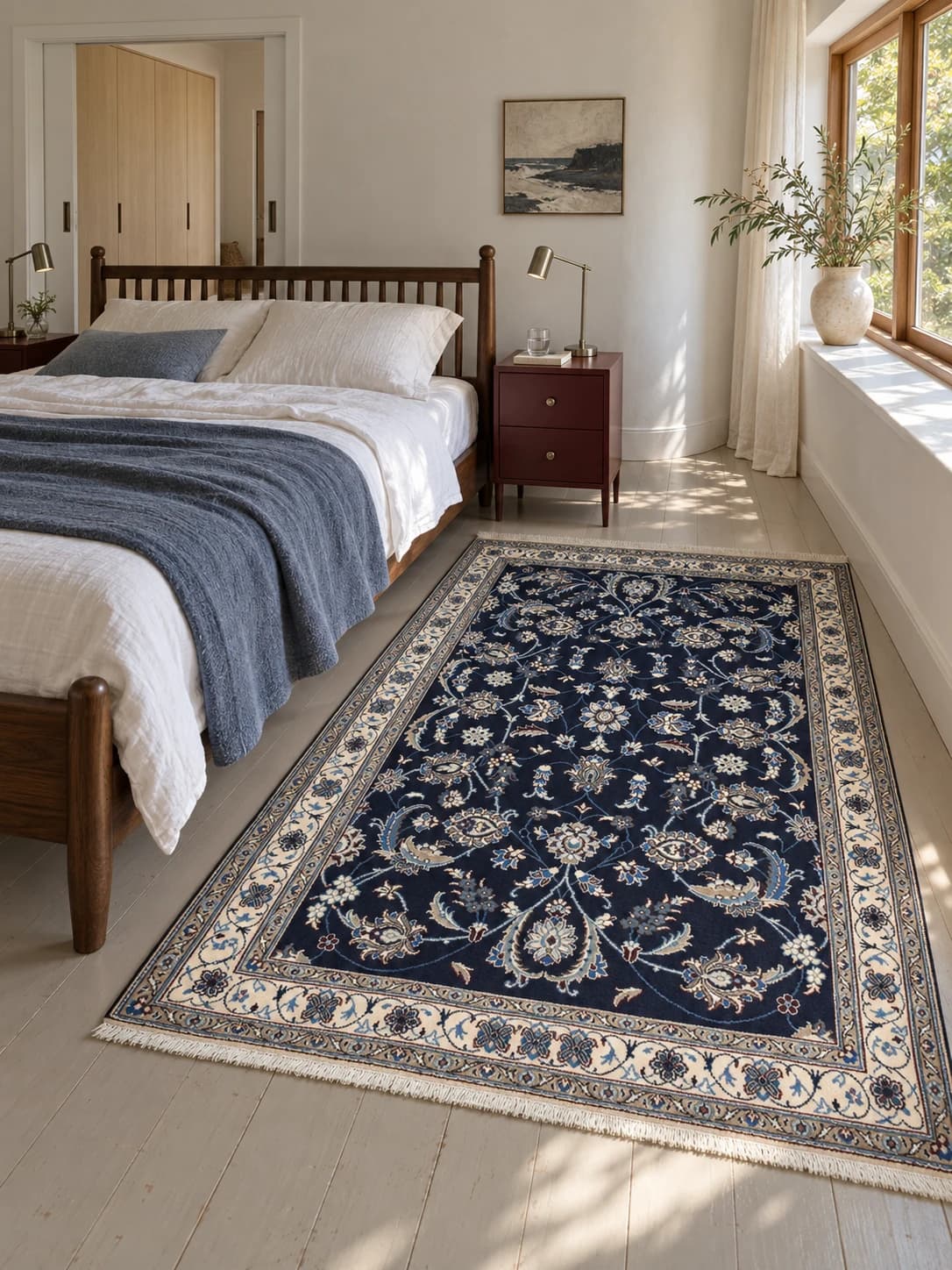
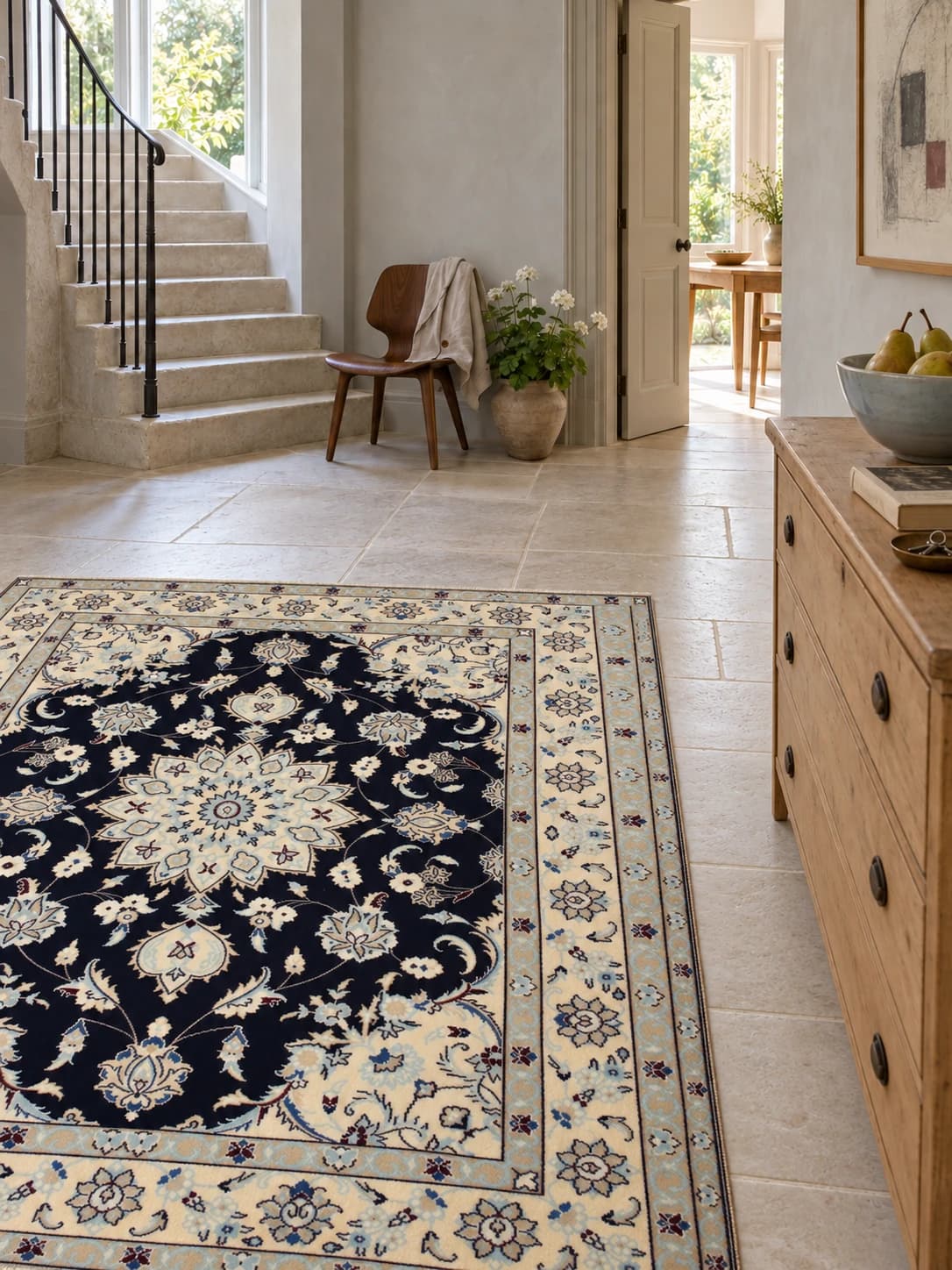
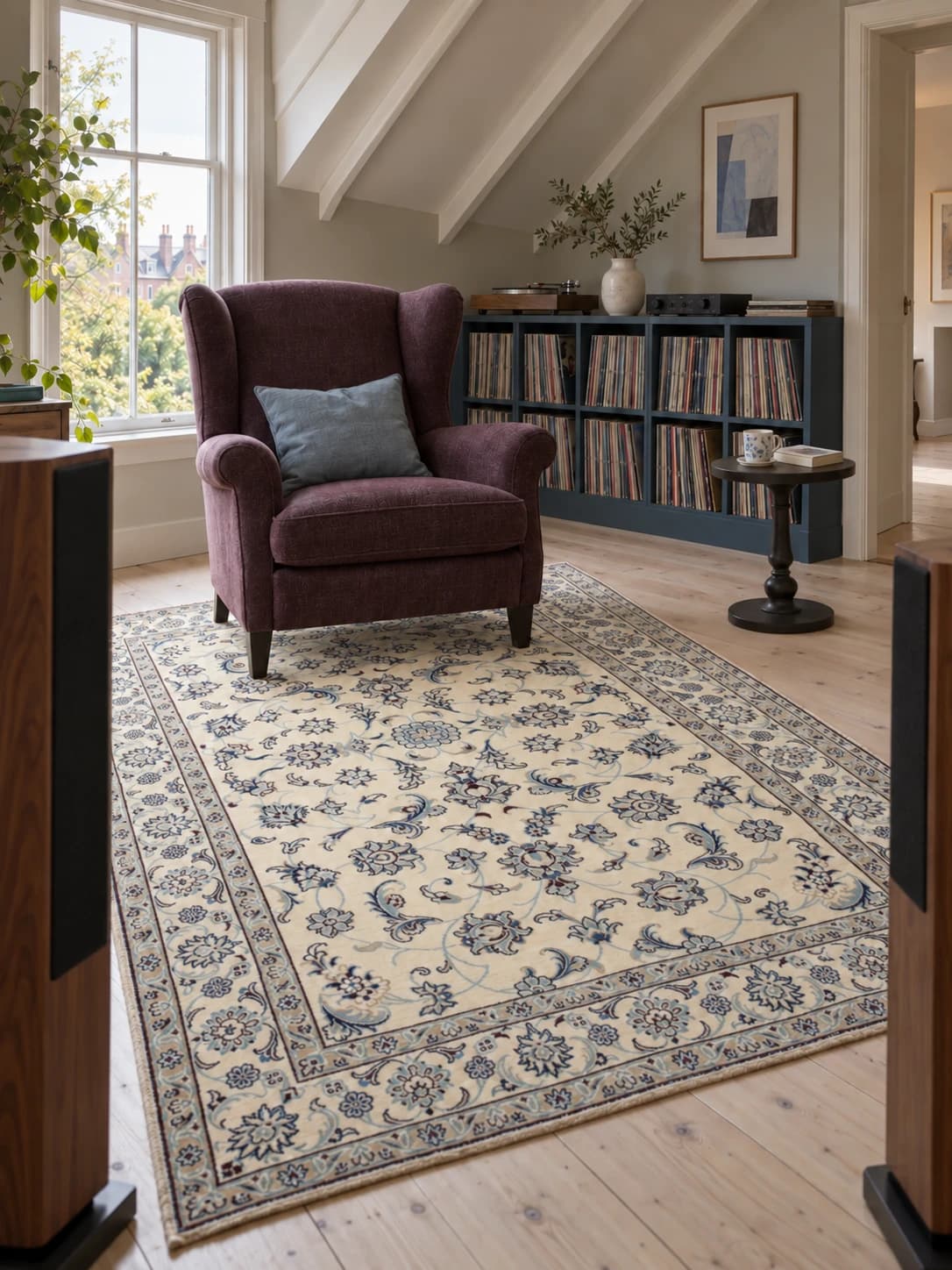
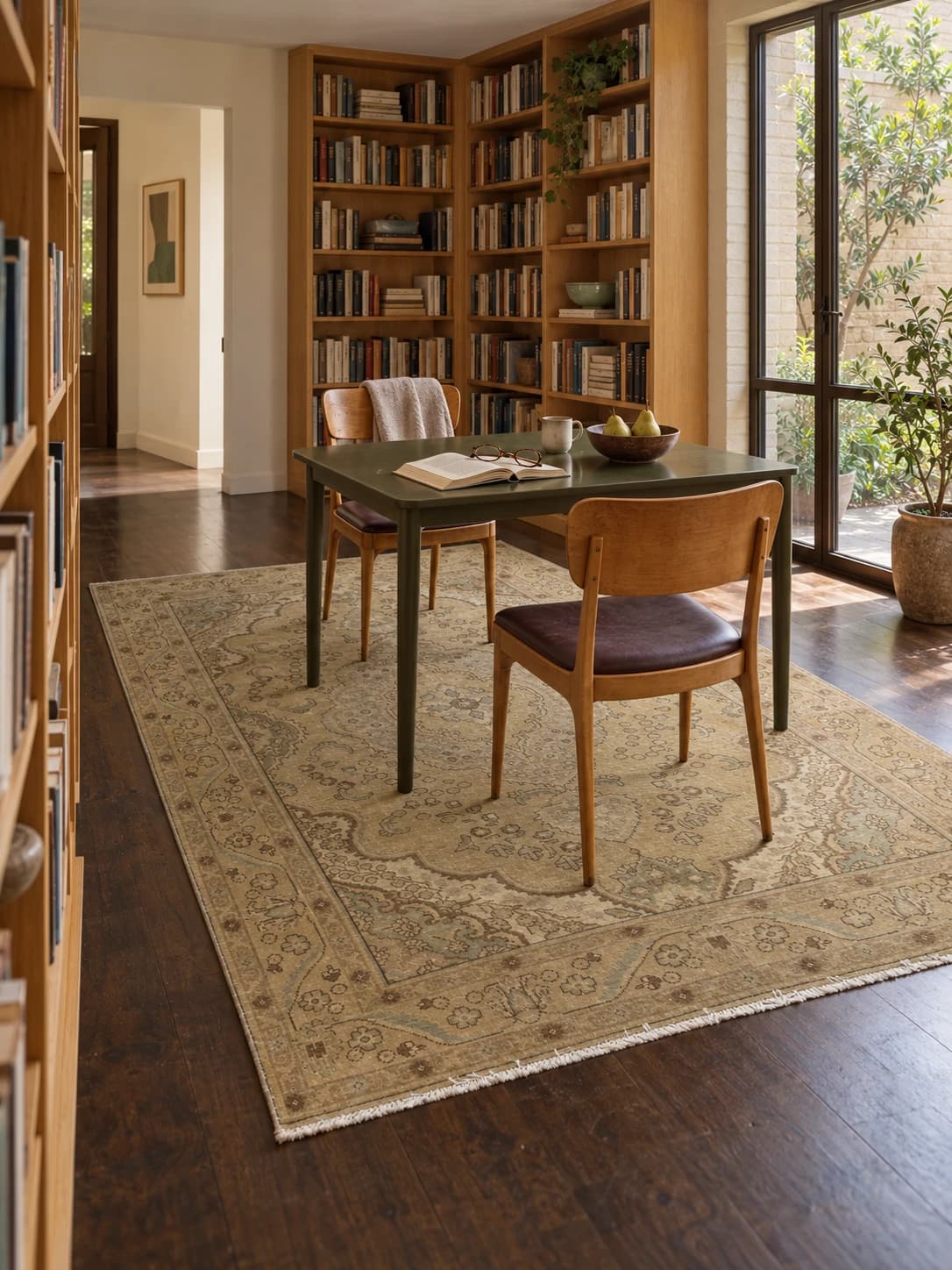
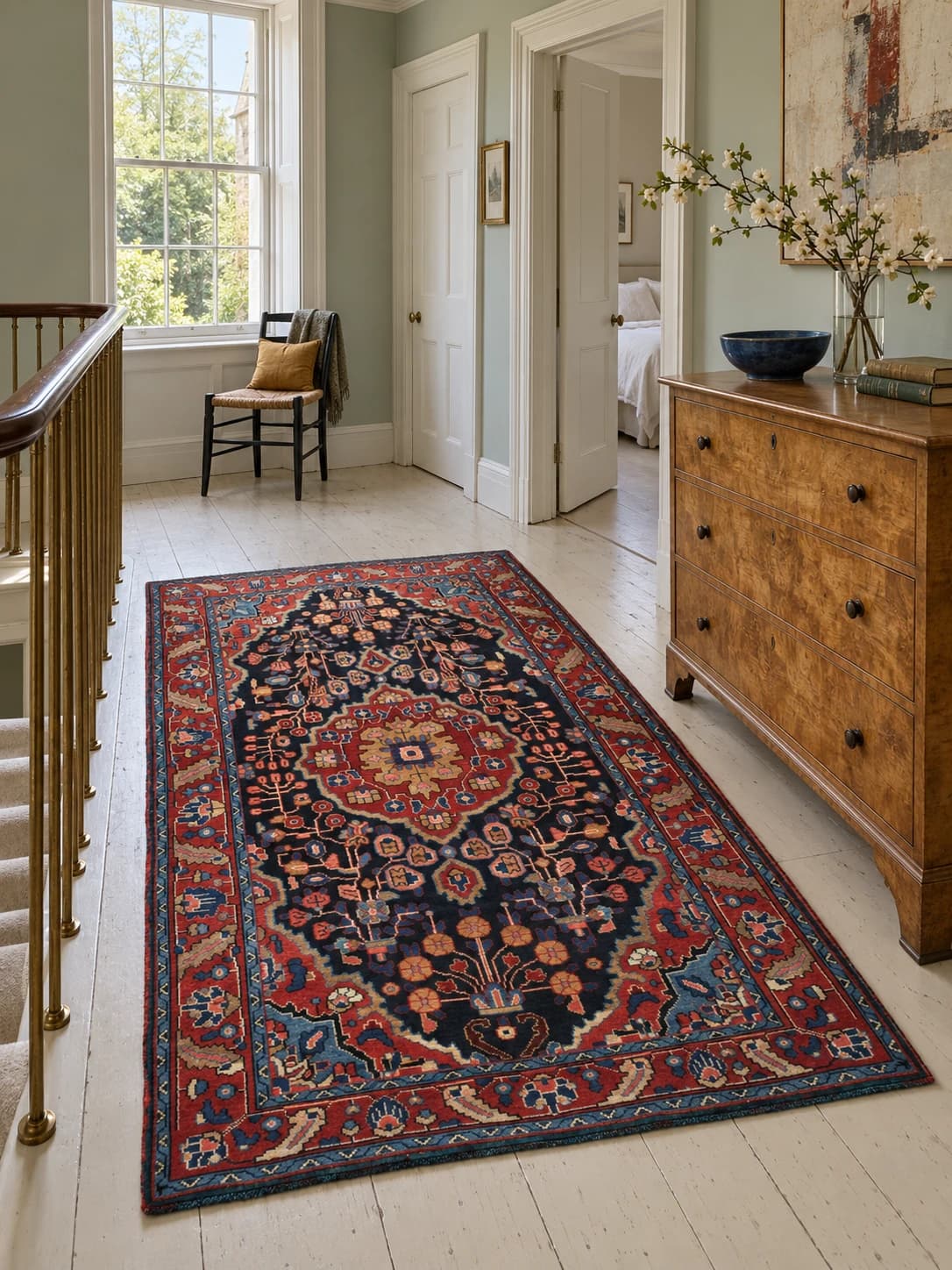
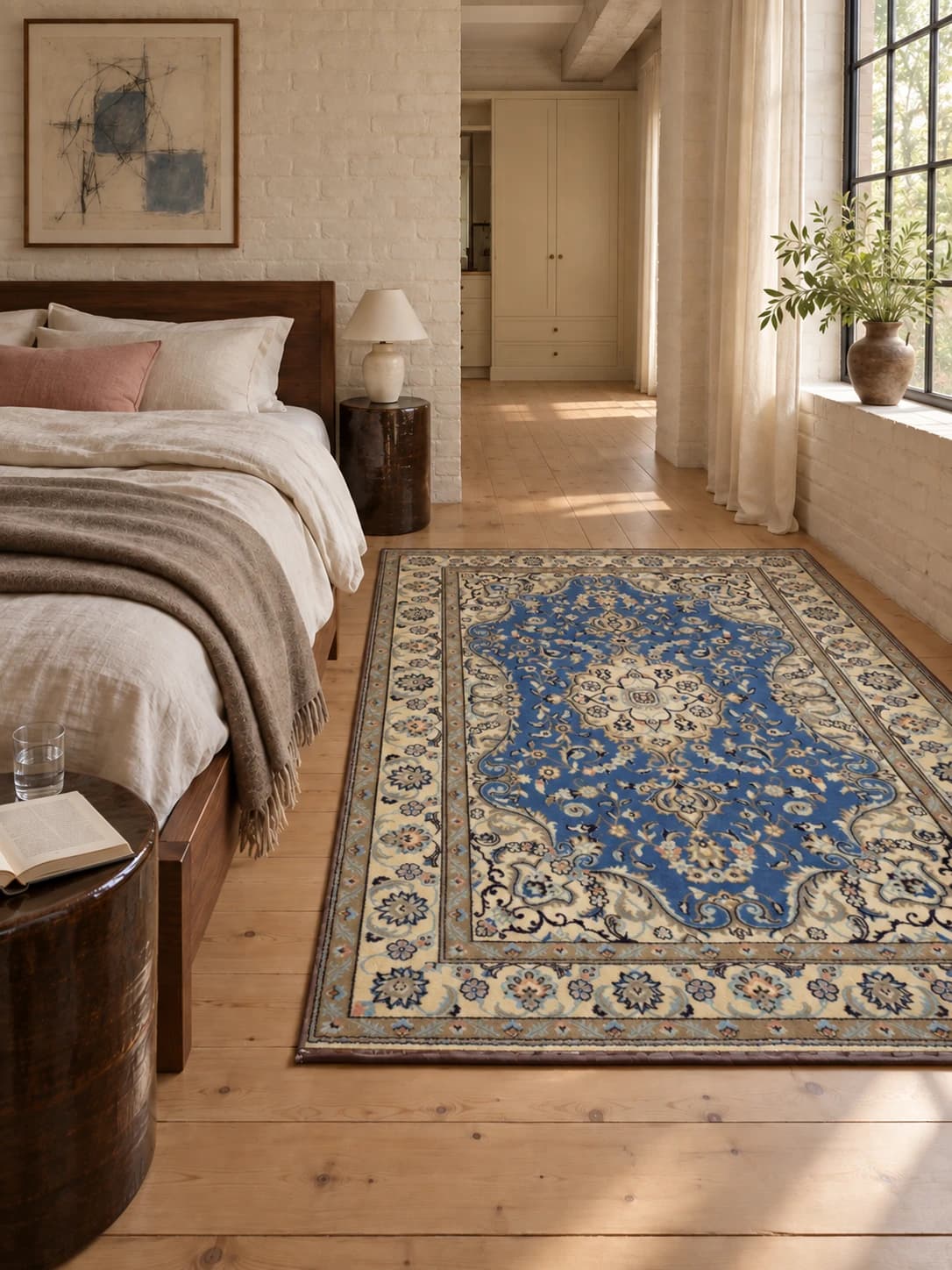
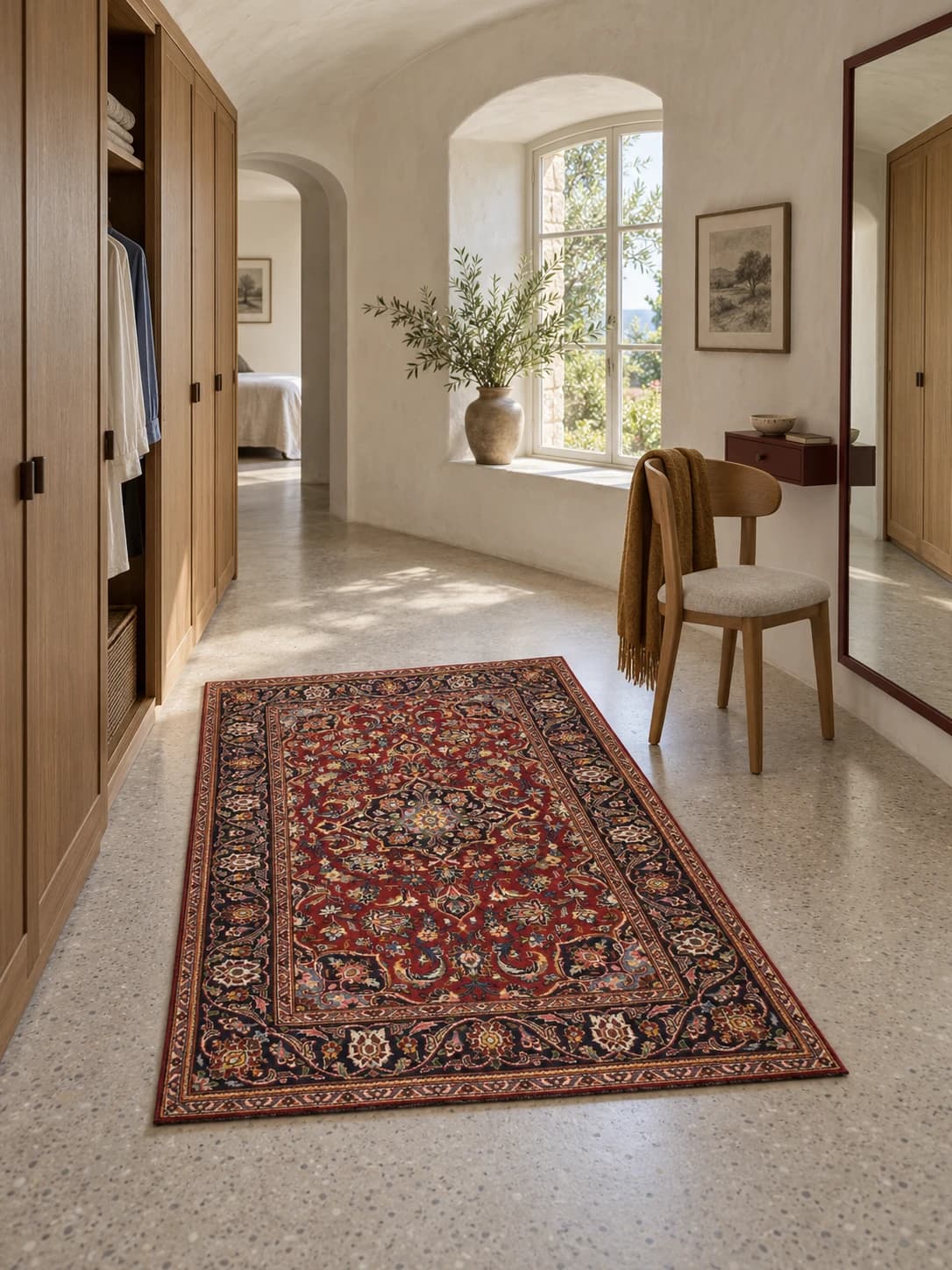
Persian carpets settle into modern rooms as naturally as classical ones, as a focal point in a living room, a foundation under a dining table or a quieter accent in a bedroom. Care is undemanding: gentle vacuuming without a rotating brush, an occasional turn for even wear, and a professional wash about every five years — sooner in a hallway or entrance, less often in a quiet room.
A hand-knotted Persian rug tends to outlast its owners. Pieces a century old regularly survive in fine condition, their colours settled and their pile supple, often looking better than when they left the loomSee in the carpet dictionary. A well-chosen, well-kept rug holds its worth and passes down as a family heirloom rather than being replaced — which is precisely what the knots, the wool and the dyes were always for.
Questions about this carpet?
Our family has traded carpets for two generations. Ask us anything — photos, video calls, advice on sizes.
Message us
Keep exploring
Guides from our family workshop: how to clean, place and care for hand-knotted rugs.