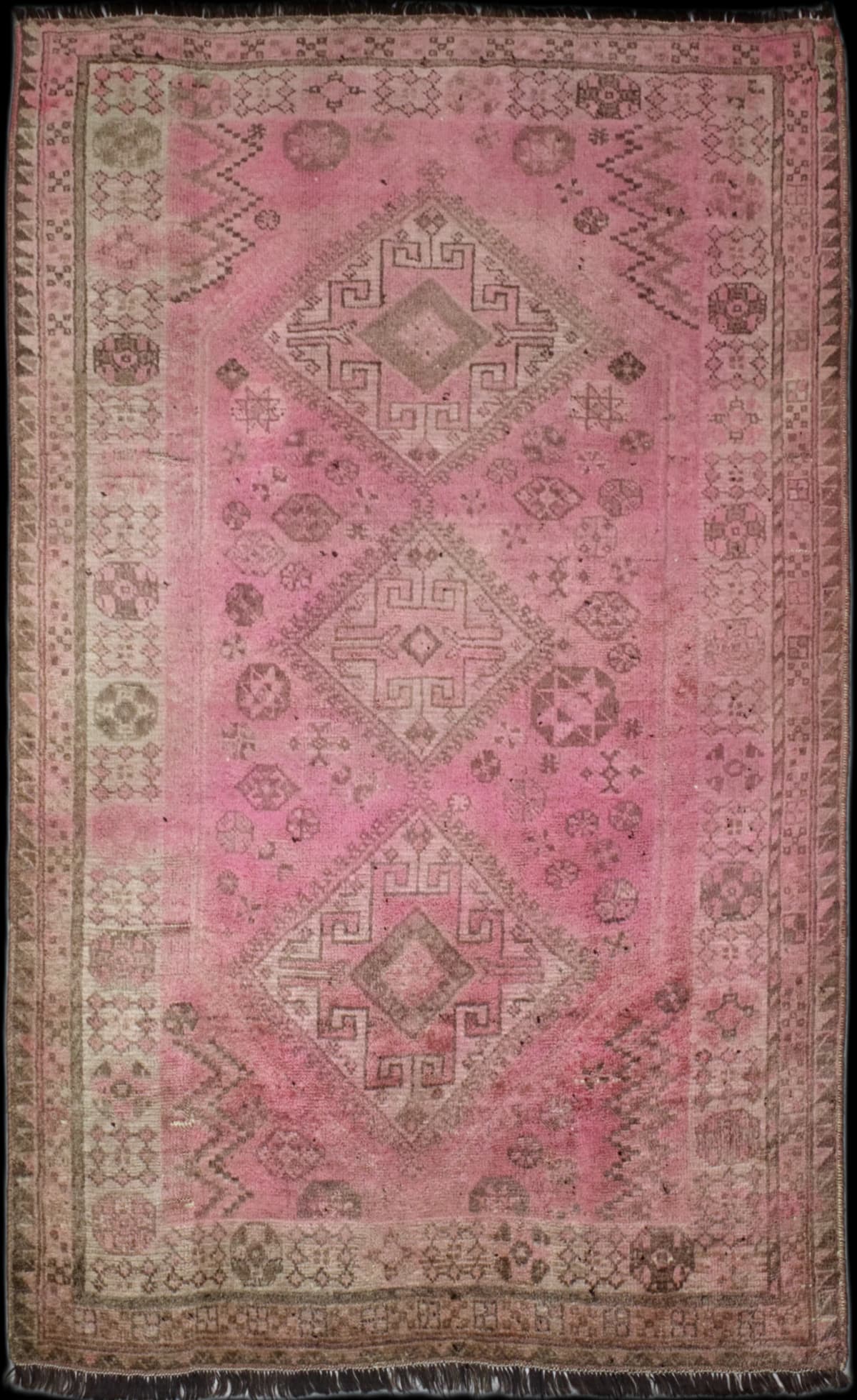
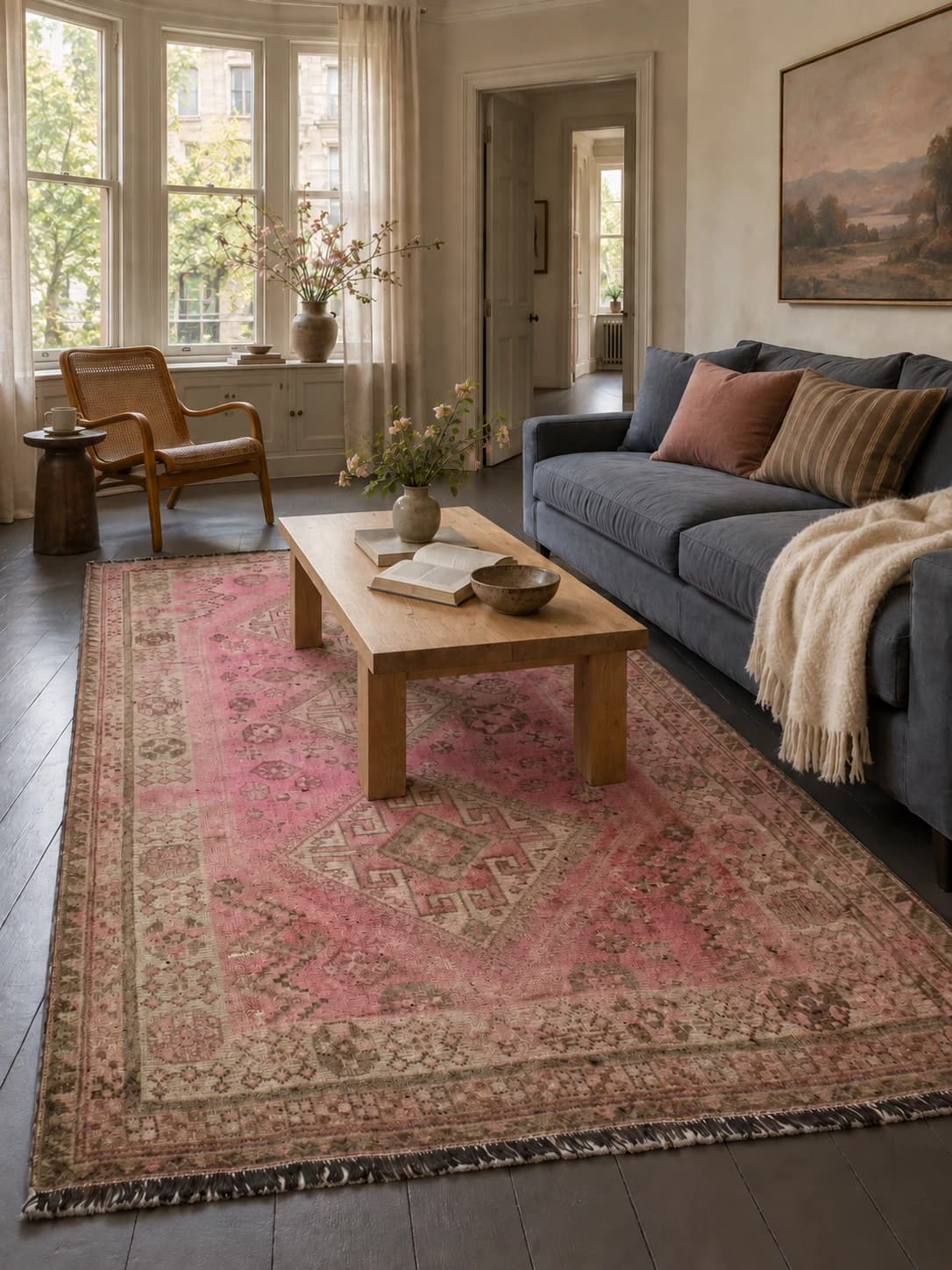
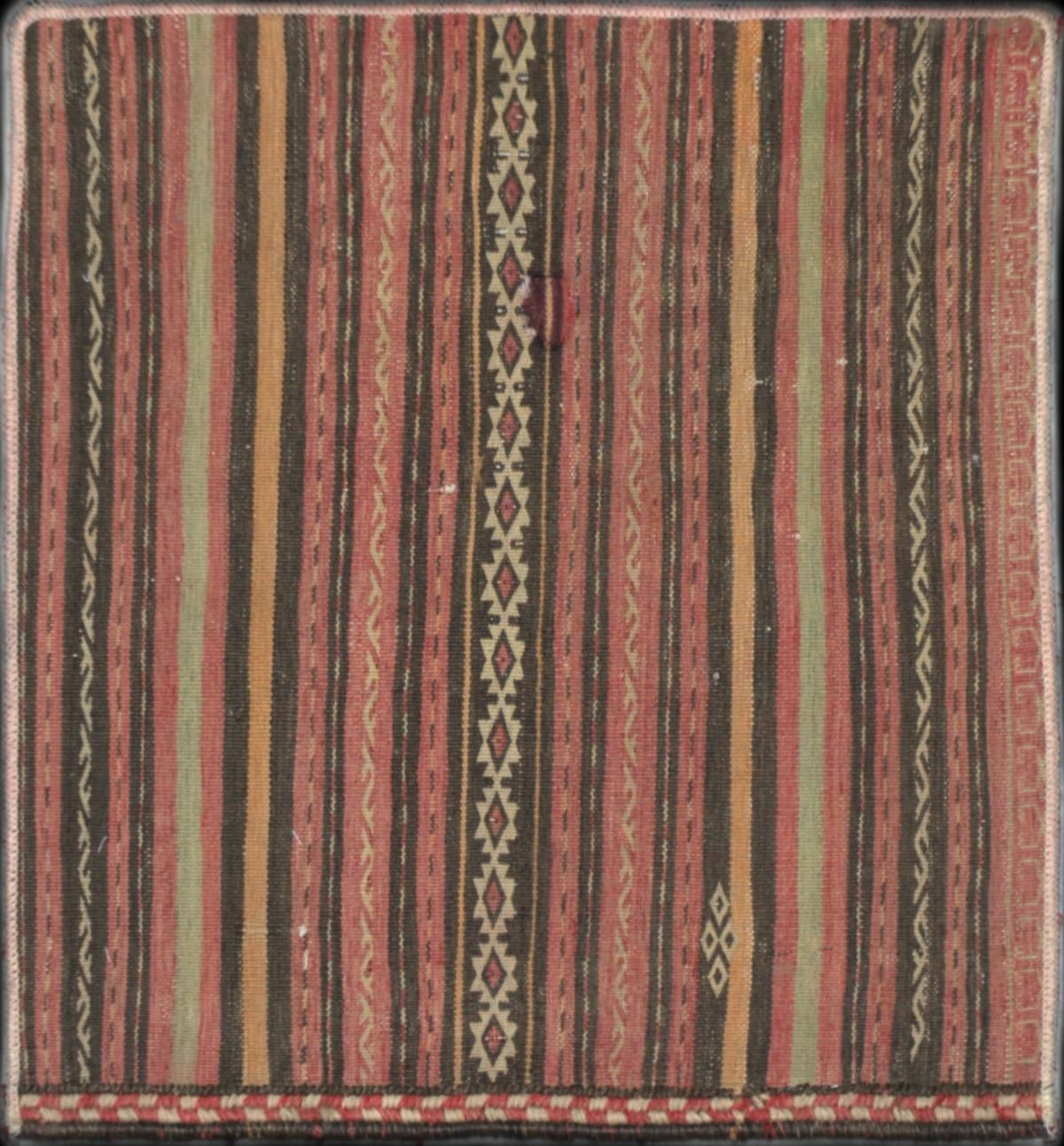
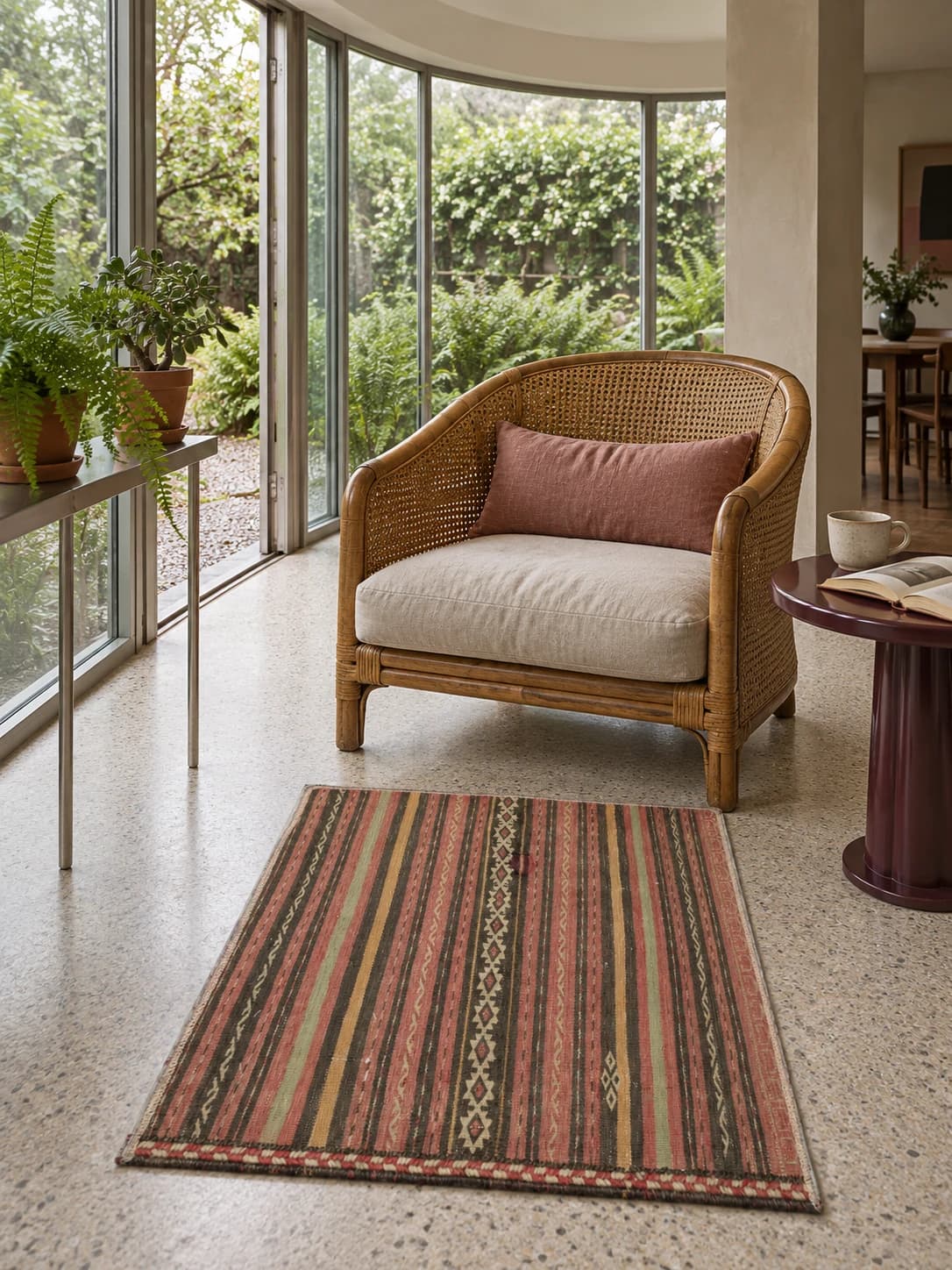
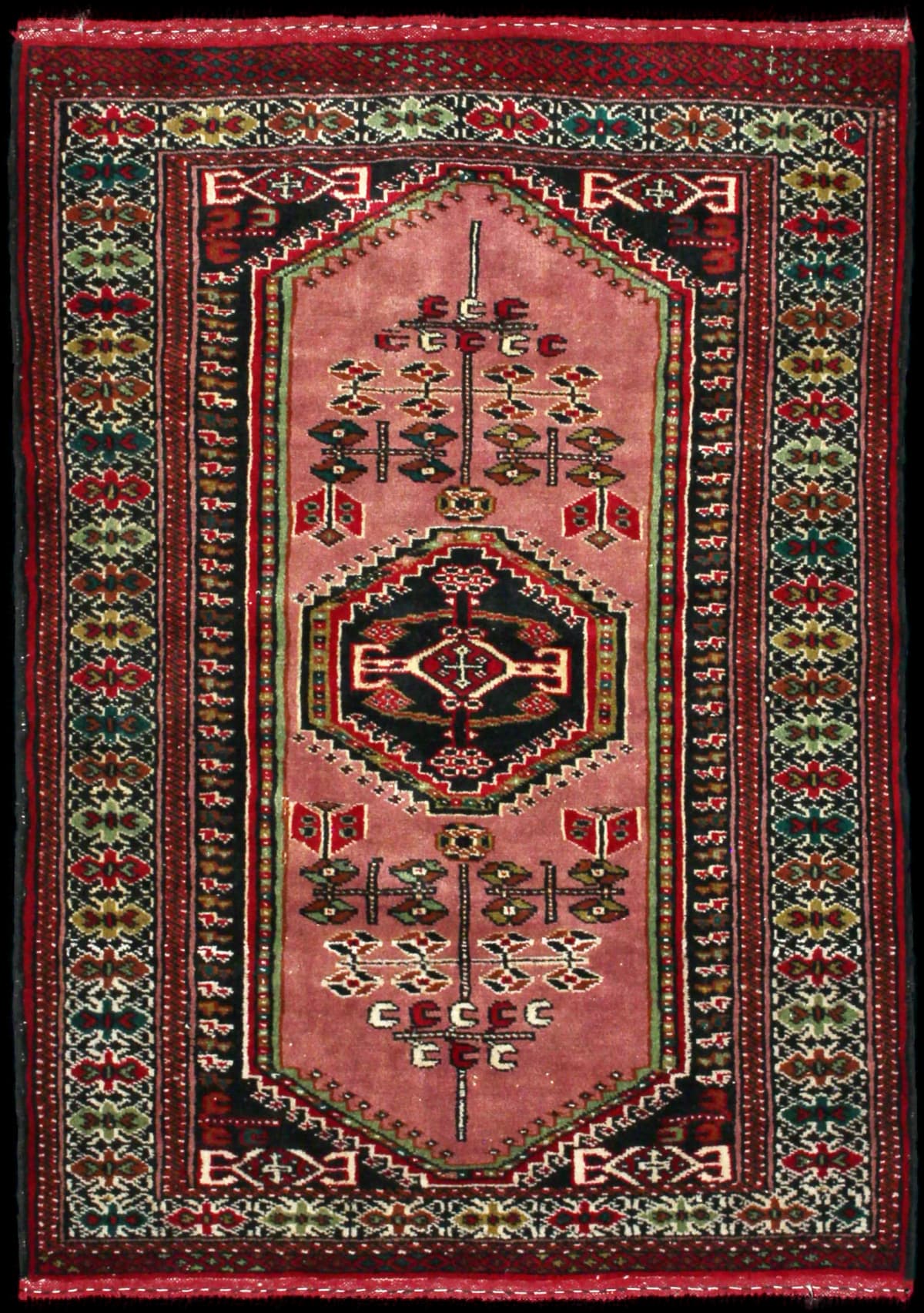
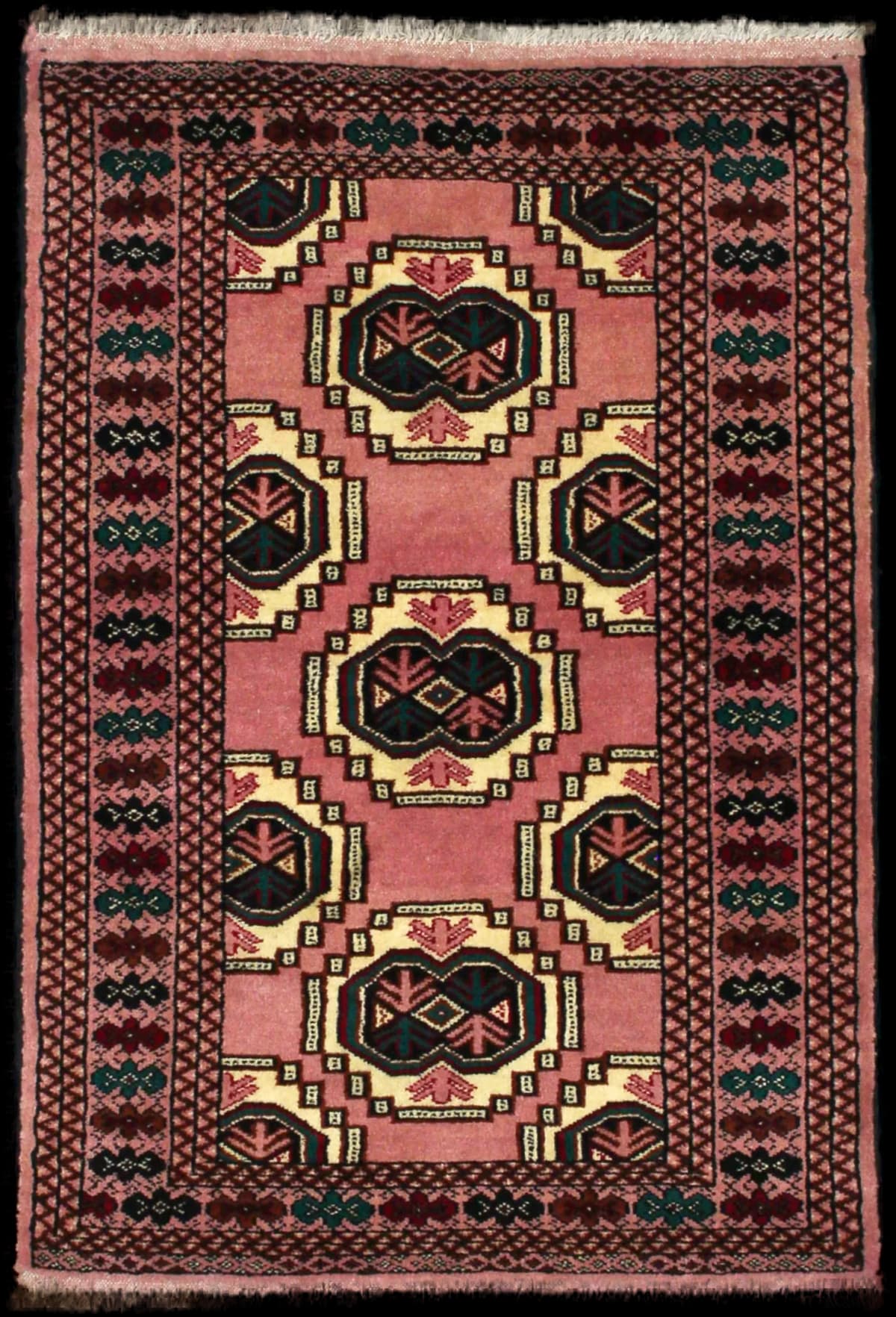
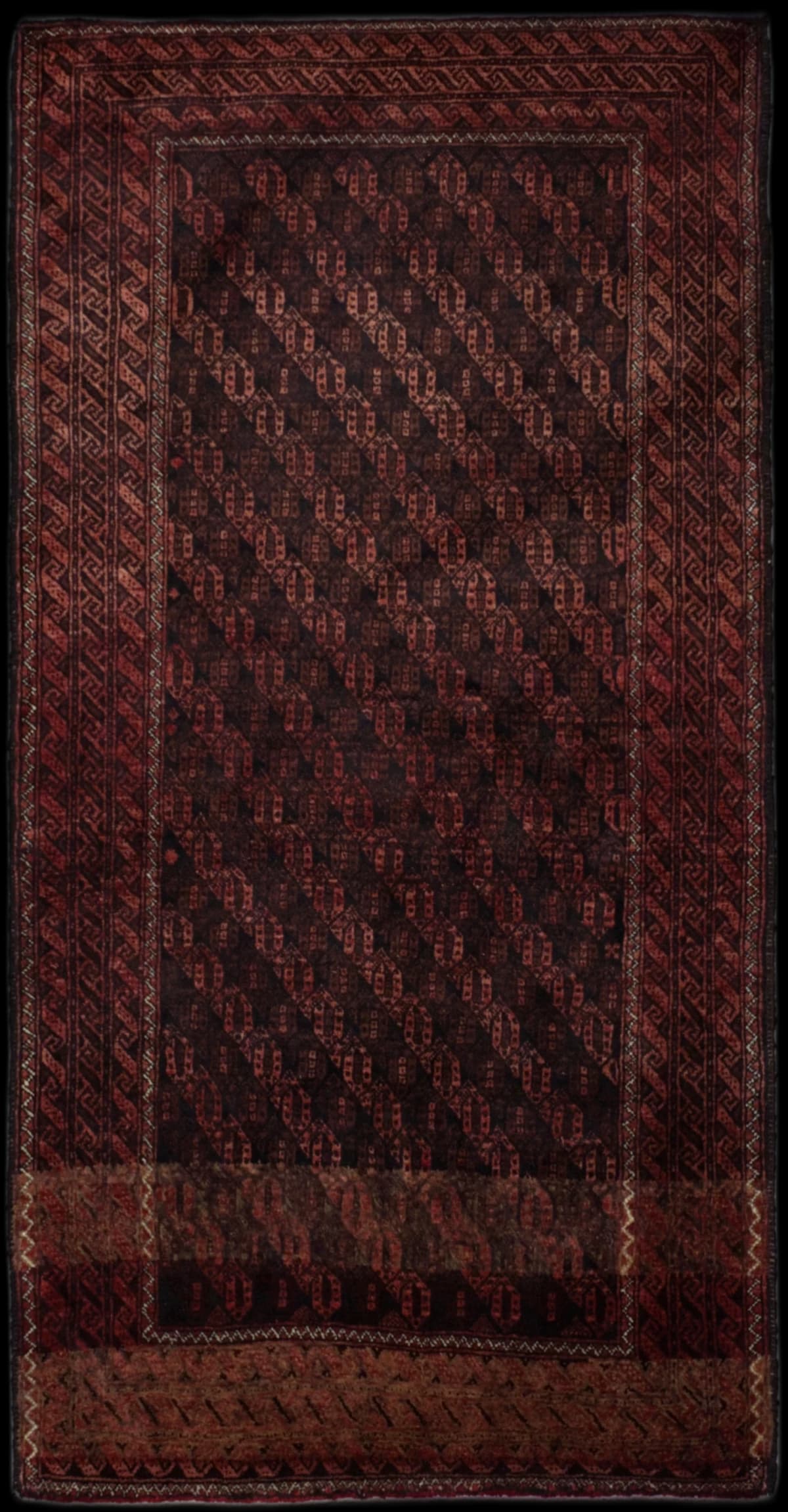
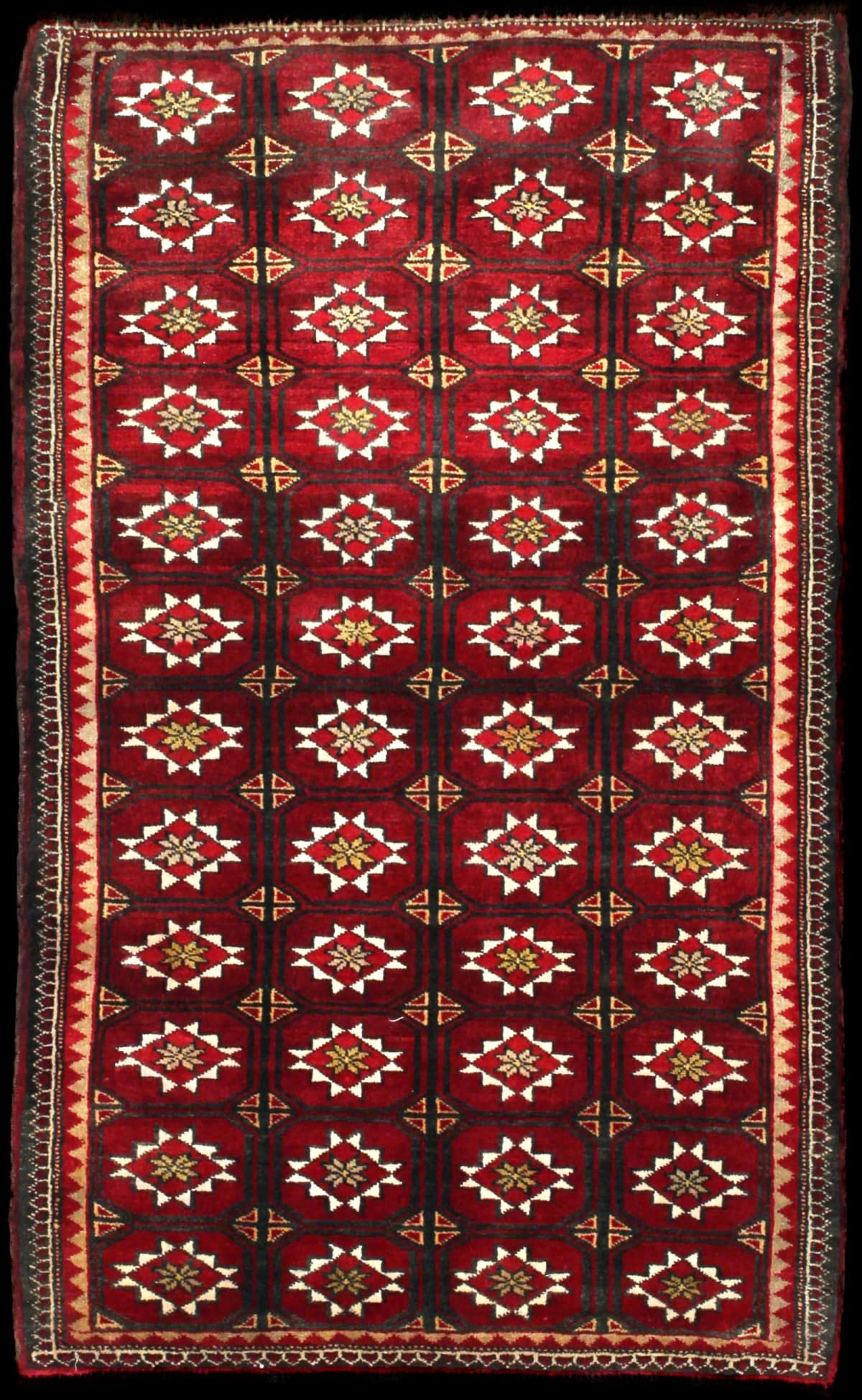
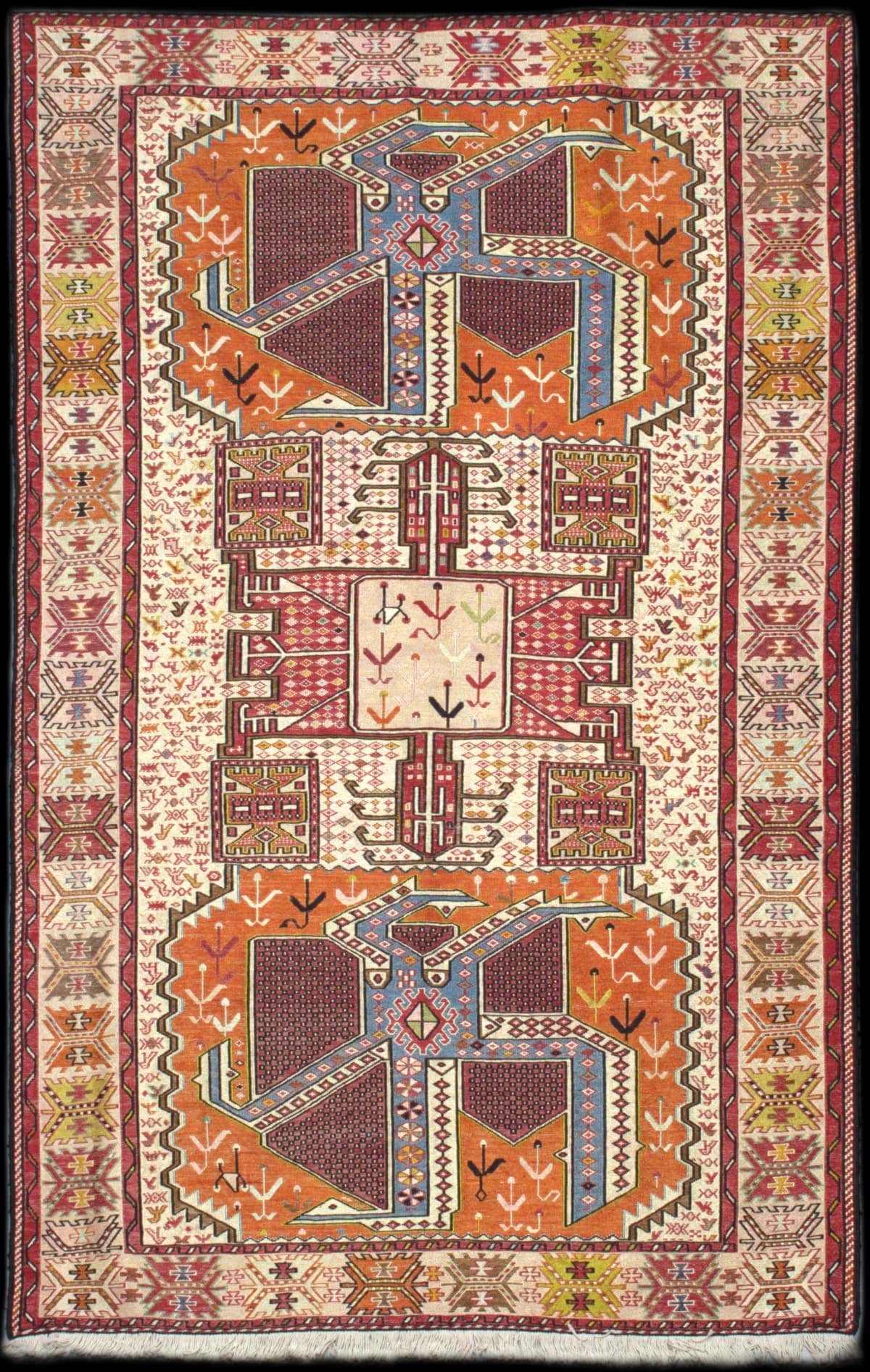
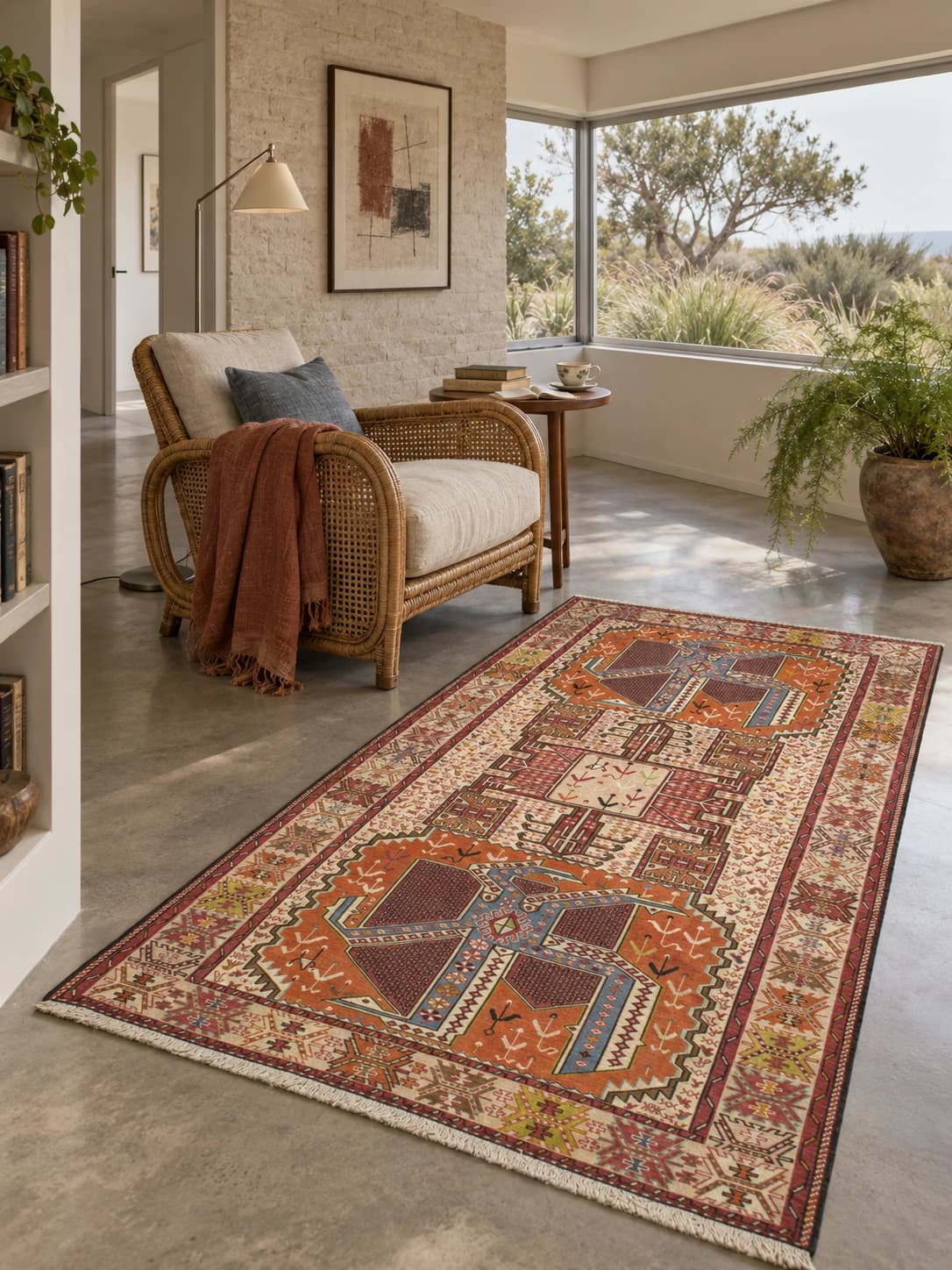
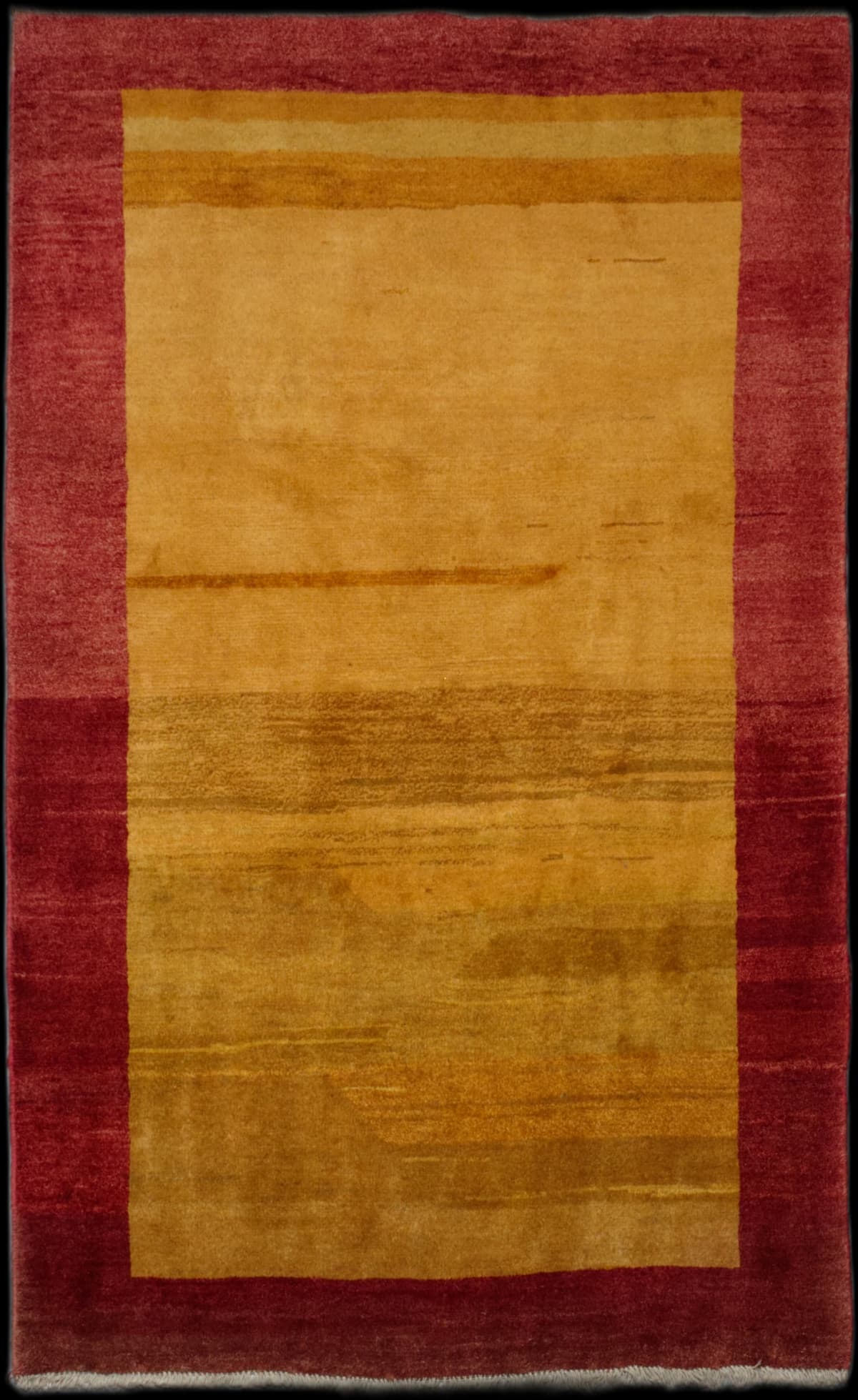
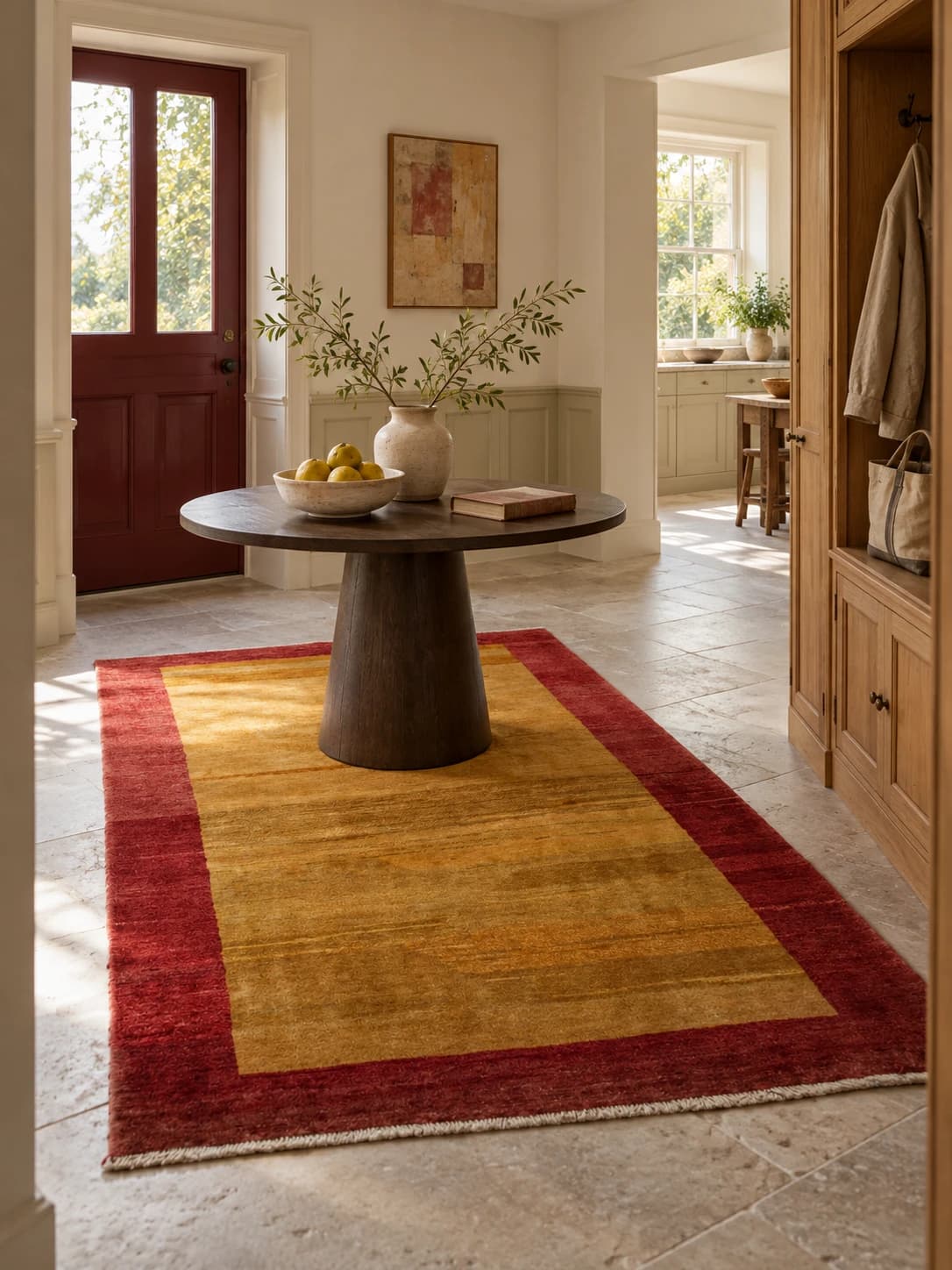
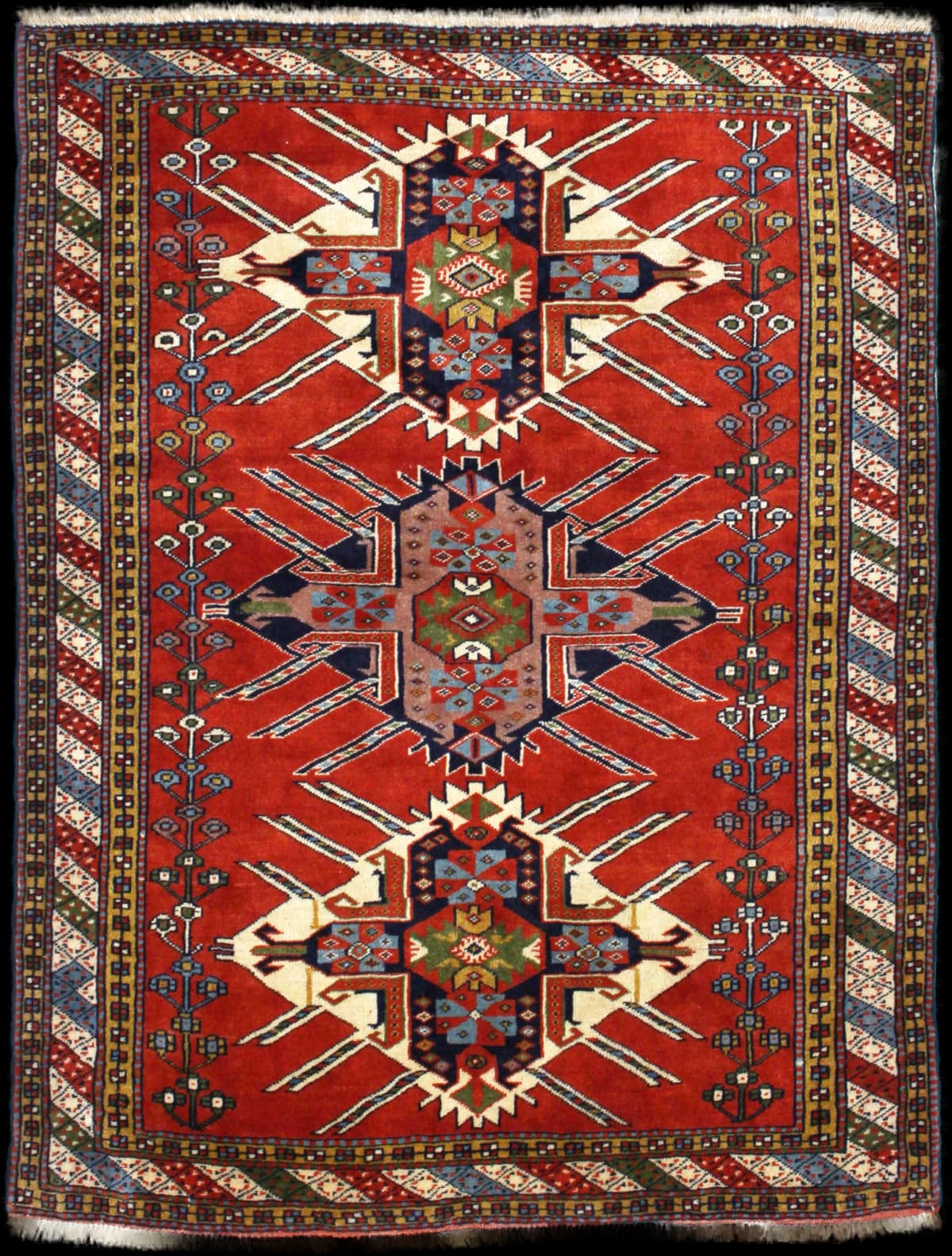
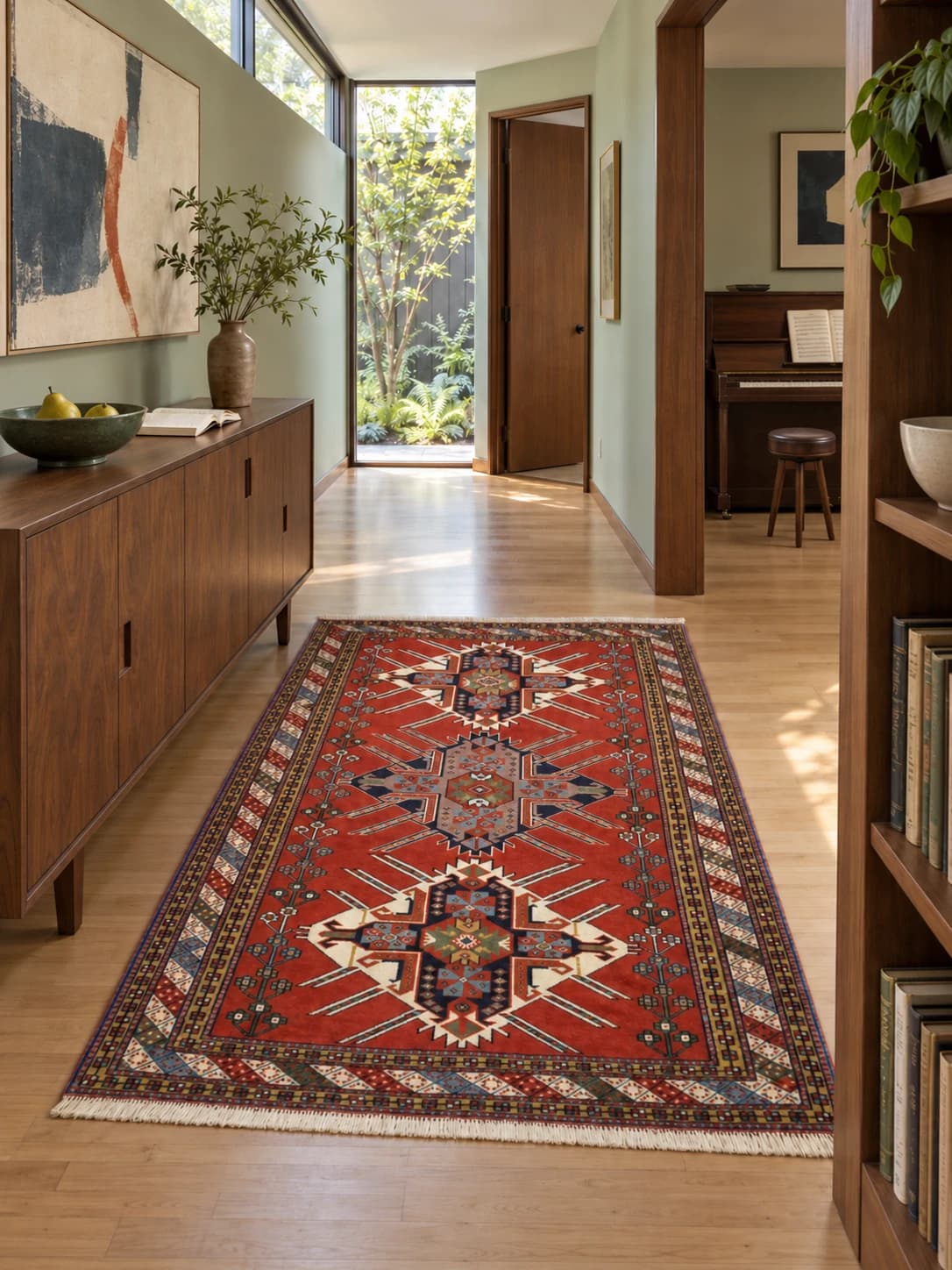
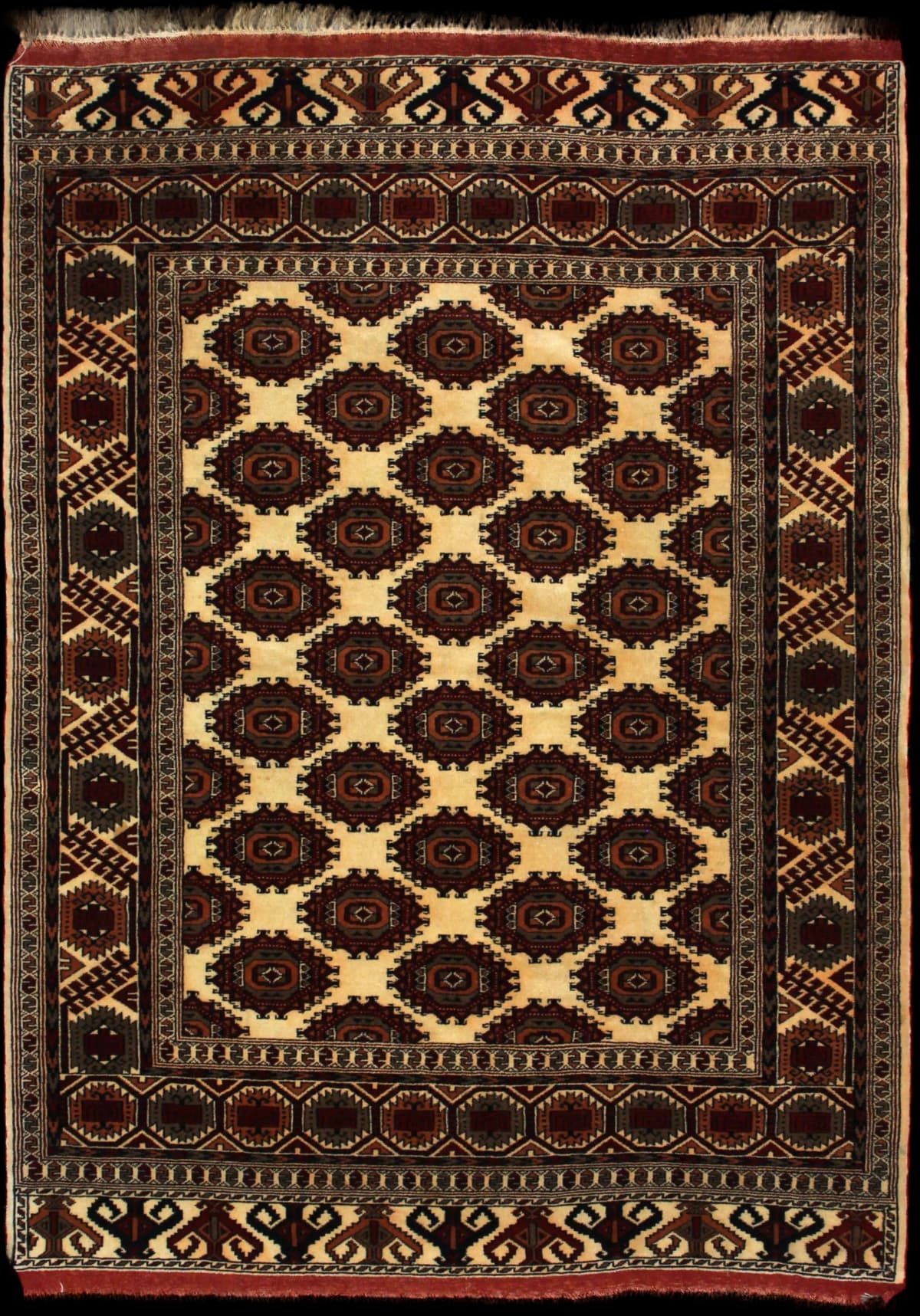
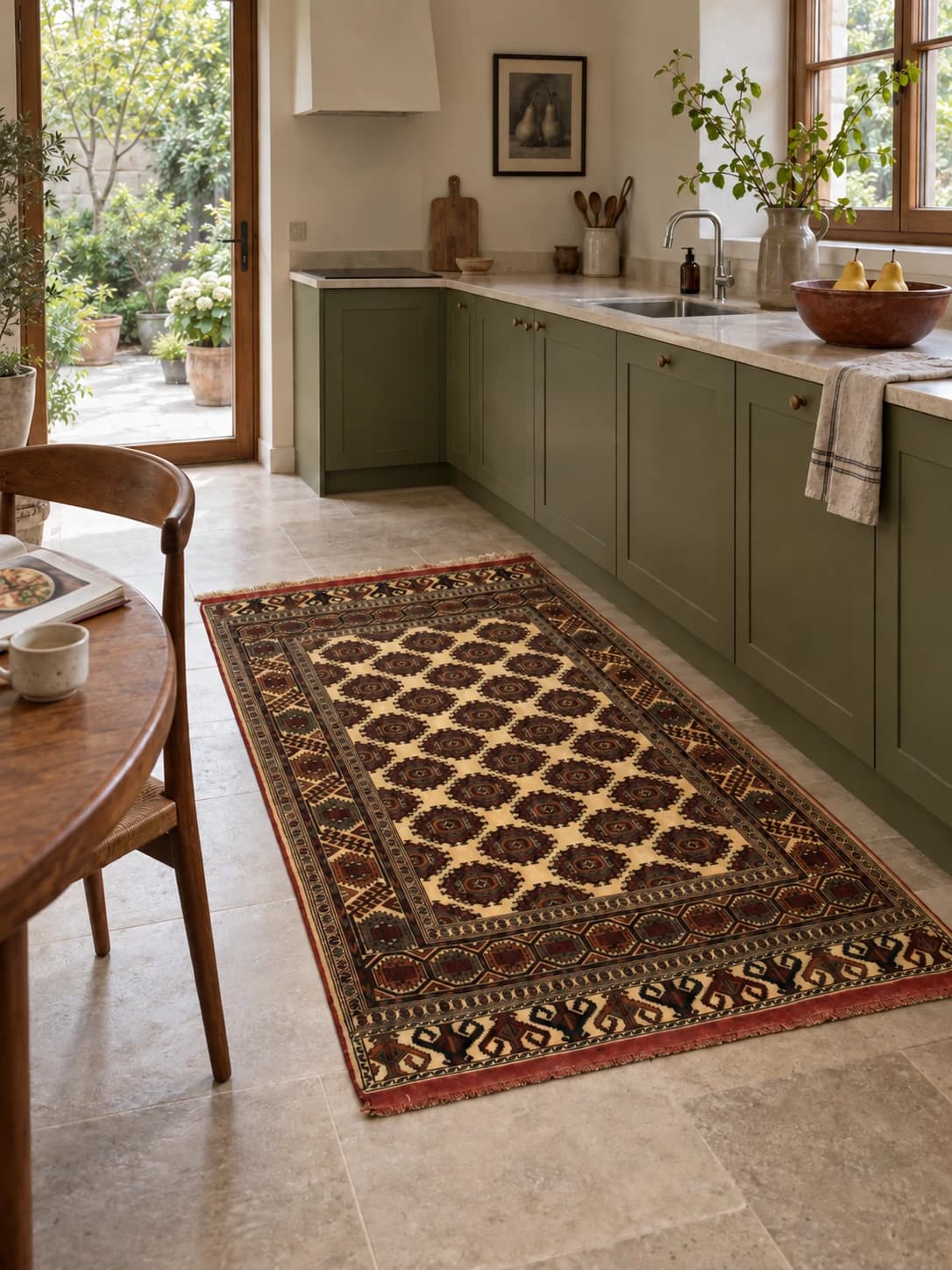
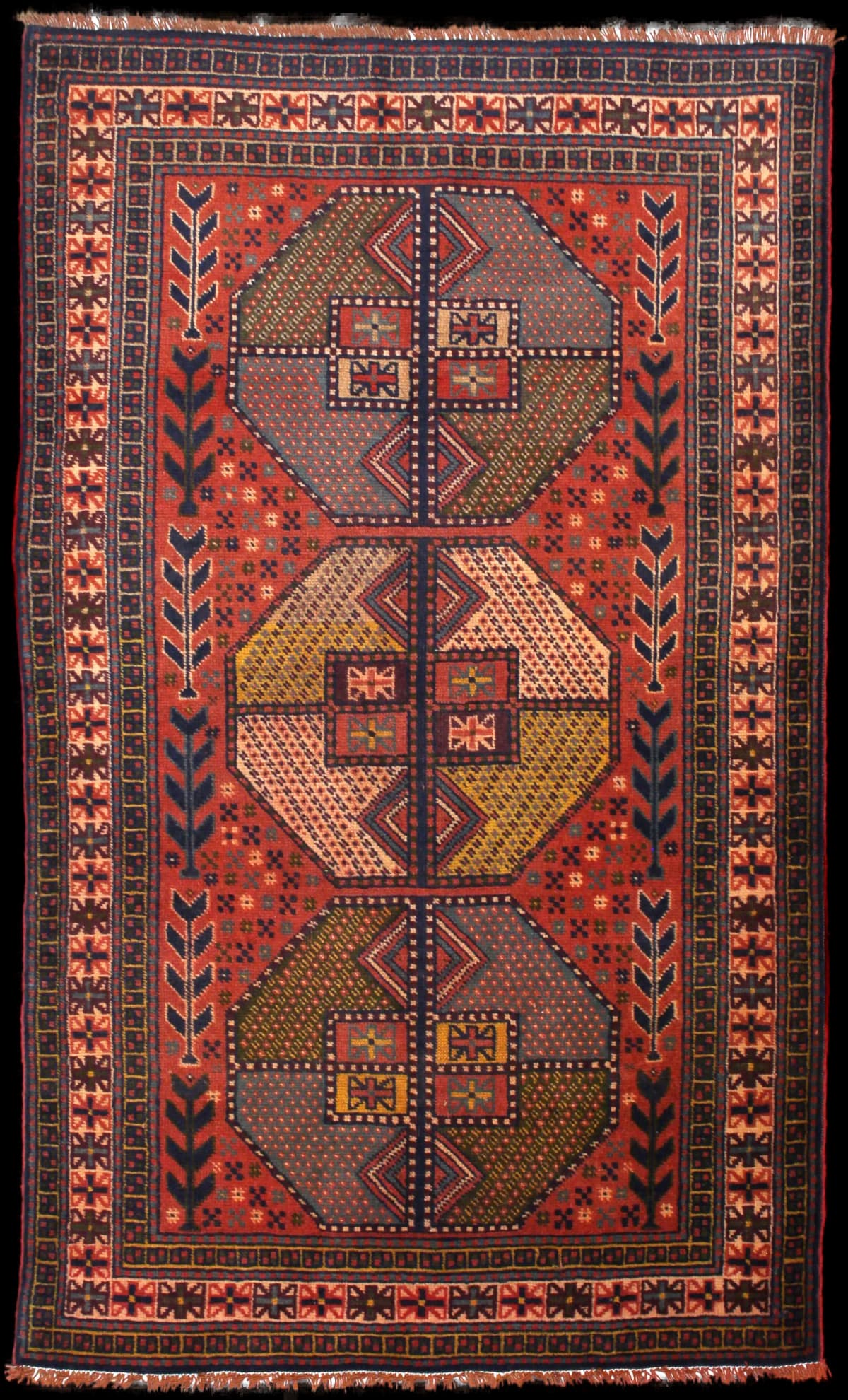
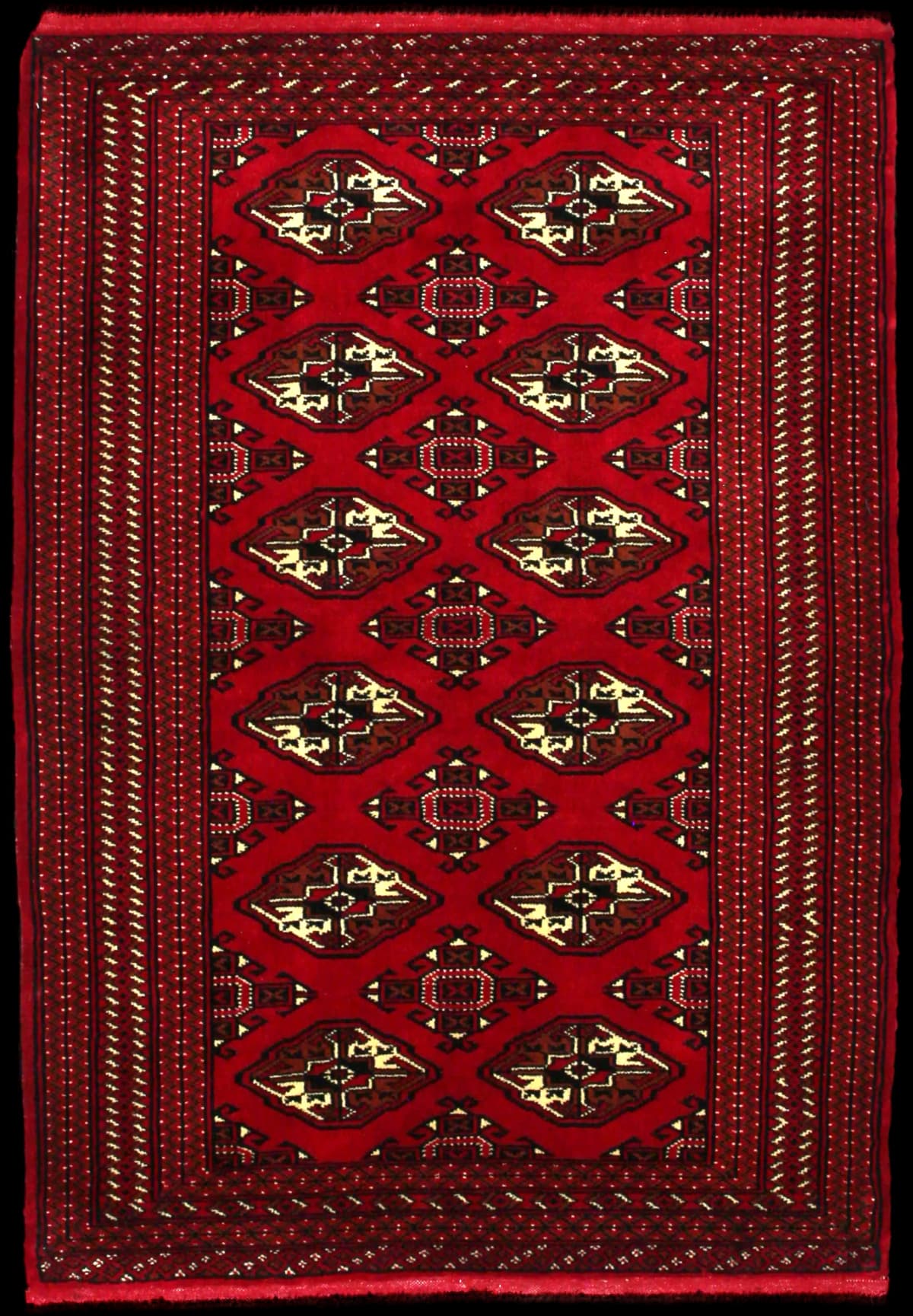
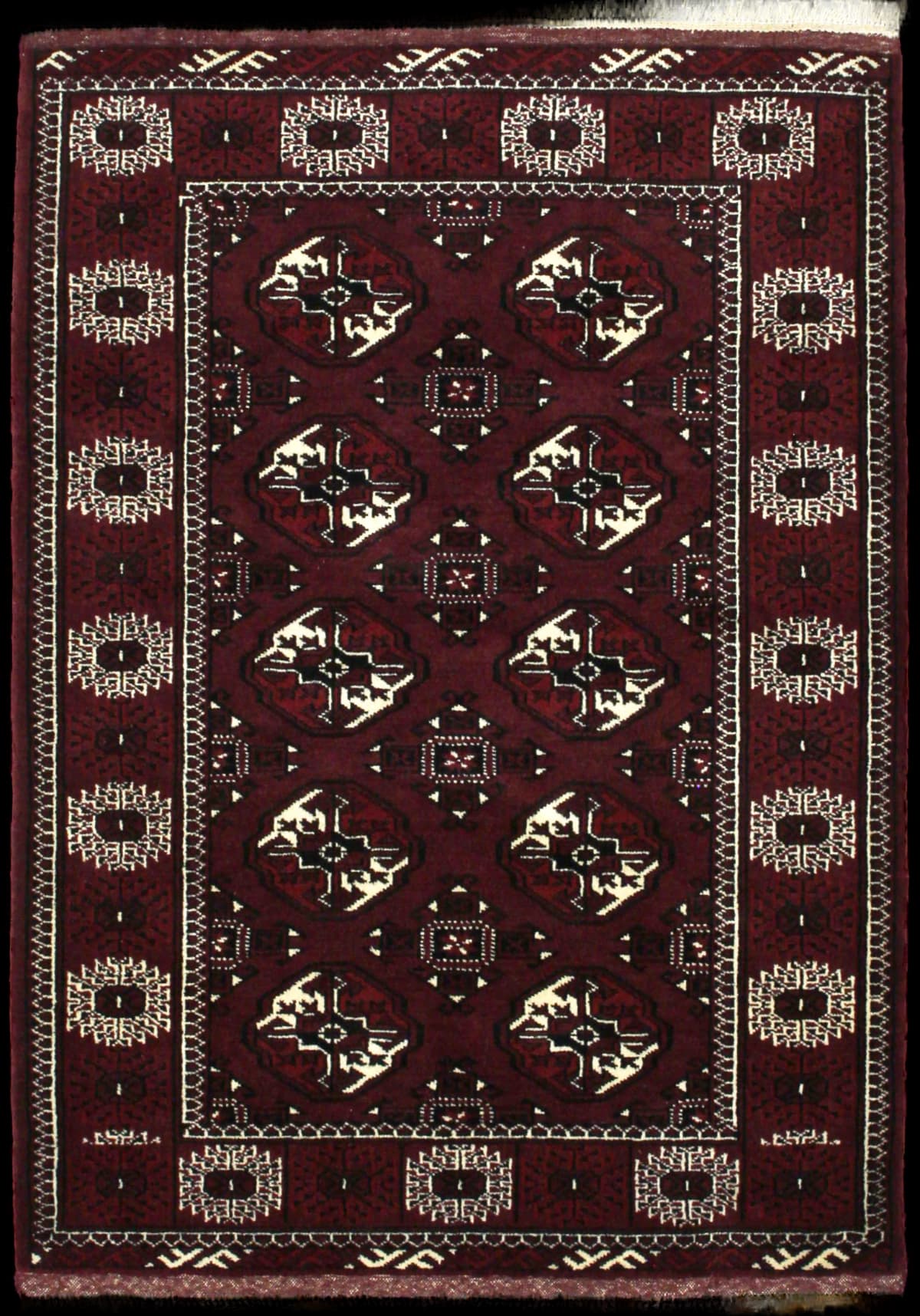
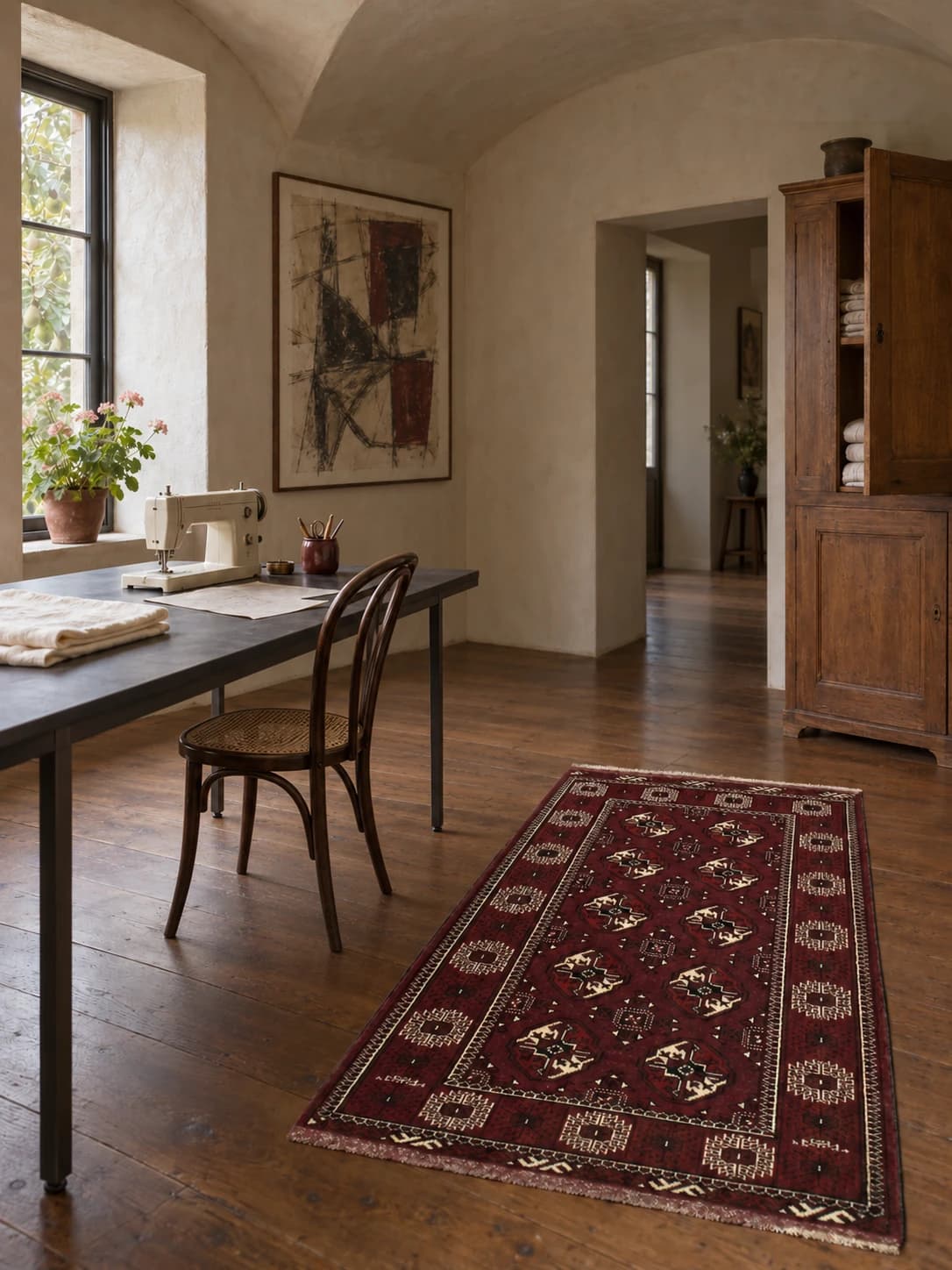
From the region ofهمدانHamadan
What makes this piece special
Hover over or tap a feature to read moreTwo knots per tuft — a denser, more durable pile that holds its pattern for decades.
Up close
Origin: Hamadan
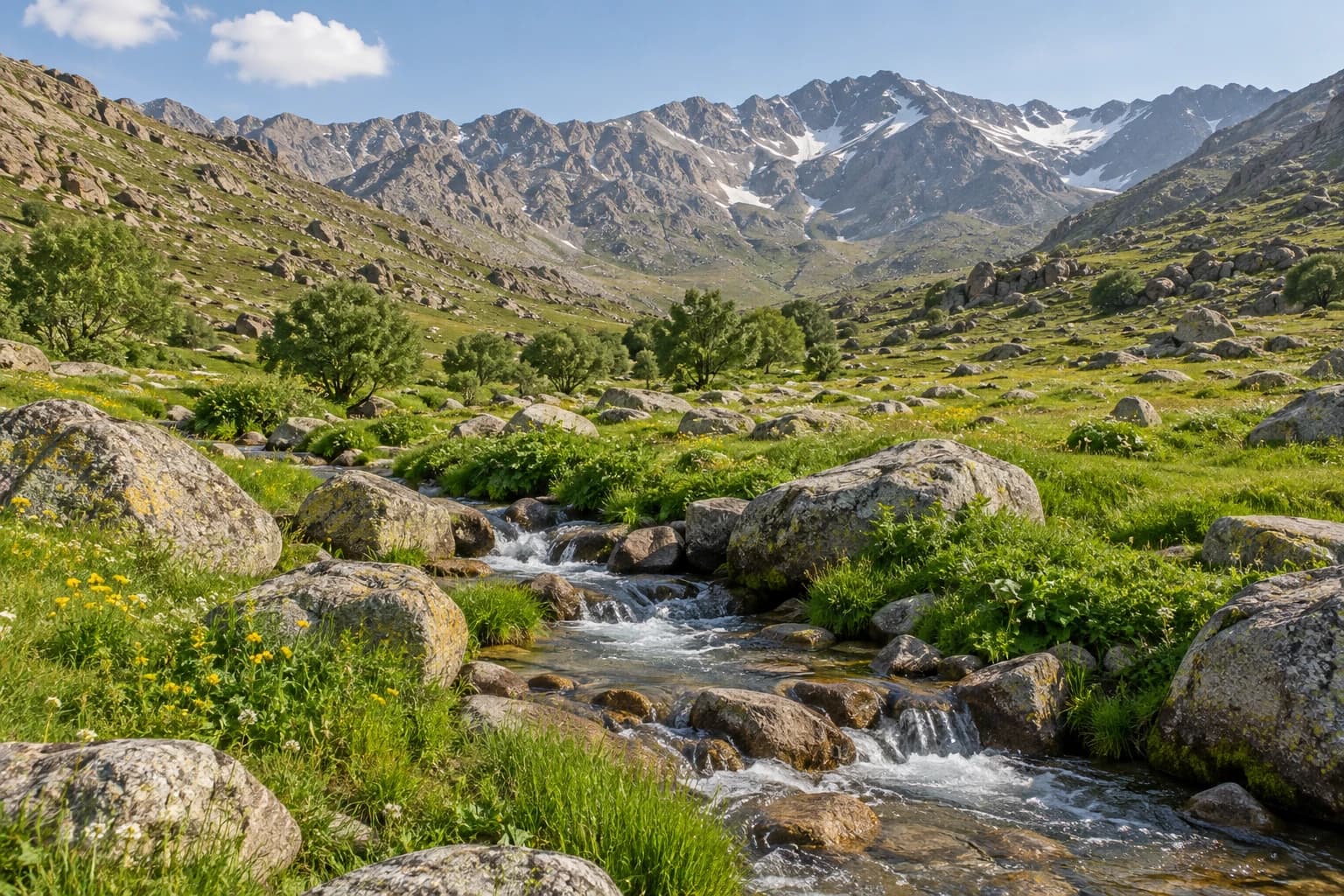
Hamadan lies in western Iran, capital of the province that carries its name, on the north-eastern flank of Mount Alvand in the Zagros mountains at roughly 1,800 meters. The main road from Baghdad across the Zagros toward Tehran passes through it, which is how its rugs reached western markets in quantity. Beneath the modern town lies Ecbatana, capital of the Medes and later an Achaemenid summer residence, and the city is usually counted among the oldest continuously inhabited places in Iran. High grazing land and a position on a trade route are the practical reasons weaving took hold here and never let go.
The name on a label covers far more than the city itself. It is a two-level term: the workshops inside the town, and the enormous village territory around them, counted in the trade at more than fifteen hundred settlements. Each village tends to keep one or two patterns of its own, so the design vocabulary gathered under a single word is vast rather than unified. Village weaving is also seasonal. Winters at this altitude are severe, and families weave indoors through the cold months, which means a village Hamadan is a winter rug in the most literal sense.
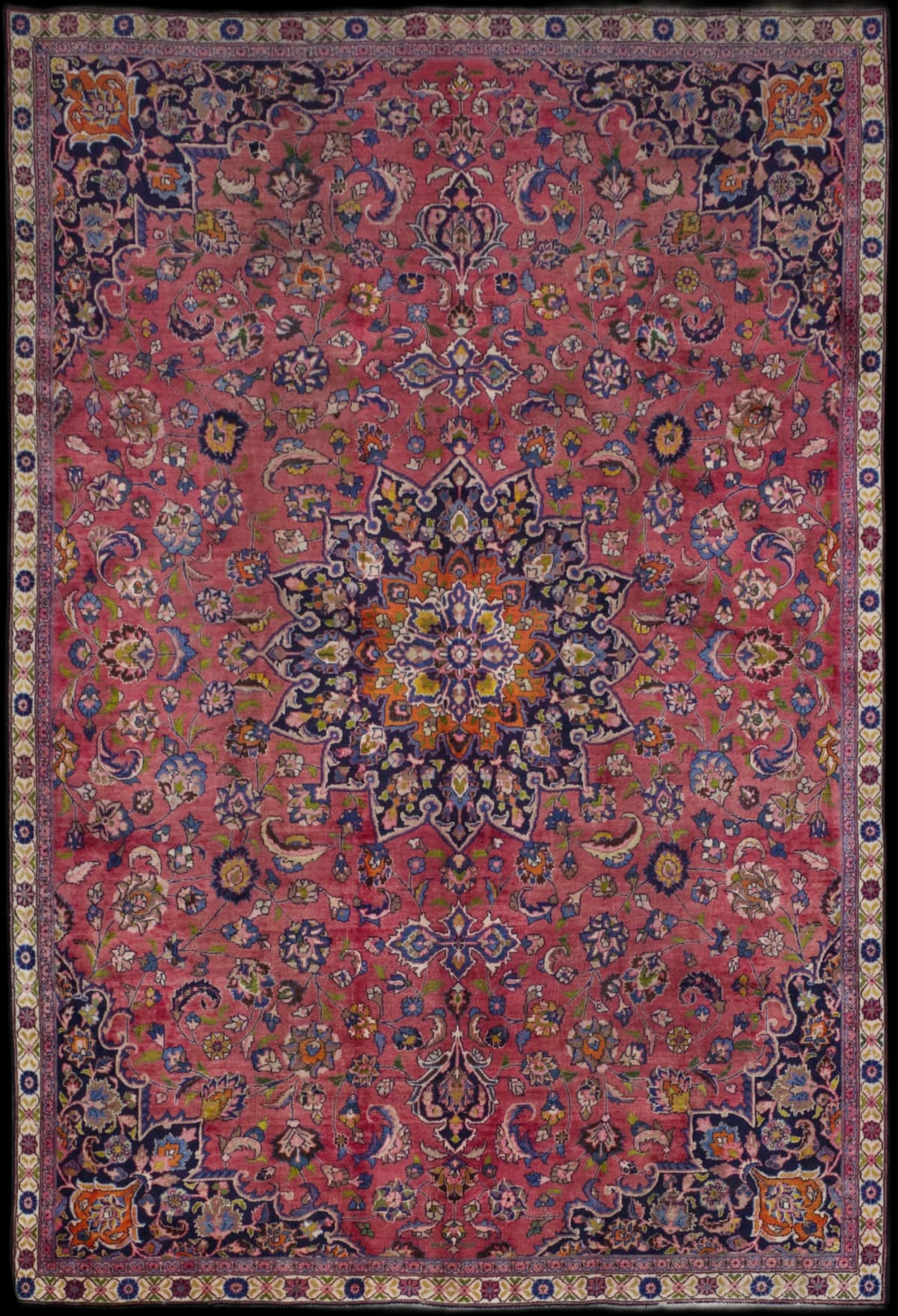
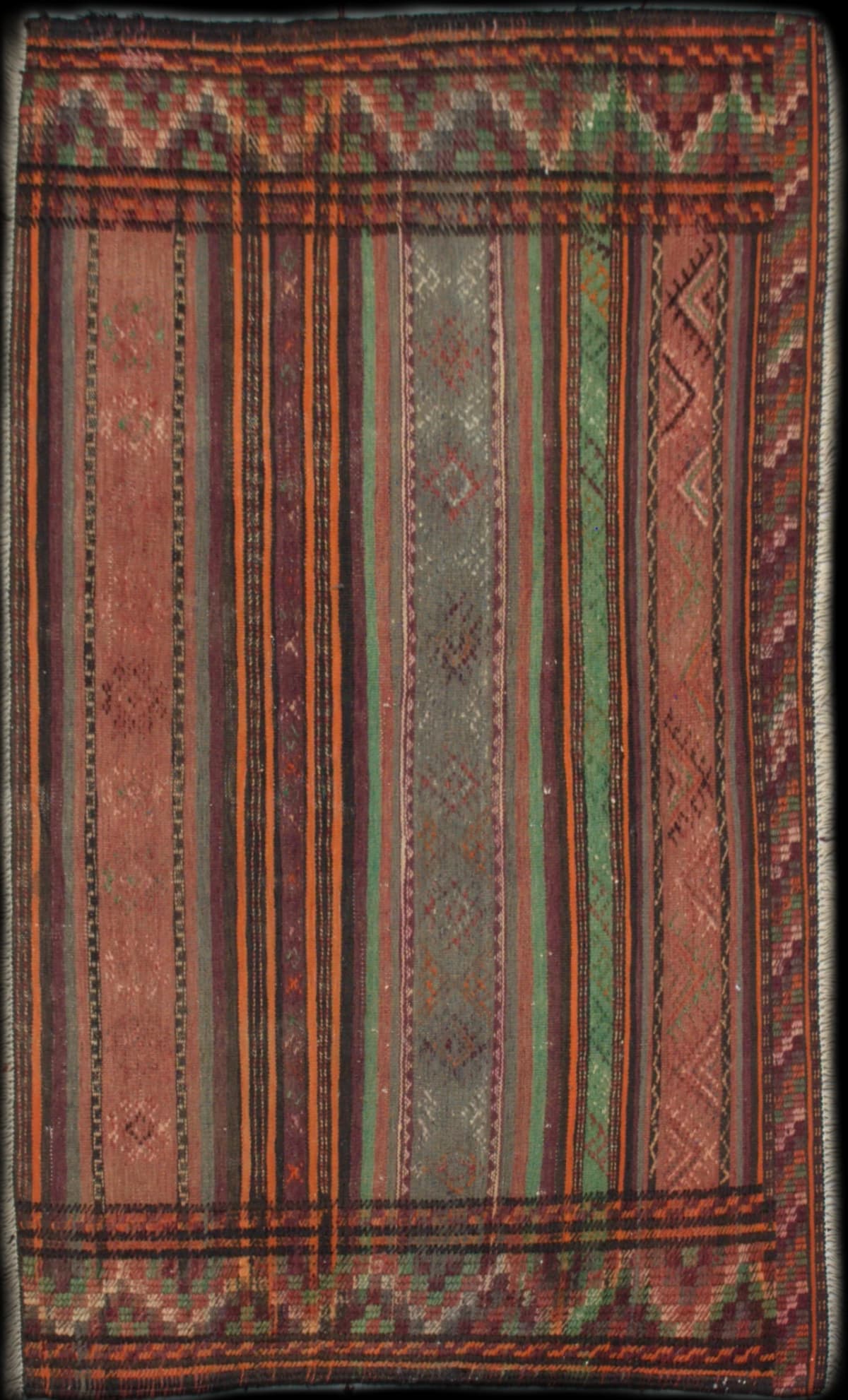
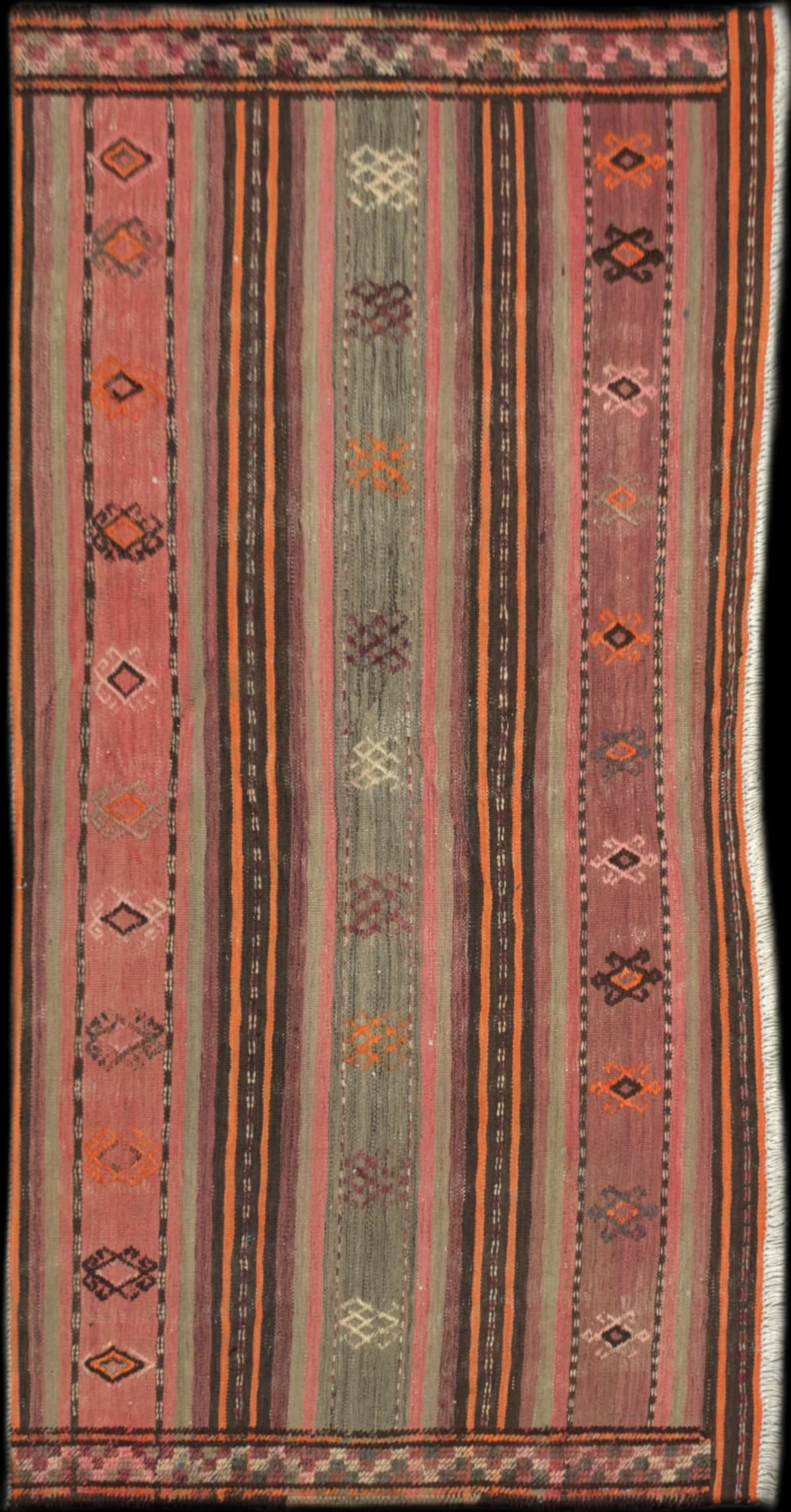
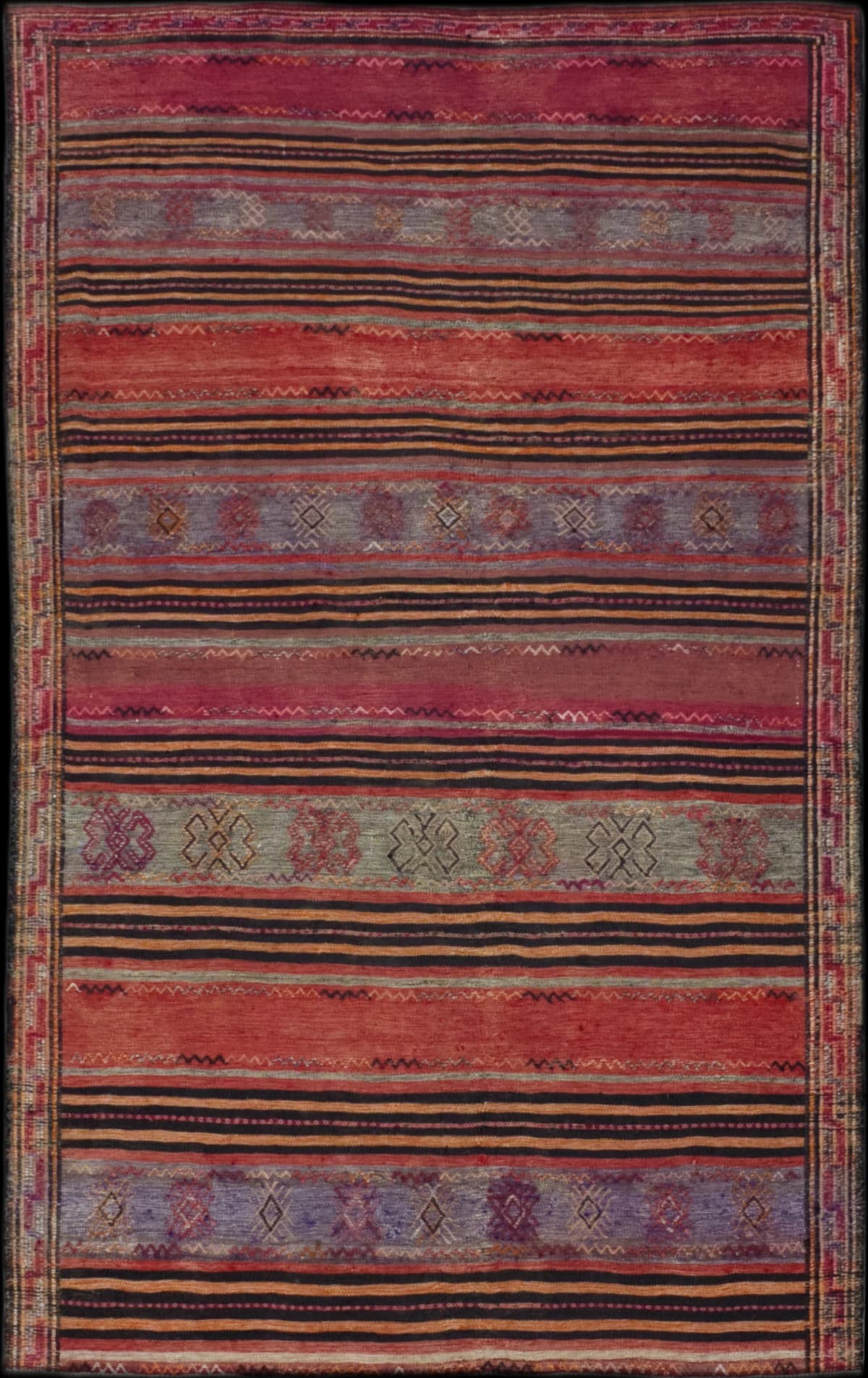
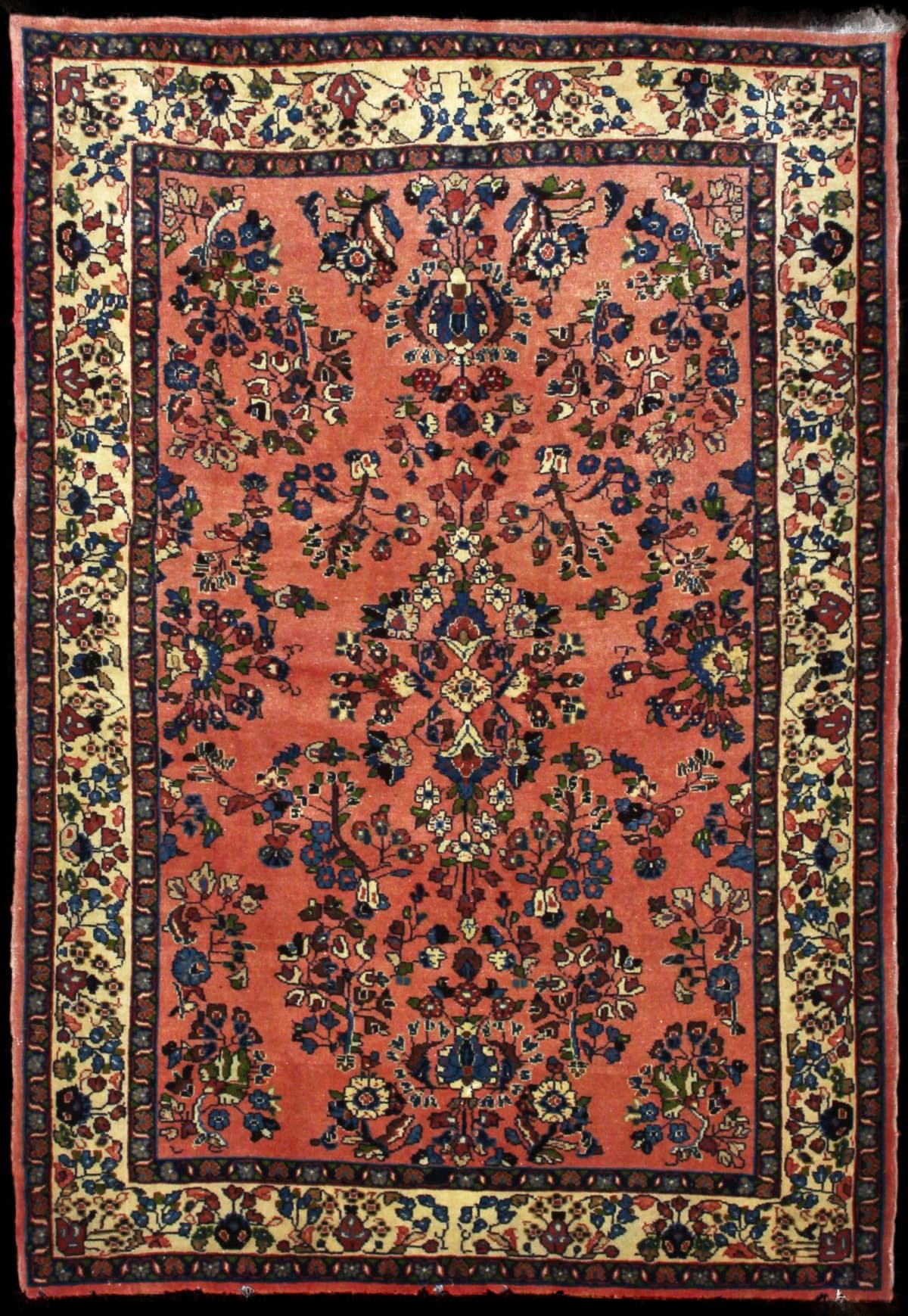
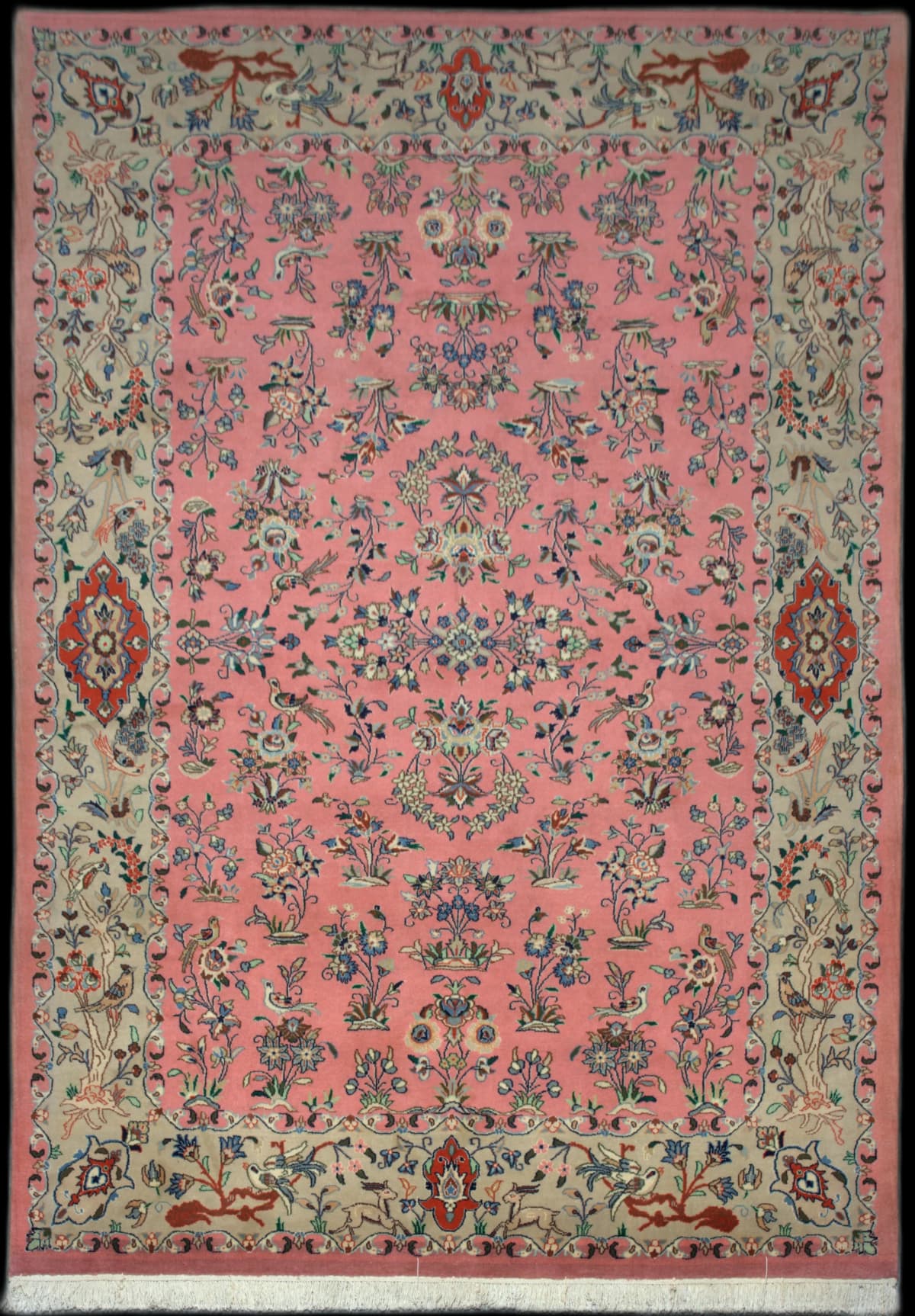
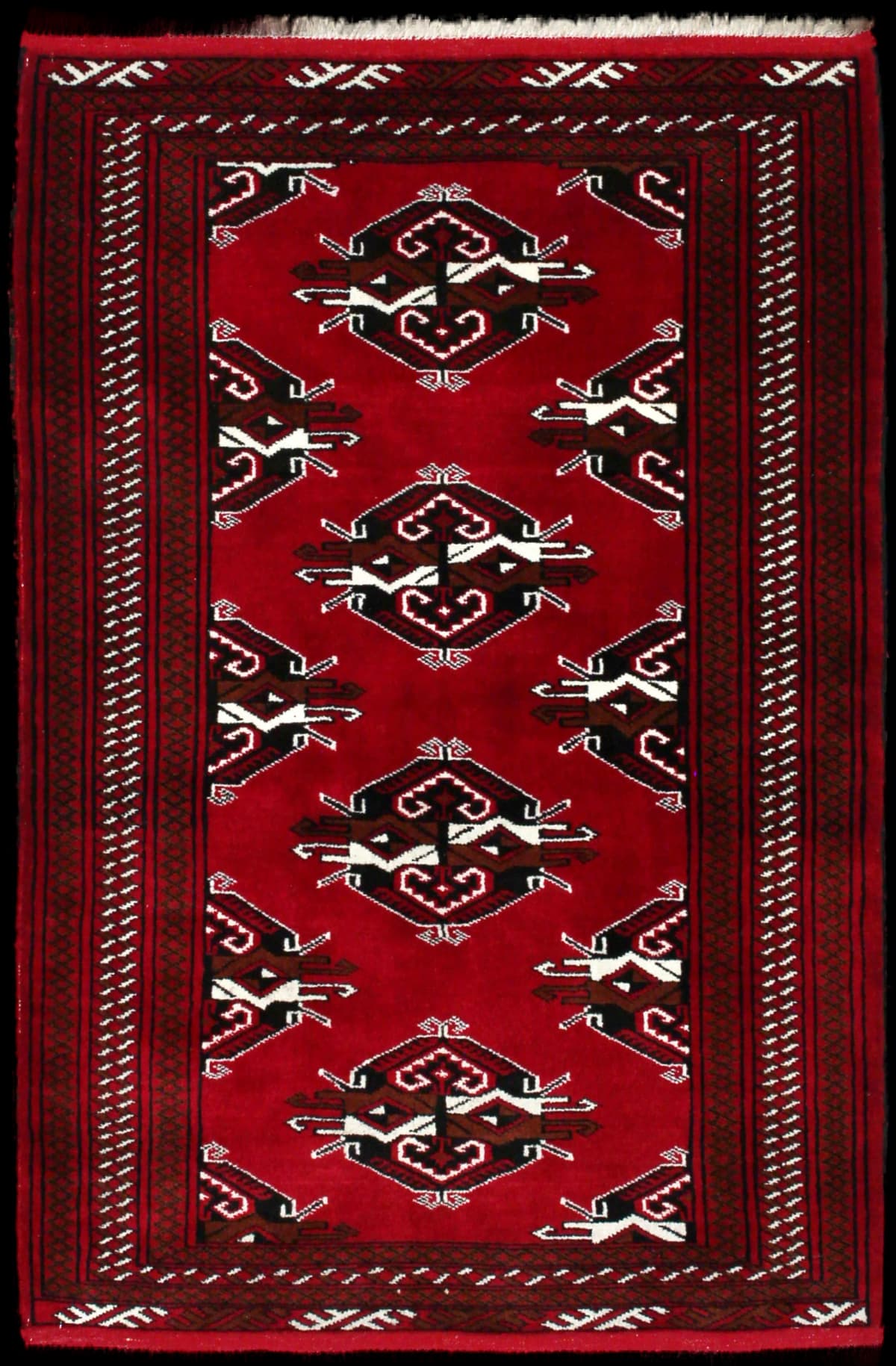
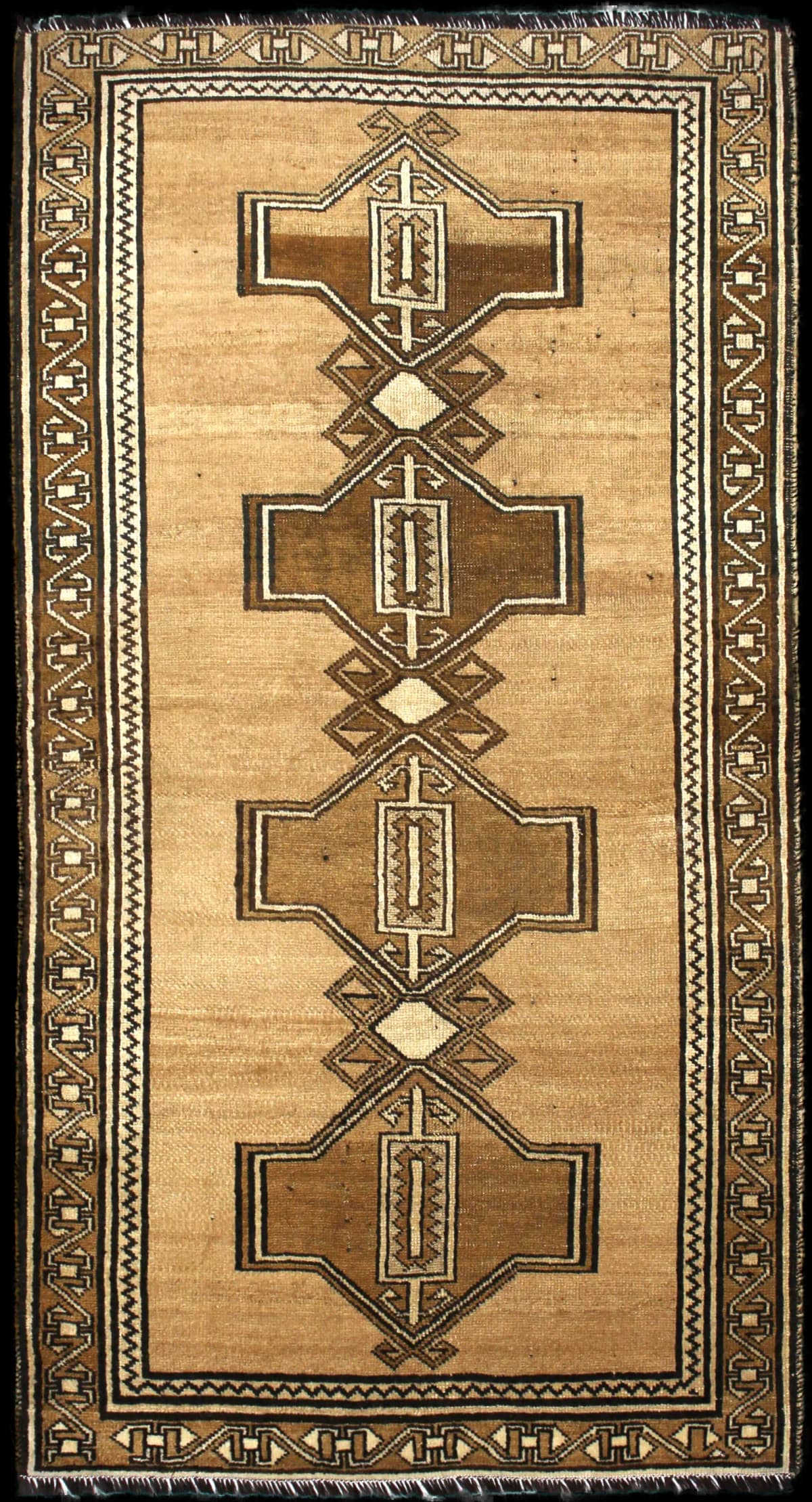
Reading one of these rugs starts with deciding which Hamadan you are looking at. City pieces come off workshop looms: more luxurious, heavily floral, noticeably denser in the knot, and often set on ground colors you would not expect from the region. Village pieces are household work made for use, in smaller sizes and runners, geometric far more often than floral, and coarser in the knotting. Neither is a lesser version of the other, but they are two distinct products, and most of the confusion around this name comes from treating them as one.
Materials are consistent across both. The pileSee in the carpet dictionary is woolSee in the carpet dictionary throughout, taken from flocks that graze the high mountain pastures around the city. The foundation is normally cotton, which holds a rug square and keeps a long runner from distorting along its length. Older Hamadan rugs were built on a wool foundationSee in the carpet dictionary instead, and that remains one of the quieter ways to place a piece in time: wool warp and weft beneath a wool pile generally indicates an earlier rug rather than a recent one.
Knotting is symmetrical, the knot usually called Turkish, whose spread into Persian weaving is generally traced to the Seljuk periodSee in the carpet dictionary in the eleventh and twelfth centuries; Hamadan, Tabriz and the wider Azerbaijan region are where that lineage still shows most plainly. The construction that goes with it is single-wefting, one weft shot passed between each row of knots rather than two. You can see it from the back: with only one weft, the warp stays partly exposed between the rows and reads as a zigzag of white dots running across the reverse of the rug.
That technique is not a local secret. It is the standard practice of the greater Hamadan area and the weaving cultures along its edges, shared with Kurdish tribal rugs, with SennehSee in the carpet dictionary, KarajaSee in the carpet dictionary, Mehraban and BakhtiariSee in the carpet dictionary. What it gives is a thinner, more flexible cloth than a double-weftedSee in the carpet dictionary rug of comparable knot countSee in the carpet dictionary, and a back through which the foundation stays legible. The pile standing on that cloth is a separate matter, and it varies: Hamadan is named both among the thicker-piled Persian weaves and as a source of runners with a low, soft pile. Judge pile height on the rug in front of you rather than on the name.
Geometry dominates, especially in the villages. Where a medallionSee in the carpet dictionary appears it is typically hexagonal or diamond-shaped, drawn with straight lines rather than as a curved rosetteSee in the carpet dictionary. Geometric all-over designs are a staple as well, one shape repeated across the field with the ground color inside the shapes changing as the pattern travels, in the same family worked by HerizSee in the carpet dictionary, Karaja and the Azerbaijan weaves. Floral, medallion, medallion-and-corner and herati patterns are all made here too, so geometry is a strong tendency rather than a rule.
Herati, also called mahi or fish designSee in the carpet dictionary, is one of the region's clearest signatures: a small rosette enclosed in a diamond with curving leaves around it, repeated across the field, and used in both all-over and medallion arrangements. The name points back to HeratSee in the carpet dictionary, the Afghan city where the pattern originated. The town has a specialty of its own in GolfarangSee in the carpet dictionary, meaning European flower, a rare floral design built on large naturalistic blooms and tied specifically to the city rather than the villages. Hamadan is also named among the weaves that draw the open field, a medallion set in a largely empty ground, which belongs with the city's more formal work.
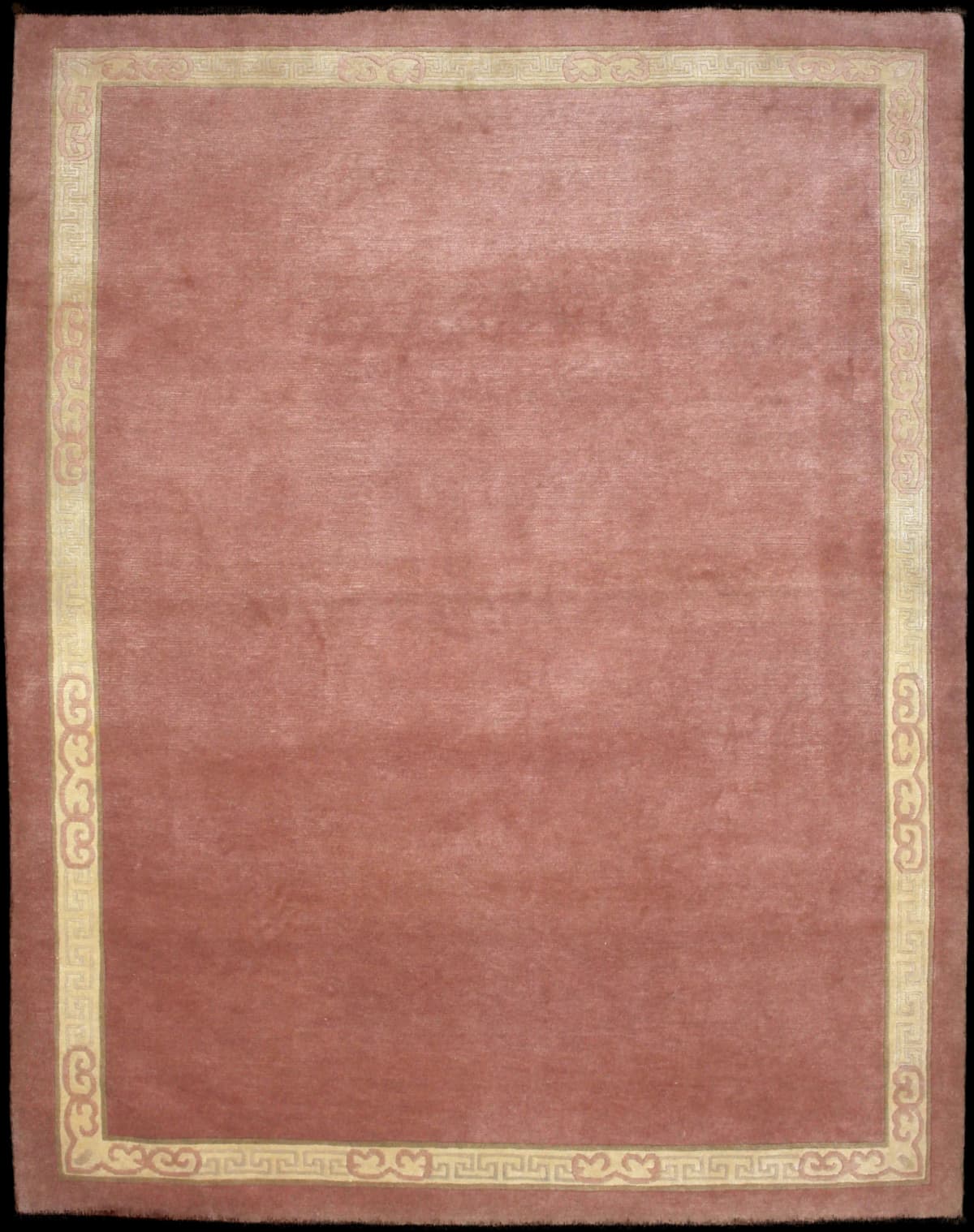
Three field colors carry most of the output: red, deep blue and cream. Highlights run to further blues, to ivory and to yellow, and runners are commonly grounded in red or dark navy with beige drawn through them. Village rugs stay close to that palette almost without exception. The workshops in town are where the departures happen, including ground colors, a clear yellow among them, that would look out of place on a village piece. If a Hamadan surprises you with its ground color, it most likely came from the city.
Knot density for the region as a whole runs in a band of roughly 80 to 200 knots per square inch (KPSI), the tier that covers hard-wearing everyday rugs rather than fine workshop weaving. Within that band the city and village division reappears: workshop pieces sit at the upper end, village pieces at the low to medium end. That is worth knowing when comparing two rugs sold under the same name, because this is not one quality. Neighboring Malayer, whose north-western villages weave in the Hamadan manner, is usually knotted a shade finer.
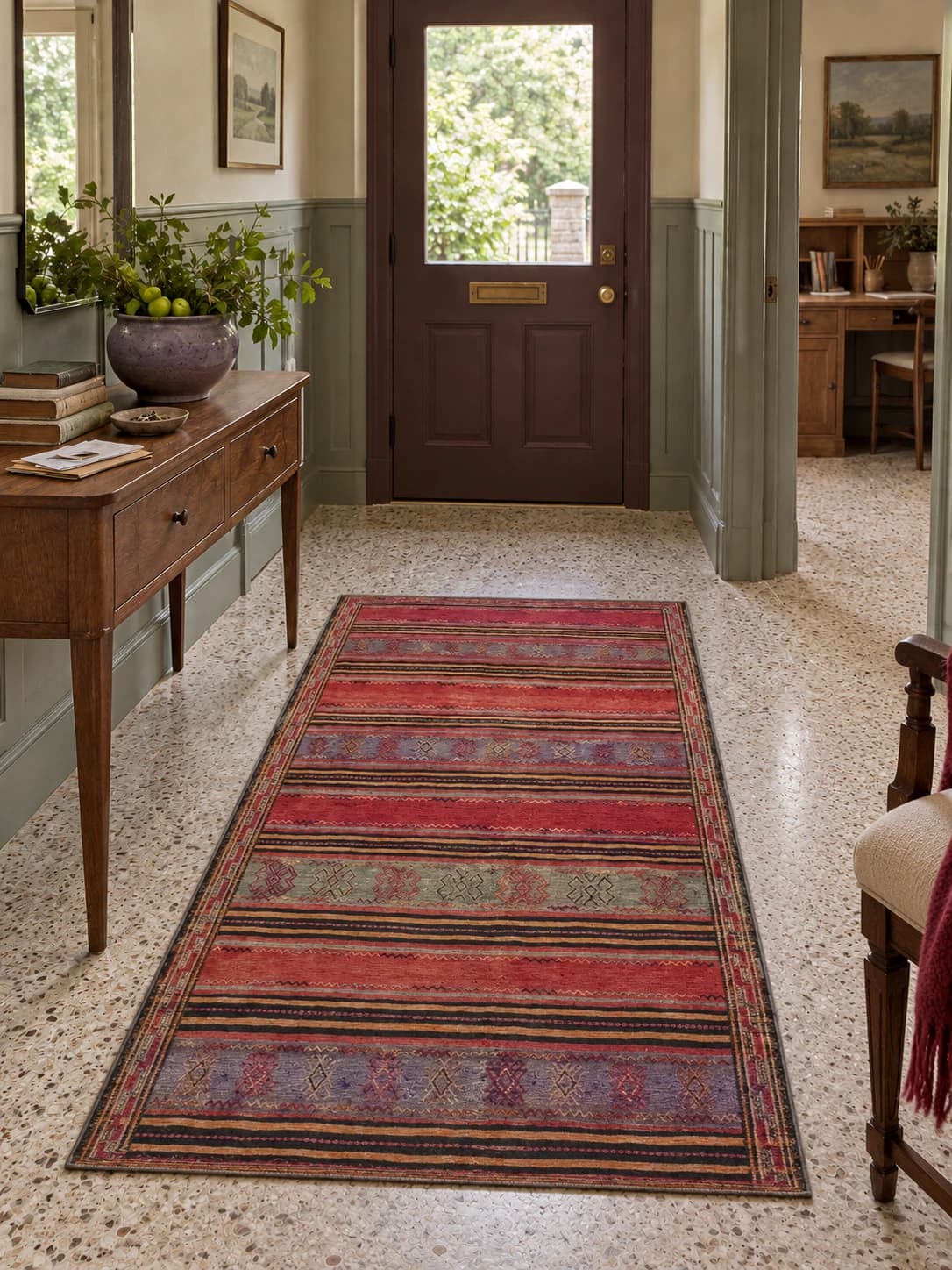
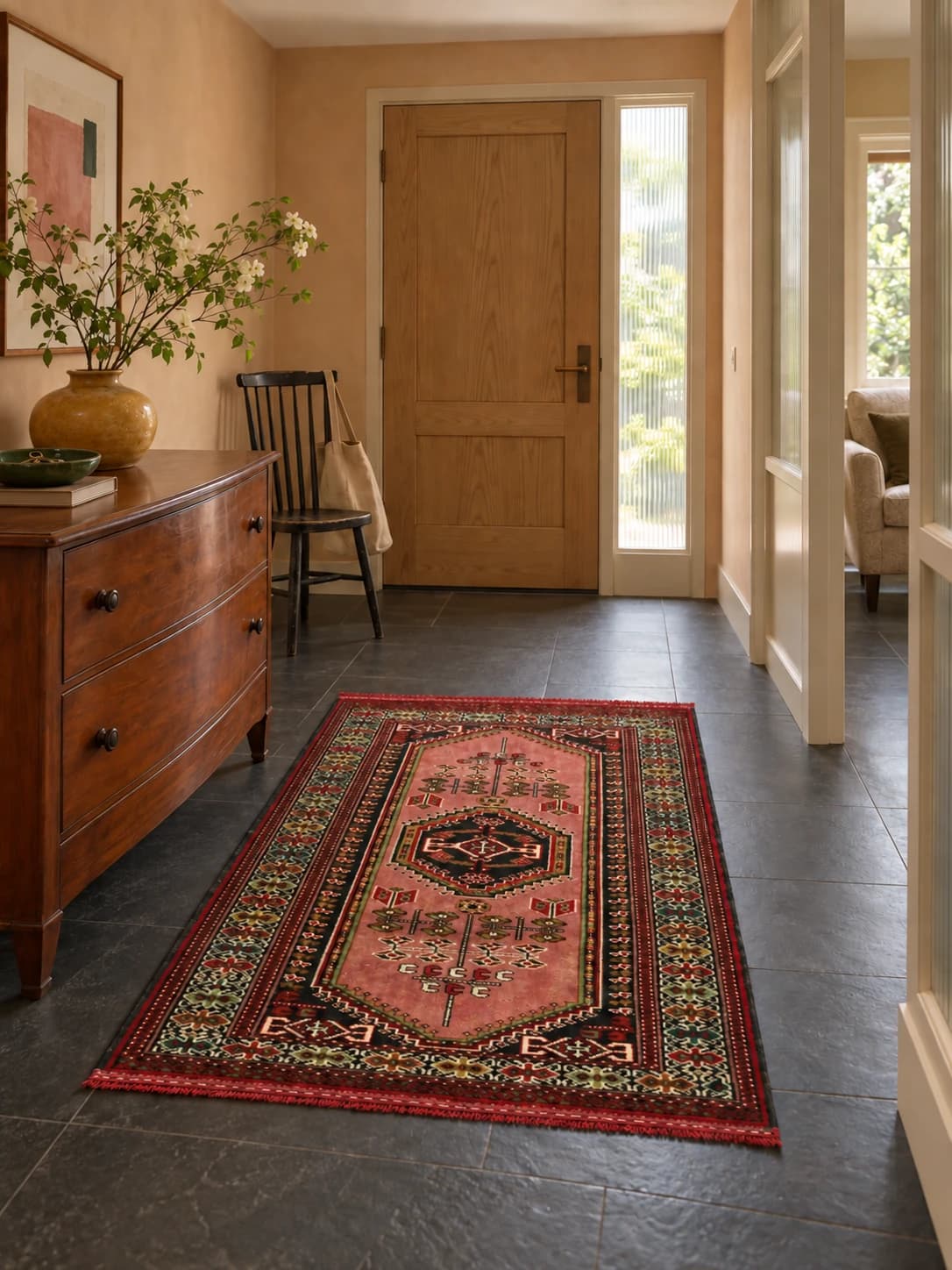
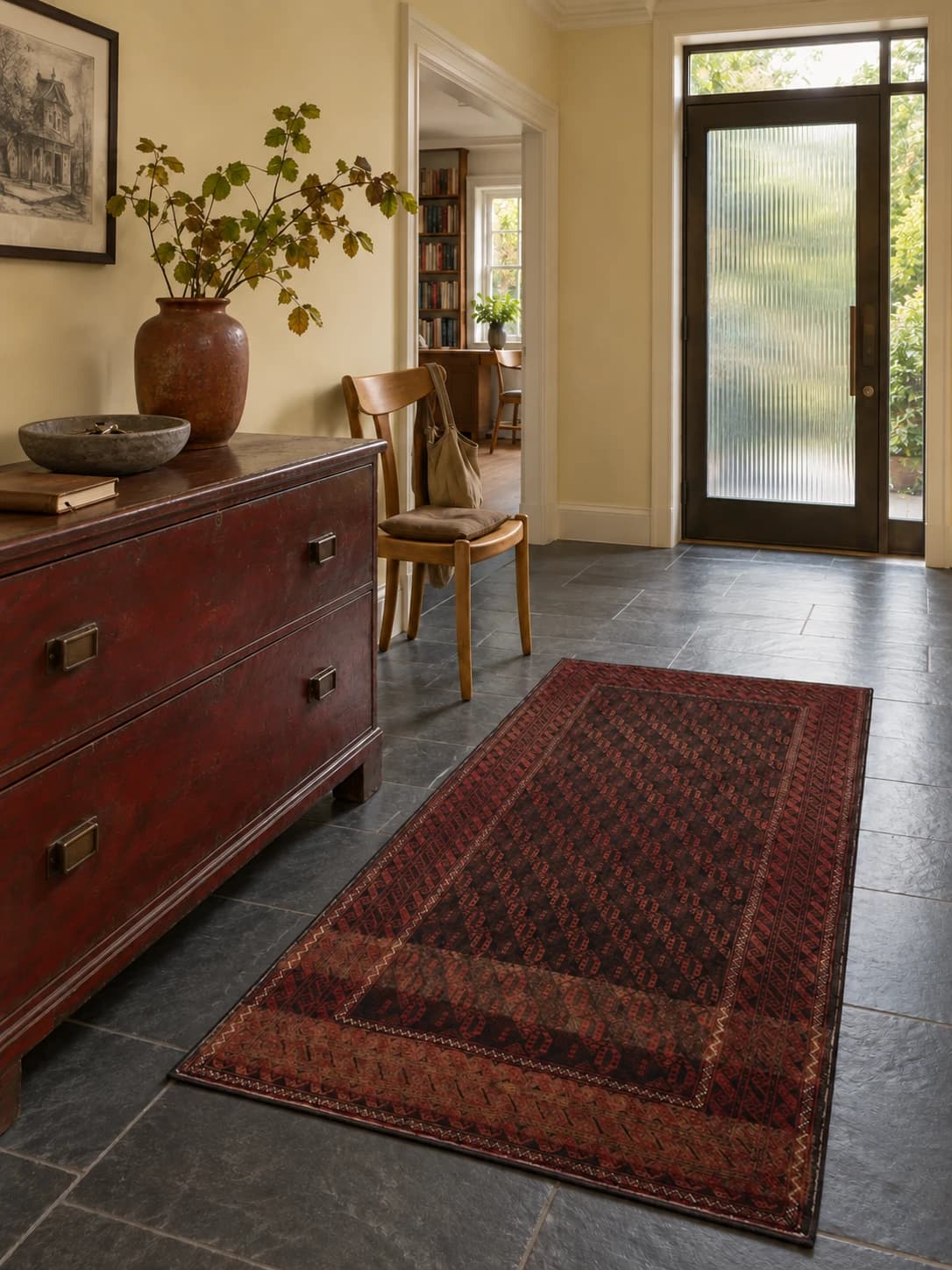
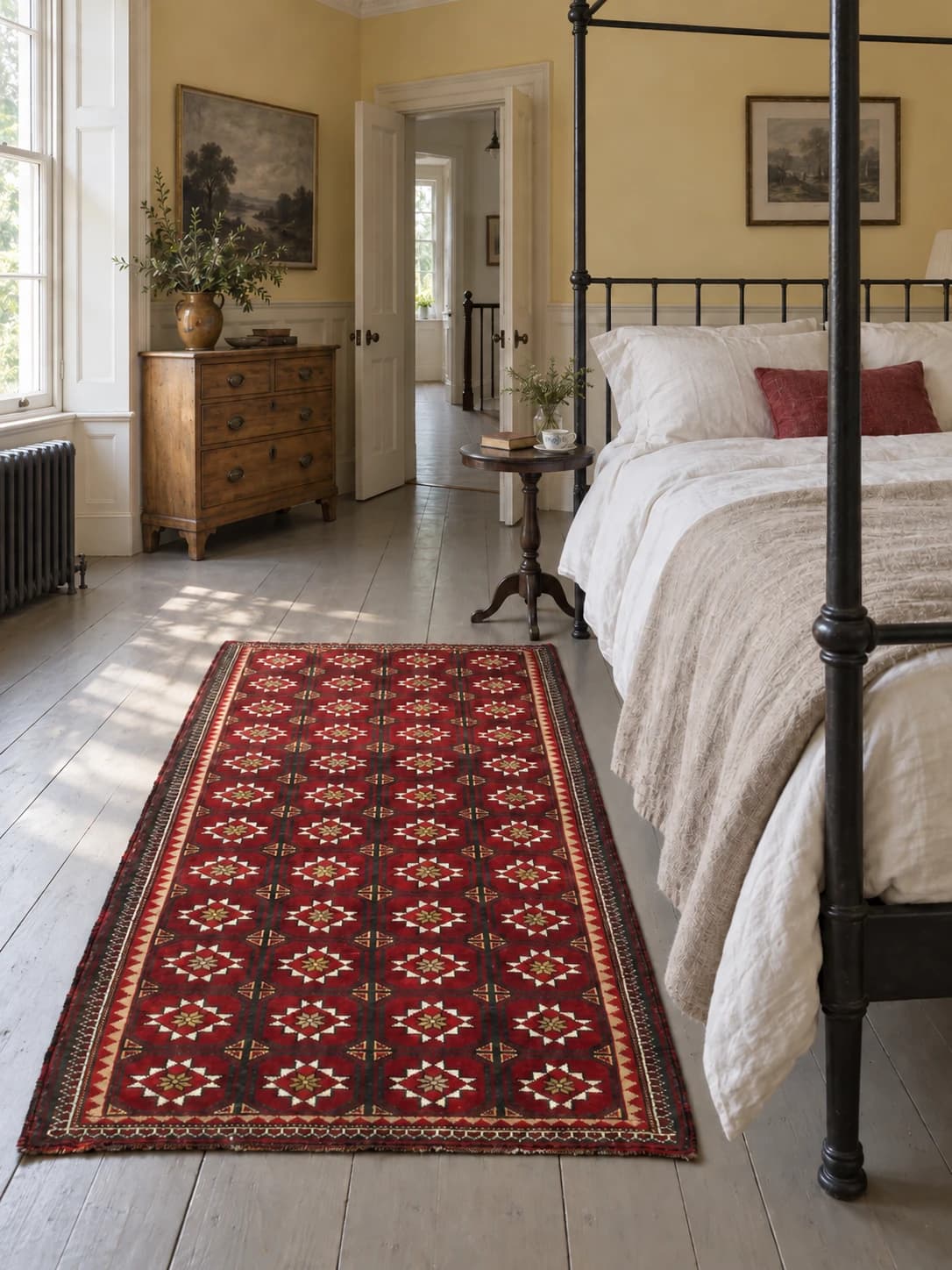
Runners are the region's commercial signature. Along with Karaja and Mehraban, Hamadan offers more runner choice than almost any other Persian weave, from about 1.8 meters up to lengths well past six meters, which is the class of rug a long corridor or a full staircase needs and one that few weaving centers supply regularly. The very long examples usually carry the herati design. Wide runners exist here as well, from roughly 90 centimeters upward, and wide examples turn up especially among older pieces. Beyond runners, village looms work mainly in smaller sizes.
Practically, this is a rug built for traffic: a cotton foundation, a symmetrical knotSee in the carpet dictionary and wool off high, cold pasture make a hard-wearing floor covering rather than a delicate one. The region's influence also reaches past its own borders. Mehraban at its northern edge and the north-western half of Malayer both weave in the Hamadan manner, and the Zanjan rugs made nearest to it repeat Hamadan designs and colors with a thinner pile. Learning to read this construction tells you how to read a good part of western Iran.
The Persian rug
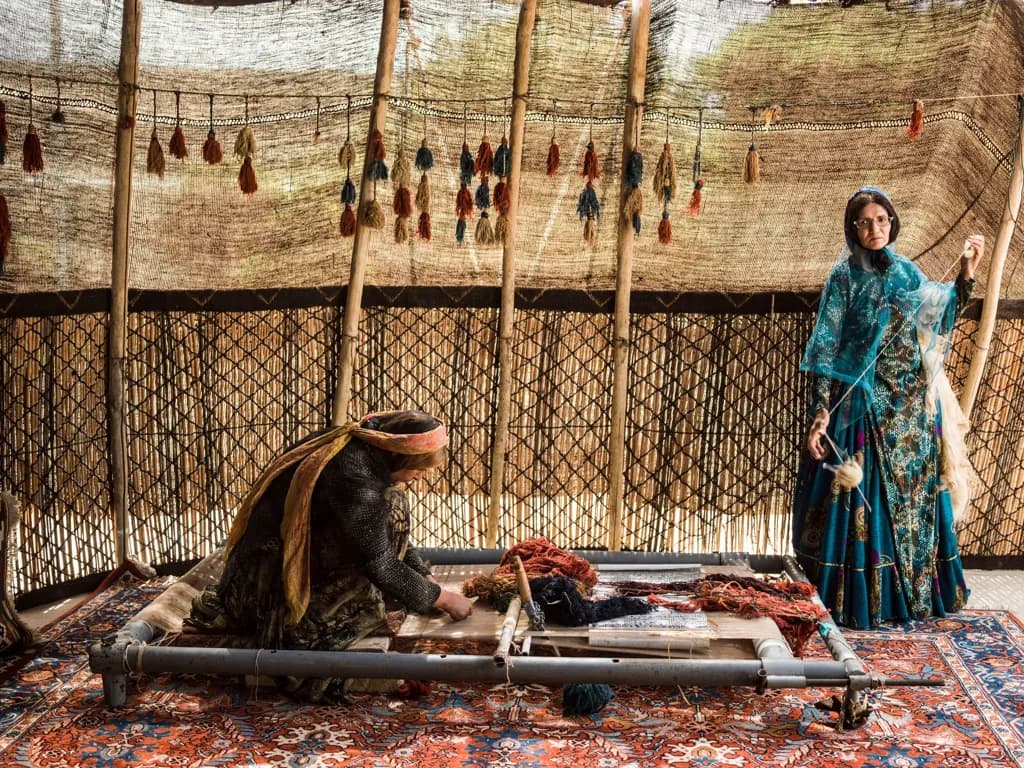
A Persian rug is an Iranian rug — a rug hand-knottedSee in the carpet dictionary in Iran — and the tradition behind it is the oldest documented anywhere. The earliest surviving carpet, the Pazyryk rugSee in the carpet dictionary, was found preserved in a frozen burial mound and dates to the fifth century BC — roughly 2,500 years ago — and it is already accomplished work, not a beginner's craft. What began as warm, hard-wearing floor coverings for tribal households grew, over those centuries, into the art form that every other rug-weaving country has borrowed from.
Two later chapters shaped what a Persian carpet looks like today. Under the Safavid dynastySee in the carpet dictionary, from 1501 to 1732, the court promoted weaving alongside painting and calligraphy, and the workshops of Tabriz, HeratSee in the carpet dictionary, Kashan and Kerman produced the masterpieces that now sit in museums. This is when the great central medallionSee in the carpet dictionary appeared, and when designs grew elaborate enough that a separate designer — often a miniature painter — drew the pattern onto a cartoon for the weaver to follow. The second chapter came in the nineteenth century, under the Qajar dynastySee in the carpet dictionary, when production reached its historical peak, exports to Europe and America boomed, and the workshop industry whose descendants still weave today took its modern shape.
The trade sorts Persian rugs into three families. City rugs — Tabriz, Kashan, Kerman, Nain, Isfahan — are woven in workshops from a drawn design, carry the highest knot densities and come in the widest range of colors, sizes and patterns. Village rugs such as HerizSee in the carpet dictionary, BakhtiariSee in the carpet dictionary and KarajaSee in the carpet dictionary sit in between, mostly geometric and largely woven from memory. Tribal rugs — Baluch, TurkomanSee in the carpet dictionary, QashqaiSee in the carpet dictionary, each named after the people who weave it — are made on small portable looms, so they run smaller, and their bold geometric drawing comes from the weaver's own head rather than from paper.
The design vocabulary draws on a deep stock of motifs: Shah AbbasiSee in the carpet dictionary palmettes, flowing arabesques, the small repeating Herati patternSee in the carpet dictionary, medallions, garden and tree-of-life compositions. These combine with regional habits into styles a practiced eye can place at a glance, from the bold geometric medallions of Heriz to the fine curvilinear florals of Isfahan.
The classic palette is built on natural dyes: madderSee in the carpet dictionary reds, indigo blues, saffron yellows and the soft whites of undyed woolSee in the carpet dictionary, settled into combinations refined over centuries. Natural dyes age gracefully, mellowing into the patina that older rugs are prized for, and slight shifts of tone between dye batchesSee in the carpet dictionary — the effect called abrashSee in the carpet dictionary — are a mark of small-batch natural dyeing, not a flaw.
The pileSee in the carpet dictionary is almost always woolSee in the carpet dictionary, and in a Persian wool rug the wool itself decides much of the quality. The best fleece comes from high-altitude flocks, where it grows thicker and richer in natural oils; spring-sheared wool beats the autumn clip, and hand-spun yarnSee in the carpet dictionary gives a finer, softer thread than machine spinning. Fine pieces add silk highlights to a wool pile, and at the very top sits the Persian silk rug, woven in pure silk. Foundations are usually cotton in city weaving, wool in tribal and older pieces, silk at the very top of the range.
Every knot is tied by hand, one at a time, in one of two forms: the asymmetric Persian knotSee in the carpet dictionary, usual in central and eastern Iran, or the symmetric Turkish knotSee in the carpet dictionary, common in the north-west ever since Seljuk weavers introduced it in the eleventh and twelfth centuries. A large rug holds in the region of two million knots and can occupy a weaver for about a year.
Knot densitySee in the carpet dictionary is the figure newcomers fixate on, and the finest silk-foundation pieces do reach as much as 1,000 knots per square inch. But densitySee in the carpet dictionary only matters as far as the drawing demands it: a curvilinear Isfahan needs a fine weave to stay sharp, while a geometric Heriz is famously durable at a modest count. Material, symmetry, color harmony and condition say more about quality than any single number.
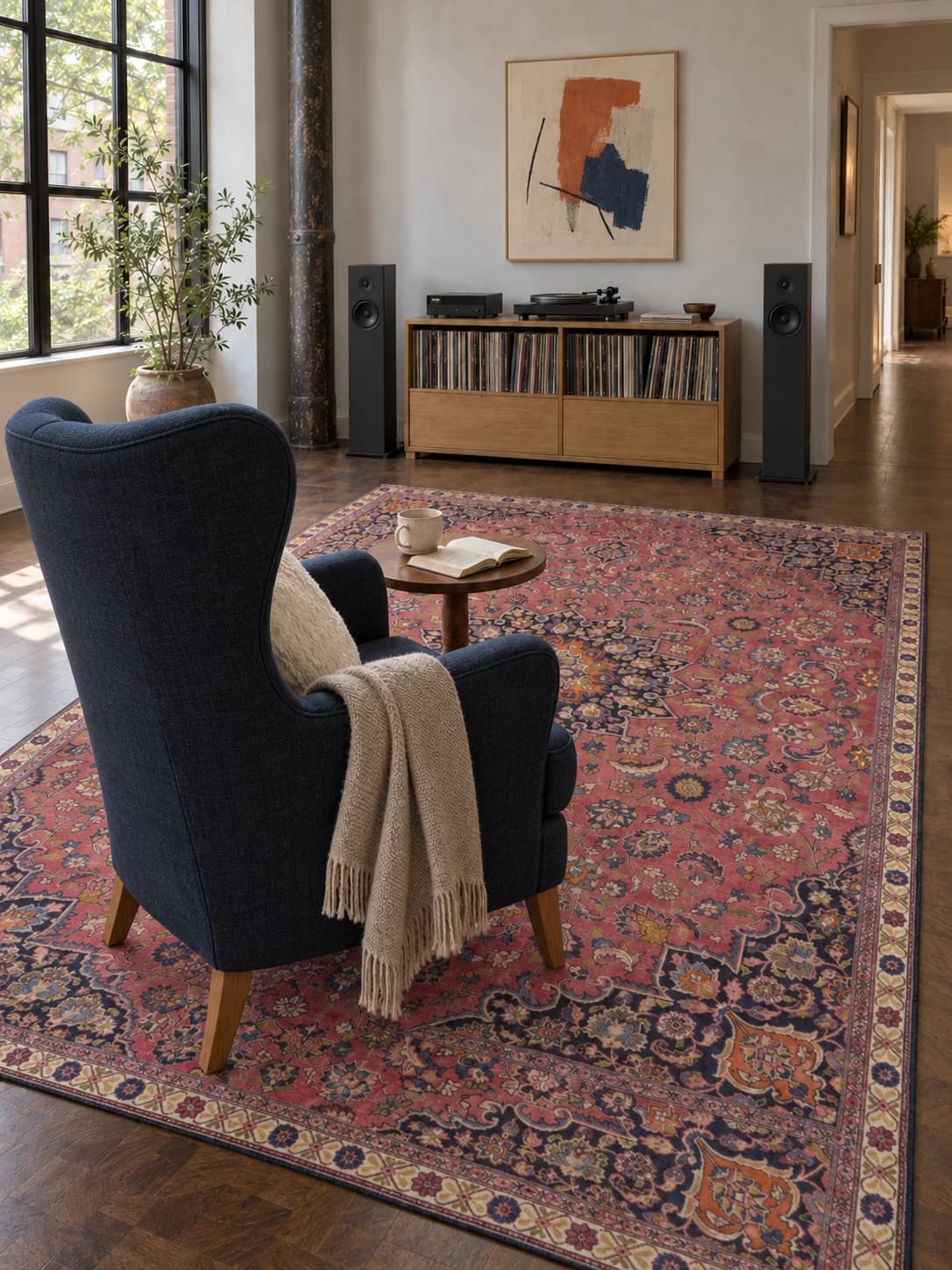
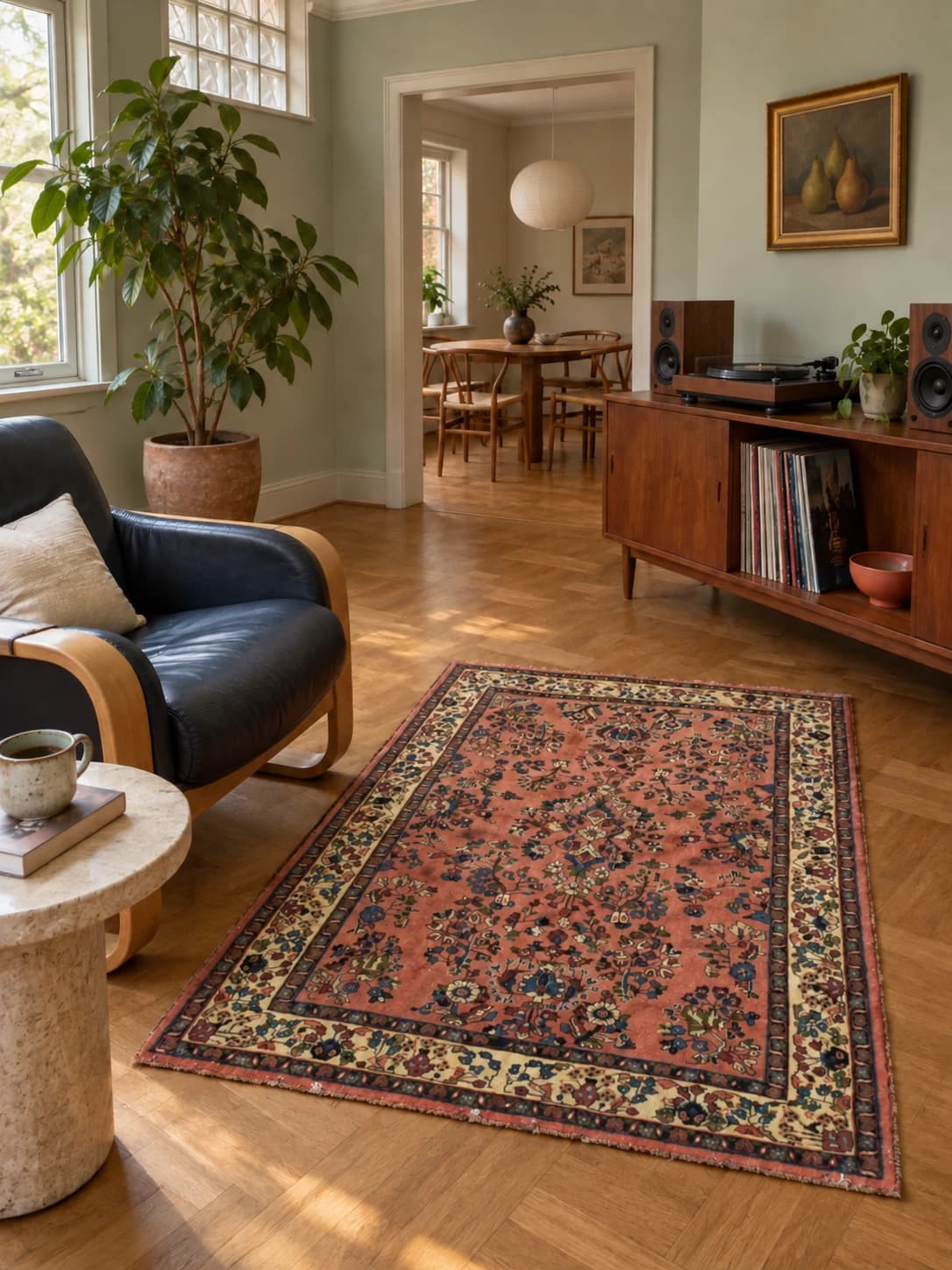
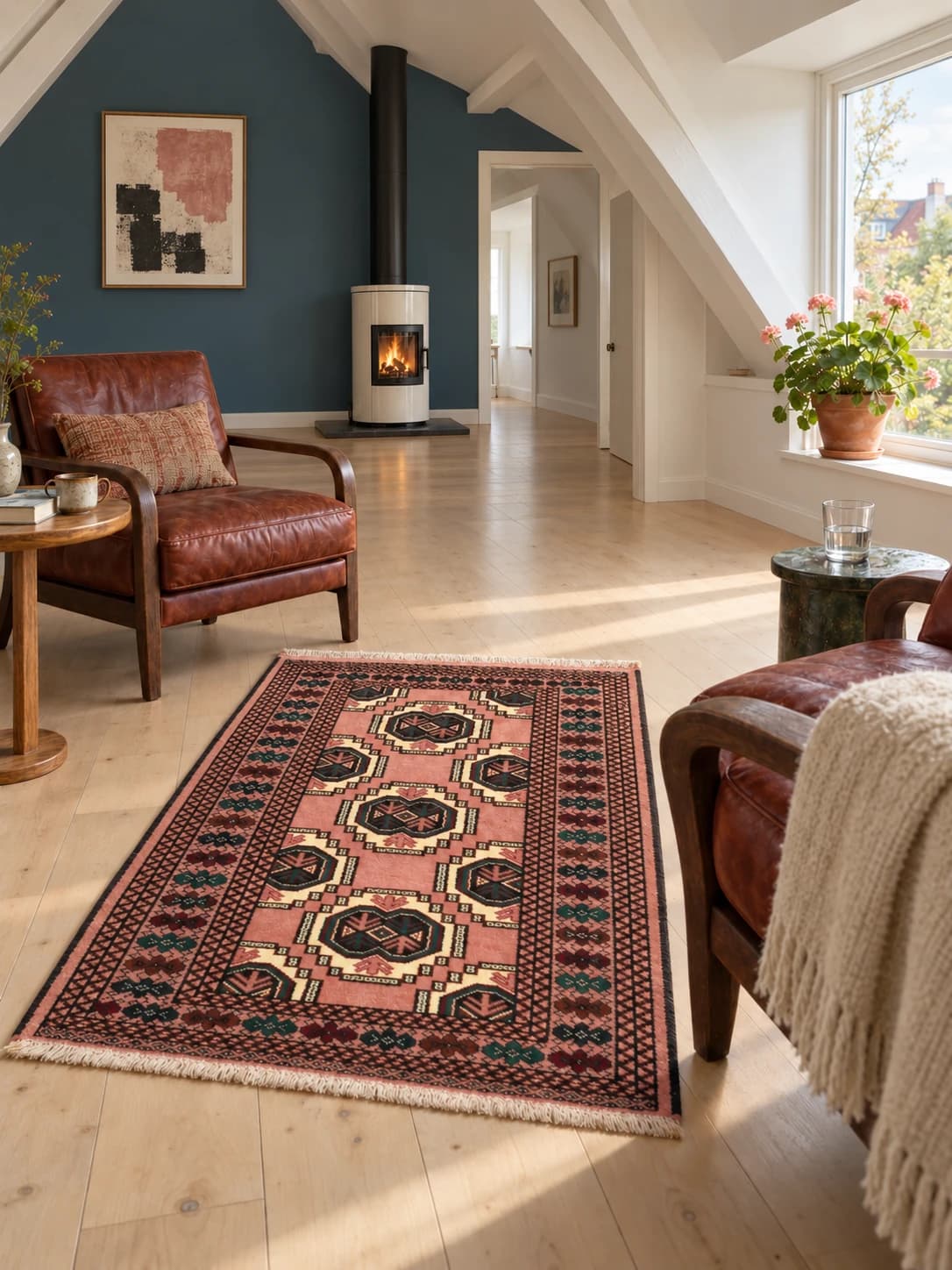
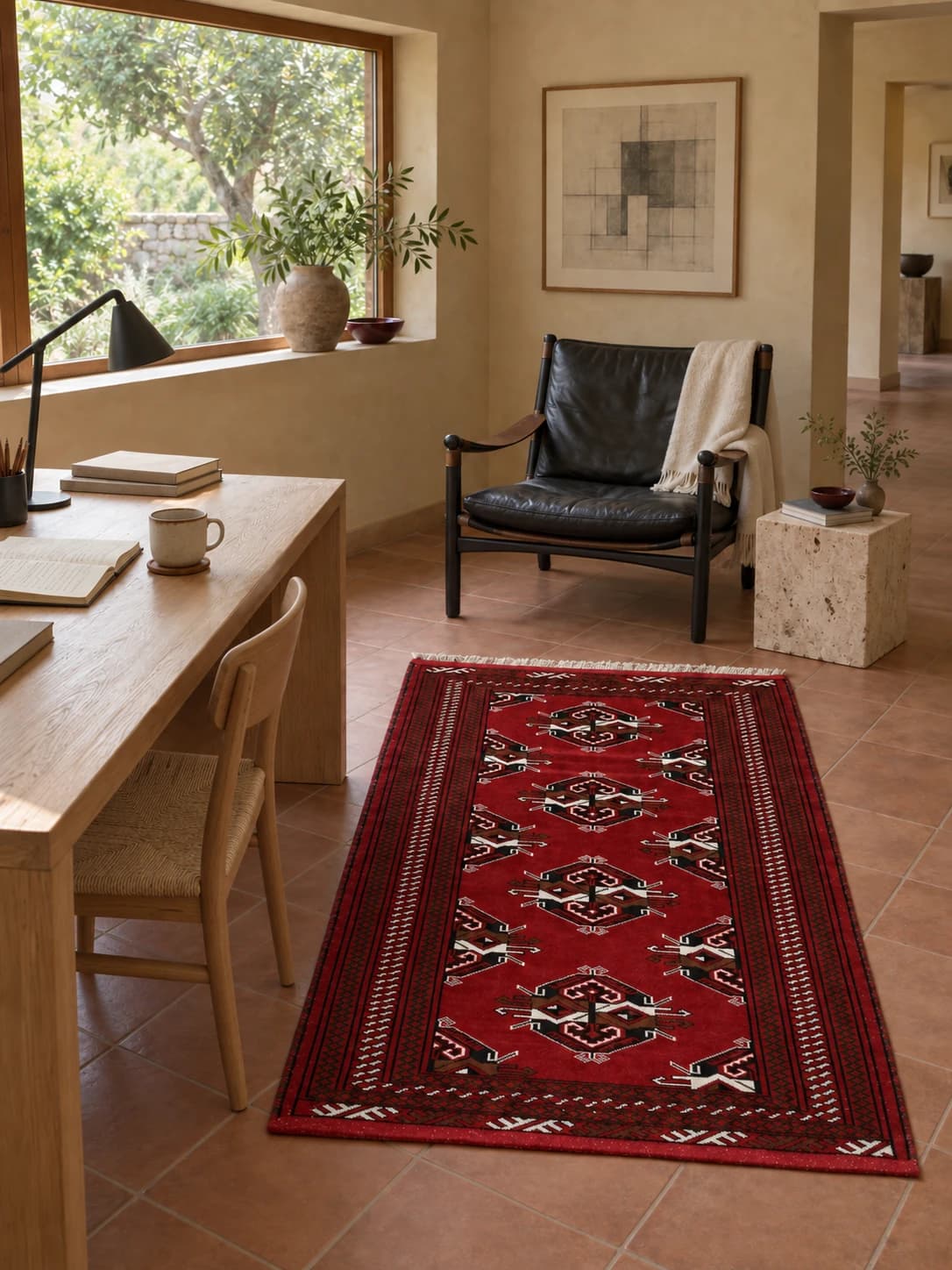
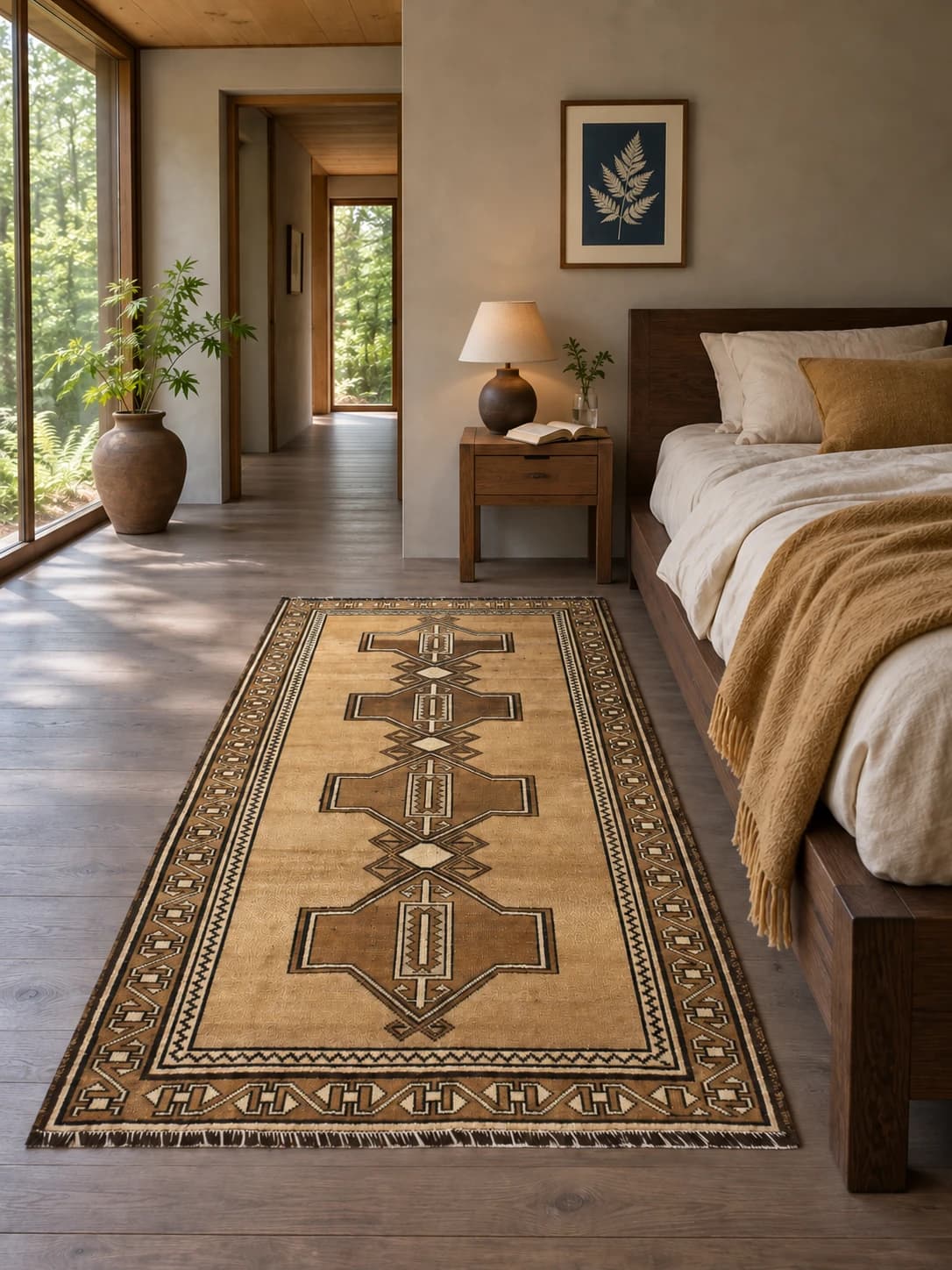
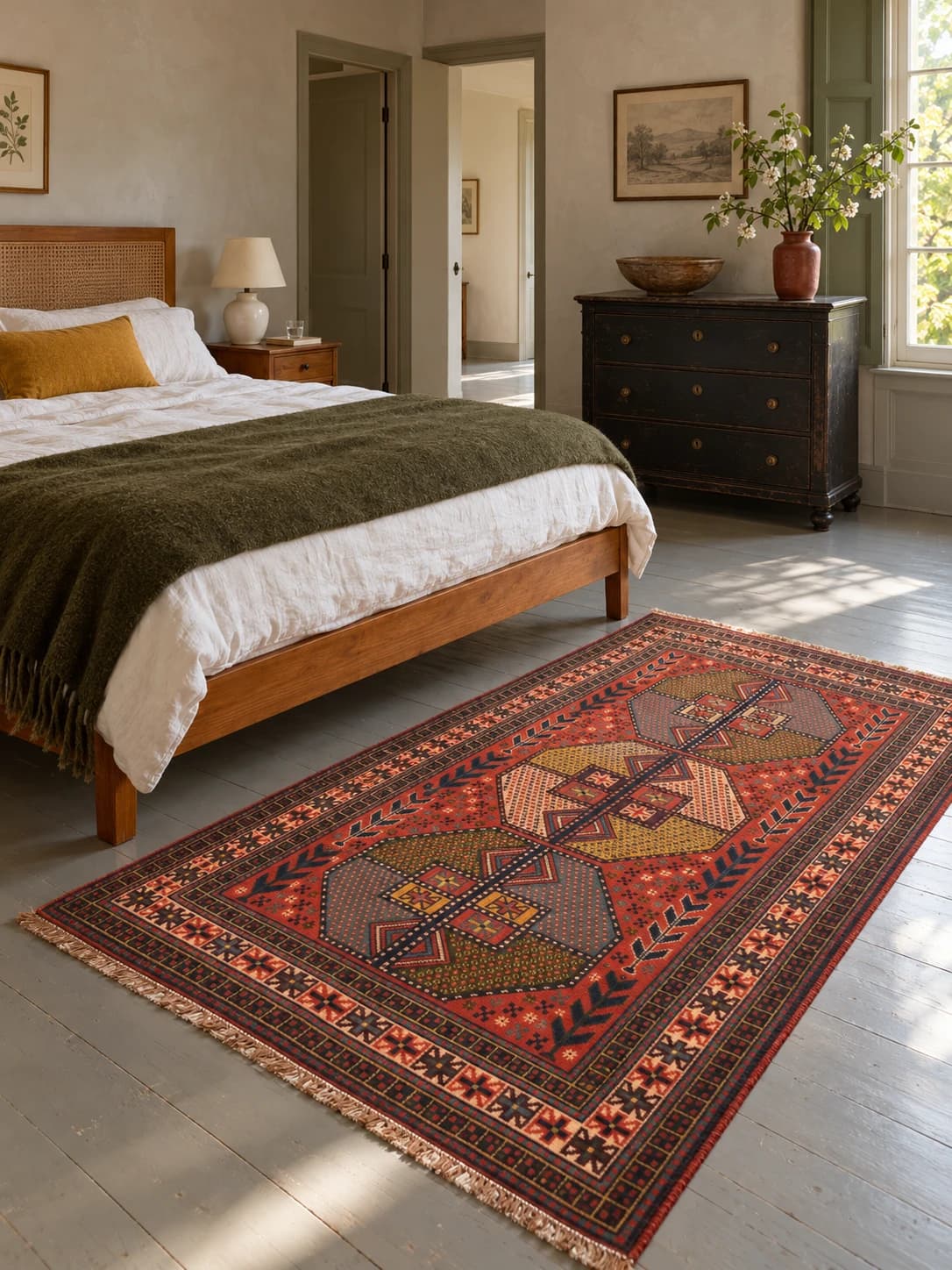
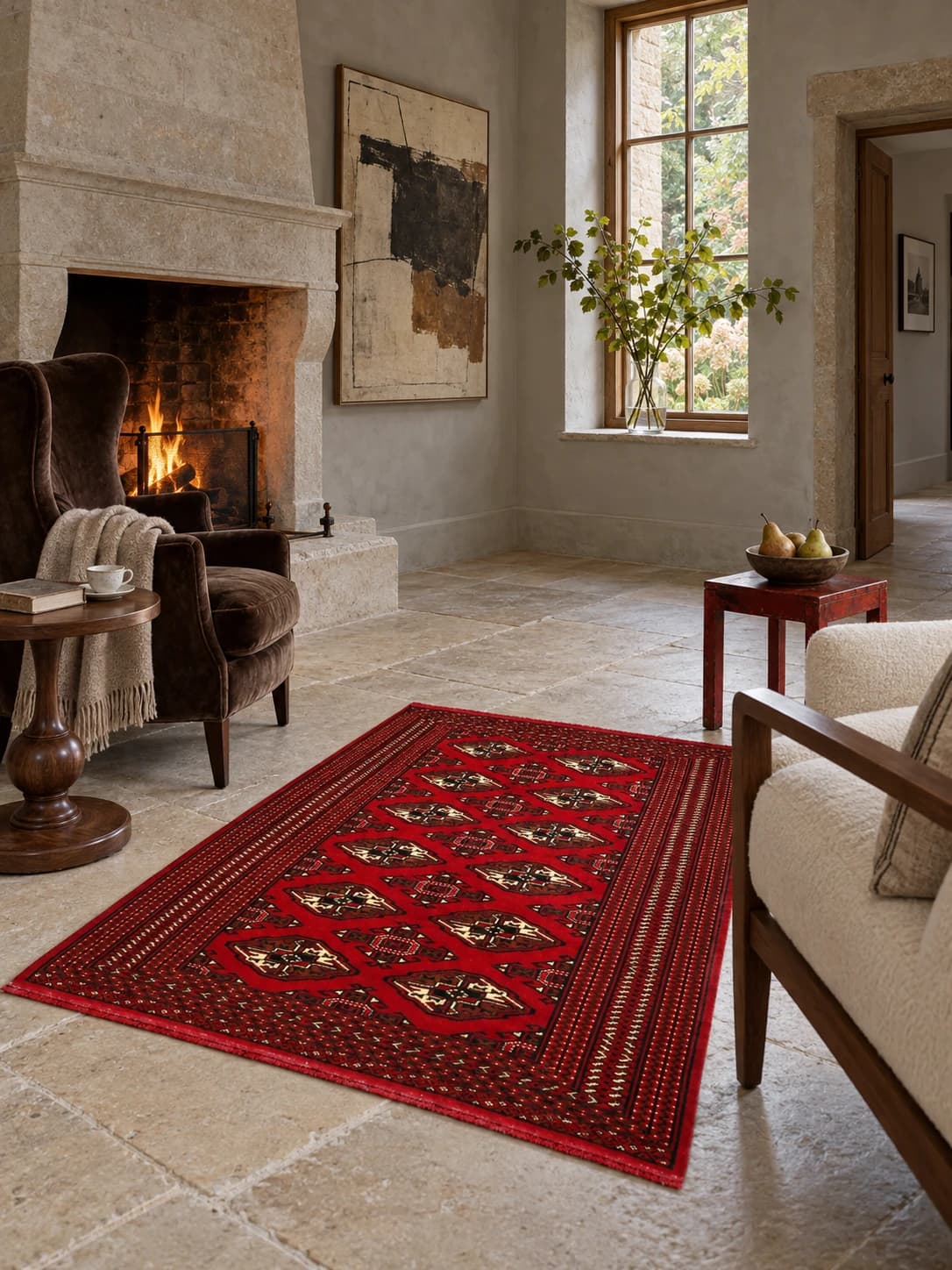
Persian carpets settle into modern rooms as naturally as classical ones, as a focal point in a living room, a foundation under a dining table or a quieter accent in a bedroom. Care is undemanding: gentle vacuuming without a rotating brush, an occasional turn for even wear, and a professional wash about every five years — sooner in a hallway or entrance, less often in a quiet room.
A hand-knotted Persian rug tends to outlast its owners. Pieces a century old regularly survive in fine condition, their colors settled and their pile supple, often looking better than when they left the loomSee in the carpet dictionary. A well-chosen, well-kept rug holds its worth and passes down as a family heirloom rather than being replaced — which is precisely what the knots, the wool and the dyes were always for.
Questions about this carpet?
Our family has traded carpets for two generations. Ask us anything — photos, video calls, advice on sizes.
Message us
Keep exploring
Guides from our family workshop: how to clean, place and care for hand-knotted rugs.