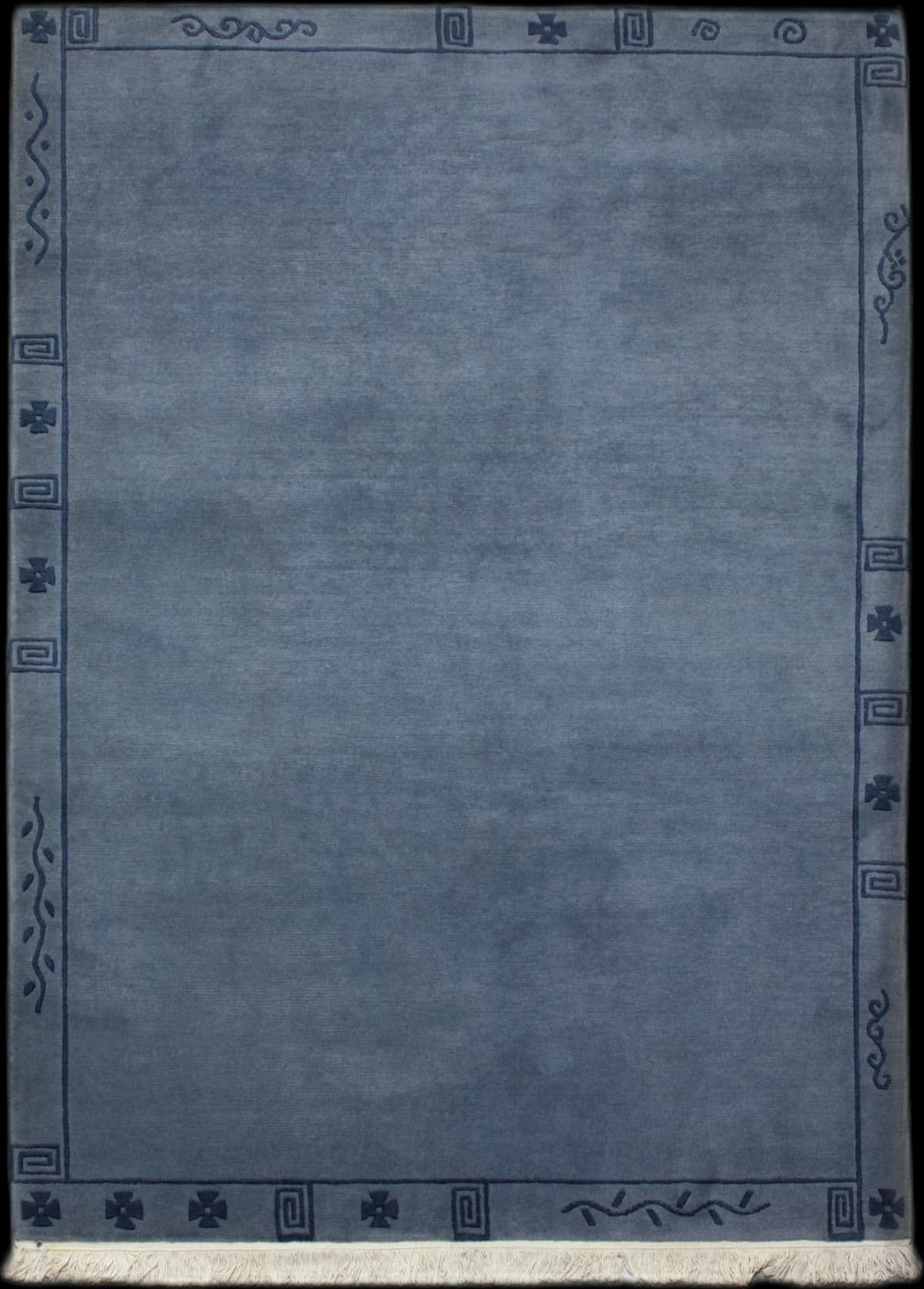
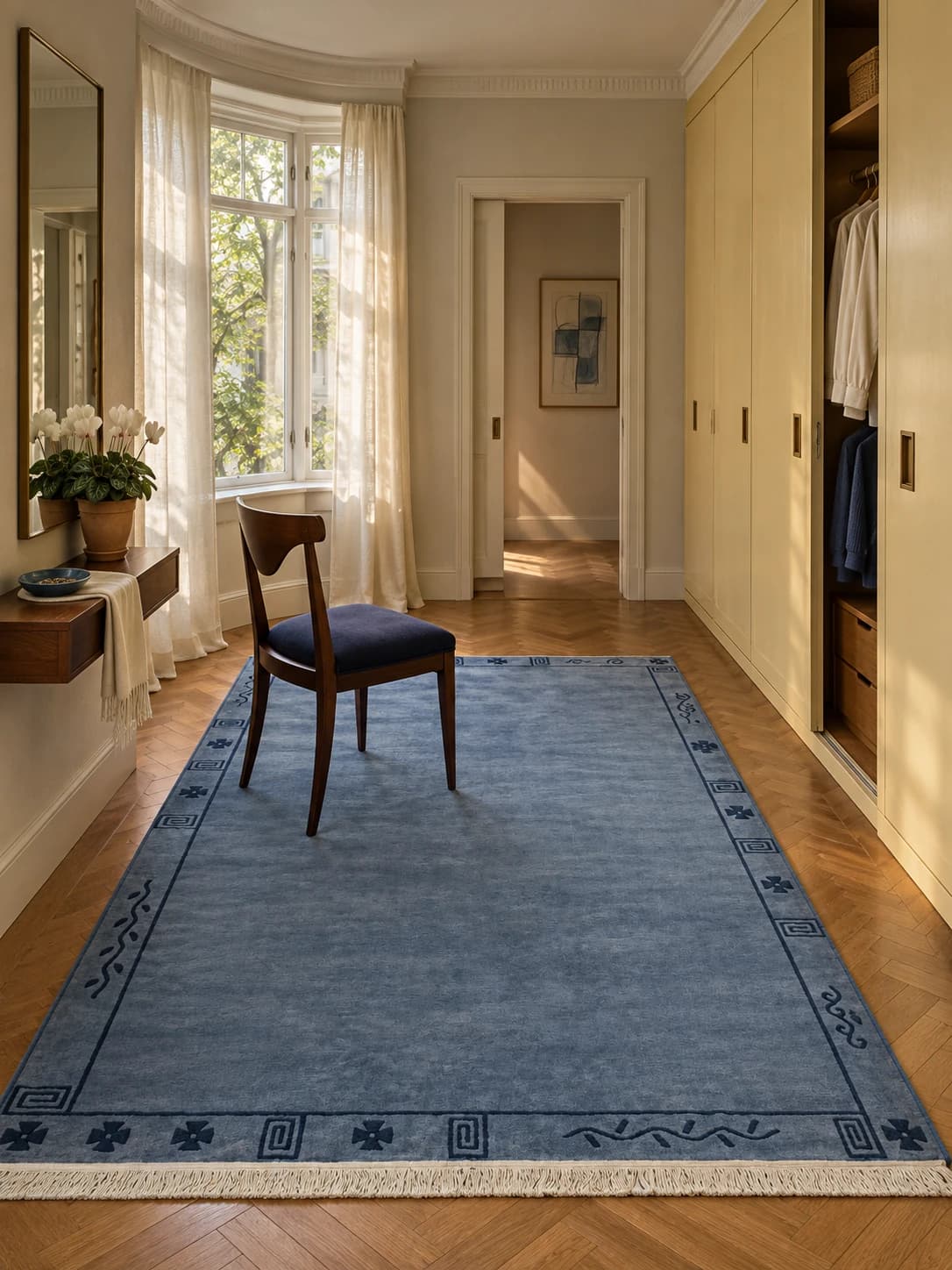
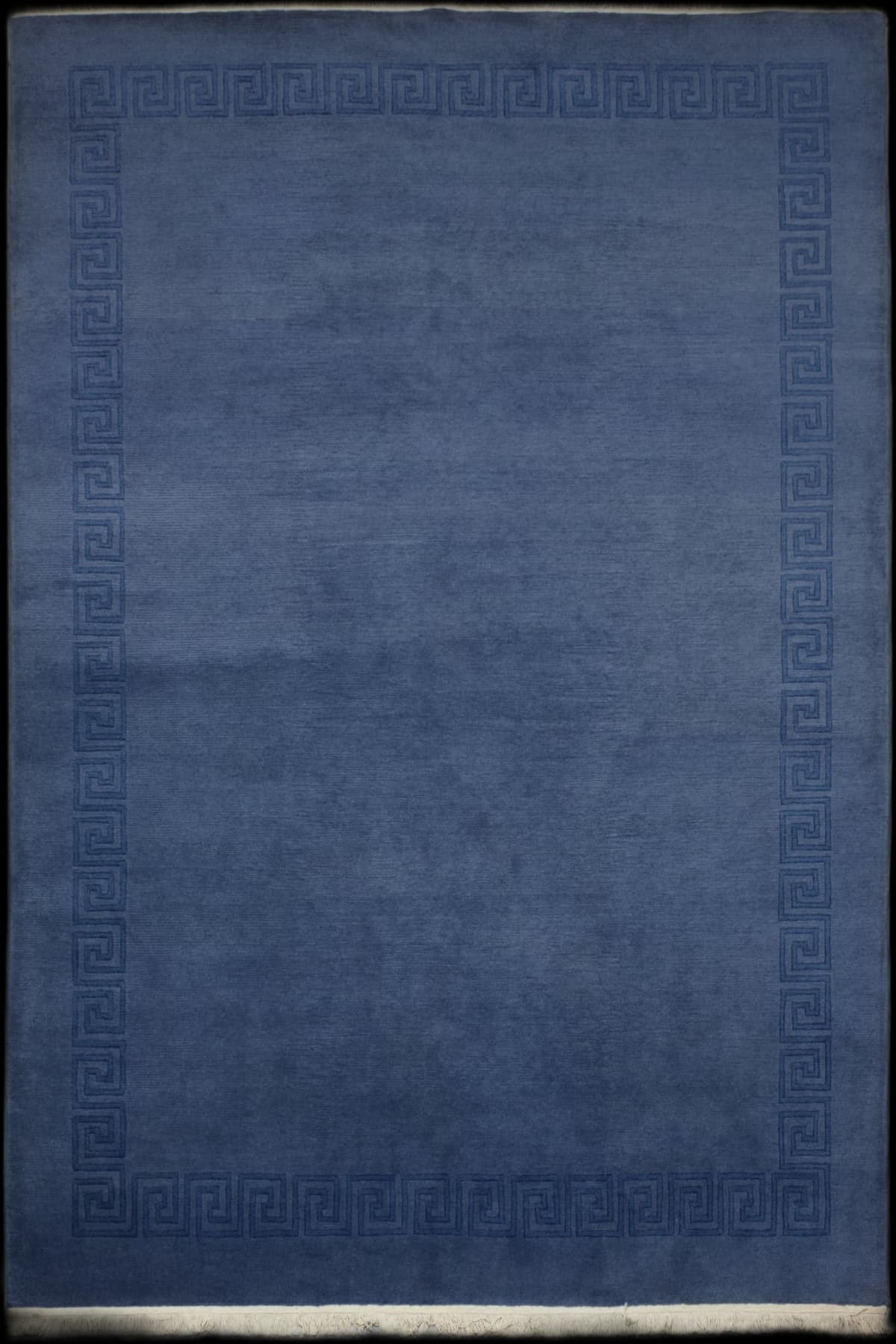
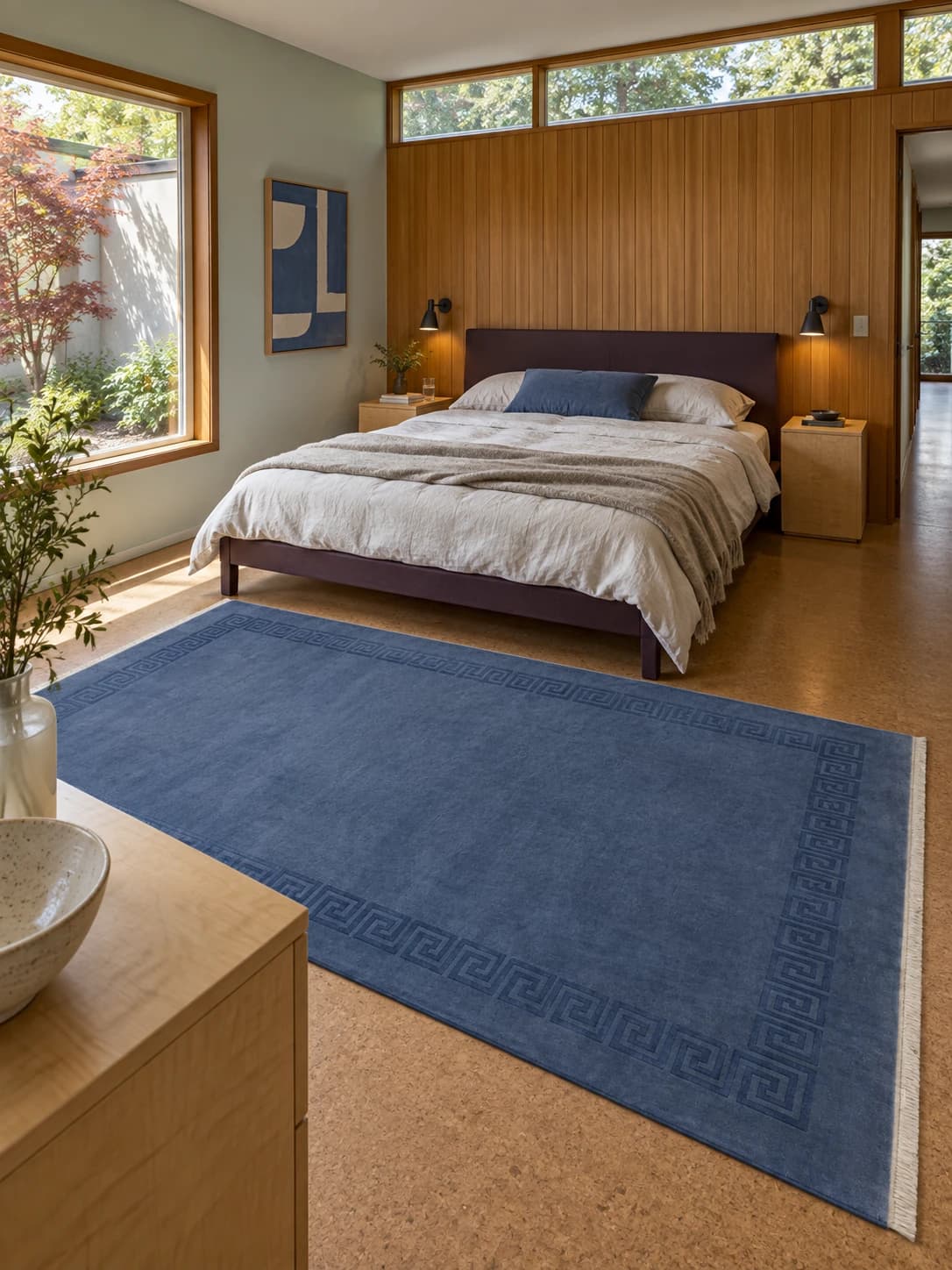
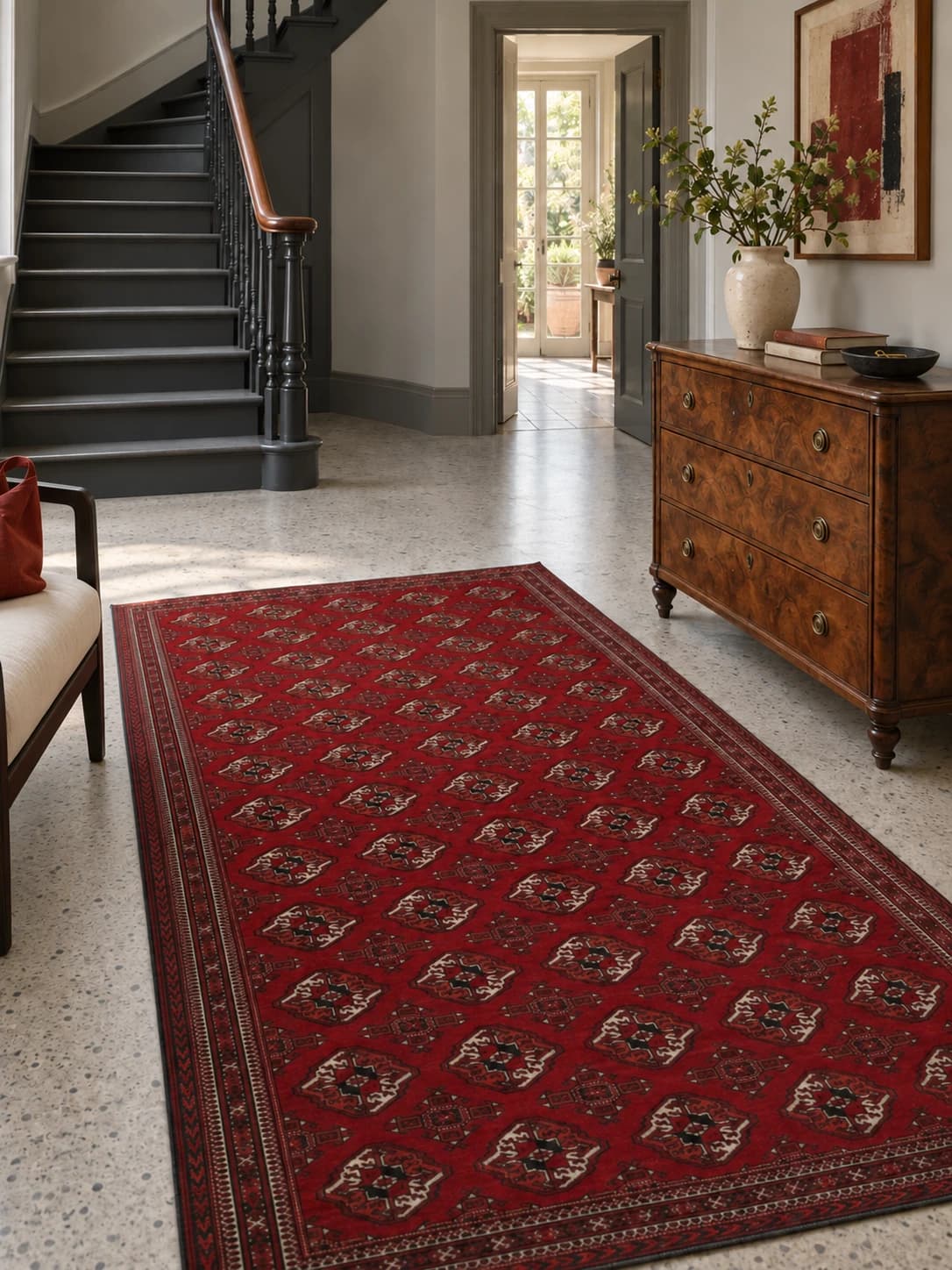
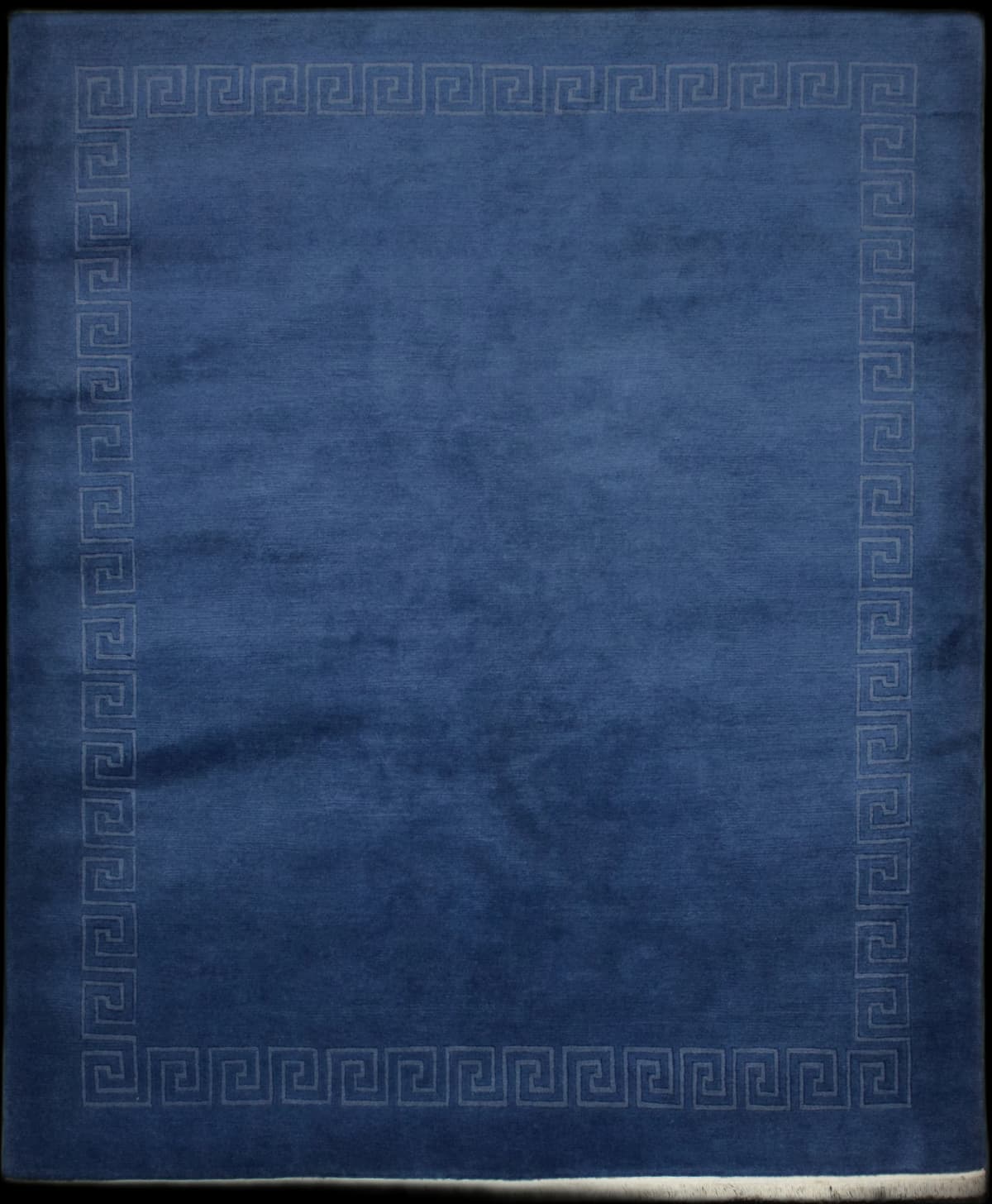
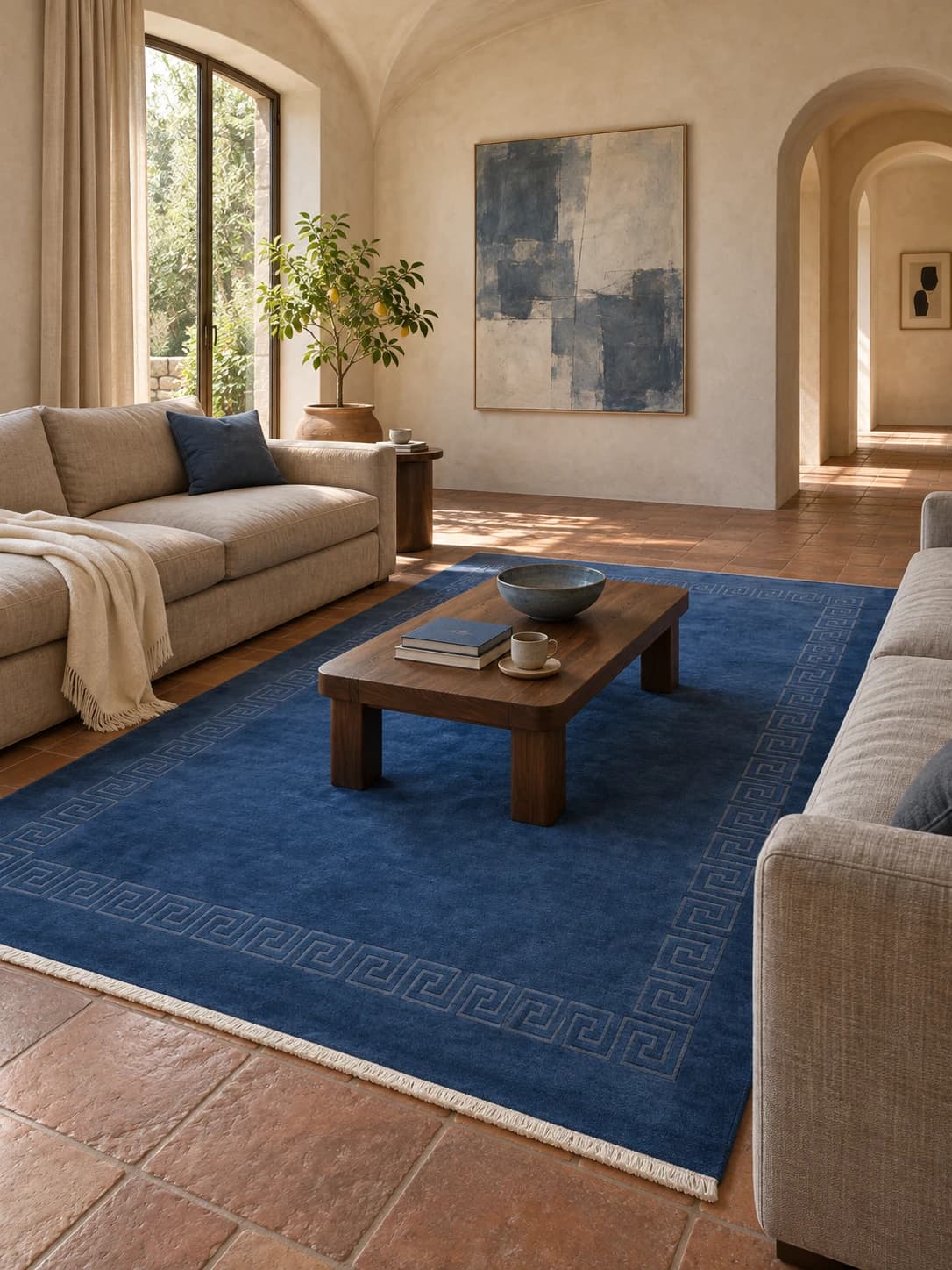
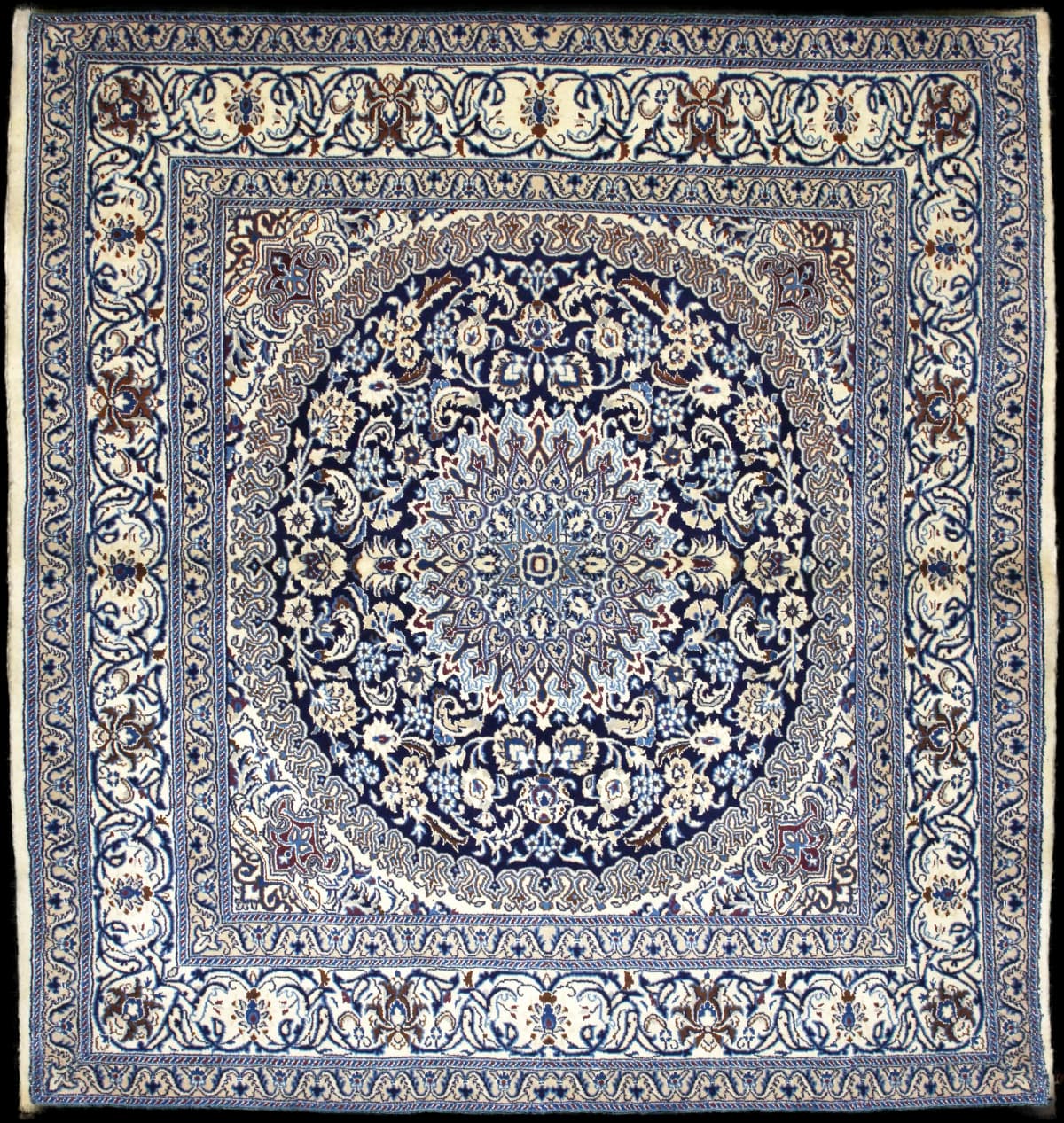
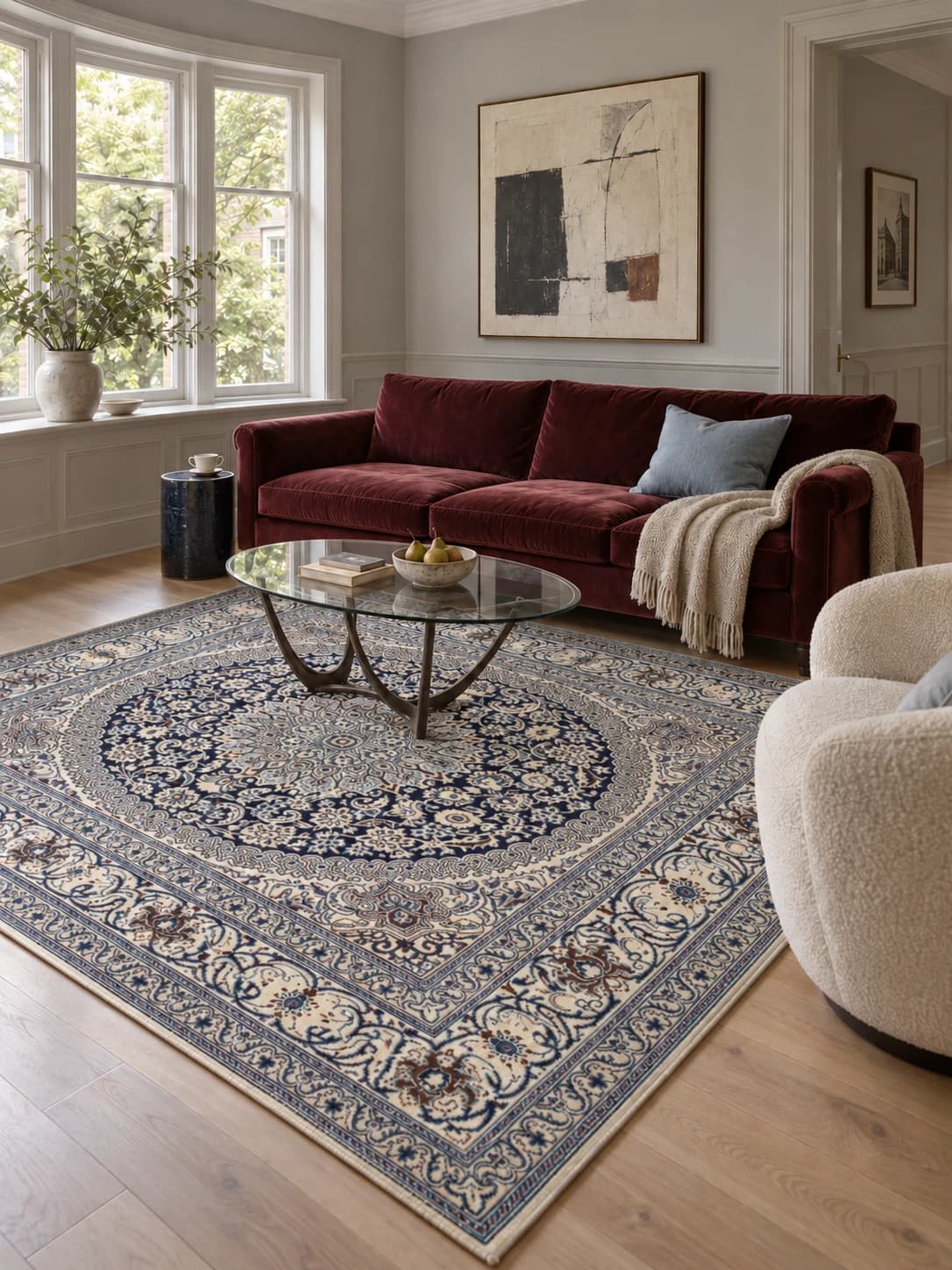
From the region ofकाठमाडौँKathmandu
Up close
Origin: Kathmandu
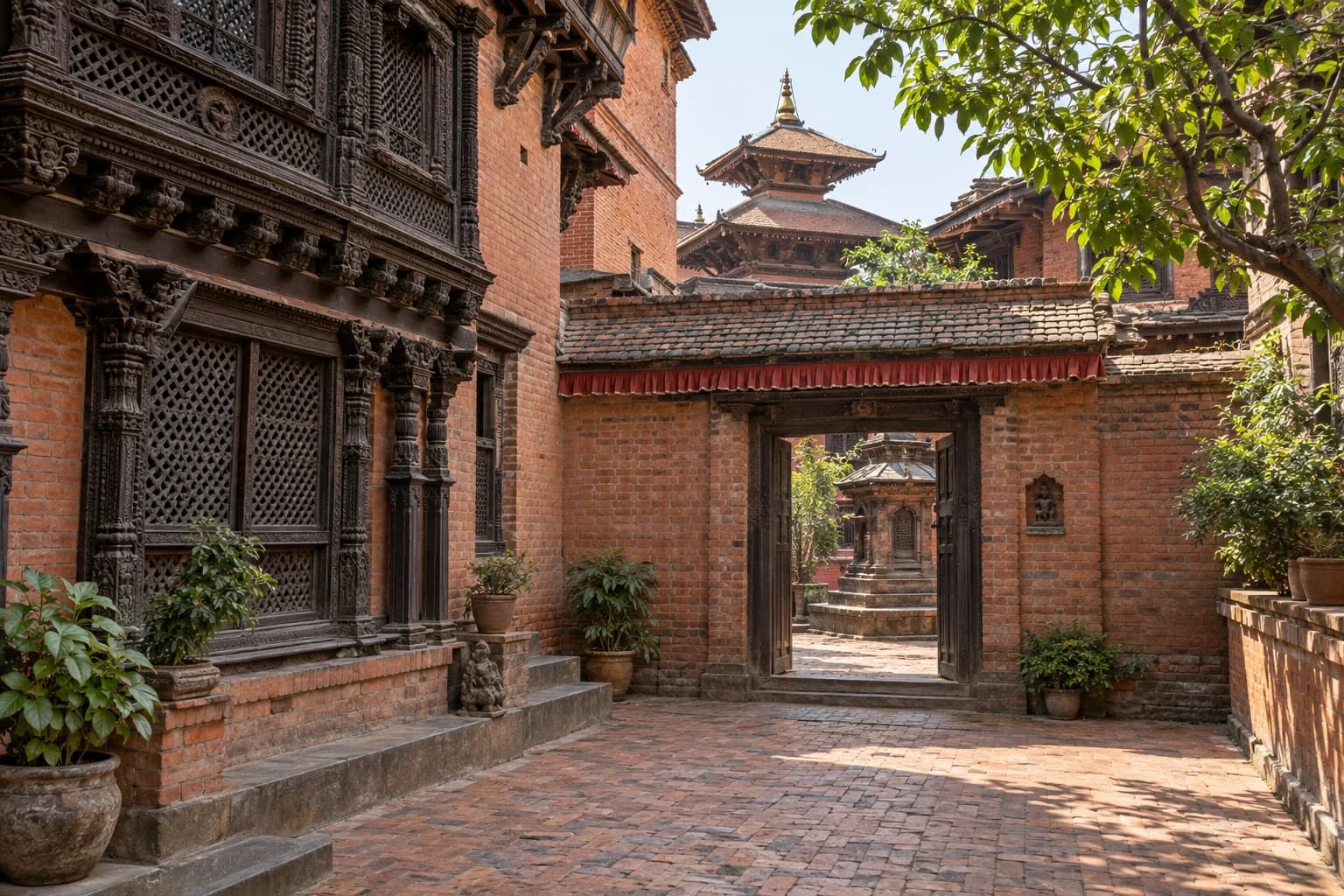
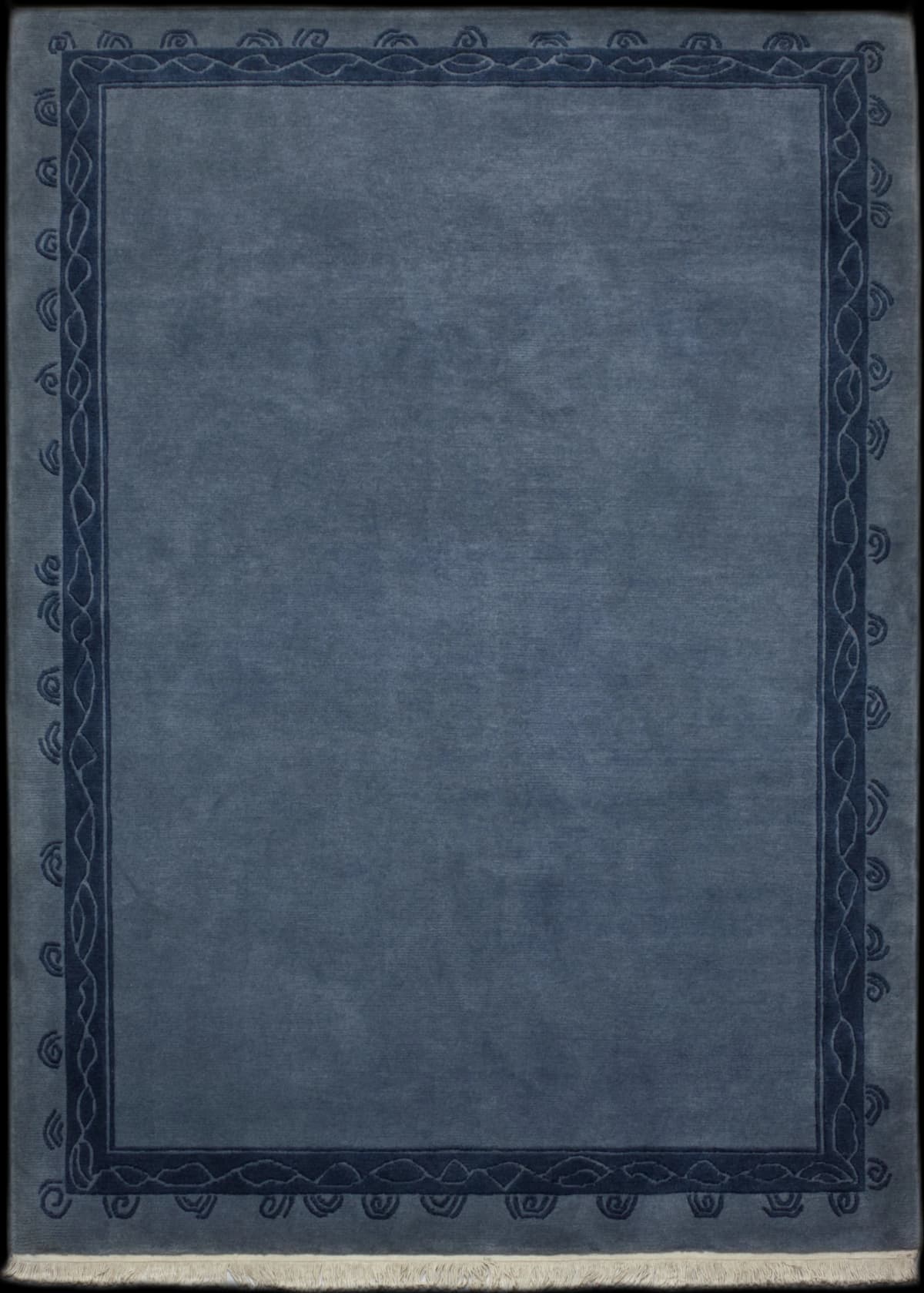
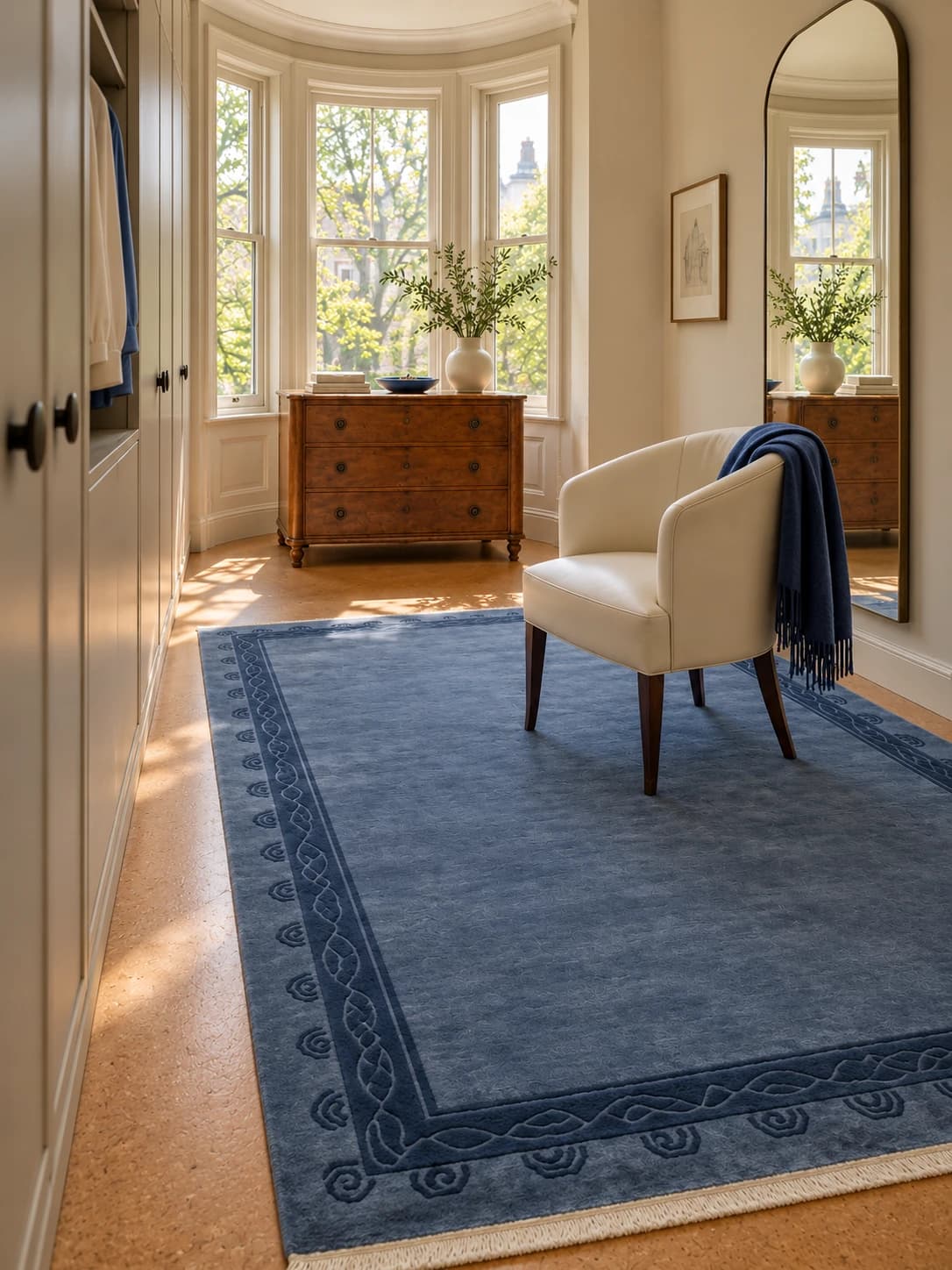
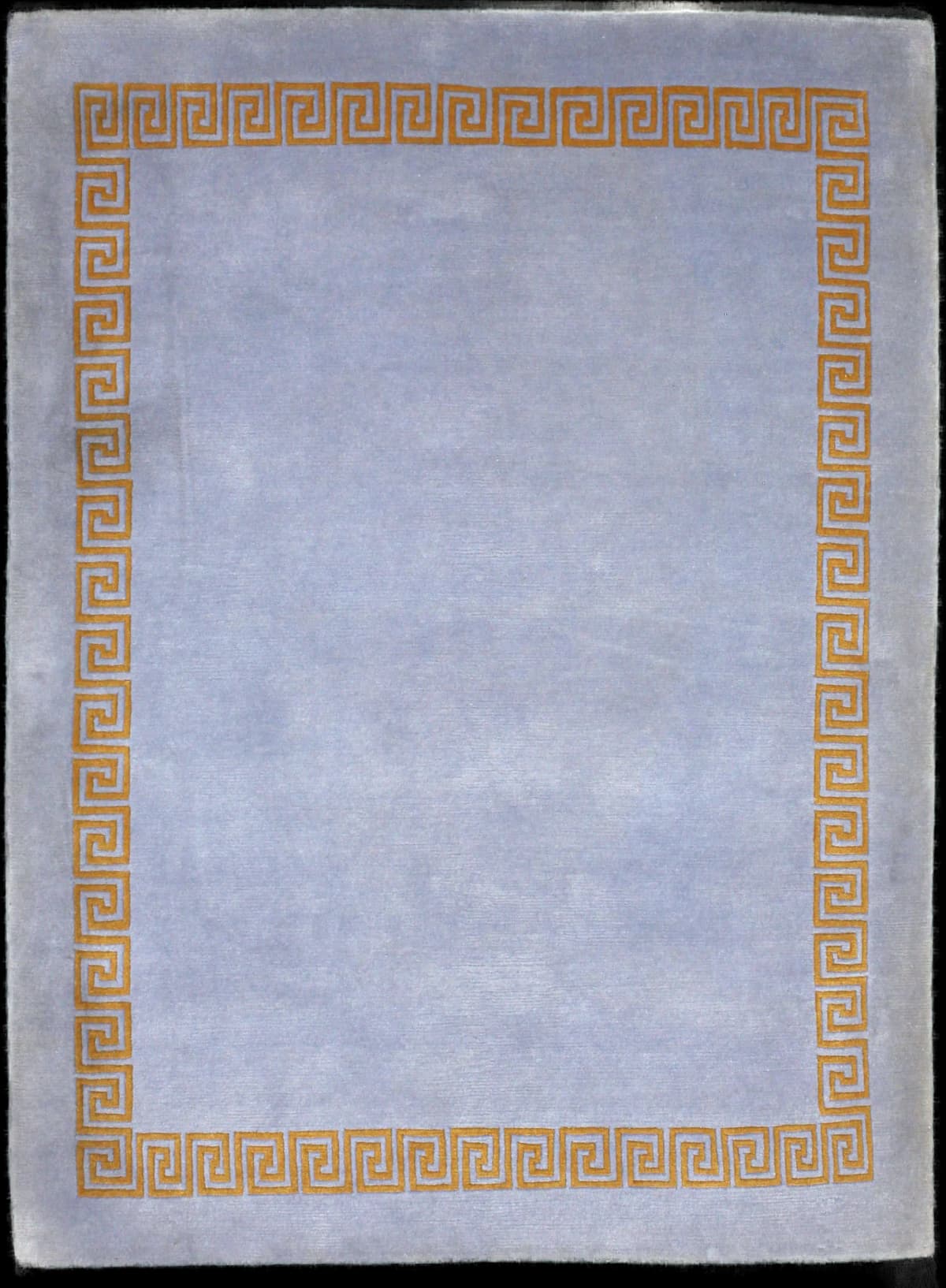
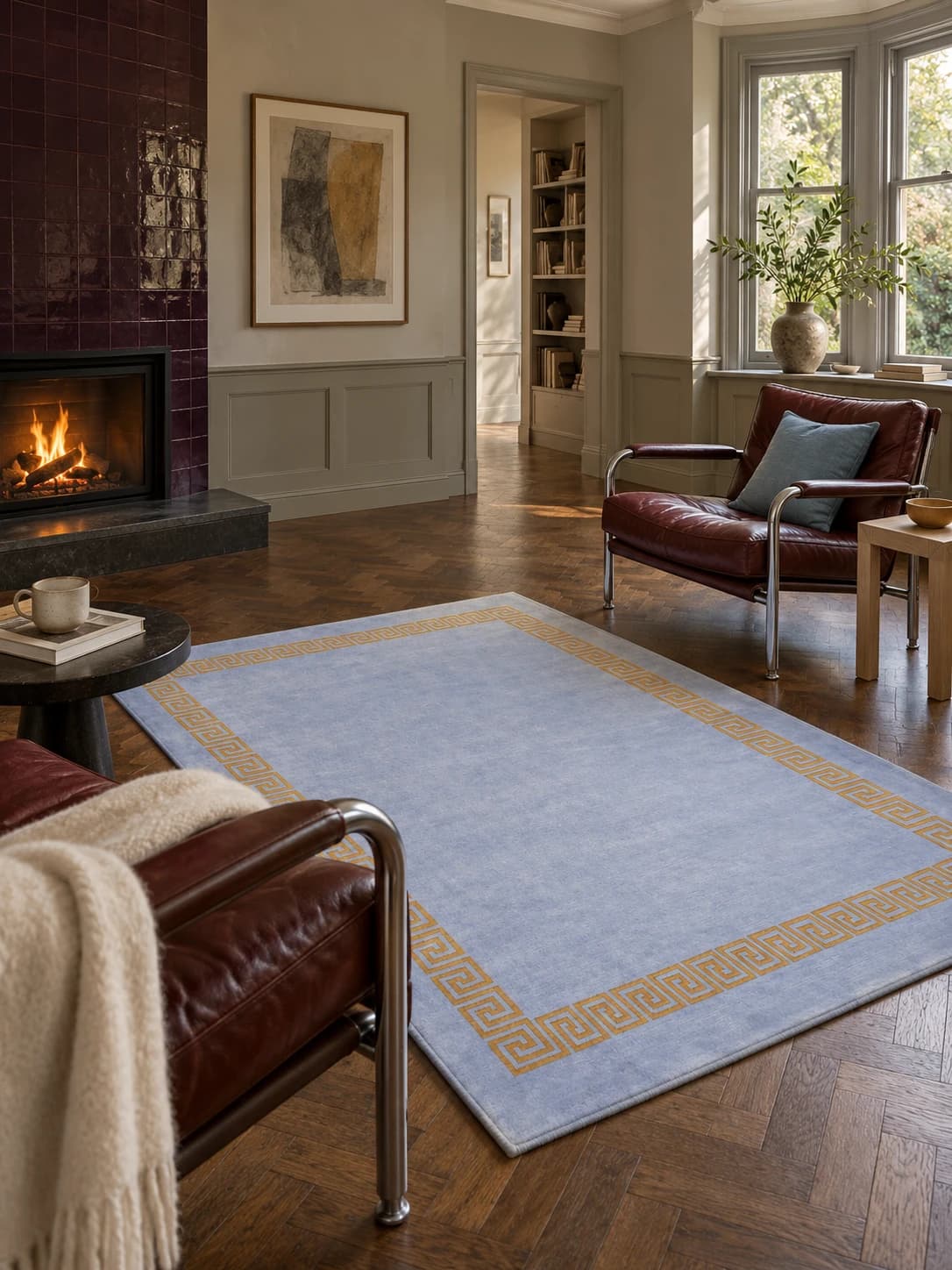
Kathmandu is the capital of Nepal and the principal city of the Kathmandu Valley, in Bagmati Province. Its name descends from Kasthamandap, the timber pavilion at Maru Tole beside the old Durbar Square; the Malla kings ruled the city as Kantipur, and its Newar inhabitants still call it Yen. Weaving belongs to the valley rather than to the capital's street plan. Looms and finishing sheds sit in Kathmandu itself, in the Tibetan quarter around Boudhanath on its north-eastern side, across the river in Lalitpur - old Patan - around Jawalakhel, and eastward towards Bhaktapur. A rug sold under the Kathmandu name comes from that cluster rather than from one quarter of the city.
Nepal had no knotted-pileThe surface of a rug or carpet, made of upright fibers in cut tufts or loops. In a hand-knotted rug it is formed by the cut ends of thousands of wool or silk knots tied onto the warp row by row, trimmed lightly during weaving and given its final height by shearing at finishing. Pile thickness, measured from the back of the rug to the top of the pile, typically runs from low, about 1/8 to 1/4 inch (3 to 6 mm), to high, about 1/2 to 5/8 inch (13 to 16 mm). Fine, dense designs are cut short to keep the pattern sharp; higher pile suits traffic and heavy furniture, lower pile suits door clearance and humid rooms.See in the carpet dictionary industry of any commercial size before the middle of the twentieth century. What exists today was built almost from nothing after 1959, when Tibetan families who had crossed the Himalaya were resettled in the valley and a handicraft center opened at Jawalakhel, with Swiss technical assistance, to give them work they already knew how to do. The craft was Tibetan rather than indigenous, and its market was foreign from the start, first visitors in Kathmandu and then importers abroad. Within a generation carpets had become one of the country's largest manufactured exports and the valley its main production center. This is a young tradition, and its youth explains a great deal about how the rugs look.
The weave itself is what most clearly separates these carpets from Persian ones. Rather than tying an individual knot on each pair of warps, the weaver runs a continuous length of yarn across the row, looping it around pairs of warps and around a metal gaugeIn machine-made carpets, refers to the distance between needles on the tufting machine. Lower gauge numbers indicate more needles per inch and a denser carpet.See in the carpet dictionary rod laid in front of them. When the row is complete the loops are cut along the rod and the rod is withdrawn, leaving a finished row of pile. This is the Tibetan or loop knot, and it gives a pile that feels dense, springy and slightly shaggy underfoot, with a softer and less exactly drawn line than a Persian knotThe asymmetrical knot of hand-knotted rugs, the counterpart of the symmetrical Turkish (Ghiordes) knot. The weaver wraps the yarn around one warp thread and passes it under the neighboring one, usually working by hand without a hook. On the back of the rug the knots look staggered or diagonal rather than like tidy squares, and the pile feels softer; the knot permits finer detail and higher knot density. In Iran, a rule of thumb ties it to the central, eastern, and southern rugs (Kashan, Isfahan, Nain, Kerman), while the northwest and west favor the Turkish knot, though exceptions exist. Fine curvilinear florals are often credited to it, but Turkish-knot rugs can be just as intricate.See in the carpet dictionary produces.
DensityA measure of how tightly a carpet is packed. In machine-made carpet it describes the fibers in the pile and is calculated by multiplying the face weight by 36 and dividing by the pile height; higher density generally indicates better durability and performance. In hand-knotted rugs it means knot density (KPSI, knots per square inch), counted on the back and averaged over several areas (150 KPSI is about 23 knots per cm²). Like image resolution, higher density allows finer curves and sharper designs, usually with a lower-trimmed pile and more labor, but it is not the sole measure of quality: bold geometric village rugs are made at low to medium density.See in the carpet dictionary is quoted differently here as well. Himalayan rugs are traditionally graded in knots per horizontal inch, as 60-knot, 80-knot or 100-knot quality, while Persian and most other hand-knottedA rug construction in which the weaver ties each knot of wool or silk pile yarn by hand around adjacent warp threads on a loom, then runs a weft through the row and beats it down. The cut knot ends form the pile, the warps and wefts form the foundation, and the warp ends become the fringe. A rug can take months or even years, and the work leaves subtle irregularities: patterns not perfectly symmetrical, opposite edges a few inches different in length, an uneven fringe. Authentic Persian, Oriental and Turkish rugs are hand-knotted, unlike hand-tufted rugs (sometimes sold as “handmade”) and machine-made ones, whose backs feel stiff and evenly aligned.See in the carpet dictionary rugs are measured in knots per square inchThe number of knots in one square inch of a hand-knotted rug (KPSI; 1 KPSI is about 15.5 knots per 10 x 10 cm), counted on the back with a ruler by multiplying the knots along one inch of height by those along one inch of width, averaged over two or three areas. More knots give sharper detail, like a higher-resolution screen, and, all else equal, somewhat more durability and a higher price, but density alone does not grade quality: Heriz and Bijar are durable at low to medium counts, while floral curvilinear designs blur without enough knots. Figures run from under about 80 for coarse tribal weaves such as Gabbeh and Qashqai, through roughly 120 to 225 for many village rugs and 300 to 700 for fine city rugs such as Nain and Isfahan, to 600 to 1,000 or more for pure silk Qum.See in the carpet dictionary, counted on the back across an inch each way and averaged over two or three parts of the pattern. The two figures are not interchangeable, and setting one against the other tells you very little. What matters more is whether the count suits the drawing: fine detail and curved lines need density or they blur, open grounds and geometry do not, and plenty of coarse rugs outlast fine ones.
WoolA natural animal fiber used for the pile, and in some rugs also the foundation, of high-quality rugs. It is durable, resilient, stain resistant and flame resistant, feels soft and cushioned underfoot, insulates against cold, and takes up dye readily and holds it for many years. It also traps dust particles, which helps reduce allergic reactions. Quality depends above all on where the sheep graze: high-elevation pastures and good feed give thicker, oilier wool, with Manchester, New Zealand and Ghazni wools the best-known prized examples. Early-spring shearing and hand spinning (finer, softer thread than machine spinning) improve it further, while thin, dry wool from dead sheep goes into cheaper rugs.See in the carpet dictionary comes from two sources and usually from both at once. Highland fleece from the Tibetan plateau is coarse, long in staple and high in lanolinThe natural wax that coats wool fibers and serves as the fleece’s own protection, waterproofing it. Wool from sheep raised at higher elevations is thicker and oilier ("fatty"), and a warm, slightly oily hand is a quick sign of real wool. In a carpet, the lanolin that remains repels liquids, so spills bead on the surface for a few moments instead of soaking in, one reason wool resists spills and soil. Hand spinning preserves it, while repeated harsh chemical cleaning strips it away, so gentle washing is recommended.See in the carpet dictionary, which makes it hard-wearing and lets it take dye with real depth; New Zealand woolWool sourced from New Zealand, ranked with Manchester and Ghazni wool among the three best-known high-quality wools for Persian and Oriental rugs; good rug wool of this kind feels thick and oily. Because it is imported rather than taken from local flocks, its use affects a rug's price. It is cited for the pile of Pakistan-woven Oushak, Ziegler and Peshawar rugs, sometimes paired with Ghazni wool, and for the thick pile of Kazak Azari rugs.See in the carpet dictionary is whiter, more even and spins more smoothly, and blending the two is standard practice rather than a compromise. CardingA wool-preparation step in which cleaned wool passes through a carding machine that lines the fibers up in one direction and removes any impurities still left. It follows scouring and carbonizing and comes before spinning, leaving the wool ready to be spun into yarn for the rug.See in the carpet dictionary and spinning are often still done by hand, which leaves the yarn slightly irregular, and that irregularity is part of why the finished surface catches light the way it does. Silk or bamboo viscoseA semi-synthetic fiber made from cellulose, used in carpets to create a silk-like appearance at a lower cost. Less durable than wool or synthetic fibers.See in the carpet dictionary is sometimes added in small quantities for highlights. The foundation is nearly always cotton, which holds its dimensions where a wool foundationA rug base in which the warp and weft threads are wool instead of cotton. It is typical of tribal rugs such as Baluchi, Turkoman and Gabbeh (Gabbeh and Quchan sometimes use goat hair instead), turns up in some Qashqai, Shiraz, small Bakhtiari and Iranian Azerbaijan pieces, and is common in older village and tribal rugs, including some Hamadan and very antique Karaja. Experts use it as a clue to age, since rugs made after about the 1930s usually have a cotton foundation, once machine-spun cotton became widely available. Wool's soft, less rigid structure gives the design a fluid, warm character, and the fringes are sometimes braided or in different colors. The drawback is that wool shrinks and stretches with humidity, so these rugs tend to be less straight than cotton-based ones.See in the carpet dictionary shrinks and pulls.
Color is where the valley parts company with the older Oriental repertoire most visibly. Vegetable dyes drawn from plants, seeds and flowers are used and give deep, harmonious grounds, but much of the output relies on modern dyes, because the greys, sands, charcoals and washed pastels the trade asks for were never part of a traditional dyer's range. AbrashSubtle shifts in color within a handmade rug, often visible as horizontal bands across the field. They arise because successive dye batches never match exactly, because differences in the wool's fat and oil content make colors change unevenly with age, and, in cream areas woven from undyed wool, because the fiber changes tone as it ages. Abrash often grows more distinct with age, so in an older rug it counts as a sign of natural dyes and hand production rather than a fault, while a newer rug is still checked for even color. Machine-made and some new hand-knotted rugs imitate it on purpose.See in the carpet dictionary, the gradual banding that appears where one dye lotA single batch of dye, together with the yarn colored with it, all of which takes the same shade. Natural dyes are made in small artisanal batches, and when one runs out the replacement cannot be matched exactly, so yarn from different lots differs slightly in tone. In a finished rug the difference shows as the color shifts known as abrash, which is read as a sign of hand dyeing, whereas a perfectly flat, uniform color suggests synthetic dyes and machine making.See in the carpet dictionary gives way to the next or where the wool took color unevenly, turns up here as readily as anywhere and is usually welcomed rather than corrected. Because a whole order tends to be dyed in one batch, color still runs more consistent than in village weaving, where yarn is bought and dyed piecemeal.
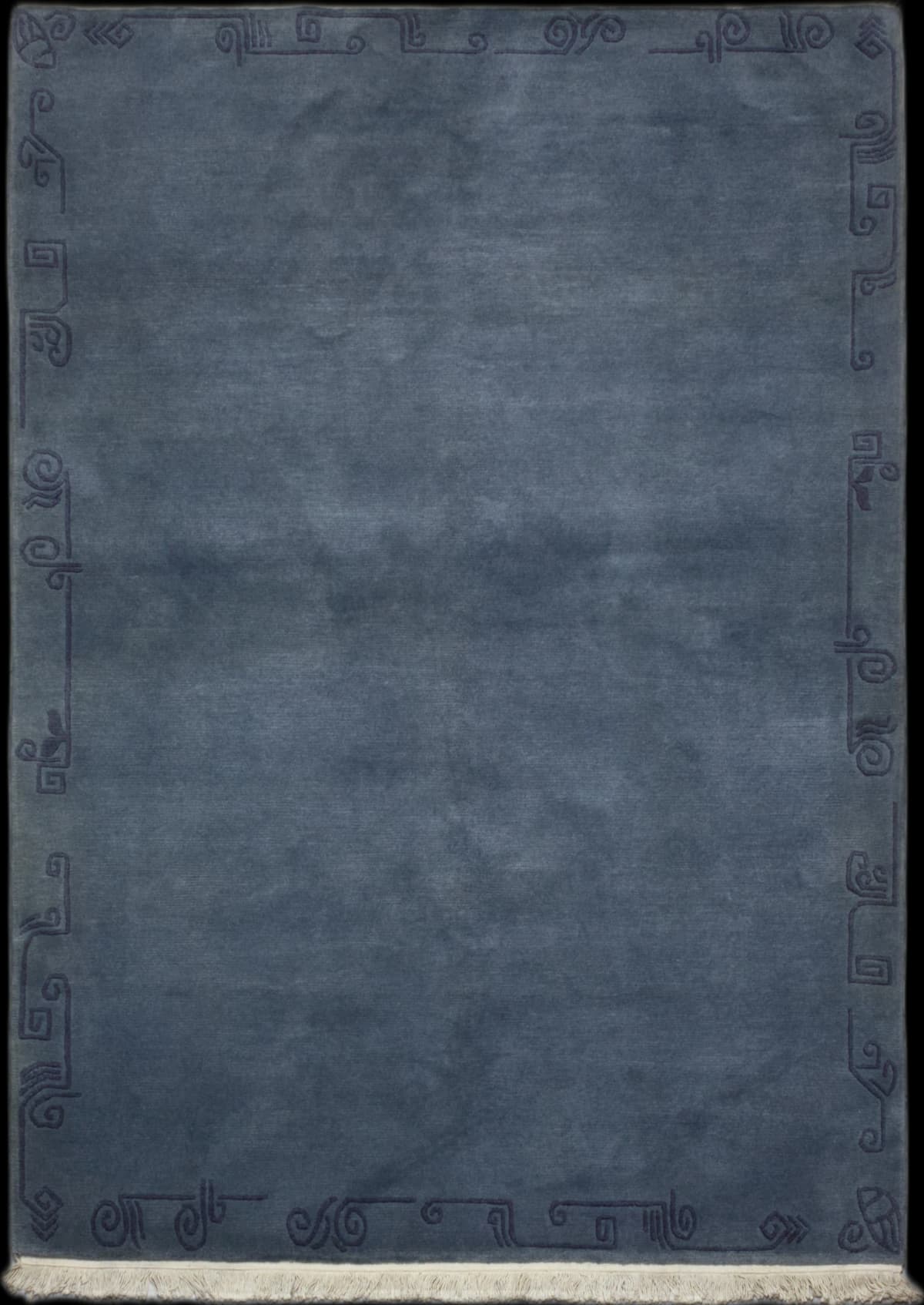
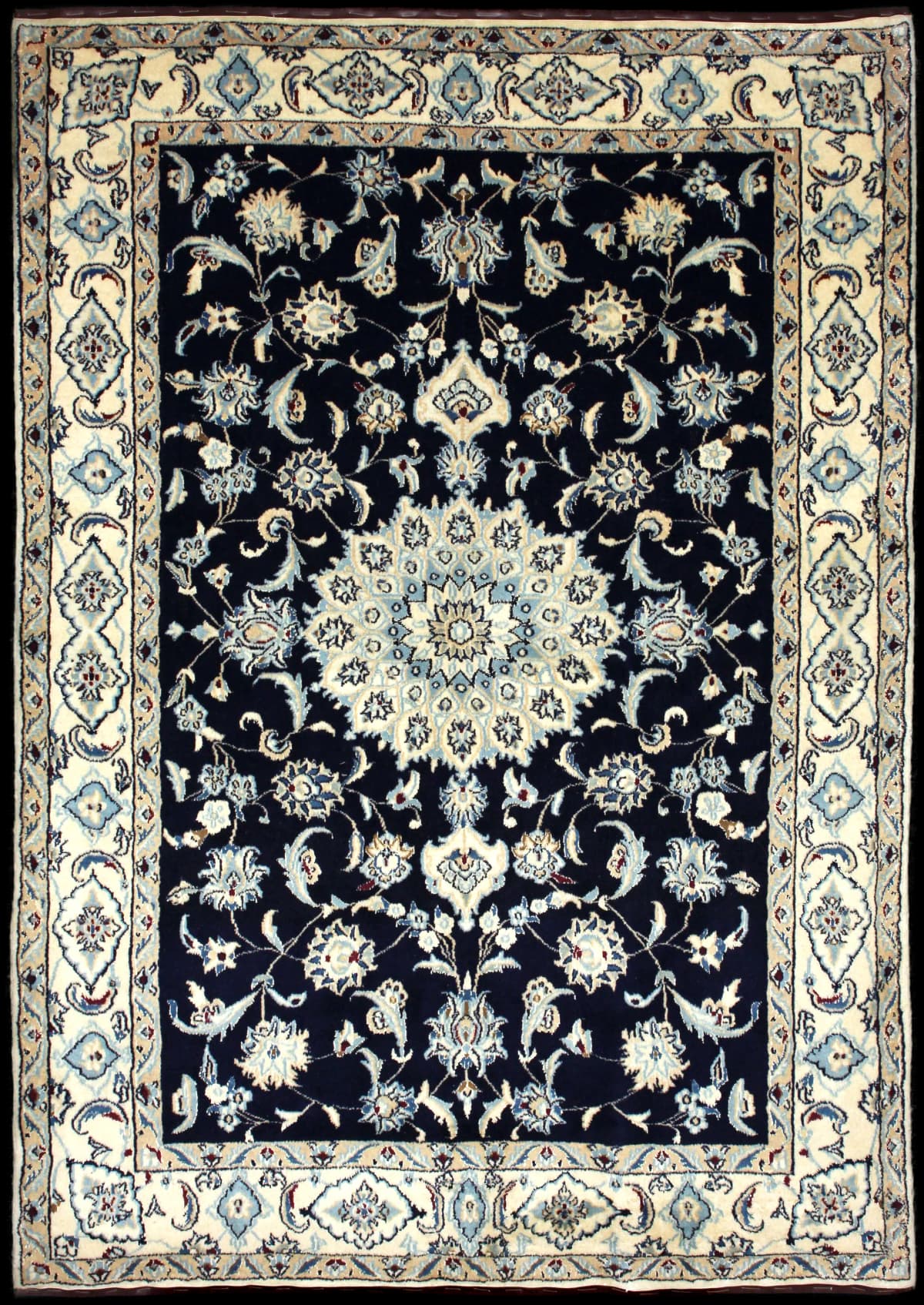
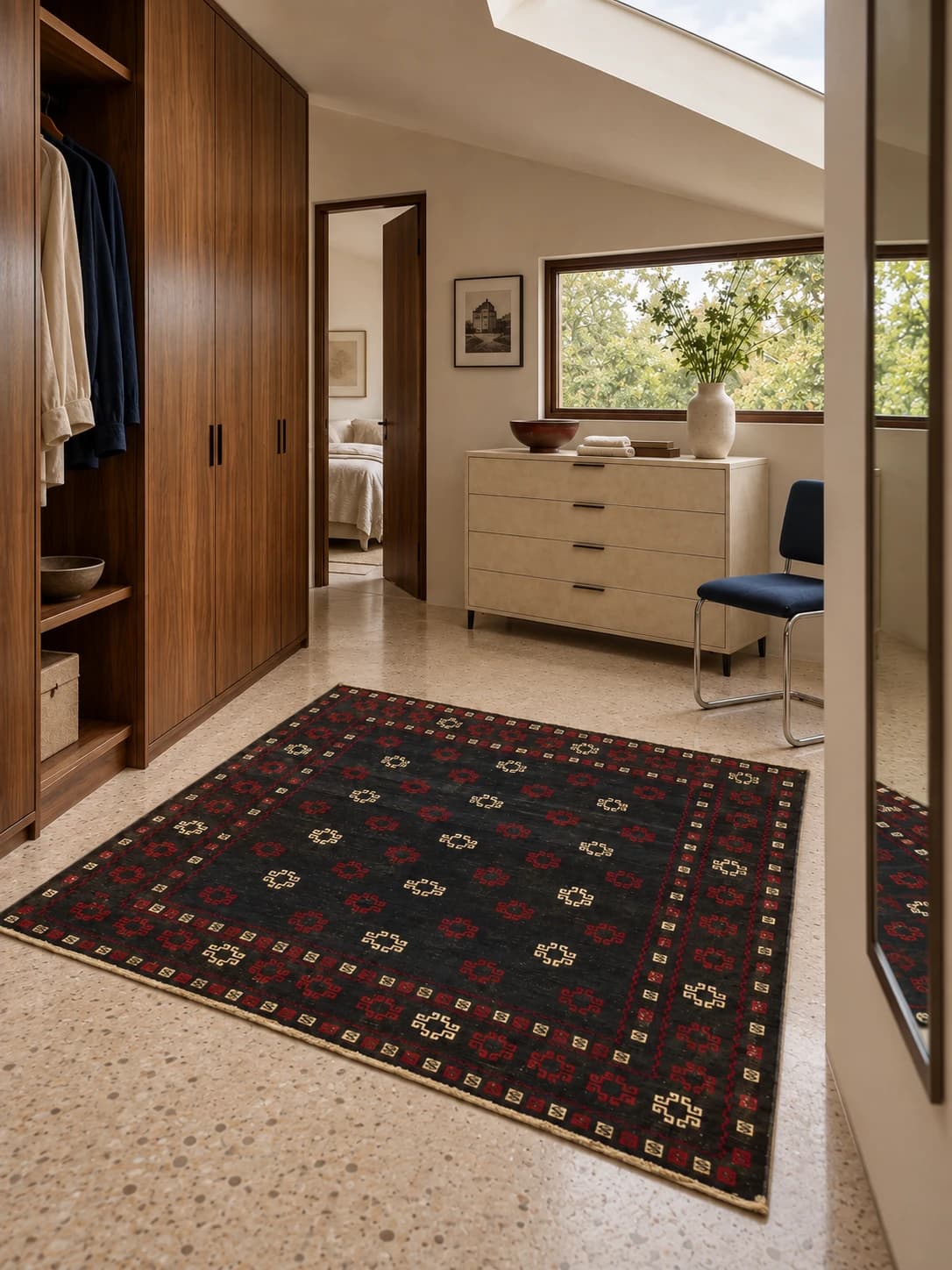
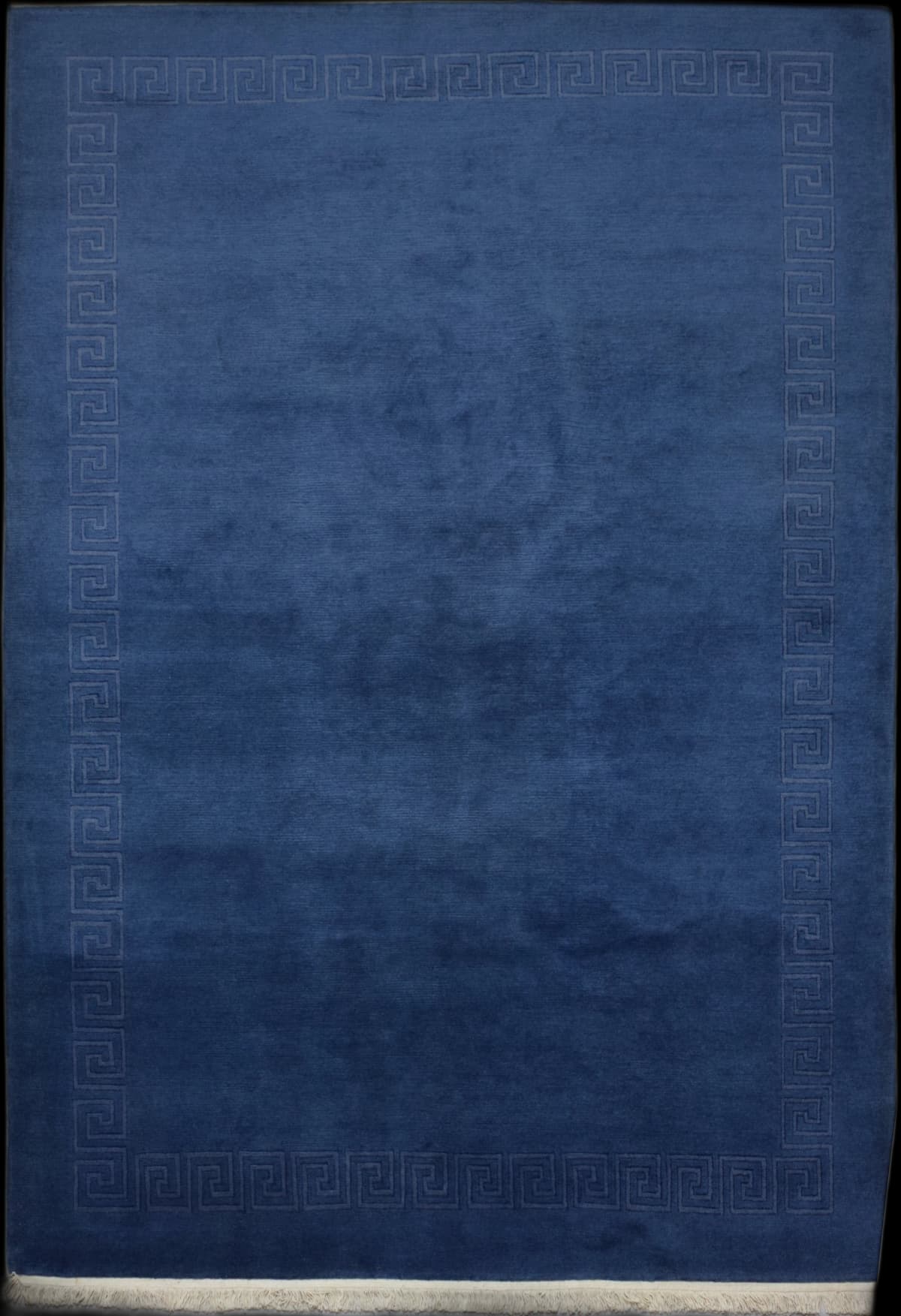
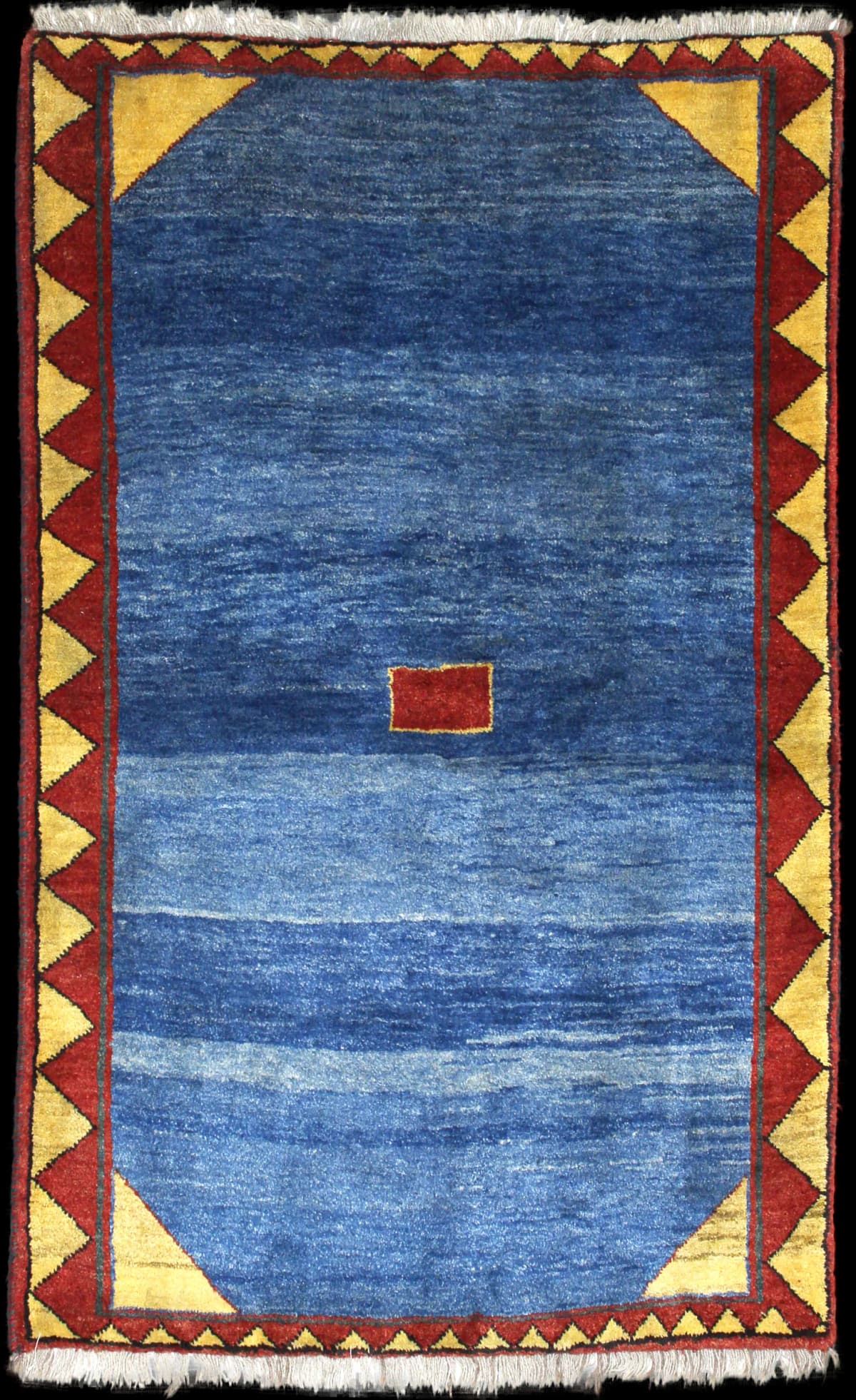
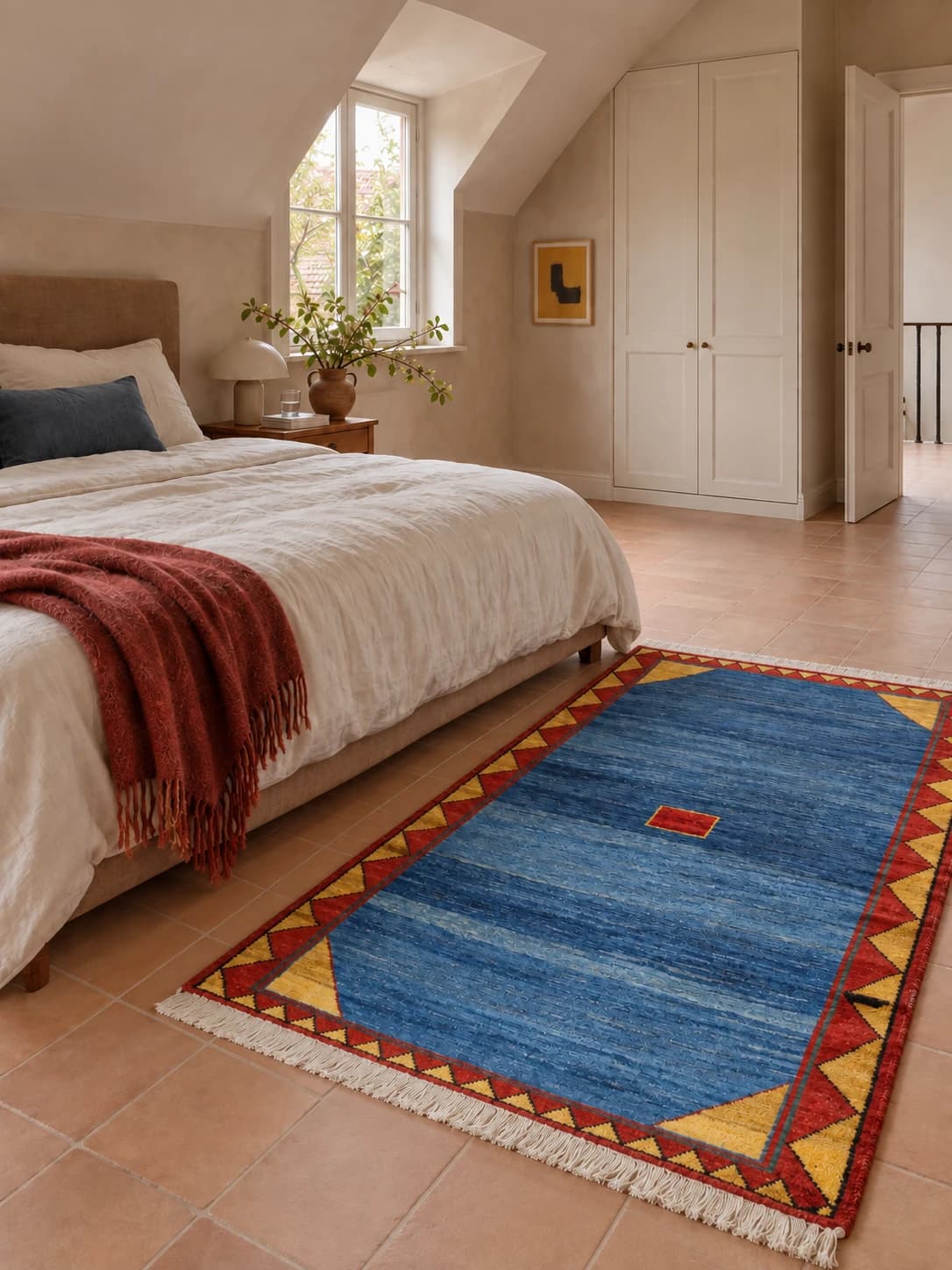
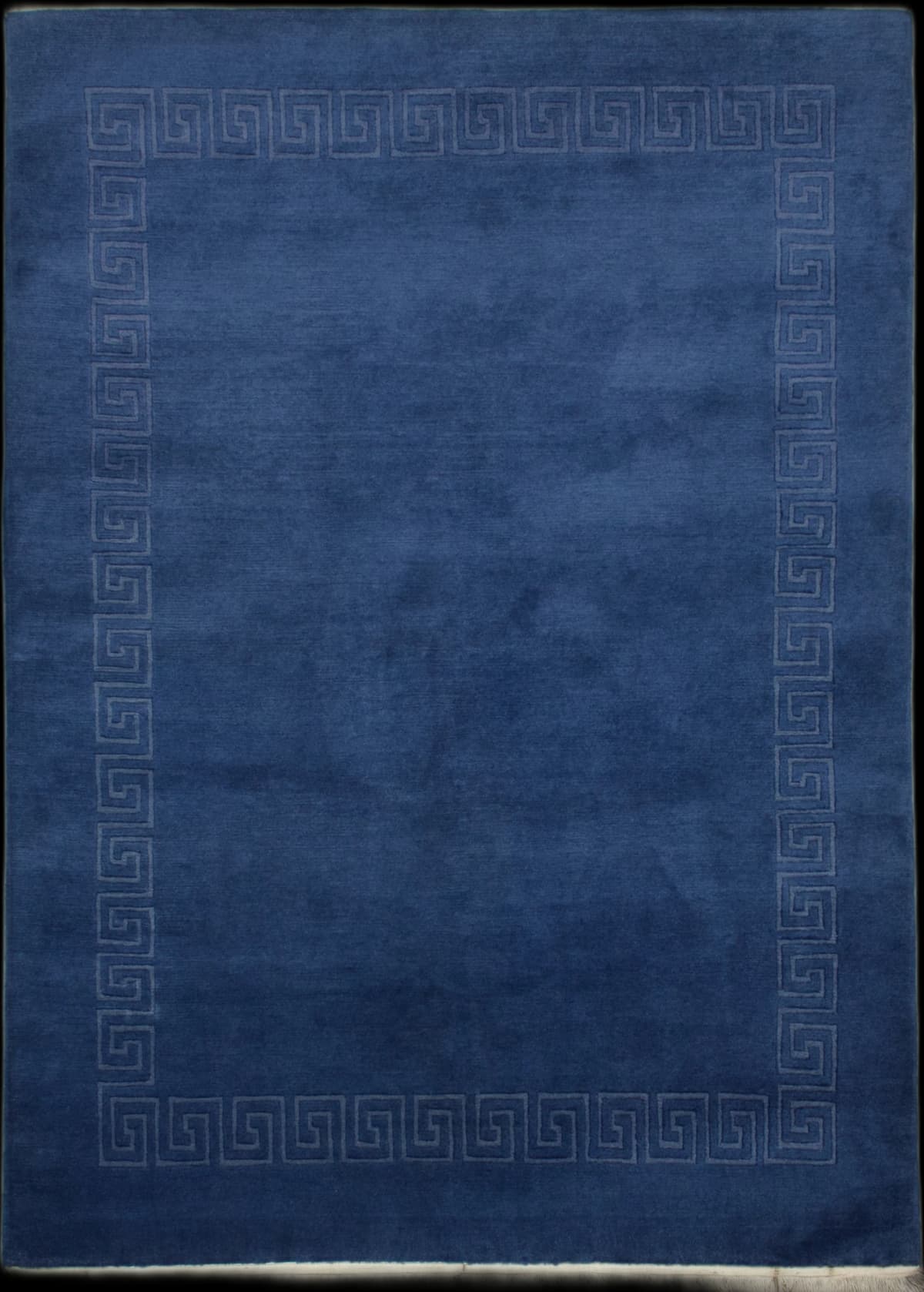
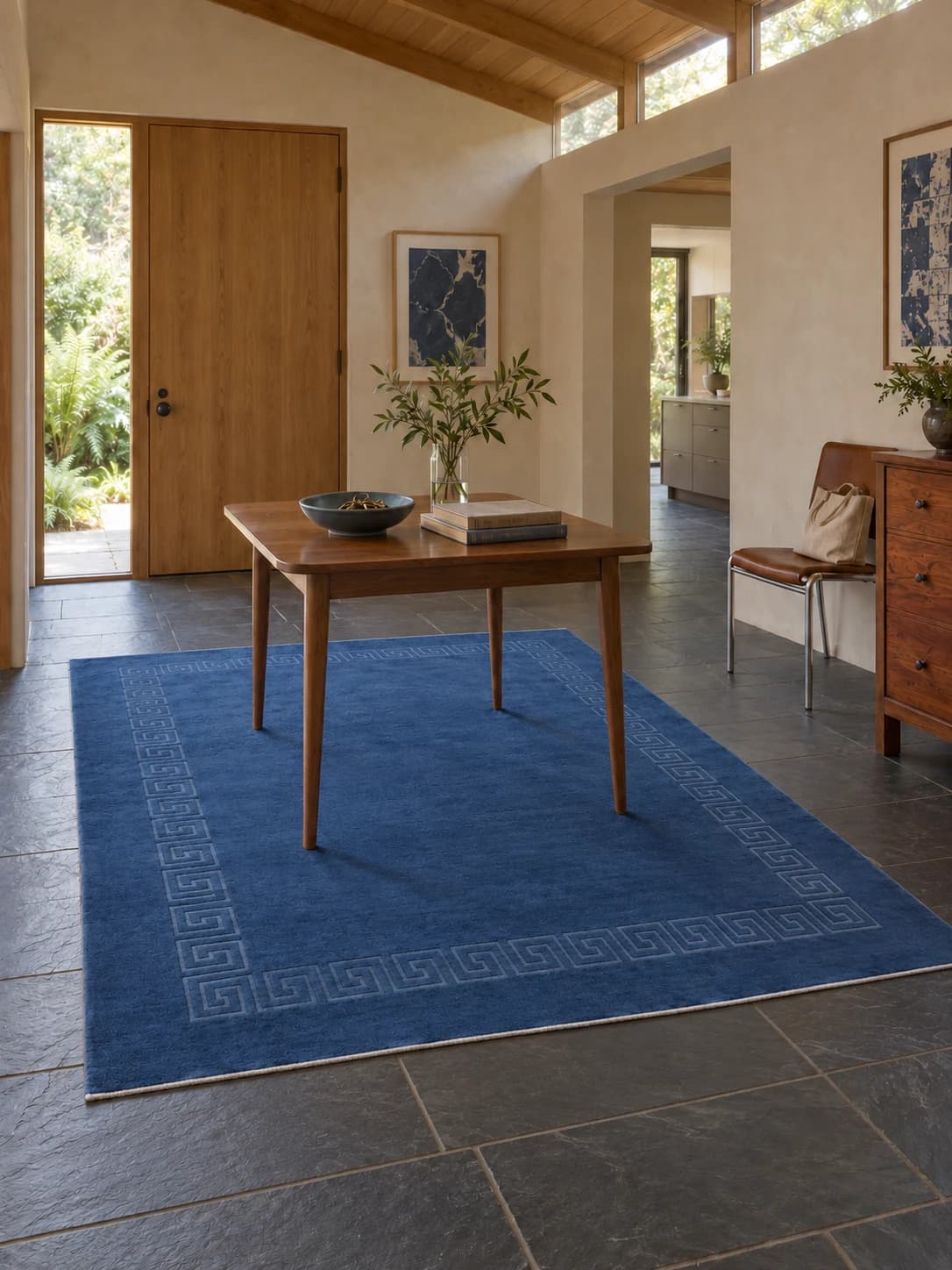
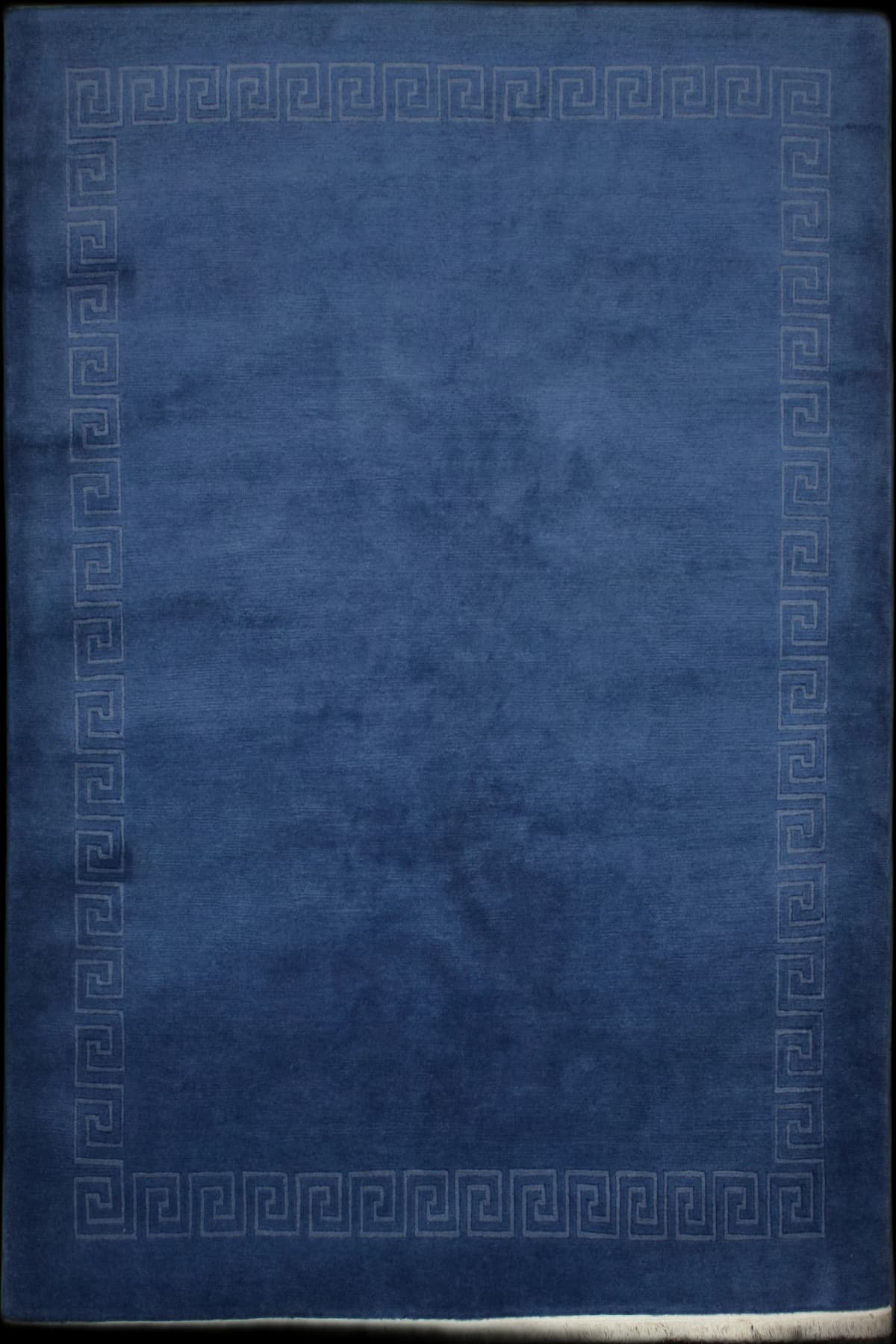
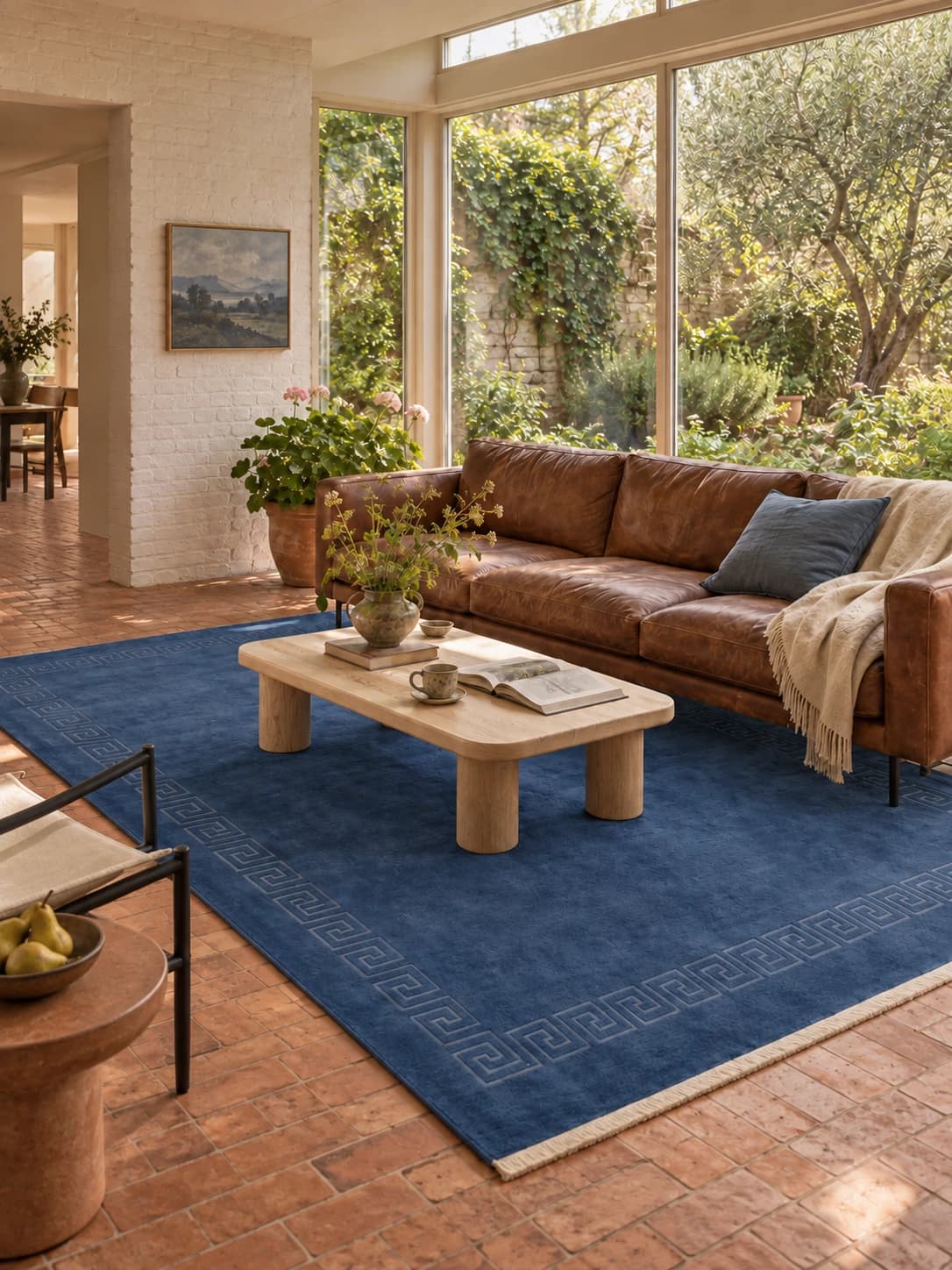
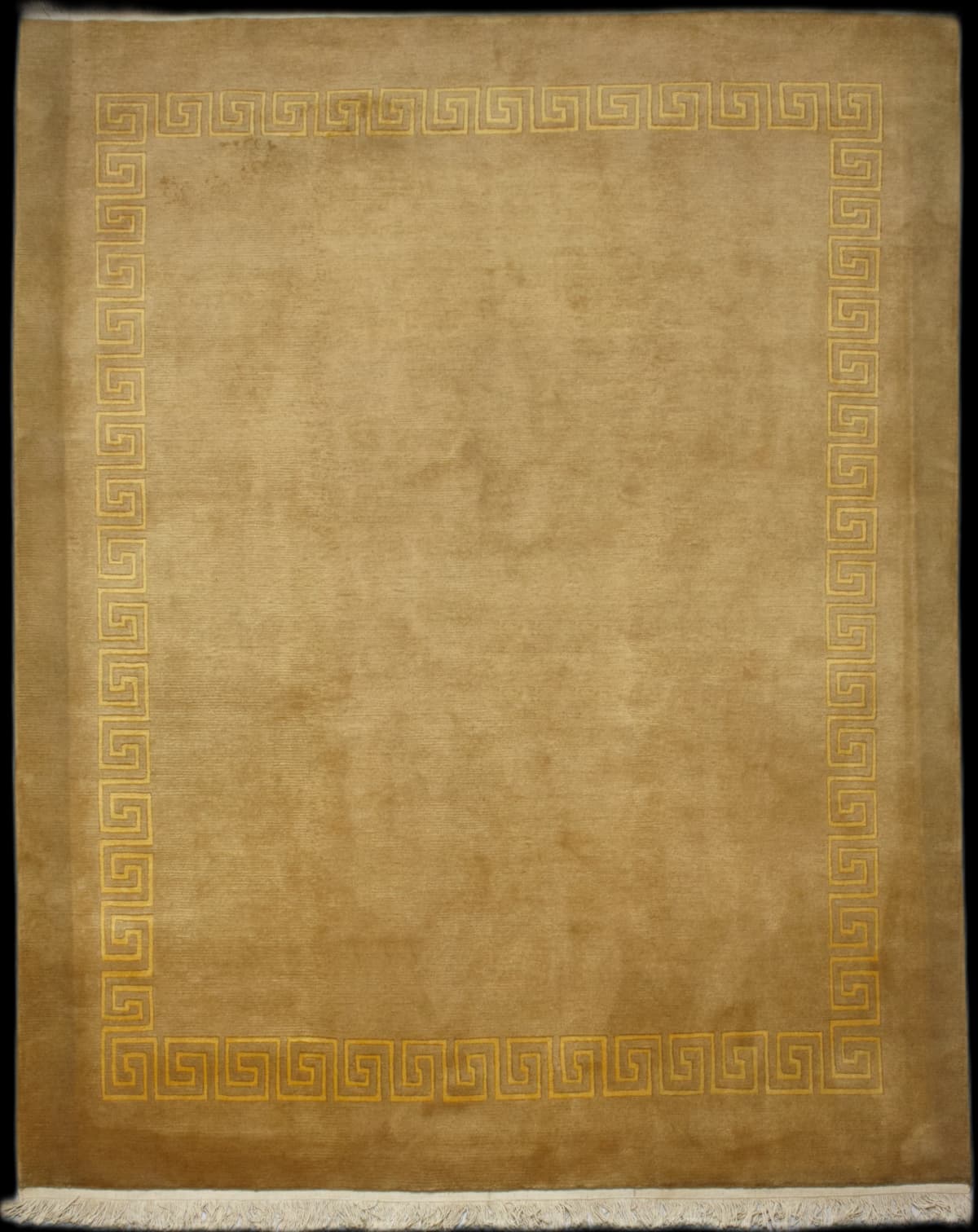
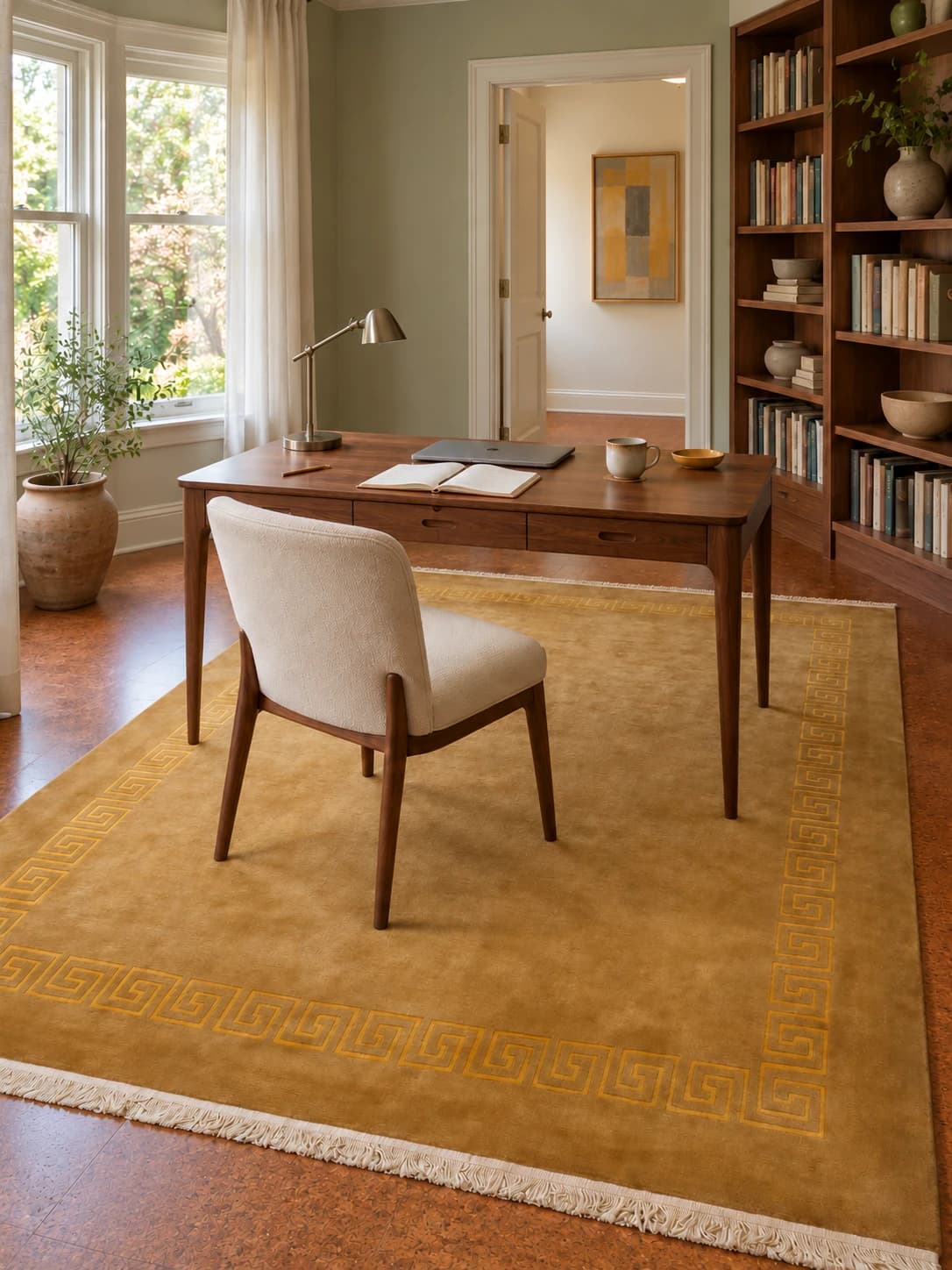
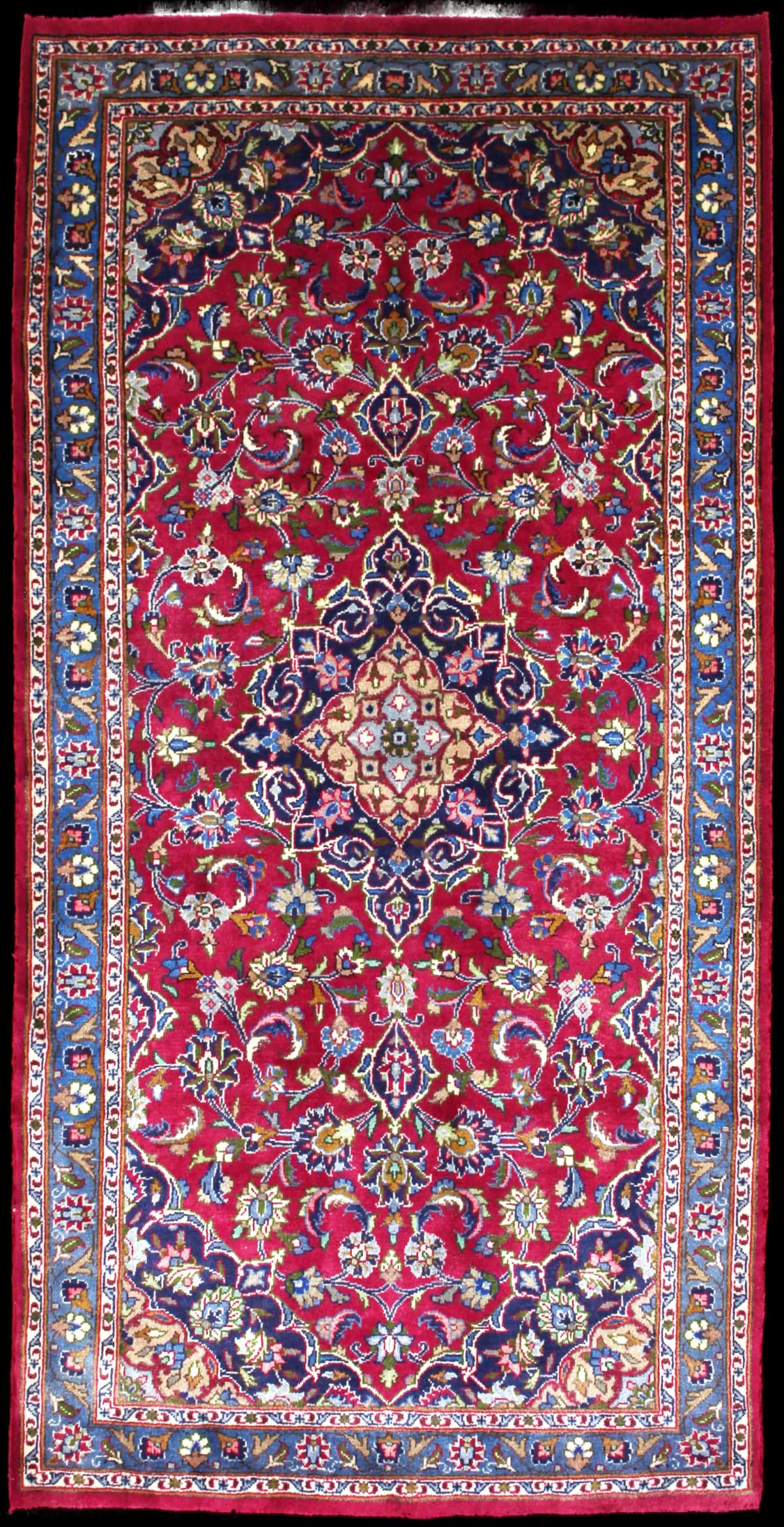
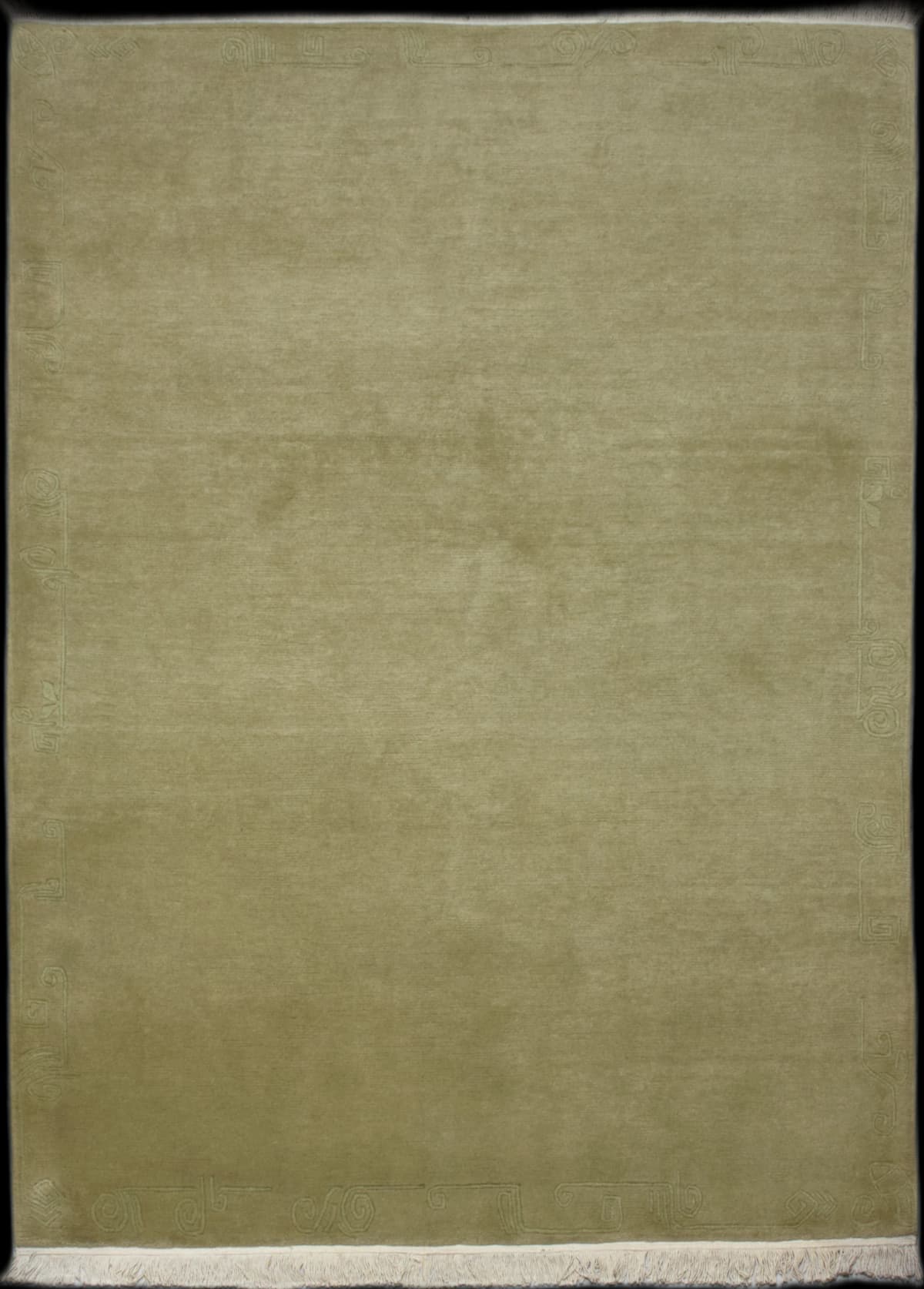
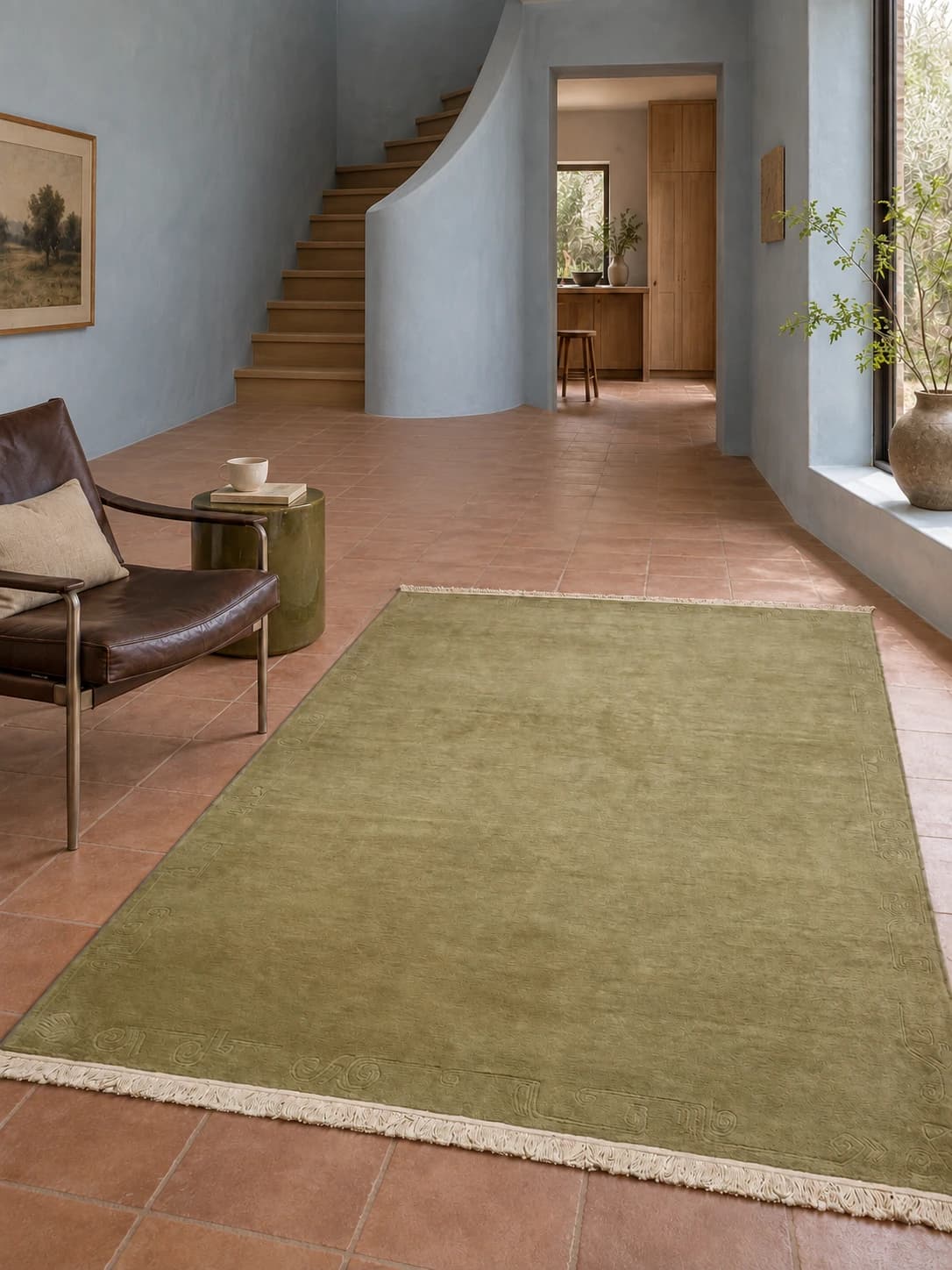
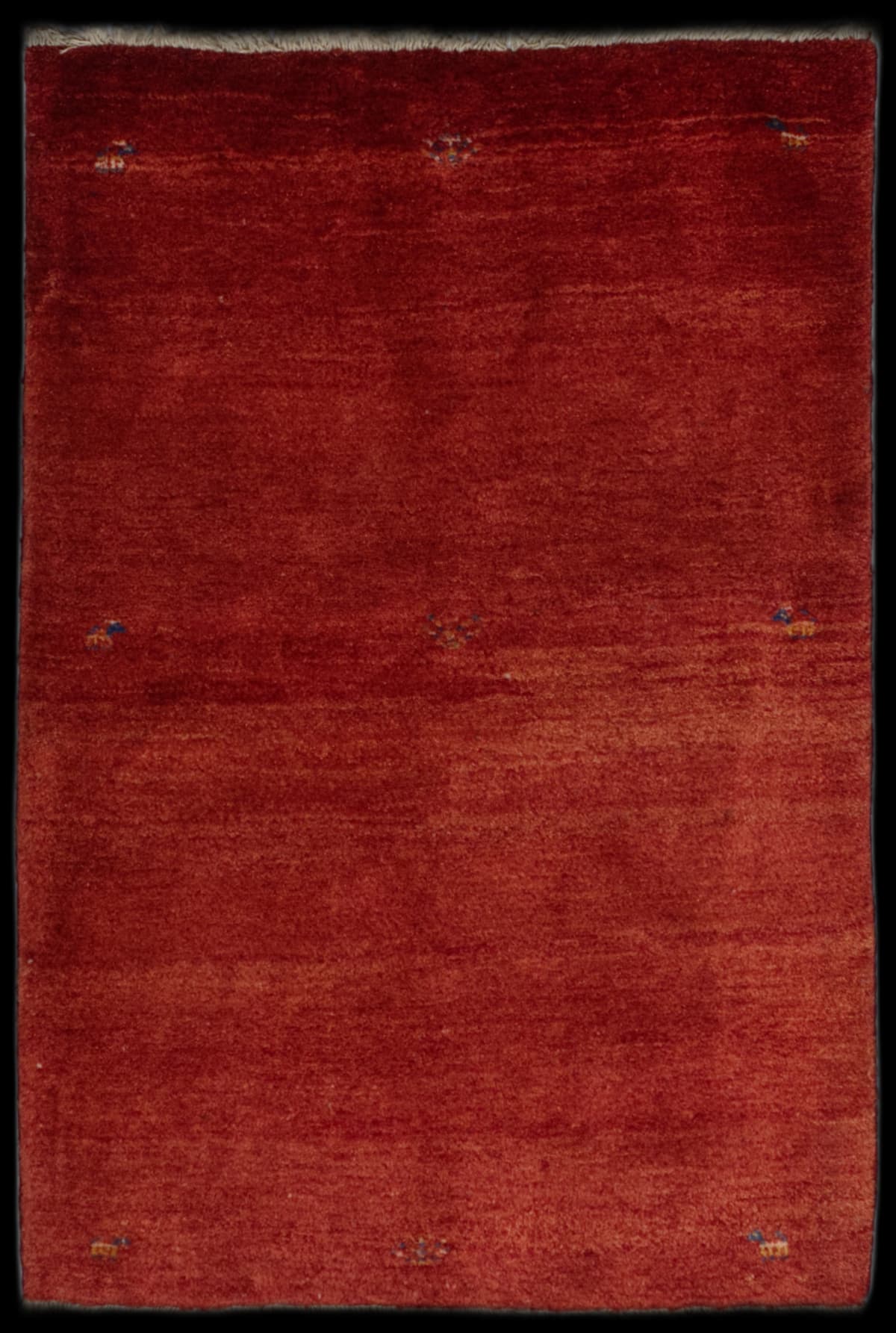
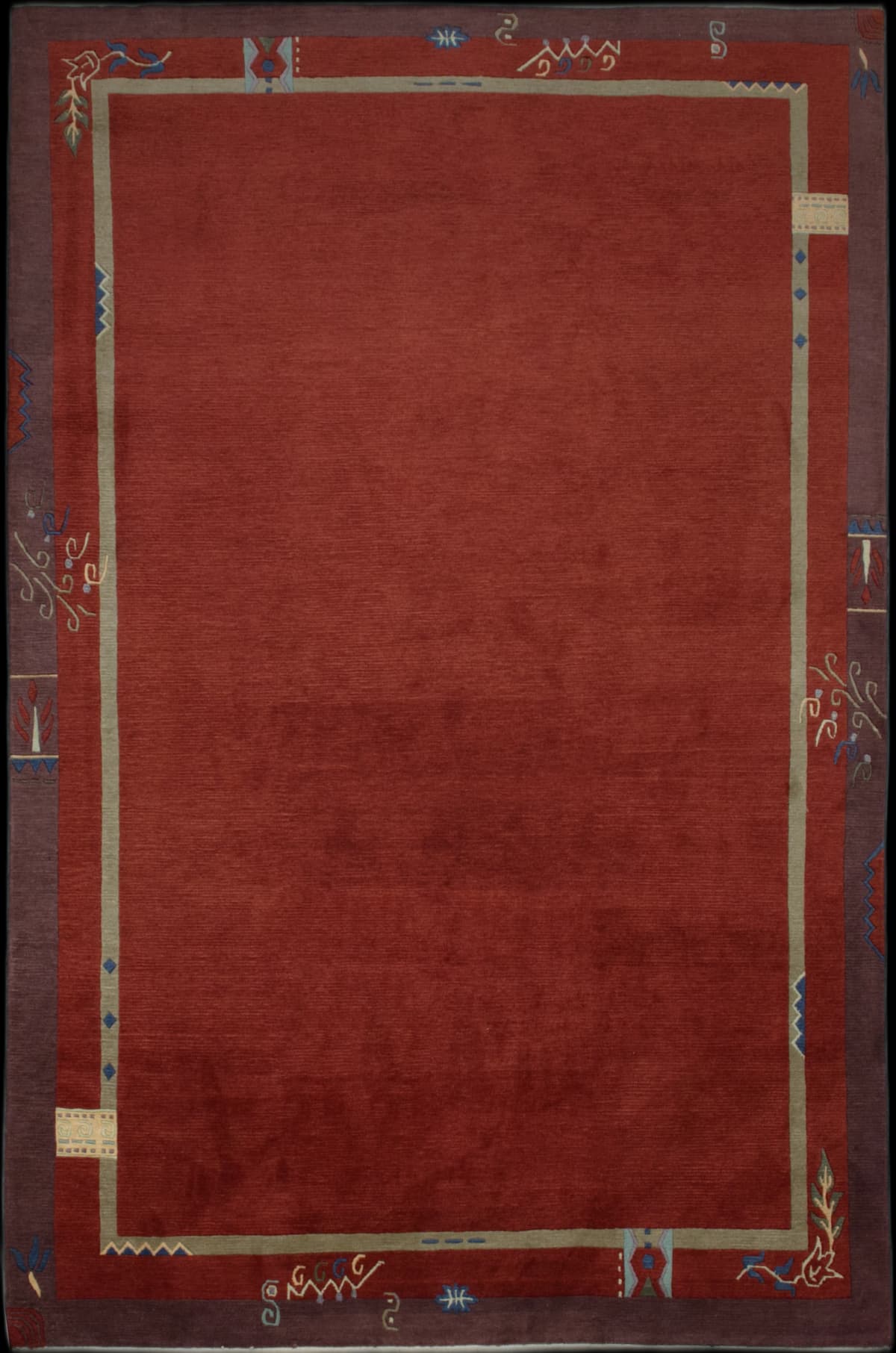
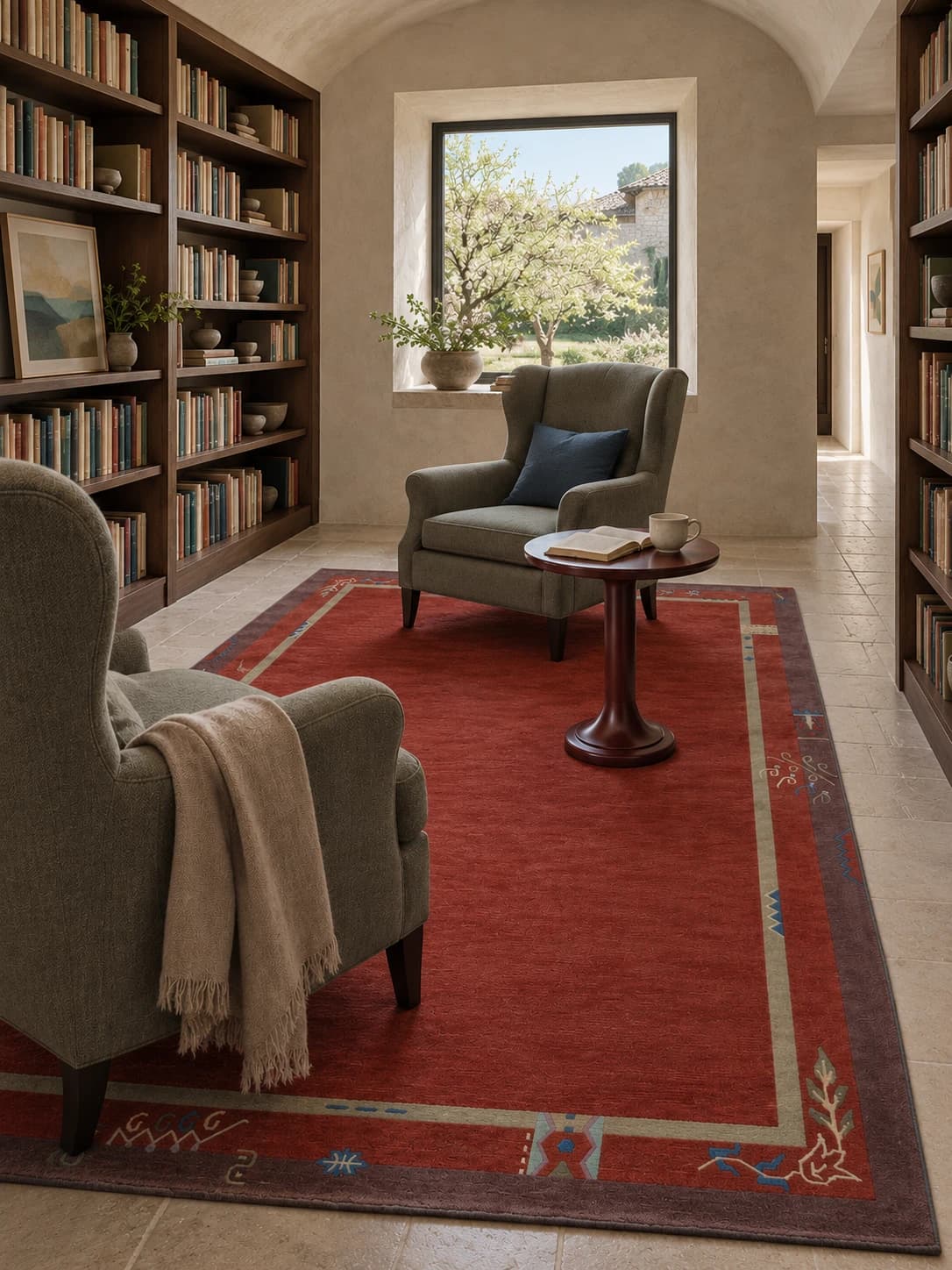
Patterns range from plain to almost architectural. Older Tibetan motifs survive - lotus flowers, cloud bands, dragons, and the small medallionA large motif at the center of a rug's field, around which the rest of the design is organized; the large central medallion is said to have been introduced in the Safavid era (16th-17th centuries). Floral medallions, typical of city rugs such as Tabriz, Kashan and Sarouk, are often read as a lotus blossom, and the motif has also been read as mirroring the interior dome of a mosque; geometric ones, often hexagonal or diamond-shaped, mark village and tribal rugs such as Heriz and Zanjan. A medallion may stand alone, come with four corner pieces, be flanked by smaller medallions above and below, or repeat down a runner. Rugs with no central motif are called allover. In a well-made rug the medallion sits at the center and the corners mirror one another, as closely as handwork allows.See in the carpet dictionary formats of the khaden sleeping rug - but the bulk of what the valley weaves is modern: abstract fields, stripes and grids, tone-on-tone textures, borderless grounds where the interest sits in the surface rather than in a drawn design. Cut-and-loop pileA carpet construction where the yarn forms loops that remain uncut on the surface. Available in level loop (all loops the same height) or multi-level loop (varying heights to create patterns or texture). Generally more durable and less prone to crushing than cut pile carpets.See in the carpet dictionary, in which some areas are left uncut, is one of the usual ways of getting that texture. Since the industry was built for export, it is unusually willing to weave to order, and custom sizes, shapes and colorways are ordinary requests rather than exceptional ones.
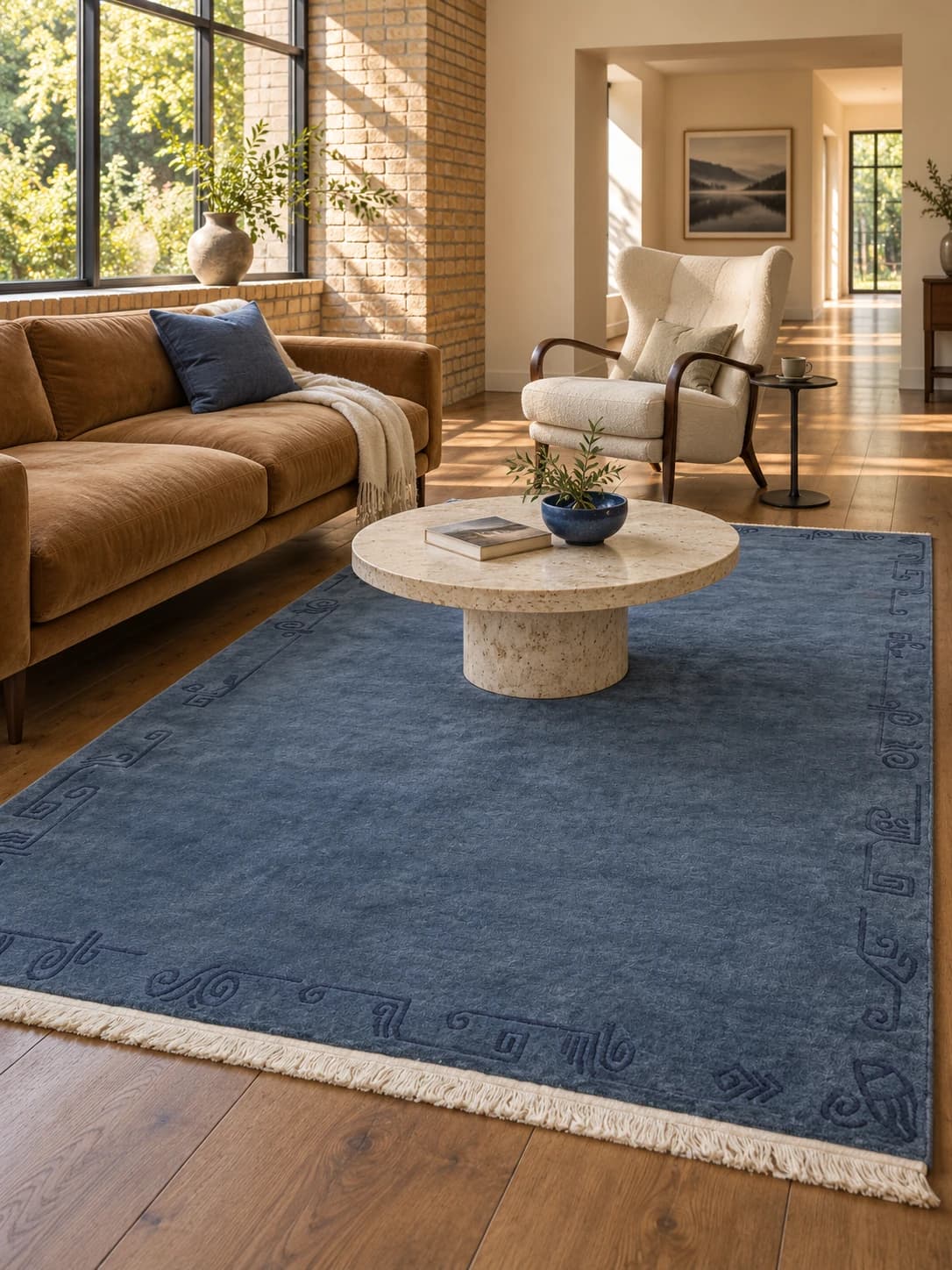
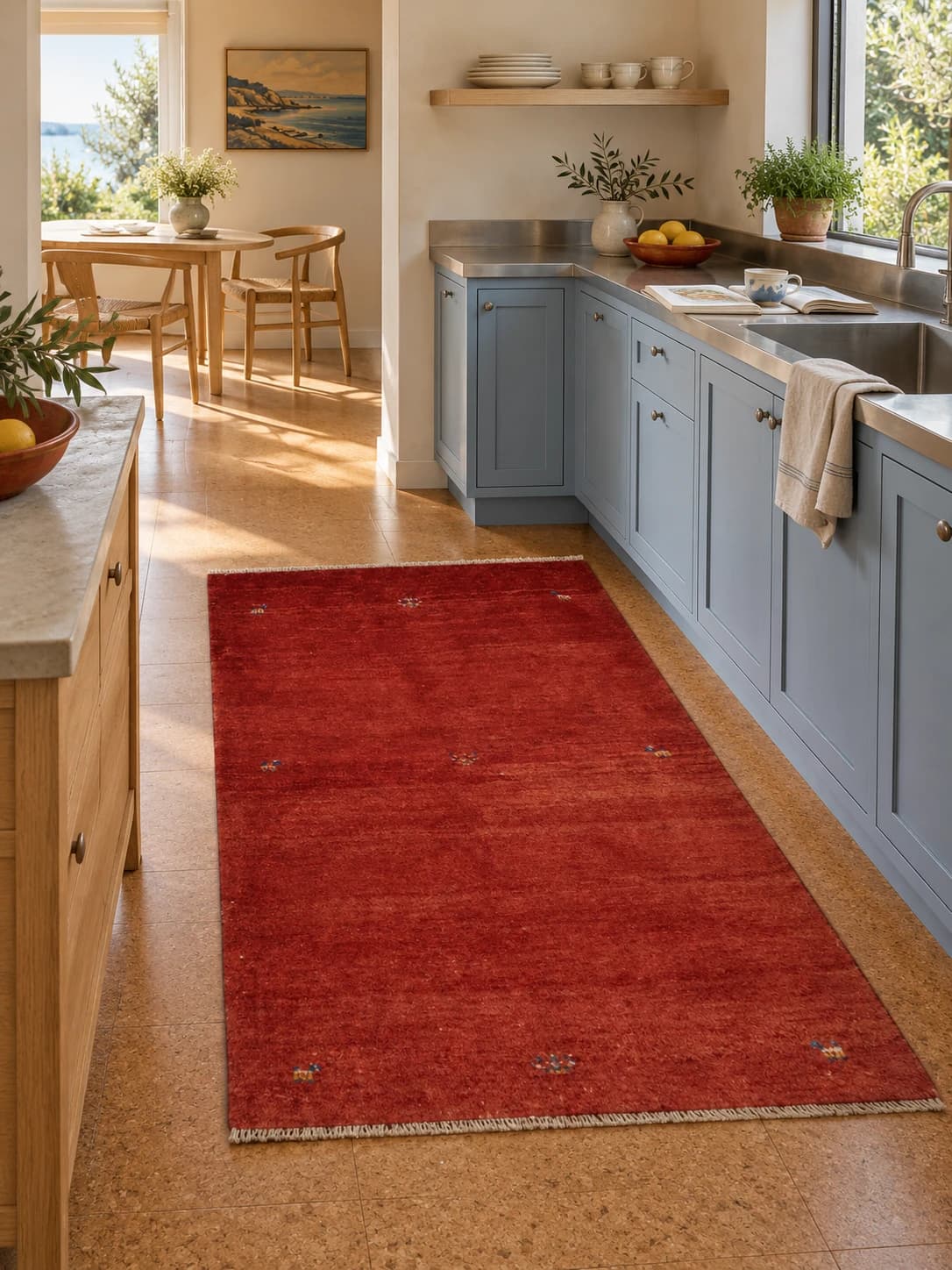
In use these are robust rugs. The looped knot packs a great deal of wool into the pile, so the carpet feels thick and resilient underfoot and copes well with a hallway or a family room, and the softer drawing means wear shows less than it would on a finely knotted floral field. Sizes run large, because the looms were set up for contract and export work, so genuinely big room-size pieces are easier to find here than in most weaving regions. The trade has also carried independent child-labour certification since the 1990s, when the first labelling schemes were set up for South Asian carpets, and labelled rugs are a normal part of it.
Nepal

Nepalese rugs carry the weaving traditions of the Himalayas, gathering styles and techniques from regions across the country. The craft grew out of centuries of exchange along old trade routes between Tibet, Nepal and India, which is why the trade most often files these pieces simply as Tibetan rugs.
The foundation of Nepal's carpet industry is the distinctive Tibetan knot, a technique preserved and adapted throughout the country's weaving centers. Like every hand-knottedA rug construction in which the weaver ties each knot of wool or silk pile yarn by hand around adjacent warp threads on a loom, then runs a weft through the row and beats it down. The cut knot ends form the pile, the warps and wefts form the foundation, and the warp ends become the fringe. A rug can take months or even years, and the work leaves subtle irregularities: patterns not perfectly symmetrical, opposite edges a few inches different in length, an uneven fringe. Authentic Persian, Oriental and Turkish rugs are hand-knotted, unlike hand-tufted rugs (sometimes sold as “handmade”) and machine-made ones, whose backs feel stiff and evenly aligned.See in the carpet dictionary rug, a Nepalese carpet is built one knot at a time over months at the loomThe frame on which the warp (vertical) threads are strung first and held under tension so the weft (horizontal) threads can be interlaced through them and the knots tied onto them. Hand-knotted rugs are made on simple looms, from those set up in weavers' homes to the compact, transportable ones of nomadic weavers, where every knot is tied by hand. Loom size sets rug size: nomads' small looms typically yield rugs no larger than about 4 x 6 or 5 x 7 ft (1.2 x 1.8 m or 1.5 x 2.1 m), city workshops with very large looms weave palace sizes, and the number of looms a workshop runs gauges its scale. Wooden looms in tribal and village weaving expand and contract over time, one cause of crooked rugs. Power looms such as Wilton, Axminster, and Jacquard, the industrial descendants, make machine-woven carpet.See in the carpet dictionary; the Tibetan method, worked by wrapping the yarn around a rod, gives an even, dense pileThe surface of a rug or carpet, made of upright fibers in cut tufts or loops. In a hand-knotted rug it is formed by the cut ends of thousands of wool or silk knots tied onto the warp row by row, trimmed lightly during weaving and given its final height by shearing at finishing. Pile thickness, measured from the back of the rug to the top of the pile, typically runs from low, about 1/8 to 1/4 inch (3 to 6 mm), to high, about 1/2 to 5/8 inch (13 to 16 mm). Fine, dense designs are cut short to keep the pattern sharp; higher pile suits traffic and heavy furniture, lower pile suits door clearance and humid rooms.See in the carpet dictionary with a character of its own.
Nepal's rug makers work with an array of wools, including high-altitude Tibetan varieties and New Zealand fleece. That range of materials, combined with varying proportions of Chinese and Indian silk, lets different workshops develop their own textures and finishes.
Dyeing traditions vary by region. Mountain workshops often favour natural dyes, while the larger production centers use both traditional and modern coloring techniques, so the palette on offer runs from muted vegetal tones to strong contemporary color.
Contemporary Nepalese design reflects the country's mixed cultural inheritance, from traditional Buddhist and Hindu motifs to modern abstract compositions. Individual workshops keep their own design languages while taking part in the broader evolution of the craft.
Construction typically runs from 60 to 100 knots per square inchThe number of knots in one square inch of a hand-knotted rug (KPSI; 1 KPSI is about 15.5 knots per 10 x 10 cm), counted on the back with a ruler by multiplying the knots along one inch of height by those along one inch of width, averaged over two or three areas. More knots give sharper detail, like a higher-resolution screen, and, all else equal, somewhat more durability and a higher price, but density alone does not grade quality: Heriz and Bijar are durable at low to medium counts, while floral curvilinear designs blur without enough knots. Figures run from under about 80 for coarse tribal weaves such as Gabbeh and Qashqai, through roughly 120 to 225 for many village rugs and 300 to 700 for fine city rugs such as Nain and Isfahan, to 600 to 1,000 or more for pure silk Qum.See in the carpet dictionary, with specialized workshops achieving higher densities. That is a sensible range for these designs: bold, textural drawing does not need extreme knot counts to read clearly or to wear well.
Many Nepalese workshops maintain strong ethical practices, supporting their communities through fair-labour initiatives and social programmes, and environmental responsibility is increasingly emphasized, though approaches differ from one producer to the next.
Production spans small village workshops to large manufacturing centers, each bringing its own character to the tradition. That spread of scale and style is part of why Nepalese weaving covers so much ground, from traditional to sharply modern.
Nepal's rugs cover a genuine spectrum of quality and design, from everyday pieces to collector-grade work. The variety of regional techniques means there is a Nepalese rug for most tastes and budgets, without the country's reputation for sound weaving being diluted.
Questions about this carpet?
Our family has traded carpets for two generations. Ask us anything — photos, video calls, advice on sizes.
Message us
Keep exploring
Guides from our family workshop: how to clean, place and care for hand-knotted rugs.