Up close
Origin: Baluchestan
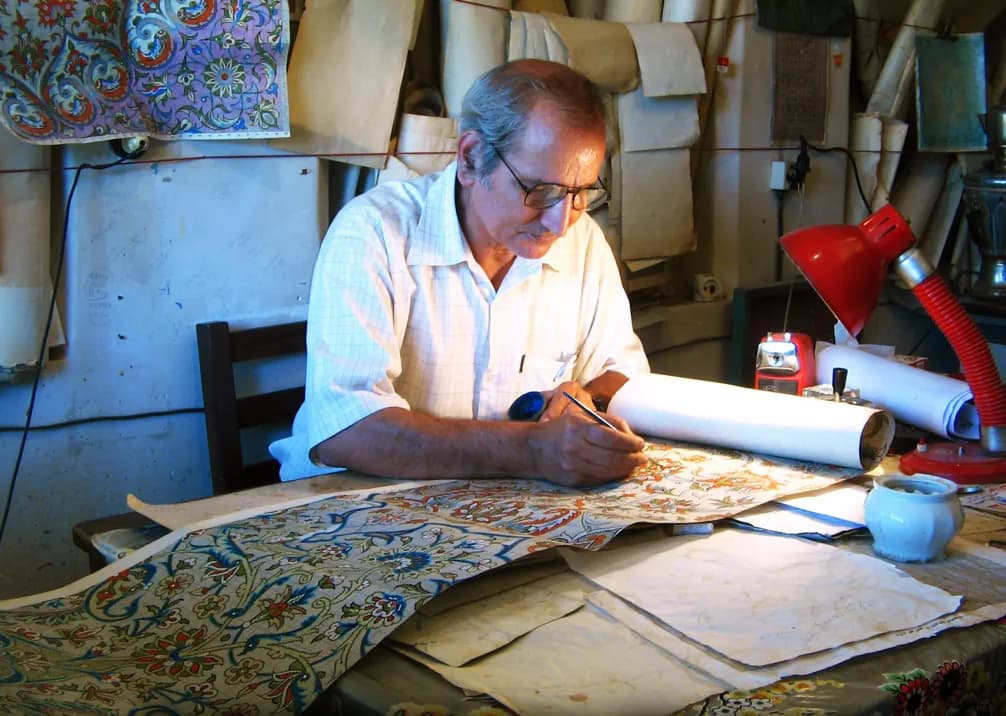
Baluchestan rugs, crafted by the nomadic and semi-nomadic Baluch people across Iran's southeastern regions, represent one of the most authentic expressions of tribal weaving traditions. These distinctive carpets reflect the rich cultural heritage of a people known for their exceptional textile artistry and deep connection to traditional patterns and techniques.
Baluchestan rugs are immediately recognizable by their distinctive dark, rich color palette. Deep reds, midnight blues, and warm browns dominate, often enriched with touches of aubergine and deep green. This sophisticated use of darker tones is punctuated by small areas of ivory and orange, creating dramatic contrast that highlights the intricate geometric patterns.
The designs of Baluchestan carpets typically feature bold geometric patterns arranged in repeating motifs. Prayer rugSmall rugs designed for Islamic prayer rituals, featuring a mihrab (arch) design that indicates the direction of Mecca. These rugs typically measure about 3'x5' and have distinctive architectural elements, including a prayer niche or arch at one end. Traditional prayer rugs from different regions have characteristic designs, colors, and motifs that reflect local cultural influences.See in the carpet dictionary formats are particularly common, featuring a mihrab (prayer niche) design filled with small geometric elements. Other characteristic patterns include repeated botehA teardrop-shaped motif with a curved upper tip, ubiquitous in Persian and Kashmiri weaving for centuries. When Scottish mills began imitating Kashmir shawls in the 19th century, the boteh became known in the West as "paisley", after the town of Paisley where the shawls were woven. Interpretations of its origin range from a cypress tree bent by the wind to a flame, a seed, or a stylized almond — in carpets it often appears in orderly rows across the field.See in the carpet dictionary motifs, stylized trees of life, and angular medallions. These designs often incorporate protective symbols and tribal identifiers that speak to the deep cultural significance of the weaving tradition.
The woolA natural fiber used in high-quality carpets, prized for its durability, resilience, natural stain resistance, and fire-retardant properties.See in the carpet dictionary used in Baluchestan rugs is particularly noteworthy for its high lanolinThe natural wax that coats wool fibers, secreted by the sheep to waterproof its fleece. In a wool carpet, residual lanolin acts as a built-in stain repellent: spills bead on the surface for a few moments instead of soaking in, which is one reason wool rugs forgive accidents that would permanently mark most synthetics. Repeated harsh chemical cleaning strips lanolin away, which is why gentle washing is recommended for wool.See in the carpet dictionary content, sourced from local sheep breeds adapted to the region's harsh climate. This naturally oily woolA natural fiber used in high-quality carpets, prized for its durability, resilience, natural stain resistance, and fire-retardant properties.See in the carpet dictionary creates carpets with a distinctive sheen and remarkable durability. The pileThe surface of the carpet consisting of upright fibers, either in loops or cut tufts. Pile height refers to the length of these fibers from the backing.See in the carpet dictionary is typically cut low to medium height, allowing the geometric patterns to maintain their crisp definition.
Technically, these rugs are woven with a distinctive asymmetrical knot, creating a dense, durable fabric despite relatively moderate knot counts of 100-200 KPSIKnots Per Square Inch, a measure of quality in hand-knotted rugs. Higher knot counts generally indicate finer detail and higher quality.See in the carpet dictionary (knots per square inch). The foundation is typically woolA natural fiber used in high-quality carpets, prized for its durability, resilience, natural stain resistance, and fire-retardant properties.See in the carpet dictionary, though cotton is sometimes used in more recent productions. The all-woolA natural fiber used in high-quality carpets, prized for its durability, resilience, natural stain resistance, and fire-retardant properties.See in the carpet dictionary construction of traditional pieces contributes to their excellent durability and aging characteristics.
Sizes in Baluchestan rugs tend toward the smaller end of the spectrum, with prayer rugs and area rug sizes being most common. This reflects both the practical limitations of nomadic weaving and traditional use patterns. Larger pieces are relatively rare and particularly valued by collectors.
End finishes often feature distinctive kilimA flat-woven rug without pile, traditionally made in Turkey, Iran, Afghanistan, and the Balkans. Known for geometric patterns and created by interweaving colored weft threads with warp threads.See in the carpet dictionary endings and occasionally include small tassels or fringe, adding to their authentic tribal character. These structural elements provide both decorative interest and additional stability to the piece.
The investment value of Baluchestan rugs has increased significantly as traditional nomadic weaving becomes increasingly rare. Their distinctive appearance, excellent durability, and authentic tribal character make them particularly attractive to collectors and enthusiasts of tribal rugs.
These carpets are especially valued for their ability to add depth and character to contemporary interiors. Their deep, rich colors and geometric patterns provide sophisticated accent pieces that work particularly well in modern design contexts, where their tribal authenticity creates compelling visual contrast.
Each Baluchestan rug represents generations of weaving tradition, where patterns and techniques have been preserved through centuries of nomadic life. These pieces continue to be prized for their combination of artistic excellence, structural integrity, and cultural authenticity, making them increasingly sought-after in both collector and decorator markets.
The Persian rug
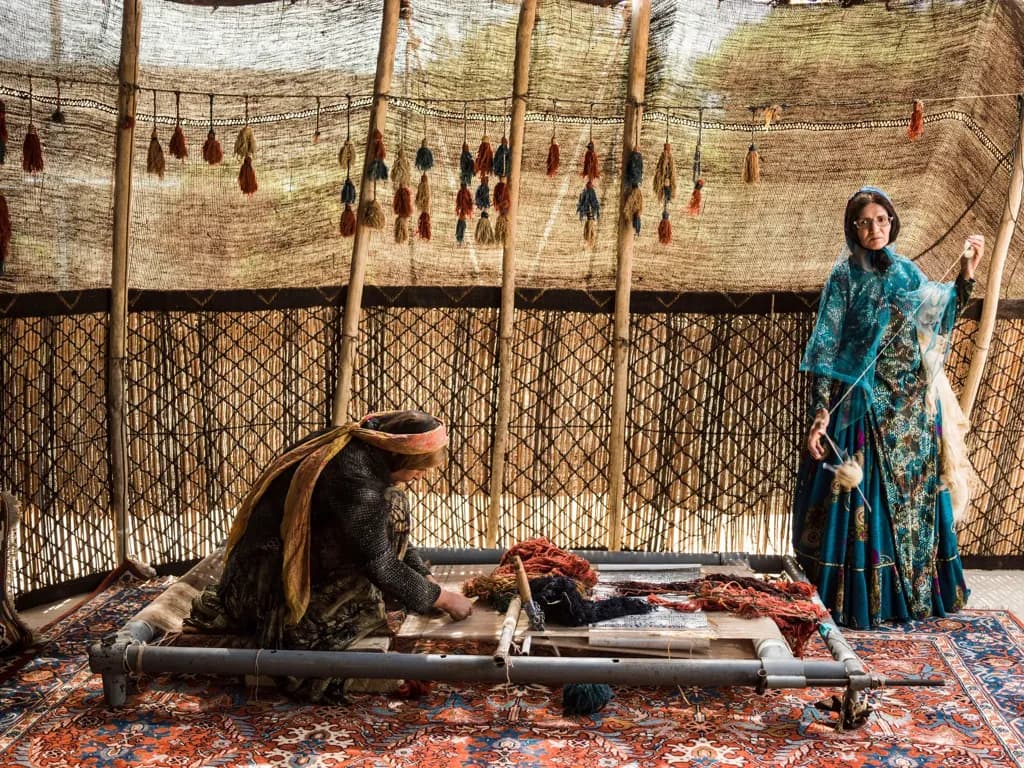
Persian carpets stand as living masterpieces of textile art, representing over 2,500 years of cultural heritage and unparalleled craftsmanship that has influenced rug making worldwide. These extraordinary floor coverings transform spaces into galleries of woven artistry, each piece telling its own unique story.
The distinguishing characteristics of authentic Persian carpets lie in their hand-knottedA carpet weaving technique where individual knots are tied by hand around warp threads, creating durable, high-quality rugs. Common in Persian, Oriental, and Turkish carpets.See in the carpet dictionary construction, with skilled artisans tying each knot individually - often up to 1,000 knots per square inch in the finest pieces. This meticulous process creates rugs of exceptional densityA measure of how tightly packed carpet fibers are within the pile. Higher density generally indicates better durability and performance. Calculated by multiplying the face weight by 36 and dividing by the pile height.See in the carpet dictionary and durability, explaining their ability to last for generations while growing more beautiful with age.
Each Persian carpet's design vocabulary draws from a rich tradition of motifs: elegant Shah Abbasi flowers, graceful arabesques, intricate Herati patterns, and magnificent medallions. These elements combine with regional variations to create distinct styles, from the bold geometric patterns of Heriz to the delicate floral compositions of Isfahan.
The color palette of Persian carpets represents a masterclass in natural dyeing techniques. Rich madder reds, indigo blues, vibrant saffron yellows, and subtle ivory tones come together in harmonious combinations that have been perfected over centuries. These natural dyes age gracefully, developing a sought-after patina that enhances the carpet's character.
Superior materials form the foundation of every genuine Persian carpet. The finest woolA natural fiber used in high-quality carpets, prized for its durability, resilience, natural stain resistance, and fire-retardant properties.See in the carpet dictionary, sourced from high-altitude sheep and spun by hand, provides remarkable resilience and a luxurious feel. In prestigious pieces, silk highlights add shimmer to woolA natural fiber used in high-quality carpets, prized for its durability, resilience, natural stain resistance, and fire-retardant properties.See in the carpet dictionary backgrounds, while all-silk carpets offer unmatched luminosity and refinement.
Persian carpets adapt beautifully to both traditional and contemporary settings. Their timeless designs complement modern minimalist spaces as effectively as they enhance classical interiors. Whether used as striking wall-to-wall installations, elegant room-sized carpets, or dramatic wall hangings, these pieces command attention while creating atmosphere.
The investment potential of Persian carpets is well-documented, with fine examples appreciating in value over time. Each piece represents a tangible asset that combines aesthetic appeal with historical significance. The finest examples are often considered alternative investments, particularly those from renowned weaving centers or featuring unusual designs.
Maintenance of Persian carpets reflects their premium status. Their natural materials respond well to professional cleaning, while regular careful vacuuming and rotation ensure even wear. Many pieces actually improve in appearance over decades, developing subtle variations in color and acquiring a lustrous sheen.
Owning a Persian carpet means participating in one of humanity's oldest and most refined decorative arts traditions. These pieces represent more than floor coverings; they are portable works of art that bring warmth, sophistication, and cultural richness to any environment they grace.
Questions about this carpet?
Our family has traded carpets for two generations. Ask us anything — photos, video calls, advice on sizes.
Keep exploring
Guides from our family workshop: how to clean, place and care for hand-knotted rugs.


